
Reading 1X2 the Long Way Around
 Available in US
The 1X2 market is the simplest frame football gives you: home win (1), draw (X), away win (2). Three outcomes, three prices, one match. Everything else on a coupon — the corners, the cards, the player specials — is layered on top of that single question. Understanding 1X2 well is the difference between reading a price and reading the match behind it.

This page is not a tip sheet. There is no fixture list, no pick, no predicted scoreline. What follows is the scaffolding any genuine prediction rests on: how the odds are made, what a value bet actually is, what the bookmaker’s margin takes from you before a ball is kicked, and why “betting tips 1×2 today” is a search for a framework rather than a forecast. The 2026 market for UK-licensed football betting has not changed that proposition. It has, if anything, sharpened it.
Verified against the Gambling Commission’s public register as of 27 October 2026.
Watching a 1X2 Game Unfold in Real Time
Live betting changed how a 1X2 market reads. Before in-play, you took the price and waited ninety minutes. Now the price breathes with the match. A goal in the eighth minute rewrites the away win in a heartbeat, and the draw price drifts to a number that looks like a different sport. The same fixtures that used to be one decision are now three or four.
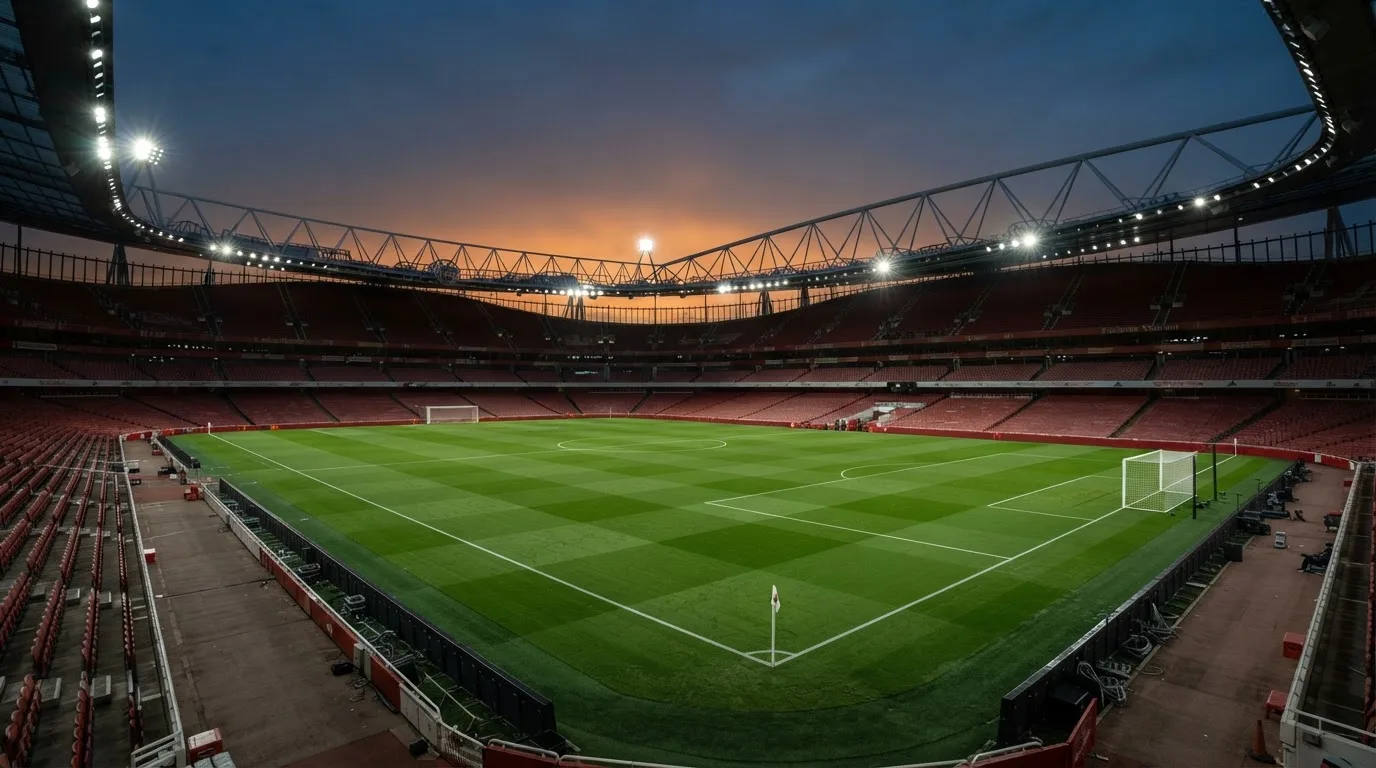
Live 1X2 markets on UK-licensed sites update continuously during play, and the price you see at kick-off rarely matches the price you see at half-time. A 0-0 at the interval will often price the draw shorter than it opened — the market is paying for the likelihood that one of two cagey teams blinks first. A 1-0 lead for the underdog can do the opposite: the favourite drifts, the draw tightens, the underdog shortens, all in the same minute. The bookmaker’s margin stays roughly embedded throughout, even as the headline numbers swing.
Watching the market move teaches something a pre-match price cannot. The favourite does not always shorten when it scores; on a strong favourite, scoring once can shorten it only slightly, because the price already priced a goal. The underdog, by contrast, often lengthens sharply on conceding, because the implied probability of a comeback drops. That asymmetry is itself information.
Cash out sits beside the live market rather than inside it. The function lets you lock in profit or cut a loss before the final whistle, at a price the bookmaker sets in real time. It looks like control — and for a bettor with discipline it can be — but the cash-out price carries its own margin, and on a tight match the offered figure is meaningfully below the true value of the bet at that instant. Used sparingly, on a position you cannot otherwise monitor, it is a useful tool. Used as a habit, it is a slow leak.
Live streaming, where the operator offers it, is the cheapest way to make these judgements: a picture, an in-play price ladder and a clock. A punter who can watch the match and read the odds at the same time has an information advantage over one who only sees the score update. Not every licensed site streams football, and not every streamed match has the full in-play market available — the Bet Builder and the cash-out button can vanish for lower-tier fixtures. That is a practical limit on what live 1X2 can do for a small-stake bettor, and worth knowing before a Saturday accumulator is built around it.
How a Prediction Is Actually Built
A “tip” in the strict sense is a reasoned forecast. The reasoning is the part the search engines cannot sell you and the part that decides whether the price in front of you is worth taking. Five inputs feed a serious 1X2 prediction, and ignoring one of them costs more than ignoring the others.

Form is the loudest of the five and the least reliable on its own. A team on a four-match winning streak has earned about four data points; a sample of four sits inside a confidence interval wide enough that a regression to the mean can erase the streak in two games. Recent form matters most when it is consistent with longer-term underlying numbers, and least when it contradicts them. A side unbeaten in six but expected to concede heavily by its season-long shots-on-target record is a streaky team, not a good one.
Statistics sit beneath form and outlast it. Expected goals (xG), shots on target, big chances created and conceded, set-piece conversion rates — these are the slower-moving numbers. They are also the ones a bookmaker’s own traders lean on, which is why a price sometimes moves sharply on an xG update released by an analytics house the morning of the game. A punter who builds a model around the same inputs the traders use is essentially arbitraging themselves; the edge has to come from a different source. That source is usually context.
Line-ups and team news are the variables that move prices the most between the morning of the match and kick-off. A rested striker in place of a fatigued one can shift the implied probability of a home win by three or four points, which is more than most statistical inputs would justify. Injuries, suspensions, the goalkeeper rotated for a cup tie, the new signing ineligible — all of these are public information by the time the bet is placed, and the price should already reflect them. Where the price has not moved and team news has, there is either a slow market or a misread.
Head-to-head records are the input that looks weighty and weighs the least. Football changes: managers leave, squads turn over, a stadium is renovated. A run of five consecutive home wins against a particular opponent can mean something tactical — a system that exploits a weakness — or it can mean nothing more than variance. Treat it as flavour, not as evidence.
The bookmaker’s own odds are the fifth input, and they sit awkwardly beside the other four. The price on the screen is the market’s collective view, which already includes most of what a tipster would write. A price that disagrees with your own probability estimate is interesting; a price that confirms it tells you nothing. The job is to find the disagreement, not the agreement.
Staking and Bankroll Discipline
The mistake most casual bettors make is not on the prediction but on the stake. A 1X2 price of 6/5 (decimal 2.20) on the draw looks tempting because it almost doubles your money; it is tempting in the same way every bet looks tempting the moment before it loses. Bankroll discipline is the answer, and it has nothing to do with picking winners.
Level staking — the same unit on every selection, scaled only to your overall bank — is the boring foundation. A unit of 1% to 3% of the bank is the band professionals defend, because it lets you survive a 10-bet losing run without serious damage and rewards you when the edge shows up over 100 or 200 bets. Anything larger flattens the variance problem into a ruin problem.
The Kelly criterion is the more aggressive alternative: stake a fraction of the bank proportional to your edge over the price. In theory it grows the bank fastest; in practice it requires an honest estimate of the edge, which nobody has. Half-Kelly is the version most serious bettors actually use, and even then only when the edge is large and well-supported. Staking Kelly on a hunch is staking more than the edge justifies, and it ends the same way every time.
Bankroll and prediction are two halves of the same question. A punter with a 55% strike rate on draws at value prices and a 10% stake will end the season better off than one with a 65% strike rate and a 25% stake. The numbers are illustrative; the principle holds.
Why No Tip Is Ever Certain
A prediction is a probability, expressed as a price. The shorter the price, the higher the implied probability; the longer the price, the lower it. Even at 1/10 (decimal 1.10), which the market treats as near-certain, the true probability of a home win is rarely above 90% in a competitive league. The remaining ten points are where draws and away wins live, and the longer the season the more often they show up.
Upsets are not anomalies; they are the market’s margin of error. A team priced at 1.50 (decimal) winning 60% of its matches and losing the other 40% is doing exactly what the price implies. The bet loses on those 40%, and the punter who forgot that the price implied a 33% loss rate is the punter who blames the sport.
This is the only honest answer to the question “how do I win a 1X2 bet?”. You do not win every 1X2 bet. You build a process that wins more than it loses over a large sample, and you let the sample do the work. Anyone promising a guaranteed result is selling you a feeling, and the feeling has a price tag.
The Anatomy of a 1X2 Bet
A 1X2 bet is a single wager on the result of a football match after ninety minutes of regulation play. The three letters cover the three outcomes: home (1), draw (X), away (2). Extra time and penalties do not count in a 1X2 market; a knockout match that finishes 1-1 after ninety minutes and 2-1 after extra time is a draw on the coupon. That detail catches people out once and is rarely wrong twice.
Settlement is what a 1X2 bet actually does. You pick the outcome; if you are right, the bookmaker pays your stake multiplied by the decimal odds (or your stake plus your stake multiplied by the fractional odds); if you are wrong, the bookmaker keeps the stake. There is no partial payout, no bonus for getting close. The match returns one of three values and the bet returns one of two.
Staking is the part you control. The bookmaker sets the odds; you set the amount. The mistake is to treat the stake as a function of the price. It is not. The stake is a function of the bet, and the bet is the part that needs the work. A £10 stake on a 2.10 home win and a £10 stake on a 3.40 away draw carry the same risk in cash terms but very different risks in probability terms. Most punters adjust the stake to the confidence, not the price — which is the wrong direction, because confidence is what the work was meant to provide.
The 1X2 market sits at the top of a coupon and the bottom of a sport. Every other football market — both teams to score, total goals, Asian handicap, player shots — is a derivative of it. A BTTS bet on a match where the favourite is 1.40 and the underdog is 9.00 is really a bet on whether the underdog scores. The 1X2 line tells you most of what the BTTS line implies. Reading the simple market first is the discipline.
Odds, Prices and What They Are Telling You
British bookmakers display prices in fractional form by tradition: 5/1, 11/4, evens. The fractional price expresses the profit relative to the stake; £10 at 5/1 returns £60 in profit plus the £10 stake, total £70. Decimal odds express the total return: £10 at 6.00 returns £60 total, of which £50 is profit. The conversion is mechanical — a/b becomes a÷b+1 — and both forms describe the same underlying probability.
The market’s implied probability is the reverse of the price, after the bookmaker’s margin is taken out. At even money (1/1, decimal 2.00) with no margin, the implied probability is 50%. At 5/1 (decimal 6.00) with no margin, it is about 16.7%. Add the margin — the overround — and every implied probability shrinks below its true level, because the prices sum to more than 100%. The bookmaker pays out less than a fair market would, and the difference is the margin.
A price is never “the probability”. It is the probability with the margin folded in. Confusing the two is the most expensive mistake a casual bettor makes, because it makes value bets invisible. A price of 2.50 that looks generous is sometimes generous; sometimes it is exactly fair once the margin is stripped out and the implied probability is recalculated.
How Returns Are Calculated
Return is mechanical. Take the stake, multiply by the decimal odds, and that is the total return including stake. The net profit is the return minus the stake, or equivalently the stake multiplied by (decimal odds minus 1). £25 at 3.40 returns £85 in total, of which £60 is profit; the calculation takes less than a second, and a punter who cannot do it on the betting slip should not place the bet.
Combination bets multiply the odds of each leg into one price, with the stake paid once. A double at 2.10 and 3.40 is a single bet at 7.14 (the product), and the £10 stake returns £71.40 if both legs win. The catch is that every leg must win; one loser and the whole accumulator is gone. Accumulators are how a small stake can return a large sum, and they are also how a small stake can be lost in a hurry.
The Margin Hiding Inside the Price
The bookmaker’s margin — also called the overround — is the percentage of every unit staked that the bookmaker keeps on average. It is the single most important number on a 1X2 coupon and the one a casual bettor is least likely to look at. A typical Premier League 1X2 margin at a UK-licensed bookmaker runs between 2.5% and 7%, depending on the operator, the fixture and how close to kick-off the price was set. Champions League and lower-tier English football sit higher; tight Saturday afternoon Premier League matches sit lower.
The margin can be read straight off the prices. A balanced match between two roughly equal teams might be priced at 2.10 / 3.40 / 3.60 — what looks like a fair reflection of the form. The arithmetic tells a different story: 1/2.10 plus 1/3.40 plus 1/3.60 gives a payout share of about 95.6%, meaning the margin is about 4.4%. The bookmaker keeps roughly £4.40 of every £100 staked across all three outcomes. That is not a criticism of the bookmaker; it is the cost of the service.
The illustrative margin for a two-way market at 1.90 / 1.90 sits in the band of about 5.3%, depending on rounding. Strip the bookmaker out of the picture and a fair two-way market at even money would price each side at exactly 2.00, with a margin of zero. The difference between a fair market and the offered one is the price of admission.
What Value Actually Means
A value bet is a price that exceeds the true probability once the margin has been taken out. That is the whole definition. Everything else — form, statistics, tipsters, models — exists to estimate the true probability so that the comparison can be made. The punter who understands this is halfway to a workable edge; the punter who understands only that “this team is likely to win” is halfway to losing money.
The discipline of value is harder than it sounds. It means declining a price that looks too short, accepting that the favourite at 1.40 is rarely value even when it wins, and walking past matches that look attractive but offer nothing. A Saturday afternoon with three Premier League games and no value bet is a Saturday afternoon where the right move is to bet on none of them. The boredom is the work.
The Ten Reviewed Bookmakers for 1X2 in 2026
The ten brands below each hold a Gambling Commission remote licence for Great Britain and are listed on the Commission’s public register. Their inclusion here reflects what they offer on a 1X2 market — the depth of the price board, the live market, the in-play tools, the bet builder that lets a 1X2 selection ride alongside other legs — and not a recommendation to use any of them. Several carry very different licences (Spreadex, for instance, also operates under FCA regulation on its spread-betting side) and several sit under the same parent group (LC International for Ladbrokes, LeoVegas Gaming for BetMGM, PPB Counterparty Services for Paddy Power). A licence is not a guarantee of quality; it is a statement that the operator has met the Commission’s entry bar and is bound by the LCCP.
Paddy Power
Paddy Power’s site is Paddy Power, run by PPB Counterparty Services Limited under Gambling Commission remote licence 039439-R-319330-013, with remote general betting standard (real events) on the register. The brand is the public face of a much larger group, and its 1X2 product reflects that scale.
What sets it apart is the breadth of bet-building tools layered on top of a standard 1X2 line. Bet Builder+ lets a punter combine a 1X2 selection with player shots, corners, cards and other match events into one priced bet; Popular Bet Builders highlight the combinations other customers have priced up. The Super Sub feature rolls a player selection over to the replacement if the chosen player is substituted before the bet settles, which solves a real annoyance on player markets but does not touch the 1X2 line itself. The Win More expanded markets and the player and acca stats panels sit beside the live price ladder.
For a 1X2 punter who wants the home-and-draw markets well-priced and a deep bench of in-play features, Paddy Power is a complete product. The punter who wants the narrowest possible margin on Premier League matches may find that another licensed brand in this list runs tighter prices on the headline 1X2, particularly on Saturday afternoons.
10bet
10bet is licensed under Gambling Commission remote licence 043173-R-322899-023 to Blue Star Planet Limited, with remote general betting standard (real events) on the register. The site is 10bet.co.uk.
The brand covers football, tennis and horse racing at full depth, with cash out, a bet builder and live streaming across football and tennis fixtures. For a 1X2 punter the football coverage is the relevant layer, and the price ladder runs deep enough to cover the Premier League down into the lower English leagues, the Scottish leagues and the major European competitions.
What sets 10bet apart is the combination of the three pillars — cash out for early settlement, bet builder for combination bets, live streaming for the picture. A punter who wants all three on a single platform for the same match has them here, without needing a second bookmaker for the in-play stream or a third for the combination bet. The trade-off is brand recognition: 10bet is a smaller name than the household brands, and its welcome package is more modest than theirs.
Ladbrokes
Ladbrokes is licensed under Gambling Commission remote licence 054743-R-330863-014 to LC International Limited, which also runs Coral under the same licence. The register lists remote general betting standard (real events) and remote betting intermediary. The site is Ladbrokes.
The product is one of the deepest on the UK market. Best Odds Guaranteed applies to UK and Irish horse racing — not directly to 1X2 football — but the acca boosts and odds boosts extend to football multiples. In-play betting is layered over the pre-match coupon, and the price board on a Premier League Saturday is one of the most competitive in the country.
What sets Ladbrokes apart is the combination of price depth and the betting-intermediary licence, which means exchange-style functionality sits beside the traditional sportsbook. For a 1X2 punter, that means alternative ways to back and lay the same outcome, sometimes at better prices than the main board. The 1X2 line itself is sharp; the surrounding product is wider than most.
888sport
888sport is licensed under Gambling Commission remote licence 039028-R-319297-014 to 888 UK Limited, and is licensed for real-event remote betting. The site is 888sport.
The platform offers pre-match and in-play betting, cash out, bet builder, racing streams and BetFinder form tools. The live bet feed and the daily boosted odds sit beside the standard 1X2 board. The price depth on Premier League and Champions League football is competitive, and the bet builder is a workable single-match combination tool.
What sets 888sport apart is the BetFinder form tools layered over the football coupon. A punter who builds their own 1X2 model — or who wants to sanity-check a price against a form indicator — has access to the kind of supplementary data the bigger brands sometimes bury. For a bettor with the patience to use it, this is a quiet advantage; for a bettor who only wants to take a price and move on, it adds nothing.
Spreadex
Spreadex is licensed under Gambling Commission remote licence 008835-R-104580-022 to Spreadex Limited, and is licensed for real-event remote betting. The site is Spreadex. The same firm is regulated by the Financial Conduct Authority for spread betting, which is a separate licence and a separate product.
The distinction matters for a 1X2 punter. Spreadex’s fixed-odds sportsbook is a normal Commission-licensed offering, and the 1X2 line sits on it. The spread-betting side, which lets a punter trade on the margin of victory rather than the result, is FCA-regulated and carries the specific risk that spread-betting losses can exceed the deposit. A punter who only ever uses the fixed-odds book sees a Commission-licensed product; a punter who wanders into the spread book is on a different regulatory ground entirely, and the customer protections are not identical.
What sets Spreadex apart is precisely this dual licence. The fixed-odds 1X2 market is smaller in scope than the bigger brands, but the spread book gives a serious football trader an additional instrument. For a pure 1X2 punter, the licensed book is the only relevant surface, and it is a competent one.
Fitzdares
Fitzdares is licensed under Gambling Commission remote licence 000400-R-103839-030 to Fitzdares Limited, and is licensed for real-event remote betting. The site is Fitzdares.
The product centres on racing — horse racing in particular — but extends to football, tennis, rugby, cricket, golf and American football, with cash out, accumulators, Lucky 15s, specials and antepost markets. In-play live odds are available across the football coverage, and the 1X2 line sits inside that.
What sets Fitzdares apart is the racing heritage. For a 1X2 punter who also bets seriously on horse racing, the integration of the two products under one account is convenient; for a pure football bettor, the racing depth adds little. The 1X2 line is competent, the in-play is functional, and the platform is the kind of independent UK bookmaker that has held a Commission licence across multiple ownership changes.
Star Sports
Star Sports is licensed under Gambling Commission remote licence 009177-R-104555-019 to Star Racing Limited, and holds a remote general betting licence for real events. The site is starsportsbet.co.uk.
The product combines a sportsbook with virtual sports, casino and live casino. The brand describes itself as one of the UK’s leading independent bookmakers, and the licence has been held long enough to support that framing.
For a 1X2 punter the relevant layer is the sportsbook. The football price board covers the Premier League and the major European competitions, the in-play market updates through the match, and the bet builder is a standard single-match combination tool. What sets Star Sports apart is its independence: a Commission-licensed bookmaker outside the major groups is a different kind of counterparty than a Paddy Power or a Ladbrokes, with different pricing pressures and a different customer base.
BetMGM
BetMGM is licensed under Gambling Commission remote licence 039198-R-319450-029 to LeoVegas Gaming PLC, and holds a remote general betting licence for real events. The site is betmgm.co.uk.
The welcome structure — four £10 free bets for a £10 deposit and a sports bet placed within seven days, two of them on football accumulators of four or more selections and two on sports multiples of two or more — frames the product towards combination betting. The free bets carry a minimum odds requirement, a seven-day validity and an opt-in condition, and they are a marketing structure rather than a permanent feature of the account.
What sets BetMGM apart is the combination product layered over the 1X2 line. A punter who wants the four-fold football combination has a free-bet route in; a punter who wants the simple 1X2 line at sharp prices needs to look at the underlying sportsbook, which sits on the LeoVegas Gaming platform. The 1X2 line is competent; the combination-bet focus is the brand’s distinguishing feature.
Swifty Sports
Swifty Sports is licensed under Gambling Commission remote licence 058957-R-334734-006 to Swifty Global (UK) Ltd, and holds a remote general betting licence for real events. The site is swiftysports.co.uk.
The product includes Best Odds Guaranteed (on horse racing), cash out on markets including horse racing and football, daily price boosts, live streaming and in-play betting. The bet builder is listed as coming soon, which is a real gap for a 1X2 punter who wants the combination tool.
What sets Swifty apart is the live streaming and the price-boost cadence. The platform is newer than most of the brands in this list, and the product reflects that. For a 1X2 punter who wants the in-play picture and a price ladder that moves quickly, this is a competent newer option; for a punter who wants the full bet-builder + cash-out + streaming combination on a single match, the bet builder’s absence is a real cost.
Midnite
Midnite is licensed under Gambling Commission remote licence 101839-R-342850-001 to Midnite Limited, with remote general betting standard (real events) on the register. The site is Midnite.
The sports welcome structure — £25 in free bets and 50 free spins for a £5 pre-match qualifying bet at evens or greater, placed within 14 days, with the free bets valid for seven days — sits over a sportsbook that shows in-play events, an acca builder, popular accas and price boosts with maximum-stake limits.
What sets Midnite apart is the front-end design and the acca-builder focus. For a 1X2 punter who wants a clean interface and an acca-builder that surfaces popular combinations quickly, the platform is built for that workflow. The 1X2 line is competitive on Premier League and Champions League fixtures, and the price-boost feature adds an extra layer on top of the standard board.
Licences and Operator Terms at a Glance
| Brand | Licence | What the operator’s terms state |
|---|---|---|
| Paddy Power | 039439-R-319330-013 · PPB Counterparty Services Limited | Bet Builder+, Super Sub, Win More markets, acca stats |
| 10bet | 043173-R-322899-023 · Blue Star Planet Limited | Cash out, bet builder, live streaming across football and tennis |
| Ladbrokes | 054743-R-330863-014 · LC International Limited | Best Odds Guaranteed (racing), odds boosts, acca boosts, betting intermediary licence |
| 888sport | 039028-R-319297-014 · 888 UK Limited | Cash out, bet builder, racing streams, BetFinder form tools |
| Spreadex | 008835-R-104580-022 · Spreadex Limited (also FCA-regulated for spread betting) | Fixed-odds book alongside FCA-regulated spread book; spread losses can exceed deposits |
| Fitzdares | 000400-R-103839-030 · Fitzdares Limited | Cash out, accumulators, Lucky 15s, specials, antepost, in-play live odds |
| Star Sports | 009177-R-104555-019 · Star Racing Limited | Sportsbook, virtual sports, casino and live casino under one licence |
| BetMGM | 039198-R-319450-029 · LeoVegas Gaming PLC | Four £10 free bets on a £10 deposit, valid 7 days, with minimum odds |
| Swifty Sports | 058957-R-334734-006 · Swifty Global (UK) Ltd | BOG on racing, cash out, daily price boosts, live streaming, bet builder coming soon |
| Midnite | 101839-R-342850-001 · Midnite Limited | In-play events, acca builder, popular accas, price boosts with stake caps |
The licence numbers and licence holders are taken from the Gambling Commission’s public register; each row is the operator’s own statement of the key features of its platform, drawn from its site or its app. The list is not a ranking and not a recommendation; the column on operator terms summarises each brand’s own framing, and the underlying T&Cs on the operator’s own pages are the binding version.
How a 1X2 Bet Actually Sits Inside the Law
The legal frame around 1X2 betting in Great Britain is set by the Gambling Act 2005 and the Commission’s Licence Conditions and Codes of Practice. The Act covers Great Britain — England, Scotland and Wales. Northern Ireland is outside the Act and runs under older legislation; a GB licence is not, and has never been, a Northern Ireland licence. Since the Gambling (Licensing and Advertising) Act 2014 an operator whose remote facilities are used in Great Britain needs a Commission licence wherever it is based — a Curaçao, Maltese or Gibraltar licence is not a substitute for the point-of-consumption rule.
There is no statutory list of permitted bets or markets. An operator holds a licence for a category — remote general betting standard (real events) is the one every brand in this list carries — and offers markets under its own rules and the LCCP. 1X2 sits comfortably inside that envelope. In-play betting is offered by every GB bookmaker in this list and is controlled by the operator’s licence conditions and customer-protection duties rather than by a statute.
Betting exchanges run under a separate licence category — remote betting intermediary — and Ladbrokes’ parent LC International is the only operator in this list that carries both. The rates and rules specific to exchanges are stated only from each exchange’s terms. Spread betting that is not a financial product is inside General Betting Duty; financial spread betting, like Spreadex’s FCA-regulated book, is a separate regulatory ground with separate protections.
Identity verification is the part of the law a 1X2 punter feels most directly. Since 7 May 2019 a licensed operator must verify a customer’s name, address and date of birth before they can deposit or gamble — including with a free bet or bonus. There is no anonymous play at a licensed site. Source-of-funds questions at higher spend are normal under the money-laundering rules, and a punter who cannot or will not answer them will not be able to continue depositing.
The financial vulnerability check, in force since 30 August 2024, applies when a customer’s deposits minus withdrawals exceed £150 in a rolling 30 days. It is a public-record check — bankruptcy or county court judgments — not an income check and not a credit reference check. The wider financial risk assessments, sometimes called affordability checks in the press, are announced in a staged plan and have no published start date. A punter should expect, eventually, to be asked about income at higher deposit levels; today the £150 vulnerability check is the live threshold.
What the Bonuses Are Actually Worth
Every bonus on a UK-licensed sportsbook carries terms behind the headline. The 100% deposit match, the “free £50”, the “risk-free” first bet are all marketing structures with conditions attached, and the conditions are the part that determines whether the offer is worth taking. Wagering requirements are capped at 10x by the LCCP since 19 January 2026: a £10 bonus at 50x wagering would have required £500 of qualifying bets; under the cap no licensed operator can require more than £100 of qualifying bets on a £10 bonus. Mixed-product promotions — an offer that requires gambling on two or more product types such as betting, casino, bingo and lottery — are banned under the same rule.
The implication for a 1X2 punter is that bonuses are no longer the sharp instrument they once were. A bonus tied to betting only, with a wagering requirement below the cap and a reasonable minimum odds threshold, is a fair add-on to the deposit. A bonus with a high minimum odds requirement forces the punter away from the markets they would otherwise bet on, and the value of the bonus can disappear into the unfavourable prices. The math is the same as always: read the terms, calculate the turnover, and decide whether the offer is worth more than the deposit would be on its own.
Free bets are the offer type most relevant to a 1X2 punter. A free bet of £25 at minimum odds of evens (decimal 2.00), valid for seven days, gives the punter one chance to back a selection without risking the stake. The expected value of a free bet depends on the price the punter takes. The stake is not paid back with a win on most free bets, which means the punter is wagering the bonus amount, not the bonus plus the deposit. On a 2.00 selection the free bet returns £25 in profit at fair odds; on a 3.00 selection it returns £50. Whether the price is value is the same question a punter would ask with cash.
The cleanest read of any welcome offer is this: ignore the headline, find the turnover, find the minimum odds, find the expiry, and decide whether the offer improves on what the punter would have done anyway. If the answer is no, the right move is to deposit without the offer and accept that the marketing has done its job.
Staying Safe and Getting Help
GAMSTOP is the national multi-operator self-exclusion scheme, and every GB-licensed online operator participates in it. Self-exclusion periods run six months, one year, five years, or five years with auto-renewal; after the minimum period the exclusion stays in place for a further seven years unless the customer asks GAMSTOP to remove it. GAMSTOP covers online sites and apps; the betting-shop self-exclusion service is separate. A punter who has self-excluded and then tries to open a new account with the same operator or any other GB-licensed operator will be blocked at the verification stage.
Deposit limits are the customer’s own tool and the operator’s obligation. The first changes under the Commission’s Remote Technical Standards have applied since 31 October 2025; a second phase was postponed to 30 September 2026. Operators must offer a gross deposit limit on a fixed time frame, and a punter can set one at any time. There is no state-set ceiling for betting; the limit is the customer’s choice and the operator’s responsibility to honour.
Help is available outside the operator. The National Gambling Helpline (run by GamCare) is the front door for a punter who is worried about their own betting or a family member’s. GambleAware funds treatment and research, and the NHS runs gambling clinics in several regions. Gamblers Anonymous runs peer-support meetings. A licensed operator’s safer-gambling page will link to these, and a punter who has self-excluded and is looking for help should not have to dig for the links.
The Honest Frame
A bookmaker serving customers in Great Britain needs a Gambling Commission licence, and the Commission’s public register is the whole test of who holds one. The ten brands in this list are on that register; no brand off the register is reviewed here. Several licences sit underneath the same parent group — LC International Limited for Ladbrokes, PPB Counterparty Services Limited for Paddy Power, LeoVegas Gaming PLC for BetMGM — and a punter comparing brands should know who is on the other side of the bet, because the same parent group means the same trading desk and often the same prices.
The choice of operator is not the choice of licence alone. Some of these brands run tighter 1X2 margins on Premier League fixtures; some run wider in-play books on lower-tier matches; some have a deeper bet builder; some have live streaming where others do not. The choice is which trade-off the punter wants. A licence is the entry ticket; the product is the rest.
No tip is certain. The market for 1X2 tips is, at best, an industry in which a small number of serious bettors make a small edge over a large sample of bets. The punter who approaches the 1X2 market as a framework — form, statistics, value, staking, discipline — is the punter who has a chance of ending the season ahead. The punter who approaches it as a forecast is the punter the bookmaker is built to serve.
Frequently Asked Questions
What does 1X2 mean in betting?
The 1X2 market names the three possible outcomes of a football match after ninety minutes of regulation play: 1 is a home win, X is a draw, 2 is an away win. The bet settles on whichever of those three outcomes the match produces; extra time and penalty shoot-outs do not count, so a knockout match finishing 2-1 after extra time but 1-1 after ninety minutes is a draw on a 1X2 coupon.
What is 1X2 in betting?
1X2 is a three-outcome betting market specific to sports with three possible results, of which football is by far the most common. The “1” is the home team, the “X” is the draw, the “2” is the away team, and each carries its own price. The market is the foundation of a football coupon because every other market — both teams to score, total goals, handicap — is built on top of the same result.
How do I win a 1X2 bet?
You win a 1X2 bet by correctly predicting one of the three outcomes of a football match after ninety minutes. A single bet returns the stake multiplied by the decimal odds, or the stake plus the profit at fractional odds; a combination bet multiplies the prices of each leg but loses entirely if any one leg loses. There is no guaranteed way to pick winners, because every outcome carries an implied probability of less than 100%, and even a heavy favourite loses often enough that a punter staking too much of their bank on any single match can be wiped out by a small losing run.
What is a value bet and why is no tip ever certain?
A value bet is a price offered by the bookmaker that exceeds the true probability of the outcome once the bookmaker’s margin is taken out. It is the only situation in which a punter has an edge, because at a price that exactly matches the true probability the bookmaker’s margin ensures the punter loses over time. No tip is certain because the true probability of any football outcome is never 100%: even the shortest-priced favourites lose often enough that staking as if they cannot is ruinous. The job of the punter is to estimate the true probability honestly enough to spot the prices that exceed it.
What is the bookmaker’s margin and how can it be seen in the odds?
The bookmaker’s margin, also called the overround, is the percentage of every unit staked across all outcomes of a market that the bookmaker keeps on average. It can be read from the prices themselves: the implied probability of each outcome is 1 divided by the decimal odds, and the sum of those implied probabilities exceeds 100% by the size of the margin. A 1X2 market at 2.10 / 3.40 / 3.60 implies a payout share of about 95.6% and a margin of about 4.4%, meaning the bookmaker keeps roughly £4.40 of every £100 staked across all three outcomes.
How is the return on a bet worked out from the stake and the odds?
The return on a single bet is the stake multiplied by the decimal odds, which gives the total amount paid back including the stake; the net profit is the return minus the stake, or equivalently the stake multiplied by the decimal odds minus one. At fractional odds, a price of 5/1 on a £10 stake returns £60 in profit plus the £10 stake, total £70, the same as decimal odds of 6.00. For a combination bet the prices of each leg are multiplied together into one combined price, and the same arithmetic applies to the combined price with the stake paid once.
Tips & predictions – Fast Payout
Content created by the «Fast Payout» team
