
How MMA betting actually works — and what to do before you place a bet
 Available in US
Mixed martial arts has moved from niche to mainstream on British betting slips. The UFC runs eleven weight divisions across men’s and women’s divisions, and weekly cards now sit alongside football and horse racing on every major sportsbook’s homepage. Most pages titled “tips” hand the reader a set of picks. This one doesn’t, because no model and no writer can know who will win on Saturday. What a page can do is explain how a bet is built, what a price actually says about a fight, and what an offer costs in turnover once the marketing copy is stripped away.

The data below is current as of 27 October 2026, checked against the Gambling Commission’s public register. From there, three questions do most of the work: what market are you betting on, what does the price say about the bookmaker’s view of the fight, and what does the offer attached to it ask you to do with your money before you can withdraw.
The shape of MMA — and why structure matters before you back anyone
The Ultimate Fighting Championship was founded on 12 November 1993, when UFC 1 was held at McNichols Sports Arena in Denver, Colorado. A bout is a sequence of timed rounds judged under the Unified Rules of mixed martial arts; non-title fights run up to three rounds, title fights up to five, each round five minutes long with one minute of rest. That shape is the foundation of nearly every MMA market. Method of victory, “to win in round three”, and over/under round totals are markets that exist precisely because the contest has a defined end. Football’s 90-minute rule and tennis’s set structure do the same thing on other sports.

Scoring uses the 10-point must system: three judges score each round, the round winner takes ten, the loser nine or fewer, and an even round is scored 10–10. Decisions come back unanimous, majority or split, and a draw is scored the same three ways under the same rule. A bout can also end by knock-out, technical knock-out, submission, disqualification or no contest — disqualification follows an intentional foul that leaves a fighter unable to continue, no contest follows an unintentional one. Each of those endings is its own settlement, and bookmakers price them as separate markets.
A fight’s outcome and the round in which it ends are the two variables that drive most of the markets on a card. A bettor who doesn’t know the difference between a “to win by submission” market and a “to win inside the distance” market is paying the bookmaker’s margin on a question they haven’t asked themselves. Structure first, market second, price third.
The shortlist of MMA books operating under a Great Britain licence
The set below is drawn from the Gambling Commission’s public register against a current remote general betting standard licence. The list is not a ranking and not a recommendation — a place on it is a licence fact, not a quality judgement. Several brands sit under one licensee in the GB market, so the number of licences is smaller than the number of trading names; a brand new to a reader may be owned by the same company as a brand they already use. Quality, depth of MMA coverage, mobile experience and offer terms vary, and the rows in the table below put each brand on the page side by side so the comparison is read at a glance rather than buried in prose.
| Operator | Commission licence | Holding entity | MMA-specific positioning |
|---|---|---|---|
| Fitzdares | 000400-R-103839-030 (Commission account 400) | Fitzdares Limited | Premium positioning with horse racing, football, tennis, rugby, cricket, golf and American football coverage plus in-play odds and acca products. |
| 10bet | 043173-R-322899-023 (Commission account 43173) | Blue Star Planet Limited | Sportsbook across football, tennis and horse racing, with Cash Out, Bet Builder and Live Streaming. |
| Star Sports | 009177-R-104555-019 (Commission account 9177) | Star Racing Limited | Independent British bookmaker running sportsbook alongside virtuals, casino and live casino. |
| QuinnBet | 061011-R-335683-004 (Commission account 61011) | QuinnBet (Gibraltar) Limited | Free bets valid for 7 days from credit, usable on any market at odds of 1/2 (1.5) or greater with a ceiling of 50/1, and straight accumulators allowed while Trixies, Patents and Yankees are not. |
| Ladbrokes | 054743-R-330863-014 (Commission account 54743) | LC International Limited | Best Odds Guaranteed on UK and Irish racing, in-play markets, odds boosts and Acca Boosts. |
| Betboro | 044181-R-324363-007 (Commission account 44181) | Webmedia Development N.V. | In-play and cash-out on football, racing and tennis, boosted odds on singles from £10 stakes and safer-gambling tools in the account. |
| DragonBet | 064908-R-339041-003 (Commission account 64908) | DragonBet Ltd | Cash out in-play and pre-match with live streaming of racing. |
| Dabble | 065677-R-340363-005 (Commission account 65677) | Dabble Sports UK Ltd | Welcome offer terms cited on the App Store state a 7-day free bet expiry and the stake not returned with a win. |
| Betfred | 039544-R-319290-010 (Commission account 39544) | Petfre (Gibraltar) Limited | Bet Builder, Sub Switch, Racing Post form data, Extra Places plus live casino and bingo inside the app. |
| Kalooki Sportsbook | 057730-R-333396-005 (Commission account 57730) | Kalooki Sportsbook Limited | Instant withdrawals by bank transfer, Best Odds Guaranteed on UK and Irish racing, in-play betting, daily boosts and extra place races. |
A licence means the brand is on the Commission’s public register and accepts the Licence Conditions and Codes of Practice — GAMSTOP membership, the financial vulnerability check at £150 of net deposits in a rolling 30 days and the bonus wagering cap covered later in this guide. A licence does not mean the brand has deep MMA markets, sharp in-play pricing or an especially generous offer; those come from each book’s own product. The verdict at the bottom of each write-up below makes that judgement.
The fundamentals of MMA betting — what a market actually asks of you
Three market families cover most of an MMA card: the match result, the method of victory, and round-specific propositions. The match result is the simplest: pick the fighter. Most books settle it as the three-way market “fighter A wins, fighter B wins, draw”. A draw at top-level MMA is rare and almost always priced as the longest line on the board.
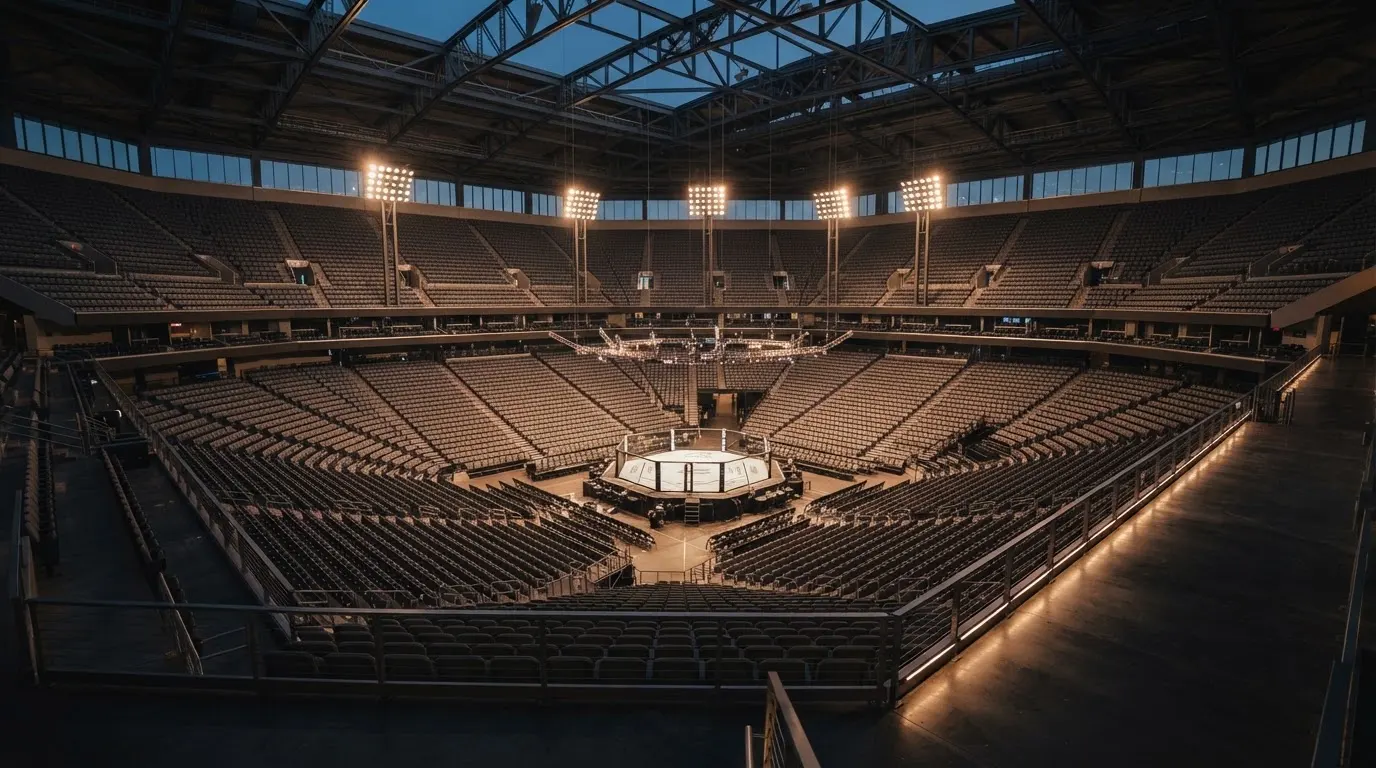
Method of victory splits the result into how the bout ends: decision, knock-out or technical knock-out, submission. Each method carries its own price against each fighter, and the prices add up to a different margin than the match-result market. A bookmaker holds more on some methods than others because fewer fights end that way — knockout and submission are simply less common than decision, and the prices reflect that scarcity alongside the bookmaker’s edge.
Round-specific markets ask a second question on top of the winner: who wins in round one, who wins inside the distance, who wins by decision. A price on “fighter A in round three” has two pieces of information embedded in it — the chance that fighter A wins the fight at all, and the chance the fight reaches round three. That compounding is why round-specific markets are usually the hardest to price beat. The market’s margin rises with each layer added.
Same-game multis and bet builders — offered by brands like 10bet and Betfred — let a bettor combine outcomes from one fight under one stake. Each leg carries the bookmaker’s margin; a same-game multi carries it on every leg, which makes the cumulative margin materially worse than a single bet on a single market at a single price. The convenience of one click costs the bettor exactly the legs’ combined margins.
Legality and regulation — what a Gambling Commission licence actually buys
Any operator whose remote facilities are used in Great Britain needs a Gambling Commission licence under sections 33 and 36 of the Gambling Act 2005 as amended by the Gambling (Licensing and Advertising) Act 2014. A Curaçao, Maltese or Gibraltar operating licence is not a substitute. Licensed operators come in two flavours: those whose sites end in .co.uk and those whose sites end in .com; the suffix is not a test of legality, and the Commission’s public register is. A bettor who only checks the domain misses brands that hold a proper GB licence. A bettor who checks the register sees which name is named against the licence.
Three things follow from a Commission licence that materially change what an MMA bet looks like. First, customers are verified before the first deposit or gamble — name, address and date of birth must be confirmed (this has been the rule since 7 May 2019). Anyone who values anonymity over regulatory protection will find the licence scheme itself the obstacle. Second, the licensed book is part of GAMSTOP, the national multi-operator online self-exclusion scheme that has been mandatory for online operators since 31 March 2020; self-exclusion runs six months, one year, five years, or five years with auto-renewal, with a further seven-year retention after the minimum period unless the customer asks to be removed. Third, the 10x wagering cap introduced on 19 January 2026 sits on top of every bonus a licensed book offers to a Great Britain customer. An MMA-focused offer with a 50x wagering requirement is automatically out at a GB-licensed book.
Credit cards are banned for gambling in Great Britain under LCCP condition 6.1.2 since 14 April 2020, including credit-card-funded e-wallet top-ups. Debit cards and bank-based payments are untouched by that rule. Cryptocurrency is a separate question: the Commission’s rules don’t forbid it but the major GB-licensed books tend to operate in sterling and haven’t marketed crypto deposits as a feature.
Betting tax sits on the bookmaker, not on the customer. General Betting Duty is currently 15% on the operator’s gross profits; from 1 April 2027 the remote rate rises to 25%, while UK horse racing, pool betting and in-person bets stay at 15% (HM Government policy paper of 26 November 2025). Spread betting is regulated separately — financial spread betting is the Financial Conduct Authority’s domain rather than the Gambling Commission’s — and the rates differ (3% on financial, 10% on other). What a bettor actually needs to know is that no tax line appears on the slip at any GB-licensed MMA book; a winning bet returns the stake plus the winnings with no deduction.
Safer gambling tools — what’s mandatory at a licensed book
GAMSTOP is the headline. Self-exclusion through GAMSTOP blocks the customer’s access to every GB-licensed online betting site and app, not just one. The scheme doesn’t cover betting shops, which run a separate offline register. A customer who wants full coverage signs up once and the licensed books enforce it.
Beyond GAMSTOP, four tools matter for MMA bettors specifically. Deposit limits let the customer set a fixed gross deposit ceiling on a time frame — daily, weekly or monthly. The first rules took effect on 31 October 2025 and a second phase is scheduled for 30 September 2026; the exact scope isn’t settled, and operators already offer voluntary limits at any level the customer picks. Reality checks are timed pop-ups inside the betting session that report stake and time played. Time-out is a short self-exclusion on a single account, distinct from GAMSTOP. Product restrictions allow the customer to lock specific products — for example casino or bingo — out of their own account while leaving the sportsbook usable.
The financial vulnerability check (LCCP condition 3.4.4, in force since 30 August 2024) is the rule that confuses bettors most. It triggers when the customer’s deposits minus withdrawals exceed £150 inside a rolling 30-day window, in force since 28 February 2025. When triggered, the book runs a public-record check — bankruptcy and county court judgments are the named examples — not an income check and not a credit-reference search. The financial risk assessments that the press calls “affordability checks” are a separate, staged set of obligations announced by the Commission, with no start date confirmed. A bettor who isn’t asked for payslips at the smaller operators yet may be asked at the larger ones as the rules harden.
Help is independent of the bookmaker. GamCare runs the National Gambling Helpline; GambleAware funds treatment and advice; the NHS runs gambling clinics in several regions; Gamblers Anonymous runs peer-support meetings. The bookmakers themselves are required by licence to point customers at those services and to publish safer-gambling messaging. Unibet, for example, lists BeGambleAware, GamCare, GAMSTOP, Gambling Therapy and the Betting and Gaming Council on its safer-gambling page.
Crypto and MMA betting — what an unlicensed route costs
Mixed martial arts draws a particular kind of bettor and a particular kind of operator. Crypto-native sportsbooks have marketed MMA lines directly to that audience since the late 2010s. None of the brands in the comparison table above is in that group; the Commission’s rules on customer verification and source-of-funds checks push licensed books away from crypto deposits as a feature, and the major GB-facing sportsbooks haven’t promoted them.
That gap has an upside and a downside, and a bettor needs both on the page. The upside is exactly what the licensed frame requires: identity verification before the first deposit, GAMSTOP coverage, the dispute-resolution route, and the 10x bonus cap that no offshore book is bound by. The downside is that no-payment-route-light option does not exist at a GB-licensed MMA book in the same shape that crypto bettors are used to. Bitcoin, Ethereum and stablecoin deposits either aren’t an offered method or are processed through a card-funded e-wallet and routed under the credit-card ban conditions.
The cost of using an unlicensed crypto book instead is the sum of what its licence regime doesn’t have. No GAMSTOP coverage means a customer who has self-excluded can still place MMA bets there. No Commission complaints route means a dispute over a voided selection is decided by the operator’s own terms and the operator’s own resolution — there is no ADR body above the book. No British consumer redress means a frozen withdrawal is hard to chase across jurisdictions. The 10x bonus cap doesn’t apply and a casino bonus with a 50x requirement remains possible; a customer who values the cap from a compliance perspective gets nothing of the kind offshore. The transparency of the price ledger is a real upside of crypto books — every line is on a public chain — and that upside is paid for by the loss of every protection the licensed regime guarantees.
For a UK-resident bettor, the practical choice is between the licensed book that requires verification and the offshore book that doesn’t. Neither is risk-free; one is regulated, the other isn’t. The rest is a personal trade-off.
Bonuses and free bets — the arithmetic the marketing copy skips
A “free bet” is a marketing name for a credit the book stakes on behalf of the customer. The two facts that distinguish it from cash are these: the stake is usually not paid back with the win, and the credit comes with conditions. The conditions at a GB-licensed book are capped on the betting side at 10x wagering since 19 January 2026 — a £10 bonus at 50x would need £500 of qualifying bets; under the cap the same £10 bonus needs at most £100 of qualifying bets. Mixed-product promotions (an offer that requires gambling across two or more product types like betting and casino) are banned at licensed books under the same package.
Free bets at a licensed GB book typically expire. QuinnBet credits are valid for 7 days from credit and can be used on any market at odds of 1/2 (1.5) or greater, with maximum odds of 50/1; straight accumulators are allowed but Trixies, Patents and Yankees are not. Dabble’s first-deposit free bet expires after 7 days with the stake not returned on a win. The exact expiry, the minimum odds, and the markets excluded all live in the bookmaker’s own terms.
The value of a free bet whose stake is not paid back is the average edge the bettor gains across many such bets. A £10 free bet at odds of 6/4 (2.50 decimal) on a market whose payout share is, say, 95% gives an expected return of £10 × (2.50 − 1) ÷ 2.50 × 0.95 — the £10 free bet is worth £5.70 on average. The same £10 staked on a market with a 90% payout share is worth £5.40. The mechanic stays the same; what shifts is the market’s margin.
Sign-up offers sit on top of the wagering cap. A £30 in free bets after a £10 qualifying bet is a price for opening the account, not a gift. The qualifying bet at the qualifying odds is the cost; the free-bet terms above are the upside. A bettor who reads only the headline figure and not the qualifying stake, the expiry and the markets excluded ends up paying for an offer they could have skipped.
Boosted odds — sometimes called “enhanced odds” or “price boosts” — look like free money until the price is checked. A “boosted” price from 5/2 to 4/1 (3.00 to 5.00 decimal) is real extra payout if it lands; the catch is that the boost is usually on the longest line on the card and any winnings above the original price often return as free bets, not cash. That, again, is the gamble’s the cost being met by the customer, structured into a promotion that reads as generosity. Read the settlement terms.
Mobile and app — what actually matters for an MMA bettor on a phone
An MMA fight card often runs late at night UK time, and a bettor watching the stream on a phone has roughly two-and-a-half minutes between rounds to react to in-play markets. The app has to keep up with that clock. Five things differentiate a strong MMA app from a serviceable one.
The first is in-play latency. Prices on an MMA fight move round by round; the round winner settles, the bet then reopens and the price on the next round updates. A lag between rounds means a bettor placing an in-play bet after the bell has rung is a bettor confirming what their eyes already saw — too late to find a price. App store screenshots and reviews are no proof; the only test is in-play use during an actual fight.
The second is bet builder on one fight. 10bet lists Bet Builder; Betfred lists Bet Builder. Fitzdares and Ladbrokes offer accumulator-style products. A “same-game multi” on MMA is a different product from a standard acca: the legs of one fight compound, and the builder needs to keep the price accurate as legs are added or removed.
The third is cash out speed. Cash out is a function the bookmaker offers to close a bet before settlement at a price it sets. The price is its own second layer of margin on top of the bet’s opening margin. A book that advertises cash out without specifying the markets it covers — fight winner, method of victory, round totals — hasn’t said what it offers.
The fourth is live streaming. Where the book has rights to a card, in-app streaming replaces the switch between the bet slip and the broadcaster. DragonBet streams racing directly inside its app. For MMA the rights are harder, since UFC and other major promotions sit behind paywalls; Lottoland’s app is one example of a multi-product book that combines sports, casino and lottery in a single app with no implication that all of them are equally well-stocked.
The fifth is account tools inside the app. Reality checks, deposit-limit changes, time-out and GAMSTOP short-exclusion should all be reachable in the same place the bet is placed. Unibet’s app lists those tools alongside BeGambleAware, GamCare, GAMSTOP, Gambling Therapy and the BGC. A book that hides safer-gambling tools two menus deep isn’t following the spirit of the licence, even if it is following the letter.
Live betting and cash out — how in-play markets settle on MMA
Live betting on MMA is mostly a round-by-round product. The first few markets price fighter A and fighter B straight; the main card expands into method of victory, next round winner and going-the-distance. A fight that ends inside one round has its in-play market suspended throughout the stoppage and settled on the ruling.
Cash out is the bookmaker’s offer to settle the bet early at a price it sets. The offer is always lower than the price the same bet would clear at if it ran to fight end, because the book has priced in the chance the fight ends in the next round. A bettor who takes the early cash out on a winning bet pays the bookmaker twice: the original margin on the bet, and the second margin on the cash out. Cash out is a tool for managing a specific position, not a steady source of edge.
The GB bookmaker cluster on the table covers in-play and cash out to varying depth. Betboro offers both in-play and cash out on football, racing and tennis with boosted odds on selected singles. DragonBet offers cash out both in-play and pre-match. Betfred’s app adds Sub Switch — a feature that lets the bettor substitute one fighter in a multi-leg bet when a card reshuffles late. Each book has a different shape; the right shape is the one that matches how a bettor actually uses it.
Live betting profitability is its own subject and not what this page sets out to answer. The honest summary is that in-play markets on MMA are thinner than on football or tennis, which means each price reflects a smaller number of bets and tends to carry a wider margin. The bookmaker also has the information advantage of seeing the fight in real time at the venue; a bettor watching a stream on delay is reacting to a market that has already moved.
Strategy — what a “betting model” actually does, and why no model wins every time
A model is a set of rules that takes inputs — recent form, training camp length, age, reach, weight cut, strike and grappling statistics — and produces a probability for each fighter. The model’s probability sits next to the bookmaker’s implied probability, and any fight where the model’s line is higher than the book’s is a “value bet”. Value betting is the most consistent strategy the data supports, and it is also the strategy that requires the bettor to do the work that no tipster can do for them: estimate the chances themselves, accept that the estimate is wrong often, and accept that the long-run edge is small.
Bankroll discipline sits underneath any strategy that works. A flat stake of one or two per cent of bank on any single bet means a normal losing streak doesn’t blow the budget; a Kelly-criterion stake scales the bet up when the edge is larger and down when it is smaller. The Kelly formula is mathematically right more often than any fixed stake, but the variance is steeper — a misjudged edge produces an oversized bet. Most professional bettors run a fractional Kelly, betting a quarter or an eighth of the theoretical optimum, to keep the variance manageable.
What a strategy can’t do is predict who will win. A bettor who looks back at the model and sees it landed 7 of 10 bets on the card has experienced a normal week; a bettor who thinks the model is broken because it landed 3 of 10 has experienced a normal week in the other direction. Expected-value strategies win at the long-run aggregate, not at the next fight.
Staking plans that promise to recover losses — martingale, Fibonacci and their relatives — are not edges. They are sequences that double the stake on each loss, capping them at the bookmaker’s stake ceiling and exhausting the bankroll long before the sequence “catches up”. The bookmaker’s commission doesn’t disappear; the next loss is paid for by the stake the same way as the first.
The honest statement a tip page needs to make is that no model guarantees the next card. A model that lands at the implied probability from a 1.91 / 1.91 line is breaking even before commission; a model that lands 55% of the time at the same line is a long-run winner. Both models can lose on the same Saturday.
Bet types and odds — how a price is read and why two prices on the same fighter are not the same bet
MMA odds on a GB-facing sportsbook print in fractional form by default: 5/1, 11/4, evens (1/1). The decimal form is odds-on (less than 2.00) on the favourite and odds-against (greater than 2.00) on the underdog. The conversion between fractional a/b and decimal is decimal = a ÷ b + 1. A price of 4/6 reads as 1.67 decimal; a price of 7/2 reads as 4.50 decimal.
Three prices on the same fighter are three different bets. The price on the match result of a three-way line is not the same as the price on a method-of-victory line on the same fighter, because method-of-victory adds the probability the bout is decided one specific way. The price on a same-game multi that includes the fighter and a round-specific line multiplies the two probabilities together with a margin on each, and the cumulative margin comes out higher than either single bet.
A single bet of £10 at 4/1 (5.00 decimal) returns £50 total — the £10 stake plus £40 winnings. A double at 4/1 and 3/1 (5.00 and 4.00 decimal) returns £10 × 5.00 × 4.00 = £200 total, with winnings of £190 after the stake. Each leg’s price carries its own margin and the cumulative margin compounds. The bettor pays the bookmaker twice when the legs price into the multi.
How the bookmaker’s margin sits inside the price
A bookmaker does not take bets on the chance each side of a fight wins. It takes bets on a margin inside that chance — the overround. On a two-way market priced at 1.90 / 1.90 (9/10 fractional on each side), the payout share per £1 staked is 1 ÷ (1/1.90 + 1/1.90) = 0.95, and the margin is 1 − 0.95 = 0.05, or 5%. The bookmaker keeps about 5p of every pound wagered across the whole market before settlement.
That same 5% margin looks tight against a 10% margin on another market and loose against a 2% margin on a heavily-traded market. MMA is a price-competitive sport at the bigger books but the long tail of UFC Fight Night cards and regional promotions is sharper; the wider the margin, the harder a price is to beat even when the bettor has a real edge.
The honest comparison a bettor can make is the payout share between books on the same fight. A 1.91 / 1.91 line gives a payout share of about 95.5%; a 1.85 / 1.85 line gives a payout share of about 92.5%. The price on each side has moved from 9/10 fractional to 17/20 fractional — roughly a tenth of a turn on each side. Across a year of betting that tenth compounds, and the difference between the highest payout share and the lowest on a card is the difference between losing slowly and losing quickly.
A smaller market — method of victory, round of finishing — typically carries a higher margin. A 5% margin on the outright price rises to 7-8% on the method-of-victory market, with the longshot methods the widest. The bettor chasing bigger prices on a market the book prices thinly is paying the bookmaker a tax that’s invisible until the bets are tallied.
A worked example. On a fight priced at 1.90 / 1.90 (9/10 on each side), a £10 stake on the favourite returns £19 total (£10 profit on a winner; £10 returned stake). Across a balanced book of 1,000 bets of £10 each, the bookmaker collects £10,000 in stakes and pays out roughly £9,500 in returns, keeping £500. That £500 is the operating margin; the bettor’s take on a true 50/50 fight is the gap between the book’s view of the fighter (1.90 implied) and the bettor’s own model. Most models are wrong more often than they are right; the bettor with a model that lands 53% of the time at 1.90 is at break-even on the bets that didn’t land and slightly ahead on the ones that did, before the next card starts.
What each book in the comparison brings to MMA
The ten brands on the shortlist are on the page because they hold a Gambling Commission remote licence and operate in the British market. They are not ranked; they are compared on what their public materials say about MMA-relevant features. The verdict at the end of each block is the judgement of how that brand’s shape lines up with the interests of an MMA-focused bettor.
Fitzdares — premium positioning, lighter on MMA than on racing
Fitzdares is licensed under Commission account 400 (remote licence 000400-R-103839-030), with the licence held by Fitzdares Limited. The brand is positioned as a premium sportsbook covering horse racing, football, tennis, rugby, cricket, golf and American football, alongside accumulators, Lucky 15s and specials, with in-play live odds and cash out. Antepost markets — bets placed ahead of an event’s runners-and-riders being confirmed — are listed on the App Store page.
The verdict. Fitzdares is a strong racing book with a clearly defined product. MMA is not on the named sports list in the App Store material, and the depth of UFC Fight Night lines on the site isn’t established by the materials this guide has to draw on. For an MMA bettor the brand is a name on the register rather than a destination; for a customer who places the occasional bet between Premier League weekends and wants a premium app, the shape fits.
10bet — Cash Out, Bet Builder and Live Streaming across three sports
10bet is licensed under Commission account 43173 (remote licence 043173-R-322899-023), held by Blue Star Planet Limited. The bookmaker’s sportsbook covers football, tennis and horse racing, with Cash Out, Bet Builder and Live Streaming listed on the app page. Live Streaming is the feature that sets it apart on the comparison: rights to live in-play video of selected events let a bettor react to a fight without switching apps.
The verdict. The three-sport coverage (football, tennis, horse racing) doesn’t include MMA on the named list. The app’s three flagship tools are relevant for MMA in principle — Cash Out and Bet Builder apply to any sport with multiple selections — but the volume of MMA markets and how deep the in-play prices run is the proof that matters. Bet 10bet on football, tennis and racing; check MMA coverage directly on the card before committing.
Star Sports — independent British bookmaker with a multi-product app
Star Sports is licensed under Commission account 9177 (remote licence 009177-R-104555-019), held by Star Racing Limited. The brand positions itself as the UK’s leading independent bookmaker, with virtual sports, casino and live casino alongside the sportsbook. Independence, in the betting market, usually means family-owned, smaller marketing budget, and a sharper line on racing than the major chains.
The verdict. Star Sports is a racing-led book by reputation and the materials don’t show MMA in the named product list. The value for an MMA bettor is the same as for any other book on the register: the licence ensures the regulated book has the safer-gambling tools and the dispute-resolution route. The depth of MMA markets is the gap the bettor checks on the card before betting.
QuinnBet — free-bet terms spelled out cleanly
QuinnBet is licensed under Commission account 61011 (remote licence 061011-R-335683-004), held by QuinnBet (Gibraltar) Limited. The bookmaker’s free-bet terms are clear: 7 days from credit to use, minimum odds 1/2 (1.50), maximum odds 50/1 (51.00 decimal), straight accumulators allowed and Trixies, Patents and Yankees excluded. The clarity of those terms is what sets QuinnBet apart on the comparison.
The verdict. QuinnBet is the brand on the register whose free-bet terms a bettor can read without meeting a footnote. For MMA the value is the same arithmetic — a 7-day free bet at the quoted markets, with no special MMA conditions established — applied to the bookmaker’s own fight-card pricing. The expiry at 7 days means the bettor uses the credit fast or doesn’t use it.
Ladbrokes — Best Odds Guaranteed, odds boosts and Acca Boosts across racing
Ladbrokes is licensed under Commission account 54743 (remote licence 054743-R-330863-014), held by LC International Limited. The bookmaker offers odds boosts, Best Odds Guaranteed on UK and Irish racing, in-play betting and Acca Boosts. Best Odds Guaranteed is a policy under which a customer who backs a horse (or greyhound) at one price gets paid at the starting price if the SP is bigger; the rule is racing-specific.
The verdict. Ladbrokes is a major-chain book with the broadest marketing footprint on the page. BOG is a racing feature and doesn’t apply to MMA; the in-play product and Acca Boosts do. For MMA the question is depth of fight-card markets — number of methods of victory priced, number of round-specific markets, in-play volumes — and none of those is established by the materials this guide can draw on.
Betboro — safer-gambling tools spelled out alongside the offer
Betboro is licensed under Commission account 44181 (remote licence 044181-R-324363-007), held by Webmedia Development N.V. In-play and cash-out sit on football, racing and tennis, boosted odds on selected singles from £10 stakes run alongside, and the safer-gambling tools — deposit limits, reality checks, self-exclusion — are listed in the brand’s own materials. The careful listing of safer-gambling tools is what sets Betboro apart on the page.
The verdict. The materials name football, racing and tennis as the sports with in-play and cash-out; MMA is not on the named list. For MMA the value is the licensed book with full safer-gambling tools in the account menu. The product breadth on MMA specifically is what the bettor verifies on the card before staking — the licence is the floor, not the ceiling.
DragonBet — cash out and live racing streaming in one app
DragonBet is licensed under Commission account 64908 (remote licence 064908-R-339041-003), held by DragonBet Ltd. Cash out both in-play and pre-match is offered alongside live streaming of racing. Live streaming of racing inside the app is what sets DragonBet apart.
The verdict. Streaming of racing doesn’t extend to MMA without a separate rights deal, and the materials don’t establish MMA streaming inside the DragonBet app. For MMA bettors the value is the licensed book with cash out on the markets that are offered, and the app is the easier evaluation if the bettor already uses racing streaming.
Dabble — clean welcome-offer terms with a short free-bet expiry
Dabble is licensed under Commission account 65677 (remote licence 065677-R-340363-005), held by Dabble Sports UK Ltd. The first-deposit welcome offer is “Bet £10, Get £10 in Free Bets” with a 7-day free bet expiry and stake not returned on a win. The clean structure of the offer is what sets Dabble apart.
The verdict. Dabble is the brand on the register with the clearest welcome-offer line. The £10 qualifying bet at the qualifying odds is the cost; the £10 free bet on 7-day expiry is the upside. The 10x wagering cap at GB-licensed books applies, and the wagering on the free bet is the value the customer does the arithmetic on before committing.
Betfred — Bet Builder, Sub Switch and Racing Post data in the app
Betfred is licensed under Commission account 39544 (remote licence 039544-R-319290-010), held by Petfre (Gibraltar) Limited. The app features Bet Builder, Sub Switch, Racing Post form data, Extra Places, live casino and bingo. Sub Switch — the ability to substitute a fighter in a multi-leg bet when the card reshuffles — is a feature MMA bettors run into more often than racing bettors do.
The verdict. Betfred is the brand on the register with the most racing-and-form tools, and MMA-shaped features (Bet Builder in particular) apply across the bookmaker’s markets. The depth of UFC markets specifically is what the bettor checks on the card before staking; the licence is the floor. For a bettor who already uses Racing Post data, the brand is the natural extension into MMA.
Kalooki Sportsbook — instant withdrawals and Best Odds Guaranteed on racing
Kalooki Sportsbook is licensed under Commission account 57730 (remote licence 057730-R-333396-005), held by Kalooki Sportsbook Limited. The bookmaker advertises instant withdrawals by bank transfer within minutes, Best Odds Guaranteed on UK and Irish racing, in-play betting, daily boosts and extra place races. The instant-withdrawal promise (instant by the book’s own description) is what sets Kalooki apart.
The verdict. Instant withdrawals are a major operational claim — a withdrawal of the winnings to a bank account inside minutes rather than days is the difference between having the money and waiting for it. The terms behind the claim (the time of day, the verification status of the account, the £10,000 ceiling and the specifics of the “instant” definition) live in Kalooki Sportsbook’s own terms. For MMA the value is the licensed book with a competitive payout speed; the MMA-specific market depth is what the bettor verifies on the card.
How a punt on an MMA fight is worked out — decimal and fractional in plain English
The price of a bet is the multiple applied to the stake. A £10 stake at 4/1 (5.00 decimal) returns £50 total (£40 winnings plus the £10 stake). The same bet in accumulator form, with a second leg priced at 3/1 (4.00 decimal), returns £10 × 5.00 × 4.00 = £200 total (£190 winnings plus stake). Each leg’s price carries the bookmaker’s margin and the cumulative margin compounds.
Each-way betting is two bets of equal stake: one on the fighter to win, one on the fighter to “place” — to win or finish inside a stated position. A £10 each-way bet at 5/1 (6.00 decimal) costs £20 in total and pays out on the win leg if the fighter wins and on the place leg if the fighter places. The place terms depend on the market and the operator; the stake is doubled either way and that is the price a bettor pays for the place leg’s insurance.
An MMA-specific same-game multi combines multiple legs from one fight. A “to win in round three” multi on one fight is itself a same-game multi because it prices the chance of the fight reaching round three on top of the chance the named fighter wins. Same-game multis are margin compounds and the bettor pays the cumulative margin on each leg.
Picking a market — what each bet type rewards
The match-result market is the easiest to read because the price is closest to the probability the bookmaker assigns to each fighter. It is also the market the bookmaker holds the lowest margin on, because football-style “1X2” markets are heavily traded across the betting industry.
Method of victory is the market where an informed bettor does the work. A bettor who knows that a fighter finishes inside the distance on 70% of recent cards and the bookmaker’s price implies 50% has a model edge that is wide enough to overcome the market’s higher margin. The information is harder to find and harder to update, which is why the edge exists.
Round-specific markets are the hardest to price beat. A “to win in round three” bet has to clear two thresholds — the fighter wins and the fight reaches round three — and the cumulative margin compounds. A bettor with a strong view on one of the two is better served splitting the bet into two singles than combining them in one slip.
Same-game multis carry the convenience of one stake on multiple legs of one fight. The convenience costs the cumulative margin across the legs. A bettor who likes one leg of the multi is better served betting the single than buying the multi.
What “free” actually means in an MMA book offer
A £10 free bet in a licensed GB book has two costs. The first is the qualifying bet the bookmaker requires to release the credit — typically a £10 wager at minimum odds. The second is the value the credit gives up at settlement. A free bet whose stake is not returned is worth stake × (odds − 1) ÷ odds on a winning bet, with no return on the stake itself.
A £10 free bet at 5/1 (6.00 decimal) on a winning bet returns £50 winnings plus nothing on the stake. Staked in cash the same bet returns £60 total. The £10 difference is the cost the customer paid for the credit. Whether the credit is “worth it” depends on whether the qualifying bet, the 10x wagering cap at GB books and the free-bet expiry make it worth the trouble.
Sign-up offers are the largest credit a GB book will give a customer. The structure typically pays the credit in tranches (e.g., £30 in free bets after a £10 qualifying bet) and the expiry, minimum odds and excluded markets shrink the actual value. The terms page is the only place the value lives in full.
Odds boosts and price boosts are a different beast. A “boosted” price of 5/2 (3.50 decimal) up to 4/1 (5.00 decimal) on a single bet returns extra winnings on the win. The catch is that the boost often pays out as free bets with the same expiry as a sign-up offer, and the customer trades the cleanest part of the win (the cash) for the bonus-credit part.
How MMA markets settle, in practice
A knockout settles the method-of-victory market as KO/TKO/DQ on the winning fighter. A corner stoppage between rounds is settled as TKO. A submission is settled as submission on the winning fighter. A decision is settled unanimous, majority or split, and the result-specific decision matters on the market that asks for it.
A bout that ends in no contest because of an unintentional foul typically voids all bets on the fight. The settlement rule for each market lives in the bookmaker’s own terms; bookmakers settle the same no contest differently across markets, and a bettor who has a multi on the card checks the settlement terms before staking.
A walkover — one fighter fails to make weight or is replaced — is settled by most books as a win for the fighter who turns up. Method-of-victory markets are typically voided. A weigh-in miss is announced publicly before the fight; a bettor who checks weigh-ins on the day of the card protects themselves against settled-as-void surprises.
Frequently asked questions
How does MMA betting work?
MMA betting works by predicting the outcome of a fight across three market families: the match result (fighter A, fighter B, or draw), the method of victory (decision, knockout or technical knockout, submission, disqualification), and round-specific markets (who wins in round one, who wins inside the distance, over/under round total). Each market is priced separately, and each carries the bookmaker’s margin. The price the bookmaker offers is its implied probability plus the margin; a price of 4/6 (1.67 decimal) on a fighter implies a 60% chance of winning with the margin included.
Where can I find high-odds prices on MMA fights?
Higher odds sit on the underdog in any market and on method-of-victory or round-specific markets rather than the match-result market. The bookmaker’s margin on those markets is wider, so the price is longer and the value harder to find. To find MMA fights with high odds a bettor opens the card at the licensed book of choice, sorts by method of victory, and compares the price against the underdog’s recent results and the books on either side of the bet.
Are weekend MMA fights good value bets?
A weekend card is the same kind of card as a midweek one — the same market structure, the same margin. The difference is volume: more bets are placed on the bigger card and the bookmaker’s prices are sharper because more customers have looked at them. A small card on a Tuesday night is where the underdog prices sit longer; a bettor with a model edge sees more value there than on the well-priced Saturday card.
What is a value bet and why is no tip ever certain?
A value bet is any price above the bettor’s own estimate of the true probability of the outcome, with the bookmaker’s margin taken out. The math is straightforward — if the bettor’s model says a fighter has a 60% chance of winning and the bookmaker’s price implies 50%, the bet is a value bet regardless of who wins. No tip is ever certain because the bookmaker is pricing against real uncertainty; even a heavy favourite at 1/100 (1.01 decimal) loses about one in a hundred times.
What is the bookmaker’s margin and how can it be seen in the odds?
The bookmaker’s margin is the share of every pound wagered that the book keeps across the whole market. To see it, add up the implied probability of each outcome on a market and subtract from 100%. On a two-way market priced at 1.90 / 1.90 (9/10 on each side), the implied probability is 52.6% on each side, the sum is 105.3% and the margin is 5.0%. A market with a sum of 102% has a 2% margin; a market with a sum of 110% has a 10% margin.
How is the return on a bet worked out from the stake and the odds?
The return on a single bet is stake × odds, where odds is the decimal price (4/1 = 5.00, 9/10 = 1.90, evens = 2.00). The profit is stake × (odds − 1). For an accumulator, the legs’ decimals multiply into one and the return is stake × that product. Each-way bets are two bets of equal stake, one on the win and one on the place, with the place terms set by the bookmaker.
Combat & motorsport – Fast Payout
Content created by the «Fast Payout» team
