
Snooker Betting Tips
 Available in US
Data current as of 27 October 2026 and checked against the Gambling Commission’s public register.
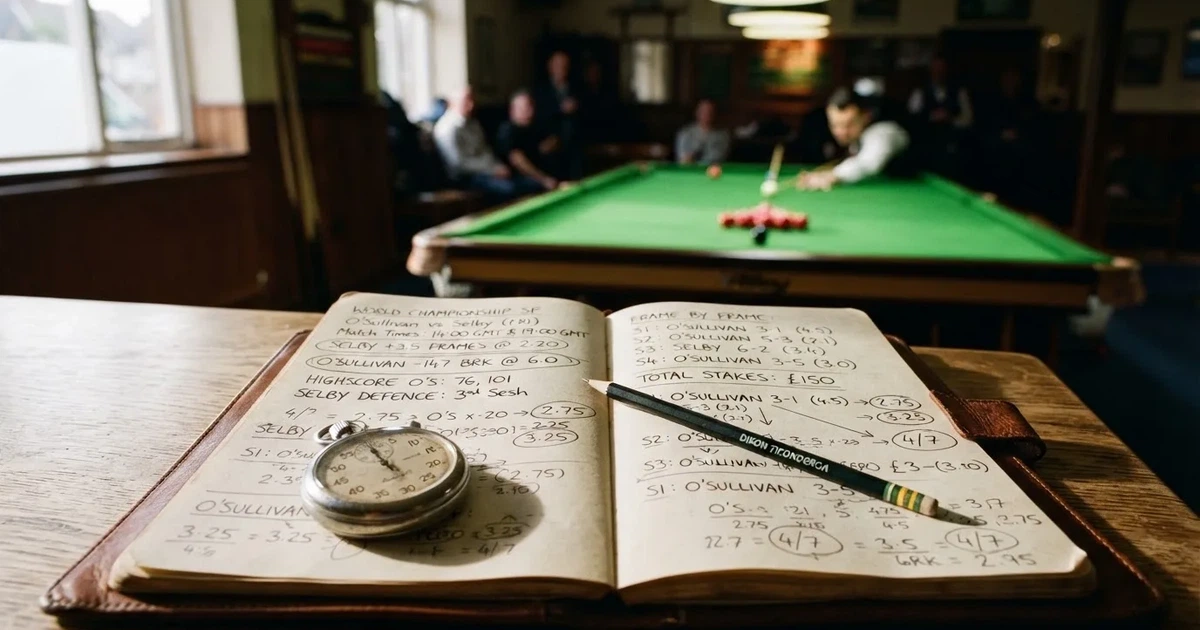
Snooker looks like a quiet sport. Two players, twenty-two balls, no clock, no rowdy crowd noise drowning out commentary. The break the commentators keep whispering about is 147. The table runs 12 feet by 6 feet, and the World Championship final, every spring, plays to a best-of-35 at the Crucible Theatre in Sheffield. None of that, on its own, makes a betting guide. What does is the gap between how predictable the match looks and how unpredictable the next frame turns out to be – a gap the bookmaker prices into every market it puts up.
This guide is for the punter who has watched enough snooker to know a century break from a 147 attempt, and who wants to understand why no tipster, no matter how loud, can promise a winner. It walks through how to read form and head-to-heads, how to judge whether a price is a value bet once the margin is stripped out, how staking and bankroll discipline sit beside tip-following, and what the betting site itself costs you in terms it does not always advertise – a margin in every price, a free bet that is not what its name says, an in-play book that closes at the worst possible moment.
The licensing frame is the one all of this sits inside. Any bookmaker serving customers in Great Britain needs a Gambling Commission licence, and the Commission’s public register is the only test of who holds one. The ten operators reviewed here are all on that register, every one of them bound by the same player-protection code and every one of them taking part in GAMSTOP.
The shape of the game that shapes the betting
A snooker match is a sequence of independent frames. Each frame starts with the balls racked, the cue ball in the D, the player taking a shot. A frame ends when a player pots the black off the final spot, or when one of them concedes. Frames are not equal – a player who wins the first frame still has to win the next one – but a match is the sum of the frames inside it, and a tournament is the sum of the matches.
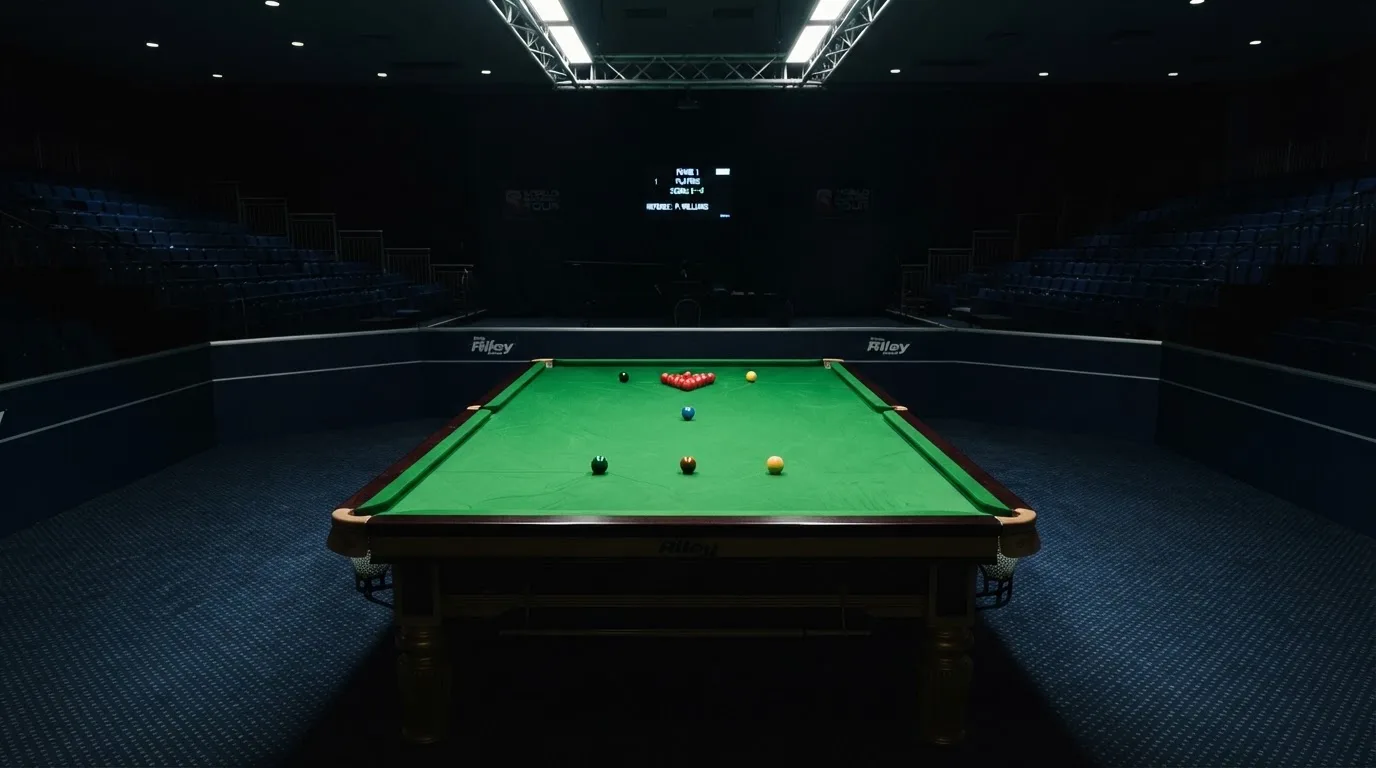
Most professional matches are best of 7, 9 or 11 frames. The World Championship stretches from a best-of-19 first round to a best-of-35 final. That range matters for the betting market: a best-of-7 gives a single hot session a chance to swing the result; a best-of-35 swallows it. A punter backing a heavy favourite over a shorter format is paying for the favourite to win in a small sample. Over a longer format, that same favourite just has to be the better player twice in a row on the same day, and the price often does not reflect how much harder that is.
Frames themselves do something useful for the form reader. They produce countable events – breaks of 50, 70, 100, 147; centuries; centuries in a row; a frame won from a starting position in the middle of the table; a foul on a colour that costs the frame. Those events do not predict the next frame, but they tell you who is in form this season, who is struggling to clear the colours, who has lost the potting touch under pressure.
The two records that matter most in 2026 snooker are Ronnie O’Sullivan’s seven World Championship titles (tying Stephen Hendry’s modern-era record) and the recent shift at the top of the game – Wu Yize beat Shaun Murphy 18-17 in the 2026 final at the Crucible, taking the £500,000 winner’s share of a £2,395,000 prize fund. The era when the top of the game was two or three names is gone, and the field at a ranking event now has six or seven players who can win it. That alone makes outright betting harder than it looked five years ago, and the bookmaker’s prices have widened accordingly.
How a prediction is actually built
A tip is not a hunch. It is the output of a process, and the process has four inputs that anyone can check.
The first is recent form, taken from the last few tournaments. A century rate above 60% across a season says the player is potting the ball cleanly. A century rate below 40% says the cue action is off, or the head is. Form drops out of the data fast – three months of poor results at the start of a season can become irrelevant by Christmas – so the rolling window matters more than career averages.
The second is head-to-head record, and it is more useful than most punters give it credit for. Some players simply struggle against a specific opponent’s style: a grinder who plays every safety for two minutes and never gives a free ball is poison to a fast, attack-minded player who wants a frame over in 20 minutes. The head-to-head captures what neither player’s season form shows.
The third is the venue. The Crucible in Sheffield has its own conditions – the crowd is close, the lighting is steady, the table plays slower than some of the tour’s other venues. A player who thrives in Shanghai or Riyadh might find the Crucible a different kind of test, and a player who has won there four times already carries that knowledge into the first round.
The fourth is the draw and the run-in. A best-of-35 final gives a player time to find their game; a best-of-9 semi-final against a confident opponent gives them very little. The punter who reads the bracket before the tournament starts knows who has the path.
A tip is the join of those four. None of them is a guarantee, and the punter who treats any one of them as decisive is the punter the bookmaker makes money from. The four together narrow the field, narrow it again, and the price on the eventual favourite often reflects that work already – which is why “this player is my tip” without a price is half a sentence.
What a value bet is, and why no tip is ever certain
A value bet is a price bigger than the true probability of the event, once the bookmaker’s margin is taken out. That is the whole definition, and it is the only definition that matters.
If a player’s true chance of winning a frame is 60%, and the bookmaker is offering 1.70, the implied probability is 1 ÷ 1.70 = 0.588, or about 59%. The price is shorter than the true chance – no value, do not back. If the same player is available at 1.85, the implied probability is 54%, and a 60% chance is a value bet. Over many such bets, the punter profits. Over one bet, anything can happen – the 60% chance loses four times in a row more often than a punter who has not run the numbers believes.
This is the first reason no tip is certain. The bookmaker has already priced in the public’s view of the match – the favourite Ronnie O’Sullivan is to face is shorter than his true chance because the punters who want to back O’Sullivan have already done so. The value, if there is any, sits on the outsider, and it is thin.
The second reason is variance. Snooker matches are short. A best-of-9 is five frames. A 60% favourite in each frame still loses one match in five. A 55% favourite loses one in three. A punter who picks three favourites at 1.70 and watches all three lose is not unlucky in any cosmic sense – the outcome falls inside the math.
The third reason is the information the punter does not have. A player who looked slow in practice might be ill, might be distracted, might be playing through a wrist problem the broadcast has not mentioned. The bookmaker has access to a betting exchange’s pricing and to live data feeds; the punter has the broadcast and the form table. The gap is real.
The fourth reason is the bookmaker’s margin, which sits inside every price and which no punter can avoid. A 5% margin means a 50/50 match is priced at 1.90 / 1.90, not at 2.00 / 2.00, and the punter who backs the favourite at 1.90 is paying the margin on every bet, whether the bet wins or loses. The margin is the cost of being in the market at all, and it is the reason a punter who picks winners at the true probability still loses money.
The margin, in plain numbers
The margin is what the bookmaker keeps of every pound staked on a market. It is built into the prices, so it is invisible until you pull it out.
Take an illustrative two-way market priced at 1.90 / 1.90. The implied probability of each outcome is 1 ÷ 1.90 = 0.5263, or 52.63%. The two probabilities add up to 105.26%, not 100%. The extra 5.26% is the margin. Stated as a band, this kind of market sits between 4% and 6% on a typical snooker match-winner market – tighter than a football 1X2, where the three-way market carries a bigger margin.
How that band works in practice: a market at 1.90 / 1.90 pays £1.90 on every £1 staked if the bet wins, returns nothing if it loses. The punter who backs the favourite ten times at £1 and wins six is up £1.40 – £11.40 in returns against £10 in stakes. The punter who backs five times and wins three is down £2.30. The margin is doing its quiet work on both sides.
The arithmetic belongs to the writer of this guide, and the page states the result as a band rather than a single number because the margin varies by bookmaker, by tournament, by the time before the off, and by whether the market is match-winner, frame-winner, total frames, handicap, or a same-game multi. No bookmaker publishes its snooker margin the way a supermarket publishes a price, and the punter who wants the exact figure for a particular match has to do the calculation from the prices shown.
The bookmaker’s edge and where it shows
The margin is the bookmaker’s edge on every market. The punter’s edge, when there is one, is information – a view of form, of head-to-head, of venue, of price movement – that the market has not yet priced in.
Three places the margin shows in the snooker market:
First, in match-winner prices. The favourite is priced short enough that backing the favourite rarely makes money over a season, even at a true win rate above 55%. The outsider is priced long enough that backing the outsider is a lottery, with the margin eating further into any edge.
Second, in frame betting. The first-frame winner market is a coin flip with a margin baked in – the favourite to win the first frame is rarely priced above 1.60 even when the match favourite is much shorter. Over a long session, frame betting eats the bankroll faster than match betting because the variance is higher and the margin is the same.
Third, in the totals market. Total frames over/under at a best-of-11 is a market the bookmaker prices confidently because the data is rich. The punter who thinks they have spotted an edge on total frames has usually spotted the margin and mistaken it for value.
The way to see the margin is to add the implied probabilities. Two prices that add to 103% carry a 3% margin. Three prices that add to 107% carry a 7% margin. Anything over 105% on a snooker two-way market is heavy; anything under 103% is unusually tight and worth a closer look.
Reading price movement
Prices move. A player priced at 2.50 to win their first-round match on Monday and at 2.10 by Friday morning has been backed hard, and the bookmaker has trimmed the price to protect the book. The punter who watches the price shorten knows two things: the market thinks something has changed about the player’s chances, and the value, if it existed at 2.50, has shrunk or gone.
The reverse is true for a player drifting from 3.00 to 4.50. The market is shedding that player’s chances, and a tipster who wants to ride against the drift has to have a reason – an injury the market has overreacted to, a head-to-head edge the market has ignored, a venue that flatters the player more than the form table shows.
What the price never tells the punter is whether the bookmaker is right. The bookmaker has access to the betting exchange and to a settled-position algorithm the punter does not have. The price the bookmaker posts is a compromise between the public’s view and the bookmaker’s risk, and the punter who reads price movement as the market’s verdict is reading one signal out of several.
Bankroll, staking and why discipline beats the tip
Bankroll is the cash the punter has set aside for betting and is prepared to lose. Staking is how much of that bankroll goes on each bet. Discipline is sticking to the staking plan when the bankroll drops.
Three staking plans sit at the heart of the snooker market:
Flat staking – the punter risks the same amount on every bet. £10 a bet, regardless of price or confidence. The plan is dull, and that is the point. It survives losing runs because no single bet blows the bankroll.
Percentage staking – the punter risks a fixed percentage of the current bankroll, usually 1% to 3%. A £500 bankroll at 2% is a £10 stake. After a £50 win the stake rises to £11. After a £50 loss the stake falls to £9. The plan compounds with winning and shrinks with losing, which is what protects the bankroll through a cold streak.
Kelly staking – the punter risks a fraction of the bankroll based on the perceived edge. A 5% edge at price 2.00 is a 5% Kelly stake. The plan is mathematically optimal but volatile, and most professional bettors stake half-Kelly or quarter-Kelly to dampen the variance.
The discipline sits in the staking, not the picking. A punter who picks at a 55% true win rate and stakes 10% of the bankroll on each bet will go bust, because the variance on a small sample is wider than the edge. A punter who picks at the same 55% and stakes 2% will survive long enough for the edge to show. The tip is half the work; the staking is the other half.
What a free bet actually pays
A free bet is not what its name says. The stake is usually not paid back with a win. A £10 free bet at odds of 3.00 pays £20, not £30 – £10 of profit at 3.0, minus the £10 stake that did not come back. A punter who reads “free bet £10, win £30” is reading a headline, not the terms.
The cost of the free bet is what the bookmaker has put behind it. A bookmaker that hands out £100 in free bets and sets the wagering requirement at 10x the bonus has tied £1,000 of qualifying bets to the offer. Those £1,000 are bet at the bookmaker’s margin, and the punter who clears them at the true win rate is paying the margin on £1,000 of stakes. The expected cost is the margin times the turnover, and that is the cost of taking the free bet, before the free bet’s own value is counted.
The promotion rules in force since 19 January 2026 cap wagering requirements at 10x, so no licensed bookmaker can demand £5,000 of qualifying bets on a £100 bonus. The cap is a floor, not a ceiling: a bookmaker that demands £1,000 of qualifying bets on a £100 bonus is using the full cap. A bookmaker that demands £400 is using less than half.
The other rule that matters is mixed-product bans. An offer that asks the punter to bet on football to get free spins on a slot, or to bet on slots to get a sports free bet, is banned under the new rules. The free bet stays in the product it was offered in.
Bonuses, offers and what they really cost
Bonuses come in three shapes: cash, free bet and price boost. Each costs the punter differently.
A cash bonus is money the bookmaker adds to the account. It comes with a wagering requirement – a multiplier that turns £100 of bonus into £1,000 of qualifying bets at 10x. The punter who clears it at the true win rate pays the margin on £1,000, and the bonus pays for itself only if the bonus is bigger than the margin times the turnover.
A free bet is a stake the bookmaker gives but does not refund. A £10 free bet at 2.00 pays £10 of profit, not £20. The free bet’s value depends on the price at which it is used. At 5.00, a £10 free bet pays £40 of profit; at 1.50, it pays £5. The free bet is most valuable at long prices, and the bookmaker usually restricts it to certain markets or to minimum odds.
A price boost is an enhanced price on a specific outcome. The bookmaker moves the favourite from 1.80 to 2.00, or the outsider from 4.50 to 6.00. The boost looks generous, and the punter who treats it as a gift is reading past the margin. The price boost is the same market, with the bookmaker giving up a slice of its margin to put a headline in front of the punter.
What every offer costs is the margin on the turnover the offer forces through the bookmaker’s book. The punter who reads the headline number and ignores the turnover reads the offer the way the bookmaker wants it read.
In-play betting and cash out
In-play betting on snooker is the market that opens once the match starts and closes at the end of every frame. The bookmaker prices the next frame, the next century, the total frames in the match, the player to win from a given position. The market updates frame by frame, and the bookmaker’s algorithm follows.
The punter who bets in-play is paying the in-play margin, which is usually wider than the pre-match margin because the bookmaker is taking on more risk per price update. The punter who bets in-play is also competing with the bookmaker’s data feeds, which carry the frame score and the points on the table in real time. The punter who watches the broadcast and reacts two seconds later is not reacting faster than the bookmaker.
Cash out is the bookmaker’s offer to settle the bet before the match ends. A back bet on the match favourite at 1.80, with the favourite 4-1 up, might cash out at 1.20 of the original stake. The cash out locks in a smaller profit than waiting for the match to finish, and the punter who takes the cash out is paying the bookmaker for the certainty. The price of certainty is the difference between the cash-out value and the expected value of holding the bet to the end.
The punter who uses cash out as a rule is paying the bookmaker for the right to skip the variance. The punter who uses cash out occasionally, on a price that has moved in their favour, is taking a slice of the value the bookmaker has priced in. The discipline is the same as with staking: a plan, a rule, and an exit when the rule no longer fits.
Bet types and how they settle
Snooker betting offers a narrower set of bet types than football, and the punter who treats them as a simplified version of football betting is paying for the simplification.
Match winner – the player to win the match. Settled when the match ends. Best of 7, 9 or 11 frames settles fastest. Best of 35 settles over two days.
Frame winner – the player to win a specific frame. Settled when the frame ends. First-frame winner is the most popular, and the most volatile.
Total frames – over/under on the total frames in the match. Settled at the end. The bookmaker prices it based on the match format and the players involved.
Handicap – one player starts the match at a virtual frame advantage. Settled at the end. A -2.5 handicap on the favourite pays out only if the favourite wins by three frames or more.
Century break – yes/no on a specific player making a century (a break of 100 or more) in the match. Settled at the end.
Highest break – the player with the highest break in the match. Settled at the end. A 147 wins it outright, and the bookmaker usually prices that as a separate market.
Same-game multi – a combined bet on multiple outcomes from the same match. The odds multiply. A treble on match winner + over 9.5 frames + a century in frame one pays the product of the three leg odds. The margin on a same-game multi is the sum of the margins on each leg, minus the discount the bookmaker gives for bundling.
Each bet type settles at a different point, and the punter who builds a snooker betting diary knows which bet settled when and how the cash-out decision looked at the moment.
What may be bet on, and what the regulator says
No statute lists the markets a snooker bookmaker may offer. The Gambling Commission licenses the operator for a category – remote general betting standard (real events) is the usual one – and the operator decides which markets to offer under its licence conditions and the Licence Conditions and Codes of Practice.
In-play snooker is offered by GB-licensed bookmakers. The Commission does not restrict it. The bookmaker’s own risk-management controls do. The punter who sees an in-play snooker market close at the end of a frame is seeing the bookmaker’s algorithm re-price the market, not a regulatory shutdown.
Esports, politics, TV shows and novelty markets are also offered by GB-licensed bookmakers under the same category. None of those markets is prohibited by statute; the bookmaker decides whether to offer them.
The one hard line is the credit card ban. Since 14 April 2020, no GB-licensed bookmaker may accept a credit card payment for gambling, including a credit-card-funded e-wallet deposit. Debit cards and bank-based payments are not covered.
The other hard line is the age and identity check. A customer must be 18 or older, and the bookmaker must verify name, address and date of birth before the first deposit or bet. A free bet is not exempt – the verification happens before the free bet can be used. Anonymous play at a licensed site is not possible.
Player protection: what the licence buys
A GB-licensed bookmaker is bound by the social responsibility code in the LCCP. The code covers deposit limits, self-exclusion, product restrictions, affordability checks, marketing, and the support routes for a customer in trouble.
GAMSTOP is the national multi-operator self-exclusion scheme, and a GB-licensed online operator is required to take part. The punter who signs up for six months cannot use any participating site or app for six months, and the minimum period is six months; longer periods are one year, five years, or five years with auto-renewal. After the minimum period, the exclusion stays in place for a further seven years unless the punter asks GAMSTOP to remove it.
Deposit limits are the punter’s own choice within a set of operator-provided tools. The operator must offer a gross deposit limit on a fixed time frame. The first set of changes applied from 31 October 2025, and a second phase was postponed to 30 September 2026. Whether the second phase is now live is not established. The limits themselves are the punter’s call – the operator offers the tool, the punter sets the number.
The financial vulnerability check is the Commission condition 3.4.4, in force since 30 August 2024, and applies when a customer’s deposits minus withdrawals exceed £150 in a rolling 30 days (since 28 February 2025). It is a public-record check – bankruptcy, county court judgments, similar – not an income check and not a credit reference check. The punter who crosses £150 in net deposits in a month should expect the check.
Financial risk assessments are the affordability checks announced in a staged plan (Commission article of 7 July 2026) with no start date. The punter who reads about “affordability checks coming in” should read “announced, staged, no start date”, not “in force now”.
Help when the betting stops being fun comes through GamCare (which runs the National Gambling Helpline), GambleAware, the NHS gambling clinics, and Gamblers Anonymous. A GB-licensed bookmaker shows links to these services in its safer-gambling section, and the punter who cannot find those links is on a site that has not earned the licence.
Cryptocurrency and what it does and does not buy
Cryptocurrency deposits at GB-licensed bookmakers are not prohibited by statute and not endorsed by the Commission. A bookmaker that accepts Bitcoin, Ethereum or another coin is doing so under its own house rules, and the punter who deposits in crypto is paying in coin and being paid out in coin – or in sterling, depending on the bookmaker.
The thing crypto does not buy is anonymity. Identity verification happens before the first deposit, and a punter who deposits in Bitcoin and tries to withdraw to a different wallet will be asked source-of-funds questions. The blockchain is public; the wallet is pseudonymous. The punter who thinks crypto buys anonymity at a GB-licensed site is thinking past the verification step.
The thing crypto can buy is speed. A Bitcoin withdrawal that settles in 10 minutes is faster than a bank transfer that settles in three working days, and the punter who needs the cash today may pay the volatility of the coin for that speed.
A bookmaker licensed in Curaçao, Malta or Gibraltar is not licensed in Great Britain. A punter who bets on a Curaçao-licensed site accepts that the GAMSTOP coverage, the £150 vulnerability check, the 10x bonus cap, and the British consumer redress route do not apply. The Commission can issue cease-and-desist notices and has been given, or is about to receive, court-order DNS blocking powers – the punter who reads “unlicensed” should read “no British protection”, not “illegal to use”.
Reading a bookmaker’s licence line
The licence line on a GB-licensed bookmaker’s site is the start of the verification, not the end of it. The punter who reads “Licensed by the Gambling Commission” should open the Commission’s public register and confirm the licence number, the licence holder, and the licence category.
The register can be searched by business name, trading name, domain or account number. A punter who sees licence number 57385 on a site should be able to find Taichi Tech Limited as the licence holder on the register. A punter who cannot find the licence holder by name should treat that as a red flag.
The licence category matters. Remote general betting standard (real events) covers snooker. Remote general betting standard (virtual events) does not. Remote pool betting covers horse and dog racing pools. Remote betting intermediary covers betting exchanges. A punter who sees a snooker market on a site licensed only for pool betting is on a site that has gone outside its licence, and the punter who stays is not protected by the licence they are reading.
A GB-licensed operator may use a .com domain. A .co.uk domain is no proof of a GB licence. The domain is the address; the licence is on the register.
The ten licensed UK bookmakers for snooker
The ten operators below are all on the Gambling Commission’s public register against a remote general betting standard (real events) or, in one case, a remote betting intermediary licence. They are presented here as the licensed set, not as a ranking, and the review that follows each one is the writer’s own judgement based on what the operator’s own terms state.
Fafabet
Fafabet runs under licence 57385, held by Taichi Tech Limited. Its snooker offering sits inside a sportsbook that pays Best Odds Guaranteed on UK and Irish horse racing win and each-way bets from 9am on race days – if the starting price is bigger than the original price taken, the bigger odds are paid out. The BOG applies to horse racing, not snooker, but the price-discipline machinery behind it is the same machinery that prices snooker frames.
For the snooker punter, Fafabet is a mainstream bookmaker with the standard markets – match winner, frame winner, total frames, handicap, century break – and a price-boost section that promoises accumulator boosts on chosen outrights. The welcome package is deposit-gated and the wagering terms are stated in the site’s terms page.
Verdict: a competent, mid-market bookmaker whose snooker coverage is steady rather than outstanding; suits the punter who wants a familiar interface and standard markets.
Tote
Tote runs under licence 54779, held by TDCO Limited. Tote’s heritage is pool betting – the brand behind the Tote Jackpot and the Tote Placepot – and the GB sportsbook offers pool products on horse racing alongside fixed-odds markets on most sports. Snooker is covered as a fixed-odds market under the same sportsbook, and the in-play offering is the standard set.
For the snooker punter, Tote is the brand to know if pool betting is part of the betting mix. The fixed-odds snooker markets are priced at the standard margin, and the pool products on other sports do not extend to snooker. The welcome offer for sports is a separate product from the pool betting.
Verdict: an excellent choice for any punter who wants to combine pool betting with traditional fixed-odds snooker lines.
Swifty Sports
Swifty Sports runs under licence 58957, held by Swifty Global (UK) Ltd. Its app offers Best Odds Guaranteed, Cash Out on markets including horse racing and football, daily price boosts, live streaming and in-play betting. Bet Builder is listed as coming soon.
For the snooker punter, Swifty’s snooker coverage is the standard match-winner, frame-winner and total-frames set, with the same cash-out option offered on horse racing available across most sports markets. The price-boost section runs daily on chosen outrights, and the live-streaming service covers selected events outside the major broadcasters’ paywalls.
Verdict: a competitive mid-market bookmaker with a strong feature set; the snooker-only punter may find the snooker market depth thinner than the bigger books.
BoyleSports
BoyleSports runs under licence 39469, held by Boylesports Enterprise. Its Acca Insurance requires opt-in, a minimum stake of £5, minimum odds of 1/2 (1.50 decimal) and pays a maximum refund of £20 as a free bet that expires in 7 days. Bets must be placed and settled on the same day.
For the snooker punter, BoyleSports’ snooker offering sits inside a sportsbook that has acca insurance on chosen accumulator markets. The punter who builds a same-game multi on a snooker match and watches one leg let them down can recover up to £20 as a free bet, which is a useful safety net on a heavily-priced multi. The same-day settlement rule means the punter cannot chain the insurance across a multi-day World Championship session.
Verdict: a strong pick for the snooker punter who builds same-game multis and wants the insurance leg; a less obvious pick for the outright-only punter.
Smarkets
Smarkets runs under licence 39173, held by Smarkets (Malta) Limited, under the remote betting intermediary category. The exchange offers two-factor authentication, live charts and an order book view, a quick trade-out option and 24/7 live chat support.
For the snooker punter, Smarkets is the betting exchange in the comparison. The price on a snooker match winner is set by the back and lay of the punters using the exchange, and the margin is the difference between the best back and best lay price, which is usually tighter than a traditional bookmaker’s overround. The trade-out option lets the punter close a position before the match ends, and the order book view lets the punter see where the liquidity sits.
Verdict: the premier destination for punters who wish to lay outcomes as well as back them; those looking for pre-packaged same-game multis will need to look elsewhere.
VBet
VBet runs under licence 44662, held by SCGO Limited. Its app offers Bet Builder, pre-match and in-play betting, live streaming and a live calendar with results and stats. The snooker coverage sits inside a sportsbook that includes a same-game multi builder on most major sports.
For the snooker punter, VBet’s snooker offering is a standard sportsbook with a Bet Builder that extends to snooker outrights where the bookmaker has priced multiple selections. The live calendar is useful for the punter who wants to see the schedule of frames across a multi-session event.
Verdict: a solid option for those focusing on Bet Builder markets and live streaming; however, snooker purists who prioritise granular frame-by-frame stats might find it less comprehensive.
QuinnBet
QuinnBet runs under licence 61011, held by QuinnBet (Gibraltar) Limited. Its free bets are valid for 7 days from credit and can be used on any market at odds of 1/2 (1.5) or greater, with maximum odds of 50/1. Straight accumulators are allowed but Trixies, Patents and Yankees are not.
For the snooker punter, QuinnBet’s free bet terms are usable on snooker markets, and the maximum odds of 50/1 do not bite on a snooker match winner at any reasonable price. The restriction on combination bets (no Trixies, Patents or Yankees on the free bet) is a constraint on the punter who would otherwise build a combination bet with the free bet stake.
Verdict: a reliable pick for using free bets on outright match winners, although users interested in complex combination bets may find the terms restrictive.
Geoff Banks
Geoff Banks runs under licence 54095, held by GB Sports Advisors Limited. The app offers live in-play prices and ante-post prices on future events. The snooker offering is narrower than the bigger books, with match winner and outright markets but less depth on frame-by-frame markets.
For the snooker punter, Geoff Banks is the boutique bookmaker in the comparison – a smaller sportsbook with a focus on horse racing and ante-post markets, and a snooker offering that covers the main events but not every ranking tournament. The in-play prices are updated frame by frame on the events it covers.
Verdict: an ideal platform for fans of ante-post markets and major ranking tournaments, though it may lack the depth required by those focused on high-frequency frame betting.
Midnite
Midnite runs under licence 101839, held by Midnite Limited. Its sports welcome offer gives new customers who bet £5 or more on pre-match odds of EVS (2.0) or greater within 14 days of sign-up £25 in free bets and 50 free spins, valid for 7 days. The site shows in-play events, an acca builder, popular accas and price boosts with maximum-stake limits.
For the snooker punter, Midnite is the modern sportsbook in the comparison – a younger brand with a clean interface, an acca builder that extends to chosen outrights, and a price-boost section on selected events. The free-bet terms are standard, and the maximum-stake limits on price-boosted selections are worth checking before placing the bet.
Verdict: a strong recommendation for anyone who values a sleek interface and acca builders; do be mindful of the maximum-stake limits on boosted prices.
BetMGM
BetMGM runs under licence 39198, held by LeoVegas Gaming PLC. Its sports welcome offer for new UK customers who deposit £10 or more and place a sports bet within 7 days is four £10 free bets (two football accumulators of 4+ selections and two sports multiples of 2+), valid for 7 days with minimum odds and opt-in required.
For the snooker punter, BetMGM’s snooker offering sits inside a sportsbook with deep market coverage, including frame-by-frame markets on selected events. The free-bet structure – two free bets tied to football accas, two tied to sports multiples – is constrained: the punter who only bets on snooker can use the two sports-multiples free bets, not the two football-only free bets.
Verdict: a strong pick for the snooker punter who also bets on football and can use the full free-bet structure; a constrained pick for the snooker-only punter who leaves two free bets unused.
How the licensed set compares
| Operator | Gambling Commission licence | Licence holder | What the operator’s terms state on snooker betting |
|---|---|---|---|
| Fafabet | 57385 | Taichi Tech Limited | Standard sportsbook with BOG on horse racing; snooker markets priced at the standard margin; price-boost section on chosen outrights |
| Tote | 54779 | TDCO Limited | Pool betting heritage with fixed-odds snooker markets; standard match winner and in-play coverage |
| Swifty Sports | 58957 | Swifty Global (UK) Ltd | Standard snooker markets, daily price boosts, live streaming, Bet Builder listed as coming soon |
| BoyleSports | 39469 | Boylesports Enterprise | Snooker markets priced at standard margin; Acca Insurance on chosen accumulator markets, same-day settlement, max £20 free bet |
| Smarkets | 39173 | Smarkets (Malta) Limited | Betting exchange; back and lay pricing set by punters; trade-out option; tightest margin on standard markets |
| VBet | 44662 | SCGO Limited | Standard snooker markets, Bet Builder, in-play, live streaming and live calendar |
| QuinnBet | 61011 | QuinnBet (Gibraltar) Limited | Snooker markets priced at standard margin; free bets valid for 7 days, max odds 50/1, no Trixies/Patents/Yankees on free bet |
| Geoff Banks | 54095 | GB Sports Advisors Limited | Snooker markets focused on match winner and outrights; ante-post pricing on future events |
| Midnite | 101839 | Midnite Limited | Standard snooker markets, acca builder, price boosts with maximum-stake limits, free-bet welcome offer |
| BetMGM | 39198 | LeoVegas Gaming PLC | Snooker markets with frame-by-frame depth on selected events; welcome offer tied partly to football accas |
The spread on the licensed set is wider than the table shows. Smarkets runs as an exchange, with the punter setting the price rather than taking the bookmaker’s; BoyleSports leads on acca insurance; VBet and Swifty Sports lead on feature set; Midnite and BetMGM lead on modern interface. The punter who picks one operator for snooker is picking on the criterion that matters most to them – exchange pricing, insurance, feature set, or interface – and the others fill the gaps.
A note on the offshore question
A punter who searches for “snooker betting not on gamstop” will find sites licensed outside Great Britain. The Commission’s position is that providing gambling facilities in Great Britain without a Commission licence is an offence under section 33 of the Gambling Act 2005, aimed at the operator. No offence aimed at a customer who merely bets on an unlicensed site has been established; the loss for the punter is the loss of protection.
The protection a GB licence buys is concrete: GAMSTOP coverage, the £150 vulnerability check, the 10x bonus cap, the safer-gambling code, the Commission’s complaints route, an approved dispute-resolution body, and British consumer redress if funds are withheld. None of those apply on an offshore site. The bookmaker on the offshore site can withhold funds on its own terms, can offer a 50x bonus with no cap, can run without a self-exclusion register, and can ask for source-of-funds verification only at its discretion. The punter who chooses the offshore site accepts those trade-offs.
The honest framing is that a GB-licensed site is not “the safe choice” by default – it verifies the customer’s identity before the first deposit, it imposes a £150 net-deposit trigger for the vulnerability check, it caps bonuses – and an offshore site is not “the unsafe choice” by default – some offshore operators are well-run. The punter who reads the choice as licensed-with-checks vs offshore-without-checks is reading it right; the punter who reads it as safe-vs-unsafe is reading past the details.
Reading the sport’s own calendar
The snooker calendar is the punter’s calendar. A punter who does not know what is being played this week does not know what to back.
The World Snooker Tour runs ranking events through most of the year, with the major tournaments clustered around the BBC’s broadcast windows. The World Championship at the Crucible in April and May is the blue riband event. The UK Championship in December, the Masters in January, and the Grand Prix and Players Championship through the winter form the rest of the Triple Crown and the Players Series.
Each tournament has its own format. The World Championship ranges from best of 19 frames in the first round to best of 35 in the final, and the format alone makes the outright market the most variable of the season. The UK Championship and the Masters use shorter formats from the quarter-finals onward. The ranking events use best-of-7 formats through the field.
The punter who backs a heavy favourite at the Crucible is paying for the favourite to win a best-of-35 – a slow, grinding test that swallows hot sessions. The punter who backs a heavy favourite at a ranking event is paying for the favourite to win a best-of-7 – a fast, volatile test. The price at the ranking event is usually shorter than the price at the Crucible, and the value, if any, sits at the longer-format event.
The piece no prediction can finish
No tip is certain. No prediction is a forecast. The bookmaker’s margin sits inside every price, and the punter who picks winners at the true probability still loses to the margin over a season. The punter who picks winners above the true probability – the value bettor – makes money, slowly, over many bets, with a staking plan that survives the losing runs the staking plan will see.
What this guide does not do is name the player to back in the next frame, the next match, the next tournament. The next frame is a separate document, written by a different kind of writer, and the punter who treats any piece of writing as a tip sheet is treating it as something it is not.
What the guide does is the work behind the tip: the form, the head-to-head, the venue, the draw, the price, the margin, the staking, the bankroll, and the decision to walk away when the discipline says so. The punter who carries those into the next frame is the punter who decides whether the price on offer is a value bet, and the punter who decides is the punter whose money it is.
Frequently asked questions
How do you bet on snooker?
Pick a licensed bookmaker from the comparison above, open an account, pass the identity check, deposit, and choose a market – match winner, frame winner, total frames, handicap, or a same-game multi. The bookmaker settles the bet at the end of the match or the end of the frame, depending on the market. Staking should sit inside a bankroll plan; the punter who stakes a fixed percentage of the bankroll survives the losing runs the staking plan will see.
Can you bet on snooker in Great Britain?
Yes, at any bookmaker licensed by the Gambling Commission for remote general betting standard (real events). Every operator reviewed above holds that licence, and the Commission’s public register is the test of who else does. The minimum age is 18 and the bookmaker verifies name, address and date of birth before the first deposit or bet, including with a free bet.
What is a value bet, and why is no tip ever certain?
A value bet is a price bigger than the true probability of the outcome, once the bookmaker’s margin is taken out. No tip is certain because snooker matches are short, variance is high, the bookmaker has priced the public’s view into the favourite, and the punter never has all the information the bookmaker has. A punter who picks at a 55% true win rate and stakes 2% of the bankroll will, over many bets, make a small profit; that profit is statistical, not guaranteed.
What is the bookmaker’s margin, and how can it be seen in the odds?
The margin is what the bookmaker keeps of every pound staked on a market. To see it, add the implied probabilities of all the outcomes (1 ÷ decimal odds). Two prices at 1.90 / 1.90 add to 105.26%, and the 5.26% above 100% is the margin. The wider the margin, the more the punter pays to be in the market; the tighter the margin, the closer the punter sits to a fair price.
How is the return on a bet worked out from the stake and the odds?
For decimal odds, the return on a winning bet is stake × odds. A £10 stake at odds of 2.50 returns £25. The net profit is stake × (odds − 1), which is £15 in this example. For a combination bet, the odds of the legs multiply into one price – a treble at 2.00, 3.00 and 4.00 has combined odds of 24.00, and a £5 stake returns £120 if all three land.
How can it be checked that a bookmaker holds a Gambling Commission licence?
Open the Commission’s public register and search by business name, trading name, domain or account number. The licence number, the licence holder, and the licence category are all listed. A punter who cannot find the licence holder by name on the register should treat the site as unverified, whatever the licence line on the site says. The register is the whole test; the licence line on the site is the start of the check.
Tennis, darts & cue sports – Fast Payout
Content created by the «Fast Payout» team
