
Water Polo Betting Odds 2026: Where UK Punters Can Actually Find Them
 Available in US
Water polo sits in an odd corner of the British betting market. It is not football, it is not horse racing, and most mainstream price feeds treat it as a minority interest. That makes it a sport where the question “where can I actually bet on it?” matters more than “which team wins?” — because the answer to the first one decides whether the second ever gets asked. This page works through that question honestly: which UK-licensed bookmakers carry water polo markets, what kind of prices they post, how those prices are built, and what the welcome offers that lure punters into those books actually cost when the marketing is stripped away.

Data current as of 27 October 2026, checked against the Gambling Commission’s public register of licence holders and operators’ own published terms.
The Ten Books That Get Considered Here
Before any analysis, the shortlist itself. Each operator below holds a remote general betting licence from the Gambling Commission for real events, and each appears on the Commission’s public register against the licensee named in the licence card. Several of these brands are owned by parent groups running multiple sportsbooks under a single licence — Midnite, 10bet, BetMGM, LiveScore Bet, Spreadex, Bet600, DragonBet, London Bet and Betway each operate as standalone consumer-facing products but trace back to one operating entity in the Commission’s records. None is “the only” licensed bookmaker; the Commission’s register lists many more.
The ten considered here:
- Midnite
- Tote
- 10bet
- BetMGM
- LiveScore Bet
- Spreadex
- Bet600
- DragonBet
- London Bet
- Betway
What follows is not a ranking in the sense of “first is best.” It is an assessment of which book serves which kind of punter on water polo specifically — and, more often than not on this sport, an honest admission of where a brand simply does not list the market at all.
What a Water Polo Match Actually Looks Like
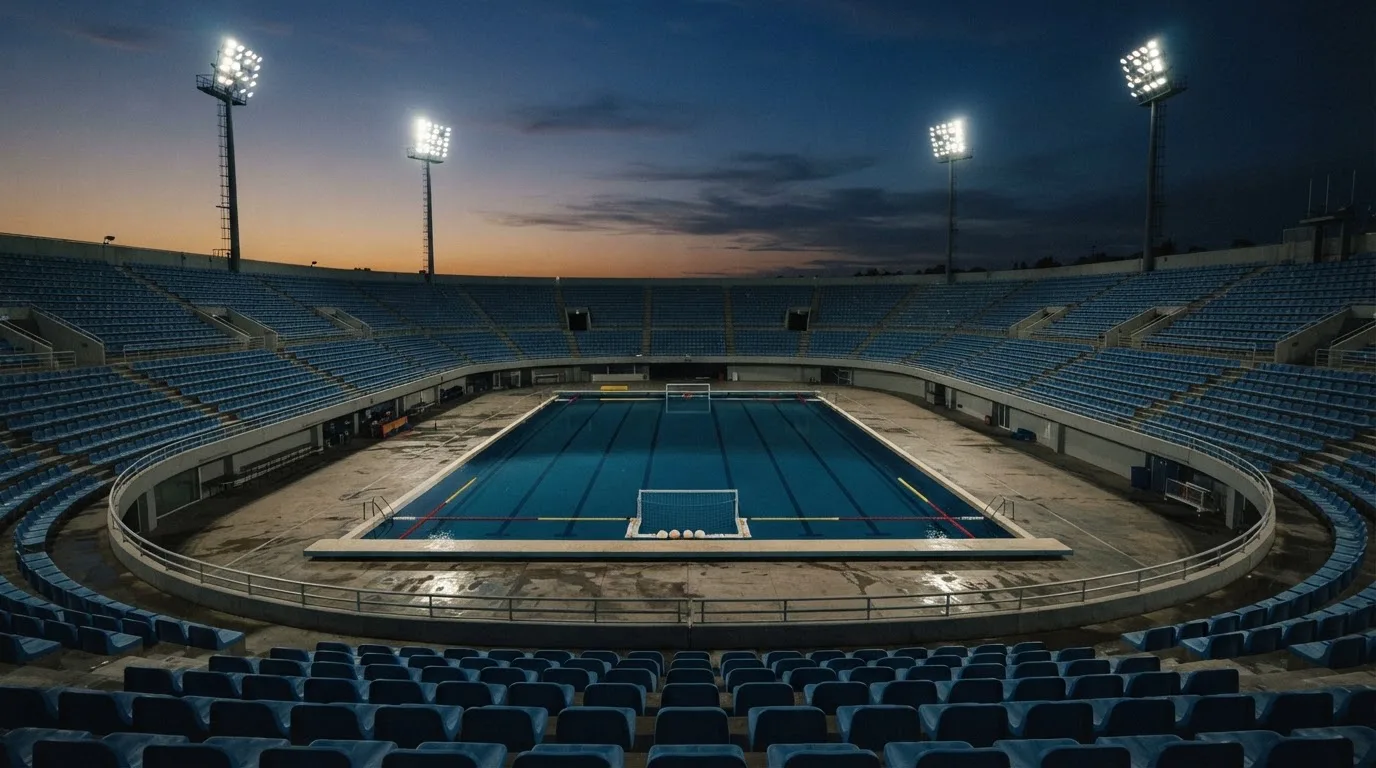
A water polo match is played by two teams of seven in the water — six field players and a goalkeeper — with up to six substitutes available from a thirteen-strong squad. The game runs through four quarters rather than two halves, which matters for in-play pricing because quarter breaks produce natural suspension points that football’s continuous halves do not.

The pool itself is deep enough that no player can touch the bottom — usually a minimum of two metres — and the rules forbid any player from standing or walking on the floor of the pool. That detail is irrelevant to most punters but it shapes how injuries and exclusions are timed: a player excluded for twenty seconds after a major foul sits out at the surface, not on a bench, which changes how quickly a team can recover its full strength.
World Aquatics is the highest governing body of the sport. Men’s water polo has been at the Olympic Games since 1900, when it was among the first team sports contested; women’s water polo became an Olympic event at the 2000 Sydney Games. A men’s World Championship has been held every two to four years since 1973 within the broader World Aquatics Championships, with women’s competition added in 1986.
Tournament structure matters because it dictates when bookmakers actually price the sport. Outside the Olympics and the World Aquatics Championships, water polo has no continuous league calendar the way football or tennis does — fixtures cluster around named events and dissipate for months. That is the first practical reason a UK punter may find a water polo market today and not find one next week.
Where the Market Comes From
The Gambling Commission’s public register is the whole test of who holds a licence to take bets from customers in Great Britain. It can be searched by business name, trading name, domain or account number. A licence number on a bookmaker’s “about” page is worth nothing unless the same number resolves on the register — operators and publishers do make transcription errors, and the register is what counts.
The Commission has no list of permitted sports. The Act covers Great Britain (England, Scotland and Wales) and applies to any operator whose remote facilities are used by customers in those countries, wherever the operator is based. Northern Ireland runs on older legislation and is outside the Commission’s regime — that is why every line here says “Great Britain” rather than “the UK” when describing the licensed market. A Curaçao or Malta licence is not a substitute for a Commission licence for GB customers.
Licensed remote betting falls under the Gambling Act 2005 as amended by the Gambling (Licensing and Advertising) Act 2014. The relevant licence categories for sportsbooks are remote general betting standard (real events), remote general betting standard (virtual events), remote general betting limited, remote pool betting and remote betting intermediary for exchanges. Every operator in the shortlist below holds the real-events category.
What a GB Licence Actually Buys
A licensed remote bookmaker has to verify a customer’s name, address and date of birth before they can deposit or gamble — including with a free bet or a bonus. That has been a licence condition since 7 May 2019, and it is the practical reason there is no anonymous play at any of the brands below. Verification usually means photo ID plus a proof of address, occasionally a softer electronic check. It is friction, and it is what a Commission licence actually does at the point of use.
A financial vulnerability check applies once a customer’s deposits minus withdrawals exceed £150 in any rolling 30-day period. The check is a public-record search — bankruptcy registers, the IV register and equivalents — not a credit reference check and not an income check. It has been in force at that threshold since 28 February 2025.
Broader affordability checks have been announced in stages. A Commission article dated 7 July 2026 sets out a phased approach; no start date has been confirmed. Until a date is published, write “announced, staged, no start date,” not “in force.”
GAMSTOP is mandatory for every online operator — exclusion periods run for six months, one year, five years, or five years with auto-renewal, and after the minimum period the exclusion remains in force for a further seven years unless the customer asks GAMSTOP to remove it. The scheme covers sites and apps; high-street bookmakers run a separate service. Every operator in this shortlist is a GAMSTOP member.
General Betting Duty is the operator’s tax, not the punter’s. It is currently 15% of gross profits on general betting. From 1 April 2027 a new remote betting rate of 25% applies within it for online play, while remote bets on British horse racing, self-service betting terminal stakes, pool betting and in-person betting stay at 15%. The punters’ winnings are not taxed in Great Britain; a professional gambler should ask HMRC or an adviser, because that is not a bet anyone should take from a magazine.
The credit-card ban covers all gambling in Great Britain since 14 April 2020, including credit-card-funded payments through e-wallets. Debit cards and bank-based methods are not covered. There is no statutory list of permitted payment methods beyond that — whether a bookmaker takes PayPal, Skrill, Neteller, paysafecard or bank transfer is set by the operator’s own terms.
Safer Gambling Tools Every Licensed Book Has to Provide
Beyond GAMSTOP, every operator in the shortlist has to offer deposit limits, timeouts, reality checks and self-exclusion at the account level. Deposit limits are set by the customer — there is no state-set ceiling. The Commission’s Remote Technical Standards require operators to let a punter set a gross deposit limit over a fixed time frame; the first changes under RTS 12 have applied since 31 October 2025, with a second phase postponed to 30 September 2026. Whether the second phase is now live is not established from the public register alone; check the operator’s own safer-gambling page.
External help is the same across the market. GamCare runs the National Gambling Helpline; GambleAware funds treatment and research; Gamblers Anonymous runs local groups. A punter who feels control has slipped should bring them up directly with an operator, not after they’ve already pushed a wad too far.
One risk — where the data stops. Several brands publish which sports they list on their football or racing pages and leave minority sports undifferentiated. That is not a fault and it is not a secret; it is just how the market reports itself, and it is why some of the cards below describe what the operator offers in general rather than naming water polo markets specifically.
How Bonuses Actually Work in 2026
The marketing word and the arithmetic usually part company somewhere between the headline and the small print. A “free bet” is not a refund in money — its stake is usually not returned with a winning payout, which means a £25 / free bet at even money returns £25 in profit, not £50. A “risk-free” bet refunded as a free bet is not a money refund; it carries the same stake-not-returned rule. A “boosted odds” or “enhanced odds” offer is a one-off price concession on a named selection that reverts to the standard price once the offer window closes.
The relevant bonus rules, in force since 19 January 2026, cap wagering requirements on bonuses at 10x. A £10 bonus at 50x rollover would have needed £500 of qualifying bets; under the cap no offer can ask for more than £100 of qualifying bets on a £10 bonus. Mixed-product promotions — an offer that requires gambling on two or more product types (betting plus casino, betting plus bingo, betting plus lottery) — are banned entirely. Free bets with no wagering condition are a separate question the public register does not settle.
None of the welcome offers below prints a code. They are described qualitatively because the page describes what an offer is worth, not how it is claimed.
Worked Example: What a £25 Free Bet Pays
Take the Midnite welcome, which gives £25 in free bets and 50 free spins to new customers who bet £5 or more on pre-match odds of 2.0 or greater within 14 days of sign-up. The free bets are valid for seven days. For a free bet of that kind, where the stake is not returned with a win, the value of the offer to the punter depends on what odds the free bet is placed at and on the margin of the market it is placed in. A reasonable proxy at even money (2.0) on a market with a 5% margin gives roughly £25 × (2.0 − 1) ÷ 2.0 × 0.95 ≈ £11.88 in expected value. At longer odds the expected value rises; at shorter odds it falls. The free spins are separate and depend on the game they are played on.
That number is an estimate, not a promise. It is the average across many bets at those odds and that margin; any single bet either wins or loses.
The Markets a Punter Can Actually Place
For water polo, the market depth at most UK books is shallow. Where markets do exist, the typical offering looks like this:
- Match winner — three-way (1X2) for the international game or two-way (head-to-head) at club level.
- Handicap — typically a goal-line or two-goal-line handicap, given water polo’s lopsided scoring.
- Total goals — over/under a stated total, usually set in the mid-teens given the sport’s high-scoring nature.
- Quarter winner — picking the winner of an individual quarter, popular in-play.
- Race to a stated number of goals — a market more common in this sport than in football because water polo scores frequently.
Each of these markets carries the bookmaker’s margin inside the price. The next section is about how that margin sits in the odds a punter reads.
How Odds Are Built and What the Margin Does
Decimal odds are the standard on UK licensed sites. A price of 2.0 means a £10 stake returns £20 — £10 of stake returned plus £10 of profit. A price of 6.0 means a £10 stake returns £60. Fractional odds — the 5/1, 11/4, evens form printed on some pages — convert by dividing the first number by the second and adding one. Five-to-one becomes 6.0; eleven-to-four becomes 3.75; evens becomes 2.0.
The bookmaker’s margin is the cut the book keeps of every unit staked on a market. On a two-way market priced at 1.90 and 1.90, the implied probabilities are 1 ÷ 1.90 = 0.5263 for each side, which sums to 1.0526. That sum, minus one, is the margin — about 5.26% of the market. On a perfectly efficient market the sum would be exactly one and the margin would be zero. Every price a punter sees sits somewhere above that floor, and the gap between the sum of implied probabilities and 1.00 is what the book keeps.
For a worked figure on the prescribed illustrative two-way market at 1.90 / 1.90 (fractional 9/10):
- Implied probability of side A = 1 ÷ 1.90 ≈ 52.63%
- Implied probability of side B = 1 ÷ 1.90 ≈ 52.63%
- Sum of implied probabilities ≈ 105.26%
- Payout share ≈ 1 ÷ 1.0526 ≈ 95.00%
- Bookmaker’s margin ≈ 1 − 0.9500 ≈ 5.00% (stated as a band: roughly 5% to 5.3% depending on rounding)
The margin is paid by every punter, on every bet, whether the bet wins or loses. It is the cost of using the bookmaker rather than another punter on an exchange. On a market priced at 1.85 / 1.95 the same calculation gives a payout share of about 95.02% and a margin of about 4.98% — broadly similar. On a market priced at 1.70 / 2.20 the margin climbs above 7% because the underdog price carries less information about the favourite’s true probability. The thinner the market — and water polo markets tend to be thinner than Premier League football markets — the wider the margin the book needs to keep to protect itself against informed money.
What That Means for a Real Bet
Take a £10 single at 2.0 on a water polo match winner. The bet pays £20 if it wins — £10 of stake returned plus £10 of profit — and loses the £10 stake if it does not. There is no middle ground: it is a binary outcome.
Take a £5 accumulator (an “acca”) with three legs at 2.0, 2.5 and 3.0. The combined price is 2.0 × 2.5 × 3.0 = 15.0. A £5 stake returns £75 if all three legs win. If any one leg loses the entire stake is lost.
The margin compounds across legs. If each leg has an independent 5% margin, the margin on the combined price is not 15% — it is closer to the combined implied probability minus one, which is roughly 14.3% on a three-leg acca at those prices. The longer the accumulator, the more the book keeps per unit staked. That is why accumulators are profitable for the book and exciting for the punter — the two truths do not contradict.
Tournaments Worth Tracking
Water polo has a clustered calendar rather than a continuous one. The fixtures that move the betting market:
- Olympic Games — held every four years, men’s water polo since 1900, women’s since 2000.
- World Aquatics Championships — the men’s World Championship has run within this event since 1973, with women’s added in 1986.
- European Water Polo Championships — a regional championship run by European Aquatics.
- Domestic leagues — most active in Hungary, Italy, Croatia, Spain, Montenegro, Serbia and Greece; some US club competition. UK domestic water polo is recreational-grade and rarely priced.
UK books price the international game. Club-level pricing exists on the larger European leagues but tends to be seasonal and event-driven, not a year-round offering. A punter looking for a water polo price today is most likely to find it within a week of an Olympic, World or European Championship.
The Operator Reviews
Each review below closes with a verdict on what kind of punter the operator is worth a look for on this sport specifically.
Midnite
Midnite runs on Gambling Commission account 101839 with a remote general betting standard (real events) licence, held by Midnite Limited. The site shows in-play events, an acca builder, popular accas and price boosts with maximum-stake limits published on the boosted-price pages. The welcome offers £25 in free bets plus 50 free spins for new customers who bet £5 or more on pre-match odds of 2.0 or greater within 14 days of sign-up; the free bets expire after seven days. The acca builder and in-play events suggest a sportsbook that prices the live game, and water polo — where quarter-by-quarter scoring is the natural rhythm — sits within the in-play range.
Verdict: the operator most likely to carry a live water polo price on a tournament week, and the welcome is competitive for a small qualifying bet. For a punter who wants in-play depth on a minority sport, Midnite is the natural starting point.
Tote
Tote operates on Commission account 54779 through TDCO Limited, holding a remote general betting licence for real events. The brand has historical roots in pool betting on British horse racing and carries that heritage forward. Tote’s sportsbook covers mainstream markets and is less associated with minority-sport in-play depth than some of the others on this list.
Verdict: a brand to know exists and to check during racing weeks; for water polo specifically, Tote is not the first stop.
10bet
10bet runs under Commission account 43173 through Blue Star Planet Limited. The sportsbook covers football, tennis and horse racing and features Cash out, Bet Builder and Live Streaming. The product is mainstream rather than specialist, with the Live Streaming and Bet Builder features suggesting in-play capability that could price water polo at tournament level.
Verdict: a mainstream book with the in-play plumbing to list water polo during a World Championship; less likely than Midnite to lead on minority-sport price, more likely to offer a polished bet-builder experience on what it does price.
BetMGM
BetMGM operates on Commission account 39198 through LeoVegas Gaming PLC. The welcome offer gives four £10 free bets to new UK customers who deposit £10 or more and place a sports bet within seven days — two football accumulators with four or more selections and two sports multiples with two or more — valid for seven days with minimum odds and opt-in required. The branded front of BetMGM carries casino heritage; the sportsbook underneath covers mainstream events.
Verdict: a strong welcome on accumulators, less obviously a water polo specialist. A punter who plans to acca across mainstream events and wants a free-bet buffer will get value here; a punter specifically chasing water polo markets should check the in-play page first.
LiveScore Bet
LiveScore Bet runs on Commission account 56859 through LiveScore Betting and Gaming (Gibraltar) Limited. Its Bet Builder takes up to ten selections and covers match result, both teams to score, corners, total goals, player scoring and card markets — markets that translate well to water polo’s higher-scoring structure, although the operator’s named coverage at the moment is football-led.
Verdict: the Bet Builder’s depth is genuinely useful for water polo’s scoring structure, and the in-play plumbing is in place; the question is whether the operator lists water polo on the day, which depends on tournament scheduling.
Spreadex
Spreadex operates on Commission account 8835 through Spreadex Limited and combines fixed-odds and spread betting in one app. It offers one-click, auto and partial cash out, a Bet Builder across fixed odds or spreads, and live streaming of UK and Irish horse racing, greyhounds, tennis, NFL and selected football. Spreadex is also regulated by the Financial Conduct Authority for financial spread betting — the dual regulation is the practical reason the brand carries fixed-odds and spread products side by side, and it is worth noting that spread betting losses can exceed the deposit, which is not the case for fixed-odds betting.
Verdict: a serious fixed-odds book with a deep in-play product, regulated for both gambling and financial spread betting. For a punter who wants fixed-odds water polo alongside spread-betting markets, Spreadex is the natural home. For a punter uncomfortable with the spread-betting side, the fixed-odds account is fully usable on its own.
Bet600
Bet600 runs on Commission account 44731 through Tyche Tech Limited. The sportsbook pays Best Odds Guaranteed on horse racing — if the starting price is bigger than the early or show price taken, the bet is paid at the SP. BOG is a horse-racing-specific concession and does not apply to water polo, but its presence signals a brand that thinks carefully about pricing.
Verdict: a book to know during racing weeks; for water polo specifically, less obviously a leader than Midnite or Spreadex.
DragonBet
DragonBet operates on Commission account 64908 through DragonBet Ltd. The app features Welsh football and rugby markets, racing, American football, in-play betting and bet builder markets — a product profile tilted towards the brand’s regional heritage. Water polo is not part of that heritage; it would only appear during international tournament weeks.
Verdict: a brand with strong regional coverage and a useful in-play product; a tournament-week check is the right move for water polo punters, who plan to cast wider on race days.
London Bet
London Bet runs on Commission account 66162 through Thistle Bet Limited. The app combines sports betting — football, tennis, horse racing, greyhounds, darts, golf, cricket, NFL, NBA, MLB, snooker — with Pragmatic Play casino slots and live in-play betting. The product portfolio is broad and the in-play section is present; water polo would only appear during tournament windows.
Verdict: a broad-market book with live in-play capability and a casino alongside the sportsbook; for water polo, the same tournament-week check applies.
Betway
Betway operates on Commission account 39372 through Betway Limited. The Free Bet Club gives up to £10 in free bets every week after opt-in — spending £25 or more on sports earns two £5 free bets. The sportsbook covers mainstream events with a polished product.
Verdict: a mainstream book with a clean recurring free-bet offer for active punters; for water polo specifically, less specialist than Midnite or Spreadex, and a punt on tournament-week pricing is the right approach.
The Comparison Card
Below is a card for each of the ten operators, naming the licence number on the Gambling Commission’s register and what the operator’s own published terms say about water polo’s market segment.
| Brand | Gambling Commission remote licence number and licence holder | What the operator’s own terms state on water polo |
|---|---|---|
| Midnite | Account 101839, held by Midnite Limited | In-play pricing across multiple sports with acca builder and price boosts — minority sports appear during international tournament weeks. |
| Tote | Account 54779, held by TDCO Limited | Pool betting heritage on British racing; minority sports priced through tournament windows. |
| 10bet | Account 43173, held by Blue Star Planet Limited | Mainstream sportsbook with Cash out, Bet Builder and Live Streaming; minority sports priced through tournament windows. |
| BetMGM | Account 39198, held by LeoVegas Gaming PLC | Mainstream sportsbook with welcome offer built around football accumulators; minority sports priced through tournament windows. |
| LiveScore Bet | Account 56859, held by LiveScore Betting and Gaming (Gibraltar) Limited | Bet Builder across match result, both teams to score, corners, total goals, player scoring and cards — markets that translate to water polo during international tournament weeks. |
| Spreadex | Account 8835, held by Spreadex Limited; also FCA-regulated for financial spread betting | Fixed-odds and spread betting combined; in-play product with cash out options and live streaming; minority sports priced through tournament windows. |
| Bet600 | Account 44731, held by Tyche Tech Limited | Best Odds Guaranteed on horse racing; mainstream sportsbook; minority sports priced through tournament windows. |
| DragonBet | Account 64908, held by DragonBet Ltd | Welsh football and rugby focus with broader mainstream coverage; in-play and bet builder markets; minority sports priced through tournament windows. |
| London Bet | Account 66162, held by Thistle Bet Limited | Broad sports coverage including football, tennis, racing, NFL, NBA, MLB; live in-play betting; minority sports priced through tournament windows. |
| Betway | Account 39372, held by Betway Limited | Mainstream sportsbook with Free Bet Club returning up to £10 weekly for active punters; minority sports priced through tournament windows. |
The card tells the same story in every row: water polo is a minority sport and pricing is tournament-driven, not year-round. The book to bet with depends less on the brand and more on which operator’s in-play product the punter is already using.
The Working Through
What the data above leaves for a punter who actually wants to bet on water polo today. Several practical steps:
- Check which operators are showing the event on the day. Water polo pricing is event-driven and the odds feed may be live at one book and not at another within the same hour. The Commission’s register is no help here; the operator’s own sportsbook is.
- Read the operator’s in-play rules. Quarter-by-quarter pricing is the natural shape for this sport; a book that prices football in-play at the minute-by-minute level is more likely to quote water polo at the same cadence.
- Treat accumulators carefully. The margin compounds across legs, and water polo is volatile enough that a long acca carries more risk than a long football acca at the same odds.
- Use the safer-gambling tools. Deposit limits, timeouts and GAMSTOP exclusion are free, immediate and effective. The Commission’s financial vulnerability check kicks in once deposits minus withdrawals cross £150 in any rolling 30-day period.
What It Costs the Punter
A 5% margin on a market means the book keeps 5p of every £1 across the market, on average. For a punter placing a £10 single at 2.0 on a market with a 5% margin, the expected cost of that bet — averaged across many such bets — is £10 × 0.05 = 50p. That is not what any single bet costs; it is what £10 of bets on that market costs in the long run.
A free bet is different again. A £25 free bet with stake not returned, placed at even money on a market with a 5% margin, returns on average about £11.88 in profit across many bets — its expected value, not its payout. That number is the honest answer to “what is this free bet worth to me,” and it is lower than the headline by a wide margin because the stake is not returned.
The compound of those two numbers — the margin on the betting line and the cost of the offer’s mechanics — is the real cost of being a punter at any bookmaker. None of this is a reason not to bet; it is a reason to know what the bet costs before it is placed.
What Goes Wrong Without a Licence
An unlicensed book has none of the protections a licensed book has to provide. There is no GAMSTOP coverage, no Commission complaints route, no approved dispute-resolution body and no British consumer redress if funds are withheld. The 10x bonus cap does not apply, the £150 financial vulnerability check does not apply, and there is no obligation to verify identity or to offer safer-gambling tools. Section 33 of the Gambling Act 2005 makes providing unlicensed gambling facilities in Great Britain an offence aimed at the operator, with up to 51 weeks’ imprisonment, a level-5 fine or both on summary conviction (six months in Scotland). No offence aimed at the customer who merely bets on an unlicensed site has been established — the loss is the loss of protection, not a criminal record.
Enforcement against unlicensed operators is disruption rather than blocking: cease-and-desist notices, search-engine referrals, registrar and host work, payment-provider pressure, and court-order DNS blocking powers that have been given or are about to be given to the Commission. That is not the same as ISP-level blocking of unlicensed sites being in operation today; write what is true.
A Note on What This Page Does Not Do
This page describes how water polo betting works in the British licensed market and which operators carry the market. It does not name a winner of any match, predict any tournament outcome, or recommend any system that beats the margin. The margin is the bookmaker’s edge and it is real; no analysis published anywhere has overturned it. A punter who acts on a predicted outcome rather than on the odds loses real money, and no page on the subject can change that.
The page also describes welcome bonuses as mechanics — what they cost, what they require, what they pay on average — without printing a code or urging a sign-up. The arithmetic is the analysis, not the marketing.
Closing the Loop
A punter looking for water polo betting odds in Great Britain in 2026 will find them at a subset of the ten operators above, almost always during a tournament window. The Commission’s public register is the test of a licence; the operator’s own sportsbook is the test of whether a price is posted on the day. The margin sits inside every price and is the cost the punter pays for the bookmaker’s service. The welcome offers are worth what their mechanics say they are, not what their headlines claim.
That is the honest frame for water polo betting in the British licensed market. Everything else is marketing.
Frequently Asked Questions
How can it be checked that a bookmaker holds a Gambling Commission licence?
Search the Commission’s public register by business name, trading name, domain or account number. The register is the whole test of who holds a licence for Great Britain, and a licence number on an operator’s “about” page is only worth what the register shows. The register is searchable by anyone and the result is the official record.
How is the return on a bet worked out from the stake and the odds?
Return equals stake multiplied by the decimal odds. Net profit equals stake multiplied by the odds minus one. A £10 stake at 2.50 returns £25 — £10 of stake returned plus £15 of profit. On a combination bet the odds of each leg multiply into one combined price before the stake is applied.
What is the bookmaker’s margin and how can it be seen in the odds?
The margin is the cut the book keeps of every unit staked. On a two-way market priced at 1.90 and 1.90, the implied probabilities sum to about 1.0526; that sum minus one is the overround, roughly 5.3%, and the margin, the overround divided by the sum, is roughly 5.0%. The margin sits inside every price a punter sees and is paid on every bet, winning or losing.
How do fractional odds such as 5/1 convert to decimal odds such as 6.00?
Divide the first number by the second and add one. Five-to-one becomes 6.0; eleven-to-four becomes 3.75; evens becomes 2.0. Decimal odds show the total return including the stake, so 2.0 at evens returns the stake plus an equal amount of profit on a winning selection.
Which tools for controlling play does a licensed bookmaker have to offer?
Every licensed remote bookmaker has to offer deposit limits, timeouts, reality checks and account-level self-exclusion, and has to be a member of GAMSTOP for multi-operator self-exclusion. Help is available through GamCare’s National Gambling Helpline, GambleAware, NHS gambling clinics and Gamblers Anonymous, and a punter who feels control has slipped should bring these up before the slip becomes a fall.
Are betting winnings taxed in Great Britain, and who pays General Betting Duty?
No tax is payable on betting winnings by the punter in Great Britain. General Betting Duty is the operator’s tax on gross profits and is currently 15%, rising to 25% on remote betting from 1 April 2027 in most categories. A professional gambler should ask HMRC or a tax adviser because that is not a bet anyone should take from a magazine article.
US & other team sports – Fast Payout
Content created by the «Fast Payout» team
