
The best no limit betting sites 2026: how stake limits work, who charges them and who does not
 Available in US
A bookmaker that takes any stake and never trims the winnings of a winning customer sounds generous until the maths arrives. Every price carries a margin, every market has its own settlement rules, and the operator decides, on its own licence, what counts as a fair-sized wager. In Great Britain the Gambling Commission (UKGC) licences the whole commercial market under the Gambling Act 2005, and the Commission’s public register is the only test of whether a brand holds a remote licence at all. What that licence does not fix is the size of the maximum stake, the minimum odds on a free bet, the cap on winnings or the daily deposit ceiling. Those rules sit with each operator and with the player. The only limit the regulator sets is the framework the operator runs inside.
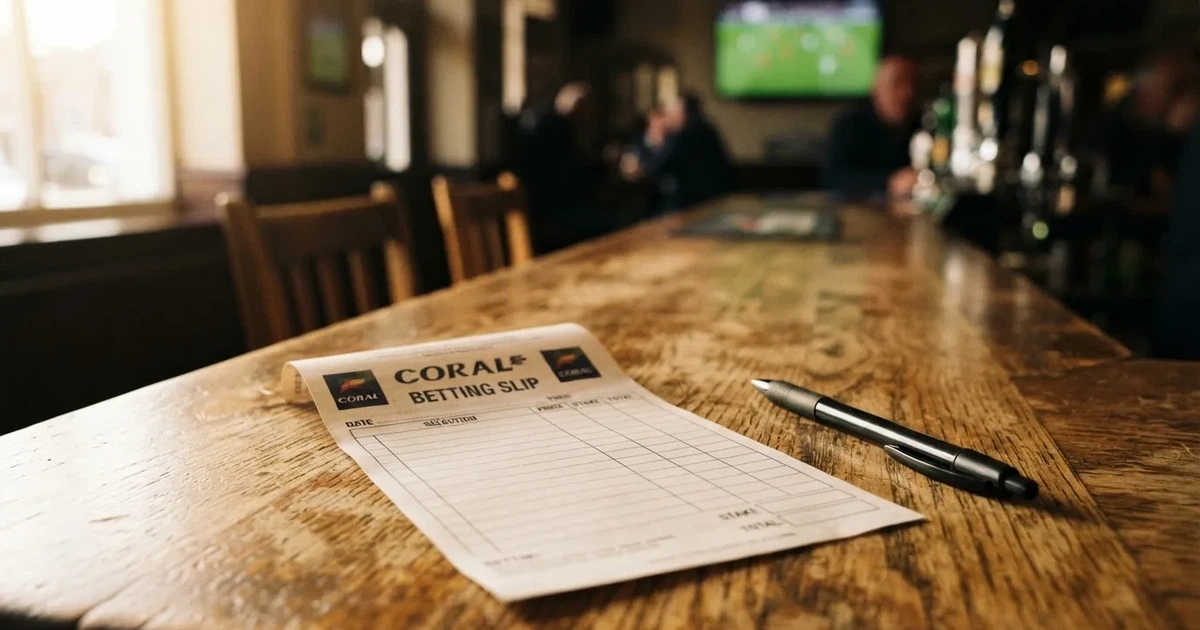
Current data: 27 October 2026 · cross-checked against the Gambling Commission’s public register for Great Britain.
Selection, settling and staking: what a “no limit” bookmaker really offers
“No limit” lands in three different places on a UK-licensed sportsbook, and a punter who treats them as one thing pays for the confusion. The first is the maximum stake on a single bet: how many pounds the operator will accept on one selection before declining the betslip. The second is the cap on winnings — the maximum return the operator will pay out from one bet, one match or one day’s racing. The third is the deposit ceiling — the gross limit the customer sets on their own account, separately from any stake rule. A bookmaker with no stake ceiling can still cap winnings. A bookmaker that caps winnings tightly can still accept a £50,000 stake on a 1/100 shot. Read the betting rules before treating any one “no limit” claim as covering all three.
The Licensing Conditions and Codes of Practice (LCCP) require operators to honour advertised odds, settle markets on agreed rules, and give customers a fair outcome. They do not force a minimum-stake floor, a maximum-stake ceiling or any winnings cap, and they do not require a minimum number of events or markets. What the LCCP does require is that each operator publishes its own stake, settlement and payout terms, and that a punter who disagrees has access to an independent alternative dispute resolution (ADR) provider approved by the Commission. The brand’s stake ladder, its maximum-payout clauses and its daily deposit ceiling live in those terms.
The shape of a UK bet at a licensed operator is otherwise conventional. Stakes are placed in pounds, the smallest widely accepted unit is £0.05 or £0.10 online, and returns are calculated as stake multiplied by the decimal price (or stake × numerator ÷ denominator plus stake at fractional odds). Each-way betting doubles the stake: one bet to win, one bet to place, at the place terms the race card or event listing states. An accumulator — an “acca” in the British idiom — multiplies the leg prices into one combined price. A bet builder, sometimes called a same-game multi, combines markets from a single event into one priced bet with one stake. Cash Out settles the bet before the event finishes, at a price the operator recalculates from the live market, not the price the customer originally took.
What changes between bookmakers is the set of markets, the depth of the in-play offering, the availability of Best Odds Guaranteed (BOG) on UK and Irish racing, and the rules on what happens when a selection is a non-runner. The Commission’s published RTS (Remote Technical Standards) governs the technical side — customer-funds segregation, identity verification, complaints handling — and the market side stays with the operator.
Fixtures, tournaments and where the limit tends to bite first
Limits bite in a predictable order across the British sporting calendar. Premier League and Champions League football run the deepest market: match result, both teams to score, total goals, player shots, player shots on target, corners, cards, and the bet-builder combinations that combine them. There the maximum stake is rarely the constraint; the win cap on outrights on long-shot markets is. A correct-score punt at 50/1 on the Premier League carries a built-in exposure of £50,000 on a £1,000 stake, and the operator’s maximum-club file often caps that bet at £25 or £50 even when a 1/4 shot sits wide open at £500. The headline stake ceiling is not the same as the actual ceiling on the long-priced selection.
Horse racing is the second test, and the most consequential one for British punters. Best Odds Guaranteed — the bookmaker paying the starting price (SP) if SP beats the price taken — applies to UK and Irish racing from 8 AM on race day, with William Hill paying BOG on both single and multiple bets and ruling out ante-post, tote and pari-mutuel pools. Each-way betting at the place terms the race card states remains the standard structure: a £10 each-way bet is two £5 bets, with the place fraction (1/4 of the win odds in fields of five to seven runners, 1/5 in fields of eight or more) returning the place half. The Rule 4 deduction, a bookmaker rule rather than a regulation, reduces the return when a runner is withdrawn and the field shortens. Maximum payouts on horse racing are quoted per race and per meeting; the cap is on what the operator will pay out from one ticket, regardless of the stake.
Cricket and golf carry their own quirks. In cricket the market structure is over-by-over, with each ball priced on its own micro-market, and the operator’s exposure is on the over rather than the match: a £1,000 bet on the first over of a Test innings is a different exposure problem for the book than a £1,000 bet on the match result. The same applies to golf, where outright markets compress margin into a long tail of prices and the per-bet ceiling is often lower than the headline stake ladder says. In both sports, a stake the operator accepts on a short-priced favourite may be declined on a long-shot outside the favourite group, and the punter who wants to bet on the tournament winner needs to check the tournament win cap rather than the stake rule.
American sports — NFL, NBA, MLB, NHL — settle on the standard match-result and spread structure but on American time zones, and the in-play offering reflects that. A Premier League evening kick-off runs with a different depth than a 1 AM NBA tip-off, and the operator that lists a market at 11 PM is rarely the same depth of book at 4 AM.
The take from the calendar is plain. A bookmaker who promises “no limit” on a banner is talking about stake, not about win cap, and a punter who wants to back a 100/1 shot at the Cheltenham Festival or a 33/1 outsider in the Champion Hurdle needs to read the maximum-payout clause before placing the betslip.
Walkthrough: how a stake travels from betslip to payout
The sequence a punter goes through on a licensed UK site is largely mechanical and mostly settled in seconds. Place the selection in the betslip, enter the stake, the betslip recalculates the return and shows the expected profit at the price offered. Confirm the bet. The site deducts the stake from the cash balance, holds it against the unsettled bet, and the bet appears in “My Bets”. Once the market settles, the operator settles the bet at the agreed price, applies any Rule 4 deduction or each-way adjustment, and credits the return to the cash balance. Withdrawals go back to the original deposit method under the source-of-funds and money-laundering rules the LCCP sets.
What is less mechanical is what happens at the boundaries. The first boundary is verification. Since 7 May 2019, GB-licensed operators must verify name, address and date of birth before a customer can deposit or gamble, including when the first product is a free bet. That verification happens against a credit-reference database and a public-records database, and the operator’s threshold for further checks — a financial vulnerability check — applies when deposits minus withdrawals exceed £150 in a rolling 30 days. The first phase took effect on 28 February 2025, and the vulnerability check is a public-record check (bankruptcy, county court judgments), not an income check and not a credit reference check.
The second boundary is in-play and live betting. The operator runs in-play markets on football, tennis, cricket and the major US sports, and the price on each live market adjusts as the action unfolds. Cash Out is one consequence of that — the operator offers to settle the bet early at a price it recalculates, and the punter accepts or declines. Cash Out is not guaranteed, is not available on every market, and is not available on every bet type. William Hill’s own help page states that Cash Out is not available on each-way bets and is not always available on accumulators, and that availability is not guaranteed. The punter who relies on Cash Out as part of an in-play strategy reads the rules first.
The third boundary is the financial side. Withdrawals go to the original deposit method, debit cards and bank transfers are the standard routes, and the operator may ask for source-of-funds evidence at higher spend levels under anti-money-laundering rules. Credit cards have been banned for gambling in Great Britain since 14 April 2020 — including credit-card-funded e-wallet deposits — so a punter who tries to deposit with a credit card is declined at the funding stage, not at the betting stage.
The walkthrough from stake to payout is short. The walkthrough from first deposit to first withdrawal is longer, because verification sits in the middle. A punter who registers, deposits, places the first bet and waits for the first race is not yet through the same journey as a punter who registered last month, completed the verification flow, and now places bets without seeing the verification prompts.
Shortlist and assessment: ten licensed bookmakers that take a stake and pay out
The set below is ten operators licensed by the Gambling Commission for remote betting in Great Britain, listed in the order the Commission’s public register sets for the licence holder, with the published licence account printed beside the brand. The shortlist is not a ranking and not a recommendation. Every operator in this set takes a stake from a registered customer, runs a market on the events the operator lists, and pays out at the advertised price once the market settles. The variation sits in the markets, the in-play depth, the cash-out rules and the welcome structure each operator offers.
Each write-up carries the same four pieces of information: the licence account as printed on the public register, the licence holder name on the register, the markets and product features the operator’s own site lists, and the page’s own verdict on what the operator is and is not for. A punter who reads this set alongside the deposit rules and the verification flow on each site ends up with a working view of who covers their event, who pays out at the advertised price, and who carries the structure they actually want.
Star Sports — racing-heavy book with Bet Boosts across racing and football
Star Sports runs pre-event and in-play markets with Bet Boosts, Daily Specials and Weekend Enhanced Boosts, and the in-play product runs across football, horse racing, golf and US sports. The UK remote licence is 009177-R-104555-019 (Commission account 9177) under licence holder Star Racing Limited, for general real-event betting.
What the operator’s site lists is what it lists: a focused racing book with a football and US-sports supplement. A punter whose interest is Premier League outrights and Champions League specials finds the in-play depth a step below the deepest in the market; a punter whose interest is daily racing cards and ante-post lists on the major meetings finds it well-stocked and price-boosted.
The verdict: Star Sports suits a punter whose weekly interest is the racing card and the in-running price on the football match, not a punter looking for a wide menu of player props and niche sports. The licence is clean, the Boosts are stated in the operator’s own terms, and the in-play coverage matches what the operator’s site says.
NetBet Sport — Boosts and free-bet structure on a wide market menu
NetBet Sport’s offering is Daily Boosts, Profit Boosts and free bet offers alongside a Bet Builder with instant dynamic odds and sports stats for the major leagues. The UK remote licence is 039170-R-319343-032 (Commission account 39170) under licence holder Netbet Enterprises Limited, for general real-event betting.
The structure of a NetBet Sports account is conventional: a market menu across the major sports, a Bet Builder that recomputes the combined price as the punter adds legs, and a Boost structure that runs on a daily refresh rather than per-event. Stats on the major leagues give the punter a level of context the operator’s own site curates; the Bet Builder’s pricing is stated as dynamic, meaning the price updates as selections are added or removed.
The verdict: NetBet suits a punter who values the Boost cycle and a Bet Builder that prices leg-by-leg, not a punter whose main interest is deep ante-post or racing-first pricing. The free-bet structure and the Profit Boost are stated on the operator’s own terms, and the price the betslip shows at confirmation is the price settled on if the bet wins.
Swifty Sports — Best Odds Guaranteed, Cash Out and racing streaming with a stated racing-first book
Swifty Sports offers Best Odds Guaranteed, Cash Out on markets including horse racing and football, daily price boosts, live streaming and in-play betting, with a Bet Builder listed as coming soon. The UK remote licence is 058957-R-334734-006 (Commission account 58957) under licence holder Swifty Global (UK) Ltd, for general real-event betting.
The racing focus is visible in the product list: BOG, live streaming of racing, Cash Out on racing markets, and the daily price boosts that follow the racing card. The football product runs alongside, with in-play and Cash Out. The Bet Builder’s “coming soon” status is a constraint on a punter who relies on the same-game multi structure.
The verdict: Swifty suits a punter whose weekly action is the racing card and the in-play football match, and who values BOG and live racing streams. The Bet Builder’s absence is a constraint on a punter who builds Premier League accas on player props. It holds a valid remote licence and the live-streaming offering is on the operator’s site as stated.
Lottoland — casino, lottery betting and sports in one app
Lottoland UK’s app combines casino, lottery betting, sports betting and scratchcards, with the operator stating it is licensed by the Gambling Commission for customers in Great Britain. The UK remote licence is 038991-R-319408-020 (Commission account 38991) under licence holder EU Lotto Limited, for general real-event betting.
The mixed-product structure is the operator’s positioning, not its liability. A punter who opens a Lottoland account for the sportsbook and then plays a lottery bet uses a product that sits on a different licence category, and the terms that govern each product vary. The sportsbook product runs on the standard remote general betting licence, and the betting interval — the window for placing and settling bets — is the standard one.
The verdict: Lottoland suits a punter who wants lottery betting and a sportsbook in one place, and accepts the mixed-product structure as part of the offer. The licence is valid and the mixed-product offer remains the operator’s standard market position.
DragonBet — Welsh football and rugby focus with a racing book
DragonBet’s app is published by DragonBet Ltd and features Welsh football and rugby markets, racing, American football, in-play betting and bet builder markets. The UK remote licence is 064908-R-339041-003 (Commission account 64908) under licence holder DragonBet Ltd, for general real-event betting.
The Welsh-football focus is unusual in the licensed GB market, and it is the operator’s positioning rather than a marketing claim — the product runs on the standard remote betting licence and the markets settle on the operator’s standard rules. The racing and American football product runs alongside. The Bet Builder is listed as available.
The verdict: DragonBet suits a punter whose interest includes the Welsh football pyramid and Welsh rugby, and who wants a bet builder on those markets. A punter whose interest is Premier League outrights and Champions League specials finds the in-play depth and the ante-post list on the Premier League a step below the deepest book. This brand is licensed for general real-event betting.
Hollywoodbets — stake-back free bet on a first acca
Hollywoodbets’ sports welcome offer is a stake-back free bet for new players who deposit £10 or more by card: their stake is returned as a free bet of up to £30 on their first qualifying losing accumulator, with the stake at £10 or more, three or more legs, odds of 4/1 or greater, and the bet settled within seven days. One free bet per customer. The UK remote licence is 053028-R-330019-013 (Commission account 53028) under licence holder Hollywoodbets International UK Limited, for general real-event betting.
The welcome structure is a stake-back, not a deposit match: the punter places an acca, the acca loses, and the stake is returned as a free bet capped at £30. The free bet is what Hollywoodbets’ terms state, and the structure is the operator’s standard welcome. The minimum odds of 4/1 and the three-leg minimum on the qualifying acca are stated, and the seven-day settlement window is a feature of the offer rather than a constraint on the regular product.
The verdict: Hollywoodbets suits a punter who wants a stake-back rather than a deposit match, and who plans a multi-leg acca on the first bet. The acca-only structure of the welcome rules out a single or a double as a qualifying bet.
Bet600 — Best Odds Guaranteed on horse racing with a starting-price fall-back
Bet600 pays Best Odds Guaranteed on horse racing: if the starting price is bigger than the early or show price taken, the bet is paid at the SP. The UK remote licence is 044731-R-323941-016 (Commission account 44731) under licence holder Tyche Tech Limited, for the category remote general betting standard (real events).
The BOG structure is the operator’s stated product on horse racing, and the fall-back to SP is the standard BOG mechanism. The product menu runs on the standard remote general betting licence and the markets settle on the operator’s standard rules. In-play and the other features run alongside.
The verdict: Bet600 suits a punter who values BOG on the racing card and accepts the operator’s menu on football and the other sports. This bookmaker operates under a valid licence and follows the published BOG terms.
VBet — Bet Builder, in-play and a live calendar with stats
The Vbet app is published by SCGO Limited and offers Bet Builder, pre-match and in-play betting, live streaming and a live calendar with results and stats. The UK remote licence is 044662-R-324273-022 (Commission account 44662) under licence holder SCGO Limited, for the category remote general betting standard (real events).
The product structure is a full remote bookmaker: pre-match, in-play, Bet Builder, live streaming and a live calendar that integrates results and stats. The Bet Builder runs on the standard same-event combination structure and settles as a single bet. Live streaming runs through the app and the desktop site, and the live calendar is a content layer on top of the market listing.
The verdict: VBet suits a punter who wants a Bet Builder, in-play depth and live streaming on a single licence, and who values a live calendar with stats. The licence is current, the product is as stated, and the gambling help routes run through the standard channels.
Smarkets — betting exchange with a 2% commission rate
Smarkets applies a standard commission of 2% on eligible exchange bets, with new customers offered 0% commission for 60 days against a minimum first deposit of £10. The UK remote licence is 039173-R-319366-011 (Commission account 39173) under licence holder Smarkets (Malta) Limited, for the category remote betting intermediary.
The exchange structure is the product: customers bet against each other rather than against a traditional bookmaker, with back and lay bets, the option to request a better price, and the MatchMe feature. The 2% commission is the operator’s standard rate on winning bets, and the 60-day 0% commission offer is the operator’s standard welcome on new accounts. The Commission account is for a betting intermediary licence rather than a general betting licence — the exchange category.
The verdict: Smarkets suits a punter who wants to lay bets and trade prices, not a punter looking for a traditional bookmaker’s market structure. The commission is the operator’s revenue; the price the punter sees is the price another customer laid or backed. The licence is for an exchange, not a bookmaker, and the product sits under that category.
BetUK — free-bet structure with stated exclusions
BetUK’s free bets exclude virtual sports, esports and non-UK/IE horse racing, with minimum odds applying. The UK remote licence is 039198-R-319450-029 (Commission account 39198) under licence holder LeoVegas Gaming PLC, for the category remote general betting standard (real events).
The free-bet structure on BetUK is a standard free bet with stated exclusions — virtual, esports and non-UK/IE racing are out — and the minimum odds on a qualifying bet apply as the operator’s terms state. The product menu runs on the standard remote general betting licence, and the markets settle on the operator’s standard rules. The licence holder is LeoVegas Gaming PLC, which also publishes other brands under the same corporate parent.
The verdict: BetUK suits a punter whose interest is the standard UK sports menu with a free-bet structure on football, horse racing and the major US sports, and who does not need esports or virtual markets as part of the qualifying bet. The licence is current, the exclusions are as stated.
Fundamentals: the maths the marketing never quite reaches
What a stake actually pays back
A bet’s return is stake multiplied by the decimal odds. A £10 single at 6.00 pays £60 back — £50 profit on the £10 stake. At fractional odds the return is stake × (numerator ÷ denominator) plus the stake, so £10 at 5/1 pays £60 back (£50 profit), and £10 at 11/4 pays £37.50 back (£27.50 profit). Decimal odds show the full return; fractional odds show the profit fraction. A “10” in decimal odds (10.00) is the same as a bet where a £1 stake returns £10; in fractional terms that is “9/1” — stake 9 wins 9 plus the stake back, total 10 to 1 stake.

For an accumulator, the leg prices multiply into one combined price. Three legs at 2.00, 3.00 and 4.00 give a combined price of 24.00 — a £10 acca pays £240 back if all three legs win, £230 profit. An each-way bet on a horse race is two bets of equal stake: a £10 each-way bet is two £5 bets, one to win, one to place, with the place half paid at the place fraction (1/4 of the win odds in fields of five to seven runners, 1/5 in fields of eight or more). The return on the place half is calculated as the place fraction multiplied by the win odds, so a 5/1 shot at 1/5 place terms carries a place price of 1.00 (evens) — the £5 place bet returns £10.
The math is mechanical, and the calculation does not change with stake or price. What changes is the operator’s margin in the price, and the margin is what the marketing never quite reaches.
Where the margin lives in the price
The bookmaker’s margin is the slice of every unit bet the operator keeps as profit before paying out winners. In a two-way market at decimal odds 1.90 / 1.90 (fractional 9/10 on each side), the implied probabilities sum to 1 ÷ 1.90 + 1 ÷ 1.90 = 0.5263 + 0.5263 = 1.0526. The payout share — the share of every pound bet the operator returns in winnings across all outcomes — is 1 ÷ 1.0526 = 0.95 (95%). The margin is 1 − 0.95 = 0.05 (5%).
That is the cleanest version of the math. A real market is rarely priced symmetrically. A 1.85 / 2.10 two-way market sums to 1 ÷ 1.85 + 1 ÷ 2.10 = 0.5405 + 0.4762 = 1.0167, a margin of 1.67%. A 1.70 / 2.40 two-way market sums to 1 ÷ 1.70 + 1 ÷ 2.40 = 0.5882 + 0.4167 = 1.0049, a margin of 0.49%. Three-way markets (1X2) carry the same math over three outcomes; a 2.10 / 3.40 / 3.60 football market sums to 1 ÷ 2.10 + 1 ÷ 3.40 + 1 ÷ 3.60 = 0.4762 + 0.2941 + 0.2778 = 1.0481, a margin of 4.81%. The margin varies from event to event and from market to market.
For a single illustrative example, a 1.90 / 1.90 two-way market is the roundest figure the field offers, and a margin in the range of 4-6% is what most UK bookmakers price on mainstream football, racing and the major US sports. Outright markets on long-shot tournaments carry wider margins, often 20% or more, because the book has less liquidity. Betting exchange markets run at a tighter margin — typically 2-3% on the major football leagues — because customers set the price rather than the operator.
The margin is the reason “no limit” is not quite the marketing claim it sounds. A bookmaker that accepts any stake still keeps 5% of every pound bet, on average, across the markets it lists. The punter pays the margin in the price rather than at the cashier.
Landscape: what the regulator does and does not fix
The Gambling Commission is the regulator. It licences the whole commercial market for Great Britain (England, Scotland and Wales) under the Gambling Act 2005. Northern Ireland is outside the Act and runs on its own older law; this page concerns Great Britain and the licences the Commission issues. Since the Gambling (Licensing and Advertising) Act 2014 an operator whose remote facilities are used in Great Britain needs a Commission licence wherever the operator is based — a Curaçao, Maltese or Gibraltar licence is not a substitute.
The licence categories are remote general betting standard (real events), remote general betting standard (virtual events), remote general betting limited, remote pool betting and remote betting intermediary (the licence for betting exchanges). An operator can hold more than one category, and the licence holder on the register can publish more than one brand from the same account. The Commission’s public register is searchable by business name, trading name, domain or account number, and is the test of whether a brand holds a licence. A licence number on an operator’s website that does not resolve on the register is not a licence.
What the regulator does not fix: stake minimums, stake maximums, win caps, deposit ceilings. The LCCP sets the framework — anti-money-laundering rules, complaints handling, customer-funds segregation, social responsibility code — and the operator sets the stake ladder, the win cap and the marketing rules. The first stage of new deposit-limit rules (RTS 12) has applied since 31 October 2025, with a second phase postponed to 30 September 2026, and the live status of the second phase is not established. There is no state-set deposit or loss ceiling for betting: limits are the customer’s choice, and the operator must offer a gross deposit limit on a fixed time frame.
Financial spread betting is regulated by the Financial Conduct Authority (FCA), not the Commission. The two regimes are separate: spread betting on financial markets is an FCA-regulated activity, and the FCA’s conduct and capital rules apply. Spreadex is regulated by the FCA for spread betting and by the Gambling Commission for fixed-odds betting, and the operator’s own site states that spread betting losses can exceed the deposit.
Bonus rules are tighter. From 19 January 2026 the wagering requirement on bonuses is capped at 10x (a £10 bonus at 50x needed £500 of bets to clear; under the cap no more than £100), and mixed-product promotions — an offer that requires gambling on two or more product types, for example “bet on football to get free spins” — are banned. Whether the 10x cap applies to free bets with no wagering condition, and any cap on the money value of a bonus, are not established.
The tax side is the operator’s, not the player’s. General Betting Duty is 15% on the operator’s gross profits from remote betting, and from 1 April 2027 a new remote betting rate of 25% applies within it for online bets outside the listed carve-outs (UK horse racing, self-service betting terminals, pool betting, in-person betting all stay at 15%). The player pays no tax on betting winnings in Great Britain; that is general information, not tax advice, and a professional gambler takes advice from HMRC or a qualified adviser.
The marketing side runs through the ASA and the CAP/BCAP Codes, not the Commission. CAP Code section 16 requires marketing to be socially responsible and not of strong appeal to under-18s, with no one who is or seems to be under 25 featured gambling in the advertisement. “Whistle-to-whistle” — the ban on TV betting ads from five minutes before a live sporting event to five minutes after it, before the 9 PM watershed — is an industry code that has applied since 1 August 2019; horse and greyhound racing are excluded. The Premier League clubs’ voluntary withdrawal of gambling sponsorship from the front of matchday shirts from 2026/27 is voluntary, not law.
Statute: what offshore costs the punter who uses it
A bookmaker licensed offshore — Curaçao, Malta, Gibraltar, Anjouan, the Kahnawake jurisdiction — and offering remote betting to customers in Great Britain without a Commission licence is breaking section 33 of the Gambling Act 2005. The offence is the operator’s: providing gambling facilities in Great Britain without the licence the Act requires carries up to 51 weeks’ imprisonment, a fine up to level 5, or both (six months in Scotland). No offence aimed at a customer who merely bets on an unlicensed site was found in the public record.

The cost to the punter is the protection gap. No GAMSTOP coverage. No Commission complaints route. No approved dispute-resolution body. No British consumer redress if funds are withheld. The 10x bonus cap and the £150 financial vulnerability check apply only to UK-licensed operators. The advertising rules in the CAP/BCAP Codes do not bind an offshore operator placing ads at UK consumers. The anti-money-laundering and source-of-funds rules that apply to UK-licensed operators do not apply offshore. Enforcement against the operator runs through disruption: cease-and-desist notices, search-engine referrals, work with registrars and hosts, and court-order DNS blocking powers the Commission has been given or is about to receive — never call it ISP blocking in operation, because that is not what the published record supports.
The honest framing of the choice is plain. A licensed site gives the punter a verification flow, a deposit limit, a financial vulnerability check at the threshold, a complaints route to an ADR provider and the protection of the operator’s segregated customer funds. It also gives the operator a licence it can lose. An unlicensed site gives the punter none of those protections and the risk that funds are withheld without British redress. Neither is “the safe choice” by default. The licensed site is the site with a published licence on the Commission’s register and a complaints route that runs through the ADR body; the unlicensed site is the site that does not appear on the register.
Wellbeing and the customer-protection framework
Every UK-licensed remote betting operator is a member of GAMSTOP, the national multi-operator online self-exclusion scheme. The scheme became a mandatory licence condition for online operators on 31 March 2020. Self-exclusion periods are six months, one year, five years, or five years with auto-renewal. After the minimum period the exclusion stays in place for a further seven years unless the customer asks GAMSTOP to remove it. GAMSTOP covers online sites and apps; betting shops run on a separate service and the shop-level self-exclusion does not flow through GAMSTOP. A punter who self-excludes through GAMSTOP cannot deposit, gamble or open new accounts at any UK-licensed remote operator for the chosen period.
Help runs through GamCare (the National Gambling Helpline), GambleAware, NHS gambling clinics and Gamblers Anonymous. The gambling help routes are not the Commission’s complaint route: a complaint about an operator’s product or settlement goes through the operator’s complaints process and, if unresolved, to the ADR body the operator lists.
The verification flow at a licensed operator has three layers. The first is name, address and date of birth, verified before the customer can deposit or gamble. The second is a financial vulnerability check at the threshold: deposits minus withdrawals exceeding £150 in a rolling 30 days, in force since 28 February 2025. The third is the financial risk assessments the Commission has announced as a staged plan (article of 7 July 2026), with no start date. The first layer is a public-record check, not an income check. The second layer triggers a public-record check (bankruptcy, county court judgments). The third layer, when it comes into force, will cover affordability and is not yet on the statute book as a live rule.
The deposit limit on a licensed account is the customer’s choice. The operator must offer a gross deposit limit on a fixed time frame, and the first stage of the new deposit-limit rules (RTS 12) has applied since 31 October 2025, with a second phase postponed to 30 September 2026. A punter who sets a £100-per-day deposit limit on their own account and then tries to deposit £200 is declined at the funding stage, not the betting stage.
Crypto, anonymity and the limit that the blockchain does not reach
No licensed UK-licensed remote betting operator accepts cryptocurrency as a funding method for a customer account. The Commission’s identity-verification rules — name, address and date of birth verified before deposit or gamble, source-of-funds evidence at higher spend — are incompatible with an anonymous funding route, and a crypto wallet without KYC (know-your-customer) verification does not satisfy the source-of-funds test. A punter who wants to bet with bitcoin at a licensed site cannot do so through the standard funding flow.
A Crypto wallet is, however, the funding layer at unlicensed offshore operators that target UK customers through VPN routing and search-engine advertising. The punt that flows into an unlicensed offshore book is pseudonymous on the wallet side and anonymous on the regulator’s side. The trade-off is the protection gap: no GAMSTOP coverage, no Commission complaints route, no ADR body, no British consumer redress if funds are withheld, no 10x bonus cap, no £150 vulnerability check. A punter who chooses that route is choosing it with eyes open, not by accident. The unlicensed operator’s stake ceiling is not the licensed operator’s, the win cap is not the licensed operator’s, and the protection layer is zero.
The “no limit” claim that comes with crypto funding is, in the marketing sense, the strongest “no limit” the market offers. In the regulatory sense, the absence of a limit on stake is the absence of a protection on funds. The two travel together.
The cheapest cost in the trade is verification. The dearest is the loss of redress. A punter who wants the deepest stake ceiling and the widest market menu in the licensed market finds it at the licensed bookmakers in the comparison table below, not at the offshore exchanges that pay for SEO on “no limit” and “crypto”.
Comparison: the licensed set on one screen
The table below brings the ten operators above onto one screen, with the licence number the Commission’s register shows, the licence holder on the register, and what the operator’s own terms say on the stake-and-payout question. Every brand in this set holds a remote licence for Great Britain, and every brand appears on the public register.
| Brand | Gambling Commission licence | Licence holder on the register | What the operator’s own terms state on stake and payout |
|---|---|---|---|
| Star Sports | Account 9177 (009177-R-104555-019) | Star Racing Limited | Pre-event and in-play markets with Bet Boosts, Daily Specials and Weekend Enhanced Boosts; in-play on football, horse racing, golf and US sports |
| NetBet Sport | Account 39170 (039170-R-319343-032) | Netbet Enterprises Limited | Daily Boosts, Profit Boosts, free bet offers; Bet Builder with instant dynamic odds; sports stats for the major leagues |
| Swifty Sports | Account 58957 (058957-R-334734-006) | Swifty Global (UK) Ltd | Best Odds Guaranteed, Cash Out on racing and football markets, daily price boosts, live streaming and in-play betting; Bet Builder listed as coming soon |
| Lottoland | Account 38991 (038991-R-319408-020) | EU Lotto Limited | Casino, lottery betting, sports betting and scratchcards in one app; licensed by the Commission for customers in Great Britain |
| DragonBet | Account 64908 (064908-R-339041-003) | DragonBet Ltd | Welsh football and rugby markets, racing, American football, in-play betting and bet builder markets |
| Hollywoodbets | Account 53028 (053028-R-330019-013) | Hollywoodbets International UK Limited | Stake-back free bet on the first qualifying losing acca: stake £10+, 3+ legs, odds of 4/1+, settled within 7 days; one free bet per customer |
| Bet600 | Account 44731 (044731-R-323941-016) | Tyche Tech Limited | Best Odds Guaranteed on horse racing: SP applied if the starting price exceeds the early or show price taken |
| VBet | Account 44662 (044662-R-324273-022) | SCGO Limited | Bet Builder, pre-match and in-play betting, live streaming, live calendar with results and stats |
| Smarkets | Account 39173 (039173-R-319366-011) | Smarkets (Malta) Limited | Betting exchange with back and lay bets, request-better-price feature; standard commission 2% on eligible exchange bets, 0% for 60 days on new accounts with a £10 minimum first deposit |
| BetUK | Account 39198 (039198-R-319450-029) | LeoVegas Gaming PLC | Free bets exclude virtual sports, esports and non-UK/IE horse racing; minimum odds apply on the qualifying bet |
The columns tell the same story the write-ups above did, in less space. Every operator in the set holds a remote licence; every operator in the set runs a market on the major sports; the variation sits in the product list and the operator’s terms. A punter who reads this table alongside the deposit rules and the verification flow on each site ends up with a working view of who covers their event, who pays out at the advertised price, and who carries the structure they actually want.
Worked example: the margin in a price the marketing never quite reaches
The math the marketing does not reach is the margin. The cleanest version is a two-way market at decimal odds 1.90 / 1.90 (fractional 9/10 each side), and the payout share on every pound bet is 1 ÷ (1 ÷ 1.90 + 1 ÷ 1.90) = 1 ÷ 1.0526 ≈ 0.95, a margin of approximately 5%. A £100 stake split 50/50 on the two outcomes returns roughly £95 in winnings across the settled market, with £5 kept by the operator as the margin. The result is a band, not a single figure: the true margin on a real market drifts around 5% as the operator’s traders reprice, and on outright markets the band is wider.
For a punt, the practical reading is this. A 1.90 / 1.90 two-way market means the operator is pricing each side at 52.63% and keeping 5.26% as the overround — the sum of implied probabilities minus 100%. The punter pays the overround in the price; the operator collects it across every pound bet. That is the cost of “no limit” in pounds and pence, and the cost is paid whether the punter wins or loses.
Frequently asked questions about no-limit betting sites in 2026
Which bookmakers do not limit?
The phrase “do not limit” needs unpacking. Every UK-licensed bookmaker sets a maximum stake, a maximum payout and a maximum deposit, and the limits sit in the operator’s terms. A bookmaker with no stated stake ceiling still carries a win cap and a deposit ceiling. The shortlist on this page covers licensed operators that take a stake from a registered customer; the stake ceiling is on the operator’s site.
Why do sportsbooks limit winning bettors?
Because the bookmaker is a price-setter, not a counterparty that hedges with the rest of the market. A winning bettor is, by definition, finding prices that are mispriced against the true line, and each pound the operator pays out is a pound the operator loses. The bookmaker’s response is to trim the stake ceiling on the markets where the customer is winning, in the hope of capping the exposure. The British Licensing Conditions and Codes of Practice require the operator to honour advertised odds on settled markets; they do not require the operator to keep a customer at a given stake ladder once a pattern of winning is established.
Why do sportsbooks limit sharp bettors?
For the same reason, with a sharper edge. A sharp bettor is a customer whose prices consistently beat the closing line — the last price the market sets before the event — and whose bets the bookmaker cannot price accurately enough to make a margin from. The bookmaker’s tools are the same: trim the stake on the markets the customer is sharp on, restrict the customer to certain market types, or close the account. The licensed market does not ban this practice, and the licensed operator is free to set its own commercial limits on its own commercial terms, subject to the framework of the licence.
How can it be checked that a bookmaker holds a Gambling Commission licence?
The Commission’s public register is searchable by business name, trading name, domain or account number. The account number on the operator’s site resolves to the licence holder on the register. A licence number on an operator’s site that does not resolve on the register is not a licence. The register is the test, and an operator’s site is not.
How is the return on a bet worked out from the stake and the odds?
Stake multiplied by the decimal odds, with the stake returned as part of the return. £10 at 6.00 returns £60. £10 at fractional 5/1 returns £60 (stake £10, profit £50). An accumulator multiplies the leg prices; an each-way bet doubles the stake at the place fraction the race card states.
What is the bookmaker’s margin and how can it be seen in the odds?
The margin is the slice of every pound bet the operator keeps, on average, across a market. It is calculated as 1 minus the payout share (1 ÷ sum of implied probabilities across all outcomes). A 1.90 / 1.90 two-way market carries a margin of approximately 5%. A 2.10 / 3.40 / 3.60 three-way football market carries an overround of approximately 4.81%. Wider margins on outright markets reflect thinner liquidity; tighter margins on the major football leagues reflect the depth of the book.
Betting sites & exchanges – Fast Payout
Content created by the «Fast Payout» team
