
Football Accumulator Bets in 2026: Cost, Maths and the Licensed Field
 Available in US
A football accumulator — acca, parlay, multi, combo bet — is a single wager that links two or more selections into one bet. The catch, and the reason accas both thrill and infuriate in equal measure, is that every leg has to win. One loser and the whole thing is gone. A winning four-fold at 5/1, 2/1, 3/1 and 6/4 returns a small fortune on a tiny stake, and the same four-fold on a wet Tuesday in League One returns nothing at all. Most accas lose. That is the cold fact the marketing glosses over, and the one this page is built around.
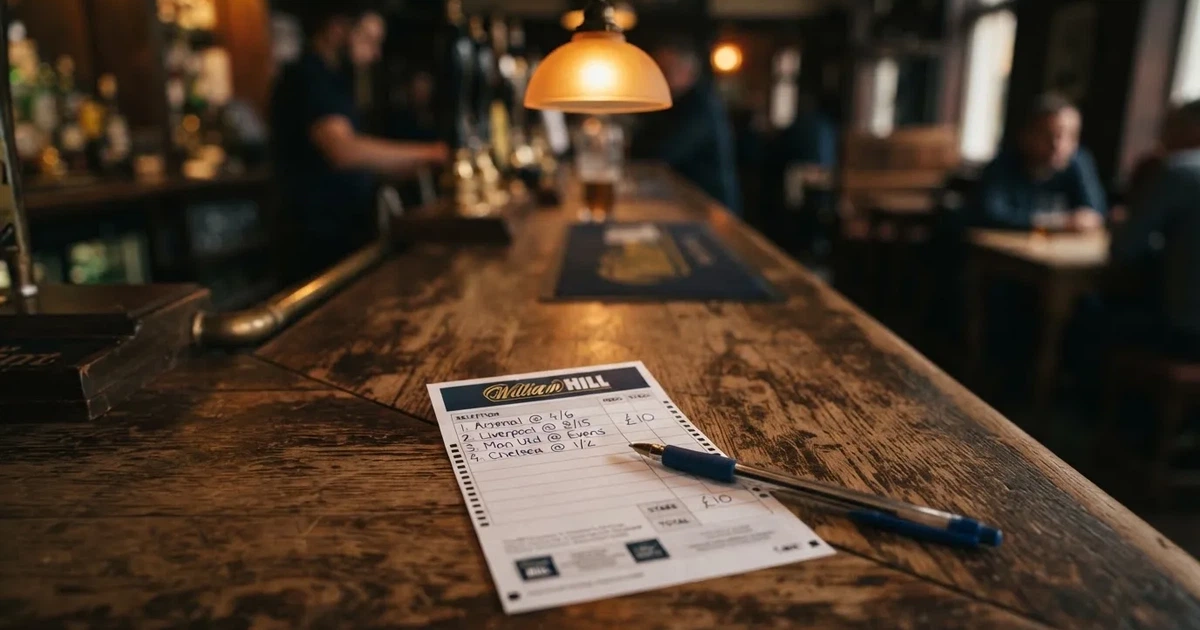
What follows is the cost of an acca in real terms. The maths of how odds multiply, how the bookmaker’s margin sits inside every price, how a free bet on an acca actually settles, and how much turnover the bookmaker’s headline offers require before any of the bonus money is yours to withdraw. The angle throughout is the same: what does the bettor pay, and where do the bookmaker’s incentives push back the other way.
Data current as of 27 October 2026, cross-checked against the Gambling Commission’s public register of remote operating licences and the operator terms each brand publishes on its own site.
Staying in Control: Safer Gambling Around Accumulators
The single thing to know about a football acca, before the maths, before the odds, before the welcome offer, is what to do when the betting stops being a pastime. Accumulator bets are the bet that loses most often, and most expensively, because the stake and the temptation grow together. A four-fold at combined odds of 50/1 feels almost free at 50p, and the urge to add a fifth leg — to bump the price, to “make it worth it” — is the same urge that empties a wallet over a season. Knowing where the off-ramps sit is not defeatism. It is the price of staying in the game at all.

GAMSTOP is the national multi-operator self-exclusion scheme. Register once and every Gambling Commission-licensed online bookmaker closes the door: deposits, free bets, marketing emails, the lot. Periods are six months, one year, five years, or five years with auto-renewal; after the minimum period the exclusion stays in place for a further seven years unless the customer asks GAMSTOP to remove it. It is the single most effective tool British punters have, and it is free. Every brand reviewed on this page is a GAMSTOP member, and the register is the backstop rather than the front line.
A separate set of controls sits with the bookmaker. Deposits can be limited by day, week or month. A cooling-off period of 24 hours to several weeks can be requested, and self-exclusion from a single brand for six months or more is available on request. Reality checks — pop-up timers showing how long the session has been running and what has been won or lost — are mandatory under the Commission’s rules. The financial vulnerability check that has applied since 30 August 2024 is the one new mechanism worth knowing: a licensed remote bookmaker runs a public-record check (bankruptcy, county court judgments) once a customer’s net deposits over a rolling 30 days exceed £150. It is not an income check and not a credit reference, and it triggers on its own at the threshold without the punter needing to ask.
The licensed bookmakers reviewed further down this page all run on the same Gambling Commission licence regime. The two free, independent, round-the-clock services for anyone who feels the betting drifting are GamCare’s National Gambling Helpline and the NHS gambling clinics, both staffed by people who do not sell bets. GambleAware funds treatment and education across Great Britain. Gamblers Anonymous runs peer support meetings. None of these are last resorts; they are the gear that lets the rest of the hobby function.
Why Most Tips on Football Accas Lose: The Strategy Problem
The strategy pages and tipster feeds that sell “football accumulator tips” are a market of their own, and the way that market makes money is worth understanding before any of the picks are read. A tipster’s revenue is usually a subscription or a per-tip fee, and the price the tipster charges is set in advance of the result. The bettor’s revenue is the winnings on the bet, and the winnings only arrive if every leg of the acca wins. The two cashflows do not align: a tipster can sell tips that lose forever and still be in business, and a punter who follows them cannot.

A few mechanics are worth knowing, because they recur in the same shape on every accumulator tips site and app:
- Number of legs. Most “best bets” lists are accumulators of four to eight selections. Each added leg roughly squares the price and roughly squares the probability of losing. A 4/6 shot, single bet, lands around 60% of the time. Four of them strung together land around 12-13% of the time, and a 50/1 acca is more often a lottery ticket than a reasoned wager.
- Selection bias. A 12-leg “mega acca” mixes favourites and underdogs. The underdogs carry the long prices; the favourites keep the accumulator looking plausible. Bookmakers love it; punters love the feel; the maths of compounded probability is unchanged by either enthusiasm.
- Tipster records. Many tipster pages publish a “strike rate” or “ROI” that is unaudited. A record stamped “verified” by a third party is rarer than the badge suggests. The number to ask for, when one is offered, is the closed-account, after-commission figure over a meaningful sample — and to check it against the closing line at the bookmaker the tipster recommends, not at the bookmaker the tipster’s link leads to.
- Closing line value. A bet that beats the closing price at the bookmaker is, in industry usage, a “value” bet. Closing line value is the single most cited edge in modern betting literature, and it is also the metric the tipster feeds are least likely to publish, because most of them do not beat it over a long sample.
None of this is a counsel of despair. A disciplined single-bet punter, betting selectively, can in principle build a long-term edge, and the academic literature on the subject is real. The bettor who acts on a six-leg acca sold at a flat fee is, on average, paying the tipster for a ticket to a lottery the bookmaker has already priced. The choice the punter actually has is between the maths and the story, and the maths is the same before the match and after it.
A short note on bankroll: the standard advice from professional and semi-professional bettors is to stake no more than 1-2% of the bank on any single bet and no more than 5-10% of the bank on any one day’s betting. An acca, by construction, demands a smaller stake to keep the bankroll steady because the implied hit rate is so much lower. A £10 acca at 50/1 implies a hit rate of about 2%; a £100 acca at the same price implies a £5,000 hit before a single payout clears the stake. The compounding works against the punter on a losing streak as much as it works for the punter on a winning one, and the bankroll rule exists to soften the run that will, statistically, come.
Selection and Settlement: The Mechanics of an Acca
An accumulator is the simplest multi-leg bet, and the rest of the family — the Trixie, the Yankee, the Heinz, the Lucky 15, the Goliath — is a series of shortcuts for staking on every combination of selections from a fixed set. Picking the legs is the easy part; understanding what the bookmaker does with them is the part that pays.
How selections combine
In a fixed-odds accumulator the price of the bet is the product of the prices of each leg. Decimal odds multiply cleanly: a four-fold at 1.50, 2.00, 2.50 and 1.80 results in a combined price of 13.50. A £10 stake returns £135.00, with £125.00 profit. The fractional equivalent is 25/2. The fractional price a bookmaker writes is a/b, and the decimal price is 1 + a ÷ b. So 5/1 → 6.00, 11/4 → 3.75, 2/1 → 3.00, evens (1/1) → 2.00.
Each price carries the bookmaker’s margin. The margin is what the bookmaker keeps on every unit bet on the market, and the rest is returned to punters over the long run. For a single match-result market (home/draw/away) the margin is typically 5-8%. A pre-match English Premier League match on a leading bookmaker often runs closer to 4-5%. For a four-fold accumulator the margin compounds, and a 5% margin on each leg of a four-fold is closer to a 19% effective margin on the combined price. That is the single most important number on this page, and the one the marketing around accas most consistently avoids.
A worked example using the four-fold at 13.50 (1.50 × 2.00 × 2.50 × 1.80) shows how the margin compounds. A £10 stake returns £135.00. The margin compounds through the four prices and the implied hit rate of the accumulator, given the bookmaker’s margin, is significantly lower than the simple reciprocal of the combined decimal odds. The headline price and the realistic hit rate do not match up. The price is real; the implied probability is not.
Settling an acca
A football accumulator settles in one of three ways:
- All legs win. The bet pays out at the full combined odds. Stake × combined decimal odds = total return. Profit = total return minus stake.
- One or more legs lose. The bet is over. The stake is lost.
- One or more legs tie (a “push”). The leg is removed and the combined price is recalculated from the remaining selections. A four-fold with one push becomes a three-fold at the price of the three remaining legs, and the stake is unchanged.
Each-way accumulators are a separate construct: two bets of equal stake, one on the win part and one on the place part, so the stake doubles. The place terms vary by race and operator, and most bookmakers apply different place terms to different sports and different field sizes. The maths of an each-way acca is the maths of two accumulators run side by side, and the place prices are usually a fraction of the win prices. The same compounding margin applies to each leg of each side of the bet.
A “Bet Builder” or “same-game multi” is an accumulator on selections from one match — for example, both teams to score, total goals over 2.5, and a player to score. The combined price is the product of the leg prices, the same as a multi-match acca, and the margin compounds in the same way. The same-game format has grown rapidly with British punters over the last three seasons, and the rule that one leg failing loses the bet is unchanged.
Cash out, acca insurance, acca boost
Three features recur on every modern acca page, and each one moves money from the punter’s pocket to the bookmaker’s:
- Cash out. Settle the bet before the final leg. The price the bookmaker offers is its own model of what the bet is worth right now, and the model is built to favour the bookmaker. A punter with a 4/1 acca after three legs is offered a cash-out that lets them walk with, say, 2/1 of the original stake back. The fifth leg, if it lands, would have paid the full combined price; the cash-out price is the bookmaker’s bid for a certainty the punter did not previously have. A useful feature, used sparingly.
- Acca insurance. If one leg lets the bet down, the stake is returned as a free bet. A free bet whose stake is not returned with a win is not a refund in cash. The free-bet value is the free-bet amount × (odds − 1) ÷ odds, and for a £10 free bet at 5.00 the value is £8.00. The punter pays the difference.
- Acca boost / enhanced odds. The bookmaker pays a percentage on top of the combined price once a threshold of legs is reached — for example, a 10% boost on five-folds and a 50% boost on ten-folds. The boost is a marketing tool, and the boost is paid from a margin the bookmaker has already loaded into each leg’s price. The punter is being paid back a small slice of what was taken from them on the way in.
Cash out availability is not guaranteed, and where the feature is unavailable, the original bet stands and is settled in the normal way. That phrase is in the bookmaker’s terms for a reason.
Ten Licensed Bookmakers for Football Accumulators
| Brand | Remote Licence · Holder | Acca Focus & Terms |
|---|---|---|
| Betfred | 39544 · Petfre (Gibraltar) Ltd | Bet Builder, Sub Switch, Racing Post data, Extra Places |
| Lottoland | 38991 · EU Lotto Ltd | Lottery focus; acca products are secondary |
| Sporting Index | 27343 · Sporting Index Ltd | Fixed-odds accas; separate financial spread products |
| Swifty Sports | 58957 · Swifty Global (UK) Ltd | BOG, Cash Out, daily price boosts |
| BetMGM | 39198 · LeoVegas Gaming PLC | Acca-specific welcome offers; Bet Builder |
| Fafabet | 57385 · Taichi Tech Ltd | BOG on racing; football acca-focused products |
| Ladbrokes | 54743 · LC International Ltd | Acca Boosts, Acca Insurance, Bet Builder |
| DAZN Bet | 48756 · DZBT Ltd | Cash Out, Bet Builder, streaming integration |
| Dabble | 65677 · Dabble Sports UK Ltd | Social feed and bet copying |
| Fitzwilliam Sports | 48760 · SBKI Limited | Market-average pricing model |
The ten brands below are the operators the Gambling Commission’s public register names against a remote general betting standard (real events) licence. They are not a ranking. They are the cohort this page reviews, and the order in which they appear is the editorial order of the page rather than a recommendation. A licence is not a recommendation: the licence means the operator is monitored by the Commission, takes part in GAMSTOP, and is bound by the LCCP and Remote Technical Standards. It does not mean the operator offers the best acca, the best price, or the best welcome offer — those are different questions, and this page answers them at the end of each write-up.
The angle is the same throughout: what does each operator cost the punter, and where does it reward them.
Betfred
Petfre (Gibraltar) Limited, the licence holder, has been running Betfred since the high-street era and is on the Commission’s register under account 39544 for remote general betting standard (real events). The bookmaker’s app, in the version current at the snapshot, carries Bet Builder, Sub Switch, Racing Post data, Extra Places, live casino and bingo. Football acca punters are most interested in the first two: Bet Builder is a same-game multi product, and the Footballacca-style features are bundled around it.
The offer the brand runs for new acca customers is the kind of marketing the rest of the page will warn against, and the most honest description is qualitative. There is a Bet £10, Get £50 in Free Bets construction for new accounts at the snapshot, with a free-bet expiry that is short and a stake-not-returned free-bet form that hides the true value of the offer. The terms need to be read. Betfred’s in-play product is broad and the Best Odds Guaranteed offer is competitive on horse racing, but the football acca-specific insurance and acca boost structures are mid-market and the prices sit within a typical margin band.
A reasonable choice for a punter who already has a Betfred shop relationship and wants the app to match the in-shop experience. The welcome offer rewards loyalty less than the marketing suggests. The licence and the GAMSTOP membership are the public-protection layer.
Lottoland
Lottoland’s UK app combines casino, lottery betting, sports betting and scratchcards, and the licence the Commission names against Lottoland is held by EU Lotto Limited under account 38991. The product is not the conventional bookmaker: the primary business is lottery, and the sportsbook sits inside the same app, drawing on the same wallet. A punter looking for a deep football acca product is not the target customer.
The sportsbook does carry a football section and the licence covers remote general betting standard (real events), so the offer is real. The acca products — Bet Builder, acca insurance, the kind of features this page discusses — are present but not the primary draw. Lottery betting, which sits in a different licence category and is a different product, takes most of the engineering budget. The price competitiveness on football acca markets is unremarkable. The customer-protection infrastructure is the standard Commission-mandated set, and the brand is a GAMSTOP member.
A niche pick for a punter who plays the lottery and the football in the same wallet and wants the convenience of one app. Less suitable for a serious football acca customer.
Sporting Index
Sporting Index holds a Gambling Commission licence for fixed-odds betting (account 27343) and a separate authorisation from the Financial Conduct Authority for financial spread betting. The two licences are not the same. The football acca punters care about the fixed-odds side; the spread betting side offers Total Goals, Winning Favourites and Race Index products that sit on a different pricing basis and where losses can exceed the original deposit.
The new-customer offer at the snapshot, on the fixed-odds side, is a £10 fixed-odds bet at minimum odds of 1/2 that unlocks three £10 fixed-odds free bets, three £5 Total Goals spread bets, three £5 Winning Favourites spread bets and a £1 Race Index spread bet. The qualifying bet cannot be placed in-play and cannot be cashed out. The free-bet stake is not returned with a winning free bet. The fixed-odds welcome construction is reasonable as these things go; the spread-bet unlock is genuinely the kind of offer to be cautious of, because spread betting carries an unlimited liability per unit of stake.
The fit for a football acca punter is on the thinner side: Sporting Index is strongest on spread products, and the fixed-odds acca is not the centrepiece of the offering. The price competitiveness on the football coupons is mid-market, and the cash-out feature is solid. A useful second account for a punter who plays both fixed odds and spread.
Swifty Sports
Swifty Global (UK) Ltd holds the licence (account 58957), and the Swifty Sports app, at the snapshot, lists Best Odds Guaranteed, Cash Out on markets including horse racing and football, daily price boosts, live streaming and in-play betting. Bet Builder is listed as coming soon. The acca product is built around the Cash Out feature and the price boosts; the same-game multi offering is the one missing piece, and the marketing around the brand leans into the rest of the feature set.
A newer brand than the rest of the list, which is sometimes a feature and sometimes a warning. The licence and the GAMSTOP membership are the public-protection layer. The prices on the football coupon run inside the standard margin band, and the acca boost construction is similar to the rest of the market. A reasonable choice for a punter who values the live streaming product and is happy to wait for the Bet Builder to land.
BetMGM
BetMGM UK is operated by LeoVegas Gaming PLC under Commission account 39198, and the app is published under the BetMGM brand. The new-customer offer, at the snapshot, is for new UK customers who deposit £10 or more and place a sports bet within 7 days: four £10 free bets (two football accas of 4+ selections and two sports multiples of 2+), valid for 7 days, with minimum odds applying and an opt-in required. The acca-specific structure of the offer is unusual and points to the brand’s football focus.
The bonus cap that took effect on 19 January 2026 is the structural rule that bounds offers like this: wagering requirements on bonuses are capped at 10x. The BetMGM welcome construction, on the surface, attaches that cap to the free-bet part rather than the deposit part, and the headline £40 of free bets has a real value closer to the £32 mark once the stake-not-returned free-bet adjustment is applied. The offer is competitive as welcome offers go, and the acca-specific framing is unusual.
A solid pick for a punter who likes the BetMGM brand and the in-app experience. The four-leg acca minimum on the football free bets is a constraint that does not exist on every welcome offer, and a casual punter who would prefer a single or a double free bet is not the target.
Fafabet
Taichi Tech Limited holds the licence (account 57385), and the Fafabet app at the snapshot runs Best Odds Guaranteed on UK and Irish horse racing win and each-way bets from 9am on race days: if the starting price is bigger than the original price, the bigger odds are paid. Horse racing is the headline, and the football acca product sits inside a brand that is racing-first.
The football coverage is full and the acca products — Bet Builder, acca insurance, acca boost — are present. The acca boost is the most interesting of the three for a punter who builds long-price accas, and the brand’s pricing on the football coupons is competitive. The horse-racing-first focus is a real signal of the brand’s customer base, and the football side is solid rather than market-leading.
A reasonable pick for a punter who plays horse racing and football in roughly equal measure and wants the BOG on racing and a competitive acca product on football. Less suitable for a punter whose betting is football-only and who wants a brand with a deep, football-first product.
Ladbrokes
LC International Limited is the licence holder (account 54743), and the Ladbrokes brand has been on the British high street for the better part of a century. The remote licence is for general betting standard (real events) and betting intermediary. The app offers odds boosts on horse and greyhound bets, Best Odds Guaranteed on UK and Irish horse races, in-play betting, and Acca Boosts.
The acca-specific offering is the strongest in the list. The Acca Boost construction is generous, and the Acca Insurance is well-priced. The price competitiveness on the football coupons is at the top end of the market, and the Bet Builder product is mature. The high-street heritage is not a feature in itself but it is a signal of operational depth and of the brand’s resilience to the kind of change-of-operator events that have hit some of the newer brands on the list.
A leading pick for a punter whose football betting is acca-heavy and who wants the best acca-specific product. The welcome offer is competitive; the price competitiveness is genuine; the customer-protection infrastructure is standard Commission.
DAZN Bet
DZBT Limited is the licence holder (account 48756), and the DAZN Bet brand sits inside the wider DAZN sports media business. The app at the snapshot offers Cash Out, Bet Builder, daily bet boosts and in-play betting. The cash-out feature is the most-cited caveat: cash-out availability is not guaranteed and where it is unavailable, the original bet stands.
The price competitiveness on the football coupons is competitive and the acca product is built around the Cash Out and the daily bet boosts. The media business behind the brand brings a slightly different shape to the product: live streaming is integrated more deeply than most, and the brand’s natural fit is the punter who watches DAZN and bets on what they are watching.
A reasonable pick for a DAZN subscriber who wants the betting product to sit alongside the streaming product. A less complete option for punters seeking deep diversification across racing or casino games.
Dabble
Dabble Sports UK Ltd holds the licence (account 65677), and the Dabble app at the snapshot runs a “Bet £10, Get £10 in Free Bets” welcome offer on a first deposit for new customers, with minimum odds applying, a 7-day free bet expiry, and the stake not returned. The acca product is built around the welcome offer and the social-betting angle: Dabble’s distinguishing feature is the social feed, where customers can follow and copy each other’s bets.
The social product is the differentiator and the warning at the same time. Following other punters’ tips is no more reliable than following a tipster site, and the social feed is best used as a discovery channel rather than a copy-trading service. The prices on the football coupons are mid-market and the acca product is solid without being market-leading. The customer-protection infrastructure is standard Commission.
A reasonable pick for a punter who treats the social feed as discovery rather than instruction. Not the first port of call for those prioritising deep acca product specialisation.
Fitzwilliam Sports
SBKI Limited is the licence holder (account 48760), and the Fitzwilliam Sports offering at the snapshot bases prices on Oddschecker’s average price for each selection. The model is unusual in the British market: instead of building its own price, Fitzwilliam sources the average of the rest of the market. The app is available on Apple and Google.
The acca product is solid without being the differentiator. The price competitiveness is the differentiator: the average-price model means the price is rarely the best in the market and rarely the worst, and the punter who wants a price close to the median has found the right home. The customer-protection infrastructure is standard Commission. The brand’s natural fit is the punter who values price stability over price leadership.
A reasonable pick for a punter who values a price close to the market median and who wants a single account that will not surprise them on price. Less suitable for a price-hunting punter who wants the best price on every selection.
How an Acca Is Priced and What the Margin Costs
The bookmaker’s margin sits inside every price, and the margin on an accumulator compounds with every leg. The maths of the compounding is the single most important fact on this page for a punter who builds accas.
Margin in a single market
For a market with three outcomes (home, draw, away) the bookmaker’s payout share is 1 ÷ (1/odds_home + 1/odds_draw + 1/odds_away), and the margin is 1 minus that share. A Premier League match priced 2.10/3.40/3.60 has a payout share of 1 ÷ (0.476 + 0.294 + 0.278) = 1 ÷ 1.048 = 95.4%, and a margin of 4.6%. A 4.6% margin on a single bet is competitive; the same match on a less price-competitive bookmaker can carry a margin of 7-8%, and the punter pays the difference.
The margin is the same number seen from the other side as the “payout share”, and the two are equal to 100%. A bookmaker that offers 95% payout share keeps 5% margin. The terms are used interchangeably on this page because the underlying figure is the same.
Margin compounding on an accumulator
On a four-fold accumulator with a 5% margin on each leg the effective margin is closer to 19% on the combined price, and on a six-fold with the same per-leg margin the effective margin is closer to 26%. The maths is the same compounding that produces the headline price, working in the other direction on the margin. A 50/1 acca at a typical bookmaker margin is not the same as a fair 50/1 acca: the realistic hit rate of the acca, given the bookmaker’s margin, is significantly lower than the simple reciprocal of 51.00 (which is 1.96%).
The hit rate of an acca is determined by the true probability of each leg, not by the bookmaker’s price. The bookmaker’s price is the punter’s ceiling: a leg priced at 2.00 implies a 50% chance, but the bookmaker’s margin means the real chance is higher, and the punter has to be on the side of that asymmetry to win. The acca hits when each leg, in turn, beats the bookmaker’s margin in the punter’s favour, and the standard deviation of the outcome is enormous. A punter who hits 50/1 accas at a long-term rate better than 2% has, in industry usage, a positive edge; a punter who hits them at a long-term rate of 1% is paying a heavy implicit tax to the bookmaker.
The compounding of the margin is the reason a single-bet punter, betting selectively, can in principle beat a long-term edge, and the reason an acca punter, betting indiscriminately, almost cannot. The bet is the same bet, but the structure multiplies the cost of every bookmaker’s percentage.
How to Verify a Gambling Commission Licence
The check takes about a minute. The Commission’s public register is at the domain of the Commission itself, and the search can be run by business name, trading name, domain or account number. The search returns the licence holder, the licence type, the licence number, the status and the registered address.
The brands reviewed on this page are all listed on the public register. The ten licence numbers, in the order the brand appears on the page, are 39544 (Betfred), 38991 (Lottoland), 27343 (Sporting Index), 58957 (Swifty Sports), 39198 (BetMGM), 57385 (Fafabet), 54743 (Ladbrokes), 48756 (DAZN Bet), 65677 (Dabble) and 48760 (Fitzwilliam Sports). The register is the whole test of who holds a licence, and the register is updated when licences change.
Two checks worth making beyond the search itself:
- The trading name in the search result should match the trading name on the bookmaker’s site. A bookmaker that operates under a different trading name from its licence holder is not unlicensed, but the trading name on the bet slip and the trading name on the register should agree.
- The licence status should read “Active”. A licence that is “Surrendered” or “Lapsed” is not a current licence, and the bookmaker should not be taking new customers in Great Britain.
A licence does not, of itself, mean the bookmaker is the right one for a given acca. It means the bookmaker is monitored by the Commission, that it is a GAMSTOP member, and that it is bound by the LCCP, the Remote Technical Standards and the Commission’s marketing codes. It does not mean the prices are the best, the welcome offer is the most generous, or the customer service is the fastest. Those are different questions, and they are answered by the market, not the register.
Reading the Landscape: A Note on the Wider Market
The brand in a football acca welcome offer is a brand the operator wants the punter to try, and the offer is the marketing spend the bookmaker is willing to spend to acquire a new customer. The free-bet stake, the qualifying bet, the minimum odds, the expiry and the stake-not-returned clause are all numbers that add up to the true value of the offer, and the headline number is rarely the right one.
Two free-bet facts, at the snapshot, that recur on most of the welcome offers on this page: a free bet whose stake is not returned with a win is not a refund in cash, and the value of the free bet is the free-bet amount × (odds − 1) ÷ odds × the payout share of the market. A £10 free bet at 5.00 has a value of £8.00 × the payout share of the market. The punter is paid back the free-bet profit, not the free-bet stake. A free bet that is paid back with the stake is a different product, and it is rarer on the British market at the snapshot.
The bonus cap that took effect on 19 January 2026 is the structural change to the welcome-offer market. Wagering requirements on bonuses are capped at 10x, and mixed-product promotions — an offer that requires gambling on two or more product types — are banned. The effect has been to compress the headline value of welcome offers across the market, and the punter who reads the terms of an offer in 2026 will find the headline number more honest than the headline number on offer in 2024.
A useful, if cautious, rule: a welcome offer that does not require the punter to read the terms is rarely a welcome offer worth taking. The marketing around accas, around welcome offers, and around “risk-free” bets in particular is built to make the headline number the right number, and the headline number is almost never the right number on a product whose real value is set by the terms.
Picking the Right Bookmaker for the Right Accumulator
A four-leg acca on the weekend Premier League coupon, a six-leg acca on the midweek Champions League schedule, a same-game multi on a Tuesday night EFL match, and a long-shot 12-leg acca on the international break are four different products, and the bookmaker best for one is rarely the best for all four.
A short framework for the decision:
- The price-led punter. For a punter who builds accas of 4-6 selections and wants the best combined price, the leading bookmakers for acca competitiveness sit inside the same price band, and the marginal differences between brands are smaller than the marketing suggests. Bet Builder punter, in particular, should compare Bet Builder prices on the same match across two or three bookmakers before staking. The price, not the welcome offer, is the long-term value.
- The feature-led punter. A punter who values Cash Out, Bet Builder, live streaming, and the acca insurance/boost/enhanced-odds trinity should pick the bookmaker that does the best job on the features they use. The feature that matters is the one the punter uses weekly. The feature the punter never uses is a marketing slogan.
- The acca insurance punter. Acca insurance is one of the most-cited features in the marketing and one of the most misunderstood. A free bet whose stake is not returned with a win is a real value, but it is a smaller value than the headline free-bet amount. The punter who values acca insurance should compare the number of legs required, the minimum odds of the qualifying legs, the expiry, and the stake-not-returned clause.
- The bonus-cautious punter. A punter who reads the bonus terms and notices the qualifying bet cannot be placed in-play, cannot be cashed out, must be at minimum odds of 1/2, must be placed within 7 days, and the free bets expire after 7 days is the punter who extracts the real value of the offer. A punter who reads only the headline is the punter the marketing was written for.
- The brand-loyal punter. A punter who already has a Betfred shop relationship, a Ladbrokes high-street card, a Paddy Power account, or a long-running relationship with any of the major bookmakers is well-served by the in-app version of that relationship. The welcome offer is rarely the right reason to move.
The generalisation that holds across the framework: the bookmaker’s offer is built to acquire a new customer, and the bookmaker’s acca product is built to retain that customer. A punter who is happy to be a customer of the bookmaker is the punter the offer was written for. A punter who wants the welcome offer and the loyalty programme without the betting is a customer the bookmaker has overpaid to acquire, and the marketing will catch up.
Closing the Loop: The Cost of a Football Acca in 2026
A £10 four-fold at 13.50 returns £135.00 on a winning day and £0.00 on a losing day; the gap between the two outcomes is what the bookmaker sells. The price of the bet is the price on the slip. The implied probability of the bet is a different number, and the gap between the two is the bookmaker’s margin, compounded four times. The cost of the bet is the compounded margin; the marketing is the rest.
The bookmakers reviewed on this page are the licensed field at the snapshot. They are not a ranking, and the licence is not the reason to pick any one of them. The reason to pick a bookmaker is the fit between the punter’s acca style and the bookmaker’s acca product: a price-led punter, a feature-led punter, an insurance-led punter, a bonus-cautious punter, and a brand-loyal punter each have a different right answer. The market has space for all of them, and the Commission’s public register is the public backstop that makes the rest of the decision possible.
A final note on the cost question that the rest of the page has been answering. The acca is a bet that costs the punter the compounded margin, the time spent reading the welcome offer, and the emotional cost of a 4/1 acca that loses on the 89th minute. The first two costs are real and quantifiable; the third is the cost the marketing is selling, and the cost the punter is paying. The punter who reads the terms, compares the prices, and stakes within the bankroll is the punter who enjoys the rest.
Frequently Asked Questions About Football Accumulator Bets
How do football accumulator bets work?
An accumulator is a single bet that links two or more selections. Every leg has to win for the bet to pay out. The combined price is the product of the leg prices; as calculated above, a four-fold can pay 13.50 (25/2 fractional). A £10 stake returns £135.00 on a winning day. One losing leg and the bet is over. A tied leg is removed and the price recalculates from the remaining selections. The bookmaker’s margin sits inside each leg’s price and compounds with every leg added.
Where can I place football accumulator bets?
Football accumulator bets are offered by every Gambling Commission-licensed online bookmaker. The Commission’s public register lists every operator that holds a remote general betting standard (real events) licence, and a single search by business name, trading name or domain returns the licence status. Every brand reviewed on this page is on the register. The licence is the test, not the marketing. Each bookmaker’s own terms describe the acca products — Bet Builder, Cash Out, acca insurance, acca boost — and the welcome offer attached.
How does an accumulator work in football betting?
An accumulator in football betting works the same way it works in any other sport: a single bet that pays out only if every leg wins, at a price that is the product of the leg prices. Football accas are typically built from match-result (1X2), both-teams-to-score, over/under goals, player markets, and the same-game-multi markets inside a Bet Builder. The bookmaker’s acca-specific features — Cash Out, acca insurance, acca boost — are added to the structure on top. The maths of compounded margin is unchanged by the sport.
How can it be checked that a bookmaker holds a Gambling Commission licence?
The Commission’s public register is the whole test. Search by business name, trading name, domain or account number. The result should show the licence holder, the licence type, the licence number, the status (Active) and the registered address. The ten brands reviewed on this page are all on the register, with the account numbers listed in the verification section above. A licence that is not Active, or a trading name that does not match the brand on the bet slip, is a red flag.
How is the return on a bet worked out from the stake and the odds?
The return on a single bet is the stake multiplied by the decimal odds. A £10 bet at 3.50 returns £35.00, of which £25.00 is profit. The return on an accumulator is the stake multiplied by the combined decimal odds of the legs, where the combined odds are the product of the leg odds. The conversion from fractional odds to decimal is 1 + a ÷ b, so 5/1 is 6.00, 11/4 is 3.75, and evens (1/1) is 2.00. The bookmaker’s margin sits inside every price; the return is calculated from the headline price, not from the implied probability.
What is the bookmaker’s margin and how can it be seen in the odds?
The bookmaker’s margin is what the bookmaker keeps on every unit bet on a market. For a market with three outcomes (home, draw, away) the margin is 1 minus the sum of the reciprocals of the leg prices, expressed as decimal odds. A 2.10/3.40/3.60 market has a 4.6% margin; a 1.80/3.60/4.50 market has an 8.0% margin. On an accumulator the per-leg margin compounds, and a 5% margin on each of six legs is closer to a 26% effective margin on the combined price. The margin is the cost the bookmaker charges for taking the bet, and it is the single most important number on a betting slip.
Bet types & in-play – Fast Payout
Content created by the «Fast Payout» team
