
A Heinz bet, line by line: what it is, what it pays and where to place it
 Available in US
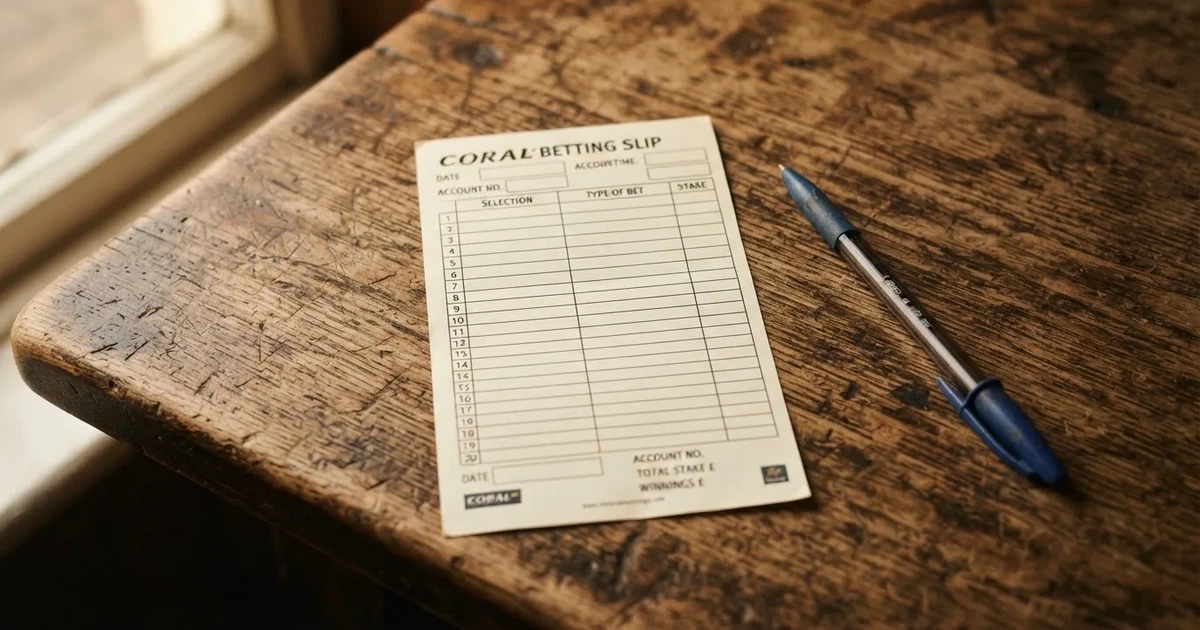
A Heinz is one of those bet constructions that looks like a single wager on the betting slip and behaves like a small factory once the race or the fixtures go in. Six selections, fifty-seven bets, no singles. Every one of those 57 lines has to win for the biggest prize to land, and the smallest prize is the long tail of doubles that can survive one or two losers. The mechanic is not new and it is not exotic — it is the same kind of arithmetic that drives a Trixie, a Yankee, a Super Heinz or a Goliath — but the way it pays out catches first-time users out, and the way a bookmaker advertises it tends to catch them out twice. This page is the work-out: how the bet is built, what each line does, what it costs in real money and which Great Britain-licensed bookmakers offer it without dressing it up as something it is not.
The data on this page was checked as of 27 October 2026 against the Gambling Commission’s public register, so each licence and account number cited below is the entry that appeared there on that date.
How the UK bookmaker list was put together
Ten brands sit behind the rest of this page. Each one is on the public register of the Gambling Commission, the body that licenses remote betting for Great Britain under the Gambling Act 2005, and each one holds a remote general betting standard (real events) licence or, in one case, a remote betting intermediary licence for an exchange. The list is not a ranking of who is “best” — there is no such thing in regulation, and a place in a comparison is not a licence — and it is not the whole of the GB market. It is the set the page works through because the data was confirmable from each operator’s own published terms on 27 October 2026.
A handful of facts govern the whole list and apply equally to every brand on it. The minimum age to bet with any of them is 18. Identity, address and date of birth are verified before the first deposit, and have been since 7 May 2019, which means there is no anonymous play at any licensed site in the set. Every brand is part of GAMSTOP, the national multi-operator self-exclusion scheme that has been a licence condition for online operators since 31 March 2020. Credit cards are not accepted for gambling anywhere in the set, and have not been since 14 April 2020. None of these is a quirk of a particular brand: each is a condition of the Gambling Commission’s licensing regime, and the practical effect of skipping it is that a brand is operating outside the law for customers in Great Britain.
What separates one brand from the next is what sits on top of the licence — the sportsbook, the markets, the promos, the cash-out, the live streams and the bet builders. Those are the columns of the comparison later in the page, and they are the only place the brands genuinely differ.
Selection criteria for the bookmaker set
Five things earned a brand a place in the line-up. A current Gambling Commission remote licence that is in force on the date of the check, identified by an account number on the public register. A sportsbook that offers full-cover multiples, because a Heinz is meaningless to a brand whose coupon stops at trebles. A published welcome offer or ongoing promotion for sports customers, described in the brand’s own terms rather than in a third-party listing. A live or in-play product, since most Heinz tickets in practice are built around fixtures that move in real time. A deposit and withdrawal route that includes debit cards or bank transfer, because the credit-card ban makes any payment method that runs through a card a paid-by-debit arrangement by default.

The comparison that follows uses one additional filter. Some brands say “Heinz” on the betting slip and some say “Lucky 63” — the two are mechanically identical, since a Lucky 63 is a Heinz plus six singles — and the line-up includes brands that label the bet either way. Where a brand uses a different label, the page says so on the operator’s own row, and treats the underlying 57-line multiple as the same construction.
| Brand | Gambling Commission remote licence | What the operator’s own terms state on Heinz and full-cover bets |
|---|---|---|
| Midnite | Account 101839, held by Midnite Limited; remote general betting standard (real events) | Site lists an acca builder, popular accas, price boosts with maximum-stake limits; the Heinz sits inside the standard multiples list. |
| Smarkets | Account 39173, held by Smarkets (Malta) Limited; remote betting intermediary | Exchange rather than sportsbook: backs and lays on the same selections, so a Heinz is built by placing 57 back bets; new-customer terms are 0% commission for 60 days on a £10 first deposit. |
| 888sport | Account 39028, held by 888 UK Limited; remote general betting standard (real events) | Pre-match and in-play betting, Cash Out, Bet Builder, racing streams, BetFinder form tools, a live bet feed and daily boosted odds. |
| BoyleSports | Account 39469, held by Boylesports Enterprise; remote general betting standard (real events) | Acca Insurance: opt-in, minimum stake £5, minimum odds 1/2, maximum £20 refund as a free bet, free bet expires in 7 days, bets placed and settled on the same day. |
| William Hill | Account 39225, held by WHG (International) Limited; remote general betting standard (real events) | Best Odds Guaranteed on UK and Irish horse racing from 8 AM on the day of the race, on singles and multiples; not on ante-post, tote or pari-mutuel. |
| LiveScore Bet | Account 56859, held by LiveScore Betting and Gaming (Gibraltar) Limited; remote general betting standard (real events) | Bet Builder allows up to 10 selections and covers match result, BTTS, corners, total goals, player scoring and card markets. |
| Betboro | Account 44181, held by Webmedia Development N.V.; remote general betting standard (real events) | In-play markets and cash-out on football, racing and tennis, boosted odds on selected singles from £10 stakes, deposit limits, reality checks and self-exclusion built in. |
| Spreadex | Account 8835, held by Spreadex Limited; remote general betting standard (real events); also FCA-regulated for financial spread betting | New-customer offer: £60 in free bets for a £10 fixed-odds bet, free bets usable across fixed odds and spread betting, qualifying bet within 28 days. |
| Lottoland | Account 38991, held by EU Lotto Limited; remote general betting standard (real events) | Site combines casino, lottery betting, sports betting and scratchcards, and confirms a Commission licence for customers in Great Britain. |
| Paddy Power | Account 39439, held by PPB Counterparty Services Limited; remote general betting standard (real events) | Bet Builder+, Popular Bet Builders, Super Sub (a bet rolls over to a replacement player if one is substituted), expanded Win More markets, player and ACCA stats. |
How a Heinz is actually built
A Heinz has 6 selections. It has 57 bets. It has no singles, and that single fact is the most useful thing to know before anything else, because it changes what “winning” means. Each of the 57 lines is a separate bet in its own right, with its own stake, its own return and its own settlement. The 57 break down by line length: 15 doubles, 20 trebles, 15 four-folds, 6 five-folds and 1 six-fold. Pick six winners and every line pays. Pick four winners and only the lines built from those four — six doubles and four trebles — pay; the four-folds, the five-folds and the six-fold all lose. Pick three winners and the only return comes from the doubles that pair them up: three doubles, paying briefly but rarely enough to recover the total stake.
The arithmetic of the stake is the second surprise. A £10 Heinz is not a £10 bet — it is 57 bets at 10p each, or £1 at 10p per line, or any unit stake the betting slip accepts multiplied by 57. Place £2 per line and the total cost is £114. Most bookmakers let the punter set the unit stake, which is why a Heinz is sometimes called a “57-unit” bet on the slip: the same construction, different scale, depending on what the customer wants to risk.
A full-cover bet, in the trade’s own vocabulary, is any bet that covers every available multiple of a given number of selections. The Heinz is the one with 6. A Trixie covers 3 selections in 4 bets (3 doubles and 1 treble), a Yankee covers 4 in 11 (6 doubles, 4 trebles, 1 four-fold), a Lucky 15 covers 4 in 15 (4 singles, 6 doubles, 4 trebles, 1 four-fold), a Super Heinz covers 7 in 120, and a Goliath covers 8 in 247. Each one is a different rung of the same ladder, and the Heinz sits in the middle of it, large enough to need a real bank but small enough to settle by hand if a customer is determined.
What a void selection does to a Heinz
The mechanic that catches out a first-time Heinz user is the way the bet reacts when a selection is void — withdrawn, postponed, ruled non-runner. The bookmaker drops the affected line to the next multiple down, and the stake on that line moves with it. A six-fold with one void becomes a five-fold, the stake reattaches to the remaining five selections, and the rest of the ticket is unaffected. A treble with one void becomes a double on the two survivors, and a double with one void becomes a single. Because a Heinz has no singles in the first place, a double with one void simply dies: that one line returns nothing. It does not become a single, because there is no single to become. The arithmetic is mechanical and the same on every GB-licensed bookmaker.
That rule is the reason a Heinz ticket survives a non-runner at all, and the reason a Lucky 15, which has 4 singles, has a meaningful edge over a Heinz for the customer whose short-priced favourite gets pulled at the stalls. Each of the Heinz’s 57 lines either wins, loses or downgrades; none of them is ever a “free” line in the way a single can be.
How a Heinz pays out
The arithmetic of a single line is the same arithmetic as any other bet: return equals stake multiplied by decimal odds, and profit is return minus stake. The 57-line complication is that this calculation happens 57 times, once per line, and the lines pay on different combinations of winners.
A worked example with three illustrative selections shows the shape of the return. Take a treble at 1/2 (1.50), evens (2.00) and 6/4 (2.50) and a unit stake of £10. A single line on the treble returns £37.50 — the £10 stake multiplied by 3.75, the product of the three decimal odds. A double on the first two returns £30. A double on the last two returns £50. A single on the first returns £15. The shape of the return is not in any one of those numbers but in the way they stack: the small wins on the short-priced lines pay for the long shots further down the ticket, and the biggest line, the six-fold, is the one that pays for everything else.
Run that same arithmetic across a Heinz and the result is a wide range of outcomes depending on how many of the six selections win. The full-coverage construction means the customer gets some return from as few as two winners, with the doubles that pair them up, and the maximum return requires all six to land. For a £2 per-line Heinz on six selections at 1.50, 2.00 and 2.50 (and three further selections at illustrative prices), the all-six-winners return runs into four figures; the two-winners return is a handful of doubles at the smaller unit stake. The size of the gap is the point of the bet, and the bookmaker’s margin is built into every one of those 57 lines.
The bookmaker’s margin is in every line
A bookmaker does not offer odds at the “true” price; the price carries an overround, the sum of the implied probabilities being above 100%, and the difference is the bookmaker’s margin. A 1/2 shot has an implied probability of 1 ÷ 1.50, or about 66.7%; an evens shot has 50%; a 6/4 shot has 40%. The three together imply a “true” combined probability of 26.7% for the treble. A bookmaker offering 3.75 on the treble — exactly the product of 1.50, 2.00 and 2.50 — would be running no margin at all. In practice the treble will pay a little less than 3.75, the difference being the margin. The same margin is in every one of the 57 lines, and the more lines a Heinz has, the more often the margin compounds on the customer.
For a customer placing a Heinz, the practical consequence is that the bookmaker’s edge on a Heinz is larger than its edge on a single. Two winners on a Heinz still pay 15 doubles, and each of those doubles carries a margin. A single bet on the strongest selection carries one margin; a 57-line bet on six selections carries 57. The bet is structured to give the customer a long tail of small wins, and the cost of that tail is the price paid in margin.
What it costs to claim a sports welcome offer alongside a Heinz
The promotion rules in force since 19 January 2026 cap wagering requirements on bonuses at 10x. A £10 bonus at 50x wagering needed £500 of qualifying bets to clear; under the cap no bonus can ask for more than £100 of qualifying bets per £10 of bonus. The same rules ban mixed-product promotions — an offer that requires gambling on two or more product types such as betting, casino, bingo and lottery, for example “bet on football to get free spins” — so a Heinz placed to clear a sports bonus is no longer wrapped in a casino-style free-spin sweetener at licensed brands.
Most welcome offers in the line-up are structured as free bets rather than cash bonuses, and the difference matters for what a Heinz is worth alongside one. A free bet whose stake is not returned with a win — the standard arrangement at most licensed brands — is worth less than its face value to the customer, because the £25 free bet returns £25 of profit only on a winning line, not £25 plus the stake. Used on a Heinz leg, the free bet’s value depends on the price: the higher the odds, the closer the free bet’s value approaches its face value, and the lower the odds, the more the value erodes. The arithmetic is mechanical and identical across brands.
The cap on wagering requirements, the credit-card ban and the GAMSTOP coverage are the three licence-condition rules that most directly affect what a Heinz is worth to the customer in 2026. Each of them bites differently. The cap stops a sports welcome offer from being dressed up as a casino-style rollover. The credit-card ban stops a free bet from being funded with borrowed money. GAMSTOP stops a customer who has self-excluded from coming back to chase a Heinz. The mechanics of the bet itself are unaffected; the framework around it is tighter than it was two years ago.
How to read a Heinz result in practice
The settlement message on a Heinz bet tells the customer how many of the 57 lines won and how many lost, what each paid, and what the total return was. On a bet where all six selections win, the slip shows 57 winning lines, no losing lines, and a return equal to the sum of 57 individual returns. On a bet where four selections win, the slip shows some winning lines, some losing lines, and a return equal to the sum of the winning lines only. The losing-line stake on the losing multiples is not returned; it is the price of the bet.
A useful habit is to check the betting slip’s “won lines” count before celebrating a return. A £2-per-line Heinz on six winning selections at modest prices returns more than a single line on any of them, but only because of the volume of bets, and a customer who reads the slip as a single big win will misjudge what the next ticket, with different prices, is likely to return. The same habit makes the loss on a four-out-of-six ticket more legible: the four selections earned a return on a small handful of lines, and the rest of the £114 stake on the ticket simply did not come back. That is the shape of the bet.
When a Heinz is the right bet and when it is not
A Heinz is the right construction when the customer has six selections whose prices the customer believes are each individually too short to be interesting. A treble of three short-priced favourites pays poorly because the prices do not compound; spreading the bet across 57 lines of all six selections lets the long shots do the compounding. It is the wrong construction when the customer has one or two strong selections and the rest are filler: a smaller full-cover bet, a Lucky 15 or a Yankee, concentrates the stake on the combinations that include the strong selections, and the rest of the bank is not lost on combinations that include the filler.
The Heinz is also the wrong construction for the customer who wants singles. There are no singles in a Heinz. A Lucky 63 — a Heinz plus six singles — is the same six selections and the same 57 multiple lines, plus six singles, and the six singles give the customer a return on a single winner. A Heinz does not. The difference is the singles, and a customer who wants them needs a Lucky 63, not a Heinz, on the same six selections.
The licensed brands, in detail
Each of the ten brands below is on the Gambling Commission’s public register against the account number shown, and the description of each brand is built from that brand’s own terms rather than from a third-party listing. The verdicts at the end of each block are the page’s own, and they answer the question the block above them actually asked: which reader the brand is right for, what the brand does better than the one before it, and where the brand’s own terms cost the customer.
Midnite
Midnite’s account on the public register is 101839, held by Midnite Limited, and the licence category is remote general betting standard (real events). The site shows in-play events, an acca builder, popular accas and price boosts with maximum-stake limits, and the Heinz sits inside the standard multiples list. The new-customer offer is £25 in free bets and 50 free spins for a £5 pre-match bet at evens (2.0) or greater within 14 days of sign-up, valid for 7 days, and the free bet is on the standard free-bet terms where the stake is not returned with a win.
For a customer building a Heinz on football and racing, Midnite’s acca builder and price boosts are the relevant features: a boosted price on a short-priced leg raises the return on every one of the 57 lines that includes it, and the boost is therefore worth more on a Heinz than on a single. The cost is the maximum-stake limit on boosted prices, which caps the size of the bet that benefits from the boost. The welcome offer’s 14-day qualifying window is generous against the 7-day market norm, and the £5 minimum qualifying stake keeps the door open for a small bankroll. The verdict is that Midnite is a solid pick for any punter planning to build Heinz-style multiples, as the acca builder and price boosts are tailored to that exact betting structure.
Smarkets
Smarkets’ account is 39173, held by Smarkets (Malta) Limited, and the licence category is remote betting intermediary, which is the Commission’s category for a betting exchange rather than a traditional sportsbook. The site’s commission on eligible exchange bets is 2%, with 0% commission for 60 days for new customers on a minimum first deposit of £10. Because an exchange matches back bets against lay bets, a Heinz on Smarkets is built by placing 57 back bets at the prices the customer wants, and the back bets settle against the lay bets on the same selections.
For a customer comfortable with the exchange mechanic, Smarkets offers a sharper price than a traditional sportsbook, because there is no bookmaker’s margin built into the exchange prices — the prices are set by other customers — and the only charge is the 2% commission on winning bets. The cost is the legwork: a 57-line Heinz is 57 separate back bets, and the customer places each one rather than pressing a single button. The new-customer terms are competitive on price but not on convenience. The verdict is that Smarkets suits an experienced customer who can handle the extra clicks in exchange for the better price, and that a customer who wants the Heinz as a single tap on the betting slip will find a traditional sportsbook a more natural home for the ticket.
888sport
888sport’s account is 39028, held by 888 UK Limited, and the operator holds a remote general betting licence for real events. The site offers pre-match and in-play betting, Cash Out, Bet Builder, racing streams, BetFinder form tools, a live bet feed and daily boosted odds. A Heinz on 888sport is one of the standard full-cover multiples on the betting slip, and the Cash Out feature applies to the ticket as a whole rather than to individual lines.
For a customer who wants to trade out of a Heinz mid-event, Cash Out is the relevant feature, and 888sport’s Cash Out is one of the more developed in the line-up because the site has been on the GB market for years. The cost is that Cash Out locks in a bookmaker-set price, not the customer’s preferred price, and the price carries a margin of its own. The BetFinder form tools and racing streams are useful for the customer who builds a Heinz around horse racing and wants form data on the same screen as the betting slip. The verdict is that 888sport suits a customer who values a mature in-play product and the option to Cash Out a Heinz mid-event, and the site’s feature list is wider than the rest of the line-up’s.
BoyleSports
BoyleSports’ account is 39469, held by Boylesports Enterprise, and it also operates under a remote general betting licence for real events. The Acca Insurance promotion is the relevant feature for Heinz customers: opt-in required, minimum stake £5, minimum odds 1/2, maximum £20 refund as a free bet, free bet expires in 7 days, and the qualifying bets must be placed and settled on the same day. The promotion refunds the stake as a free bet when one leg of a qualifying accumulator lets the customer down, and the same mechanic applies to the multiples inside a Heinz.
For a Heinz customer, the BoyleSports mechanic is double-edged. The promotion refunds up to £20 of a losing line as a free bet, which is real money against a long-shot leg, and the minimum odds of 1/2 are well within reach of any plausible Heinz selection. The cost is the same-day settlement rule, which means the customer has to build the ticket from fixtures that all resolve on the same day, and a Heinz that runs across a Saturday football card and a Sunday afternoon race does not qualify. The £5 minimum stake is below the Heinz’s typical £2-per-line total, so a £2-per-line ticket does not even reach it. The verdict is that BoyleSports suits a customer who builds same-day Heinz tickets and can hit the £5 minimum, and that the same-day rule is the kind of small print that turns a generous promotion into an unused one.
William Hill
William Hill’s account is 39225, held by WHG (International) Limited, and it is similarly licensed for remote general betting on real events. Best Odds Guaranteed applies to UK and Irish horse racing from 8 AM on the day of the race, on both single and multiple bets, and the rule does not extend to ante-post, tote or pari-mutuel bets. A Heinz built around a Saturday racing card benefits from the BOG rule on every leg whose price drifts after 8 AM.
For a customer whose Heinz is built around horse racing, the BOG rule is the most valuable feature in the line-up. A horse that is 5/1 in the morning and 8/1 at the off pays 8/1 if the bet was placed after 8 AM, and the difference compounds across the 57 lines of a Heinz. The cost is the rule’s narrow scope: ante-post bets do not qualify, tote and pari-mutuel bets do not qualify, and the rule is UK and Irish racing only. The verdict is that William Hill is the right home for a Heinz built around UK and Irish racing on a Saturday, and that the same brand is no better than any other on the line-up for a Heinz built around football or tennis.
LiveScore Bet
LiveScore Bet’s account is 56859, held by LiveScore Betting and Gaming (Gibraltar) Limited, which is licensed for remote general betting on real events. The Bet Builder allows up to 10 selections and covers match result, both teams to score, corners, total goals, player scoring and card markets. A Heinz can be built by treating each Bet Builder as a single selection, with the Bet Builder’s combined price as the leg’s odds.
For a Heinz customer, the LiveScore Bet builder is the relevant feature: a Bet Builder that includes match result, BTTS and over 2.5 goals on a single fixture is a single selection with a single combined price, and the Heinz built around six such selections is a 57-line ticket across six combined-price legs. The cost is the 10-selection cap on a single Bet Builder, which is well above the Heinz’s needs, and the dependency inside each leg, which means a single match event — a red card, a substituted player — voids the whole leg. The verdict is that LiveScore Bet suits a Heinz built around football matches where a single Bet Builder is more useful than six separate single-market legs, and that the dependency inside each leg is a real risk on a long Heinz ticket.
Betboro
Betboro’s account is 44181, held by Webmedia Development N.V., and it holds a remote general betting licence for real events. The site offers in-play markets and cash-out on football, racing and tennis, boosted odds on selected singles from £10 stakes, and responsible gambling tools including deposit limits, reality checks and self-exclusion. The Heinz sits inside the standard multiples list.
For a customer who values a clear, plainly stated in-play product, Betboro’s offer is more straightforward than some of the larger brands’ in the line-up. The boosted-odds minimum stake of £10 is above the typical Heinz per-line stake, so a Heinz customer would build the boost into a single-line bet rather than a Heinz leg. The cost is the smaller market depth compared with the larger brands in the line-up, which means a Heinz on a niche fixture may not have a price at all. The verdict is that Betboro suits a customer whose Heinz is built around mainstream football, racing and tennis fixtures, and the brand’s smaller market depth is the limit on a customer who wants to bet across a wider range of sports.
Spreadex
Spreadex’s account is 8835, held by Spreadex Limited; it is licensed for remote general betting on real events, and the same operator is also regulated by the Financial Conduct Authority for financial spread betting, which is a separate regime under a separate regulator. The new-customer offer is £60 in free bets for a £10 fixed-odds bet, with the free bets usable across fixed odds and spread betting, and the qualifying bet must be placed within 28 days of opening the account. Spreadex’s site makes clear that spread betting losses can exceed the deposit, which is the standard FCA-mandated warning for spread-betting products.
For a Heinz customer, the relevant feature is the dual fixed-odds and spread-betting product under one account: a customer can place a Heinz on the fixed-odds side and a spread bet on the same fixture on the spread side, using the same wallet. The cost is the FCA’s separate regime for the spread-betting side, which carries a different margin structure and a different risk profile, and a customer who does not want exposure to spread products should keep the Heinz on the fixed-odds side only. The 28-day qualifying window is the longest in the line-up, and the £10 minimum stake is at the small end. The verdict is that Spreadex is an excellent choice for anyone who wants access to both fixed-odds and spread products within a single account, and the extended qualifying window is a benefit for those who prefer to take their time.
Lottoland
Lottoland’s account is 38991, held by EU Lotto Limited, and the licence category is remote general betting standard (real events). The site combines casino, lottery betting, sports betting and scratchcards under one account, and confirms a Commission licence for customers in Great Britain. The Heinz sits inside the sportsbook’s multiples list, and the lottery and casino products are separate.
For a Heinz customer, the relevant feature is the combined product: a customer who plays the lottery and the sportsbook from the same wallet can use the sportsbook’s Heinz without any cross-product complication. The mixed-product promotion ban in force since 19 January 2026 means a Heinz bet is not wrapped in a free-spin sweetener at Lottoland, because such a sweetener would tie the offer across product types. The cost is the relatively narrow sportsbook compared with the larger brands in the line-up, which means a Heinz on a niche sport may not have a price. The verdict is that Lottoland works well for existing lottery and scratchcard players who want to add a sportsbook, though players focused primarily on Heinz bets might find dedicated sportsbooks more comprehensive.
Paddy Power
Paddy Power’s account is 39439, held by PPB Counterparty Services Limited, and the licence category is remote general betting standard (real events). The site offers Bet Builder+, Popular Bet Builders, Super Sub (a bet rolls over to a replacement player if a selected player is substituted), expanded Win More markets, and player and ACCA stats. A Heinz on Paddy Power is one of the standard full-cover multiples, and the Super Sub feature applies to player-markets inside Bet Builders.
For a Heinz customer, the Super Sub feature is the most relevant. A Bet Builder leg that depends on a named player to score moves to the substitute who replaces that player in the starting lineup, and the bet is not voided. The cost is that the feature is specific to player markets, not to the broader fixture result, and a Heinz built around match-result legs gets no benefit from it. The Popular Bet Builders and the Win More markets are useful for a customer who wants pre-built tickets to copy or modify. The verdict is that Paddy Power suits a Heinz built around football with player markets, and the Super Sub feature is worth real money on a long ticket where a key player is a late fitness doubt.
How a Heinz settles when something goes wrong
Three things go wrong on a Heinz in practice: a selection is a non-runner, a selection is voided by the operator after the event, and a fixture is postponed or abandoned. The bookmaker’s settlement is mechanical in each case. A non-runner voids the selection across the whole ticket, and every line that included it drops to the next multiple down. An operator-voided selection is treated the same way. A postponed or abandoned fixture is settled under the operator’s individual sport rules, which usually void the selection if the fixture is not completed within a stated window, and the ticket downgrades accordingly.
The practical cost of a voided selection is that a Heinz with one void drops from 57 lines to a smaller set of multiples built from the remaining five, and a Heinz with two voids drops further. The cost is bigger than on a Lucky 15, because the Heinz has no singles to fall back to. A Lucky 15 with two voids can still pay on the four singles and the doubles that include the four survivors; a Heinz with two voids can only pay on the multiples that exclude both voids. For a customer whose short-priced favourite is the most likely to be voided, the Lucky 63 (Heinz plus six singles) is the more forgiving construction.
Each GB-licensed bookmaker publishes its own non-runner and void rules, and the rules differ on edge cases. A horse pulled out at the start is a non-runner. A horse that comes in third and gets demoted to last after a stewards’ inquiry is a loser. A football team that plays but whose manager is later found to have fielded an ineligible player is settled on the result on the field at most operators. The edge cases are rare, but they are the reason the same Heinz ticket on the same six selections can settle differently at two different brands, and the customer’s protection is the brand’s own published rules, not a uniform industry standard.
How a Heinz is placed in practice
A Heinz is placed from the betting slip. The customer adds the six selections, marks each as win (rather than each-way), chooses the Heinz from the multiples menu, sets the unit stake, and confirms. The slip shows the total stake as unit stake multiplied by 57, and the potential return for the all-six-winners outcome. The customer does not need to set the stake on each of the 57 lines; the betting slip does that.
Some operators let the customer set a “single stake” rather than a “unit stake”, and the difference is a labelling choice, not a mechanical one. A £10 single stake on a Heinz is a £10 total stake, divided by 57, which is not a round number on any betting slip; a £10 unit stake on a Heinz is a £570 total stake, which is what the customer who wants to back a Heinz seriously usually wants. The betting slip’s “total stake” line is the field to watch, because that is the number that comes out of the wallet when the bet is confirmed, and the “potential return” line is what the customer gets back on an all-six-winners outcome.
The Heinz is not a same-game product. A same-game multi, or Bet Builder, is a single ticket that combines markets from one fixture. A Heinz is a multi-fixture product, and the six selections come from six different events. A Heinz built around the same fixture twice — both teams to score and match result on the same match — is a same-game double, not a Heinz, and the betting slip labels it as such.
What a Heinz looks like under the offer rules
The promotion rules in force since 19 January 2026 cap wagering requirements on bonuses at 10x and ban mixed-product promotions. The same rules leave the Heinz unaffected on the bet-construction side: a Heinz is a bet, not a promotion, and the rules do not change the way the bet is built or settled. The rules change what sits around the bet. A sports welcome offer that ties a free bet to a Heinz is still legal, as long as the wagering requirement on any cash bonus is no more than 10x, and a free bet with no wagering condition is not subject to the cap. A Heinz placed to clear a free bet is settled under the operator’s standard terms, and the free bet is settled separately.
The “Boosted odds” and “enhanced odds” headlines that surround Heinz tickets at most operators are subject to the same rules. A boosted price on a Heinz leg is a price boost, not a bonus, and the wagering cap does not apply. The boosted price pays at the boosted level if the bet wins, and the boost’s terms — minimum stake, maximum stake, eligible markets — are set by the operator. A customer who sees a Heinz leg at “boosted odds” should check the maximum-stake limit, because the boost typically caps the size of the bet that earns it.
The credit-card ban and the GAMSTOP coverage affect a Heinz in the same way they affect every other bet at a GB-licensed operator. A Heinz paid for with a credit card is not a valid bet. A Heinz placed by a customer who has self-excluded through GAMSTOP is not a valid bet. Each of these is a hard line, not a small-print line, and the customer’s protection is the same on every brand in the line-up.
What the bookmaker’s margin looks like on a Heinz
The bookmaker’s margin is the difference between the “true” combined probability of an outcome and the implied probability of the odds on offer. A 1/2 shot has an implied probability of 1 ÷ 1.50, or 66.7%; an evens shot has 50%; a 6/4 shot has 40%. The three together imply 26.7% for the treble, and a 3.75 treble has zero margin. A real-world treble at 3.50 has an implied probability of 1 ÷ 3.50, or 28.6%, and the difference between 28.6% and 26.7% — about 7% — is the bookmaker’s margin on that treble.
A Heinz has 57 such margins, one per line, and the average margin across the 57 lines is the bookmaker’s effective margin on the ticket. A bookmaker with a 5% average margin on singles has the same 5% on each of the 57 Heinz lines, and the effective margin on the Heinz is 5%, not 5% multiplied by 57. The cost to the customer is that the volume of bets magnifies the total amount paid in margin, and a 5% margin on a £114 Heinz ticket is £5.70 of expected cost across the 57 lines. A customer who places a £114 Heinz at one bookmaker and a £114 Heinz at another, with a 1% average margin difference, sees a £1.14 difference in expected cost.
The margin is the most useful number to compare bookmakers on, because the welcome offer, the free bet and the boosted odds are layered on top of the margin, and a customer who picks a high-margin bookmaker for the welcome offer is paying the margin on every line of the Heinz. The market-margin comparison on the same fixture, between two bookmakers, is the field to read, not the welcome offer headline.
Heinz vs. the alternatives
The Heinz is one of seven named full-cover bets in common use, and the differences between them are mechanical. A Trixie (3 selections, 4 bets) is the smallest full-cover bet without singles. A Patent (3 selections, 7 bets) is a Trixie plus 3 singles. A Yankee (4 selections, 11 bets) is the next rung up. A Lucky 15 (4 selections, 15 bets) is a Yankee plus 4 singles. A Super Heinz (7 selections, 120 bets) is the next rung up from the Heinz. A Goliath (8 selections, 247 bets) is the largest named full-cover bet in common use. The arithmetic is the same at every rung; what changes is the number of selections, the number of bets, and the presence or absence of singles.
A customer who wants six selections and no singles is at the Heinz. A customer who wants six selections and six singles is at the Lucky 63, which is a Heinz plus six singles on the same six picks. A customer who wants seven selections and no singles is at the Super Heinz. A customer who wants four selections and singles is at the Lucky 15. The choice is the size of the bet and the presence of singles, and the customer’s situation decides which rung is the right one.
The Heinz and the Lucky 63 are the most easily confused pair, because the two constructions share the same six selections and the same 57 multiples. The Lucky 63 has six more bets — the six singles — and the singles give the customer a return when only one of the six selections wins. A customer whose strongest selection is the only one to land gets a return on the Lucky 63, and nothing on the Heinz. The Lucky 63 is also a 63-bet ticket, and the total stake is 63 times the unit stake rather than 57 times. The two constructions are not the same bet, and the right one for a given customer depends on whether singles are wanted.
Verdict: which licensed bookmaker for a Heinz in 2026
The right brand depends on what the Heinz is built around and what the customer values on top of the licence. Midnite is the strongest fit for a customer who plans the Heinz as a series of boosted-price legs, because the boost mechanic compounds across the 57 lines. Smarkets is the strongest fit for the customer who can handle the exchange mechanic, because the price is sharper and the only charge is the 2% commission. 888sport is the strongest fit for a customer who wants Cash Out on a Heinz mid-event, because the in-play product is one of the more developed in the line-up. BoyleSports is the strongest fit for a same-day Heinz ticket where the customer can hit the £5 minimum, because the Acca Insurance is real money against a long-shot leg. William Hill is the strongest fit for a Heinz built around UK and Irish horse racing, because the BOG rule is the most valuable feature on the line-up for that fixture list. LiveScore Bet is the strongest fit for a Heinz built around football Bet Builders, because the 10-selection cap is well above the Heinz’s needs. Betboro is the strongest fit for a Heinz on mainstream football, racing and tennis with a clear in-play product. Spreadex is the strongest fit for a customer who wants fixed-odds and spread products under one account. Lottoland is the strongest fit for a customer who already uses the lottery and wants the sportsbook as an addition. Paddy Power is the strongest fit for a Heinz built around football player markets, because the Super Sub feature moves the bet to the substitute when a named player is replaced.
What the ten have in common is more important than what separates them. Each is licensed by the Gambling Commission, each is part of GAMSTOP, each accepts only debit-card or bank-funded deposits, each verifies identity before the first bet and each is subject to the Commission’s promotion rules. The Heinz is a 57-line multiple, and the 57 lines are settled mechanically; the brand is what sits around the ticket, and the brand’s own terms decide what the customer pays to play.
Frequently asked questions about Heinz bets
What is a Heinz bet?
A Heinz is a full-cover bet on 6 selections, made up of 57 bets in total: 15 doubles, 20 trebles, 15 four-folds, 6 five-folds and 1 six-fold. It has no singles, which is the mechanical difference between a Heinz and a Lucky 63 on the same six selections. The name is a trade label rather than a bookmaker-specific term, and the construction is offered by most GB-licensed bookmakers as a standard option on the betting slip.
What is a Super Heinz bet?
A Super Heinz is the same full-cover idea one rung up: 7 selections, 120 bets, no singles. The breakdown by line length is 21 doubles, 35 trebles, 35 four-folds, 21 five-folds, 7 six-folds and 1 seven-fold. The same logic of “many lines, no singles” applies, and the total stake at any unit price is 120 times the unit. A Super Heinz is the right construction when a customer has seven selections rather than six and wants the same full-cover coverage with one more rung of multiples.
How many bets are in a Super Heinz?
A Super Heinz contains 120 bets: 21 doubles, 35 trebles, 35 four-folds, 21 five-folds, 7 six-folds and 1 seven-fold. The total stake is the unit stake multiplied by 120, so a £1 Super Heinz costs £120 and a 10p Super Heinz costs £12. There are no singles in a Super Heinz, and the same downgrade-on-void rule that applies to a Heinz applies here: a seven-fold with one void becomes a six-fold on the remaining six, and so on down the multiples.
How can a customer check that a bookmaker holds a Gambling Commission licence?
The Gambling Commission’s public register can be searched by business name, trading name, domain or account number, and the register entry shows the licence categories the operator is authorised for. A brand that appears on the register under a remote general betting standard (real events) licence is authorised to offer sports betting to customers in Great Britain; a brand that appears under a remote betting intermediary licence is authorised to operate a betting exchange. A brand that does not appear on the register is operating outside the GB licensing regime, and a customer placing a bet with such a brand is not covered by GAMSTOP, the Commission’s complaints route, the approved dispute-resolution body, or any of the consumer protections attached to a GB licence.
How is the return on a bet worked out from the stake and the odds?
For a single bet, return equals stake multiplied by the decimal odds, and profit is return minus stake. A £10 bet at 3.75 returns £37.50 and shows a profit of £27.50. For a multiple bet, the calculation is the same on each leg, and the multiple’s overall price is the product of the legs’ decimal odds. A double on 1.50 and 2.00 is priced at 3.00, and a treble that adds 2.50 is priced at 7.50. The return on the treble is the stake multiplied by 7.50. A Heinz’s 57 lines are settled the same way, one at a time, and the total return is the sum of the winning lines.
What is the bookmaker’s margin and how can it be seen in the odds?
The bookmaker’s margin is the difference between the “true” combined probability of an outcome and the implied probability of the odds on offer, and it is the bookmaker’s expected profit on every unit bet on the market. A 1/2 shot (1.50 decimal) has an implied probability of 1 ÷ 1.50, or 66.7%; an evens shot (2.00) has 50%; a 6/4 shot (2.50) has 40%. The three together imply 26.7% for a treble, and a real-world treble at 3.50 implies 28.6%, a margin of about 7%. The same calculation works on any market, and the margin on a Heinz ticket is the average of the margins on the 57 individual lines. A bookmaker with a 5% margin on singles charges the same 5% on each Heinz line, and the effective margin on the Heinz is 5%.
Bet types & in-play – Fast Payout
Content created by the «Fast Payout» team
