
NASCAR Betting Odds for the 2026 Cup Series Season
 Available in US
27 October 2026 · Figures and licence checks verified against the UK Gambling Commission’s public register.

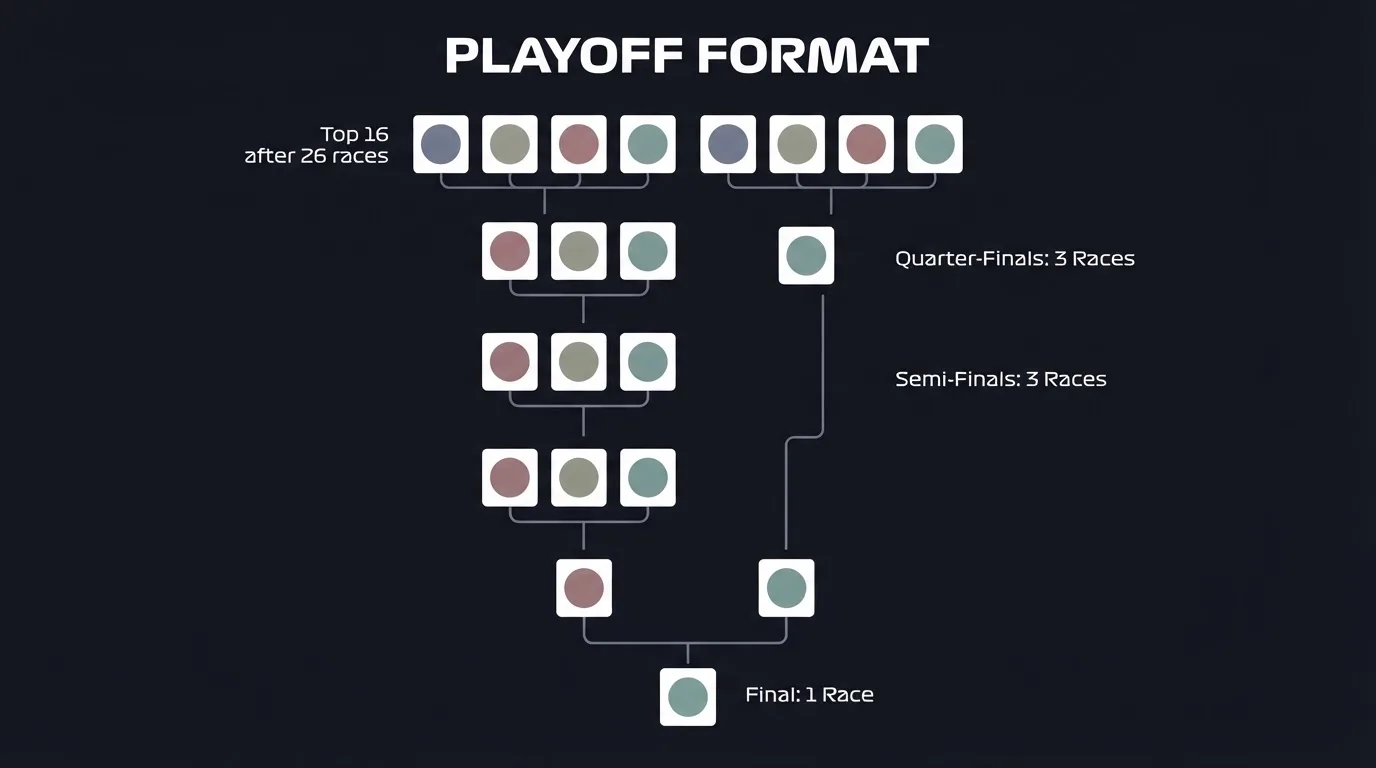
The 2026 NASCAR Cup Series runs across 36 points-paying races plus three non-championship events — the Cook Out Clash, the Duel at Daytona and the All-Star Race — from early February through early November, finishing at Homestead–Miami Speedway on 8 November. The Daytona 500 has already gone, a 68th running won by Tyler Reddick on 15 February, and the season now turns its corner into the playoffs, where the top 16 drivers by points after 26 races advance under a newly restructured format with no automatic win-and-you’re-in route and staggered playoff starting positions. Every licensed UK bookmaker prices the Cup Series somewhere on its menu. The question for a British punter is which operator carries the markets you want, at prices whose margin isn’t punishing, on a platform that lets you actually place the bet.
This page walks through that decision from fixture to settlement: how the 2026 schedule shapes the betting calendar, how the market knows what it knows about each team, who holds a Gambling Commission remote licence and who doesn’t, what the odds quietly cost the bettor, and where the price moves while a race is running.
The 2026 NASCAR Calendar and What Each Race Means for the Card
A Cup Series season is one continuous narrative for bettors, not 39 separate events. The Daytona 500 is its own beast — restrictor-plate pack racing, three-wide into Turn 1, the wrong favourite at 40/1 winning it more often than the form says. The first five or six races sit on tracks where single-car speed still wins, and qualifying tells you something. The summer is intermediate ovals where form matters more than drama. The ten-race playoff has its own logic: every driver still in contention has motivation, but the bottom four cut after each three-race round, and that urgency shifts prices on the championship futures.

The schedule gives structure to a season the bookmaker’s motorsport page mirrors. The three non-championship races pay no points and so are listed separately; some books price them as exhibition sprints with smaller fields, and they tend to be the only times a British bettor sees names like Conner Jones or Jimmie Johnson circling back for a one-off drive. The Clash at Bowman Gray Stadium (the 2026 edition) is held under short-track rules that make the outright market volatile; the All-Star Race is a fixed-purse exhibition with no impact on standings; the Duels are qualifying heats for Daytona positioning.
By mid-September, focus shifts to the playoff bracket. The four-round, three-race format has changed in 2026: there is no longer a regular-win bonus; playoff points are staggered by where drivers stood at the end of the regular season, which means a driver who ran well all year starts the Round of 16 ahead of a late surge. That long arc is what makes NASCAR betting markets a season-long market, not a Saturday-night one. A futures bet on the championship in March is still alive (or not) by race 33, and that changes how to think about price.
How the Top 10 UK Bookmakers for NASCAR Compare
Licensed to take bets in Great Britain, the ten operators below all hold a Gambling Commission remote licence for real-event betting. They are listed in the order research has them, not a personal ranking: each does something the others don’t, and the choice is about which of those somethings matters most for how a punter bets stock cars.
| Brand | Licence number & holder | What the operator’s own terms cover on this subject |
|---|---|---|
| QuinnBet | Remote 061011-R-335683-004, QuinnBet (Gibraltar) Limited | Best Odds Guaranteed on UK and Irish horse racing from 10:00am daily, singles and multiples, £150 cap per race |
| Betway | Remote 039372-R-319367-029, Betway Limited | Free Bet Club: up to £10 weekly after opt-in for £25+ in qualifying sports stakes |
| Bet600 | Remote 044731-R-323941-016, Tyche Tech Limited | Best Odds Guaranteed on horse racing, settled at SP if starting price beats the price taken |
| Geoff Banks | Remote 054095-R-330366-010, GB Sports Advisors Limited | In-play pricing and ante-post markets on future events |
| London Bet | Remote 066162-R-340278-004, Thistle Bet Limited | Sports (football, tennis, racing, NFL, NBA, MLB), casino slots and live in-play |
| 888sport | Remote 039028-R-319297-014, 888 UK Limited | Pre-match and in-play, Cash Out, Bet Builder, racing streams and a BetFinder form tool |
| bet365 | Remote 055148-R-331498-002, Hillside (UK Sports) ENC | Bet Builder+ combining markets per event, Super Boosts and in-play with live streaming |
| Copybet | Remote 053774-R-330743-010, Copybet UK Limited | Best Odds Guaranteed on all UK and Irish racing, FPPT payouts on horse racing |
| Fitzwilliam Sports | Remote 048760-R-335434-009, SBKI Limited | High-Stakes Welcome subject to compliance; instant deposits, fast withdrawals and deposit limits |
| LiveScore Bet | Remote 056859-R-332720-005, LiveScore Betting and Gaming (Gibraltar) Limited | Bet Builder up to 10 selections covering winner, BTTS-style markets, totals and player props |
Bet365 dominates motorsports coverage among GB-licensed brands, with a global partnership roster (the UEFA Champions League sits on its books, but its racing and NASCAR listings are deep), in-play updates and a live tracker; the price-makers there set the pace others quietly follow. 888sport sits in the middle lane: its BetFinder, acca boosts and streaming keep it credible for motorsports bettors who also price football. Copybet and QuinnBet both lead with Best Odds Guaranteed on horse racing, which is irrelevant to a NASCAR-only bettor but matters at a combined-action account. Fitzwilliam Sports runs a closed-membership model — useful only if you’re accepted. The rest of the field (London Bet, Bet600, Betway, Geoff Banks, LiveScore Bet) carry NASCAR markets but lean primarily on other sports; they suit a bettor whose NASCAR interest is occasional.
That ordering holds when NASCAR is a side bet. For someone whose cup interest is the lead and the rest is accompaniment, the picture flips: Bet365 or 888sport and the everyday ride begins to look like the only places carrying the sort of in-race driver-props and stage winner markets the deeper markets require.
QuinnBet
QuinnBet runs its main show on UK and Irish horse racing. Its Best Odds Guaranteed has a £150-per-race ceiling, fine for racing, useless for NASCAR. The sportsbook covers the Cup Series outright and race winner markets; the depth is typical of an operator that prizes horse racing and football more than left-turn ovals. Terms to read first: the BOG cap and its exclusion list for multiple-leg bets at SP adjustments.
Betway
The Free Bet Club is Betway’s calling card. Spend £25 on qualifying sports bets in a week and claim two £5 free bets as a reward. For a NASCAR bettor, that means a small weekly stake bonus if the operator happens to price something you want to back anyway. Free bets from UK operators are typically stake-not-returned, so a winning free bet returns profit only; treat the £10 a week as a discount on a bet you’d have placed, not as free money.
Bet600
Bet600’s brand promise is Best Odds Guaranteed on horse racing. NASCAR coverage sits on the sports page in the usual shape: race winner, each driver, podium finish, sometimes stage winner. The horse-racing BOG does not transfer to Cup Series pricing. What does transfer is the operator’s SP-if-better rule on horses, a sign it’s a shop that pays out at the better of early price and starting price — a habit some operators carry into other markets as well; check whether it does on NASCAR before relying on it.
Geoff Banks
The Geoff Banks app is the digital front for GB Sports Advisors Ltd; it carries live in-play and ante-post markets. For NASCAR, ante-post is mainly the Daytona 500 outright from late January, the championship futures from March onward, and selected race winners priced well before race day. If futures interest you — locking in a season price before form settles — Geoff Banks is one of the smaller-brand shops worth checking.
London Bet
London Bet bundles sports betting with Pragmatic Play casino slots, a hybrid sportsbook-plus-casino layout that fits well on a phone. NASCAR sits in the motorsports tab alongside F1 and IndyCar. The product is a generalist at heart — NFL, NBA, cricket, darts — and NASCAR is part of that breadth, not the centrepiece.
888sport
888sport carries everything a NASCAR bettor typically wants: race winner, podium finish, top-six finish, drivers’ championship, race stage winner, sometimes fastest lap. Cash Out closes a position mid-race — useful if a yellow flag bunches the field and you want to lock a profit. Racing streams and BetFinder, the form tool, deepen what the card can support. For a bettor who bets NASCAR alongside Premier League and Champions League, 888sport covers both brackets in one account.
bet365
A global betting partner of the UEFA Champions League is not the first brand that sounds American motorsports. The reality on the bet365 site is different: the racing section is one of its largest, NASCAR is fully priced into in-race, and Bet Builder+ lets a bettor combine markets from a single race into one betslip line. Super Boosts and daily Bet Boosts nudge the headline price up on marquee selections; in-running and streaming are wired into the same screen. The app notes it is the most-downloaded sports betting app in Britain. For a NASCAR punter whose market list includes stage winners, finishing-position matchups and laps-led props, bet365 is the industry benchmark.
Copybet
Copybet’s flagship is horse racing: BOG all day on UK and Irish racing, FPPT (First Past The Post) payouts even on a horse later disqualified. NASCAR sits on its sportsbook the way many operators carry it — race winner, podium, championship futures. Worth registering if horse racing is your second sport, less urgent if it isn’t.
Fitzwilliam Sports
A Dublin-based bookmaker with capped membership, running a “High Stakes Welcome” subject to compliance approval. If you are approved, instant deposits, fast withdrawals and deposit limits come with the deal; if not, there’s no fallback product. NASCAR is on the menu, but the limited membership means not every reader can join.
LiveScore Bet
LiveScore Bet’s Bet Builder carries up to 10 selections on a single event. The markets it lists for football are granular — corners, total goals, player props — and the same builder template extends to NASCAR where applicable: race winner, top finishing position groups, sometimes stage markets. The brand rides on the LiveScore scores app for live data, so in-play pages update fast. Coverage of NASCAR is standard rather than deep.
What Is NASCAR Betting and Who Is Licensed to Take It in Britain
NASCAR betting at a UK-licensed operator runs on the same framework as any other sport on the menu. There is no British statute that names NASCAR as a permitted event: anything an operator offers sits inside the licence category on the register, and the licence determines what the operator may offer, not what the law has blessed. The Gambling Commission issues licences for “remote general betting standard (real events)”, and the operators in this list each hold one. The brand, the licence number and the licence-holder company on the Commission’s public register should match what you see on the site you’re betting with. Three ways to check:
- search the Commission’s register by business name — QuinnBet Limited, Betway Limited, Hillside (UK Sports) ENC, and so on;
- search by domain — QuinnBet, bet365 and the rest appear because the domain is registered against that licence;
- search by account number — the unique five-digit number printed on each operator’s licence line — which catches aliases and umbrella brands.
A licensed remote operator must verify your name, address and date of birth before you can deposit or gamble, free bet included. That is a contrast with the offshore no-verification model and a small comfort, but it also means betting at a licensed site is never anonymous. A customer-protection layer sits behind that identity check: GAMSTOP membership is mandatory, a national self-exclusion scheme with minimum periods of six months and minimum total duration of seven years from registration.
The Act that enforces all of this is the Gambling Act 2005, covering England, Scotland and Wales. Northern Ireland sits outside it and under its own older law: never write that a GB licence covers a Northern Ireland customer, and never write the other way either.
The other regulator worth naming in the betting space is the Financial Conduct Authority, which regulates financial spread betting rather than fixed-odds sports. Spreadex, for instance, is regulated by both bodies: the FCA for spread betting and the Gambling Commission for fixed odds. If you see “spread betting losses can exceed your deposit” on a betting site, that warning belongs to spread bets under FCA rules and is not the Commission’s language.
Safer Gambling, Self-Exclusion and the Checks a UK Bookmaker Runs
Every online bookmaker licensed under the Gambling Act 2005 is a GAMSTOP participant, and that has been mandatory since 31 March 2020. GAMSTOP is the national multi-operator online self-exclusion scheme; once enrolled, the customer is barred from creating accounts, depositing or placing bets at any participating operator. Period options at sign-up are six months, one year, five years, or five years with auto-renewal; the total minimum lock-out is seven years, and a customer may ask GAMSTOP to lift the bar only after that period runs.
Two newer checks run at the account level rather than the self-exclusion scheme:
A financial vulnerability check, in force since 30 August 2024 with customer-level application since 28 February 2025, kicks in once your net deposits — deposits less withdrawals — exceed £150 in any rolling 30-day window. It is a public-records check, looking for bankruptcies, county court judgments and the like, not a credit-search or income check. If a flag comes back, the operator may impose deposit limits, ask for source-of-funds documentation, or pause betting until more is shown.
A second stage of affordability checks (sometimes called financial risk assessments in the press) was announced by the Commission in a paper of 7 July 2026, with a staged rollout and no start date. As of writing, this is announced, staged, and not in force. Where the operator already asks the customer for payslips or bank statements above a spend threshold, that is the operator’s own conservative policy, not a Commission rule.
Deposit limits are not state-set. Every licensed operator offers deposit limits under the Remote Technical Standards; the first phase of RTS 12 changes applied from 31 October 2025, a second phase was postponed to 30 September 2026. Whether you can place a £10,000 single bet depends on the operator’s own risk policy and your account history.
Help when it goes wrong: GamCare runs the National Gambling Helpline; GambleAware publishes advice and self-help; the NHS funds gambling clinics across the regions; Gamblers Anonymous carries the meeting-based route. Fitzwilliam Sports, one of the licensed operators above, lists GambleAware, GamStop and Gamblers Anonymous on its own safer-gambling page.
Crypto, Pseudonymous Wallets and Where NASCAR Betting Meets Them
Bitcoin, Ethereum and Litecoin appear regularly as search terms attached to NASCAR betting. The licensed UK bookmakers studied do not advertise cryptocurrency deposits, and the presence of those search terms reflects two parallel markets rather than one feature. There is no rule under the Gambling Act 2005 that bans cryptocurrency at licensed operators, but operators are free to refuse a deposit method they cannot reconcile with money-laundering rules, and most choose not to handle crypto directly. If a UK-licensed brand handles bitcoin or ether, it appears in the payment-methods list of that brand’s own terms; absent that, the bettor has no way to fund the account in crypto there.
The other market is offshore. Curaçao- and other overseas-licensed operators carry all four: bitcoin, ethereum, litecoin and stablecoins, and they often advertise no-KYC and fast withdrawals. What they do not carry is a UK Gambling Commission licence, which means none of the British protections — no GAMSTOP coverage, no Commission complaints route, no approved dispute-resolution body, no British consumer redress if funds are withheld, and not bound by the 10x bonus cap or the £150 vulnerability check. The point is not safety-as-such; it is the loss of the safeguards a UK customer is otherwise entitled to. Saying one is “more private” because it doesn’t run identity checks is partly true: it’s also less obligated to pay out without dispute.
For a British punter, the practical read of those search terms is this: a UK-licensed brand requires verification, accepts normal banking rails and is regulated; an offshore brand doesn’t verify at the door, accepts crypto and isn’t under the Commission. The reason a reader ends up searching for “place bet on NASCAR with bitcoin” is usually that the licensed alternative is being bypassed for a feature — anonymity, no verification, fast withdrawals in a particular wallet — that the licensed alternative does not offer. The cost of those features is given away in the same breath.
Bonus Codes, Free Bets and the 2026 Promotion Rules
A promotion, in the licensed UK market after 19 January 2026, has two hard limits no operator can sidestep: a 10x cap on wagering requirements and a ban on mixed-product offers. The first means that a £10 bonus which once carried 50x wagering (£500 of bets before withdrawal) may now carry no more than 10x (£100 of bets). The second means that a sport offer that hands out casino free spins or lottery tickets as part of the deal is now outside the rules — an offer must stay in one product lane, betting only, casino only, or lottery only. Best Odds Guaranteed, enhanced odds and acca insurance continue to be offered and are governed by each operator’s own house terms.
A free bet is a special case the page treats separately. A standard free bet is stake-not-returned; a winning £10 free bet at evens returns £10 profit, not £20. The operator’s own wagering rule on a free bet that converts to cash will pin the requirement again — the cap rules apply only if there is one. Some operators run “free” as a marketing word for what is in fact a risk-free first bet refunded as a free bet if it loses; that refund-as-free-bet distinction is the difference between a refund in money and a refund in the same stake-back-as-free-bet product, and it has mattered since the cap took effect.
The temptation to print a bonus code or working promo here is the same one readers see on operators’ sites. There is no code on this page. What’s useful to know is the shape of an offer worth taking before the bettor even knows which operator it’s on:
- The wagering multiple relative to the bonus: 10x is the cap, anything above that is from the operator’s draft before the rule came in or from a brand not subject to it.
- The minimum price on each qualifying leg: 1/5, 1/2 or 1/1, depending on operator. Anything below the minimum is voided for the rollover.
- The deadline on clearing: 7 days, 14 days, 30 days. Race-week turnover windows are tight, and a NASCAR bettor at the All-Star Race weekend will struggle to clear a 30-day rollover on a one-week bonus.
- The cap on free-bet winnings: a free bet whose profit is capped at, say, £500, pays £500 even on a winning trade at 50/1.
- The market exclusions: NASCAR may not be on the qualifying list for a horse-racing or football offer. Operators’ promo terms list each event category whose bets count toward clearing.
In-Play and Cash Out at NASCAR Markets
In-play betting at licensed UK bookmakers is allowed by the licence and governed by each operator’s conditions, not by statute. NASCAR’s in-running markets move in distinct bursts: a caution flag bunches the field and throws outright prices wide, then settles on the next green. Stage breaks reset the running order and shift in-race betting positions. A bettor watching at home can read those breaks faster than the screen updates, which makes cash out attractive — and worth thinking about carefully.
Cash out is the operator’s right to close a bet at a quoted figure before the event concludes. The quoted figure is the operator’s price for your position, and it includes the margin the rest of the market carries. There is no guarantee you can cash out at a profit; a yellow flag in stage 3 of a race you backed can wipe the visible edge. The mechanics worth checking before relying on it:
- Cash out availability depends on the operator’s in-play feed and the market. Some markets (race winner, especially on smaller fields) are unavailable in-running;
- The cash-out price is calculated by the operator’s trading desk and may be rejected — the operator can refuse to offer a price if its in-play risk has crossed a threshold;
- Settling as a cash-out value may forfeit a free bet bonus that would have been triggered had the bet run to conclusion.
For NASCAR, the operator with the deepest in-play catalogue among the licensed GB brands is bet365 — its racing section pairs in-running prices with live streaming and a tracker showing position updates. 888sport’s Cash Out runs across the same range and pairs with its BetFinder form tool. Other operators carry NASCAR in-play more thinly.
The Mobile App Stack for NASCAR Bettors
Native apps from the licensed UK bookmakers are the standard channel for placing a wager on a Cup Series race. The experience a punter gets varies:
bet365’s iOS app is widely regarded as the deepest motorsport app in the UK market, with in-play, streaming and Bet Builder+ bundled together. For a NASCAR-only bettor it is the one that ships the most race-level content. 888sport’s app pairs BetBuilder with racing streams and a BetFinder form tool; the experience is closer to a football-first product but covers NASCAR well. Betway and LiveScore Bet serve up the NASCAR card inside a multi-sport app, betting-quality without standing out. Fitzwilliam Sports and Geoff Banks sit as specialty shops with smaller user bases and lighter features. London Bet doubles as a hybrid casino-and-sports book — useful if a tablet is shared with a casino player, distracting if not.
What that turns into is two camps: the motorsport-led stack (bet365 first, then 888sport, with 888sport and London Bet as the closest depth-tier alternatives) and the multi-sport stack (Betway, LiveScore Bet, QuinnBet, Copybet), supplemented by specialty shops (Fitzwilliam Sports, Geoff Banks, Bet600). The right camp depends on whether the bettor’s account also carries Premier League, F1, tennis, horse racing — and how often the phone screen is a NASCAR screen rather than a multi-sport one.
Race Strategy: What Kinds of Bets Cup Markets Take
NASCAR Cup Series betting lines are a smaller, less granular market than Premier League football or US NFL. Most UK books price:
- Race winner — pick the driver to win the race. Single market, deep liquidity. Prices range from the favourite, usually 4/1 to 8/1 at the marquee events, all the way back to 500/1 for backmarkers.
- Podium finish — driver to finish in the top three. Easier to win and pays less; a favourite tends to be 6/4 to 5/2.
- Top-six or top-ten finish — a positioning market, often priced in groups. Useful for longshots whose cars have competitive pace but not race-winning pace.
- Drivers’ championship — season-long outright. Tier-1 favourites around 5/1 mid-season and outside chances climbing once playoffs hit.
- Stage winner — bet on the driver to win a specific stage of the race. Some books price stage 1 and stage 2 separately; others price stage-winner-as-it-happens.
- Fastest lap — applied loosely to fastest pit-stop or fastest green-flag lap segment.
- Matchup / finishing position matchups — head-to-head between two drivers, the bet settles on which finishes ahead.
Each-way is meaningful in NASCAR the same way it is in horse racing — a bet is two equal stakes, one to win and one to place, with place terms set by the operator and varying by field size. The Cup Series field is fixed at 36 to 40, and a typical place payout is a third of the win price plus the stake back on the win half. Each-way is a small adjustment that costs a double stake and a reduction in expected value at the favourite end.
Bets on NASCAR combine cleanly. A bet builder at a major licensed brand pulls markets from the same race into one ticket (winner plus top-six, say) at multiplied odds. The catch is that you have lost the ability to cash out one leg without the other, and the multiplied price reflects the operator’s joint pricing rather than two independent bets summed by you.
Whether to treat a Cup Series market as outright, position-based or matchup comes down to how the bettor reads the race. Restrictor-plate tracks at Daytona and Talladega compress the field and produce chaotic finishes — outright is high variance, podium is the safer market. Intermediate ovals have form saying more than chaos — outright and matchups carry the day. Short tracks reward qualifying pace. The right bet varies track to track; the right strategy is to read the schedule with that in mind.
How Bookmaker Margins Sit Inside NASCAR Prices
A bookmaker’s margin (also called overround) is the difference between the sum of implied probabilities of all runners in a market and 100%. It’s the slice the book keeps from every unit bet, before any individual punter comes out ahead.
Margin in a NASCAR winner market: how much does the bookmaker keep of every unit bet on the race? Take an illustrative two-way race down to two drivers that the trading desk could plausibly have at the same price — both at 1.90, the example the page works with in plain decimals. Implied probability per side is 1 ÷ 1.90, which is roughly 52.63% per side; on a fair two-way race (where the two outcomes sum to 100%), the two sides would be 50% plus 50%. The implied total here is 105.26%, which means the margin (the share kept by the bookmaker) is about 5.26%, depending on rounding. Expressing this as a band rather than a single figure: somewhere in the low- to mid-single-digit percent range, sitting in a margin typical of a two-way motor-racing market priced tightly.
The wider the field, the bigger the margin. A 36-car Cup field with each driver priced has to add up to well over 100% in implied probability — sum to 110-115% is common, with the difference being the operator’s edge. The bettor absorbs that edge on every unit placed.
Margin appears in prices, not as a separate fee. The 9/4 shot versus the 7/2 versus the 50/1 longshot at a Cup Series race carries a margin built into the prices; that’s why the bookmaker’s edge isn’t on the headline. A bettor with sharp eyes can read the implied probability of each runner, sum them, and back-calculate the margin — then judge whether the book’s edge is wider than its competitors’. On NASCAR, comparing prices between two operators is rarely clear-cut because in-running volatility swings the running prices — quote at exactly kickoff and the comparison is meaningful; quote 30 seconds in and it isn’t. The useful exercise is to compare prices 60 minutes before the race and again right before green, then take the better side at each stop, settling for the better of the two.
What the Bookmaker Promises and What It Actually Pays
A NASCAR bet at a UK-licensed bookmaker pays the price the operator quotes at bet acceptance. Where settlement is automatic, a £10 bet at 5.00 (decimal) returns £50 if the driver wins; that’s £40 profit. Where a price change happens before the bet is placed — the screen price moves between viewing and clicking — the bet is taken at the price clicked on the betslip, not the last price shown. Slipping a price is the bettor’s loss; grabbing one as it ticks is the gain.
Three settlement rules to watch for at NASCAR markets specifically:
- Driver finishes race, off the lead lap. A bet to win that misses finishing on the lead lap is a losing position in some operator settlement language. Check whether “retired” or “DNF” rules apply.
- Race shortened or moved. A race postponed 24 hours typically sees bets void or carried over, depending on operator rule. A race called for weather mid-running is a judgment call the operator makes; cash out may already be settled.
- Stage settlements. Stage winner markets often settle at the flag of that stage, irrespective of post-stage penalties. Verify that the operator settles a stage win on track position, not on post-race inspection.
A spec reading on a “risk-free” or “no-risk” claim at any operator is worth its full 60 seconds of reading. The marketing words can hide a free-bet refund or a stake refund in cash — and the difference between the two is the difference between a £10 returned as cash (£10 of withdrawable balance) and £10 returned as a free bet (£10 of bet credit, with another rollover to clear before payout).
Cup Series Markets, Schedule Format and Why Form Fluctuates
A Cup Series season is not a flat level of form. The points-paying schedule turns through track types that ask different questions of the car. A driver who dominated the short-track run of Bristol and Richmond may finish mid-pack at the 1.5-mile intermediates; the same chassis that took Phoenix well may not handle Kansas. Tracks known for close, side-by-side racing (Martinsville, Bristol) reward the bumper and reward experience; tracks known for high speed and pack racing (Daytona, Talladega) compress the field and reward the right drafting partner at the right moment.
Three reading frames help decode form against the schedule:
Track-type form. Each driver’s recent results at the same track type tell you more than the season standings. A driver with three top-sixes at 1.5-mile intermediates in the last 12 months is a more credible top-six pick at Texas than a driver with one strong run at Martinsville and no other recent form.
Equipment cycle. NASCAR teams run the same chassis for a limited run before switching to next year’s spec; the early-season races show less data per car and the late-season races run on known equipment. The window when new parts hit the fleet varies year by year.
Pit crew and strategy. Pit road has a measurable times-per-stop variation between teams, and a fast pit crew wins stages that close under green. Pit crews rotate throughout a season; check the most recent race’s average four-tire pit time, which is usually published on sports-business and team press pages.
The playoff format in 2026 has changed the way futures settle. There is no longer a regular-win bonus, and playoff points are staggered by where drivers stood at the end of the regular season. That makes early-season form much more materially priced into futures before the playoffs: a driver with the points lead at race 26 starts the Round of 16 with a meaningful cushion.
Making the Best of What the Card Gives You
The choice among GB-licensed bookmakers is rarely a one-book choice. Most serious bettors hold two or three accounts, with one as a primary app for motorsports depth and one or two as comparators for price. The audit that matters is what each operator pays on the price you actually click; compare at the price-quote point, not at generic values that 60 minutes of in-play movement has already overtaken.
The cheapest way to think about which operator is which:
- bet365 is the deep motorsports book for price and product. It does not chase you with promos; it pays out reliably and shows a wide market. Best paired with one of the others as a comparator.
- 888sport is a multi-sport book with motorsports depth and the closest stacked product (Cash Out, Bet Builder, BetFinder, streams).
- QuinnBet, Copybet, Betway are racing-led books that carry NASCAR but lead with horse racing. Useful at a combined-action account, weaker as NASCAR-only.
- Bet600, LiveScore Bet, London Bet are mid-stack sportsbooks; NASCAR is on the menu but not the centrepiece.
- Geoff Banks is a specialty book with ante-post pricing and a small membership base.
- Fitzwilliam Sports is the high-stakes specialty book — it rewards a closed-membership application but won’t take every punter.
The seat-by-feature shape, in plain terms:
- Outright winner market depth: bet365, then 888sport.
- In-play pricing: bet365, with 888sport and LiveScore Bet close.
- Cash out across a NASCAR race: 888sport and bet365.
- Stage winner markets: bet365, then 888sport.
- Ante-post championship futures: bet365 first, then Geoff Banks and 888sport.
The schedule is settled enough that a bettor can plan — into a season, into a track type, into a stage of the playoffs. The bookmakers are licensed enough that a bettor doesn’t need to chase offshore for deeper markets. The price is what moves the answer. Compare at quote time, pick the better side, settle up.
Frequently Asked Questions
How do I place a bet on a NASCAR race from the UK?
Choose a UK Gambling Commission licensed bookmaker, complete the identity check before you deposit (name, address, date of birth), pick the race from the motorsports menu, select your driver and stake on the betslip, and confirm. The odds shown at the moment you click are the price you’ll be settled at. A NASCAR-only bettor will find the deepest markets at bet365, with 888sport the most comparable alternative.
Which licensed UK bookmakers carry NASCAR odds?
The ten licensed brands on the comparison table above all carry NASCAR Cup Series outright and podium markets. Some — bet365, 888sport, Copybet, Fitzwilliam Sports — also carry stage winners, finishing-position matchups and championship futures. The deeper the market you want, the smaller the field of operators that supplies it.
What kinds of bets can I place on a single NASCAR race?
A typical Cup race takes race winner, podium (top-three) finish, top-six and top-ten finishes, finishing-position matchups between two named drivers, stage winners per stage of the race, fastest lap and the overall drivers’ championship outright futures. Bet builders combine two or three of those markets into one betslip line at multiplied odds. Each-way markets turn a single stake into a stake-to-win plus a stake-to-place at place terms.
How do I check whether a bookmaker actually holds a UK Gambling Commission licence?
Open the public register at the Commission’s site, search by business name, by domain or by five-digit account number, and confirm the licence category, the licence holder company and the trading name match what the operator’s own site states. The remote general betting standard (real events) is the category that covers sports betting on real events; verify the licence is current and unrestricted on the register rather than taking the operator’s word for it.
How is the payout on a bet worked out?
Return equals stake × decimal odds. Profit equals stake × (decimal odds − 1). A £10 single at decimal odds of 5.00 returns £50 if the bet wins; £40 of that is profit. On a combination bet the odds of the legs multiply into one combined price before the stake is applied.
What is the bookmaker’s margin, and where does it sit in the price?
The margin is the slice of every pound staked that the book keeps, before any punter wins. It sits invisibly in the prices: the sum of implied probabilities across all runners in a market always exceeds 100% by the margin amount. The closer a race’s market is to a tidy 100% sum, the smaller the operator’s edge, and the more of every pound is returned to bettors on average. Comparing the implicit margin across bookmakers is how a bettor reads which pays the truer price.
Combat & motorsport – Fast Payout
Content created by the «Fast Payout» team
