
The 2026 Shortlist of New UK Betting Sites Worth Opening an Account With
 Available in US
Last checked: 27 October 2026, against the Gambling Commission’s public register and each operator’s own published terms.
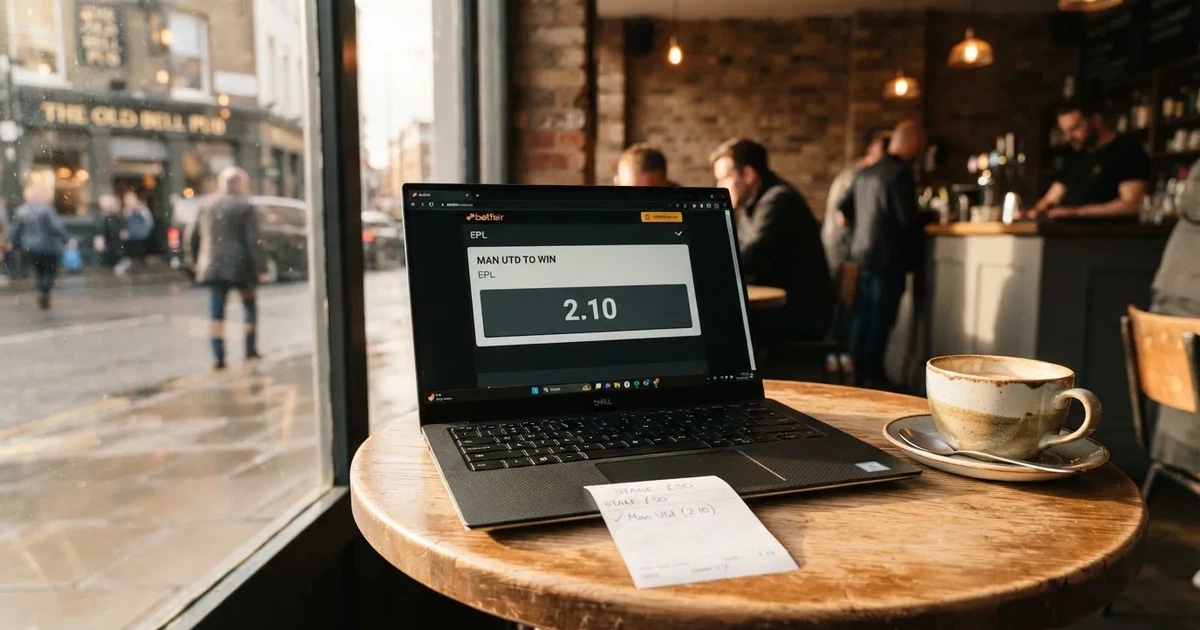
The honest answer to “which betting sites are new” sits in a register. A new site is one that has recently been granted a Gambling Commission licence, and that licence is the one fact that decides whether “new” also means “legit”. A site that is brand new in marketing language and holds no British licence is, by definition, an unlicensed offer — whatever it calls itself. This page is built around that test, and around what each of ten reviewed operators actually does once a punter has opened an account.
The consequence angle runs through everything that follows. A bonus, a payout, a market, a cash-out button, a self-exclusion link — each has a price, and the price is the point. A new site with a generous welcome offer but a slow withdrawal, or a fast withdrawal but no cash-out, or a licence but no GAMSTOP, is not a contradiction. It is a different combination of trade-offs, and the right combination depends on what the reader actually bets on and how.
Responsible Gambling Comes First, Even on a “New Sites” Page
The decision to start with safer gambling rather than rankings is deliberate. A list of new bookmakers that buries the protection story at the bottom treats it as a footnote, and it is not. GAMSTOP enrolment is a licence condition for every online operator in Great Britain, not a brand choice. The period a customer excludes themselves for is six months, one year, five years, or five years with auto-renewal. After the minimum period the exclusion stays in place for a further seven years unless the customer asks GAMSTOP to remove it. That is a long stretch of a person’s betting life to give up to a single decision made on a hard afternoon, which is why the schema forces the question early.

A second protection sits on top of GAMSTOP. Since 7 May 2019 every licensed operator has verified name, address and date of birth before a customer can deposit or gamble, including with a free bet or bonus. There is no anonymous play at a GB-licensed site, full stop. A new site, however fresh, runs the same check on a new account within minutes of registration. This is what “licensed” buys a customer, alongside dispute resolution through an approved ADR body and a complaints route to the Commission itself.
A third protection is the financial vulnerability check. Since 30 August 2024 the LCCP has required licensed remote operators to run a public-record check — for example, on bankruptcy or county court judgments — when a customer’s deposits minus withdrawals exceed £150 in a rolling 30 days. The £150 threshold has applied since 28 February 2025. The check is a public-record check, not an income check and not a credit reference check, and it is not the same as the financial risk assessments announced in the Commission’s article of 7 July 2026, which set out a staged plan with no start date. A new site that ran live this year runs the vulnerability check at the same threshold as any other.
A fourth is deposit limits. Under RTS 12 licensed operators must offer a gross deposit limit on a fixed time frame; the first changes applied on 31 October 2025, with a second phase postponed to 30 September 2026. There is no state-set ceiling — the limit is the customer’s own choice. “How much can I deposit at a new site?” is therefore answered with the same tool a customer would set at any other licensed bookmaker.
A fifth is the help network. GamCare runs the National Gambling Helpline. GambleAware funds treatment. The NHS runs gambling clinics. Gamblers Anonymous runs meetings. Several of the operators reviewed on this page link directly to one or more of these bodies. The links are not a marketing gesture; they are part of the licence conditions.
The cost of a “new site not on GAMSTOP” framing is plain to set out. A site that does not appear on GAMSTOP is, by construction, not a GB-licensed site. The loss of coverage is the loss of the multi-operator self-exclusion, the dispute route, the bonus cap, the vulnerability check, and any British consumer redress if funds are withheld. “New non-GAMSTOP” is therefore not a feature. It is the description of an unprotected market, and it is named as such for the reader who would otherwise be sold one as a perk.
Welcome Offers, Free Bets and the Real Cost of a “Free” Bonus
A new betting site is almost always marketed by what it gives away. Welcome offers cluster into a handful of shapes, and the shapes are not interchangeable. A free bet is a free bet: the stake is usually not paid back with a win, so a £10 free bet at odds of 3.00 returns £30 in profit, not £40. A matched deposit bonus returns bonus money that comes with a wagering requirement: the bonus has to be turned over a stated multiple of times before withdrawal. A risk-free bet is a bet that, if it loses, is refunded — usually as a free bet, not as cash. A price boost is a single enhanced price, often with a stake cap, on a named event. An acca insurance refunds a stake, usually as a free bet, if one leg of a multi lets the rest down. Each of these pays back differently, and each one carries a condition that the marketing copy does not always put in the headline.
The cap that lands on most of these offers arrived on 19 January 2026. Wagering requirements on bonuses are capped at 10x. A £10 bonus at 50x would have required £500 of qualifying bets; under the cap no more than £100 of turnover is required. The cap is the difference between a bonus that could be cleared in a moderate session and one that took weeks of low-margin betting to work through. The cap also bans mixed-product promotions — offers that require gambling on two or more product types, such as “bet on football to get free spins” — which removes a class of friction that the licensed market had drifted into. Whether the 10x cap applies to free bets with no wagering condition, and any cap on the money value of a bonus, are not established, so they are not asserted here.
The same picture shows up in the operator write-ups that follow. Vbet’s sports welcome, for instance, is a £10 free bet if a new, verified customer stakes £10 or more on a first-ever bet that loses — straightforward in shape, modest in size, and conditional on the first bet losing. The £10 stake, once lost, is not recoverable; the free bet then has to clear on its own. Reading that sentence slowly is the job the marketing page does not do. Midnite runs acca insurance, popular accas and price boosts with maximum-stake limits, and the maximum-stake clause is the part that turns a “boost” into a ceiling. NetBet offers Daily Boosts, Profit Boosts and free bet offers, and a Bet Builder with instant dynamic odds, and the dynamic odds on a Bet Builder tend to compress payout share as legs are added. 888sport runs daily boosted odds, a live bet feed and BetFinder form tools — the boost is a single price, the feed is a presentation choice, the form tools are a research aid. None of these are bad; all of them are bounded.
The advice that holds across the board is the same advice the marketing copy avoids. Read the wagering multiple. Read the minimum odds on qualifying bets. Read the deadline. Read the cap on free-bet winnings if there is one. Read the list of markets the offer does and does not apply to. Read the payment-method exclusions — some offers do not count deposits made through e-wallets or specific cards. Then look at the margin of the market the offer routes the customer into, because the bonus is being paid for in the odds, and the odds are not free.
Payments, Withdrawals and What “Fast” Means at a New Site
A new site is judged by readers on payment speed more than on any other operational feature, and the reason is simple: a winning bet is a debt the operator owes until it is paid, and the time that debt takes to clear is the time the punter cannot redeploy it. The page routes the topic through what each operator’s own terms state, because the regulator does not set a speed.
A small number of ground rules apply to every GB-licensed site. Credit cards have been banned for gambling in Great Britain since 14 April 2020, including credit-card-funded payments through an e-wallet. Debit cards and bank-based payments are not covered by the ban. A British named-account rule, a state list of permitted payment methods and any rule for or against cryptocurrency deposits at licensed operators are not established, so payments are described only from each operator’s terms. Midnite, for example, accepts Visa, Mastercard, Apple Pay, Google Pay and Trustly, and links to safer-gambling bodies including GambleAware, GamCare, GamStop and BetBlocker — the payment set is mainstream UK, the protection links are present. Other reviewed operators are described in the same register.
The phrase “fast withdrawal” is the one to be careful with. A withdrawal that is “instant” on the operator’s side still waits on a banking rail; a withdrawal that is “same-day” is the operator’s processing time and not the bank’s. The honest test for a punter is how long the operator names for the withdrawal to be approved, and then the published speed of the rail. A PayPal withdrawal at a GB-licensed site that approves in hours is a different proposition from a bank transfer that approves in the same hours but takes one to three working days to land. The page does not name a fastest operator, because the inputs do not give a single common benchmark; instead the operator write-ups state the methods each one accepts and let the reader weigh the rail.
The verification step is the other thing that shapes payment speed. Identity checks run before the first deposit, which means there is no anonymous play, but it also means a first withdrawal may pause for a source-of-funds check. A punter who funds with a debit card and a small stake will rarely see this. A punter who funds with a bank transfer and a large stake will. The delay is not the operator being slow; it is the operator being required to ask, and the answer determines the payout.
Live Betting, Cash Out and What “In-Play” Gets a Punter
In-play betting at a GB-licensed bookmaker is offered under the operator’s licence conditions and customer-protection duties; it is not “unrestricted” as a legal conclusion, and the page does not write it that way. The thing that distinguishes a new site on in-play is rarely the right to offer it — almost all of them do — and almost always the density of markets and the speed of the cash-out price.
Cash out is the tool that closes a position before the final whistle. Its price is the operator’s estimate of the current value of the bet, less a margin, and that margin is what makes a cash-out button a different product from a lay bet on an exchange. The 888sport offer, for instance, lists Cash Out, Bet Builder, racing streams, BetFinder form tools, a live bet feed and daily boosted odds, and the bet feed is the live view the punter will trade on. DragonBet lists in-play betting alongside Welsh football and rugby markets, racing, American football and bet builder markets; the shape of the in-play product is broader than at some sites that only run football. Paddy Power covers football, horse racing, boxing, rugby, tennis, golf, darts, snooker and F1, and the breadth of the in-play product on football in particular is what a long-established brand spends on. None of these are bad; all of them are bounded by the operator’s pricing.
A new punter’s first mistake on in-play is to assume the cash-out price is fair to them. It almost never is. The price reflects the operator’s view of the live state of the match, and the operator’s margin is wider in-play than pre-match. A bet that is winning at the hour mark and traded out at a cash-out price has, in most cases, been traded at a price below the live true value of the position. The cash-out is a tool for cutting risk or locking partial profit, not a tool for extracting value. The punter who treats it as the latter loses to the margin the way they would on any other bet.
A second note on in-play: the price moves with the event, and a price the punter saw five seconds ago is not a price the operator owes them. The slip is the contract, the price on the slip is the price, and a change between the click and the confirmation is the operator’s right. New sites tend to be clearer about this in their terms than older ones, because they have not had time to drift into a marketing tone; the punter who reads the term before their first live bet is the punter who avoids the disappointment.
Sports, Tournaments and the Fixture List That Matters
A new betting site that opens with a thin fixture list is a new betting site that loses customers in the first week. The reviewed set covers, between them, the sports a British punter looks for first: football, horse racing, tennis, golf, boxing, rugby, darts, snooker and Formula 1, with the obvious Premier League, Champions League, FA Cup and racing festivals at the top of each list. 888sport names racing streams, BetFinder form tools and a live bet feed; Fafabet runs Best Odds Guaranteed on UK and Irish horse racing win and each-way bets from 9am on race days — if the starting price is bigger than the original price, the bigger odds are paid. Paddy Power’s app covers the eight sports above; DragonBet’s markets run to Welsh football and rugby, racing and American football; Lottoland combines casino, lottery betting, sports betting and scratchcards, so a punter looking for sports in the same wallet as lotteries has a single home.
What the page does not do is to rank one operator’s fixture list above another’s, because the inputs do not give a single common benchmark and a fabric of “X has 30,000 markets a month” is exactly the kind of number the audit fails. What it does do is to name the markets each reviewed operator names, and to leave the comparison to the reader.
A note on Best Odds Guaranteed, because it is the one horse-racing-specific term that confuses new punters. BOG means the operator pays the bigger of the price taken and the starting price. A punter who takes 5/1 (6.00 decimal) on a horse and the SP is 8/1 (9.00) gets paid at 9.00. A punter who takes 8/1 and the SP is 5/1 gets paid at 9.00 only if the operator’s BOG concession says “if the SP is bigger” rather than “the bigger of the two”. Fafabet states the SP-bigger version, which is the standard British BOG. The concession is paid on UK and Irish racing only, and on win and each-way bets only, from 9am on race days. The starting price is the price the course declares at the off, set by the on-course bookmakers, and a punter who backs early has the BOG concession as a free upside.
What “New” Means in the British Market
The word “new” is the page’s central word and the one most likely to be misused. In British betting marketing, “new” can mean any of three different things, and they are not equivalent.
The first is a brand that has launched in the past year or two and holds a Gambling Commission remote licence for general betting. Betmaster and NetBet sit closer to this end; 888sport and Paddy Power are long-established brands. The Kalooki Sportsbook is operated by Kalooki Sports Book Ltd (company number 12938274), licensed by the Gambling Commission under account number 57730, and is a GAMSTOP member; that licence was a recent grant, which makes it the clearest “new” on the page. Silkbet Limited holds three Gambling Commission remote licences under account number 101183 (casino, general betting real event, general betting virtual event), active since 7 May 2026; the operator’s head office is at 4 Grosvenor Square, Southampton, with Ed Kelly as CEO, and as of 24 August 2026 the site had not yet gone live. That makes Silkbet a new licensee, not yet a new site, and the two are named separately for that reason.
The second is a long-established brand on a recent Gambling Commission licence. Midnite’s site cites Gambling Commission licence 101839 and shows in-play events, an acca builder, popular accas and price boosts with maximum-stake limits — the licence is recent, the product is established. Unibet states it has operated since 1999, and its UK site is run by Platinum Gaming Limited, Gibraltar, under Gambling Commission account 45322 — the operator is anything but new, the licence is the test that matters, and Unibet is not included in the reviewed set because it does not need a “new site” frame.
The third is a brand that calls itself new and holds no British licence. Several of the inputs name such brands; none of them appear in the reviewed set, because the licence is the test. “New” without “licensed” is a marketing word; “new” with a recent Commission account number on the register is a different word, and that is the only word the rest of the page uses.
A few specific cases sit on the boundary. Greenlight Bet’s site currently shows a “Launching Soon” placeholder with a contact form and email sign-up, and no offers, payment methods or licence text — it is a brand that is new in marketing, has no Commission entry the inputs can verify, and is therefore described only as a launching-soon page rather than a betting site. Rollerbet’s app states that users must be 18 or older and that the service is available only where online betting is legally permitted — the “where legally permitted” framing is an offshore operator’s standard wording, and the page does not place Rollerbet in the reviewed set. Betconnect launched a platform that lets customers place bets with major Great Britain bookmakers through a Betconnect account, which is a different product (a proxy betting layer) and is not a GB-licensed bookmaker in its own right.
Two market-exit cases matter for the reader. Betdaq announced that there will be no markets on the site after 21 October 2026, with account access until 4 November 2026 for viewing statements and withdrawing balances — a betting exchange closing its markets and running a wind-down. UK online poker players moved to PokerStars on Betfair on 7 October 2026, and Betfair account balances are held in pounds sterling (GBP) — a product migration inside the Flutter family, not a closure. Both are background to the topic, not part of the reviewed set, and they are noted because a punter who held an account on either needs the dates.
How the Ten Operators Compare
The table below is the single comparison the page makes. It pairs each reviewed bookmaker with the Commission account number on the public register, the operating company on the licence, and a one-line summary of what the operator’s own terms say about the topic of the page. The numbers on the licence are the ones to check; the notes are what the operator’s own pages say at the time of writing.
| Brand | Gambling Commission remote licence | Licence holder | What the operator’s own terms state on being new |
|---|---|---|---|
| Betmaster | 65699 | BM Solutions GB Ltd | UK-facing site operated by a Malta-registered holder; new on the British register with the standard general-betting category |
| NetBet | 39170 | Netbet Enterprises Limited | Daily Boosts, Profit Boosts and free bet offers, a Bet Builder with instant dynamic odds, and sports stats for major leagues |
| 888sport | 39028 | 888 UK Limited | Pre-match and in-play betting, Cash Out, Bet Builder, racing streams, BetFinder form tools, a live bet feed and daily boosted odds |
| BetMGM | 39198 | LeoVegas Gaming PLC | App published under the LeoVegas Gaming PLC account; sports and casino on a single British account |
| Fafabet | 57385 | Taichi Tech Limited | Best Odds Guaranteed on UK and Irish horse racing win and each-way bets from 9am on race days |
| Lottoland | 38991 | EU Lotto Limited | Combines casino, lottery betting, sports betting and scratchcards under a single GB licence |
| Paddy Power | 39439 | PPB Counterparty Services Limited | Covers football, horse racing, boxing, rugby, tennis, golf, darts, snooker and F1 |
| DragonBet | 64908 | DragonBet Ltd | Welsh football and rugby markets, racing, American football, in-play betting and bet builder markets |
| VBet | 44662 | SCGO Limited | £10 free bet if a new, verified customer stakes £10 or more on a first-ever bet that loses |
| Fitzwilliam Sports | 48760 | SBKI Limited | Instant deposits, fast withdrawals, timeouts and deposit limits, with links to safer-gambling bodies |
A licence number is not a recommendation; a row in the table is not a ranking. The reader’s job with this table is to pick a brand whose subject coverage matches the sports they actually bet on, then to check the account number on the public register. The check is free and takes a minute; the inputs name the Commission’s register as searchable by business name, trading name, domain or account number, and that is the test that should sit on the kitchen table alongside the welcome offer.
The Landscape Behind the New-Site Marketing
A licensed new site in Great Britain does not appear by accident. The Gambling Commission licenses the whole commercial market under the Gambling Act 2005, which covers England, Scotland and Wales; Northern Ireland is outside the Act and has its own older law, and the page never writes a GB licence as regulating Northern Ireland. Since the Gambling (Licensing and Advertising) Act 2014 an operator whose remote facilities are used in Great Britain needs a Commission licence wherever it is based, so a Curaçao, Maltese or Gibraltar licence is not a substitute. Several reviewed operators are run by holders registered outside the UK — Betmaster’s BM Solutions GB Ltd is registered in Malta, and Unibet’s UK site is run by Platinum Gaming Limited, Gibraltar — and the page names the holder, not the country of registration, because the licence is the British one.
The Commission does not cap the number of licences. New licences are granted to operators that pass the suitability, financial and integrity tests the Act requires, and the same test is run periodically on existing holders. The 10bet app, for instance, states that 10bet.co.uk is licensed by the Great Britain Gambling Commission under licence 43173, which is one of the longer-standing remote licences; the brand is not “new” in the marketing sense and does not appear in the reviewed set. The minimum age at any licensed site is 18; the verification step on the first deposit is the same one the new sites run.
Betting at a GB-licensed site is taxed at the operator’s level, not the player’s. The player pays no tax on betting winnings in Great Britain, and that is general information rather than tax advice — a professional gambler should ask HMRC or an adviser. General Betting Duty is the operator’s tax on gross profits, currently 15%; from 1 April 2027 a new remote betting rate of 25% applies within it, while remote bets on UK horse racing, self-service betting terminal bets, pool betting and in-person betting stay at 15%. Until 1 April 2027 the remote rate stays at 15%; whether operators pass duty on through odds is not established, and the page does not write that the player is charged duty. The Commission’s statutory levy is a separate charge, not a tax.
The Ten Operators, Reviewed
What follows is the operator-level picture the table sits on top of. Each write-up carries the licence number on the register, what the operator’s own pages say about the topic of the page, and the consequence for the punter who chooses this brand. The verdicts are not identical across the ten; the question a block answers is the question the block’s material leaves open.
Betmaster
A new entrant to the British register, run by BM Solutions GB Ltd, a Malta-registered holder. The licence is on the standard general-betting category, which is the broadest one a remote bookmaker can hold, and the licence number on the register is the entry a punter should check. The site’s own pages at the time of writing present a sportsbook with the usual British fixture list and the usual welcome shape; the consequence of being a recent grant is that the operator has not yet had the years to build a strong identity on the British market, and the punter is choosing a brand on the strength of its licence and the freshness of its product rather than on a long public history. That is the trade-off a “new site” framing makes explicit.
NetBet
A more established remote brand, run by Netbet Enterprises Limited, on the register for the same general-betting category. NetBet’s offer is a familiar British shape: Daily Boosts, Profit Boosts, free bet offers, a Bet Builder with instant dynamic odds, and sports stats for major leagues. The Bet Builder with instant dynamic odds is worth a sentence of its own: dynamic odds on a Bet Builder compress payout share as legs are added, because the operator is pricing a multi and the margin compounds with each leg. The punter who builds a five-leg acca on a single match should expect the price to look worse than the sum of the singles would suggest; that is the cost of the convenience. The price-boost suite is the part of the offer the marketing page leads with, and the part where the cap on the boost and the qualifying-market list are the read.
888sport
A long-established remote brand, run by 888 UK Limited, with a product set that includes pre-match and in-play betting, Cash Out, Bet Builder, racing streams, BetFinder form tools, a live bet feed and daily boosted odds. The racing streams and BetFinder form tools are the parts that distinguish 888sport from a same-shape bookmaker: a punter who follows racing gets live pictures and a form service, and a punter who follows football gets a live bet feed alongside the cash-out button. The form tools are a research aid, not a tip, and the racing streams are a convenience, not a margin reducer. 888sport’s “new” status is closer to the second meaning — a brand with a recent and live British licence rather than a brand that just launched.
BetMGM
A brand published by LeoVegas Gaming PLC, on the register as account 39198. The single-wallet sports-and-casino product is the part that distinguishes BetMGM from a sports-only brand: a punter who wants casino and sports under one login and one verification has a clear home. The brand sits in the long-established international bookmaker cluster; the British remote licence is the licence the page tests against, and the test passes. The consequence of choosing BetMGM is the consequence of choosing any long-established operator: a wider product, a more developed loyalty programme, and a name a British punter is more likely to have seen in a casino or on a sports-marketing channel.
Fafabet
A newer remote brand, run by Taichi Tech Limited, with a clear racing proposition: Best Odds Guaranteed on UK and Irish horse racing win and each-way bets from 9am on race days, with the bigger of the taken price and the starting price paid out. For a punter whose betting is anchored on British and Irish racing, the BOG concession is a real upside, and 9am on race day is the standard British start time. Fafabet is not the same shape as a football-led bookmaker, and a punter whose betting is more football than racing should look at one of the broader-product brands; a punter whose betting is the other way round has a clean match. The licence is on the standard general-betting category, and the BOG concession is a published feature rather than a marketing line.
Lottoland
A brand that combines casino, lottery betting, sports betting and scratchcards under a single GB licence, run by EU Lotto Limited. The “lottery betting” framing is the part that distinguishes Lottoland from a sports-only bookmaker: a punter who plays lottery products alongside a sportsbook has a single wallet, a single verification and a single self-exclusion. The sportsbook is on the standard general-betting category, and the licence is the British one. A punter who only bets on sports is paying for a product set they do not use; a punter who plays the lottery and the sportsbook has a one-stop shop. The choice is the punter’s, and the licence is the test that the choice passes either way.
Paddy Power
A long-established British and Irish brand, run by PPB Counterparty Services Limited, with one of the broader product sets on the page. The Paddy Power Sports Betting app covers football, horse racing, boxing, rugby, tennis, golf, darts, snooker and F1, and the depth on football in particular is the depth a long-established brand spends on. Paddy Power’s “new” status is the second meaning again: a long-established operator with a live British licence, named on this page because the reader looking at “new sites” is also looking at the alternative of a long-established brand. The consequence of choosing Paddy Power is the consequence of choosing a brand with marketing muscle, an aggressive promos team and a depth on the sports a British punter follows most.
DragonBet
A newer remote brand, run by DragonBet Ltd, with a sports product that is built around Welsh football and rugby, alongside racing, American football, in-play betting and bet builder markets. For a punter who follows the Welsh leagues and the Welsh rugby, the niche coverage is the point; for a punter who follows the Premier League and the Champions League, the niche is not a benefit. The in-play product and the bet builder markets are the broader features, and the brand is small enough that the punter will have a more direct line to the operator’s customer support than at a long-established brand. The licence is the standard general-betting category, and the test passes.
VBet
A brand run by SCGO Limited, with a sports welcome offer that is small enough to be described plainly: a £10 free bet if a new, verified customer stakes £10 or more on a first-ever bet that loses. The shape is a refund-in-free-bets offer, and the cost of the offer to the punter is the £10 first stake, which is not recoverable. The free bet then has to be cleared on its own terms, and the marketing copy is not where the punter finds them. For a punter who wants a small, conditional welcome and a brand with a long-established remote licence, VBet is a fair match. For a punter who wants a large matched deposit bonus, the 10x wagering cap that landed on 19 January 2026 sets the ceiling on what any licensed operator can offer, and VBet’s offer is below that ceiling rather than at it.
Fitzwilliam Sports
A remote brand, run by SBKI Limited, with a product set that names instant deposits, fast withdrawals, timeouts and deposit limits, alongside links to safer-gambling bodies. The instant-deposits and fast-withdrawals framing is the part that distinguishes Fitzwilliam from a same-shape bookmaker: a punter whose decision is anchored on payment speed has a clear match. The deposit limits and timeouts are not a marketing gesture — they are the licence-condition tools the operator must offer, and the link to safer-gambling bodies is the second of the licence-condition safeguards. The brand is the kind of choice a punter makes for operational reasons rather than for sports coverage, and the licence is the standard general-betting category.
The Statute Behind the Licence
A new betting site in Great Britain operates inside a statute the reader does not need to know in full but does need to know exists. The Gambling Act 2005 is the framework; the Gambling (Licensing and Advertising) Act 2014 closes the point-of-consumption gap; the Commission’s Licence Conditions and Codes of Practice and the Remote Technical Standards are the operational rules. Advertising is not licensed by the Commission; it runs through the CAP Code (non-broadcast) and BCAP Code (broadcast), enforced by the ASA, alongside the LCCP marketing conditions. CAP Code section 16 sets the tone: marketing must be socially responsible, must not be of strong appeal to under-18s, and no one who is or seems to be under 25 may feature gambling or play a significant role, with an exception for marketing placed where a bet can be made directly. The rule concerns who may appear in the advertisement, not who may bet.

“Whistle-to-whistle” is an industry code, not a statute: since 1 August 2019 betting advertisements are not shown on TV from five minutes before a live sporting event to five minutes after it, before the 9pm watershed, with horse and greyhound racing excluded. The Premier League clubs’ withdrawal of gambling sponsorship from the front of matchday shirts, from 2026/27 onwards, is voluntary rather than statutory, and sleeves and hoardings remain. None of these constraints are visible to a punter on a betting site, and none of them are relevant to a single bet; they shape the environment a brand markets inside, and they are the kind of detail a reader comparing licensed operators might want to know.
Financial spread betting is regulated by the Financial Conduct Authority rather than the Commission, and a financial spread betting loss can exceed the deposit. Spreadex is regulated by the FCA for spread betting and by the Gambling Commission for fixed-odds betting, and the FCA-regulated side is the one that takes deposits without the deposit-limit tools the gambling side has. The page does not place a financial spread bet in the reviewed set, because the regulation, the product and the protection are different.
Offshore and the Cost of “Not on GAMSTOP”
The honest framing of an unlicensed site is the framing the inputs require. A site without a British licence is, in plain English, a site the Commission does not regulate. The loss of coverage runs through the same list the GAMSTOP section set out: no multi-operator self-exclusion, no Commission complaints route, no approved dispute-resolution body, no British consumer redress if funds are withheld, no application of the 10x bonus cap, no application of the £150 vulnerability check. The licensed-side verification step on the first deposit does not apply either, and a site that lets a punter deposit and bet without verifying identity is not “easier” — it is unregulated, and the difference matters at the moment the operator decides not to pay out.
Providing gambling facilities in Great Britain without the licence the Act requires is an offence under section 33 of the Gambling Act 2005, aimed at the operator. On summary conviction the offence carries up to 51 weeks’ imprisonment, a fine up to level 5, or both, with six months in Scotland. The enforcement the Commission runs is disruption rather than blocking: cease-and-desist notices, search-engine referrals, work with registrars, hosts and payment providers. The Commission has been given, or is about to receive, court-order DNS blocking powers; the page does not write that ISP blocking is in operation. No offence aimed at a customer who merely bets on an unlicensed site was found in the inputs, so the page does not assert that a customer has broken a law. The page asserts what the customer has lost: the protection a GB licence buys.
The “new” in “new betting sites not on GAMSTOP” is a marketing word, and the test of a “new” worth opening an account with is the licence number on the public register. Everything else on the page is the consequence of that test, including the welcome offers, the payment speed, the in-play product and the safer-gambling tools, and the operator write-ups that close the page are the consequence of the test in ten different combinations.
The Verdict
Ten operators, one test, ten different combinations of welcome offer, payment set, sports coverage and safer-gambling tool. The page does not name a single best, because the inputs do not name a single best, and a “best new site” that depended on a punt the inputs do not give would be a worse guide than a one-line summary. The summary is this: check the licence number on the public register, read the welcome offer’s terms, set a deposit limit before the first bet, and read the licence’s safer-gambling tools before the first deposit. The punter who does that has done the work the marketing page was written to skip.
Frequently Asked Questions
Which betting sites give free bets to new customers?
A welcome free bet is published by most reviewed operators, and the shape varies. Vbet’s sports welcome is a £10 free bet if a new, verified customer stakes £10 or more on a first-ever bet that loses; NetBet and 888sport list free bet offers alongside Daily Boosts, Profit Boosts and daily boosted odds. The stake is usually not paid back with a win, and a free bet that returns as a free bet is not a refund. The cap on wagering requirements is 10x, in force since 19 January 2026.
How can a bookmaker’s Gambling Commission licence be checked?
The Commission’s public register is searchable by business name, trading name, domain or account number, and the entry shows the licence categories, the licence holder and the licence status. The reviewed operators on this page are listed with their account numbers in the comparison table, and the register is the only place the licence can be verified; the operator’s own page is not.
How is a return worked out from the stake and the odds?
Return on a winning single is stake multiplied by the decimal odds. Profit is stake multiplied by the odds minus one, so a £10 stake at 6.00 returns £60, of which £50 is profit. On a combination bet the odds of the legs multiply into a single price, and the same formula applies to the combined price. The bookmaker’s margin is built into the price and is not visible without converting the price.
What is the bookmaker’s margin, and how does it show in the odds?
The margin is the share of every unit staked that the bookmaker keeps on average, and the payout share is one minus the margin. A market at a 5% margin returns 95p in the long run for every pound staked across all outcomes. The margin is calculated from the prices on every outcome of the market, and a single price is not the margin — the margin is the market. The lower the margin, the higher the payout share, and the higher the long-run return to the punter.
How do fractional odds such as 5/1 convert to decimal odds such as 6.00?
A fractional price a/b converts to a decimal price of a divided by b plus one. Five-to-one is 5 divided by 1 plus 1, which is 6.00. Eleven-to-four is 11 divided by 4 plus 1, which is 3.75. Evens (1/1) is 1 divided by 1 plus 1, which is 2.00. The conversion is mechanical and does not change the underlying probability the price implies.
Betting sites & exchanges – Fast Payout
Content created by the «Fast Payout» team
