
Handball betting odds in 2026 — markets, margin and the GB shortlist
 Available in US
A handball match ends quickly, the price on it is set in two figures and the difference between the two is where a bookmaker earns. The page that follows is built around that gap. It opens with the shape of the sport and the odds on it, walks through the licence a punter in Great Britain should check, the bonus wording that arrives alongside every welcome offer, the live markets and the cash-out that arrives mid-match, and the strategies a tipster sells for a fee. Then comes a worked margin and a short table of ten GB-licensed bookmakers that take bets on handball, with the licence number and the relevant point of each operator’s own terms. Every figure on the page carries its source, every licence card is a line from the Gambling Commission’s public register, and the year is the publication year unless a date is pinned to a specific past event.
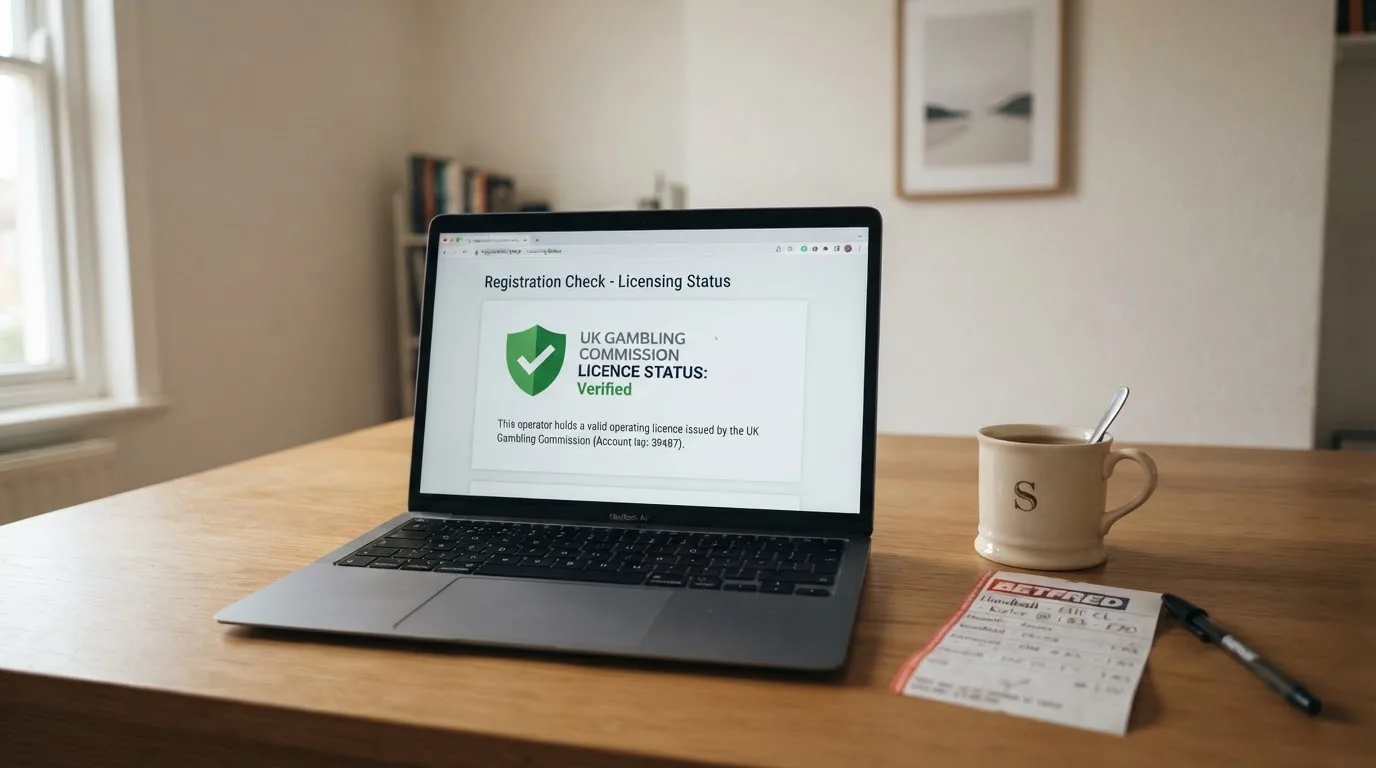
Last checked against the Gambling Commission’s public register on 27 October 2026.
The shape of the sport a price is set on
A handball team has seven players on court, six outfield players plus a goalkeeper, and a match is two 30-minute halves. A team that scores 30 goals wins most evenings, and most professional fixtures land somewhere between 20 and 35 per side. The court is 40 metres by 20, with goals 2 metres high and 3 metres wide. A pitch you cannot see is two ends, two goalkeepers and a clock that runs straight through two halves with the clock stopping for time-outs and two-minute suspensions rather than for every foul.

Handball sits inside the wider Olympic family. Men’s handball debuted at the 1936 Berlin Olympics, returned indoors at the 1972 Munich Games, and women’s handball was added in 1976. The International Handball Federation runs men’s and women’s world championships in odd-numbered years; the men’s event has been held every two years since 1995. Denmark holds the 2025 men’s handball world title and France the 2023 women’s title. Behind those two competitions sits a calendar that fills the rest of the year — the EHF Champions League for the men’s and women’s club game, the Bundesliga and the Liga ASOBAL at club level, regional European championships and a steady diet of friendly tournaments in the gaps between them.
Decisive matches carry an ending different from football’s flat draw. A tied handball game goes to up to two 5-minute overtime periods, then to a penalty shootout if the scores remain level. That structure matters to the odds: a bookmaker pricing a knockout game must decide whether to price three outcomes (home, away, draw after regulation) or two (home, away once overtime is on the table), and the price set changes accordingly. A two-way line in a knockout tie hides a slimmer margin on paper than a three-way line in a league game.
Where the odds come from and what sits inside them
A price is a statement about what a winning bet returns, set against what was paid in. Read the function first, then the lines.
A single bet at decimal odds returns the stake multiplied by the odds. A £10 bet at 2.50 returns £25; the net profit is the stake multiplied by the odds minus one, £15. A combination bet multiplies the odds of each leg into a single price, so a double at 2.00 and 3.00 prices at 6.00; a £10 stake returns £60 if both legs win, £60 if the first loses is the answer the punter gets from the slip, which is nothing.
The bookmaker’s margin is what sits between the prices offered and the sums of those prices taken over every outcome of one market. The standard result holds in every price: the sum of the implied probabilities of every outcome, expressed as one divided by the decimal odds, is below one, and the gap between that sum and one is the margin. A market priced with no margin would have implied probabilities summing to exactly one; a market with a 5% margin has implied probabilities summing to 1.05. The punter pays the margin on every bet, win or lose, because the odds are set against a base that already includes it.
A worked example on the kind of line a punter sees most often. Take a two-way market — a match outcome in a knockout game with overtime and penalties in play — priced at 1.90 on each side (fractional 9/10, sometimes written “9/10” or “evens minus one tick”). The implied probability of each side is one divided by 1.90, or about 0.5263. The sum over the two outcomes is 0.5263 + 0.5263 = 1.0526. The payout share, the share of every pound bet on this market that the bookmaker returns to customers as winnings on average, is one divided by 1.0526, or about 0.9501, or 95.0%. The margin, the share of every pound the bookmaker keeps on average, is one minus 0.9501, or about 0.0499, or roughly 5%.
That 5% figure is a band, not a price: a tighter line of 1.95 and 1.95 gives 1.0268 as the sum, a payout share of 0.9740, a margin of 2.60%; a looser line of 1.85 and 1.85 gives 1.0811 as the sum, a payout share of 0.9250, a margin of 7.50%. The page discusses the margin further in the worked calculation section, where the same arithmetic is set against a specific event in this market. A price with a 5% margin is a typical line for a well-traded handball fixture; a price with a 10% margin is a line the punter pays a real cost to take.
The margin is not the only number that lives inside an odds line. A bookmaker also sets the price against a view of who wins, not just against the action on either side, and a price that drifts against one outcome carries an opinion baked in. The margin and the opinion are separable in principle and inseparable in practice on a single fixture: the price the punter reads is the sum of both. The skill in reading odds is not to spot the margin alone but to weigh it against the price the same fixture carries on another bookmaker.
The licence a punter should check before a deposit
A bookmaker serving customers in Great Britain needs a Gambling Commission licence wherever the operator itself is based. The test is the Commission’s public register: search by business name, trading name, domain or account number, and a brand either appears against a remote betting licence or it does not. There is no second test. The register is updated as licences are issued, varied, surrendered or revoked, and any operator detail on this page was checked against the register on the date the page notes under the lead. The Commission issues licences under the Gambling Act 2005, and since the Gambling (Licensing and Advertising) Act 2014 a remote operator using facilities in Great Britain needs a Commission licence irrespective of where it is incorporated. A Curaçao, Maltese or Gibraltar licence is not a substitute for the GB one, and the page does not treat such licences as covering a GB punter.
Licences come in categories, and the category matters. A remote general betting standard (real events) licence covers the everyday sports book; a remote betting intermediary licence is the one an exchange runs on; a remote pool betting licence covers pool products on horse and dog racing. The list of categories is set by the Commission and the brand’s register entry names the categories it holds. Most of the brands on this page sit under remote general betting standard (real events); Smarkets sits under remote betting intermediary, and that distinction shows up in how the product works rather than in how the licence is checked.
A punt checks a brand in three moves: confirm the trading name appears on the register, confirm the trading name is bound to a remote licence in the right category, and confirm the licence is currently in force rather than surrendered or revoked. A surrendered licence is an entry the register still shows, marked accordingly; a revoked licence is one the Commission has taken away. A brand with a former entry marked “surrendered” is not a GB-licensed operator today, and the register is the place where the change becomes visible.
A single brand is never the only licensed one. The register lists far more operators than any one review covers, and “the only licensed brand” is the kind of exclusivity claim the page does not make.
How a bonus actually pays out
Paid out, not advertised. The mechanics sit inside the small print, and the small print is the offer.
A welcome offer is a marketing line with two parts: a headline (“Bet £10, Get £30”) and a set of conditions that determine what the £30 turns out to be worth. The headline tells a punter how to qualify; the conditions tell a punter what the qualification costs and what the reward pays back. The difference between those two is the offer.
Free bets are paid as bet credits, not as cash, and the stake is usually not paid back with the win. A £10 free bet at odds of 3.00 that wins returns £30 in winnings, not £40; the £10 stake stays with the bookmaker. A “risk-free” bet is most often a free bet of the same value if the qualifying bet loses, and the same stake-not-returned rule applies. A price boost is a one-off enhanced price on a named selection; the boost pays at the new odds, and any stake limit on the boosted price applies only to that offer. Acca insurance refunds a stake, usually as a free bet, if one selection in a named accumulator lets the rest down. Cashback returns a share of net losses over a named period, often credited as a free bet rather than as cash. The labels matter because the underlying mechanics differ, and a “risk-free” bet is not the same offer as a refund of stake in cash.
Wagering requirements are the cost a punter pays in turnover before any bonus money turns withdrawable. The rules changed on 19 January 2026: wagering requirements on bonuses at GB-licensed operators are capped at 10x, so a £10 bonus at the cap needs £100 of qualifying bets, and a £50 bonus needs £500 of qualifying bets. Mixed-product promotions, offers that require gambling on two or more product types such as betting and casino or betting and bingo, are banned under the same rules. Whether the cap applies to free bets with no wagering condition is not established in the rules themselves, and the only honest answer is to read each offer’s own terms. A promotion with no wagering requirement is not the same as a promotion below the cap; a free bet paid out as a winning return is a different thing again.
A minimum odds rule cuts a wagering requirement in two: only bets at or above a stated price count towards the rollover. A £10 bonus with a 10x wagering requirement and a minimum odds rule of 2.00 (evens) needs £100 of bets at 2.00 or longer, not £100 of bets at 1.50. The rule matters because short-priced bets are the easy way to clear a turnover in raw volume; the minimum odds rule closes that door and forces turnover into bets that cost the punter something in expected value.
A deadline closes the same door with a clock. A free bet valid for 7 days from issue expires unused at the end of the seventh day; a bonus with a 14-day wagering window expires with whatever has not been turned over at the end. The deadline is the third leg of the offer: qualify, clear, use.
A cap on bonus winnings is the fourth. Some free bets cap the payout at a named figure; some bonuses cap the bonus money itself; the cap is the difference between an offer that pays off on a long-priced winner and an offer that pays off only on a short-priced winner. The cap is rarely in the headline.
The honest frame: an offer is what the qualifying bet costs minus what the bonus returns, averaged over the bets that qualify. A £10 bonus with a 10x wagering requirement and a minimum price of 2.00 costs the punter the expected value of £100 of bets at or above 2.00; the bonus returns whatever the qualifying bet wins plus whatever the bonus itself pays. The difference is the offer, and failing to read the conditions leaves the punter with only half the story.
Live betting, cash out and the price that moves
Live betting, also called in-play, is the betting that happens between the opening whistle and the final one. The bookmaker prices a market again on every play as the score changes, and the price moves faster than the punter can usually click. Handball is well suited to live betting because the score moves quickly, the action is continuous and the data feeds the bookmaker relies on tend to be rich.
A cash-out is the bookmaker’s offer to settle a bet before the event is over, at a price set against the current score and the current state of play. A full cash-out closes the bet for the full stake; a partial cash-out closes a share of the stake and leaves the rest running. An auto cash-out closes the bet automatically when the price reaches a number the punter sets. The price the bookmaker offers is its own price, set against its view of what the bet would settle at on completion, and the price includes its own margin.
A bet builder is a single bet made up of several markets on the same event — a home win combined with over 55.5 goals, for example. The price on the combined bet is not the price of the legs added together; the price is set by the bookmaker against a correlated outcome, and the legs move together in ways a single bet cannot. A Bet Builder Plus on a major sportsbook is a bet builder available pre-match and in-play. An acca builder is a similar product for accumulators across events rather than within one event. The mechanics differ: a bet builder is a single bet with correlated legs; an acca builder is a multi-event accumulator with legs the punter chooses from a menu.
Live streaming is the bookmaker’s offer of a video feed alongside the in-play markets, and the licence required to stream a UK or Irish horse race, a tennis match or a selected football fixture is not the same licence as the one required to take bets. A GB-licensed bookmaker that streams a UK horse race holds the right to do so under its own commercial terms; a brand that streams only overseas events may still take bets in Great Britain but may not stream the British ones.
The in-play market is the bookmaker’s most expensive market to run and the punter’s least expensive market to read. A price on a live handball game moves against the score, and a punter who reads the price against the score reads the bookmaker’s view of the game, which is rarely the bookmaker’s edge alone. The edge is still there in the margin; the margin is just harder to see in a moving price.
Predictions, tips and the offers a tipster sells
Predictions are forecasts. Tips are forecasts sold or given away. A strategy is a rule the punter follows across many bets. None of the three is a guarantee, and a service that markets a tip as a certainty is marketing a story rather than a market.
A forecast works the way a forecast works: a view, a price, a probability. A punter who backs a forecast at a price longer than the forecast’s probability of winning has a positive expected value; a punter who backs it at a price shorter than the probability has a negative expected value. The probability is the part nobody can give a punter, because the outcome of a handball match is not knowable in advance and a tipster who claims a certainty is selling a fiction.
A bankroll is the stake a punter sets aside for betting, set against the bets the punter makes. A flat-stake rule (one unit per bet) is the basic discipline: every bet costs the same share of the bank, so a run of losses does not wipe the bank. A proportional rule (a share of the current bank) is the same discipline adjusted for results. The discipline is the difference between a punter who bets once and a punter who bets many times.
A market with a low margin is a market the bookmaker runs tight, and a punter who backs forecasts in low-margin markets pays less for the same forecast than a punter who backs forecasts in high-margin markets. The discipline of a tipster who charges for tips is the discipline of forecasting in markets the bookmaker runs wide; the discipline of a punter who pays for tips is the discipline of paying twice for the same forecast.
A tipster service is a tipster, and a tipster is paid for forecasts. The forecasts are sold on a subscription, on a per-tip basis or on a share-of-profit basis, and the offer the tipster sells is the same offer a bookmaker sells — the difference is that the tipster takes the price as his edge and the bookmaker takes the margin. A punter who pays a tipster and pays a bookmaker is paying both.
The honest frame: a tip is a forecast, a forecast is uncertain, and a tipster who claims a winning system is selling a story. A punter who reads a forecast and reads a price has read the bet; a punter who reads a forecast and skips the price has read half the bet.
The bet types, the markets and the odds a punter sees
The bet types are the shapes a bet takes. The markets are the events a bet is placed on. The odds are the prices the bookmaker sets on each market.
A single is a bet on one outcome of one event. A double is a bet on two outcomes of two events. A treble is a bet on three outcomes of three events. An accumulator (“acca”) is the same product with any number of legs. The price on an accumulator is the product of the prices on each leg, so a treble at 2.00, 3.00 and 4.00 prices at 24.00. The price on a single leg is the price the punter sees; the price on the accumulator is the price the punter does not see until the bet is placed.
A handicap is a market in which one side starts the match with a goal advantage or disadvantage, and the price is set against the adjusted score. A handicap of −3.5 on the home side means the home side must win by four or more for a backer of the home handicap to win. The price on a handicap is shorter than the price on the match outcome because the bookmaker has set the handicap against a likely margin.
A totals market is a market in which the punter bets on the total goals scored in the match, set against a line set by the bookmaker. A line of 55.5 means a backer of the over wins if 56 or more goals are scored; a backer of the under wins if 55 or fewer are scored. The half-goal line removes the possibility of a void bet. The price on a totals market is set against the typical scoring rate of the league and the form of the teams.
A both-teams-to-score market (BTTS) is a market in which the punter bets on whether both teams score at least one goal. Handball matches are usually high-scoring enough that both teams score; the price on “yes” is therefore short. The price is set against the proportion of matches in the league in which both teams score.
A outright market is a market in which the punter bets on the outcome of a competition rather than a single match. The price on an outright is set months before the competition, and the price drifts as the competition approaches. An ante-post bet is the same product placed before the final field is known.
The bookmaker’s margin on a single match outcome (1X2) is not the margin on the totals market, not the same as the margin on a handicap, and not the same as the margin on an outright. The margin on a low-margin market in a well-traded league is closer to 2-3%; the margin on a high-margin market in a thinly-traded league is closer to 8-10%. The page discusses the margin of a single market in the worked calculation section; the margin of other markets follows the same arithmetic but with the inputs research gives.
The tournaments a GB-licensed bookmaker prices
Handball carries a calendar that fills most of the year. The IHF World Championship runs in odd-numbered years for men’s and women’s. The EHF Champions League runs the club game in Europe for men and women, with the men’s competition drawing the deeper betting menu at GB-licensed bookmakers. The Bundesliga (Germany), the Liga ASOBAL (Spain), the Ligue Nationale (France) and the Herre Handbold Ligaen (Denmark) fill the club calendar through the autumn and spring. The Olympics run every four years, with men’s handball at the Summer Games since 1972 (indoors) and women’s handball since 1976. Regional championships — the European Championship, the Asian Games, the Pan American Games — fill the gaps.
The odds on a tournament depend on the bookmaker’s view of the field and on the margin the bookmaker runs on the market. A well-traded league (the Bundesliga, the Liga ASOBAL) carries tighter margins than a thinly-traded competition (a friendly tournament, a regional cup). The depth of the menu at a GB-licensed bookmaker is set by the operator’s own commercial decision, and the brand-by-brand menu is the comparison the table at the end of this section sets out.
The odds on a single match are set by the bookmaker against its view of the form, the injuries, the venue and the action on either side. The price drifts as the action comes in, and the closing price is the price at the start of the match. The starting price (SP) is the price on the betting exchange at the start, and a best-odds-guaranteed (BOG) promotion pays at the SP if the SP is longer than the price taken.
Ten GB-licensed bookmakers and the points that set them apart
Each brand below holds a Gambling Commission remote licence for fixed-odds or exchange betting on real events. The licence number is the account number on the Commission’s public register, and the licence holder is the company named against that account. The “what stands out” line names the single point of the operator’s own terms or product that matters to a punter choosing between brands for handball. No brand is “the only” licensed one, and a place in the comparison is not a licence.
| Brand | Licence | Licence holder | What the operator’s own terms state on this page’s subject |
|---|---|---|---|
| 10bet | 43173 | Blue Star Planet Limited | Sportsbook covers football, tennis and horse racing, with Cash Out, Bet Builder and Live Streaming. |
| Midnite | 101839 | Midnite Limited | Site cites Gambling Commission licence 101839 and shows in-play events, an acca builder, popular accas and price boosts with maximum-stake limits. |
| Smarkets | 39173 | Smarkets (Malta) Limited | UK deposits by open bank transfer are instant from £10 up to £10,000; withdrawals are processed within 6 hours from £10 up to £100,000. |
| Bet Ahoy | 100094 | Bet Ahoy Ltd | Welcome offer is a £5 sports bet plus a £5 acca, made up of two free bets of equal value. |
| Betfred | 39544 | Petfre (Gibraltar) Limited | App covers 21 sports plus over 2,000 casino-style games. |
| BetMGM | 39198 | LeoVegas Gaming PLC | Welcome offer for new UK customers who deposit £10 or more and place a sports bet within 7 days is four £10 free bets on accumulator and multiple bets, valid for 7 days. |
| Spreadex | 8835 | Spreadex Limited | Combines fixed-odds and spread betting in one app, with one-click, auto and partial cash out, Bet Builder across fixed odds or spreads, and live streaming of UK and Irish racing, tennis, NFL and selected football. |
| Betmaster | 65699 | BM Solutions GB Ltd | App covers football, cricket, horse racing, NFL and eSports (League of Legends, Dota 2) betting. |
| DAZN Bet | 48756 | DZBT Limited | Deposits start at £5 by debit card, Apple Pay, Paysafecard, Trustly and Skrill, and at £20 by PayPal, with no processing fees. |
| Kalooki Sportsbook | 57730 | Kalooki Sportsbook Limited | Operated by Kalooki Sports Book Ltd (company number 12938274), licensed by the Gambling Commission under account 57730, and is a GAMSTOP member. |
The table is a comparison of licences and a single product or terms point each, not a ranking. A punter who wants the deepest in-play menu looks at the columns that name in-play, cash out and live streaming; a punter who wants the fastest withdrawal looks at the column that names one. No single column captures the whole of what makes a bookmaker suit a punter, and the section below sets out the judgement behind each card.
10bet
10bet runs on Gambling Commission account 43173, held by Blue Star Planet Limited. The sportsbook covers the three sports most punters in Great Britain bet on — football, tennis and horse racing — with Cash Out, Bet Builder and Live Streaming on the app. A punter who wants the standard product on the standard sports, with a UK licence, gets what 10bet’s terms describe. A punter who wants the longest-running app and the most-traded leagues gets what the bigger sportsbooks also offer, and 10bet is not the only licensed one. This operator suits a punter looking for a standard menu rather than a niche one.
Midnite
Midnite runs on Gambling Commission account 101839, held by Midnite Limited. The site names in-play events, an acca builder, popular accas and price boosts with maximum-stake limits, and the welcome offer is a £5-or-more pre-match bet at EVS (2.0) or greater within 14 days, settled as £25 in free bets plus 50 free spins valid for 7 days. A punter who wants the acca builder and the price boosts gets what Midnite’s terms describe; a punter who wants a deep menu of single markets on a niche sport may not. The 7-day expiry on the free bets closes the offer quickly, and anyone looking at the headline should also check the deadline. Midnite is a solid option for accumulator players.
Smarkets
Smarkets runs on Gambling Commission account 39173, held by Smarkets (Malta) Limited, and sits under the remote betting intermediary category. UK deposits by open bank transfer are instant from £10 up to £10,000; withdrawals are processed within 6 hours from £10 up to £100,000; UK debit card deposits are instant from £10 up to £15,000. A punter who wants an exchange — a market in which the punter backs and lays against other punters, with the operator taking a commission rather than a margin — gets what Smarkets’s terms describe; a punter who wants a traditional sportsbook gets the back-and-lay product, not the fixed-odds product. The 6-hour withdrawal time is a clear selling point for those who prioritize speed.
Bet Ahoy
Bet Ahoy runs on Gambling Commission account 100094, held by Bet Ahoy Ltd. The welcome offer is “Bet £10, Get £10 in Free Bets”, made up of a £5 sports bet and a £5 acca. A punter who wants the simplest welcome offer gets what Bet Ahoy’s terms describe; a punter who wants the deepest welcome offer gets what the bigger brands also offer, and Bet Ahoy is not the only licensed one. The two-free-bet structure splits the £10 reward across two bets of equal value, and anyone interested should verify the terms before signing up. Bet Ahoy provides a straightforward experience for those not hunting for the most complex welcome packages.
Betfred
Betfred runs on Gambling Commission account 39544, held by Petfre (Gibraltar) Limited. The app covers 21 sports plus over 2,000 casino-style games. A punter who wants a sports-and-casino combination gets what Betfred’s terms describe; a punter who wants a sports-only book gets the same sports menu plus a casino the punter may not want. The 21-sports figure is a wider menu than most niche brands offer, and the combined app is a strong contender for those who enjoy both sports and casino games. It is a reliable choice for the casual player.
BetMGM
BetMGM runs on Gambling Commission account 39198, held by LeoVegas Gaming PLC. The welcome offer for new UK customers who deposit £10 or more and place a sports bet within 7 days is four £10 free bets (two football accumulators of 4+ selections and two sports multiples of 2+), valid for 7 days with minimum odds and opt-in required. A punter who backs accumulators and multiple bets gets what BetMGM’s terms describe; a punter who backs singles gets four free bets the punter cannot use as singles. The 7-day deadline closes the offer quickly, and savvy bettors should take note of this time constraint. It is a popular choice for accumulator enthusiasts.
Spreadex
Spreadex runs on Gambling Commission account 8835, held by Spreadex Limited, and is regulated by the FCA for spread betting and by the Gambling Commission for fixed-odds betting. The app combines fixed-odds and spread betting in one place, with one-click, auto and partial cash out, Bet Builder across fixed odds or spreads, and live streaming of UK and Irish horse racing, greyhounds, tennis, NFL and selected football. A punter who wants the combined fixed-odds and spread product gets what Spreadex’s terms describe; a punter who wants fixed odds alone gets the same fixed-odds menu plus a spread product the punter may not want. Spreadex states that spread betting losses can exceed the deposit, and that line is the one a punter reads before opening a spread account. This operator is best suited to those who understand the risks of spread betting alongside fixed-odds options.
Betmaster
Betmaster runs on Gambling Commission account 65699, held by BM Solutions GB Ltd. The app covers football, cricket, horse racing, NFL and eSports (League of Legends, Dota 2) betting. A punter who wants the standard sports menu plus an eSports product gets what Betmaster’s terms describe; a punter who wants the deepest menu on a niche sport may not. The eSports product is the single point of the comparison and those interested in League of Legends or Dota 2 will find what they need in the table. Betmaster is a focused choice for bettors who enjoy mixing traditional sports with eSports.
DAZN Bet
DAZN Bet runs on Gambling Commission account 48756, held by DZBT Limited. Deposits start at £5 by debit card, Apple Pay, Paysafecard, Trustly and Skrill, and at £20 by PayPal, with no processing fees. A punter who wants the lowest deposit threshold on the standard payment methods gets what DAZN Bet’s terms describe; a punter who wants the widest payment-method menu may not, and the PayPal threshold of £20 is the one a paywall that prizes the lower-deposit brands reads first. Worth it for the punter who bets on a small deposit and is happy with the standard payment methods.
Kalooki Sportsbook
Kalooki Sportsbook runs on Gambling Commission account 57730, held by Kalooki Sportsbook Limited, and is operated by Kalooki Sports Book Ltd (company number 12938274). The brand is a GAMSTOP member, and GAMSTOP membership is a condition of every GB-licensed online operator’s licence, so a brand that names it is naming the minimum. A punter who wants a brand that names its licence and its GAMSTOP membership gets what Kalooki Sportsbook’s terms describe; a punter who wants the widest menu on a niche sport may not. Worth it for the punter who reads the licence line and the GAMSTOP line before a deposit.
The margin on the kind of line a punter takes
The margin is a cost, and the cost is the difference between what the punter pays and what the punter gets back on average. The market is a two-way line in a knockout handball fixture (overtime and penalties in play), priced at 1.90 on each side (fractional 9/10). The example is illustrative, not a quoted price; the page does not name a real bookmaker and does not name a real fixture.
The implied probability of one side at decimal odds of 1.90 is one divided by 1.90, or about 0.5263. The sum over the two outcomes is 0.5263 + 0.5263, or about 1.0526. The payout share, the share of every pound bet on this market that the bookmaker returns to customers as winnings on average, is one divided by 1.0526, or about 0.9501, or 95.0%. The margin, the share of every pound the bookmaker keeps on average, is one minus 0.9501, or about 0.0499, or roughly 5%.
That figure is a band rather than a single number. A tighter two-way line at 1.95 and 1.95 gives a sum of 1.0268, a payout share of 0.9740, a margin of 2.50%. A looser two-way line at 1.85 and 1.85 gives a sum of 1.0811, a payout share of 0.9250, a margin of 7.50%. The 5% line sits in the middle of the band a GB-licensed bookmaker runs on a knockout handball fixture; the 2.50% line is a tight price on a well-traded fixture; the 7.50% line is a wide price on a fixture the bookmaker is less sure about. The same arithmetic gives the margin of any market the bookmaker runs, with the price the bookmaker sets as the input.
The cost a punter pays on a single £10 bet at 1.90 on either side, win or lose, is the margin on that bet, which is £0.50 on average across many such bets. The punter pays the same £0.50 whether the bet wins or loses, because the margin sits inside the price and the price is what the punter takes. The punter’s net position on the bet is the return minus the stake, which is £9 on a £10 bet at 1.90 on a winning outcome, and £0 on a losing outcome; the average of those two, weighted by the implied probabilities, is the £0.50 the bookmaker keeps.
The margin is a cost, and the cost is the difference between what the punter pays and what the punter gets back on average. The punter who takes a forecast at a price longer than the forecast’s probability of winning has a positive expected value; the punter who takes it at a price shorter than the probability has a negative expected value. The forecast is the part nobody can give a punter, because the outcome is not knowable in advance; the price is the part the punter reads.
Safer gambling and the place a punter goes for help
GAMSTOP is the national multi-operator online self-exclusion scheme, and a GB-licensed online operator must take part as a condition of its licence. The periods are six months, one year, five years, or five years with auto-renewal; after the minimum period the exclusion stays in place for a further seven years unless the customer asks GAMSTOP to remove it. GAMSTOP covers online sites and apps; betting shops use a separate service. A punter who self-excludes through GAMSTOP is excluded from every GB-licensed online operator and from every brand on this page.
Identity verification happens before a customer’s first deposit, including before a free bet or bonus can be claimed. The verification checks the customer’s name, address and date of birth against public records and is a condition of the licence, not a service the punter opts into. A punter who cannot verify is not a customer of the operator, and a brand that takes anonymous play is not a GB-licensed brand.
A financial vulnerability check applies to licensed remote betting when a customer’s deposits minus withdrawals exceed £150 in a rolling 30 days. The check is a public-record check (for example, bankruptcy or county court judgments), not an income check and not a credit reference check. A punter whose deposits minus withdrawals pass the £150 threshold is checked; the check is the operator’s duty, not the punter’s choice.
A deposit limit is the operator’s offer of a gross deposit limit on a fixed time frame. Operators must offer one; whether the limit is the punter’s choice or a default is set by the rules. There is no state-set deposit or loss ceiling for betting in Great Britain: the limits are the customer’s choice.
A credit card is banned for gambling in Great Britain, including credit-card-funded payments through an e-wallet. Debit cards and bank-based payments are not covered by the ban. A punter who tries to deposit from a credit card is blocked; a punter who tries to deposit from a credit-card-funded e-wallet is blocked.
Help is free, confidential and not a condition of a licence. GamCare runs the National Gambling Helpline. GambleAware funds treatment and support across Great Britain. NHS gambling clinics run specialist treatment. Gamblers Anonymous runs peer support. A punter who feels the betting has stopped being the punter’s choice can pick up the phone or go online; the help is there before the help is needed.
The licence, the protection and the offshore alternative
A GB-licensed bookmaker takes the customer-protection rules as a condition of its licence. The rules cover identity verification, self-exclusion, vulnerability checks, deposit limits, advertising and bonus terms. A punter who bets with a GB-licensed bookmaker is betting with an operator bound by those rules.
An offshore bookmaker is not bound by those rules. A Curaçao, Maltese or Gibraltar licence is not a substitute for the GB one, and an offshore bookmaker serving customers in Great Britain without a GB licence is operating outside the Gambling Act 2005. The consequences for the punter are practical: an offshore brand is not bound by GAMSTOP, has no Commission complaints route, has no approved dispute-resolution body, has no British consumer redress if funds are withheld, and is not bound by the 10x bonus cap or the £150 vulnerability check. Funds held by an offshore brand are held under the brand’s own terms, not under British consumer law.
A brand that holds only an offshore licence and serves customers in Great Britain without a GB licence is not “legal to use”; it is operating outside the Act the Commission administers. The Act’s offence is aimed at the operator, not at the customer, but the customer pays the practical cost. The honest frame: a GB-licensed brand carries checks, limits, GAMSTOP and the bonus cap, and asks for verification before the first bet; an offshore brand carries none of those protections and the punter may lose funds the punter cannot recover.
Frequently asked questions
Is a handball a foul in betting?
No. In football betting the word “handball” names the foul of handling the ball with the hand or arm. In handball betting the sport is the seven-a-side indoor game played on a 40 by 20 metre court, with two 30-minute halves and goals 2 metres high by 3 metres wide. A market named “handball” on a sportsbook is a market on the sport, not on the footballing foul.
Does a handball count as a foul in betting?
No. The term on a sportsbook is the name of the sport, set against the International Handball Federation’s calendar of world championships, the EHF Champions League and the European leagues. A foul inside the sport (a two-minute suspension, a seven-metre throw) is settled inside the sport’s own rules; the word “handball” on the betting slip names the event, not the foul.
Does handball count as a foul in betting?
No. The word on a sportsbook is the sport, not the footballing offence. A betting market on the sport is priced against the fixture, the form, the score and the action; the word is the label.
How can it be checked that a bookmaker holds a Gambling Commission licence?
Open the Commission’s website and search the public register by business name, trading name, domain or account number. A brand either appears against a remote betting licence or it does not; the register is the whole test. The licence number on this page is the Commission account number, and the licence holder is the company named against that account. A surrendered or revoked licence is marked on the register; a brand with such an entry is not a GB-licensed operator today.
How is the return on a bet worked out from the stake and the odds?
A single bet at decimal odds returns the stake multiplied by the odds; the net profit is the stake multiplied by the odds minus one. A £10 bet at 2.50 returns £25; the net profit is £15. A combination bet multiplies the odds of each leg into one price, and the stake is multiplied by that price if all legs win.
US & other team sports – Fast Payout
Content created by the «Fast Payout» team
