
Online motorsport betting in Great Britain: the licensed bookmakers, the markets and the cost of every offer
 Available in US
Motor racing sits in a peculiar corner of British sports betting. It is not one sport. Formula One, Formula E, IndyCar, the FIA World Endurance Championship (with Le Mans at its heart), the World Rally Championship, MotoGP, NASCAR, the British Touring Car Championship and a long tail of national series each carry their own calendar, their own qualifying grammar and their own odds. A bettor who watches the racing understands the difference; a bookmaker’s site lists all of them under a single heading and lets the price do the rest. The £10 to £500 of qualifying stake, the accumulator insurance, the boosted odds and the cash-out button look the same whatever the race; the markets underneath do not.

This page is about what follows from that. Who holds a Gambling Commission licence to take bets from a remote family in Great Britain and how that licence is checked. What the margin inside a set of odds actually is, and how it changes the value of every offer above it. Which categories of race the major bookmakers cover in depth, and which ones a serious motorsport bettor has to find on the day. How the £150 vulnerability check, the 10x bonus cap and the GAMSTOP self-exclusion shape the practical experience of betting from a British living room. And ten operators the Commission register lists, each with what their own terms say they do and where the page can find the lines that matter.
Current as of 27 October 2026 · checked against the Gambling Commission’s public register
The ten bookmakers this page reviews
| Operator | Commission Licence Details | Key Terms |
|---|---|---|
| NetBet | 39170 (Netbet Enterprises Limited) | Daily Boosts, Profit Boosts, Bet Builder with stats |
| Star Sports | 9177 (Star Racing Limited) | Phone-in trading line (08000 521 321) |
| DragonBet | 64908 (DragonBet Ltd) | Regional identity (Welsh football and rugby) |
| William Hill | 39225 (WHG (International) Limited) | Best Odds Guaranteed (horse racing) |
| DAZN Bet | 48756 (DZBT Limited) | £5 deposit floor on five payment methods |
| Fafabet | 57385 (Taichi Tech Limited) | Best Odds Guaranteed from 9am on race days |
| BoyleSports | 39469 (Boylesports Enterprise) | £20 free bets for £10 qualifying bet |
| BetTom | 64959 (Bet Tom Limited) | 50% back as free sports/slot funds |
| Fitzwilliam Sports | 48760 (SBKI Limited) | Capped membership; “High Stakes Welcome” |
| BetGoodwin | 2927 (Goodwin Racing Limited) | Bet £10 & Get £15 (3x£5 free bets) |
The Commission register lists every business that holds a remote general betting licence for Great Britain. The set below is a comparison of ten of them, taken from the register and written up against each operator’s own published terms. The order is editorial; a position in a list is not a recommendation. Several brands share a parent company and several run under a single licence, so what looks like competition is sometimes the same back office with a different logo. The reader’s job is the same in either case: read the terms before staking, and check the licence number on the Commission’s own site.

NetBet: an established sportsbook with a deep bet-builder
NetBet runs its UK sportsbook under account 39170 of the Gambling Commission register, with the licence held by Netbet Enterprises Limited. Its app offers Daily Boosts, Profit Boosts and free bet offers, runs a Bet Builder with odds that refresh as markets are added, and carries sports statistics for the major leagues. A bettor who plans to build a Custom Bet from a single race session — fastest qualifier, race winner, fastest lap, podium finish — will find the building blocks wired together here. For a deeper motorsport bettor, the value of a Bet Builder rises sharply when the legs are correlated to the same race; for a casual follower, the same tool mostly adds friction. NetBet is a reasonable first stop for a bettor who bets on several sports and wants one consistent bet-builder interface across them.
Star Sports: a phone-led bookmaker with a trader on the other end
Star Sports trades under the Star Racing Limited licence, Commission account 9177. Its distinguishing point of contact is a phone line — 08000 521 321 — through which a customer can speak to a trader directly to open an account, place a bet or chase a query, alongside an email route. That is unusual among British-licensed online operators and it suits a bettor who has a specific position in mind and wants to negotiate stake or price by voice. For a bettor who bets online and never picks up the phone, the same appeal is invisible. The Commission’s register lists the site as a remote general betting standard licence; the motorsport market depth is reported only in general listings, so a reader who races the calendar should check the site for the specific meetings they want before staking.
DragonBet: Welsh football and rugby sit at the centre
DragonBet runs under DragonBet Ltd, Commission account 64908. Its app foregrounds Welsh football and rugby, alongside racing, American football, in-play betting and bet-builder markets. A motorsport bettor from south Wales who already uses it for the regional leagues will find the same wallet, the same login and a familiar layout when the Grand Prix rolls around; a bettor who has no connection to the Welsh leagues has no particular reason to be here. The site’s identity is regional, and motorsport sits within a broader offering rather than as a flagship product.
William Hill: the high-street heavyweight with Best Odds Guaranteed
William Hill’s UK remote betting runs under WHG (International) Limited, Commission account 39225. The brand’s flagship racing concession, Best Odds Guaranteed, pays the bigger of the early price or the starting price on UK and Irish horse racing from 8am on the day of the race, on single and multiple bets, and explicitly excludes ante-post, tote and pari-mutuel bets. BOG is for horse racing and not for motorsport, so it does not change the price of a Hamilton pole-sit or a Le Mans podium. What it does mean is that a bettor who uses William Hill for racing on Saturday and motorsport on Sunday is working inside a single account with a known set of safer-gambling tools and a payout calculator that has not changed in years. The motorsport book is broad and settled against official FIA timing where it is available.
DAZN Bet: low deposit floor across the usual rails
DAZN Bet runs under DZBT Limited, Commission account 48756. Its published payment schedule starts at £5 by debit card, Apple Pay, Paysafecard, Trustly and Skrill, and at £20 by PayPal, with no processing fees. For a bettor with a £5 stake in mind, the £5 deposit floor on five of those rails is the lowest published entry on this list. The £20 PayPal minimum is a small but real friction for a bettor who uses PayPal for everything. The motorsport book sits inside the wider DAZN streaming tie-up, which gives the brand a video-led identity the racing calendar can lean on where live streams are available. For a bettor who already watches motorsport through DAZN’s broadcast, the betting app sits in the same subscription family and that is a real, if not monetary, advantage.
Fafabet: Best Odds Guaranteed from 9am on race days
Fafabet trades under Taichi Tech Limited, Commission account 57385. Like William Hill, it pays Best Odds Guaranteed on UK and Irish horse racing win and each-way bets, but from 9am on race days rather than 8am, and with the same rule: the bigger of the original price and the starting price is settled. Again, BOG is for horse racing; the motorsport book has no equivalent. What Fafabet offers a motorsport bettor is a competitive price on the major championships and a BOG concession on the racing calendar for the rest of the Saturday card.
BoyleSports: a matched welcome for UK and Irish customers
BoyleSports’ UK-facing sports welcome is £20 in free bets when a £10 bet is placed; Irish customers get the euro equivalent. The licence is held by Boylesports Enterprise under Commission account 39469. The dual-currency welcome is unusual and reflects the brand’s cross-border identity, but the substance for a UK-based bettor is a £20 free-bet return for a £10 qualifying bet. BoyleSports has a long racing heritage and the motorsport book is part of the same broader wallet, so the value of the welcome depends on whether the bettor uses it on the meeting they wanted to back anyway.
BetTom: a 50% back welcome split between sports and casino
BetTom trades under Bet Tom Limited, Commission account 64959. Its published sports welcome offer is 50% back as a free bet up to £50, with a matching 50% back up to £50 in free slot funds for casino play. The split matters: half the headline value is for the slot machines and not the sportsbook. A bettor who bets on motorsport and never plays slots is looking at £50 of headline value, of which roughly half is real to them. Full terms apply, and those terms — minimum odds, expiry, eligible markets — are where the offer’s true cost lives.
Fitzwilliam Sports: a Dublin bookmaker with capped membership
Fitzwilliam Sports runs under SBKI Limited, Commission account 48760. The brand presents itself as a Dublin bookmaker with capped membership, and its welcome is described as a “High Stakes Welcome” subject to compliance criteria — meaning the headline figure is conditional on the customer’s profile under the operator’s own checks. The site advertises instant deposits, fast withdrawals, timeouts and deposit limits, and links to GambleAware, GamStop and Gamblers Anonymous. For a high-stakes motorsport bettor who can clear the membership check, the offer is in a different league from the £10-qualifying welcomes above; for everyone else, the same compliance ceiling reads as a closed door.
BetGoodwin: a £15 free-bet welcome split three ways
BetGoodwin runs under Goodwin Racing Limited, Commission account 2927. Its sports welcome offer is “Bet £10 & Get £15 in Free Bets”, split into a £5 sports bet, a £5 acca and a £5 Sub-Cover bet. The split is the point: the offer is not one £15 free bet but three smaller ones, each tied to a different product. A bettor who wants to bet on a single race uses one of the three; a bettor who builds an accumulator uses another; a bettor who hedges with a Sub-Cover bet uses the third. The £10 qualifying stake is the floor; the headline £15 is real only if the bettor takes the three of them.
How the Commission licence works in Great Britain
The Gambling Commission is a non-departmental public body sponsored by the Department for Culture, Media and Sport. It regulates the commercial market under the Gambling Act 2005, which covers Great Britain — England, Scotland and Wales. Northern Ireland sits outside the 2005 Act and has its own older law; a Commission licence regulates GB customers and not customers in Northern Ireland, so any framing written as “UK-licensed” overstates the regulator’s reach. Since the Gambling (Licensing and Advertising) Act 2014, a remote operator whose facilities are used in Great Britain needs a Commission licence wherever it is based — a Curaçao, Maltese or Gibraltar licence is not a substitute.
The Commission’s public register can be searched by business name, trading name, domain or account number. It is the whole test of whether a brand holds a licence. The licence types relevant to this page are remote general betting standard (real events), which is what every operator below holds, and remote general betting standard (virtual events), which is a separate category. There is no state monopoly and no cap on the number of licences. Operators use .com as well as .co.uk, so the domain by itself proves nothing; a bettor who takes the trouble to look up the licence number on the register removes that ambiguity entirely. No single brand is “the only” licensed one, the position in a comparison is not a licence, and a licence is a permission to take bets, not a recommendation of the operator.
Identity checks, age and what verification means for the first bet
The minimum age to bet in Great Britain is 18. Since 7 May 2019, name, address and date of birth have been verified before a customer can deposit or gamble at a licensed site — and the verification covers free bets and bonuses too, so a £5 free bet cannot be claimed without the same checks as a £500 deposit. There is no anonymous play at a GB-licensed bookmaker, and that fact alone separates the licensed market from any offshore alternative the original offer may advertise.
A financial vulnerability check, in force since 30 August 2024 under LCCP condition 3.4.4, applies to licensed remote betting once a customer’s deposits minus withdrawals exceed £150 in a rolling 30 days. The threshold has been in force since 28 February 2025. The check itself is a public-record search — bankruptcy, county court judgments, that sort of record — and not an income check, not a credit reference check and not a tax-return request. A bettor who never crosses the £150 net deposit line never sees it; a customer who does sees a public-record check rather than anything more intrusive. Financial risk assessments, sometimes called “affordability checks” in the press, are a separate, more searching tier. They are announced in a staged plan published on 7 July 2026 and have no start date, so the page records them as announced, staged, with no implementation date. Writing them as “in force” would mis-state a fact a reader may act on.
What may be bet on, and what counts as in-play
There is no statutory list of permitted sports or markets in Great Britain. A bookmaker holds a licence for a category and offers markets under its own rules and the Licence Conditions and Codes of Practice. In-play betting is offered by GB bookmakers and the controls are the operator’s licence conditions and customer-protection duties, not a free-for-all. In-play on motorsport is legal; what counts as a fair market at the end of a safety car is the operator’s call. Esports are treated like any other event under the same category; virtual events are a separate licence category; bets on politics, TV shows and novelty markets are offered by GB bookmakers and no statutory prohibition was found.
Betting exchanges run under a remote betting intermediary licence, which is a different licence category again, with rates and rules specific to exchanges. Spread betting that is not a financial contract is inside General Betting Duty and is regulated by the Gambling Commission; financial spread betting is regulated by the Financial Conduct Authority, not the Commission. A spread-bet customer is told that losses can exceed deposits because the product is leveraged, and the mark matters because the same FCA-regulated product is not the same as a fixed-odds bet.
Bonuses and free bets: the headline and the rule
A bonus is the headline figure. The cost is the rule. Every welcome offer, price boost, acca insurance and free bet the major bookmakers run in Great Britain is now subject to two pieces of regulation that shape what the offer really returns. First, since 19 January 2026, wagering requirements on bonuses are capped at 10x — a £10 bonus with a 50x rollover used to need £500 of qualifying bets; under the cap no more than £100 of turnover is required to clear it. Second, mixed-product promotions, offers that require gambling on two or more product types such as betting, casino, bingo and lottery, are banned. The headline of “bet on football to get free spins” no longer exists.
A free bet is its own category. The stake is usually not returned with the win; the £10 free bet at odds of 4/1 returns £40 of profit and not £50 of return. The £15 in free bets that headline a BetGoodwin welcome is three smaller free bets rather than one, and each one carries its own minimum price, its own expiry and its own eligible markets. A boosted-odds offer is settled at the bigger price for a stake that is also capped, and a single boost rarely moves the long-term arithmetic by as much as the marketing suggests. Acca insurance returns the stake as a free bet if one leg lets the customer down, and it usually caps the refund at the stake and excludes certain markets. Each type of offer keeps its type. A cash bonus is a cash bonus. A free bet is a free bet. A risk-free bet refunded as a free bet is not a refund in money, and a 100% bonus is a 100% match of the deposit up to a cap, not a free £100 in cash. No voucher or promo code goes on this page; the reader has the book’s own promotion page for that.
Responsible gambling tools at a GB-licensed bookmaker
Every GB-licensed online bookmaker is a member of GAMSTOP, the national multi-operator online self-exclusion scheme, and GAMSTOP membership has been a mandatory licence condition since 31 March 2020. Self-exclusion periods are six months, one year, five years, or five years with auto-renewal. After the minimum period, the exclusion stays in place for a further seven years unless the customer asks GAMSTOP to remove it. GAMSTOP covers online sites and apps; betting shops use a separate scheme. Registering once with GAMSTOP closes the door at every participating online bookmaker in Great Britain, and it is the single most consequential safer-gambling decision a customer can make.
Operators must offer a gross deposit limit on a fixed time frame under RTS 12. The first changes have applied since 31 October 2025, and a second phase was postponed to 30 September 2026, so whether the second phase is live at the time of reading is not established. There is no state-set deposit or loss ceiling for betting in Great Britain: limits are the customer’s own choice, and a customer who wants a £50 weekly cap sets one. Help is available through GamCare’s National Gambling Helpline, through GambleAware, through NHS gambling clinics and through Gamblers Anonymous. The links are on every licensed operator’s site, usually in the footer.
Payments: what is allowed and what is not
Credit cards are banned for gambling in Great Britain since 14 April 2020 under LCCP condition 6.1.2, and the ban extends to credit-card-funded payments through an e-wallet. Debit cards and bank-based payments are not covered. The identity check before the first deposit means no anonymous play at a licensed site, and source-of-funds questions at higher spend are normal under the money-laundering rules. No state list of permitted payment methods was found: what a customer can deposit with is set by each operator, and a brand that quotes a £5 floor on five rails and £20 on PayPal is doing what its own terms say, not what the regulator mandates. A British named-account rule is not established, and the question of cryptocurrency deposits at licensed operators is not established either.
Tax: what the bettor pays and what the operator pays
The bettor pays no tax on betting winnings in Great Britain. General Betting Duty is the operator’s tax, currently 15% on gross profits, and from 1 April 2027 a new remote betting rate of 25% applies within it. Until that date, the remote rate stays at 15%. Remote bets on UK horse racing, bets on self-service betting terminals in licensed premises, pool betting and in-person betting all stay at 15% on the published policy paper of 26 November 2025. Spread betting has its own rates — 3% on financial spread bets and 10% on other spread bets — and that is a different conversation. Whether operators pass duty through into the odds is not established; writing that the player is charged duty would be wrong, and writing that duty makes British odds worse than they would otherwise be would be an inference the page cannot make.
Offshore: what the customer loses by betting without a GB licence
A GB licence is compulsory at the point of consumption. Providing gambling facilities in Great Britain without the licence the Act requires is an offence under section 33 of the Gambling Act 2005 — on summary conviction, up to 51 weeks’ imprisonment, a fine up to level 5, or both, and six months in Scotland. The offence is aimed at the operator. No offence aimed at the customer who merely bets on an unlicensed site was found in the published record, and the page does not write “legal to use” because that is a question of consumer law the regulator does not answer. What the customer loses is the protection. No GAMSTOP coverage at the offshore brand. No Commission complaints route. No approved British dispute-resolution body. No British consumer redress if funds are withheld. No 10x bonus cap. No £150 vulnerability check. None of those is “the safe choice” by default — a GB-licensed bookmaker is the licensed choice, with verification before the first bet and a regulator looking over its shoulder; an offshore bookmaker is the unlicensed choice, with none of those protections and the possibility of the funds being held. Neither is “safe” without the bettor’s own input.
Enforcement against unlicensed operators is disruption rather than blocking. The Commission issues cease-and-desist notices, refers brands to search engines, and works with registrars, hosts and payment providers. The Commission has been given, or is about to receive, court-order DNS blocking powers. Writing that ISP blocking is in operation would overstate what is currently enforceable.
The fundamentals of motorsport as a betting subject
The FIA, formed in 1904, is the oldest and most prominent international governing body for vehicles with four or more wheels. The FIM governs motorcycle racing. Between them they cover almost every series a British-licensed bookmaker lists under “motorsport”.
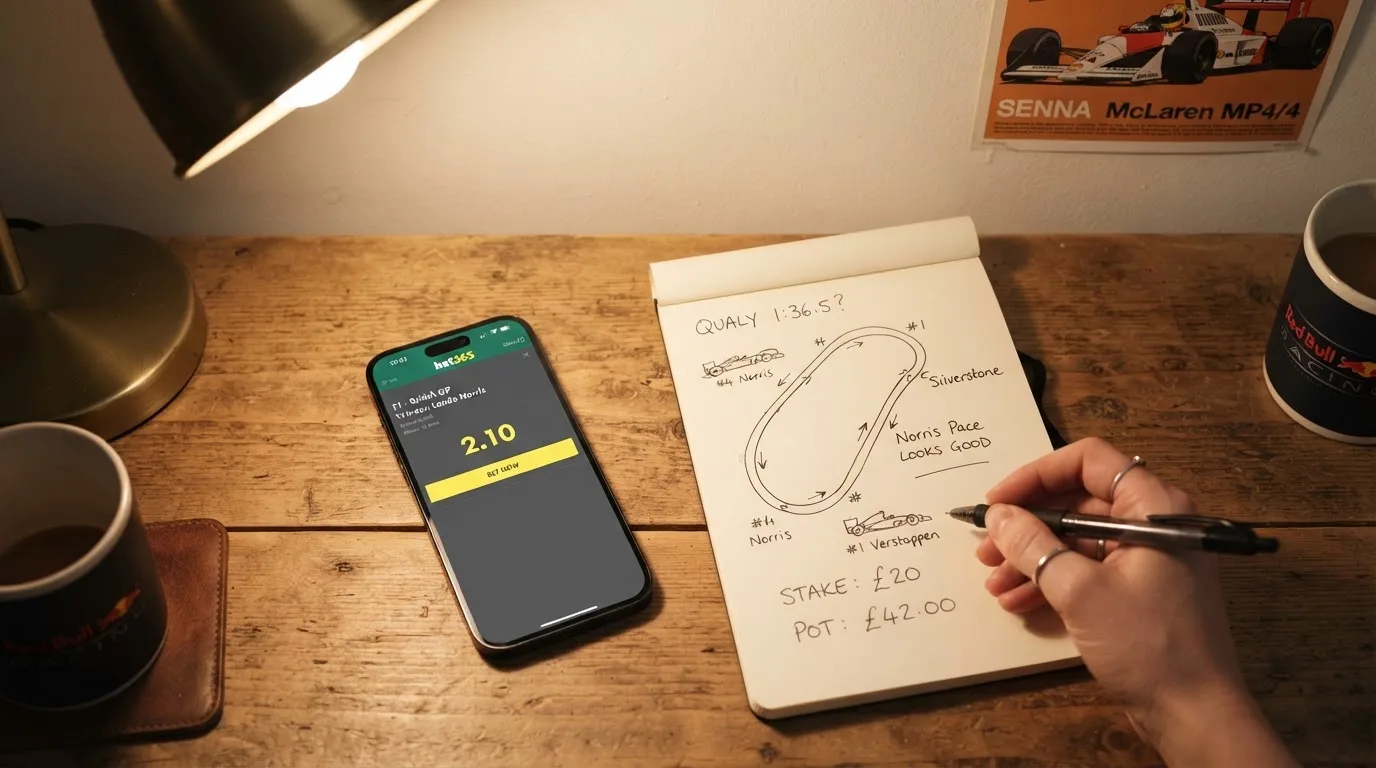
The main categories a bettor meets are open-wheel (Formula One, Formula E, IndyCar), touring car (the British Touring Car Championship is the local headline), endurance (the 24 Hours of Le Mans, held each June in France, is part of the FIA World Endurance Championship), rallying (the World Rally Championship is the headline) and motorcycle racing (MotoGP, World Superbikes, the Isle of Man TT). Each series has its own rhythm. Formula One runs a structured weekend of practice, qualifying, sprint and grand prix; the World Endurance Championship runs multi-class races of six, eight or twenty-four hours; rallying runs stage-by-stage across a weekend with a power stage on the final day. The market depth at any British bookmaker reflects that rhythm: Formula One gets the deepest menu, the World Endurance Championship gets a leaner one, and the British Touring Car Championship gets a market on race winner, podium and fastest lap rather than the full qualifying-and-race menu.
The 2026 Formula One World Championship
The 2026 Formula One World Championship has 23 Grands Prix. The season starts on 8 March at Albert Park, Australia and is scheduled to end on 6 December 2026 with the Abu Dhabi Grand Prix at Yas Marina. The grid has 11 teams. Cadillac is the new team, and Audi enters as a works team after acquiring Sauber. The 2026 team cost cap is 215 million US dollars.
The 2026 regulations drop the MGU-H, raise MGU-K output to 470 bhp (350 kW), and replace DRS with active aerodynamics including an overtake mode available within one second of the car ahead. Lando Norris is the reigning Drivers’ Champion going into the 2026 season. The combination of a cost cap, a new power-unit regulation, a new aero regulation and a new entrant on the grid makes the season unusually hard to price before practice begins, and the early-weekend odds on a Saturday sprint reflect that uncertainty rather than the form book.
What a motorsport bettor actually bets on
The shape of a motorsport bet depends on the series. On a Formula One weekend the market depth goes pole position, race winner, podium, points finish, fastest lap, head-to-head match-ups between named drivers, and a long tail of specials on constructor championship points and driver championship standings. A Bet Builder combines several markets from the same race — pole and win, fastest lap and podium — into a single bet whose odds reflect the joint probability the bookmaker’s traders are willing to underwrite. In endurance racing the menu is shorter: class winner, overall podium, finishing position of a named car, sometimes a head-to-head between two of the same class. In rallying the menu is stage winner, rally winner, head-to-head, championship outright and points-finish markets after the power stage.
Each market settles differently. A Formula One race settles on the FIA’s official classification; a head-to-head settles on which of the two named drivers finishes higher in that classification regardless of where they finish overall. A bet on fastest lap settles on the official lap time recorded during the race. A BTCC race settles on the official result. The settlement rule is the operator’s, and a bettor who reads it before staking is not surprised when a disqualified driver drops a place at 11pm.
How odds are quoted in Great Britain
Two formats sit side by side on every licensed bookmaker’s site. Fractional odds are the older British form: 5/1, 11/4, evens (1/1). Decimal odds are the European form: 6.00, 3.75, 2.00. The two are interchangeable. A fractional odd of a/b means the customer wins a units for every b units staked and gets a+b units in return; converting to decimal gives a/b + 1, so 5/1 becomes 6.00 and 11/4 becomes 3.75. “Odds-on” describes anything shorter than evens (1/2, 4/6, 8/11) where the stake is bigger than the profit.
A useful habit is to read both forms on the betting slip and to use the decimal form in the head when comparing prices across bookmakers. Fractional odds are not easier for the arithmetic; decimal odds are. The £10 at 6/5 pays £22 in return (£12 profit plus the £10 stake), and the £10 at 2.40 pays the same.
What a winning bet pays back
For a single bet, the return is the stake multiplied by the decimal odds and the net profit is the stake multiplied by the decimal odds minus one. A £10 bet at decimal odds of 6.00 returns £60 and produces a net profit of £50. A £10 bet at 3.75 returns £37.50 and produces a net profit of £27.50. For a combination bet — an accumulator — the odds of each leg multiply into a single price, and a four-leg accumulator at 2.00, 3.00, 4.00 and 5.00 carries combined odds of 120.00, so a £10 stake returns £1,200 if all four legs win.
The arithmetic is the same whatever the sport. What changes is the likelihood the joint price is right. A Formula One accumulator of pole sitter, race winner, fastest lap and podium finisher from the same grand prix looks tempting at the combined price, but the four events are correlated — the pole sitter often wins the race, and the fastest-lap driver is often a podium finisher — so the joint probability is higher than the independent-multiplication formula suggests and the bookmaker’s margin in the combined price is correspondingly lower. A bet builder across correlated markets from the same race is not the same product as a four-leg accumulator across four unrelated events, and the price reflects that.
What the margin inside the odds really is
The margin is the slice of every pound staked the bookmaker keeps, on average. The arithmetic is simple in principle. For a two-way market with decimal odds of 1.90 on each side, the implied probabilities are 1/1.90 + 1/1.90, which is 0.5263 + 0.5263, or about 1.0526. The implied probabilities of a “fair” book sum to 1.0000; they sum to 1.0526 here, and the difference — 0.0526, or about 5.3% — is the margin. A 5% margin means the bookmaker keeps about 5p of every £1 staked across the market, before any customer winnings are paid out. A 2% margin is a sharp book; a 10% margin is a soft one; a 15% margin is the kind of book the average reader meets on a long-tail novelty market.
The margin of one market is not the margin of another. A Formula One race winner market with twenty drivers carries a margin that reflects the depth of the field and the bookmaker’s confidence in pricing each entry; a fastest-lap market with twenty drivers carries a wider margin because the book is harder to make and the trader charges for the difficulty. A market margin is also not the same as a single-bookmaker’s price, and a bookmaker with a 4% margin on the race-winner market may still offer uncompetitive prices on the constructor championship because the latter book is harder to hold.
A worked illustration. Take a two-way market at decimal odds of 1.90 / 1.90, the kind of price a beginner sees on a tennis match but the same shape that appears on a head-to-head driver match-up. The payout share of the market is 1 divided by the sum of the implied probabilities, so 1 / (1/1.90 + 1/1.90) = 1 / 1.0526 = 0.9500, or 95%. The margin is 1 minus the payout share, so 5.0%. On a £100 stake split evenly across the two outcomes, the bookmaker takes in £100, returns £95 in winnings on the winning side and keeps £5. The 5% margin is the slice of every pound staked on this market that the bookmaker keeps, on average, across many bets. The size of the slice is the cost of the customer, and the cost is paid before any free bet or bonus is even considered.
For a Formula One race winner market with twenty drivers priced at the kind of book a major operator runs, the implied probabilities sum to something like 1.07 to 1.10; the payout share is roughly 91% to 93% and the margin sits at 7% to 9%. A bet builder combining four markets from the same race carries a margin that is typically lower than the four markets taken independently because the bookmaker knows the legs are correlated, and the combined price reflects that knowledge. The result is a band, not a single figure: a 5% margin is typical for a two-way market at 1.90 / 1.90, a 7% to 9% margin is typical for a deep Formula One race-winner book, and a long-tail driver match-up on the BTCC support card can carry a margin closer to 10% to 12% because the bookmaker has less to lose by pricing it conservatively.
What a free bet is actually worth
A free bet is a credit the bookmaker issues to a customer’s account, with two key rules. The first is that the stake is usually not returned with the winnings; the £10 free bet at decimal odds of 4.00 returns £40 of profit and not £50 of return. The second is that the bet is settled at the price the market offers at the time the free bet is used, not at a price the bookmaker has fixed in advance. A £10 free bet at 6/5 returns £12 of profit; a £10 free bet at 5/1 returns £50 of profit. The value of the free bet is the average expected profit over many uses, weighted by the markets the customer actually plays.
The formula is straightforward in principle. For a free bet whose stake is not paid back, the value is the free-bet amount multiplied by the decimal odds minus one, divided by the decimal odds, multiplied by the payout share of the market. A £10 free bet used at decimal odds of 4.00 on a market with a 95% payout share (a 5% margin) is worth 10 × (4 − 1) / 4 × 0.9500, which is 10 × 0.75 × 0.95, or about £7.13. The free bet is worth about £7.13 of expected profit when the bookmaker’s margin is 5% and the chosen price is 4.00. The actual figure depends on the market the bettor chooses; a free bet used at shorter odds on a higher-margin market is worth less, and a free bet used at longer odds on a sharper market is worth more.
The honest reading is that a free bet is worth a fraction of its face value, and the fraction is set by the margin and the odds. A £15 free bet on a sportsbook with a 7% margin is worth about £9 of expected profit at 4.00; the same £15 free bet on a sharper book with a 4% margin is worth about £10.50 of expected profit. A £50 free bet is worth about £35 to £37 at the same shape. The £15 headline on a BetGoodwin welcome is three £5 free bets and the value of each is set by the same rule; a £20 free-bet BoyleSports return is the same rule at a higher face value. Every welcome offer the major operators run in Great Britain is settled under the same arithmetic, and the arithmetic is what the welcome is worth.
A note on odds, snapshots and what ages fastest
A price or a margin the page prints is true on the day and at the time the snapshot was taken. The bigger the market, the more stable the snapshot. A Formula One race winner’s price on Monday morning is one number; the same driver’s price ten minutes before lights out on Sunday is another. A best-odds-guaranteed concession on horse racing is settled at the bigger of two prices, and the bigger price can be the original or the starting price depending on which way the market moves. A bettor who treats a snapshot as a promise is reading the wrong book. The figures on this page come from a defined snapshot and are presented as such; the reader’s job is to look at the price on the betting slip at the moment of staking and to use that price in the discussion with the operator if something has gone wrong.
How the major championships line up against the bookmakers
The major bookmakers run deep books on Formula One across the season. The 2026 calendar has 23 grands prix, and each one gets pole, race winner, podium, fastest lap, head-to-heads and a bet builder that takes legs from the same session. The World Endurance Championship, with Le Mans at its centre, gets a shorter menu: class winner, overall podium, head-to-head and selected specials. MotoGP gets a similar depth to Formula One — race winner, podium, head-to-head, championship outright. The World Rally Championship gets rally winner, stage winner, head-to-head and championship. The British Touring Car Championship gets race winner, podium, fastest lap and a smaller head-to-head menu. IndyCar and Formula E get thinner coverage, with race winner and podium as the headline markets.
The menu is not the same across operators. A bookmaker whose app emphasises horse racing and one whose app emphasises football will list the same motorsport menu at the same depth only if both have invested in the same trader team. The bettor who plans the season around specific meetings should check the menu of two or three licensed bookmakers on the meetings that matter to them — usually Le Mans, Monaco, the British Grand Prix and the Indy 500 — and stick with the book that runs the deepest market on those weekends.
What a serious motorsport bettor checks before staking
A short checklist is worth more than a long essay. The bettor checks that the operator is licensed by the Gambling Commission and finds the licence number on the Commission’s register. The bettor reads the operator’s terms on minimum and maximum stake, on eligible markets for any bonus, on minimum odds for any free bet, on settlement rules for the specific race and on the cash-out rule if cash-out matters. The bettor reads the safer-gambling page and sets a deposit limit. The bettor checks that the operator is a member of GAMSTOP and registers with GAMSTOP if self-exclusion is the right move. The bettor does not share account credentials. The bettor treats the welcome offer as a coupon on a future stake, not as a windfall.
The bookmaker’s marketing and the consumer protection regime
Advertising is not licensed by the Gambling Commission. It runs through the CAP Code for non-broadcast media and the BCAP Code for broadcast, both enforced by the ASA, alongside the LCCP marketing conditions that apply to licensees. CAP Code section 16 makes marketing socially responsible, prevents strong appeal to under-18s, and stops anyone who is or seems to be under 25 from featuring gambling or playing a significant role in an advertisement, with an exception for marketing placed where a bet can be placed directly. The rule concerns who may appear in the advertisement, not who may bet. The whistle-to-whistle ban on TV betting advertisements from five minutes before a live sporting event to five minutes after it, before the 9pm watershed, has been in force since 1 August 2019; horse and greyhound racing are excluded. The Premier League clubs’ withdrawal of gambling sponsorship from the front of matchday shirts from 2026/27 is a voluntary measure, not law. Operators are responsible for the marketing their affiliates run, and an affiliate that overstates an offer is a liability for the licensed brand as well as for the customer.
Frequently asked questions
How can I check that a bookmaker holds a Gambling Commission licence?
The Commission’s public register at the official site of the regulator can be searched by business name, trading name, domain or account number. The licence number on the register is the test; the account number the operator’s own page prints is the shortcut. A licence confirms permission to take bets from a remote family in Great Britain, not the operator’s quality or reputation. Two brands can share one licence, and several licences are issued to the same holding company. A .co.uk or .com domain proves nothing on its own. Every brand reviewed above is on the register as a remote general betting standard (real events) licence at the snapshot date at the top of the page.
How do I work out the return on a bet from the stake and the odds?
The decimal odds multiplied by the stake give the total return, including the stake itself. Decimal odds minus one, multiplied by the stake, give the net profit. A £10 stake at decimal odds of 6.00 returns £60 and produces a net profit of £50. For a combination bet — an accumulator — the odds of each leg multiply into a single combined price, and the same calculation applies to the combined price. The rule is the same whether the bet is on motorsport, football, horse racing or any other sport.
What is the bookmaker’s margin and how can I see it in the odds?
The margin is the slice of every pound staked the bookmaker keeps on average, before customer winnings are paid. For a two-way market with decimal odds of 1.90 on each side, the implied probabilities (1/odds for each side) sum to about 1.0526 and the excess over 1.0000 — about 5.3% here, or roughly 5% — is the margin. The lower the margin, the sharper the book. A two-way market at 1.90 / 1.90 carries about a 5% margin; a deeper Formula One race-winner book with twenty drivers typically carries a margin of 7% to 9%; a long-tail driver head-to-head on a support series can carry closer to 10% to 12%.
How do fractional odds like 5/1 convert to decimal odds like 6.00?
The conversion is a/b + 1. Fractional odds of 5/1 become 6.00 in decimal form; 11/4 becomes 3.75; evens (1/1) becomes 2.00. A useful habit is to use decimal odds for any comparison across bookmakers because the arithmetic — return = stake × decimal odds, profit = stake × (decimal odds − 1) — is the same on both formats but the conversion step is only needed once.
Which responsible-gambling tools does a licensed bookmaker have to offer?
Every GB-licensed online bookmaker is a member of GAMSTOP, the national multi-operator self-exclusion scheme. Self-exclusion can be set for six months, one year, five years, or five years with auto-renewal; after the minimum period the exclusion stays for a further seven years unless the customer asks GAMSTOP to remove it. Operators must offer deposit limits on a fixed time frame under RTS 12, with the first changes in force since 31 October 2025 and a second phase postponed to 30 September 2026. Operators must offer timeouts, reality checks, and access to GamCare, GambleAware and the NHS gambling clinics. The Commission’s register and the operator’s own safer-gambling page list the tools, and the bettor’s own deposit limit is the most useful of them.
Are betting winnings taxed in Great Britain, and who pays General Betting Duty?
The bettor pays no tax on betting winnings in Great Britain; this is general information rather than tax advice, and a professional gambler should ask HMRC or an adviser. General Betting Duty is the operator’s tax, currently 15% on gross profits, with a new remote betting rate of 25% applying from 1 April 2027 while remote bets on UK horse racing, in-person bets, pool betting and self-service betting terminal bets stay at 15%. Whether operators pass duty through into the odds is not established, and the page never writes that the player is charged duty.
Combat & motorsport – Fast Payout
Content created by the «Fast Payout» team
