
Gaelic football betting odds: where they come from and what they take
 Available in US
Gaelic football sits in an odd corner of the British betting market. The sport itself is Irish — governed by the Gaelic Athletic Association, played across 32 counties, settled at Croke Park every July — but the audience for the prices is increasingly global, and a meaningful slice of it is in Britain. The Championship showed up on UK screens a few seasons back, the streams held, the markets followed, and now the same set of odds you would see on an English League One game appear alongside the hurling. Most of what this page covers is the mechanical question every punter ends up asking sooner or later: how the odds are built, what the bookmaker’s margin looks like inside them, and what each licensed operator on this list actually offers on the All-Ireland. The answer is the same for hurling and for any team sport priced at two-way or three-way markets, but the Championship has a shape worth knowing before laying down a stake.

Prices are stamped as of 27 October 2026 against the Gambling Commission’s public register; verify a brand’s licence there before depositing. Offers described below are reproduced from each operator’s own terms and may change; recheck the relevant page before claiming.
The fundamentals a price depends on
Gaelic football is its own game, and the market treats it differently from association football. A few of the basics matter for any price the bookmakers write.
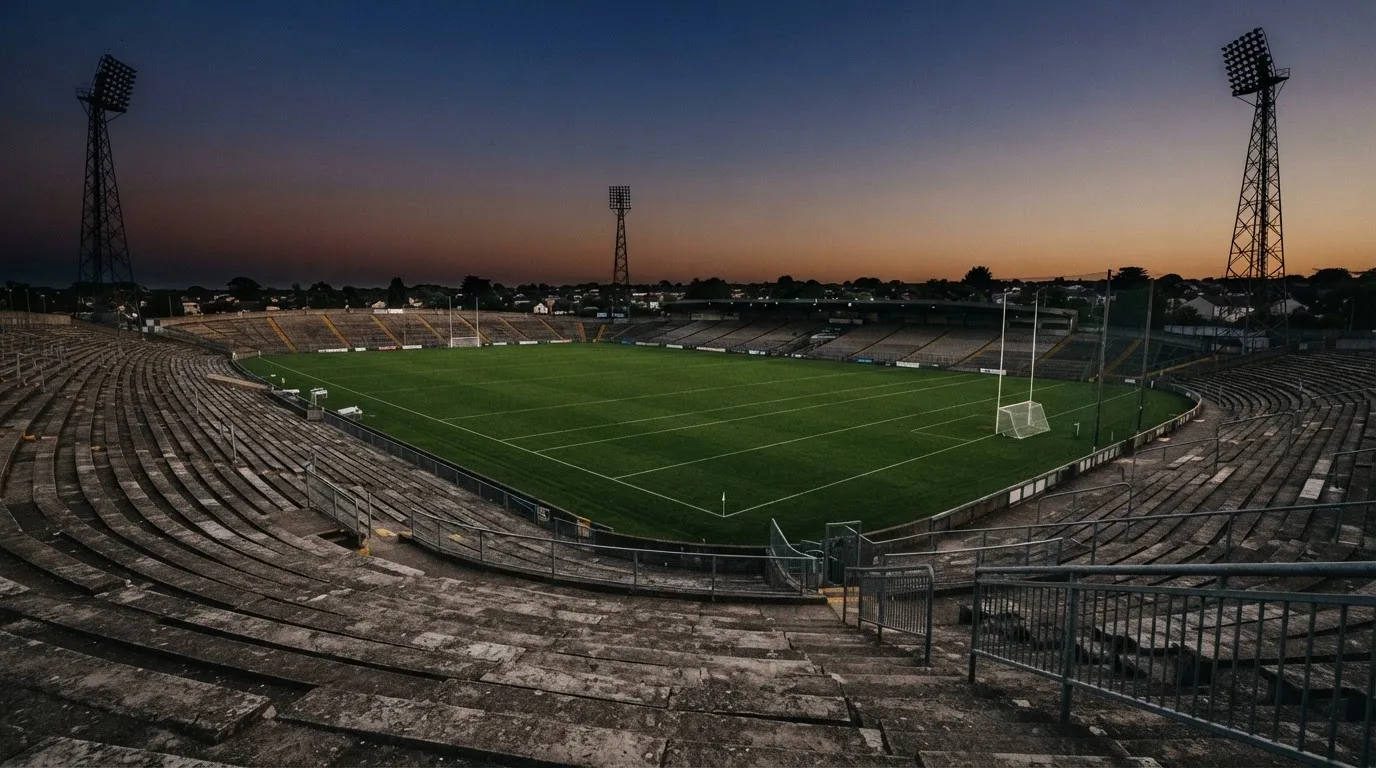
Gaelic football is played between two teams of fifteen, with up to fifteen substitutes on the bench and only six of those allowed on at the match. The senior inter-county Championship (the one priced deepest on UK sites) runs seventy minutes: two halves of thirty-five. Most other adult matches — club level in Ireland, lower-tier county fixtures, women’s National League — run sixty minutes in two halves of thirty, the same shape most junior and university fixtures take. A pitch is a rectangle 130 to 145 metres long by 80 to 90 metres wide, considerably wider than a soccer pitch, and the goal at each end is a single combined structure: a soccer-style net for goals and rugby-style uprights above it for points. A goal — the ball under the crossbar into the net — is worth three. A point — the ball over the crossbar between the uprights — is worth one. So the scoreline reads as goals-points, and a 1-12 to 0-14 finish is the typical Championship final: tight in goals, busy in points.
The scoring shape changed for the 2025 season. Since then, a shot from outside the new 40-metre arc is worth two points instead of one, which lengthens the scoring tail and nudges the totals markets wider. From a price-build point of view that matters because the typical “over 0.5 goals” or “over 1.5 goals” market on a Championship match now clears more often than it did on the old scoring curve; the bookmaker’s margin on those lines absorbs the change at refresh and the punter sees it as quietly tighter prices, especially on match winner markets after a settled scoreline.
The game’s governing body is the GAA. The Championship is the All-Ireland Senior Football Championship, played as a provincial round (Munster, Leinster, Connacht, Ulster), a Super-8 / quarter-final round, semi-finals, and the All-Ireland final. The final is always at Croke Park in Dublin. Kerry hold the record of All-Ireland titles, with 39. The 2026 All-Ireland Senior Football Championship final, played on 26 July 2026 at Croke Park, saw Mayo beat Kerry 1-20 to 1-17 for their fourth title — a six-point margin out of goals weighted at three each, which is why the final scoreline moves in jumps bigger than an English soccer score does.
The landscape of UK-licensed betting on Gaelic games
In Great Britain every online bookmaker taking a bet on Gaelic football must hold a Gambling Commission licence; there is no statutory list of permitted sports or markets, and there is no separate “Gaelic games” permit. An operator holds a remote general betting standard (real events) licence and lists markets under that. That is the whole of the legal test, and the Commission’s public register — searchable by business name, trading name, domain or account number — is the only reliable way to confirm it. Once that filter is passed the question becomes commercial rather than legal: which brands price the sport, which markets they offer, how deep the book goes, and whether the punters who arrive at the All-Ireland final in July are met with a thin fixture list or a full one.

The market for the sport is smaller than the one for Premier League football and is shaped accordingly. Headline markets — match winner, handicap, total points, total goals, half-time result, first scoring play, BTTS in the “both teams to score a goal” sense — appear at almost every UK-licensed operator, priced at a noticeably wider margin than they would be on an English Premier League game. The narrower proposition markets (first goal scorer, winning margin brackets, player performance) appear at fewer brands and with shallower books, because the player market is thinner and the betting shops do not have proprietary player data the way they do for soccer. Live in-play is present at most sites but is functionally a smaller offering: a two-way match winner at half-time and a small handful of total-points lines, with no player props to speak of and slow settlement. That pattern is consistent across the British-facing brands reviewed below — none of them run a dedicated “Gaelic games” tab of the depth they run on football or horse racing.
What the punter gets in trade for that shallower book is also the core thing to be careful with: tighter prices on the headline winner market on the bigger fixtures, and wider margins on everything else. The result is that the way the price is built — the margin, the stake-to-return ratio, the way combination bets multiply — is the single biggest determinant of whether a long-run punter ends up ahead or behind. The next two sections cover exactly that.
Reading a price: payout, margin, what the numbers do
The decimal price a bookmaker posts is the unit stake plus the profit on a winning bet, all returned as one figure. So a £10 stake at 2.60 returns £26 — £10 of stake back, £16 of profit. A £10 stake at 1.40 returns £14 — £10 back, £4 of profit. Where a price is given in fractions, the conversion is mechanical: 5/1, written as “five-to-one”, converts to decimal by dividing the first number by the second and adding one. 5 ÷ 1 + 1 = 6.00. 11/4 = 11 ÷ 4 + 1 = 2.75 + 1 = 3.75. Evens, written “1/1”, is 2.00. Anything shorter than evens is “odds-on”; the price is below 2.00 and the profit on a winning bet is smaller than the stake.
These prices do not exist in a vacuum. On a two-way market — for example the head-to-head winner between two Gaelic football teams, or the over/under on total goals in a match — the bookmaker writes prices for both outcomes and adds a margin on top. The margin is what the bookmaker keeps, on average, from every unit bet on the market. It is the single most important number sitting inside any price a punter sees, and the way it is calculated is straightforward.
Take a worked two-way market priced at decimal odds of 1.90 and 1.90 — an even-money example. For each outcome, the bookmaker’s implied chance of that outcome winning is 1 ÷ 1.90, which is about 52.63%. Adding both sides together gives the implied probability “book”: 105.26%. The 5.26% above and beyond 100% is the margin — the bookmaker’s cut of one unit staked on the market, on average. So the payout share to punters on the same market is 1 minus 5.26%, or 94.74%. As a band, both outcomes are inside the bookmaker’s margin: a margin of roughly 4% to 6% on a standard match winner sits inside the typical UK range for a Championship-priced fixture.
The cleanest expression of this in editorial terms is a price band rather than a single figure. On a headline Championship match winner priced at around 1.91 / 1.91, the implied margin runs in the band of roughly 4% to 6% — a wider gap than what the same fixture would carry at Premier League prices, but tighter than what Gaelic hurling often shows on the same books, where three-way markets (home / draw / away) inflate the margin by several points because of the extra outcome.
For a three-way market — 1X2 (home win / draw / away win) — the same calculation adds a third outcome. At decimal prices 2.20 / 4.00 / 3.40, the implied probabilities are roughly 45.5% (1 ÷ 2.20), 25% (1 ÷ 4.00) and 29.4% (1 ÷ 3.40), summing to 99.9% — a margin below 1% in this case, though this is purely illustrative and not a quoted price on any operator.
The reason the calculation matters for a punt on Gaelic games: the more outcomes a market has, the more margin sits inside it, even when the headline prices look reasonable. On a soccer match winner priced 1.91 / 3.60 / 4.50 the implied probability sum is roughly 110%, a margin of 10%. On a Gaelic football head-to-head, the two outcomes produce a much smaller margin because there are fewer outcomes for it to be spread across. That is the structural reason two-way markets on the Championship are priced closer to “fair” than three-way markets are on soccer — fewer outcomes, less margin per outcome. The punter sees it as slightly better value on the headline match winner; the cost lives in the shallower book around it.
Combination bets work differently. A bet on, say, Mayo to win and over 0.5 goals in the same fixture, both at 1.60 and 1.50, returns 1.60 × 1.50 = 2.40. To convert that to its margin you multiply all outcomes’ implied probabilities together and subtract from 1: 1/1.60 × 1/1.50 × the round-end inverse. The mechanism is the same and the margin is wider per unit stake than any single leg would carry. That is the structural reason accumulators pay more in absolute terms and cost more in percentage terms.
The rule of law: what a UK punter can and cannot do online
The Gambling Act 2005 covers commercial betting in Great Britain. Northern Ireland runs its own older framework, so a “GB licence” or “Great Britain licence” is the precise term and “UK licence” is loose. The Commission runs the regime; it is a non-departmental public body sponsored by the Department for Culture, Media and Sport. The Gambling (Licensing and Advertising) Act 2014 — amending sections 33 and 36 of the 2005 Act — confirmed that an operator whose remote facilities are used in Great Britain must hold a Commission licence wherever it is headquartered, which is why Curaçao, Malta and Gibraltar alone no longer suffice. There is no state monopoly on sports betting and no cap on how many licences are issued; what a brand needs is a remote general betting standard (real events) licence to price Gaelic football events.
Spread betting is a different licence class entirely. Where a product is a financial spread bet the regulator is the Financial Conduct Authority, not the Commission; where it is a sports spread bet the Commission is the regulator and the product sits inside General Betting Duty. Spreadex, reviewed below, runs both and is regulated by each authority in its respective territory. The practical difference shows up in customer protection: a financial spread betting loss can exceed the deposit, and the firm has to say so on its homepage — the same FCA-driven disclosure that applies to CFD and other leveraged products.
The minimum age is 18 and has been for the life of the regulated market. A licensed operator has to verify name, address and date of birth before the first deposit or first bet, including a free bet or a bonus. That is why no anonymous play exists at a licensed site: the account is opened with verified identity, the card is in the punter’s own name, and a source-of-funds request is normal at higher spend under money-laundering rules.
What may be bet on is governed by the licence category and the operator’s own terms, not by a statutory list. In-play betting is offered by GB bookmakers and is not banned; whether a particular market is offered, suspended or restricted during play is the operator’s commercial call, conditioned by its licence obligations and customer-protection duties. A licence is for a category, and the markets inside the category are at the operator’s discretion subject to the LCCP. Esports and virtual events sit under separate categories: a remote general betting licence covering real events does not, by itself, authorise virtual events — they are a different licence. No statutory cap on individual stakes exists; operators set their own maximums and may restrict customers at their discretion.
The licensable forms are: remote general betting standard (real events), remote general betting standard (virtual events), remote general betting limited, remote pool betting and remote betting intermediary (the licence for betting exchanges). A betting exchange such as Betfair runs under the intermediary licence and lets punters back and lay against each other; rates and rules specific to an exchange are stated only from each exchange’s own terms.
How a licensed operator proves it
There is no shortcut here. The Commission’s public register is the whole test, and every brand reviewed below has an account number on it. The register can be searched by business name, trading name, account number or domain, and the listing will name the licence categories the operator holds, the trading names it runs, the registered address, and any conditions attached. The two checks that catch most issues: that the licence is currently in force and is not suspended, and that the trading name on the register matches the trading name on the site the punter is depositing with.
Licensed operators use both .com and .co.uk, so the domain proves nothing. Both Ladbrokes and Unibet, for example, hold Commission licences and run mainline .com addresses. Several brands can run under one licensee: Ladbrokes and Coral under LC International Limited, Paddy Power and Betfair under PPB Counterparty Services Limited. That is fine under the licence and not a trick, but a register check confirms it.
Single-brand exclusivity claims do not survive the register: far more brands hold a remote general betting standard (real events) licence than any article can feature, and the featured set here is a shortlist, not the market. The Commission’s public register is the only place a count of licensed operators comes from, and it carries no figure without the access date beside it.
Responsible gambling: what every licensed site has to offer
GAMSTOP is the national multi-operator online self-exclusion scheme and is a mandatory licence condition for every remote gambling operator in Great Britain. It has been since 31 March 2020. The exclusion periods are six months, one year, five years, or five years with auto-renewal; the minimum period is six months, and after it ends the exclusion stays in place for a further seven years unless the punter asks GAMSTOP to remove it. GAMSTOP covers online sites and apps. Betting shops use a separate retail self-exclusion arrangement.
A financial vulnerability check is part of the licence conditions and codes of practice, condition 3.4.4, in force from 30 August 2024. The check applies to remote betting at licensed operators and triggers when a customer’s deposits minus withdrawals exceed £150 in a rolling 30-day window — a threshold that came into operation from 28 February 2025. The check is a public-record one (bankruptcy, county court judgments, similar markers), not an income check and not a credit reference check.
Financial risk assessments, sometimes called “affordability checks” in the press, sit further along the spectrum. The Commission’s staged plan from a July 2026 article announces them; a specific implementation start date has not been set. The honest framing is “announced, staged, no start date” — neither “in force” nor “abolished”. When in force, the check looks at the punter’s actual income and spending before allowing further deposits.
Deposit limits are a separate requirement (RTS 12). Operators have to offer a gross deposit limit on a fixed time frame. The first changes applied from 31 October 2025; a second phase was originally scheduled and has been postponed to 30 September 2026, and whether it is live at any given moment is a question to ask the operator or to check against the Commission’s own updates. There is no state-set ceiling on deposits or losses: the limit is the customer’s choice, set on the operator’s safer-gambling page.
Help is structured and outside any single operator. GamCare runs the National Gambling Helpline. GambleAware funds treatment and education. The NHS runs gambling clinics across the regions. Gamblers Anonymous runs mutual-aid meetings. Every licensed operator links to these on its safer-gambling page; their presence is the visible test of a brand living up to its licence.
Crypto and anonymity: not really compatible with the GB licence
The premise of crypto betting on Gaelic games is “no identity check, no bank trail” — a pitch that does not survive the regulatory test for any operator taking bets from customers in Great Britain. Name, address and date of birth are verified before the first deposit and first bet, including with a free bet or a bonus. That closes the anonymous-play path at every operator on the Gambling Commission’s register, regardless of whether the operator takes a cryptocurrency deposit.
What survives, at a few operators, is a deposit-method listing that includes a cryptocurrency. Where one does appear, the same identity-verification rules apply, the same source-of-funds rules apply at higher spend, and the same GAMSTOP coverage and financial-vulnerability checks apply. The crypto angle, in other words, does not move a single customer-protection feature.
A punt at an unlicensed site in lieu of a licensed one is a different question, and the answer is structural rather than financial. The Commission’s enforcement is disruption, not blocking: cease-and-desist notices, search-engine referrals, working with registrars, hosts and payment providers, with court-order DNS blocking powers granted or about to be granted. There is no offence against the punter who merely places a bet on an unlicensed site; the offence is in operating without the right licence. The protection gaps at such a site are absolute: no GAMSTOP coverage, no Commission complaints route, no approved dispute resolution body, no British consumer redress if funds are withheld, and no obligation to honour the 10x bonus cap or the £150 vulnerability check. That’s the trade the punter is making: a price at the same shop, free of British restrictions, against the absence of every protection a GB licence carries.
Bonuses and free bets: what the marketing actually costs
The promotion rules in force from 19 January 2026 cap wagering requirements on bonuses at 10x. That is, on a £10 bonus carried by a 50x wagering requirement — the legacy industry norm — the punter has to turn over £500 of qualifying bets before the bonus becomes withdrawable as cash. Under the cap, the same scenario is now banned: a £10 bonus requiring a turn of £500 in bets cannot be advertised at a GB-licensed operator. The cap applies to wagering requirements; whether it covers free bets with no wagering condition, and whether there is a money-value cap on bonus size, are not established in the rules and should be re-checked against each operator’s terms.
Mixed-product promotions — an offer that asks the punter to bet on football to get free spins on a casino slot — are banned outright from 19 January 2026.
A free bet, specifically, has a shape of its own: the stake is usually not returned with a winning bet. A £10 free bet at 3.00 returns £20 — the £20 of profit, not £30. Calculating what the free bet is worth on average, on a market priced at odds 3.00, the value is: £10 × (3.00 – 1) ÷ 3.00 × payout share of the market. If the market is a 1X2 priced at 4.00 / 3.50 / 1.91 with implied probabilities summing to 105% (margin 5%), the payout share is 95%, and the free bet is worth £10 × 2 ÷ 3 × 0.95 = £6.33 over many realisations. The “free” word is misleading; the offer is a statistically-priced coupon and the price is the margin. The £10 deposited free bet returns £6.33 on average — and that is on the gross value, before the punter’s own time and the requirement that the winnings from the free bet are themselves turned over a further number of times to become withdrawable.
The “risk-free” framing of some offers is a careful label. A “risk-free” first bet often means the stake is refunded as a free bet — not as cash — if the first bet loses. The refund is the marketing; the qualifier is the type of the refund, which is the coupon above.
An “enhanced odds” or “price boost” offer is a stake at a higher price than the headline price on the same market, usually capped at a low single-figure stake and usually with no wagering requirement. The trade is the size of the stake cap: an enhanced £5 stake at 50/1 is worth less in absolute terms than a £10 stake at a smaller enhancement, even though the headline price is more dramatic. The cap is the marketing’s actual ceiling.
An acca insurance offer refunds a stake as a free bet or as cash if one leg of an accumulator loses. The refunded amount is usually capped (often between £10 and £25), the number of legs required is usually four or more, and minimum prices per leg of 1/2 (1.50 decimal) or longer are standard. The trade is that the punter has built and placed the acca already; the insurance is a small backstop on a structure that the margin inside the price has already priced.
A cashback offer refunds a percentage of net losses over a fixed period (often a week or a weekend). The refund is usually free-bet money, not cash, and the percentage is capped.
These are the building blocks; every sportsbook welcome offer combines them. BetUK’s welcome, for example, hands out four £10 free bets — two football accumulators with four or more selections, two multiples with two or more — to new customers who deposit £10 or more and place a sports bet within seven days of registering. Each free bet is valid for seven days. Opt-in is required. The headline “four free bets” hides the actual economic value: each £10 free bet returns its averaged-out gross value (£6.33 on the example market above) less any further wagering. The marketing says four bets; the arithmetic says about £25 of expected value before further conditions.
Live betting and cash out: what is actually possible on Gaelic games
Live in-play on Gaelic football is offered at most licensed UK bookmakers, but the depth is rarely what Premier League football gets. The reason is structural: the sport is mid-tier on viewership and mid-tier on data, and the in-play offering reflects that. A typical Championship in-play book runs a two-way match winner, a small handful of total-points lines, a half-time/quarter-time result market, and at the deeper end a next-score market — usually “next goal” or “next point” priced in some combination. Player props are largely absent because the data layer on individual players is thin. Settlement is slower than soccer because the player’s end of the bet — the goal scored, the point scored — is moderated by a slow GAA score-check cycle.
Cash out is a separate question. It is the operator’s feature, not a market, and most major operators run it across sports. The mechanism: the punter closes the bet early at a price set by the operator, which the operator calculates from the current state of play and the original price. The trade is that the punter takes a price the operator is offering, not a price a market is reporting. The cash-out value on a £10 win bet at 3.00 with two minutes left in a tight All-Ireland final might be ~£18 against a full settlement of £30: the operator is paying for the certainty of the win being a couple of minutes from being confirmed, and pricing in the chance that one final point slips the result the other way.
For Gaelic football, the live experience is workable on the headline markets and thin on the rest. A punter whose strategy rests on in-play will find more depth at soccer and at horse racing than at Gaelic games; a punter whose strategy rests on the headline winner will find the in-play lines perfectly adequate.
Strategy, tips, and the limits of pre-match research
There is no predicting a match. The All-Ireland’s 2026 final, where Mayo beat Kerry 1-20 to 1-17, was a six-point win and a final scoreline, not a result anyone called as a probability fact in May. The work a punter does before betting is the work the bookmaker is not doing for them.
Form is one input: how the team has played across the Championship run-up, the injuries, the players who sat out the last fixture for rest, the surface condition at the venue. Most of this is on the GAA’s own official site, on the provincial councils’ pages, and on a small handful of specialist press outlets — the Irish Examiner, the Irish Independent’s GAA coverage, RTÉ Sport. The bookmakers themselves run a form guide on each fixture and on each team; the data is curated, not proprietary.
Odds movement is a second input. When the headline price on the All-Ireland final drifts from 1.91 to 2.10 over the two weeks before the game, that drift is a signal from the market. The signal is not always right — books sometimes drift for reasons that have nothing to do with team news, and a money-back offer is a frequent cause — but the drift is the only collective bet the punter gets for free. Recording the opening price, the closing price, and the same two figures on a handful of operators lets the punter see where the market is consistent and where one operator is off-market.
Bankroll discipline is the single most useful thing a punter can carry. The advice most often given — flat stakes of 1% to 2% of bankroll, stop-losses at session and weekly levels, no chasing losses — is the advice that lasts. The advice that pays off in the short run and burns in the long run is the advice built on an information edge that nobody has on a sport priced at 5% margin by a consensus market.
Tipsters and prediction sites are a separate category. A tipster who promises a hit rate is hiding a margin: the tip itself has a price, and that price is what the tipster charges. The honest framing of any tip service is “what does this tip cost, what does it return, over what sample”. A punter who treats the tipster as an analyst rather than as a source of certainties is a punter who pays for analysis, not for clairvoyance.
The honest summary: the bookmaker’s edge is structural; the punter’s edge, where it exists, is in the markets the bookmaker has mispriced or in the disciplines the bookmaker cannot take away. Both edges are thin and both are real.
Bet types on Gaelic games: a working list
The sportsbook price list on Gaelic football follows the same templates as soccer, with one structural difference: no draw in the headline match winner for the standard senior fixture, because the sport does not produce a draw with any frequency. The draw market exists at the deeper books for tournaments where draws are settled (such as hurling, where draws can and do happen), and on Gaelic football it exists only in niche markets.
| Type | What it settles on | Shape on Gaelic games |
|---|---|---|
| Match winner | 2-way (home/away) | The headline market |
| Total points | Over / under on combined points | Available on most fixtures; changed curve since 2025 |
| Total goals | Over / under on combined goals | Available on most fixtures; less depth than points |
| 1X2 | Home / draw / away | Available mostly on hurling; rarely on football |
| Handicap | Lines of 2.5 to 6.5 points | Available on most fixtures at sharper books |
| Half-time result | 2-way at the break | Available; the half is 35 minutes |
| First scorer | First goal or first point in the match | Available at sharper books |
| BTTS | Both teams to score a goal | Available on the deeper books |
| Player props | Player-specific markets | Thin to absent — data layer is the constraint |
| Anytime scorer | Player to score at any point | Available at sharper books |
Combination bets — the accumulator (“acca”), the Lucky 15, the Trixie, the Yankee, the Heinz, the Goliath — are built into the betting slip at every modern operator. The stake on each combination is the unit stake multiplied by the number of bets (a Lucky 15 is 15 bets of equal stake). The margin inside every leg of the combination builds into the margin of the whole. A treble on three legs at 2.00, 2.00, 2.00 has a margin inside it of roughly 13%, not 5%, and the more legs added the wider the margin grows.
A bet builder on the same fixture lets the punter pick markets from one event and combine them. The single-fixture constraint keeps the margin inside the combined bet narrower than a cross-event accumulator of the same number of selections. bet365 runs a feature called Bet Builder+ that combines markets from one event into a single bet and is available pre-match and in-play; the company’s wider Super Boost and Bet Boost products layer onto singles, bet builders and selected multiples. The economic shape is the same: enhanced price, capped stake, time-limited.
Spread betting on Gaelic football is offered by Spreadex and Sporting Index. The price is a spread (a range inside which the spread-betting firm quotes a buy and a sell price), and the punter’s profit or loss is the difference between the spread at bet placement and the spread at settlement, multiplied by the stake. On a Championship match, the spread might be something like “total points: 32-34”: a stake on the higher side wins £10 per point above 34 and loses £10 per point below 34. The settled total on a typical 60-to-72-point match — a typical 1-18 to 0-22 scoreline — clears the spread by 20 to 40 points. That is £200 to £400 of profit on a £10 stake, before margin and before the possibility of a settlement the other way. Spread betting losses can exceed the deposit, which is why every regulated spread-bet firm states it on its homepage.
Each-way is a soccer/horseracing shape: two bets of equal stake (one on the winner, one on the place market). Gaelic football rarely has a “place” market; the each-way shape does not arrive cleanly on the sport.
The Championship and the tournaments behind it
The All-Ireland Senior Football Championship is the headline Gaelic football tournament and the one priced deepest on UK sites. The structure: four provincial championships (Munster, Leinster, Connacht, Ulster) feed into a Super-8 / quarter-final round, then semi-finals and the final. The final is always at Croke Park in Dublin and most often falls in mid- to late-July.
The provincial championships are played first. Each is a knockout (Munster and Leinster also have a round-robin round) and the results of the provincial round determine the quarter-final line-up. The All-Ireland series from the quarter-finals on is the part of the season that gets the headline coverage on UK screens and, correspondingly, the part the bookmakers price with the deepest books.
Below the All-Ireland Senior, the All-Ireland Senior B and the Joe McDonagh Cup / Ring Cup / Lory Meagher Cup tier allow counties from the lower tiers of the championship structure into the calendar; the Tailteann Cup, introduced in 2022, is the second-tier knockout. Each is a thinner proposition market but a real fixture list.
The Allianz National Leagues run across January to April of each year and feed into the Championship seeding. The Leagues are priced on most UK-licensed operator sites from February onward; they are a real money-and-form source.
The club championship in Ireland — county-level, then provincial, then All-Ireland — runs across the autumn and winter. The market on club fixtures is thin at UK sites, but Irish-facing books price them.
Hurling is the parallel sport, run by the same GAA but on different pitches and with different rules. Senior inter-county championship is the All-Ireland Senior Hurling Championship, with Kilkenny, Cork, Tipperary and Limerick the historic counties. Hurling prices look the same on the surface as football prices but the games are higher-scoring, faster-paced, and the draw occurs with some frequency, so the 1X2 market is a working proposition for hurling in a way it rarely is for football. Most UK books run both sports.
Below the senior grade, the lower tiers — the All-Ireland Senior B, the Joe McDonagh Cup tier — are the second-level championships for the smaller counties. The very bottom of the senior structure runs through the Lory Meagher Cup for hurling and the Nicky Rackard Cup. The bookmakers run these less regularly, but they do appear.
Lower again are the Under-20 and the Minor grades, with their own championship. These fixtures do attract a small market on UK-licensed sites, especially in the run-up to the All-Ireland finals in those grades.
Women’s Gaelic football has its own championship, the All-Ireland Senior Ladies’ Football Championship, with the parallel LGFA structure. The pricing depth is shallower than the men’s championship at most operators.
On all of these fixtures, the headline markets are match winner (or 1X2 on the three-way sports), handicap, totals, half-time/quarter-time, first scorers and the in-play versions. The depth of the book and the size of the in-play feed is greater at the bigger brands reviewed below and thinner at the rest.
The top 10 UK-licensed bookmakers for Gaelic football
Each brand below carries a Gambling Commission remote licence as of the date at the top of this article. The licence number and licence holder are on the Commission’s public register; the offer details are each operator’s own terms and may change. The verdicts are the page’s own, drawn from each operator’s offer profile and the book’s depth on Gaelic games.
Ladbrokes — the depth of an English high-street book, with a wide Gaelic games menu
Ladbrokes is published as an app by Entain Operations Limited and carries a Gambling Commission remote general betting standard (real events) licence under LC International Limited (Commission account 54743). The app’s GB App Store rating is 4.66 from over 100,000 ratings, which puts it in the top band of British-facing sportsbook apps. Ladbrokes’s Gaelic games coverage goes deep: the menu runs match winner, handicap, totals, half-time score, next scorer, BTTS, the in-play versions of all of these and a wider proposition offering than the smaller books run. The welcome offer for new GB customers involves a free-bet bundle, with standard terms including no stake return on winning bets and a seven-day validity period. The pro is depth and app quality; the con is that offers are more conditional and more numerous than at the smaller, more focused books, which can make the headline price harder to read at a glance. Verdict: the British punter who wants a single app that runs Gaelic games across the season, with deep books on the bigger fixtures and a credible live in-play menu, gets a serviceable Ladbrokes account.
Paddy Power — the punchy marketing book on a sturdier licence than its tone suggests
Paddy Power is published by Paddy Power PLC and runs under a Commission account held by PPB Counterparty Services Limited (Commission account 39439). The app covers football, horse racing, boxing, rugby, tennis, golf, darts, snooker and F1; Gaelic games sit inside the football menu under their own sport tab and price the headline markets plus a useful depth of proposition and in-play. Paddy Power’s brand voice is the lively end of the British market — price boosts, money-back specials, novelty markets on big fixtures — and the welcome offer for new GB customers offers new customers a free-bet package tied to qualifying wagers, subject to a seven-day window. The terms and conditions of these offers carry the standard qualifications: stake not returned with a free bet win, minimum odds on the qualifying bet, opt-in. Verdict: the punter who likes a price-boosted headline event, who appreciates the brand voice, and who is comfortable navigating a denser terms page than the smaller books run, gets a Paddy Power account that works.
DAZN Bet — the newer sportsbook with the cleaner terms page
DAZN Bet carries a Commission account under DZBT Limited (Commission account 48756). Deposit methods start at £5 by debit card, Apple Pay, Paysafecard, Trustly and Skrill, with PayPal at £20 minimum and no processing fees — the kind of low-floor entry that lets a casual punter try the book without committing much. The welcome offer for new customers is a free-bet bundle on qualifying bets, structured on the standard shape. The menu on Gaelic games runs the headline markets and a workable in-play offering, with a proposition book shallower than Ladbrokes and Paddy Power and a free-bet-credit loyalty programme at the centre. Verdict: a clean, usable sportsbook for the punter whose stake size is modest (£5 to £20 per bet) and whose booklist is the headline winner rather than the proposition market.
BetUK — the football-first book with a Gaelic games subtab
BetUK is operated by LeoVegas Gaming PLC (Commission account 39198) and positions itself around football markets. The welcome offer for new GB customers hands out four £10 free bets — two football accumulators of four or more selections, two multiples of two or more — to a customer who deposits £10 or more and places a sports bet within seven days of registering. Each free bet is valid for seven days, opt-in is required, and the headline offer runs through the football tab. The Gaelic games menu is the football subtab: match winner, handicap, totals, half-time result, BTTS, in-play. Depth is shallower than at the bigger books and price boosts are rarer. Verdict: a tidy second account for the punter whose main book is elsewhere and who wants the welcome structure to ride alongside the season opener.
Sporting Index — the spread betting book for the price-sensitive punter
Sporting Index carries a Commission remote licence under Sporting Index Limited (Commission account 27343). The headline feature is the ability to switch between fixed odds and spread betting on the same fixture, with in-play betting, a Bet Builder on football, auto cash-out and Multi-Markets layered on top. The welcome offer for new customers is built on a first-deposit-and-bet pattern, with specific qualifying thresholds. The book’s depth on Gaelic games is shallower than at the bigger fixed-odds books, but the spread-betting offering is the firm’s point of difference. Verdict: a useful account for the punter whose strategy rests on spread-style positions on a Championship match, layered with the fixed-odds side when the price is right.
BoyleSports — the Irish-shape book with a smaller GB surface
BoyleSports’ GB-facing app is published under a Commission licence held by Boylesports Enterprise (Commission account 39469). BoyleSports was, before its GB launch, principally an Irish bookmaker, and the GB-facing app carries that flavour: a deeper fixture list on Gaelic games, a sharper price on the smaller events, and a sportsbook welcome offer of £20 in free bets when a £10 bet is placed — the higher figure than the smaller GB welcome offers because of the GB-facing pricing. The Irish players on the same app receive the €30-in-free-bets variant when a €10 bet is placed. Verdict: a useful second or third account for a British punter whose Gaelic games research is deeper than the mainstream British audience, and who likes a sharper book on the second tier of the Championship.
Lottoland — the lottery-rooted book with a sportsbook bolted on
Lottoland’s GB-facing app combines casino, lottery betting, sports betting and scratchcards under a Gambling Commission licence held by EU Lotto Limited (Commission account 38991). The sportsbook is the bolt-on to the lottery business, and the fixture depth on Gaelic games is shallower than the dedicated sportsbooks reviewed above. The welcome offer for new customers provides a welcome incentive of free bets linked to an initial qualifying stake. The £5 minimum stake, the £10 deposit point, and the absence of an app-side lottery requirement keep the sports entry frictionless. Verdict: a reasonable account for the punter who wants a sportsbook on the side of an existing Lottoland lottery relationship, and who treats Gaelic games as one fixture among many rather than as a season-long focus.
Octobet — the smaller GB-facing book with a deeper welcome offer
Octobet carries a Gambling Commission licence under Octopus Game Limited (Commission account 62545). The sportsbook welcome offer is 50% back as a free bet up to £50, plus a £10 casino bonus for new customers — the deepest offer on this list by the back-percentage headline, with the standard free-bet terms layered on (stake not returned with a free bet win, validity window, opt-in). The menu on Gaelic games runs the headline markets and a workable in-play offering. The fixture depth on Gaelic games is shallower than at the bigger books; the price on the headline events is competitive. Verdict: a tidy account for the punter who values a single welcome offer that can clear at up to £50 of free-bet value, rather than four smaller free bets across different markets.
Kwiff — the smaller brand where the price moves
Kwiff is licensed by the UK Gambling Commission under a licence held by Eaton Gate Gaming Limited (Commission account 44448) and is described in its app store listing as a trademark operated by Spryme Ltd; the App Store age rating is 17+. The headline feature on Kwiff is the “supercharged” price — a punt on a selection is, in the brand’s marketing, sometimes given a much higher price than the headline. Whether a price moves up in this way is a random allocation, and the operator’s terms state that the moves are not negotiable. The sportsbook welcome offer awards new sign-ups free-bet credits upon placing an initial qualifying wager. Verdict: an interesting brand for the punter who values the random price-move feature and treats the headline price as a baseline rather than a ceiling.
Betboro — the smaller book with a structured welcome
Betboro carries a Gambling Commission licence under Webmedia Development N.V. (Commission account 44181). The sportsbook welcome offer is a 100% matched free bet of up to £25 on the first qualifying wager, requiring a debit card deposit of at least £10 and a first bet of £5 to £25 with at least three selections each at 3/5 (1.60) or higher. The structure is closer to a “qualifying acca” welcome than the four-free-bets shape, and the headline ceiling is £25 of free bet. Verdict: a clean second account for the punter whose qualifying shape is a small accumulator and who can comfortably place the qualifying bet above the 1.60 minimum per leg.
A side-by-side view of the licensed set
The table below cross-references each brand’s Gambling Commission remote licence, the licence holder entity, and what each operator’s own terms say on the operator’s own headline feature. The licence details are from the Commission’s public register and a separate check of the operator’s published terms; the operator-feature column reflects what each firm markets to British customers.
| Brand | Gambling Commission remote licence number and licence holder | What the operator’s own terms state on the headline feature |
|---|---|---|
| Ladbrokes | 054743-R-330863-014, LC International Limited | Welcome offer: a structured free-bet bundle; minimum deposit £5-£10; stake not returned with a free bet win; opt-in required |
| Paddy Power | 039439-R-319330-013, PPB Counterparty Services Limited | Welcome offer: free bets on qualifying bets; standard free-bet terms; price-boost programme on fixtures |
| DAZN Bet | 048756-R-327274-019, DZBT Limited | Deposit methods: £5 by debit card, Apple Pay, Paysafecard, Trustly, Skrill; £20 by PayPal; no processing fees |
| BetUK | 039198-R-319450-029, LeoVegas Gaming PLC | Welcome offer: four £10 free bets (two football accas of 4+ selections, two multiples of 2+); deposit £10; place a sports bet within 7 days; free bets valid 7 days |
| Sporting Index | 027343-R-308898-011, Sporting Index Limited | Switchable between fixed odds and spread betting; in-play, Bet Builder on football, auto cash-out, Multi-Markets |
| BoyleSports | 039469-R-319383-025, Boylesports Enterprise | Welcome offer for GB players: £20 in free bets when a £10 bet is placed (Irish players receive €30 in free bets for a €10 bet) |
| Lottoland | 038991-R-319408-020, EU Lotto Limited | App combines casino, lottery betting, sports betting and scratchcards; licensed for customers in Great Britain |
| Octobet | 062545-R-337248-006, Octopus Game Limited | Welcome offer: 50% back as a free bet up to £50, plus a £10 casino bonus for new customers |
| Kwiff | 044448-R-323408-017, Eaton Gate Gaming Limited | UK Gambling Commission licensed; described as a trademark operated by Spryme Ltd |
| Betboro | 044181-R-324363-007, Webmedia Development N.V. | Welcome offer: 100% matched free bet up to £25; debit card deposit at least £10; first bet £5-£25 with at least 3 selections each at 1.60+ |
The marketing presents each operator’s welcome offer in headlines; the arithmetic behind each one is the sum of qualifying conditions, validity windows, free-bet terms and the underlying market margin. A £25 free-bet offer on a 1X2 with a 5% margin is worth roughly £15.83 on average; a £40 free-bet bundle across four separate bets of £10 each has the same average value per bet and a wider validity window to clear.
Marketing rules: what the British rules forbid
The CAP Code (non-broadcast) and the BCAP Code (broadcast) sit on top of the Commission’s marketing conditions, enforced by the ASA. Section 16 of the CAP Code: marketing must be socially responsible, must not be of strong appeal to under-18s, and no one who is or seems to be under 25 may feature gambling or play a significant role (with an exception for marketing placed where a bet can be made directly). The rule is about who appears in the advert — not about who may bet. Credit-card-funded payments through an e-wallet are banned for gambling in Great Britain (since 14 April 2020, LCCP condition 6.1.2); debit cards and bank-based payments are not covered by that ban.
The whistle-to-whistle rule is an industry code, not law. Since 1 August 2019, betting advertisements are not shown on TV from five minutes before a live sporting event to five minutes after it, before the 9pm watershed. Horse and greyhound racing are excluded (their scheduling has to allow the betting-shop flow). The Premier League clubs’ withdrawal of gambling sponsorship from the front of matchday shirts is voluntary, from 2026/27 onward; sleeves and hoardings remain.
Operators are responsible for the marketing of their affiliates. An affiliate promoting an unlicensed brand carries the same risk to the punter as a search-engine result linking to a non-GB-licensed site, and the licensed operator whose name an affiliate has used is, in the Commission’s view, accountable for the messaging.
Tax: the British punter pays none on winnings
A punter in Great Britain pays no tax on sports betting winnings. General information, not tax advice; a professional gambler should ask HMRC or an adviser. The bookmaker pays General Betting Duty at 15% on its gross profits from betting. From 1 April 2027 a new remote betting rate of 25% applies within General Betting Duty, while remote bets on UK horse racing, in-person bets and self-service betting-terminal bets stay at 15%. Until 1 April 2027 the remote rate is 15% across the board. Spread betting has its own rates (3% financial, 10% other). Whether operators pass duty on through odds is not established in the public statements; never write that the punter is charged duty.
The punters’ checklist before a stake lands
A short, practical list — none of this is novel, all of it is forgotten:
- The licence is on the Commission’s public register, currently in force, trading name matches the site.
- GAMSTOP enrolment is the right answer for any punter whose stake is creeping past fun.
- The financial-vulnerability check kicks in past £150 of deposits minus withdrawals in a rolling 30 days — that is the moment a punter is asked the public-record questions and it pays to know what is on file.
- The headline “free bet” is not “free” — the average value of a £10 free bet on a 1X2 with a 5% margin is roughly £6.33, not £10, and the stake usually does not come back with the win.
- The “enhanced odds” headline caps the stake at a low single figure and the rest of the offer is on the operator’s standard terms.
- The match winner on a Championship fixture is a two-way market and the margin is narrower than soccer’s three-way. The proposition markets around the match are wider.
- Spread betting losses can exceed the deposit — read the firm’s homepage disclosure and the firm’s FCA-overseen treatment before staking.
- Spread betting on a financial instrument and spread betting on a sport are different products, with different regulators and different treatments under General Betting Duty.
- The in-play experience on Gaelic games is workable on the headline markets and thin on the rest. The punter whose strategy depends on the in-play feed should plan around soccer or horse racing, not around Gaelic games.
- The Championship’s draw is settled less frequently than soccer’s. The “draw” market on Gaelic football is rare on UK sites; on hurling it is standard.
None of these checks is novel, and that is the point. The lost stake is rarely the result of a sophisticated trap. It is usually the result of a punt placed when one of these ten would have said “no”.
Frequently asked questions
How does a punter bet on Gaelic football from Great Britain?
A punter opens an account with a UK-licensed online bookmaker (any of the brands in the top-10 list above), completes the identity verification step, deposits using a debit card or bank-based method, navigates to the Gaelic games tab and selects the fixture and the market. Stake is placed; settlement is automatic on the result, with in-play markets settling as the match is updated. Cash-out, if offered, closes the bet early at the operator’s offered price. A punter who cannot or does not want to verify identity cannot use a GB-licensed site for gambling — that verification is a licence condition.
How does the punter confirm a bookmaker holds a Gambling Commission licence?
The Commission’s public register can be searched by business name, trading name, account number or domain. The listing shows the licence categories, the trading names, the registered address, the licence holder entity and any conditions attached. Two checks catch most issues: the licence is currently in force (not suspended) and the trading name on the register matches the site the punter is using. Both Ladbrokes and Coral, for example, run under LC International Limited; both Paddy Power and Betfair run under PPB Counterparty Services Limited. A register search at the entity level answers those multi-brand questions cleanly.
How is the return on a bet worked out from the stake and the odds?
For decimal odds, the formula is simple: return = stake × odds. A £10 stake at 2.60 returns £26 — £10 of stake back, £16 of profit. A £10 stake at 1.40 returns £14 — £10 back, £4 profit. For a combination bet, the odds of each leg multiply into a single combined price, and the stake is multiplied by that combined price to give the total return if every leg wins. The stake is returned only if the price is greater than 1.00 (every decimal price is), and on a free bet the stake is usually not returned. For fractional odds the rule is the same, but the price needs to be converted: divide the first number by the second and add 1.
What is the bookmaker’s margin and how does it show up in the odds?
The margin is the percentage of every unit staked the bookmaker keeps, on average, over the long run. On a two-way market at decimal odds 1.90 and 1.90, the implied probability “book” of both outcomes is 1 ÷ 1.90 + 1 ÷ 1.90 ≈ 105.26%. The 5.26% above and beyond 100% is the margin — the bookmaker’s cut. The payout share (the punter’s share) on the same market is the complement, 94.74%. On a wider three-way market (1X2) the implied sum runs larger, often above 105%, and the margin inside the market runs correspondingly larger.
How do fractional odds like 5/1 convert to decimal odds like 6.00?
The conversion is mechanical: divide the first number by the second, then add 1. So 5/1 = 5 ÷ 1 + 1 = 6.00. 11/4 = 11 ÷ 4 + 1 = 2.75 + 1 = 3.75. 4/6 = 4 ÷ 6 + 1 = 0.667 + 1 = 1.667. “Evens” (1/1) is 2.00. Anything shorter than evens is “odds-on” — the price is below 2.00 and the profit on a winning bet is smaller than the stake. British bookmakers routinely post prices in both forms on the same fixture.
Which safer-gambling tools does a licensed bookmaker have to offer?
GAMSTOP enrolment on every remote licence (six months, one year, five years, or five years with auto-renewal); a deposit-limit tool on a fixed time frame on every account; time-out and self-exclusion features; the financial-vulnerability check when deposits minus withdrawals exceed £150 in a rolling 30 days (public-record, not income); access to GamCare, the National Gambling Helpline, GambleAware and Gamblers Anonymous through links on the safer-gambling page. The exact UI varies by brand — the licence conditions behind the tools do not.
Rugby, cricket & Gaelic – Fast Payout
Content created by the «Fast Payout» team
