
Over/Under Betting in Great Britain: Lines, Margins and the Bookmakers Behind Them
 Available in US
Snapshot current as of 27 October 2026 and cross-checked against the Gambling Commission’s public register.
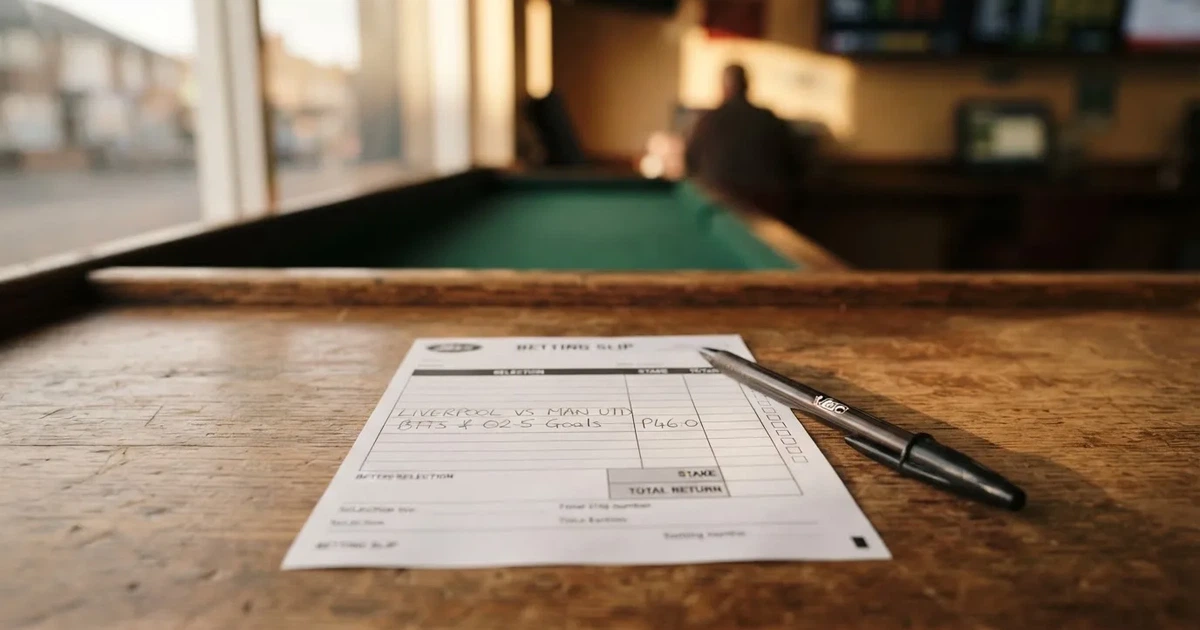
The phrase “over under” travels through British sports coverage in a hundred small ways. It shows up next to a Premier League total at half-time, beside a horse racing each-way line, attached to a Wimbledon games tally, baked into an NBA prop. Read separately, the words look technical. Read together, they describe one of the oldest wagers in the book — a bet on a number the bookmaker sets and the contest answers. This page is a working guide to that wager for the British punter in 2026: how an over/under is built, settled, paid and priced, where the margin lives in the price, and which ten Gambling Commission-licensed bookmakers treat totals as a serious line of business.
Responsible Gambling Around Totals
A market built on numbers invites a particular kind of overconfidence. The bettor knows the season average. The bettor has a model. The bettor can name the teams in their sleep. None of that stops a losing streak, and none of it slows the recovery.

Every operator named further down this page is licensed by the Gambling Commission for remote betting in Great Britain, which means GAMSTOP coverage is built in. Customers who want to stop betting across every UK-licensed site and app at once register once with GAMSTOP and choose a self-exclusion period of six months, one year, five years, or five years with auto-renewal. Once the minimum period ends, the exclusion stays in place for a further seven years unless the customer asks GAMSTOP to remove it. GAMSTOP covers online sites and apps; betting shops use a separate service. The betting shops and the online channel for British customers are different products, with the same underlying duty of care and different mechanics.
Two more protections sit inside the licence, and they matter for totals because totals are where many small bets happen in a short window. The first is the financial vulnerability check, an LCCP condition that has been in force for remote operators since 30 August 2024. It is a public-record check, not an income check and not a credit reference check — it looks for markers such as bankruptcy or county court judgments, and it is triggered when a customer’s deposits minus withdrawals exceed £150 across any rolling 30 days (the £150 trigger came into force on 28 February 2025). The second is the deposit limit regime (RTS 12): operators must offer a gross deposit limit on a fixed time frame, with the first changes applying since 31 October 2025 and a second phase postponed to 30 September 2026. There is no state-set ceiling; the limit is the customer’s own choice.
The non-financial protections are as important as the financial ones. GamCare runs the National Gambling Helpline, GambleAware funds treatment and research, the NHS runs gambling clinics in several regions, and Gamblers Anonymous runs meetings across the country. None of those services ask whether the bettor backed the over or the under. They are reached the same way.
The credit card ban, in force since 14 April 2020, applies to every product on a Gambling Commission-licensed site, including deposits funded through an e-wallet that is itself topped up by a credit card. Totals are usually funded the same way as singles, and the funding rule is the same. Identity verification before the first deposit — in force since 7 May 2019 — means there is no anonymous play on a licensed site, and source-of-funds questions are normal at higher spend under the money-laundering rules. None of those checks is unique to totals; the page returns to them where they bite into a totals bettor’s choices.
Betting on Totals from a Mobile
Most British totals bets are placed from a handset. The same odds sit on the desktop site and the app, but the live touchpoint is the phone. The ten brands below run apps on Apple’s App Store and Google’s Play Store; seven of them were checked on the GB App Store in October 2026 and carry age ratings from 17+ to 18+, depending on the operator and on the casino content bundled with the betting product.

Two patterns matter for a totals bettor choosing between them. The first is whether the app surfaces totals as a first-class market. bet365 builds its whole product around the in-play experience, with Bet Builder+ combining markets from one event into a single bet and Super Boosts sitting alongside. William Hill pays Best Odds Guaranteed on UK and Irish horse racing from 8 AM on the day of the race, on both single and multiple bets, which is a horse-racing feature that does not apply to football or NBA totals. Hollywoodbets’ welcome offer is built around the accumulator, not the single total, and that shapes which screen a new customer sees first.
The second pattern is the opposite of cash-out. Betfred’s app pairs Bet Builder with Sub Switch, Racing Post data and Extra Places. BetUK’s free bets exclude virtual sports, esports and non-UK/IE horse racing, and minimum odds apply. The free-bet markets excluded are not the totals markets; the minimum-odds rule applies to the qualifying bet for the free bet, not to every wager on the app. BetMGM UK is published by LeoVegas Gaming p.l.c., 10bet is published by 10bet Limited, and London Bet is published by Thistle Bet Limited. The publisher line on an App Store listing is not the licence holder, and the Commission’s register is the place to verify the licence; the app store entry only confirms the operator has published an app for British customers.
One app from the licensed set looks different from the rest on a totals page. Lottoland’s UK product combines casino, lottery betting, sports betting and scratchcards. Sports totals are part of the product, not the reason for it. The brand is licensed for remote general betting standard (real events) on the Commission’s register, and a customer who reaches Lottoland for the lottery product will find totals in the sportsbook without leaving the app.
Two operators without a headline mobile app of their own still appear in the comparison because the desktop product is the main channel. Tote’s remote product runs at tote.co.uk and the brand is rooted in pool betting on British and Irish racing — totals on the sportsbook sit alongside the pool products rather than replacing them. Fitzwilliam Sports is a smaller operator that bases its prices on Oddschecker’s average price for each selection and provides Apple and Google mobile apps; the price-averaging approach affects the totals line in particular, because the average is built from the wider market, not from one operator’s model.
Predictions, Tips and the Shape of a Totals Strategy
There is no shortage of pages promising over/under tips today, this weekend or for tonight’s fixtures. They arrive in newsletters, in YouTube previews, in tipster threads. They are a separate product from the wager they describe, and they need to be read as one.
Two distinctions do the work. The first is between a tip and a price. A tip names a side — over or under, at a line. A price is the decimal or fractional number the bookmaker offers against that side. The same tip at a short price and the same tip at a long price are two different bets, and the difference between them is the bookmaker’s margin. The second is between a model and a market. A model produces a fair price from inputs the modeller chose. A market produces a price from the bookmaker’s inputs and from the bets being cut. The two are not the same, and the gap between them is where the value lives — or where the loss comes from.
Strategies for totals fall into a handful of shapes. The line-shop strategy compares the same total across bookmakers and bets the best available price; the value is in the spread, and the discipline is in taking the best price every time rather than the most familiar one. The pace-of-play strategy tracks a team’s tempo, the number of possessions per game or the average minutes per game, and looks for totals set against the league pace rather than the team pace. The injury-adjusted strategy adjusts the model for confirmed absentees on either side. The closing-line strategy treats the price available shortly before kick-off as the most informative single number on the market and grades tips against whether they beat the closing line. None of these strategies guarantees a return; each one describes a discipline that turns a market of opinions into a record.
The arithmetic behind the strategies is the same arithmetic the page works through in the calculation section. A model outputs a probability. A bookmaker offers a price. The fair value of a bet at decimal odds o on a result the model rates at probability p is p × (o − 1) − (1 − p). A positive number means the bet has a positive expected return on the model’s own terms; a negative number means it does not. The same arithmetic works for fractional odds after conversion. The punter’s edge over a long run of bets is the average of that number across the bets actually placed, and the average over a long enough record is what tells a punter whether the strategy is producing anything at all.
What the strategies cannot do is predict the next fixture. They can produce a price at which the bet is worth taking. They cannot name which side the contest will fall on. Two readers can apply the same strategy to the same fixture and arrive at different prices, because the inputs they trust are different. The strategy is the discipline. The fixture is the test.
Bet Types, Odds and the Wording Around Totals
The vocabulary on a British betting slip is specific, and a totals page is the right place to set it down. A single is a wager on one selection. A double is two selections, both of which must win for the bet to pay. A treble is three. An accumulator — an “acca” — is four or more, all of which must win. Each-way is two equal bets, one on the win and one on the place; the stake doubles, and the place terms vary by race, sport and operator. A Lucky 15 is fifteen bets on four selections; a Trixie is four bets on three selections; a Patent is seven. The number after the name is the number of bets, and the unit stake multiplied by the number of bets is the total stake on the slip.
A bet builder, also called a same-game multi, is a single-priced combination of markets from one event. bet365’s product is Bet Builder+. The combined markets are priced together, the stake is one stake, and the bet wins when all chosen markets win. A bet builder on a Premier League fixture might combine over 2.5 goals with both teams to score and a specific player to score or to be carded; the price is whatever the operator offers against the combination, and that price carries a margin heavier than the margin on any single leg.
A totals bet is a wager on whether a stated statistic in a contest will be higher (over) or lower (under) than a number the bookmaker sets. The most common totals statistic is the combined score of both teams, but totals exist on goals, points, games, sets, corners, cards, shots, treatment rooms, and a long list of props. If the final figure exactly matches the line, the bet is a push and every stake is refunded. A push is neither a win nor a loss; the operator returns the stake to the bettor’s account and the bet leaves the record.
Odds are quoted in two formats in Great Britain. Fractional odds of 5/1 (read “five-to-one”) mean a stake of £1 returns £5 profit plus the £1 stake. Decimal odds of 6.00 mean a stake of £1 returns £6, of which £5 is profit and £1 is the stake returned. A useful one-line conversion is a/b → a ÷ b + 1: 5/1 becomes 6.00, 11/4 becomes 3.75, evens (1/1) becomes 2.00. The two formats carry the same information. The bookmaker’s margin lives inside both, and the margin section of this page shows where.
Spread betting is a different product altogether. Spreadex, for instance, is regulated by the FCA for spread betting and by the Gambling Commission for fixed-odds betting, and states that spread betting losses can exceed the deposit. A spread bet is not an over/under; a spread bet is a wager on whether a figure will be higher or lower than a quoted spread, and the winnings or losses are calculated by how far the figure moves away from the spread, not by a fixed price. A punter who sees the word “over/under” attached to a spread product is looking at a different wager. The risk on a spread bet can outrun the deposit; on a fixed-odds total it cannot.
Sports and Tournaments Where Totals Sit at the Centre
Totals are not equally important across sports. The market sits at the centre of basketball and American football, where scoring is frequent enough that the line moves bet-by-bet. It sits at the side of association football, where a 2.5-goal line is the market but the action is on the result. It sits inside cricket, where a totals market on a session’s runs or on a team’s innings carries different rules from a totals market on a T20. It sits below the surface in horse racing, where totals markets are sparse and the each-way line is the centrepiece. Knowing where the market sits in a sport is the first step in reading it.
In association football, the totals market is settled on 90 minutes of play including referee-added stoppage time, unless the market states otherwise; extra time and penalty shootouts are excluded. That rule, written into Sky Bet’s football rules hub, is reproduced across the major British operators in nearly identical wording. A bettor backing the over on a cup tie that finishes 2–1 after extra time has lost only the regulation market if the goal arrived in the 93rd minute; the over on the cup-tie match including extra time is a separate market, settled separately, and the difference between the two is the difference between reading the rule and guessing.
In basketball and the NBA, the totals line is usually in the 220s for a regular-season game and moves with injuries and pacing news. The bet is settled on the combined score at the end of regulation; overtime, where played, is treated under the rule the operator publishes. Betting tips pages for the over/under on tonight’s NBA slate are a daily fixture of the British betting media.
In American football and the NFL, totals are the second-biggest market after the spread, which is itself settled against a line set by the bookmaker. The classic illustration is Super Bowl XXXIX: most Las Vegas casinos set the over/under for the game score at 46.0, and the combined score was 45, so the under won. The line was set by the market, not by the result, and the bet was settled at the closing line; what the bettor needed was a price, not a prediction.
In tennis, the totals market is most often a games line — over or under a stated number of total games in the match — rather than a sets line. A best-of-three match with a clear favourite will often be priced at over 21.5 games; a best-of-five will often be priced at over 35.5. Totals on aces, double faults and first-serve percentage are available on bigger events, and bet builders on tennis are common on the bigger bookmakers.
In horse racing, totals markets exist but each-way is the dominant wager. The place part of an each-way bet is settled at a fraction of the win price — a quarter or a fifth, depending on the number of runners — and the place terms vary by race and by operator. The totals market on a race is sparse enough that a bettor looking for a totals product is more likely to find a horse-racing product on the same app than a totals line on a given race.
Across all of these sports, the totals market is the second market a bookmaker prices after the outright result, and the prices are usually kept close across operators because of price-tracking services such as Oddschecker. Fitzwilliam Sports bases its prices on Oddschecker’s average price for each selection; the same approach is more or less visible in the rest of the licensed set, but the prices it produces are similar.
How a Totals Bet Actually Works in Great Britain
The mechanics of a totals bet are four steps, and each step is a place where the bet can go wrong.
The first step is the line. The bookmaker sets a number for the statistic in question — 2.5 goals in a football match, 220.5 points in a basketball game, 35.5 games in a tennis match, 46.0 points in an American football game. The line is the only number the bettor needs from the bookmaker to place the bet. The bettor chooses over or under, names the stake and the bettor has a wager.
The second step is the price. The bookmaker offers a price against over and a price against under. The two prices together carry the bookmaker’s margin; the margin is what the bookmaker keeps of every unit bet on the market, on average, over the long run. The price against each side is below the fair price the market would set if there were no margin; how far below is the margin, split between the two sides. The calculation section below shows the arithmetic.
The third step is settlement. The contest produces a number. The bookmaker compares the number to the line. If the number is over the line and the bettor backed the over, the bettor wins at the price offered. If the number is under the line and the bettor backed the under, the bettor wins at the price offered. If the number equals the line, the bet is a push and every stake is refunded. The result is final at the moment the contest’s relevant period ends, under the operator’s own rules. In football that moment is the end of stoppage time in regulation; in basketball it is the end of regulation; in tennis it is the final point of the match unless the operator’s rules state otherwise. The bet is settled once and not revisited.
The fourth step is payout. The bookmaker credits the stake and the winnings to the bettor’s account. A winning decimal-odds bet of £10 at 1.90 returns £19, of which £10 is the stake and £9 is the profit. A winning fractional-odds bet of £10 at 9/10 (equivalent to decimal 1.90) returns £19 — £10 stake and £9 profit. A push returns £10. A losing bet returns nothing.
The four steps are the same across operators. The difference between operators is in the products around the bet: the bet builder, the cash-out, the price boost, the acca insurance, the best-odds-guaranteed offer on horse racing. None of those products changes the four steps; each one changes the price the bettor sees or the moment the bettor exits.
The Ten Bookmakers Behind the Lines
The comparison below ranks ten remote betting operators licensed by the Gambling Commission for Great Britain. Each card describes the licence the Commission’s public register records, the setting a typical totals bettor meets on the operator’s own product, and what the operator’s terms state on totals, odds, free bets and accas. No brand is “the only” licensed operator; many more brands sit on the same register, and the ten below are a sample that runs the breadth of the licensed set on totals.
The verdict at the end of each card is the page’s own reading of the brand for a totals punter, not a recommendation. A punter who wants the closing line across all books and an aggressive in-play experience will not pick the same brand as a punter who wants a quieter horse-racing product with extra places.
Fitzdares — Premium Build for Racing-Heavy Tots
Fitzdares Limited holds Gambling Commission account 400 for remote general betting (real events). The app’s product description lists cash out, accumulators, Lucky 15s, specials and antepost markets on horse racing, football, tennis, rugby, cricket, golf and American football, with in-play live odds. The product is positioned as a premium one rather than a high-volume one, and the betting menu is built around horse racing and football.
Totals on horse racing are sparse in the British market generally, and Fitzdares’ focus on racing does not change that. Totals on football are a deeper market. The acca product is the Lucky 15, which is fifteen bets on four selections; the total stake at a £1 unit is £15, and a single legs win still pays on the singles within the Lucky 15. Cash out is available.
The verdict: Fitzdares is a brand for the punter who wants a premium product and a heavy racing menu, with totals as part of a broader product rather than as the headline. A punter whose main interest is basketball totals will find a thinner menu here than at a basketball-first brand, and the cash-out pricing on a totals market in a fast-moving football game will be tighter than the in-play product at a higher-volume operator.
Fitzwilliam Sports — Price-Averaged Lines from Oddschecker
SBKI Limited holds Gambling Commission account 48760 for remote general betting (real events). The operator’s home page describes itself as basing prices on Oddschecker’s average price for each selection and providing Apple and Google mobile apps. The pricing approach is the distinguishing feature; the rest of the product is a smaller operator’s full remote offering.
A totals bettor who likes the discipline of line shopping will appreciate a brand whose prices are set against the wider market rather than against the brand’s own model. The trade is that the brand does not move first on a line, and a punter looking for an outlier price on a totals market will not find one here. The app is on both stores.
The verdict: Fitzwilliam Sports is the right brand for a totals punter who trusts the average price and wants the convenience of a single app, and the wrong brand for a punter hunting an edge on a single fixture. The smaller operator size also means fewer markets on minor events, and totals on a low-tier tennis match are more likely to be absent than on a bigger bookmaker.
London Bet — Compact Product, Clear Terms
Thistle Bet Limited holds Gambling Commission account 66162 for remote general betting (real events). The brand is published by Thistle Bet Limited and the app carries a 17+ App Store age rating. The product is a compact sportsbook with the standard British menu, and totals on football, horse racing and tennis are part of it.
A smaller British brand with a single licence holder has a simpler structure than a brand running under one of the big licensees. The terms are published under one name, and the customer knows who they are dealing with. The trade is depth of market: a smaller operator will sometimes have fewer lines on a Premier League fixture than the largest bookmakers.
The verdict: London Bet suits the punter who prefers a smaller, clearly licensed brand and is happy with a thinner menu on big fixtures. The 17+ age rating reflects the bundled casino content; a punters whose only interest is the sportsbook will find the betting product complete.
BetUK — Free Bets That Exclude Some Markets
LeoVegas Gaming PLC holds Gambling Commission account 39198 for remote general betting (real events). The BetMGM UK app is published by LeoVegas Gaming p.l.c. and lists the same Commission account number 39198; the two brands share a licence holder, which is how a single LeoVegas licence can carry more than one trading name. The app store description for BetUK notes that free bets exclude virtual sports, esports and non-UK/IE horse racing, and that minimum odds apply.
The free-bet exclusions are the practical detail for a totals bettor. A qualifying bet on a football total at minimum odds qualifies for the free bet; a qualifying bet on a virtual sports total does not. The minimum-odds rule is set per promotion and is on the promotion’s terms rather than on every wager the customer places. The product itself is a full sportsbook with totals on the usual menu.
The verdict: BetUK is a solid mid-market choice with clear free-bet terms that exclude some product areas. A punter whose totals interest is on football, basketball, tennis and American football will not be affected by the exclusions; a punter whose interest is on esports or virtual sports will be.
Lottoland — Lottery Brand With a Sportsbook Attached
EU Lotto Limited holds Gambling Commission account 38991 for remote general betting (real events). The UK app combines casino, lottery betting, sports betting and scratchcards, and states it is licensed by the Gambling Commission for customers in Great Britain. The brand is rooted in the lottery product, and the sportsbook is part of the same app.
A punter who reaches Lottoland for the lottery will find totals on football, basketball and tennis on the same app. The sportsbook is not the headline; it sits next to the lottery and the casino, and the marketing weight is on those products. The licensed status for remote general betting standard (real events) covers the sportsbook in the same way it covers a brand whose entire product is a sportsbook.
The verdict: Lottoland is the right brand for a punter who wants lottery, casino and sports betting under one roof, and the right totals brand for a punter whose primary interest is the lottery and whose sportsbook interest is occasional. A punter whose only interest is sports totals will find a thinner menu and fewer price boosts than at a sports-first brand.
Betfred — Bet Builder, Sub Switch, Racing Post Data
Petfre (Gibraltar) Limited holds Gambling Commission account 39544 for remote general betting (real events). The app’s product description lists Bet Builder, Sub Switch, Racing Post data, Extra Places, live casino and bingo. The product is a full British sportsbook with a heavy racing focus and a deep in-play product.
Totals on horse racing and football are deep. Betfred’s Bet Builder is built around football and the in-play product, and a totals market is a common leg in a bet builder on a Premier League fixture. Sub Switch is a substitution-aware feature that adjusts bets when a player is substituted; the totals market is not directly affected, but a bet builder that includes a player-specific market is. Racing Post data is the racing product’s distinctive feature; totals on racing are still sparse.
The verdict: Betfred is one of the two strongest choices on the comparison for a football-totals punter, with Bet Builder and a deep in-play product. The horse-racing product is the headline; the totals market is one leg of a wider product.
Tote — Pool Betting Brand With a Sportsbook Alongside
TDCO Limited holds Gambling Commission account 54779 for remote general betting (real events). The Tote brand is rooted in pool betting on British and Irish racing; the sportsbook at tote.co.uk sits alongside the pool products. Totals on football and tennis are part of the sportsbook; totals on horse racing are not the pool product’s focus.
A punter who uses the Tote for pool betting will find the sportsbook priced in standard fixed-odds form. The two products are settled separately, and a bettor whose stake is split between a placepot and a football total will see two bets and two settlements on the account. The Commission’s licence covers both products.
The verdict: Tote suits the punter whose interest is pool betting on British and Irish racing, with a sportsbook as a convenience product. The sportsbook is licensed and complete, but it is not the headline.
bet365 — The In-Play Reference Point
The Commission register records Hillside (UK Sports) ENC as the licence holder, with account 55148 and the categories remote general betting standard (real events). The app’s product description names Bet Builder+ combining markets from one event into a single bet, available pre-match and in-play; Super Boosts; Winnings Boosts on Bet Builders and selected singles; and daily Bet Boosts. The product is the reference point for in-play pricing on British totals, and the Bet Builder+ product is the deepest bet builder on the comparison.
Totals on football, basketball, tennis and American football are deep, and the in-play market on each is priced bet-by-bet. A bettor who wants the closing line on a Premier League total will find bet365’s line near the centre of the market and the in-play price moving through the match. The Super Boosts and Winnings Boosts add a promotional layer over the regular price; the regular price carries the regular margin, and the boost adds a small headline improvement on selected markets.
The verdict: bet365 is the strongest single choice on the comparison for an in-play totals punter. The trade is that the brand’s price is the market price on most lines; there is rarely an edge against the closing line at bet365 that is not already in the closing line.
Hollywoodbets — Acca Welcome, Football Focus
The Commission register records Hollywoodbets International UK Limited as the licence holder, with account 53028 and the categories remote general betting standard (real events). The welcome offer is structured around the accumulator: new players who deposit £10 or more by card get their stake back as a free bet of up to £30 on their first qualifying losing accumulator (stake £10+, 3+ legs, odds of 4/1 or greater, settled within 7 days), with one free bet per customer. The product is a full sportsbook with a heavy football menu.
A totals punter at Hollywoodbets is, on the welcome offer’s terms, an accumulator punter rather than a single-totals punter. The offer’s structure rewards a 3+ leg acca; a single-totals bet does not qualify. The free bet is paid back as a free bet on a losing acca, not as cash, and the stake is not paid back with a free-bet win. The terms are clear and the structure is consistent with the British market.
The verdict: Hollywoodbets is the right brand for a punter whose interest is football accumulators built around totals markets, and the wrong brand for a punter whose interest is single-totals betting. The acca welcome offer is the headline; the single-totals market is part of the underlying sportsbook.
Copybet — Best Odds Guaranteed All Day, FPTP
The Commission register records Copybet UK Limited as the licence holder, with account 53774 and the categories remote general betting standard (real events). The product is a full sportsbook with two distinctive racing features: Best Odds Guaranteed all day, every day, on all UK and Irish racing, and first past the post (FPTP) on horse racing even if the winner is later disqualified. The two features are horse-racing products; their presence on a totals page is as context for the operator’s wider book.
A totals punter at Copybet finds a standard football, basketball and tennis menu, with totals as one of the deeper markets on football. The headline features are horse-racing, and the totals product on football is a regular sportsbook product. The licence is for remote general betting standard (real events).
The verdict: Copybet is the right brand for a punter whose interest is horse racing and who wants Best Odds Guaranteed all day plus FPTP, with totals as part of a broader product. A punter whose only interest is football totals will find a complete sportsbook without the headline features to attract them.
Over/Under Betting in the British Legal Frame
The Gambling Commission licenses the whole commercial remote market for Great Britain under the Gambling Act 2005. Since the Gambling (Licensing and Advertising) Act 2014 an operator whose remote facilities are used in Great Britain needs a Commission licence wherever it is based; sections 33 and 36 of the 2005 Act, as amended, set out the requirement and the offence. A Curaçao, Maltese or Gibraltar licence is not a substitute. The Commission’s public register can be searched by business name, trading name, domain or account number, and the register is the whole test of whether a brand holds a licence. The register should be the first stop for any punter who is unsure whether a brand is licensed.
What may be bet on under a Commission licence is set by the licence category and by the operator’s own rules within the Licence Conditions and Codes of Practice (LCCP). The categories for remote betting are remote general betting standard (real events), remote general betting standard (virtual events), remote general betting limited, remote pool betting and remote betting intermediary. Every brand in the comparison above holds remote general betting standard (real events), which covers totals on real sporting events. Virtual totals — on simulated events generated by a random number generator — sit under the virtual events category and are not the same product as a totals bet on a real fixture.
In-play betting is offered by GB bookmakers and the legal frame is the operator’s licence conditions and customer-protection duties; the LCCP and the social responsibility code set the limits on what an operator may do in-play. Esports are treated like any other event; bets on politics, TV shows and novelty markets are offered by GB bookmakers and no statutory prohibition was found. Spread betting, where the product is a financial one, is regulated by the Financial Conduct Authority; spread betting on sports, where the product is not a financial contract, sits inside General Betting Duty under the Commission’s licence.
The credit card ban is in force across every product on a Commission-licensed site, including deposits funded through an e-wallet that is itself topped up by a credit card. Identity verification before the first deposit has been in force since 7 May 2019 and applies to free bets and bonuses as well as to cash deposits. The minimum age is 18. The financial vulnerability check has been in force for remote operators since 30 August 2024; the £150 rolling-30-day trigger has applied since 28 February 2025. Financial risk assessments (the “affordability checks” of the press) were announced in a Commission article of 7 July 2026 in a staged plan, with no start date — they are announced and staged, not yet in force. Deposit limits under RTS 12 are an operator obligation; the first changes have applied since 31 October 2025 and a second phase was postponed to 30 September 2026.
Advertising sits outside the Commission’s licensing perimeter; it runs through the CAP Code (non-broadcast) and BCAP Code (broadcast), enforced by the ASA, alongside the LCCP marketing conditions. CAP Code section 16 sets the rules on socially responsible marketing, appeal to under-18s, and the use of anyone who is or seems to be under 25 in gambling marketing. Promotion rules in force since 19 January 2026 cap wagering requirements on bonuses at 10x and ban mixed-product promotions; whether the cap applies to free bets with no wagering condition is not established, and there is no cap on the money value of a bonus. The “whistle-to-whistle” code has kept betting advertisements off UK TV around live sporting events since 1 August 2019. The Premier League clubs’ withdrawal of gambling sponsorship from the front of matchday shirts from 2026/27 is a voluntary arrangement, not law. Promo codes are operator property and do not appear on this page.
The player pays no tax on betting winnings in Great Britain. General Betting Duty is the operator’s tax, currently 15%, on gross profits. From 1 April 2027 a new remote betting rate of 25% applies within General Betting Duty, while remote bets on UK horse racing, bets on self-self-service betting terminals in licensed premises, pool betting and in-person betting stay at 15%. Until 1 April 2027 the remote rate stays at 15%. Whether operators pass duty on through odds is not established; the duty is not the player’s.
Offshore, the rule is the same at the point of consumption. A punter who bets on an unlicensed site does not commit an offence aimed at the customer; the operator providing the facilities to customers in Great Britain without the licence the Act requires commits an offence under section 33 of the Gambling Act 2005, which carries up to 51 weeks’ imprisonment, a fine up to level 5, or both on summary conviction (six months in Scotland). The punter loses the protections a Commission licence carries: no GAMSTOP coverage, no Commission complaints route, no approved dispute-resolution body, no British consumer redress if funds are withheld, and no obligation on the operator to apply the 10x bonus cap or the £150 vulnerability check. Enforcement against unlicensed sites is disruption — cease-and-desist notices, search-engine referrals, work with registrars, hosts and payment providers — and the Commission has been given, or is about to receive, court-order DNS blocking powers; ISP blocking is not yet in operation. The honest framing is that licensed means checks, limits, GAMSTOP, the bonus cap, and verification before the first bet, and unlicensed means none of those protections and possible loss of funds.
The Margin, the Price and the Spreader
Every price on a British betting market carries the bookmaker’s margin. The margin is the share of every unit bet on the market that the bookmaker keeps, on average, over the long run. The punter sees the price; the margin sits underneath the price, split between the over side and the under side.
The arithmetic on an illustrative two-way market at decimal odds 1.90 / 1.90 — the equal-prices example — is straightforward. The payout share on a market with prices o₁ and o₂ on the two outcomes is 1 ÷ (1/o₁ + 1/o₂). At 1.90 / 1.90 the reciprocal of each price is 0.5263, the sum is 1.0526, and the payout share is 1 ÷ 1.0526, which is 0.9500 — 95.00%. The margin is 1 − payout share, which is 0.0500 — 5.00%. The punter backs a £10 stake; on a winning selection the bookmaker pays £19 (£10 stake and £9 profit); over a long run of bets at 5.00% margin the bookmaker keeps 5p of every pound bet on this market.
The same arithmetic works on a less symmetric market. A 2.00 / 1.80 line (decimal) produces 1/2.00 = 0.5000 and 1/1.80 = 0.5556, summing to 1.0556, with a payout share of 1 ÷ 1.0556 = 0.9473 — 94.73% — and a margin of 5.27%. The bookmaker’s margin is higher on the asymmetric market than on the symmetric one, because the bookmaker is taking more of a position on the outcome. The margin on a Premier League 2.5-goals line is usually a little over 5%, the margin on a tight NBA game can run a little higher, and the margin on a heavily lopsided tennis match is closer to the lower end.
The comparison makes the practical point. Two bookmakers offering the same totals line at different prices are offering different bets to the bettor; the bettor’s edge over the long run is the average margin across the bets actually placed. A line-shopping discipline that always takes the best available price on a given market reduces the average margin and increases the average return. The discipline costs the bettor nothing beyond the time spent checking the price; the discipline’s cost to the bookmaker is the spread between the worst and the best price across the licensed set.
The page states the margin as a band with its condition. The headline condition is decimal prices; the same arithmetic works on fractional prices after conversion. The headline assumption is that the bettor is looking at a single market on a single event; the margin on a bet builder that combines markets from one event is heavier than the margin on any single leg, and the rationale is the same — the bookmaker is pricing a less coordinated outcome. The headline guarantee is none. The margin is an average over many bets, not a prediction of the next bet, and the margin on the next bet is what the bettor pays or wins against the closing line.
Comparison: Licence and Bookmaker
The table below aligns the ten bookmakers in the comparison with their official licensing details and the totals markets they offer. The licence holder, account number, and trading name are drawn from the Gambling Commission’s public register, while the “Totals terms” column details each operator’s approach to betting on totals, best-odds-guaranteed offers, and bet builders. This snapshot is current as of October 2026.
| Bookmaker | Gambling Commission licence holder | Account number | What the operator’s terms state on the totals market |
|---|---|---|---|
| Fitzdares | Fitzdares Limited | 400 | Cash out, accas, Lucky 15s, specials and antepost markets on horse racing, football, tennis, rugby, cricket, golf and American football, with in-play live odds |
| Fitzwilliam Sports | SBKI Limited | 48760 | Prices based on Oddschecker’s average price for each selection; Apple and Google mobile apps |
| London Bet | Thistle Bet Limited | 66162 | Licensed and regulated in the UK; 17+ App Store age rating |
| BetUK | LeoVegas Gaming PLC | 39198 | Free bets exclude virtual sports, esports and non-UK/IE horse racing; minimum odds apply |
| Lottoland | EU Lotto Limited | 38991 | Licensed by the Gambling Commission for customers in Great Britain; combines casino, lottery betting, sports betting and scratchcards |
| Betfred | Petfre (Gibraltar) Limited | 39544 | Bet Builder, Sub Switch, Racing Post data, Extra Places, live casino and bingo |
| Tote | TDCO Limited | 54779 | Pool betting on British and Irish racing alongside a remote sportsbook |
| bet365 | Hillside (UK Sports) ENC | 55148 | Bet Builder+ pre-match and in-play; Super Boosts; Winnings Boosts on Bet Builders and selected singles; daily Bet Boosts |
| Hollywoodbets | Hollywoodbets International UK Limited | 53028 | Welcome offer: stake returned as a free bet of up to £30 on first qualifying losing accumulator (stake £10+, 3+ legs, odds of 4/1 or greater, settled within 7 days); one free bet per customer |
| Copybet | Copybet UK Limited | 53774 | Best Odds Guaranteed all day every day on UK and Irish racing; first past the post even if the winner is later disqualified |
The account numbers above are what the Commission’s register records against each licence holder at the snapshot date. The brands trade under names that may differ from the licence holder, and a brand may share a licence holder with another brand — LeoVegas Gaming PLC, for instance, holds account 39198 and that single licence covers both BetUK and BetMGM UK. The register is the place to confirm the current licence status of any of these brands; the table is a snapshot, not a substitute.
Frequently Asked Questions
How does a bet on tennis over/under work?
A bookmaker sets a number of total games for the match — over 21.5 games is a common line on a best-of-three between two evenly matched players — and the punter backs over or under. The bet is settled on the official total at the end of the match unless the operator’s tennis rules state otherwise; a tie-break counts as one game. A best-of-five match carries a higher line, often over 35.5 games. A push (the total exactly matching the line) returns the stake.
What is an over/under bet?
An over/under — sometimes called a total — is a wager on whether a stated statistic in a contest will be higher (over) or lower (under) than a number the bookmaker sets. The most common totals statistic is the combined score of both teams. If the final figure exactly matches the line, the bet is a push and every stake is refunded. Totals exist on goals, points, games, sets, corners, cards and a long list of props.
What does “over/under” mean in betting?
The “over” is the side that wins if the statistic is higher than the line; the “under” is the side that wins if the statistic is lower than the line; the line is the number the bookmaker sets. The two sides carry separate prices, and the margin between the prices is the bookmaker’s margin on the market. The punter chooses the side, names the stake and the bet is settled at the end of the contest’s relevant period.
How can a punter check that a bookmaker holds a Gambling Commission licence?
The Commission’s public register at the Commission’s website can be searched by business name, trading name, domain or account number. The register lists the licence holder, the licence category, the account number and the registered address, and the register is the whole test of whether a brand holds a licence. A punter who sees a brand on the register under a remote general betting standard (real events) category knows the brand is licensed for remote betting on real events; a punter who does not find a brand on the register should assume the brand is unlicensed for Great Britain and treat the protections that come with a licence as not available.
How is the return on a bet worked out from the stake and the odds?
At decimal odds o, a winning stake s returns s × o, of which s is the stake returned and s × (o − 1) is the profit. At fractional odds a/b, a winning stake s returns s × (a/b) profit plus s stake, for a total of s × (a/b + 1). The conversion between the two formats is a/b → a ÷ b + 1, so 9/10 becomes 1.90 and 6/4 becomes 2.50. A £10 stake at decimal 1.90 returns £19, of which £9 is profit; the same stake at 9/10 fractional returns the same £19, of which £9 is profit.
What is the bookmaker’s margin and how can it be seen in the odds?
The margin is the share of every unit bet on a market that the bookmaker keeps on average over the long run. On a two-way market with prices o₁ and o₂ on the two outcomes, the payout share is 1 ÷ (1/o₁ + 1/o₂) and the margin is 1 minus the payout share. On equal prices of 1.90 / 1.90 the margin is 5.00%; on a 2.00 / 1.80 line the margin is 5.27%. The margin is hidden inside the price, and the only way to see it is to do the arithmetic on the prices quoted.
Bet types & in-play – Fast Payout
Content created by the «Fast Payout» team
