
Online soccer betting in Great Britain, 2026 edition
 Available in US
Last updated: 27 October 2026 · Operator data checked against the Gambling Commission’s public register.

Football is the sport the British betting market was built on, and it is still the one most punters open an account to follow. Online soccer betting in Great Britain in 2026 is no longer a narrow product — a licensed bookmaker will run markets on every division the data feeds cover, from the Premier League down to the seventh tier and across most of European football, and a serious bettor moves between single, accumulator, in-play and exchange products in the same afternoon. What follows is not a league table of which brand to choose. It is a way of reading the offer, the price and the cost, so that a bettor looking at ten licensed bookmakers can see which one fits the way they actually bet.
The page is structured around the choices a bettor faces. It opens with the sport itself and what is on offer across the football calendar, then works through the ten licensed bookmakers reviewed against it, the legal frame, the protection rules, the payment and crypto question, the bonuses and free bets the market runs on, the mobile and app layer, the live and cash-out world, the prediction and strategy conversation, the mechanics of bet types and odds, and finally a worked margin example that shows what a bookmaker keeps from every unit staked. A calculation that the rest of the page depends on is the margin built into the three-way match-result price — that sits inside the section on bet types and odds. The ten operators come from the Gambling Commission’s public register, and each is described only as its own terms state it.
The football calendar and the tournaments that drive the offer
Association football in Great Britain is a year-round market. The English Football League and the Premier League run from August to May, the Scottish professional leagues mirror that, the FA Cup and the League Cup weave through the season, and the European club competitions — the Champions League, the Europa League and the Conference League — fill the midweek slots. On top of that sits the international calendar: qualifiers through the year, the finals in summer, and the showpiece tournaments every two years. The 2026 FIFA World Cup has been played, and the next senior men’s tournament is the European Championship in 2028. For a bettor, this means the depth of markets is widest when the Premier League is in full flow and a European competition is running at the same time, and narrowest in the close-season weeks of June and early July.
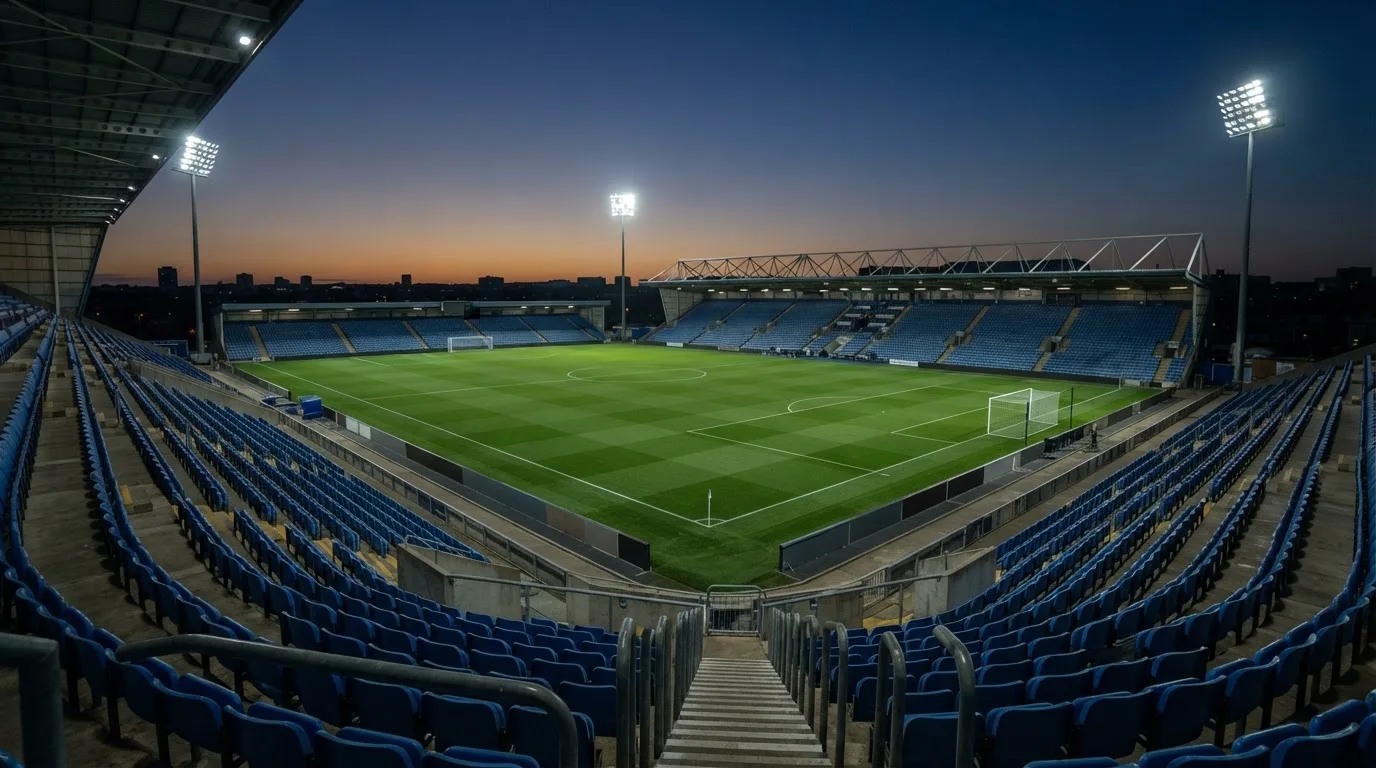
The 2026–27 Premier League season opens on 21 August 2026 and runs to 30 May 2027, with twenty teams. The promoted clubs are Coventry City, Ipswich Town and Hull City, and Arsenal are the defending champions. That is the domestic frame. Outside it, the European calendar carries the bulk of midweek volume, and the World Cup 2026, won by Spain in extra time against Argentina on 19 July 2026, marks the end of one four-year cycle and the start of another. The cycles matter because a major tournament collapses the offer: hundreds of matches a week, every bookmaker running a price, and the margin in any one match thin because the bookmaker is competing for position on the headline fixtures.
What a bettor actually bets on, in volume terms, is the Premier League. The match-result market, the over/under 2.5 goals, the both-teams-to-score market, the Asian handicap line and the player-specific markets (first goalscorer, anytime goalscorer, shots on target, assists) all run on every Premier League fixture. The same menu repeats at lower depth in the Championship, League One and League Two, and in the Scottish Premiership. The European competitions add a Champions League-specific menu that includes qualifying for the knockout rounds, the method of victory and the player markets that only show up in those fixtures.
There is a tier below that. The National League, the seventh tier of English football, is on most bookmakers but with a thinner market, fewer player props, and a longer suspension of markets when team news is thin. Lower still, the women’s game is expanding: the Women’s Super League is now a scheduled market on the major bookmakers, the Champions League women’s draw gets a full match-result price, and the international women’s tournaments are priced from the group stage. A bookmaker that does not cover women’s football in 2026 is behind the curve; a bookmaker that covers it deeply is doing something most of the field is not.
This is also where the offer splits. The Premier League and Champions League get price boosts, acca insurance, request-a-bet, Bet Builder lines, live streams and in-play markets down to the throw-in. The National League gets the match-result price and a handful of totals. A bettor whose betting follows the lower leagues will find a narrower offer with wider prices, because the margin in a thinly-traded market is the bookmaker’s defence against being exposed.
The ten licensed bookmakers, ranked by what each is good at
A bookmaker ranking is not a recommendation and not a guarantee of value. What follows is a way of reading the ten licensed brands on the Gambling Commission’s public register against the kind of bettor who would use them. Each is described as its own terms state it, with the licence number visible, and the verdict at the end of each block is the one place a judgment is made. The set, in the order research sets it, is: Fitzwilliam Sports, Betfred, Dabble, William Hill, Unibet, BetVictor, Bet600, Kwiff, DAZN Bet, Smarkets. Every one of them is a Gambling Commission remote licensee, and every one takes part in GAMSTOP.
| Operator | Licence & Holder | Terms Summary |
|---|---|---|
| Fitzwilliam Sports | 048760 (SBKI Limited) | Dublin-based, capped membership, “High Stakes Welcome” |
| Betfred | 39544 (Petfre Gibraltar) | Full British menu, widest sport list, high-street name |
| Dabble | 65677 (Dabble Sports UK) | Social-first, chat layer, free-bet driven welcome |
| William Hill | 39225 (WHG International) | Best Odds Guaranteed on racing, full Premier League coverage |
| Unibet | 45322 (Platinum Gaming) | Broad European offer, 7-day free bet expiry welcome |
| BetVictor | 39576 (BV Gaming) | BOG on racing, streaming, BetFinder stats layer |
| Bet600 | 44731 (Tyche Tech) | Racing-focused, SP-conversion play, simpler app |
| Kwiff | 44448 (Eaton Gate Gaming) | Surprise multiplier on settled bets |
| DAZN Bet | 48756 (DZBT Limited) | £5 minimum deposit, broad payment coverage |
| Smarkets | 39173 (Smarkets Malta) | Exchange back-and-lay mechanic, fast withdrawals |

Fitzwilliam Sports — a Dublin-based bookmaker with a members-only feel
Fitzwilliam Sports describes itself as a Dublin bookmaker with capped membership, and the welcome is a “High Stakes Welcome” subject to compliance criteria. The site lists instant deposits, fast withdrawals, timeouts and deposit limits, and links to GambleAware, GamStop and Gamblers Anonymous. It holds Gambling Commission remote licence 048760-R-335434-009 (account 48760), held by SBKI Limited.
The model is the opposite of the mass-market bookmaker. Membership is not open in the same way; the welcome offer is described in terms of stakes a casual bettor will not reach. For a higher-stakes bettor who has tired of stake limits and enhanced-odds restrictions at the bigger brands, that positioning is the point. For a casual bettor, the same positioning is a wall.
Verdict. Fitzwilliam Sports suits the higher-stakes, lower-volume punter who is happy to be vetted before being welcomed. Everyone else will find a more open book elsewhere.
Betfred — the high-street name with the broadest sport list
The Betfred Sports, Casino & Games app is published by Done Brothers (Cash Betting) Ltd and covers 21 sports, alongside over 2,000 casino-style games. It operates under Gambling Commission remote licence 039544-R-319290-010 (account 39544), held by Petfre (Gibraltar) Limited.
Betfred is the British high-street name that took the longest to feel like an online bookmaker and now feels like one of the more complete ones. The app carries the full Premier League offer, the horse racing product, the greyhound product, the lotto products and a casino bundle, and the breadth of sports is the widest of the ten. The trade is depth per sport: a specialist tennis bettor will find more on a dedicated tennis bookmaker, a specialist football bettor will find more in-play depth on the bigger online-only brands.
Verdict. Betfred suits the bettor who wants one account, one app, and the full British menu from Premier League football to the dogs, and is happy to trade a little in-play depth for the breadth.
Dabble — social-first, free-bet driven
Dabble’s welcome offer is “Bet £10, Get £10 in Free Bets” on a first deposit for new customers, with minimum odds applying, a 7-day free bet expiry and the stake not returned. It is licensed by the Gambling Commission (remote licence 065677-R-340363-005, account 65677) and held by Dabble Sports UK Ltd.
Dabble is built around a social feed and a chat layer that other bookmakers do not have. The product is the bet, the comment and the follow, and the welcome is the entry point. The free bet stake is not returned, so a winning free bet pays only the profit; that is the standard free-bet treatment, but the headline price of “£30 in free bets” usually conceals a stake that does not come back. A bettor who has never used a free bet should read the mechanics before assuming the headline is the payout.
Verdict. Dabble suits the bettor who likes the social layer, is comfortable with the standard free-bet terms, and is happy for the welcome to be the headline product. It does not suit the bettor who wants deep in-play markets on lower leagues.
William Hill — the Best Odds Guaranteed shop window
William Hill pays Best Odds Guaranteed on UK and Irish horse racing from 8 AM on the day of the race, on both single and multiple bets; it does not apply to ante-post, tote or pari-mutuel bets. It holds Gambling Commission remote licence 039225-R-319373-015 (account 39225), held by WHG (International) Limited.
Best Odds Guaranteed is the headline. From 8 AM on race day, if the starting price is bigger than the price the bettor took, the bet is paid at the SP. For a horse racing bettor, that is the single most valuable concession a bookmaker can offer, and William Hill has run it longer than most. The football offer sits alongside it: full Premier League and Champions League coverage, the standard bet builder, in-play markets on the big fixtures. The exclusions matter — ante-post bets and tote products are not covered, so a bettor laying out a long-term position is not protected.
Verdict. William Hill suits the horse racing bettor who wants BOG on race day, and the football bettor who wants a familiar book with full Premier League and European coverage. It is not a specialist’s book for any one sport.
Unibet — long-running, broad offer, free-bet welcome
Unibet states it has operated since 1999, and its UK site is run by Platinum Gaming Limited, Gibraltar, under Gambling Commission account 45322. The sports welcome offer is “Get £40 in Free Bets when you bet £20”: a deposit and sports bet of £20 or more at minimum odds of 2.0 (1/1), with free bets expiring within 7 days of issue, for new GB customers using a debit card or instant bank transfer.
Unibet is one of the longer-established European brands running a full UK product. The welcome is a 2x free-bet match, the qualifying bet is at minimum odds of evens (2.0), and the free bets expire in a week. The seven-day window is the constraint: a casual bettor who opens the account, finds the welcome, and goes on holiday loses it. The free-bet stake is not returned, so a £10 free bet at odds of 3.0 pays £20 in profit, not £30.
Verdict. Unibet suits the bettor who will use the free bet inside a week, and wants a single account with a deep European football offer. The seven-day expiry is the cost of the welcome, and a bettor who cannot use it inside the window is paying for a product they do not consume.
BetVictor — Best Odds Guaranteed, race streaming, BetFinder
BetVictor offers Best Odds Guaranteed on UK and Irish horse racing, enhanced live race streaming and a BetFinder feature for finding racing bets, alongside Smart Stats. It is licensed under Gambling Commission remote licence 039576-R-319370-028 (account 39576), held by BV Gaming Limited.
BetVictor pitches the same way William Hill does, with a racing-first product and a football offer that does not try to be the deepest in the market. Smart Stats and BetFinder are the betting-aid layer — a bettor who likes form, pace maps and sectionals has somewhere to start, rather than a raw market. The streaming coverage on UK and Irish racing is the kind of concession that pays off in the small hours of a winter midweek, when the alternative is a text-only feed.
Verdict. BetVictor suits the racing-led bettor who wants BOG, streaming and a stats layer in one product, and treats football as a complement rather than the main event.
Bet600 — the SP-conversion play
Bet600 pays Best Odds Guaranteed on horse racing: if the starting price is bigger than the early or show price taken, the bet is paid at the SP. It operates under Gambling Commission remote licence 044731-R-323941-016 (account 44731), held by Tyche Tech Limited.
Bet600 is a smaller brand pitching on the same BOG mechanic William Hill and BetVictor run. The product is narrower than the bigger houses: a smaller football offer, a thinner in-play layer, a simpler app. The BOG is the hook. A bettor who bets mostly on UK and Irish racing, values the SP upgrade, and does not need a deep football menu has a clean offer at Bet600; a bettor whose main product is the Champions League will find more at a bigger house.
Verdict. Bet600 suits the racing bettor who wants BOG without the broader bundle. It is a focused product, and a bettor looking for depth elsewhere will read it as thin.
Kwiff — surprise boosts on settled bets
Kwiff is licensed by the UK Gambling Commission and describes itself as a trademark operated by Spryme Ltd; the app has a 17+ App Store age rating. It holds Gambling Commission remote licence 044448-R-323408-017 (account 44448), held by Eaton Gate Gaming Limited.
Kwiff’s product is a surprise mechanic: a bet can be “supercharged” at settlement to a higher price than was taken. The effect is to add a random multiplier to settled bets, which changes the feel of a small-stake weekend. The football offer sits behind the surprise, and the surprise itself is governed by Kwiff’s own terms. A bettor who likes the unpredictability treats it as a feature; a bettor who plans bankroll around expected value treats it as noise.
Verdict. Kwiff suits the small-stake, casual bettor who likes a surprise on top of the settled price. The marketing of the surprise is sharper than the underlying football offer, and a serious bettor will find the in-play market thin.
DAZN Bet — deposits from £5, broad payment coverage
DAZN Bet deposits start at £5 by debit card, Apple Pay, Paysafecard, Trustly and Skrill, and at £20 by PayPal, with no processing fees. It is licensed by the Gambling Commission (remote licence 048756-R-327274-019, account 48756), held by DZBT Limited.
DAZN Bet is the newer brand in the set, pitching on the payment layer. The £5 minimum deposit is low for the market, the payment coverage is the broadest of the ten, and the football offer is the standard Premier League and Champions League product. The bettor choosing on payment alone has a reason to be here; the bettor choosing on football depth has no special reason to leave a more established brand.
Verdict. DAZN Bet suits the bettor who values a low deposit minimum and a wide payment set, and is happy with a standard football offer. It does not differentiate on the in-play product.
Smarkets — the exchange layer
Smarkets UK deposits by open bank transfer are instant from £10 up to £10,000, and withdrawals are processed within 6 hours from £10 up to £100,000; UK debit card deposits are instant from £10 up to £15,000. The licence is remote betting intermediary under account 39173, held by Smarkets (Malta) Limited.
Smarkets is an exchange, not a traditional bookmaker, and the licence category is the giveaway: remote betting intermediary is the Commission’s term for a betting exchange. The commission is on net winnings, the price is set by backers and layers, and the model is the opposite of the bookmaker’s overround. A bettor who wants to lay, who wants the SP of a liquid market, who wants the depth that a busy exchange has on a Premier League fixture, has a different product here. A bettor who wants a free bet and a Bet Builder has come to the wrong place.
Verdict. Smarkets suits the bettor who wants the exchange mechanic, the back-and-lay flexibility, and a fast withdrawal window. It is not a substitute for a traditional bookmaker; it is a complement to one.
The legal frame in Great Britain
The Gambling Commission regulates the whole commercial market in Great Britain under the Gambling Act 2005. Northern Ireland sits outside the Act and has its own law, so a “GB licence” governs England, Scotland and Wales and not Northern Ireland. Since the Gambling (Licensing and Advertising) Act 2014, an operator whose remote facilities are used in Great Britain needs a Commission licence wherever it is based, and a Curaçao, Maltese or Gibraltar licence is not a substitute. The point of consumption is the test.
The Commission’s public register is the whole proof of who holds a licence. It can be searched by business name, trading name, domain or account number. A licence category on the register — remote general betting standard (real events), remote general betting standard (virtual events), remote general betting limited, remote pool betting or remote betting intermediary — defines what the operator can offer. A brand with only a casino licence cannot lawfully take a sports bet. A brand with only a pool-betting licence cannot take a single on a Premier League match. The ten brands in this comparison all hold remote general betting standard (real events) licences; Smarkets holds a remote betting intermediary licence, which is the exchange category.
There is no statutory list of permitted bets or markets. The Act and the Licence Conditions and Codes of Practice (LCCP) set the rules, and an operator offers markets under its own terms within those rules. In-play betting is allowed, and the controls are the operator’s licence conditions and customer-protection duties; it is not “unrestricted” as a legal matter, only in the colloquial sense that a bookmaker will run a price. Esports are treated like any other event. Virtual events are a separate licence category. Politics, TV and novelty markets are offered, and no statutory prohibition was found. There is no statutory cap on stakes in sports betting: operators set their own maximum stakes and may restrict customers.
Financial spread betting is regulated by the Financial Conduct Authority, not the Commission. Spreadex is regulated by the FCA for spread betting and by the Gambling Commission for fixed-odds betting, and states that spread betting losses can exceed the deposit. The two regimes cover two different products, and a bettor who crosses from one to the other should know which regulator’s protection applies to which bet.
The player pays no tax on betting winnings in Great Britain. That is general information and not tax advice; a professional gambler should ask HMRC or an adviser. The operator pays General Betting Duty, currently 15% of gross profits. From 1 April 2027 a new remote betting rate of 25% applies within it, while remote bets on UK horse racing, bets on self-service betting terminals in licensed premises, pool betting and in-person betting stay at 15%, on the Government’s policy paper of 26 November 2025. Until that date the remote rate stays at 15%. Whether operators pass duty on through the odds is not established; never write that the player is charged duty.
Credit cards are banned for gambling in Great Britain since 14 April 2020, including credit-card-funded payments through an e-wallet. Debit cards and bank-based payments are not covered. Identity is verified before the first deposit, so anonymous play at a licensed site is not available. A British named-account rule, a state list of permitted payment methods, and any rule for or against cryptocurrency deposits at licensed operators are not established; payments are described qualitatively, and only from each operator’s own terms.
A bookmaker without a GB licence is offering facilities in Great Britain without the licence the Act requires, which is an offence under section 33 of the Gambling Act 2005. The offence is on the operator, not the customer. A punter who uses an unlicensed site loses the British protection layer: no GAMSTOP coverage, no Commission complaints route, no approved dispute-resolution body, no British consumer redress if funds are withheld, no 10x bonus cap, no £150 vulnerability check. The trade is no verification, and no recourse.
Safer gambling and the protection layer
Every operator on the Commission’s remote register for online betting is part of GAMSTOP, the national multi-operator online self-exclusion scheme. Self-exclusion is for six months, one year, five years, or five years with auto-renewal. After the minimum period the exclusion stays in place for a further seven years unless the customer asks GAMSTOP to remove it. GAMSTOP covers online sites and apps; betting shops use a separate service.
The financial vulnerability check is the part of the regime a casual bettor meets without knowing its name. Under LCCP condition 3.4.4, in force since 30 August 2024, a licensed remote operator runs a public-record check on a customer when deposits minus withdrawals exceed £150 in a rolling 30 days, and the threshold was set from 28 February 2025. The check is a public-record one (bankruptcy, county court judgments), not an income check and not a credit reference check. Financial risk assessments — the “affordability checks” of the press — are announced in a staged plan in the Commission’s article of 7 July 2026, with no start date. They are not yet in force.
Deposit limits are an operator requirement (RTS 12): operators must offer a gross deposit limit on a fixed time frame. The first changes have applied since 31 October 2025, a second phase was postponed to 30 September 2026, and whether it is live is not established. There is no state-set deposit or loss ceiling for betting: limits are the customer’s choice. The help layer is GamCare (which runs the National Gambling Helpline), GambleAware, the NHS gambling clinics and Gamblers Anonymous.
The promotion rules in force since 19 January 2026 set two important caps. Wagering requirements on bonuses are capped at 10x: a £10 bonus with a 50x wagering requirement, which was once common, would have demanded £500 of qualifying bets; under the cap no bonus can require more than £100 of qualifying bets per £10 of bonus. Mixed-product promotions — an offer that requires gambling on two or more product types such as betting, casino, bingo and lottery, the “bet on football to get free spins” pattern — are banned. Whether the cap applies to free bets with no wagering condition, and any cap on the money value of a bonus, are not established.
The practical advice is the same advice the Commission and GamCare give: a punter sets a deposit limit before the first bet, a punter who finds themselves chasing losses is already losing, and a punter who wants to stop can self-exclude in a single GAMSTOP registration that covers every licensed online bookmaker. The British protection layer is real and works; the unlicensed site offers none of it.
Crypto, Bitcoin and the anonymity question
No rule for or against cryptocurrency deposits at GB-licensed operators has been published, and the British named-account requirement (identity verified before the first deposit) means a licensed site is not an anonymous site, whatever the payment method. A bettor who wants to bet with Bitcoin from a wallet that is not linked to a verified identity has left the GB-licensed set. The trade is the protection layer described above: no GAMSTOP coverage, no Commission complaints route, no British consumer redress if funds are withheld.
The licensed brands in this comparison describe their payment methods in pounds and in regulated rails. DAZN Bet’s set is the broadest, with debit card, Apple Pay, Paysafecard, Trustly, Skrill and PayPal. Smarkets accepts open bank transfer up to £10,000 instantly. None of them advertises a Bitcoin deposit method, and the verification regime is the reason. A “soccer betting with bitcoin” product exists in the wider market, but it is not a GB-licensed product.
The practical reading is simple. A GB-licensed bookmaker takes pounds, verifies the punter’s identity, and offers the protection layer. An unlicensed site takes the payment method the punter prefers and offers none of that. The punter who values anonymity is choosing between two products, and the protection gap is the price of the choice.
Bonuses and free bets: what the welcome is really worth
The headlines run “Bet £10, Get £30 in Free Bets”, “Risk-Free £20”, “100% Bonus up to £50”, and a bettor who has not seen the small print will read the headline as a cash gift. The headlines are not cash gifts. The arithmetic behind them is the same arithmetic that decides whether a welcome is worth taking.
A free bet is a stake the bookmaker gives the punter to place, and the stake is usually not paid back with a win. A £10 free bet at odds of 3.0 pays £20 in profit, not £30. The headline of “£30 in free bets” is the sum of three £10 stakes, each of which pays profit only. The expected value of a free bet depends on the odds the punter takes and the margin in the market; the headline never tells the punter either.
A deposit bonus matches a percentage of the deposit in bonus funds, and the bonus is locked behind a wagering requirement. A 100% bonus up to £50 with a 5x wagering requirement on the bonus means the punter has to place £250 of qualifying bets before the bonus is withdrawable. A 100% bonus up to £50 with a 10x wagering requirement on the bonus means £500 of qualifying bets, which is the new cap under the January 2026 promotion rules. The 10x cap is the change that mattered: bonus offers used to demand 30x, 40x or 50x turnover, and the cap has compressed the worst end of the market.
A “risk-free” bet is a refund as a free bet if the first bet loses. The refund is not a cash refund, so a losing £10 risk-free bet returns a £10 free bet whose stake is not paid back. The risk-free is risk-free on the first bet only, and the headline of “Risk-Free £20” is not the same as a £20 cash refund.
Dabble’s welcome is “Bet £10, Get £10 in Free Bets” on a first deposit for new customers, with minimum odds applying, a 7-day free bet expiry and the stake not returned. Unibet’s welcome is “Get £40 in Free Bets when you bet £20” with minimum odds of 2.0 (1/1), free bets expiring within 7 days of issue, for new GB customers using a debit card or instant bank transfer. Both follow the standard pattern. The headline numbers are honest as headline numbers; the trade is the expiry window and the stake-not-returned mechanic.
The mechanics to read before claiming a welcome: the minimum odds on the qualifying bet, the expiry window on the free bet, the markets the free bet can be used on, the maximum winnings the free bet can return, and any stake limit while a bonus is being cleared. A punter who reads those five lines will not be surprised by the offer.
The mobile layer and the apps
The British bookmaker market is mobile-first. The big brands are designed to be opened on a phone, and the smaller brands are catching up. The bet365 app is described as the most downloaded sports betting app in the UK, and bet365 is the official global betting partner of the UEFA Champions League. The app carries Bet Builder+ (combining markets from one event into a single bet, available pre-match and in-play), Super Boosts, Winnings Boosts on Bet Builders and selected singles, and daily Bet Boosts. That product set is the bar the rest of the market is being measured against.
The Betfred Sports, Casino & Games app is published by Done Brothers (Cash Betting) Ltd and covers 21 sports plus over 2,000 casino-style games. The breadth is the differentiator. The Dabble, BetVictor, Bet600, Kwiff and Lottoland UK apps are all in the App Store; Lottoland UK’s app combines casino, lottery betting, sports betting and scratchcards and states it is licensed by the Gambling Commission for customers in Great Britain. The App Store age rating is a useful signal — Kwiff’s app has a 17+ rating, which is unusual and reflects the brand’s responsible gambling positioning.
The native terms matter. A “betting app” is a downloaded application; a “mobile site” is the same product in a phone browser. A bettor whose handset is older, or who does not want another app installed, uses the mobile site. The product is the same product, and the choice is about how the bettor prefers to access it. A Bet Builder is the same Bet Builder in the app and on the mobile site; the difference is the screen real estate for the in-play markets.
A practical note on the in-play product. The app is the place a serious in-play bettor lives, because the latency between a price change on the pitch and a price change in the bettor’s hand is the edge in in-play betting. A mobile site is a step behind; a desktop site is two steps behind. The bettor whose main product is in-play should choose the app, and the bettor whose main product is ante-post or weekend accumulators can use whichever is comfortable.
Live betting, in-play and cash out
In-play betting is the product where the bookmaker’s margin is widest and the punter’s edge is thinnest, because the price has to move fast and the bookmaker’s protection is the margin. The mechanics are the same as pre-match: the punter backs an outcome, the price is offered, the bet settles at the end of the match or the end of the market. What changes is the speed. A goal is scored, the price of the next goal, the method of the next goal, the player to score the next goal, all move at once. A bettor who can read the move and the price at the same time is the bettor who wins at in-play; a bettor who cannot is paying for the privilege of watching the price change.
Cash out is the bookmaker’s offer to settle a bet before the match ends, at a price the bookmaker sets. The cash-out price is a function of the current state of the match and the bookmaker’s margin on the cash-out. A punter who cashes out a winning bet at half-time locks in a profit smaller than the full payout; a punter who cashes out a losing bet recovers a fraction of the stake. The trade is certainty for value. A punter whose bankroll is tight and whose bet is winning will sometimes take the smaller profit; a punter whose bankroll is comfortable will let the bet run.
Smarkets is the exchange layer in this comparison, and the in-play product on a betting exchange is structurally different: the cash-out equivalent is to place a lay bet at the current price, locking in a position by trading against the original bet. A punter who understands the back-and-lay mechanic has a different tool here; a punter who does not should not use an exchange as a cash-out substitute.
The live-streaming layer is the third leg. Several bookmakers stream football fixtures inside the app, subject to a positive account balance or a recent settled bet. The streams are usually for lower-division fixtures that the broadcast rights do not cover, and the bettor gets the price and the picture in the same place. The match-tracker layer, a graphical representation of the match in real time, is the fallback when no stream is offered. A bookmaker with deep live streaming and a fast in-play product is the bookmaker a serious in-play bettor chooses; a bookmaker with neither is not.
Predictions, tips and strategy: what the marketing does not say
A bookmaker or a tipster site that sells “sure bets” is selling a contradiction. No one can know an outcome, and a punter who acts on a “sure” tip is paying for the previous tipster’s marketing. The legitimate tipster sites are paid for the work of finding value, not for the work of finding winners, and the difference is the difference between a price and a forecast.
The value bet is the strategy that follows from the margin. A bookmaker’s margin is built into every price, and the only way a punter wins in the long run is to find prices that are higher than the true probability of the outcome implies. The arithmetic is straightforward: a price of 3.0 implies a 33.3% probability, and a punter who thinks the true probability is 40% has found a 6.7-point edge. The hard part is the estimate of the true probability, not the multiplication.
The bankroll strategy is the part the marketing skips. A punter who stakes a fixed percentage of the bankroll on every bet survives a losing run; a punter who stakes a fixed amount on every bet does not. The Kelly criterion, staking a fraction of the edge relative to the price, is the formal version of the same idea, and the practical version is to stake between 1% and 5% of the bankroll on any single bet. The punter whose bankroll is £500 and whose average stake is £50 is over-staking by a factor of ten.
The strategy that actually works is the boring one: bet on markets the punter understands, at prices the punter has checked, with a stake the punter can afford to lose, and keep a record. The acca insurance products and the price boosts the bookmakers run are the marketing layer over the same strategy, and a punter who reads the terms on the acca insurance finds a cap on the free bet refund, a minimum number of legs, and a minimum odds per leg. The product is real, and the price is the marketing.
Bet types, odds and the arithmetic of the price
A single bet is one selection on one market. A double is two selections on two markets, with the odds multiplied into one price. A treble is three. An accumulator (“acca”) is four or more. Each added leg multiplies the odds, but each added leg also multiplies the chance of losing, because every leg has to win. A four-fold acca at average odds of 2.0 per leg is a 16.0 price, and a 1-in-16 shot on paper; the bookmaker’s margin is built into each leg, so the real probability of the four-fold landing is below 1-in-16, and the punter is paying for the multiplication of the price.
The each-way bet is two bets of equal stakes: a win bet and a place bet, where “place” means the runner finishes in the place positions the operator defines. The stake doubles because two bets are placed. Each-way is a horse racing product in the strict sense, and the place terms vary by race and by operator; a punter who bets each-way on a Premier League match has misread the product.
The bet builder is the same-game multi: a bettor picks several markets on the same match (match result, total goals, first goalscorer, both teams to score) and the bookmaker builds a price from the legs. The price is higher than any single leg, and the margin is built into every leg. A bettor who builds a bet on a high-profile fixture gets a competitive price; a bettor who builds a bet on a low-profile fixture gets a wider margin and a smaller edge.
Asian handicap is the line that halves the draw. A line of -0.5 on the favourite means the favourite has to win; the draw is a losing bet for the favourite. A line of -1.5 means the favourite has to win by two clear goals. The Asian handicap line is the bookmaker’s way of pricing a one-sided matchup, and the price at -0.5 is closer to even money than the match-result price because the draw is taken out. A line of -1.0, which refunds the stake on a one-goal win, is the half-line that gives the bettor a refund option; a line of -1.25, a split line, is two bets at -1.0 and -1.5 with the stake split between them. The arithmetic is the same arithmetic, and the half-line is the bookmaker’s way of offering a refund.
Double chance is the line that takes the draw back in. A double chance bet on the home team covers the home win and the draw; a double chance bet on the away team covers the away win and the draw. The price is shorter than the single on the home or away win because two outcomes are covered. A punter who wants the security of a draw refund but the price of a single has the Asian handicap line; a punter who wants the price of a single but the security of a draw has the double chance.
Draw no bet is the line that refunds the draw. A draw no bet on the home team pays on a home win and refunds on a draw; the stake on a draw is returned. The price is shorter than the match-result home price because the draw is taken out as a losing outcome. A draw no bet is a one-step Asian handicap on the half-line, and the price is between the match-result home price and the -0.5 Asian handicap price.
The match-result market, the 1X2, is the three-way market: home win, draw, away win. The margin in a three-way market is the sum of the inverse of the three prices minus 1. A worked example: a match at decimal odds of 2.10 / 3.40 / 3.60, the kind of price a bookmaker offers on a competitive Premier League fixture. The payout share is 1 ÷ (1/2.10 + 1/3.40 + 1/3.60), which is 1 ÷ (0.4762 + 0.2941 + 0.2778), or 1 ÷ 1.0481, which is 0.9541, or 95.4%. The margin is 1 − 0.9541, or 4.6%. That is the bookmaker’s take on the market — between roughly 4% and 6% on a competitive Premier League fixture, with the precise figure varying by match and by bookmaker. A less competitive fixture carries a wider margin; a lower-league fixture with a thinner market carries a wider margin still. A punter who reads the three prices on a fixture before placing a bet can see the margin in the air, and a punter who compares margins across bookmakers has a real edge.
The margin is the same number seen from two sides: as the bookmaker’s take on every unit staked, and as the punter’s discount on the true odds. A margin of 5% is a 5% discount on the true odds across the market, distributed unevenly across the three outcomes because the bookmaker’s margin is rarely even. The favourite carries less margin than the draw, the outsider carries the most, and the punter who bets only on outsiders is paying a premium for the privilege.
The fractional odds and the decimal odds are the same price in two notations. 5/1 fractional is 6.00 decimal; 11/10 fractional is 2.10 decimal; evens is 2.00 decimal. The conversion is a/b → a ÷ b + 1, and a punter who is comfortable in one notation should be comfortable in the other. The British bookmaker defaults to fractional; the European bookmaker defaults to decimal; the betting exchange is decimal. A punter who can read both is the punter who can compare prices across the two products.
The return on a single bet is the stake multiplied by the decimal odds. A £10 stake at odds of 3.40 returns £34, of which £10 is the stake and £24 is the profit. The return on a winning accumulator is the stake multiplied by the multiplied odds: a £5 stake on four legs at 2.10, 3.40, 1.80 and 2.50 returns £5 × (2.10 × 3.40 × 1.80 × 2.50), or £5 × 32.13, or £160.65, of which £5 is the stake and £155.65 is the profit. A losing accumulator returns nothing. A free-bet stake is not returned with a win: a £10 free bet at odds of 3.40 returns £24 in profit, not £34. The arithmetic is the same arithmetic, and the headline of “£30 in free bets” is the sum of three £10 stakes each of which pays profit only.
The worked margin example
The numbers in this section are an example, not a quoted price. The decimal odds are 2.10 / 3.40 / 3.60, the fractional equivalents are 11/10, 12/5 and 13/5, and the market is the match result on a typical Premier League fixture.
The three prices are the three possible outcomes: home win at 2.10, draw at 3.40, away win at 3.60. The sum of the inverse prices is 1/2.10 + 1/3.40 + 1/3.60, or 0.4762 + 0.2941 + 0.2778, or 1.0481. The payout share is 1 ÷ 1.0481, or 0.9541, or 95.4%. The margin is 1 − 0.9541, or 0.0459, or 4.6%. Of every £100 staked on this market across the three outcomes, the bookmaker keeps about £4.59 and pays out about £95.41.
The margin is a band rather than a single figure, because the bookmaker adjusts it match by match. A competitive Premier League fixture might run at 4% to 5% margin; a one-sided matchup with a strong favourite might run at 6% to 7%; a lower-league fixture with a thinner market might run at 8% to 10%. The punter who reads the three prices on a fixture before placing a bet has a real sense of the market’s generosity, and a punter who compares margins across bookmakers has a real sense of which bookmaker is offering the better price.
The punter’s edge is in the difference between the price and the true probability. A price of 3.40 on the draw implies a 29.4% chance; a punter who thinks the true probability is 35% has found a 5.6-point edge. The arithmetic is the multiplication of the stake by the odds, and the punter who finds the edge more often than not is the punter who wins in the long run.
Frequently asked questions
What is draw no bet in soccer?
Draw no bet is a two-way line on a three-outcome match. The bet settles as a win if the backed team wins, and the stake is returned if the match is a draw. The price is shorter than the match-result price on the same team because the draw is taken out as a losing outcome. A draw no bet on the home team at 1.80 is roughly equivalent to a half-goal Asian handicap on the same team at a similar price. The line is the bookmaker’s way of offering a draw refund without the full Asian handicap mechanics.
What is Asian handicap in soccer betting?
Asian handicap is a line that takes the draw out of the match-result market. A line of -0.5 on the favourite means the favourite has to win; a line of -1.5 means the favourite has to win by two clear goals. A line of -1.0 refunds the stake on a one-goal win. A split line, like -1.25, splits the stake between -1.0 and -1.5. The price at any line is shorter than the match-result price on the same outcome because the draw is removed, and the half-line is the bookmaker’s way of offering a refund. Asian handicap is the dominant market on one-sided matchups, particularly in European and Asian football.
What is double chance in soccer betting?
Double chance is a line that takes the draw back in. A double chance bet on the home team covers the home win and the draw; a double chance bet on the away team covers the away win and the draw. The price is shorter than the single bet on the home or away win because two outcomes are covered. A punter who wants the security of a draw refund but the simplicity of a single market uses double chance; a punter who wants a wider market of refund options uses the Asian handicap lines. The trade is the price for the security.
How can it be checked that a bookmaker holds a Gambling Commission licence?
The Commission’s public register is searchable by business name, trading name, domain or account number, and the register is the whole test of who holds a licence. The register entry shows the licence categories (remote general betting standard real events, remote betting intermediary, and so on), the licence holder’s name, and the trading names and domains the licence covers. A punter who searches the brand name or the domain will see the entry; a punter who searches the operator’s account number will see the same entry directly. The register is updated as licences change, and a current entry is the proof. No other document replaces the register, and a brand that claims a licence without an entry on the register is not licensed.
How is the return on a bet worked out from the stake and the odds?
The return on a single bet is the stake multiplied by the decimal odds. A £10 stake at decimal odds of 3.40 returns £34, of which £10 is the stake and £24 is the profit. The return on a winning accumulator is the stake multiplied by the multiplied odds across the legs: a £5 stake on four legs at 2.10, 3.40, 1.80 and 2.50 returns £5 × 32.13, or £160.65. A free-bet stake is not returned with a win: a £10 free bet at odds of 3.40 returns £24 in profit, not £34. The arithmetic is the multiplication, and a punter who knows the rule can read any price.
What is the bookmaker’s margin and how can it be seen in the odds?
The bookmaker’s margin is the share of every unit staked that the bookmaker keeps on a market. On a three-way match-result market, the margin is the sum of the inverse of the three decimal prices minus 1. The margin sits inside every price, and the punter who reads the three prices can see it. A margin of 4% to 5% on a competitive Premier League fixture is normal; a margin of 8% to 10% on a lower-league fixture is normal too. The lower the margin, the better the price for the punter. Comparing margins across bookmakers is the comparison that has a real effect on long-term return, and the punter who does it has an edge the punter who does not.
Football – Fast Payout
Content created by the «Fast Payout» team
