
Snooker Betting 2026: The Licensed UK Market, Worked Through
 Available in US
Snooker has quietly become one of the deeper betting markets on a British bookmaker’s site outside the Premier League and the racing pages. The sport runs year-round on the World Snooker Tour, peaks twice a year at the Crucible, and settles in markets that are small in volume but precise in price. This guide walks through how snooker betting actually works in Great Britain: which bookmakers hold a Gambling Commission licence, which markets they offer, how the odds are built, and what an offer or a free bet really costs once the small print is read. The angle throughout is what follows from each mechanism for the person staking the money, not a sales pitch for any one brand.

*Current as of 27 October 2026 · verified against the Gambling Commission’s public register and each operator’s own published terms.*
Snooker as a betting market: why it sits where it sits
Snooker is a frame sport with a fixed structure: two players, a defined number of frames, and a winner who first passes the halfway line of the scheduled distance. A match at a ranking event might be best of 7, 9 or 11 frames; a Crucible final is best of 35. That structure is what makes snooker friendly to outright markets and frame-by-frame markets in equal measure. A bookmaker can list a tournament winner months in advance, a match winner the morning of, and frame handicaps or next-frame winner odds in-running once the balls are on the cloth.
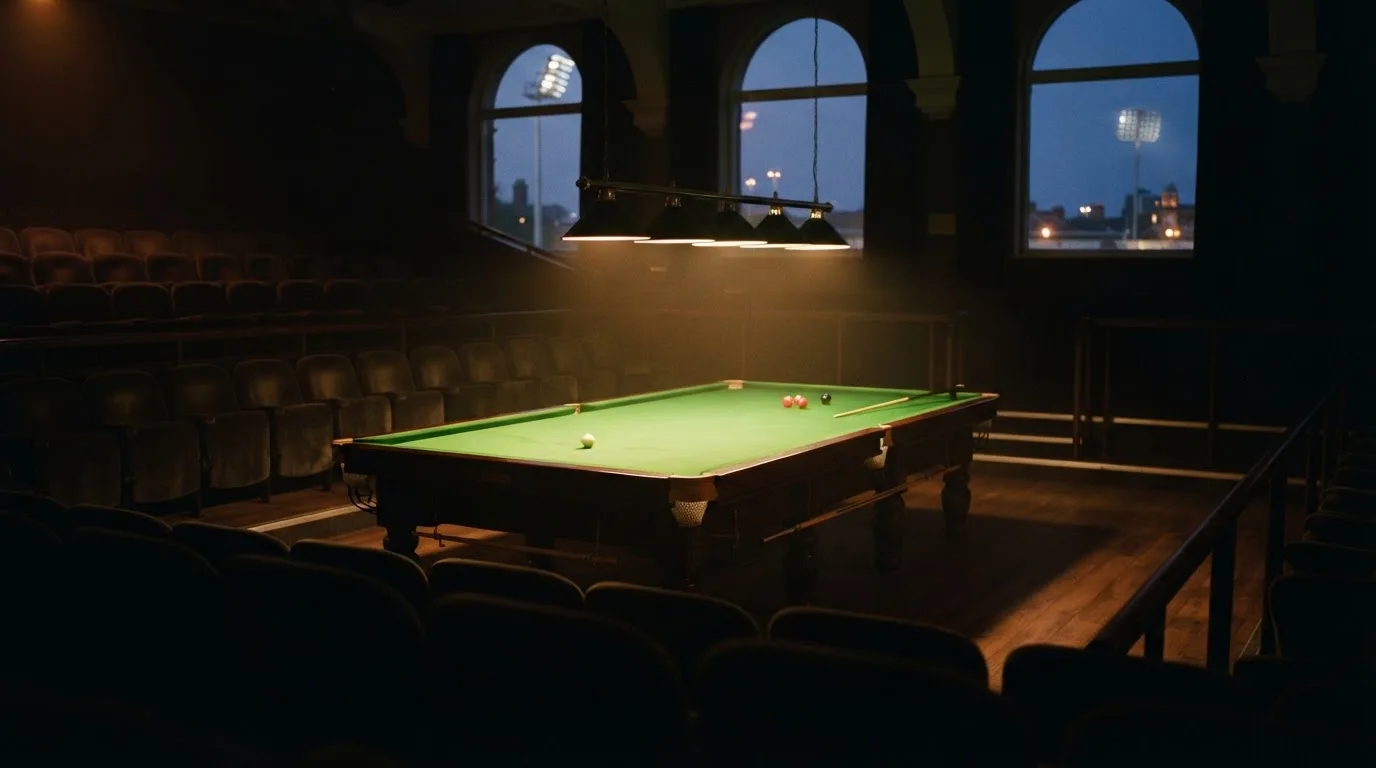
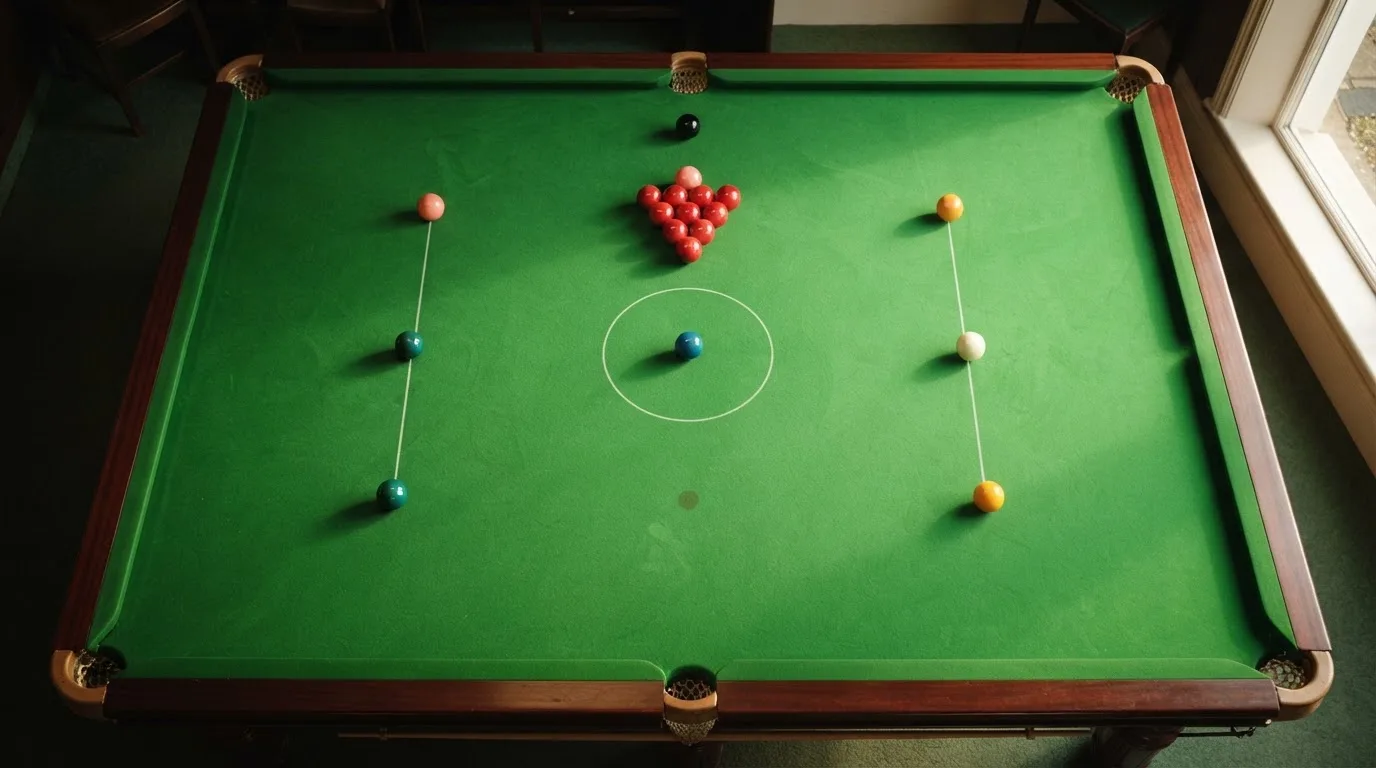
The table itself runs to a fixed geometry: 12 feet by 6 feet, six pockets, twenty-two balls in play. A cue ball, fifteen reds, and six colours worth yellow 2, green 3, brown 4, blue 5, pink 6 and black 7. The maximum break is 147, made by potting all fifteen reds with blacks and then clearing the colours in order. Knowing the value of the colours is not bookmaker trivia: a bookmaker that posts “next frame to feature a century break” or “highest break in the match” is, in effect, asking whether a player will run a clean table from a given position. The geometry and the point values give a sharp bettor something to price against, and they give a casual reader a way to read a market that otherwise looks impenetrable.
Snooker also has a long and narrow competitive calendar. The World Snooker Championship has been held at the Crucible Theatre in Sheffield since 1977, ranging from best of 19 in the first round to best of 35 in the final. The 2026 championship ran from 18 April to 4 May, with Wu Yize beating Shaun Murphy 18-17 in the final; the winner took £500,000 from a total prize fund of £2,395,000. Around that anchor sit the UK Championship, the Masters, the Champion of Champions, the Shanghai Masters, the Welsh Open and a dozen smaller ranking events, each with its own outright and match market. The narrowness of the calendar matters for an outright punter: the form cycle is short, the head-to-head sample is large, and the same names keep meeting the same opponents in the same rounds, year after year.
That narrowness is also what made Stephen Hendry and Ronnie O’Sullivan each reach seven world championships in the modern era, and what made Joe Davis win fifteen in a row between 1927 and 1946. Records at the Crucible are dense, well-documented, and available on the WPBSA’s own site. A bookmaker pricing an outright who has not read those records is pricing against the public, and the public in snooker remembers names longer than it remembers form. Sharp bettors treat snooker outrights as a market where the closing line moves slowly and the early price is often the best one.
How snooker betting works in Great Britain
Snooker sits inside the same regulatory framework as every other sport offered to British customers. There is no statutory list of permitted sports or markets — a bookmaker serving customers in Great Britain needs a Gambling Commission licence wherever it is based, and the Commission’s public register is the sole test of who holds one. Since the Gambling (Licensing and Advertising) Act 2014 an operator whose remote facilities are used in Great Britain needs a Commission licence, and a Curaçao, Maltese or Gibraltar licence is not a substitute.
The minimum age is 18, and identity verification happens before the first deposit or bet — including with a free bet. That single rule is why no licensed British bookmaker offers anonymous play: a customer cannot fund an account, place a bet, or claim a bonus without passing name, address and date-of-birth checks. Offshore sites without a Commission licence do not run those checks, and the comparison on that point is real and unresolvable from the reader’s side. The licensed site asks for proof; the unlicensed site does not; the licensed site can be complained to at an approved dispute-resolution body and pays into GAMSTOP, and the unlicensed site can do none of those things.
The bettor-facing protections are not just a licence badge. GAMSTOP, the national multi-operator self-exclusion scheme, has been a mandatory licence condition for online operators since 31 March 2020, with periods of six months, one year, five years, or five years with auto-renewal. After the minimum period the exclusion stays in place for a further seven years unless the customer asks GAMSTOP to remove it. From 30 August 2024 a financial vulnerability check applies when a customer’s deposits minus withdrawals exceed £150 in a rolling 30 days (the £150 trigger has been live since 28 February 2025): it is a public-record check, not a credit check, and it screens for markers like bankruptcy or county court judgments. Financial risk assessments, sometimes called affordability checks in the press, were announced in a staged plan published on 7 July 2026, with no start date set. Deposit limits under RTS 12 have had a first phase since 31 October 2025 and a second phase postponed to 30 September 2026, with the live status of that second phase not established.
Credit cards are banned for gambling in Great Britain since 14 April 2020, including credit-card-funded e-wallet payments. Debit cards and bank-based methods are not covered by that ban. The bettor pays no tax on betting winnings in Great Britain. General Betting Duty, currently 15% of the operator’s gross profits on remote bets, is the bookmaker’s tax, not the customer’s; from 1 April 2027 a new remote betting rate of 25% applies, while remote bets on UK horse racing, pool betting and in-person betting stay at 15%. Whether operators pass duty on through odds is not established. None of this is tax advice for anyone running a betting operation professionally; HMRC or a qualified adviser is the place for that conversation.
The point of restating the framework here is simple: snooker sits inside it like every other sport, and the framework shapes what a bookmaker is allowed to offer. The market list, the in-play rules, the bonus cap and the verification flow all flow from the licence, and that is why a comparison of ten licensed brands can be a comparison at all.
Responsible gambling: where the protections sit
Snooker’s calendar runs almost every month, and a bettor who watches it closely can find something to stake almost any week. That frequency is what makes the responsible-gambling protections worth knowing in detail.
GAMSTOP is the most sweeping of them. A self-exclusion registered with GAMSTOP blocks the customer from every online operator licensed in Great Britain for the chosen period. It does not cover betting shops, which use a separate service. Self-exclusion cannot be undone early; after the minimum period the exclusion stays in place for a further seven years unless the customer asks GAMSTOP to remove it. For a punter who decides that snooker betting has gone past being a hobby, GAMSTOP is the lever with the most reach.
The deposit limit is the lever for everyone else. Operators must offer a gross deposit limit on a fixed time frame under RTS 12; a punter can set their own ceiling and the operator must enforce it. There is no state-set ceiling, so a punter who wants £50 a week and a punter who wants £5,000 a week can each set the figure that suits them. The first phase of the deposit-limit regime has been in force since 31 October 2025; a second phase was postponed to 30 September 2026, and whether it is live at the time of writing is not established.
The £150 financial vulnerability trigger catches a smaller slice of customers. It looks at deposits minus withdrawals in a rolling 30-day window, not income, and it screens public records rather than running a credit reference. A punter who crosses £150 in a month will be asked soft questions; a punter who crosses much higher is asked harder ones. The check exists to catch markers of acute financial pressure, not to gate every wager.
For people outside the customer base, GamCare runs the National Gambling Helpline, GambleAware publishes guidance, the NHS runs gambling clinics, and Gamblers Anonymous runs peer-support meetings. Every licensed operator’s site links to those organisations, and several of the apps in this comparison — including Fitzwilliam Sports — surface them directly. None of those organisations is part of the Commission, and none of them is a regulator: they are services a bettor can use before, during or after a problem has set in.
The honest framing on this is: a licensed site asks for proof of identity, applies GAMSTOP, caps bonuses at 10x wagering, runs vulnerability checks above £150 net deposits per month, and offers self-set deposit limits. An unlicensed site does none of those things. Neither is automatically the safer choice; both have their costs.
Crypto and anonymity at the snooker table
Crypto-native snooker betting is a niche some searchers look for, but the British licensing regime does not serve it. The snooker betting terms they search for — snooker betting with bitcoin, crypto snooker betting sites, ethereum snooker betting sites — do not match the licensed UK market.
The reason is the verification flow. A Gambling Commission remote licence requires identity checks before the first deposit or bet, including with a free bet. A crypto deposit that does not pass through a verified bank account cannot, on its own, satisfy that requirement, and no GB-licensed operator is known to offer a purely crypto-funded account. Where crypto sits at a licensed operator, it sits inside the same identity-checked perimeter as every other payment method.
The pitch from offshore and crypto-native sites is the opposite: no document checks, near-instant settlement, and an account that can be funded and drawn down pseudonymously. The trade-off is everything the licensed perimeter gives a British customer. There is no GAMSTOP coverage; the customer cannot self-exclude across operators by a single registration. There is no Commission complaints route, no approved dispute-resolution body, and no British consumer redress if a withdrawal stalls or is refused. The 10x bonus cap does not apply. The £150 vulnerability trigger does not apply. The credit-card ban does not apply. If the operator decides to withhold funds, the punter’s path is a private dispute, possibly in a jurisdiction the punter has never set foot in, with no ombudsman to escalate to.
There is also the legal frame itself. Providing gambling facilities in Great Britain without a Commission licence is an offence under section 33 of the Gambling Act 2005, aimed at the operator; no offence by the customer has been identified. Enforcement is disruption, not blocking: cease-and-desist notices, search-engine referrals, work with registrars, hosts and payment providers. The Commission has been given, or is about to receive, court-order DNS blocking powers — ISP blocking is not in operation. None of that makes it illegal for a customer to bet on an unlicensed site; it makes it unprotected.
For most readers of an online-snooker-betting page, the conclusion is straightforward. If the betting is on a major ranking event with a deep market, a licensed British bookmaker will price it; the prices will be tighter than at an offshore shop because the customer pool is bigger, and the protection regime is real. If the priority is anonymity and pseudonymity, no licensed brand will offer it, and the trade is between what anonymity buys and what it costs when something goes wrong.
Offers and free bets: what the marketing word is worth
Snooker is a heavily promoised sport during the Crucible fortnight. The bookmakers know the audience, the audience knows the calendar, and the operators compete for new accounts by tying offers to the World Championship. The marketing vocabulary around those offers is the part of the page where a reader benefits most from a careful reading.
A cash bonus is money added to an account on top of a deposit, with a wagering requirement that must be cleared before withdrawal. A free bet is a stake the operator gives; if it wins, the stake is usually not paid back with the winnings, and any return is the profit only. A “risk-free” bet refunded as a free bet is not a refund in money. A price boost is a one-off enhanced price on a named selection, settled at the boosted figure rather than the SP. An accumulator insurance returns stakes as free bets if one leg of an acca lets the rest down. A cashback returns a share of net losses over a period. A deposit-gated package stays deposit-gated.
The promotion rules in force since 19 January 2026 cap wagering requirements on bonuses at 10x. A £10 bonus at 50x needed £500 of qualifying bets before the cap; under the cap, no more than £100. That cap does not apply to free bets with no wagering condition, and any cap on the money value of a bonus is not established. The cap also does not change what the wagering requirement actually costs. A £10 bonus at 10x means £100 of qualifying bets, and the cost of those bets is the bookmaker’s margin times the stake. Mixed-product promotions — an offer that requires gambling on two or more product types, for instance a sports bet to unlock free spins — are banned outright.
The calculation behind the cap is what gives the marketing word its true price. Take a £10 free bet at decimal odds of 4.00 on a snooker match winner, settled on a market where the bookmaker’s margin is 5%. The free bet’s stake is not returned with a win, so its value is stake times (odds − 1) divided by odds times the payout share of the market. At 4.00 with a 95% payout share, that is £10 × 3.00 / 4.00 × 0.95 = £7.13. That is what the offer is worth on average; the stake itself is gone the moment the bet is placed, win or lose.
Take a £10 cash bonus at 10x wagering on a snooker market with a 5% margin. The required turnover is £100. At an average stake of £10 per bet, that is ten bets; at £5, twenty. The expected cost of clearing the bonus is turnover times margin: £100 × 0.05 = £5. The net value of the bonus is £10 minus £5 = £5, before the time and the personal stake limits the clearing imposes. The marketing word says “£10 bonus”; the arithmetic says the bonus is worth roughly half of that on a low-margin market, and less on a high-margin one.
The point is not that offers are worthless — they are not. The point is that the marketing word is the entry price, not the value, and the value is set by the wagering factor, the qualifying odds, the deadline, the market margin and the stake limits of the bets that count. Two offers with the same headline price can be worth different amounts once those figures are read, and an offer that looks generous on the homepage can be a worse deal than the one it sits beside.
For a punter who wants a number rather than a feeling: assume a low-margin snooker match market runs at 5%, a typical wagering factor sits at 10x under the current cap, and a £10 bonus is worth roughly £5 after the cost of clearing. A £10 free bet on a single selection at 4.00 with the same margin is worth about £7 on average. Both figures are statistical estimates over many bets, not guarantees for any one punter.
In-play and cash out: what changes once the match starts
Snooker is a frame-by-frame sport, and the in-play markets reflect that. A bookmaker’s in-play offering on a best-of-11 match typically includes the match winner, the next-frame winner, the handicap after the current frame, the total frames at the end of the match, and a string of micro-markets on the next frame: highest break, whether there is a century, who wins the next visit to the table. The list expands sharply at a World Championship semi-final, where the volume justifies a deeper book.
In-play odds move in tighter steps than pre-match odds because the market re-prices frame by frame. A player who is 3-0 up in a best of 7 has shortened dramatically; a player who is 0-3 down has lengthened even more, because the structure of the match is now against them. The bookmaker’s margin in-play is typically wider than pre-match — the cost of re-pricing frame by frame is reflected in the spread — though it varies by bookmaker and by event. None of that makes in-play a worse market; it just makes it a different one, and one where the bettor’s edge is harder to find.
Cash out is a separate mechanism that lets a punter settle a bet before the match has finished, at a price the bookmaker quotes in real time. The quoted cash-out price is the bookmaker’s estimate of the bet’s current fair value, minus its margin, minus the optionality the bookmaker is giving up. A punter who cashes out at 2-0 up in a best of 7 has locked in a profit; a punter who cashes out at 2-2 has locked in a smaller profit or a smaller loss than letting the bet ride. The trade-off is that the bookmaker’s margin on the cash-out quote is rarely published, and it sits inside the price the punter sees. Auto cash-out triggers at a threshold the punter sets; partial cash-out lets the punter settle a fraction of the stake.
For snooker specifically, in-play and cash out work well because the match is interrupted by frame breaks. The frame ends, the players leave the table, and there is a natural pause in which the bookmaker can re-price and a punter can decide. The two mechanisms together are how a serious snooker bettor manages a tournament outright across its two-week run.
Predictions and strategy: what a sharp snooker bettor actually does
The sharp snooker betting market is small, knowledgeable, and dominated by outright punters. Match markets on a Wednesday in November are lightly traded and the prices are soft; outright markets on the World Championship are heavily traded, and the closing line is closer to the true price because more eyes have looked at it. The strategic shape of snooker betting follows from that distribution.
Pre-tournament outrights are where the best prices sit. A punter who reads the draw, looks at head-to-heads, and prices each player’s path to the title can find value in March for a tournament that ends in May. The closer the tournament gets, the more information the market has priced, and the harder value is to find. A rank outsider who reaches a semi-final pays well at 100/1 in February and pays nothing at 5/1 in April.
Match markets reward form reading. The Crucible is famous for first-round upsets because best-of-19 allows a qualifier to find their range; smaller ranking events are best of 7 and the form book holds. A punter who backs a player coming off a deep run at a smaller event into a bigger event two weeks later is pricing the player’s confidence and table time as much as their ranking. The form cycle in snooker is short, and a fortnight matters.
Frame markets and in-play markets reward watching. A punter who can read a player’s body language, who notices a missed long pot two visits in a row, who sees the cue action shorten as the pressure rises, can spot the moment the match turns before the market does. That kind of edge evaporates inside a frame, so it has to be acted on inside a frame, which means it is mostly the province of in-play punters.
Bankroll management is the same as in any other sport. Flat stakes on each selection, no chasing losses, no staking more than a small percentage of the bank on any one bet. Snooker’s narrow calendar means a punter who bets on every event will have weeks of dense action and quiet weeks; bankroll needs to cover the dense weeks without the quiet ones breaking it.
No strategy wins reliably. Snooker results have a large random component, especially at the smaller events, and the public’s memory of names is longer than its memory of form. The honest version of any snooker-betting strategy is: read the form, price the market yourself, take the price when it is bigger than your price, and skip the bet when it is not. Everything else is marketing.
Bet types and odds: how snooker prices are built
Snooker odds are published in fractional form by British bookmakers — 5/1, 11/4, evens — and in decimal form by international sites and most apps. The two are equivalent: fractional odds a/b convert to decimal odds a/b + 1, so 5/1 becomes 6.00 and 11/4 becomes 3.75. Odds-on means shorter than evens, so 4/6 is odds-on and 6/4 is odds-against. The starting price, SP, is the price the horse or, in snooker’s case, the player is at when the event begins; best odds guaranteed, BOG, pays at whichever is higher of the price taken and the SP, and several of the operators in this comparison publish BOG terms.
The bet types used in snooker are the standard set. A single is one selection. A double is two. A treble is three. An accumulator, “acca”, is four or more, and the odds multiply. Each-way is two bets of equal stakes, one on the win and one on the place, so the stake doubles; place terms vary by tournament and by bookmaker, and snooker place terms are usually a fraction of the field rather than the standard racing fractions. A Trixie is four bets on three selections; a Patent is seven; a Yankee is eleven; a Lucky 15 is fifteen; a Super Yankee or Canadian is twenty-six; a Heinz is fifty-seven; a Goliath is two hundred and forty-seven. The total stake on each is unit stake times the number of bets, so a £1 Patent is £7, a £1 Lucky 15 is £15, and a £1 Goliath is £247. A Rule 4 deduction is a bookmaker rule that reduces the price of a winning bet when a competitor withdraws; in snooker, withdrawals between the off and the start of a match trigger the rule.
A bet builder, also called a same-game multi, is a single bet constructed from several markets on one event — for example, player A to win, highest break over 100, and total frames over 16.5 on a single match. LiveScore Bet’s bet builder takes up to ten selections and covers match result, BTTS-style markets (rare in snooker), corners (not applicable), total goals (replaced by total frames), player scoring and card markets. The price is the product of the individual prices, with a margin layered on top; the bookmaker’s margin on a bet builder is wider than the margin on any single one of its legs, which is one reason the marketing word “custom bet” deserves the same scrutiny as any other.
Cash out, ante-post, non-runner rules and the rest of the standard vocabulary all apply. Snooker has one peculiarity worth knowing: an outright bet on a tournament is settled when the tournament is over, and a player who withdraws between the bet and the start settles at a Rule 4-style reduction or, on some books, at the bookmaker’s discretion. The withdrawn-player rule is the one place snooker outrights differ materially from horse-racing ante-post bets.
The odds themselves carry the bookmaker’s margin. Take a two-way snooker match with each player at decimal odds of 1.90 (fractional 9/10). The payout share of a unit bet on either player is 1 divided by (1/1.90 + 1/1.90), which is 1 divided by (0.5263 + 0.5263), or 1 divided by 1.0526. That is 0.95, or 95%. The margin is 1 minus the payout share, or 5%. Of every pound bet on that market across both outcomes, 5p is the bookmaker’s expected take and 95p is returned to punters as winnings. The same arithmetic on a three-way market — a three-player outright or a frame handicap with three options — gives a wider payout share and a wider margin, because three prices have to add to more than 100% to leave the bookmaker a cut.
The price of a snooker frame market typically carries a margin in the 4–7% range for major events, wider for smaller ones. The price of a next-frame winner market is wider still, because the bookmaker is re-pricing inside a frame and the volume is lower. The wider the margin, the more the bettor pays over the long run for the privilege of taking the price. A bettor who backs five-point accumulators at a 12% per-leg margin is paying close to half the stake in expected margin over the acca’s life, which is why accumulators and high-margin markets rarely make money over a season.
The band and its condition state the margin clearly. A two-way match market at decimal odds 1.90 / 1.90 carries a margin of around 5%; a three-way market at decimal odds 2.50 / 3.50 / 4.00 carries a margin in the 8–10% range; a same-game multi built from several markets carries a margin in the 10–15% range. The arithmetic is exact for the inputs given; the band widens as the inputs change.
Tournaments, fixtures and the snooker calendar
The professional snooker calendar is run by the WPBSA, which owns the official rules, with the IBSF governing the amateur game. The professional tour runs roughly forty ranking events a year, plus invitationals, with the World Championship at the Crucible as the centre of gravity.
The 2026 calendar, as it stood at the time of writing, was anchored by the World Snooker Championship at the Crucible Theatre, 18 April to 4 May 2026, with Wu Yize beating Shaun Murphy 18-17 in the final. Around that sat the UK Championship, traditionally in November/December; the Masters, traditionally in January; the Champion of Champions, the Shanghai Masters, the Welsh Open, the Players Championship, the Tour Championship, and a string of ranking events stretching from Riga to Riyadh. The smaller events fill the gaps and give bookmakers the volume to keep outright markets live between the majors.
Each event carries its own market list. The majors carry match winner, handicap, total frames, highest break, century breaks, and a deep in-play offering. The smaller events carry fewer markets and tighter margins, because the volume is lower. Outright markets on the smaller events can be softer, because fewer punters have priced them; that softness is an opportunity for a sharp bettor who has done the work, and a trap for a casual bettor who has not.
The amateur circuit, run by the IBSF, is not typically priced by British bookmakers, and the WPBSA’s own Q School is rarely priced either. Where a bookmaker does price a smaller event, the rule is the same as for any other sport: check the bookmaker’s terms, check the liquidity by looking at how many prices have been taken, and treat any price that looks out of line with caution.
The Crucible record book is dense enough to be useful and short enough to be readable. Ronnie O’Sullivan’s seven modern-era world titles, Stephen Hendry’s seven, the long tail of one-time winners, Joe Davis’s fifteen in a row between 1927 and 1946 — each of those numbers is on the WPBSA site and on the relevant Wikipedia entry. A bookmaker pricing a World Championship outright has priced against that record; a punter who has read it has priced against the same.
The ten-bookmaker comparison
| Operator | Gambling Commission licence | Offer notes |
|---|---|---|
| DAZN Bet | 048756-R-327274-019 (DZBT Limited) | Wide payment choice including Apple Pay and Skrill; low £5 deposit floor. |
| Swifty Sports | 058957-R-334734-006 (Swifty Global (UK) Ltd) | Features include live streaming, price boosts, and cash out. |
| Ladbrokes | 054743-R-330863-014 (LC International Limited) | Deep outright and match market depth; standard bet builder and price boosts. |
| QuinnBet | 061011-R-335683-004 (QuinnBet (Gibraltar) Limited) | BOG on UK and Irish racing with £150 cap; snooker market standard. |
| DragonBet | 064908-R-339041-003 (DragonBet Ltd) | Focus on Welsh sports; snooker depth functional for major events. |
| Copybet | 053774-R-330743-010 (Copybet UK Limited) | BOG daily on racing; first-past-the-post rule on racing. |
| Bet600 | 044731-R-323941-016 (Tyche Tech Limited) | Racing-led BOG on starting price; snooker market functional. |
| Sporting Index | 027343-R-308898-011 (Sporting Index Limited) | Hybrid fixed-odds and spread betting; in-play betting and auto cash-out. |
| William Hill | 039225-R-319373-015 (WHG (International) Limited) | Racing BOG from 8am daily; extensive sportsbook feature set. |
| LiveScore Bet | 056859-R-332720-005 (LiveScore Betting and Gaming (Gibraltar) Limited) | Bet builder allows up to ten selections; strong in-play depth. |
The ten operators below all hold a Gambling Commission remote licence, which is the entry condition for serving British customers online. Each is described from the operator’s own published terms, with the Commission’s public register as the licence check. Several brands can run under one licensee, and none of these is “the only” licensed brand; the Commission’s register lists many more. Offers are described qualitatively from each operator’s own terms, with no working bonus code, voucher code or sign-up link on the page.
DAZN Bet — the deposit-floor newcomer with broad payment choice
DAZN Bet is the sportsbook arm of the DAZN streaming brand. Its UK site is operated by DZBT Limited under Gambling Commission remote licence 048756-R-327274-019, with remote general betting standard (real events) on the licence. Deposits start at £5 by debit card, Apple Pay, Paysafecard, Trustly and Skrill, and at £20 by PayPal, with no processing fees from the operator’s side. The wide payment list and the low deposit floor make it a fit for a punter who wants to stake small and try several funding routes without committing large sums; the £20 PayPal minimum is the one threshold to watch. Its offering’s promise is broad payment flexibility rather than deep snooker-specific market depth.
Swifty Sports — the racing-led bookmaker with snooker in the mix
Swifty Sports is operated by Swifty Global (UK) Ltd under Gambling Commission remote licence 058957-R-334734-019. Its published feature list includes Best Odds Guaranteed, Cash Out across markets including horse racing and football, daily price boosts, live streaming and in-play betting, with a Bet Builder listed as coming soon. For a snooker punter, the relevant features are the in-play offering, the cash-out availability, and the daily price boosts — the BOG headline is racing-led and unlikely to apply to snooker outrights. The bet builder’s absence, for now, is the one piece of the standard feature set that is missing. Worth it for a punter who values live streaming and price boosts over a custom bet builder.
Ladbrokes — the high-street heavyweight with the deep market list
Ladbrokes is the betting brand most British readers will recognise by sight. Its sports betting app is published by Entain Operations Limited and is rated 4.66 from 101,255 ratings in the GB App Store; the licence is held by LC International Limited under Gambling Commission account 54743, covering remote general betting standard (real events) and remote betting intermediary. The brand runs the standard British bookmaker offer set: a deep snooker outright and match market, in-play pricing, cash out, bet builder, price boosts, and a long list of payment methods including debit cards and PayPal. The high rating is the surface; the substance is the depth of the snooker market during the majors. Ladbrokes is the bookmaker to compare other snooker books against, because its snooker offering is the reference set most British readers will already know.
QuinnBet — the racing-driven brand with BOG on Irish and UK racing
QuinnBet is operated by QuinnBet (Gibraltar) Limited under Gambling Commission remote licence 061011-R-335683-004, covering remote general betting standard (real events). Its Best Odds Guaranteed applies to Irish and UK horse racing bets from 10:00am daily on singles, multiples and system bets, with a maximum benefit of £150 per customer per race. The racing focus is clear in the BOG terms; the snooker offering sits inside the same site but does not get the racing-led features layered on top. A punter who follows both racing and snooker will get the BOG on the racing leg and the snooker market on the snooker leg, with no cross-feature interference. The £150 BOG cap is worth noting for any punter who might otherwise expect an uncapped benefit.
DragonBet — the Welsh-rooted bookmaker with home-market depth
DragonBet is operated by DragonBet Ltd under Gambling Commission remote licence 064908-R-339041-003, covering remote general betting standard (real events). The brand’s stated focus is on Welsh football and rugby, racing, American football, in-play betting and bet builder markets. Snooker sits inside the standard sportsbook rather than as a featured vertical, which means a DragonBet customer sees the majors priced but not necessarily the smaller ranking events. The bet builder and the in-play offering are the headline features; the snooker depth is functional rather than deep. A punter who lives in Wales and follows the home leagues will find the site shaped around them; a snooker-only punter will find it adequate rather than tailored.
Copybet — the all-day BOG bookmaker with first-past-the-post paid
Copybet is operated by Copybet UK Limited under Gambling Commission remote licence 053774-R-330743-010, covering remote general betting standard (real events). Its Best Odds Guaranteed runs all day, every day on all UK and Irish racing, and it pays first past the post on horse racing even if the winner is later disqualified. Like QuinnBet, the racing focus is dominant; the snooker market is the standard sportsbook depth. A punter who backs racing and snooker on the same site will find the racing leg well covered and the snooker leg functional, with no snooker-specific features layered on. The first-past-the-post payment rule is unusual and worth knowing for racing punters; for snooker it has no bearing.
Betting — the BOG-on-the-SP bookmaker with a small deposit footprint
Bet600 is operated by Tyche Tech Limited under Gambling Commission remote licence 044731-R-323941-016, covering remote general betting standard (real events). Its BOG pays on horse racing when the starting price is bigger than the early or show price taken, settling the bet at the SP. The racing-led BOG applies to horse racing only, as with the other racing-heavy books above. The site’s snooker offering sits inside the standard sportsbook, and the brand’s footprint is smaller than the racing-led majors. A punter who wants a quieter site with racing and snooker under one roof will find it functional; a punter who wants the deepest snooker outright list will look elsewhere.
Sporting Index — the fixed-odds and spread betting hybrid
Sporting Index is operated by Sporting Index Limited under Gambling Commission remote licence 027343-R-308898-011, covering remote general betting standard (real events). It lets customers switch between fixed odds and spread betting, with in-play betting, Bet Builder for football, auto cash-out and Multi-Markets. Spread betting is regulated by the Financial Conduct Authority rather than the Commission for financial products, and Sporting Index is the long-standing spread-betting name in British sport. A punter who wants to bet a spread on the total frames in a snooker match or the margin of victory has the option; a punter who wants fixed-odds snooker outrights has the same option. The dual mechanism is the brand’s defining feature, and the regulatory framing is worth understanding before opening an account — Spreadex’s terms state that spread betting losses can exceed deposits, and the same warning applies across the spread-betting sector.
William Hill — the BOG-from-8am bookmaker with the standard sportsbook
William Hill is operated by WHG (International) Limited under Gambling Commission remote licence 039225-R-319373-015, covering remote general betting standard (real events). Its Best Odds Guaranteed pays on UK and Irish horse racing from 8 AM on the day of the race, on both single and multiple bets; it does not apply to ante-post, tote or pari-mutuel bets. The 8 AM start is earlier than most racing-led BOG offers and is the brand’s distinctive racing feature. Snooker sits inside the standard sportsbook depth, with match markets, outrights, in-play and the standard feature set. A punter who races early in the day and snooker in the afternoon can run both on the same site without feature conflicts.
LiveScore Bet — the bet builder bookmaker with up to ten selections
LiveScore Bet is operated by LiveScore Betting and Gaming (Gibraltar) Limited under Gambling Commission remote licence 056859-R-332720-005, covering remote general betting standard (real events). Its Bet Builder allows up to ten selections and covers match result, both teams to score (less relevant for snooker), corners (not applicable), total goals (replaced by total frames), player scoring and card markets. For snooker, the relevant builder selections are match result, total frames, player scoring (frame wins) and the next-frame markets where available. The ten-selection ceiling is unusually high for a same-game multi and is the brand’s snooker-relevant distinction. A punter who likes building custom markets will find more room here than at most competitors.
What the margin actually costs in numbers
The arithmetic of a bookmaker’s margin is useful to run once on paper.
Take a two-way snooker match at decimal odds 1.90 / 1.90 (fractional 9/10). The payout share of a unit bet on either player is 1 divided by the sum of (1/1.90 + 1/1.90). That sum is 1.0526, and the reciprocal is 0.95. The margin is 1 minus 0.95, which is 5%. Of every pound staked across both outcomes, 5p is the bookmaker’s expected take and 95p is returned to winning punters as profit. State it as a band: a two-way match market at 1.90 / 1.90 sits at a margin of 5%; a two-way market at 1.80 / 1.80 sits at a margin of 10%; a two-way market at 1.95 / 1.95 sits at a margin of around 2.5%. The tighter the price, the thinner the margin; the wider the price, the fatter the margin.
Now take a three-way snooker outright at decimal odds 2.50 / 3.50 / 4.00 (the three leading players at a ranking event). The reciprocal sum is (1/2.50 + 1/3.50 + 1/4.00) = (0.4000 + 0.2857 + 0.2500) = 0.9357. The reciprocal is 1.0686, and the margin is 1 minus the payout share. The payout share here is 0.9357 and the margin is 6.4%. The margin on a three-way outright is wider than on a two-way match market because the bookmaker’s edge is more dispersed; the band for a three-way outright is typically 5–10% at majors, wider at smaller events.
Now take a same-game multi built from three snooker match markets at 1.90 / 1.90 / 1.90 each. The combined price is 1.90 cubed, or 6.859. The reciprocal sum of three 1.90 legs is 3 × 0.5263 = 1.5789, and the margin on the combined bet is roughly 1.5789 × (1.90 / 6.859) − 1, which is approximately 1.5789 × 0.2770 − 1 = 0.4374 − 1 = a negative number that the bookmaker turns positive by widening each leg’s margin inside the builder. The practical result is that the margin on a same-game multi is wider than the margin on any single leg, typically in the 10–15% range for a three-leg snooker builder. A punter who builds a custom bet pays for the convenience with a wider margin.
The arithmetic is exact for the inputs given; the bands widen as the inputs change. The cost of a margin to a punter is turnover times margin: a punter who stakes £1,000 across a season on snooker markets with an average 6% margin expects to pay £60 in margin over the year, before any skill or luck in selection. The punter’s edge, if they have one, has to be larger than that margin to come out ahead. The book’s edge is the margin; the punter’s edge is the difference between their price and the true price; the spread between them is what the season turns on.
Frequently asked questions
How does a financial vulnerability check work?
A financial vulnerability check screens a customer’s deposits minus withdrawals in a rolling 30-day window, triggered when the net spend exceeds £150. It reviews public records like county court judgments rather than income or credit files. The check identifies markers of acute financial pressure, not a standard affordability check.
What happens if I bet on an unlicensed site?
Betting on a site without a Gambling Commission licence means you lose access to British consumer protections. There is no GAMSTOP coverage, no complaints path through the Commission, and no dispute-resolution route if funds are withheld. Bonus caps and vulnerability checks do not apply, leaving your funds unprotected in a private dispute.
Are my snooker betting winnings taxable in Great Britain?
No, punters in Great Britain pay no tax on betting winnings. General Betting Duty, which covers the operator’s remote betting profits, is a tax on the bookmaker’s gross profit, not the customer. Any professional gambler should speak to HMRC or a qualified financial adviser about their own specific tax situation.
Can I set a deposit limit for my snooker betting?
Yes, all licensed operators must offer a gross deposit limit on a fixed time frame under the Remote Technical Standards. You can set a ceiling that suits your budget, and the operator is required to enforce it. No state-set ceiling exists; the limit you choose is the one the bookmaker enforces.
What is a snooker bet builder?
A bet builder combines several market selections from a single snooker match—like match winner, total frames, and highest break—into one custom stake. The price is the product of the individual selections’ odds with a margin on top. Be aware that the builder’s margin is usually wider than a single market.
How do you actually bet on snooker?
Open an account with a Gambling Commission–licensed bookmaker, pass the identity check (name, address, date of birth), deposit by debit card or another accepted method, and pick a market from the snooker section of the site. Markets typically include match winner, handicap, total frames, highest break and outright tournament winner. In-play markets open once the match starts. Stakes settle at the price taken, or at the SP if higher and BOG applies; snooker rarely has SP, but the principle is the same. Settled bets return stake plus profit; a £10 single at 3.00 returns £30, of which £20 is profit.
Is snooker betting legal in Great Britain?
Yes, at operators that hold a Gambling Commission remote licence for Great Britain. The Gambling Act 2005 covers Great Britain (England, Scotland and Wales); Northern Ireland has its own older law and a GB licence does not regulate Northern Irish customers. There is no statutory list of permitted sports or markets — a bookmaker serving British customers needs the licence, and a Curaçao, Maltese or Gibraltar licence is not a substitute. The minimum age is 18 and identity is verified before the first deposit or bet, including with a free bet. No tax is payable on betting winnings by the customer in Great Britain.
How can a punter check a bookmaker holds a Gambling Commission licence?
The Commission’s public register at the regulator’s own site can be searched by business name, trading name, domain or account number. The register lists every licensed operator, the licence category (remote general betting standard for real events is the standard snooker licence), the licence holder’s name and the operating domain. The licence number on the register should match the licence number on the bookmaker’s own site; if it does not, the brand and the licence are different entities. The register is the whole test of who holds a licence; quote no count without its access date.
How is the return on a snooker bet worked out from the stake and the odds?
For a single bet at decimal odds, return equals stake times odds. Net profit is return minus stake, which is stake times (odds minus 1). A £10 single at decimal odds 3.00 returns £30 and profits £20. For a combination bet, the odds of the legs multiply into one price; a double at 3.00 and 4.00 has combined odds of 12.00, and a £5 double returns £60 and profits £55. Each-way doubles the stake, since each-way is two equal bets, one on the win and one on the place. The figure is a statistical estimate of what a winning bet pays back, not what it wins on average.
What is the bookmaker’s margin, and how can it be seen in the odds?
The margin is the slice of every staked total the bookmaker keeps on a market over the long run. It shows up in the odds as the gap between the reciprocal sum of the implied probabilities and 100%. A two-way match at 1.90 / 1.90 has implied probabilities of 52.63% each, summing to 105.26%; the gap of 5.26% is the margin. A tighter price (1.95 / 1.95) sums to 102.56%, a margin of 2.56%; a wider price (1.80 / 1.80) sums to 111.11%, a margin of 11.11%. The margin is the cost the punter pays over a season; the chance of the outcome is the punter’s price of being right.
How do fractional snooker odds like 5/1 convert to decimal odds like 6.00?
Fractional odds a/b convert to decimal odds a divided by b plus 1. So 5/1 is 5 divided by 1 plus 1, which is 6.00. 11/4 is 11 divided by 4 plus 1, which is 2.75 plus 0.25, or 3.75. Evens (1/1) is 1 divided by 1 plus 1, or 2.00. Odds-on means shorter than evens, so 4/6 (decimal 1.67) is odds-on and 6/4 (decimal 2.50) is odds-against. The conversion is exact and reversible: decimal odds minus 1, expressed as a fraction, gives fractional odds. The two forms price the same bet; British bookmakers publish in fractional by convention and most apps offer both.
Tennis, darts & cue sports – Fast Payout
Content created by the «Fast Payout» team
