
Online Gaelic football betting in Britain — the landscape for 2026
 Available in US
A Gaelic football match is one of the few top-level sports in Britain where the sport itself carries less weight than the question of whether the bookmaker bothered to put it on the coupon. The Championship throws up six weekends of genuinely undecided football between May and August, every fixture hands a licensed firm the chance to price a market, and most of them price it with a margin that swallows the marketing. That margin is the consequence every other thing on this page circles back to: a Gaelic game is short on televised fixtures, long on rotating County sides, and wide open to a price that looks generous until the maths is done. The pieces that follow work from that point outward — what the sport actually is, who is allowed to take your money, what the price of a bet is built from, and which of the ten reviewed brands turn out to be worth a punt once the headline offer has been read.

Licences and bookmaker details were verified against the Gambling Commission’s public register on the access date given below. Odds, market margins and operator offers shown reflect what each firm’s own terms state on that date.
Data current as of 27 October 2026 and checked against the Gambling Commission’s public register.
How Gaelic football works as a betting sport
Gaelic football is the field game run by the Gaelic Athletic Association. A pitch is a rectangle of grass 130–145 metres long and 80–90 metres wide, and at senior inter-county level each side fields fifteen players with fifteen named substitutes, of whom six may be used. Senior matches last seventy minutes, two halves of thirty-five; most other adult fixtures last sixty. The scoring is unusual and shapes every market a bookmaker offers: a goal, the ball pushed under the crossbar and into the net by either foot or hand, scores three points; a point, the ball played or kicked over the crossbar, scores one. From 2025 the rules also count a two-point score, registered when a shot from play comes from outside the new forty-metre arc.
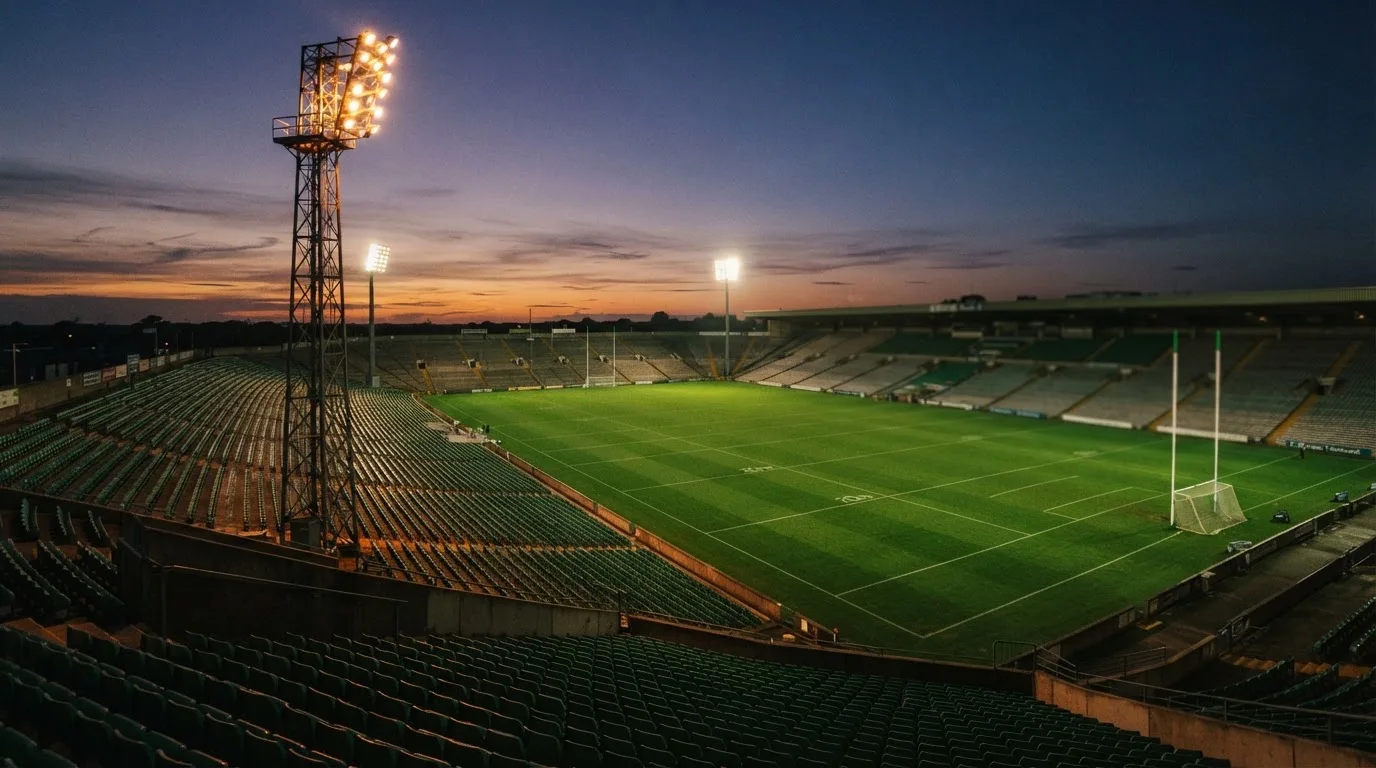
That scoring system is the single fact that decides what a Gaelic football betting market can be. Because goals are worth three, a final scoreline of 1-20 is fourteen points clear of 0-15, not five. Match-result markets tend to be settled on who wins, on a draw, or on a draw-no-bet settlement, with the goal weighting baked into the price. Handicap markets run in point handicaps, not goal handicaps, and totals settle on the combined goal-and-point total rather than goals alone. Punters who arrive from association football have to recalibrate: a one-goal lead at the break is three points, not one.
The competition most bookmakers in Britain build the bulk of their Gaelic football coupons around is the All-Ireland Senior Football Championship, run by the GAA and decided each year at Croke Park in Dublin. The senior final is the single most heavily priced match of the calendar; provincial championships and the All-Ireland quarter-finals and semi-finals sit behind it in depth. The 2026 senior final, played on 26 July 2026 at Croke Park, saw Mayo beat Kerry by 1-20 to 1-17, a fourth title for Mayo. Kerry remain the championship’s most successful county, with thirty-nine titles to their name. The size of that record is the second fact a punter has to absorb: any single-season market that prices Kerry as a tier-one contender is pricing history, not form, and form is what wins the next Saturday.
County sides turn over heavily across a championship campaign. Squads are drawn from clubs in a single county, eligibility is tight, and a panel that wins a provincial final can lose three starters to injury or travel before the All-Ireland semi-final. Bookmakers adjust, but the adjustment lags the team news by hours rather than minutes. A bettor who has a read on the panel can find prices that are slow to catch up with reality, particularly in handicaps and in-play, and that lag is where most of the value on a Gaelic football coupon sits.
The legal frame a UK bettor lives inside
There is no list of sports that may be lawfully bet on in Great Britain, and there is no list of approved markets. A bookmaker serving customers in Great Britain needs a Gambling Commission licence, full stop, and the Commission’s public register is the entire test of who has one. The Act that creates the regime is the Gambling Act 2005, which covers England, Scotland and Wales; Northern Ireland sits under older law and a Commission licence does not authorise activity there. Since the Gambling (Licensing and Advertising) Act 2014, an operator whose remote facilities are reached in Great Britain must hold a Commission licence wherever it is incorporated — a Curaçao, Maltese or Gibraltar licence is not a substitute for a GB one.

Licence categories that matter for a punter are remote general betting standard (real events), remote general betting standard (virtual events), remote general betting limited, remote pool betting and remote betting intermediary. The first covers the ordinary sportsbook; the last covers a betting exchange, where customers back and lay with each other rather than with the firm. Several of the brands reviewed below hold both a sportsbook and an exchange licence, or a sportsbook and an intermediary licence, under one corporate parent. They are not independent for that reason, and the licence number on the register is the same one across the brands.
Minimum age is eighteen. Identity is checked before the first deposit or bet, and that check covers name, address and date of birth; a free bet credit is part of the gambled-on product for these purposes, so the verification is not waved through because a deposit is small. The practical effect is the one absence that defines licensed UK betting: there is no anonymous play at a licensed site. A bettor who wants that, including using cryptocurrency at an offshore bookmaker, gives up the protections licensed play carries with it.
What a licence buys a customer, and what it does not
A Commission licence brings five things a bettor can use. First, GAMSTOP, the national multi-operator online self-exclusion scheme, is a mandatory condition of the licence; a punter who self-excludes is excluded across every licensed site for the chosen period — six months, a year, five years, or five years with auto-renewal — and the exclusion then runs on for a further seven years unless the customer lifts it. Second, the operator offers deposit limits on a fixed time frame; specific deadlines and thresholds have moved through 2025 and 2026, and whether the second phase of the rules is currently live is not nailed down here. Third, a financial vulnerability check applies once a customer’s net deposits cross £150 in any rolling thirty days, a check against public records such as bankruptcy orders and county-court judgments, not against income. Fourth, advertising runs under the CAP Code for non-broadcast and the BCAP Code for broadcast, both enforced by the ASA, so the marketing a punter sees has been pre-screened; the wagering cap on bonuses — ten times the bonus in qualifying bets — sits inside that frame. Fifth, complaints go to an approved alternative dispute resolution body, and unresolved disputes can be referred to the Commission itself.
What the licence does not buy is a cap on losses or a guarantee against limits. There is no statutory ceiling on stakes, on deposits, or on what a customer can lose in a week. Operators set their own maximum stakes and may restrict a customer at their discretion, and the regulator’s role is to police that conduct, not to override it. The bettor also pays no tax on winnings in Great Britain; tax is the operator’s, levied on gross profits at 15% under General Betting Duty, with a new remote rate of 25% due from 1 April 2027 across most remote betting while UK horse racing and certain other categories stay at 15%. Whether a firm absorbs the duty or trims it out of the price is not established, and it would be wrong to read the duty as a charge on the customer.
The offshore alternative, and what it actually costs
A bookmaker licensed only outside the United Kingdom, whether in Curaçao, Malta, Anjouan or elsewhere, cannot lawfully offer its remote facilities to customers in Great Britain, and the offence sits with the operator under section 33 of the 2005 Act. Enforcement runs through disruption rather than blocking: cease-and-desist notices, referrals to search engines, payment-provider and host cooperation, and the Commission has been moving towards court-ordered DNS blocking powers. Whether those powers are currently exercised, and against which firms, is not established here.
The honest case against the offshore option is the loss of protection, not the law on the customer. A punter who bets on an unlicensed site gives up GAMSTOP coverage, the approved dispute-resolution route, the £150 vulnerability check, the ten-times bonus cap, and any reasonable prospect of redress if the firm withholds funds. Cryptocurrency deposits at such sites add a layer: the chain does not remember who paid, the firm does not necessarily register its customer, and reversing a transaction is impossible by design. None of that makes offshore betting unlawful for the customer, and none of it makes it safe.
Safer gambling, plainly stated
Gambling harm is not an abstraction in this market. The Commission’s safer gambling work is built around five things a punter can use the day a session turns. GAMSTOP excludes the user across every licensed online operator for the chosen period, and since 31 March 2020 it is a mandatory condition of every remote betting licence. Deposit limits are offered by every licensed firm, set by the customer on a fixed time frame. Time-outs, sometimes called cool-offs, suspend an account for twenty-four hours up to six weeks without affecting the GAMSTOP registration. Self-exclusion at the operator, separate from GAMSTOP, blocks a single brand for six months or more.
The help lines sit beside the controls. GamCare runs the National Gambling Helpline, free and confidential, with online chat and telephone contact. GambleAware publishes structured information on safer gambling and funds treatment. NHS gambling clinics work with people whose gambling has begun to cause harm. Gamblers Anonymous runs peer-led meetings in much of the country. The licensed brands reviewed below signpost at least one of these; many signpost three or four.
The check a bettor applies to themselves is older than any rule. A session is in trouble when chasing losses has become the day’s purpose, when the stake a punter would once have been reluctant to lose is now routine, when sleep, work or relationships begin to bend around the betting. At that point GAMSTOP, the deposit limit and the helpline exist for the punter who already knows the answer; the value is in acting on it. A licensed firm cannot do any of this for the customer, and a punter should not wait to be asked.
Crypto, e-wallets and the question of anonymity
Cryptocurrency deposits are not a banned payment method at a GB-licensed site, and the Commission’s rules do not name one. In practice the deposit routes that actually work in this market are debit cards, bank transfer, and a short list of e-wallets whose own terms allow gambling. Cryptocurrency is not on that short list at most of the reviewed brands, and where it appears at all it is usually routed through an exchange-to-fiat step that defeats the purpose. The page can record the absence rather than the rule.
Anonymity is the wider consequence. Licensed play does not offer it: identity is verified before the first deposit or bet, and source-of-funds questions are normal at higher spend under anti-money-laundering rules. Offshore play can offer pseudonymity at the chain, but the firm still knows who its customer is and knows how to keep the funds. The practical upshot is that the kind of bettor who, a decade ago, would have looked for a quiet account at an offshore bookmaker now looks for a single licensed account with a deposit limit that suits, and pays for the verification with the alternative being most of the protection the regulator provides.
What an offer really costs — bonuses, free bets, and the rules around them
The marketing promise of a “free” or “risk-free” bet or of a “100%” bonus is built into the price before the offer exists, and the offer itself adds turnover conditions that swallow much of the headline. Three rules govern the space. First, the wagering cap in force from 19 January 2026 limits wagering on bonuses to ten times the bonus amount, so a £10 bonus cannot be tied to more than £100 of qualifying bets. Second, mixed-product promotions — an offer that asks the customer to bet on one product, such as football, to qualify for a benefit on another, such as free casino spins — are banned. Third, no working promo code may be printed on a page about betting; the offers shown below are described from each operator’s own terms, and a punter redeeming them must read the terms on the day.
Coral’s sports welcome, for new GB customers who opt in, is “Get £40 in Free Bets when you bet £20”: place a sports bet of £20 or more at minimum odds of 2.00 (1/1), receive £40 in free bets within seven days, expire seven days from issue. That is a doubled-the-stake shape on a £20 trigger, and the wagering cost of clearing the free bets depends on what the punter backs at. BetMGM, for new UK customers who deposit £10 or more and place a sports bet within seven days, hands out four £10 free bets — two football accumulators of four or more selections and two sports multiples of two or more — each valid for seven days from issue and conditional on minimum odds. The structure differs from Coral’s (a wider spread of bet types on a smaller total stake), and the value to the punter depends on which of the four credits the punter can use at a price they would have taken anyway.
William Hill’s headline offer is not a bonus at all but Best Odds Guaranteed on UK and Irish horse racing, paid from 8 AM on the day of the race on single and multiple bets; ante-post, tote and pari-mutuel bets are excluded. 888sport runs daily boosted odds, BetFinder form tools and a Bet Builder, Matchbook adds multiples and in-play on an exchange model, and Betfair’s sportsbook layers a 90 Minute Payout market on selected football matches on top of the usual exchange product. Sporting Index operates as both fixed-odds and spread betting, with auto cash-out and a Bet Builder on football; NetBet shows Daily Boosts, Profit Boosts and a Bet Builder with what the firm describes as instant dynamic odds. bet365 runs its Bet Builder+ across markets within one event, with Super Boosts and daily Bet Boosts, and is the named global betting partner of the UEFA Champions League, a fact whose marketing value exceeds its Gaelic football relevance.
The honest read is that none of these offers changes the price of a Gaelic football bet. They change what the punter has to bet and at what minimum price, which is the same trade dressed differently. A welcome bonus requires turnover; a free bet expires in a week; a price boost exists because the price without it would be lower; a Super Boost applies to selected markets, and Gaelic football is rarely on the list. The bettor who values a welcome offer for its own sake is the bettor the cap on wagering was written for.
In-play, cash out and the markets that move fastest
In-play betting on Gaelic football is offered by most licensed firms with a sportsbook product, and the controls on it — the rules for suspension, the handling of scoring events, the timing of cash-out windows — are the operator’s licence conditions rather than a published statute. Most bookmakers allow the bettor to back a result, a handicap and totals during play, and most run cash out, fully or partially, on the same markets. Score updates arrive either from official GAA feeds or from the firm’s own traders, and the difference between the two is the difference between a market that is being priced from real data and a market that is being priced from a trader’s read of the broadcast.
The bet-builder products that have become a feature of sportsbook football — bet365’s Bet Builder+, 888sport’s Bet Builder, NetBet’s instant-odds builder, Sporting Index’s fixed-odds builder — extend across the larger sports and onto Gaelic football only where a fixture carries enough liquidity. In practice the leagues that draw builders are the senior inter-county championship, the provincial finals and the All-Ireland series; club and under-age fixtures are usually priced only as match-result single bets, if at all. Cash-out, where it is offered, sits alongside the builder, and the dynamic-odds label on a builder is the same mechanism as a cash-out: the price adjusts to the bettor’s preference for locking in a position.
The risk that matters in-play is the rule a bookmaker applies to scoring. A goal in Gaelic football is three points of score, not one, and a fifty-point swing in two minutes is not the equivalent of a two-goal swing in association football — it is closer to a five- or six-goal swing. A bettor who treats a Gaelic handicap as if it were a football handicap will mis-size the bet. The licensed firm’s suspension rules — pausing markets, voiding bets on certain events — are what save the bettor from their own misreading in many cases, but the bettor should check the rule at the firm they use.
Tips, predictions and what they actually offer
A betting tip is a forecast, not a result, and the value of any forecast is what changes on the betting slip because of it. A tip that pushes a price from 2.10 to 1.95 is a tip whose punter has paid a margin for the insight; a tip that pushes a price from 2.50 to 2.48 is mostly noise. The arithmetic to settle that question is the margin of the market the bettor joined, and the maths is set out in the section that follows. The Gaelic football tipster market is small — most of the British-facing tipsters price football, horse racing and tennis in volume and treat Gaelic football as a side line — and the consequence is that a single firm may be the entire market for a given Saturday. A punter who follows one tipster is, in effect, taking the firm’s view at one remove.
Two practical rules hold. The first is bankroll discipline: stake a fixed small percentage of the betting bank on any single selection, and write the rule down before the Saturday starts. The second is line shopping: the same selection on the same fixture is rarely at the same price across two firms, and one of them is usually wrong, which means the other is usually right by more than the headline difference. Most licensed firms post their Gaelic football prices in the days before a fixture, and a punter with ten minutes and a betting app can usually beat the price they would have taken at a single firm.
The firm does not owe the punter a tip, and a tipster does not owe a result. The discipline is the punter’s, and the consequence of skipping it shows up the Monday after a bad Saturday.
Bet types, odds and how the price of a bet is built
Gaelic football uses two display formats in Britain. Fractional odds show the profit against the stake: 5/1 returns five pounds profit for every pound staked, plus the pound back. Decimal odds show the full return including the stake: 6.00 returns six pounds for every pound staked, of which five pounds is profit. The conversion is mechanical, a/b in fractional becomes a ÷ b + 1 in decimal, so 5/1 becomes 6.00, 9/10 becomes 1.90, evens (1/1) becomes 2.00. A short-price favourite in decimal form sits at 1.50 or below, against which a stake wagered looks well paid because the return is most stake and a thin slice of profit.
The combination bets the British sportsbook offers — the double, the treble, the accumulator — multiply the decimal odds of each leg into one price, the stake going on once across the whole. A treble at 2.00, 3.00 and 4.00 carries a combined price of 24.00, so a £10 treble returns £240 if every leg wins, and £0 if any leg loses. The pre-packaged systems run longer: a Trixie is four bets from three selections, a Patent seven, a Yankee eleven, a Lucky 15 fifteen, a Canadian or Super Yankee twenty-six, a Heinz fifty-seven and a Goliath two hundred and forty-seven. The total stake a punter commits is the unit stake multiplied by the number of bets in the system, a sum that climbs quickly for the larger ones.
The bet-builder is a different shape. It runs markets from one event on a single slip — a result, a handicap, a totals line and a first-scorer market priced together — and the dynamic odds the firm describes are the combined price of those markets at the moment the slip is built. In-play, that price moves; pre-match, it is held. The each-way structure, more familiar from horse racing, splits a stake into two equal bets: one on the win, one on the place, with the place terms set by the firm and the sport. On Gaelic football each-way is offered rarely and only on the larger handicaps, with place terms that vary.
The margin inside the price
Every price carries a margin the bookmaker takes, and that margin is the bookmaker’s cut of every pound the market handles. The maths is simple. For a two-way market priced at 1.90 against 1.90, the implied probabilities of the two outcomes (the reciprocal of the decimal price) are 1 ÷ 1.90 = 0.5263 for each side, totalling 1.0526. The market pays out a maximum of £1 for every £1 staked, so the 5.26% above the round pound is the margin the bookmaker keeps on that market — overround in the older British term, hold in the American one. A three-way market (home, draw, away) reaches a higher margin on the same principle, because three reciprocals must sum to more than 1.
The figure is not constant. Most sportsbook markets sit between 2% and 8% overround; the larger the firm’s confidence on a market, the tighter the price; the narrower the market, the wider the price. Gaelic football sits on the wider side of that band — fewer traders, fewer price-competing firms, less liquidity per fixture than association football — and a bettor should expect prices that include a margin of 6-10% on the bigger championships and wider on the smaller ones. The relationship between margin and what the bettor pays over the long run is direct: at a 5% margin a bettor loses 5p on every pound staked at true prices; at a 10% margin the loss doubles. The arithmetic is what the headline offers have to beat, and on a Gaelic fixture the arithmetic is rarely generous.
What a winning bet pays back
A winning single at decimal odds of d returns the stake multiplied by d. A £10 single at 2.50 returns £25, of which £15 is profit. A winning each-way returns the win stake at full price plus the place stake at the place price, both inclusive of stake. A winning combination bet returns the stake multiplied by the combined decimal odds of every leg. The net profit on any of them is the return minus the stake.
The losing bet returns the stake the firm kept, which is the cost of the bet. On a £10 single at 2.50 the worst case is the loss of £10; on a £10 treble at 24.00 the worst case is the loss of £10 against a possible return of £240. The expected cost of a bet, in the sense the maths uses the term, is the margin of the market it sits in. The worst case is the stake the punt went on. The two are not the same, and a punter who treats them as the same will misread the offer on a coupon.
The competitions a UK sportsbook covers
The All-Ireland Senior Football Championship is the headline competition and the one every reviewed firm with a Gaelic football coupon prices: provincial championships, the All-Ireland series, and the senior final. Behind it sit the National Football League, the All-Ireland Under-20 Football Championship, the All-Ireland Senior Club Football Championship (the club equivalent of the inter-county tier), and the higher tiers of county championships. Each is priced to different depths, and a punter who wants in-running markets on a county semi-final will find them at one or two firms and not at the rest.
The provincial championships — Leinster, Munster, Connacht and Ulster — run in May and early June and feed into the All-Ireland quarter-finals. Munster and Leinster are usually the deepest-priced provinces because of the senior sides they contain, and the Munster final in particular is treated by most firms as a near-All-Ireland fixture for pricing depth. Connacht and Ulster are smaller and the markets thinner.
The Tailteann Cup and the Joe McDonagh Cup (hurling) are the second-tier competitions at inter-county level. They are priced by most firms but at the smaller end of the market, often with a single result market and nothing more. Club fixtures are largely outside the licensed sportsbook, with the All-Ireland club final the only fixture most firms price. The punter looking for value on a club championship will find it at a single firm, and the price that firm quotes is the only market the punter will see.
International-level Gaelic football, in the Formal and Compromise Rules forms used by the GAA’s overseas units and the Australian Football League-GAA hybrid rules series, is priced by some firms as a curiosity and is otherwise off the standard coupon. Esports, League of Legends and Dota 2 included, sit alongside Gaelic football on the general sportsbook at reviewed firms such as Betmaster, and the punter who strays across the bookmaker’s catalogue will find them priced like any other event.
The ten reviewed bookmakers on Gaelic football
The selection below is built from the ten operators the Gambling Commission’s public register names against a remote general betting standard licence for Great Britain. The page ranks them by what they actually offer the Gaelic football punter, not by the size of their welcome bonus or the prominence of their football product. Each entry carries the licence number, the name on the register, and what the operator’s own terms state on Gaelic football, in-play, bonuses and safer-gambling tools.
| Brand | Licence holder | What the operator’s own terms state on Gaelic football |
|---|---|---|
| Matchbook | Triplebet Limited, account 39504 | Exchange model with Bet Builder, multiples and in-play; Gaelic football carried on the main coupon at narrower market depth than the football product |
| 888sport | 888 UK Limited, account 39028 | Pre-match and in-play across the sportsbook, Cash Out, Bet Builder, BetFinder, live feed and daily boosted odds; Gaelic football priced to Championship depth |
| Betfair Sportsbook | PPB Counterparty Services Limited, account 39439 | In-play sportsbook, Bet Builder, free live streams, and a 90 Minute Payout on selected football matches; exchange product sits beside the sportsbook |
| Sporting Index | Sporting Index Limited, account 27343 | Fixed odds and spread betting on one account, in-play, football Bet Builder, auto cash-out, Multi-Markets on selected events |
| NetBet | Netbet Enterprises Limited, account 39170 | Daily Boosts, Profit Boosts, free bet offers, Bet Builder with instant dynamic odds, sports stats; Gaelic football at championship depth |
| Coral | LC International Limited, account 54743 | Get £40 in Free Bets when you bet £20 trigger, single and combination markets on Championship fixtures, Cash Out and in-play |
| Betmaster | BM Solutions GB Ltd, account 65699 | Football and racing-led sportsbook with an eSports book on League of Legends and Dota 2; Gaelic football at narrower depth |
| Tote | TDCO Limited, account 54779 | Pool-led product with fixed-odds complement; racing-strength sportsbook, Gaelic football priced on the larger fixtures |
| Kalooki Sportsbook | Kalooki Sportsbook Limited, account 57730 | Under-the-radar sportsbook identity-verified before the first deposit or bet; Gaelic football carried at lighter Championship depth |
| BetMGM | LeoVegas Gaming PLC, account 39198 | Four £10 free bets on a £10 deposit-and-bet trigger across two football accumulators and two sports multiples, valid seven days |
Matchbook — the betting exchange for a small market
Matchbook operates as a betting exchange, with customers backing and laying with each other under a remote betting intermediary licence held by Triplebet Limited on Commission account 39504. The firm’s own product list shows Bet Builder, multiples and in-play, with live streaming restricted to horse racing and greyhounds in the British product. Gaelic football is carried on the main coupon, but the depth of markets is a step behind the headline football product, and the punter who wants a handicap or a totals line on a county fixture will often find a thin book.
The exchange shape matters for the punter. Back prices sit lower than sportsbook prices on the larger fixtures because the punter is competing with other punters for the other side of the bet; lay prices sit higher because the firm is the venue, not the counterparty. The punter who can lay an unsettled back bet — taking the other side to lock in a position — finds a flexibility the sportsbook does not offer. On Gaelic football the liquidity is usually too thin for the lay side of a useful price, and the bettor falls back on the standard sportsbook markets.
The verdict on Matchbook for a Gaelic football punter: the licence and the exchange structure are real advantages, the product on this specific sport is shallower than the firm suggests on its football marketing, and a punter who values liquidity on a Championship quarter-final will probably find it elsewhere. The punter who values the exchange for other sports and treats Gaelic football as a side bet will find Matchbook adequate.
888sport — the broad sportsbook with a price-boost habit
888sport is operated by 888 UK Limited on Commission account 39028, holding a UK remote general betting (real events) licence from the Gambling Commission. The product is a standard sportsbook: pre-match and in-play markets, Cash Out, a Bet Builder, racing streams, BetFinder form tools, a live bet feed and daily boosted odds. Gaelic football is priced to Championship depth, with the senior fixtures carrying match result, handicap and totals markets and the smaller ones carrying a single result market.
The boost habit is the operator’s signature. Daily boosted odds are rotated across selected events, and Gaelic football features intermittently rather than routinely. The punter who can stack a boosted price with a Bet Builder position finds value where the firm underprices its own marketing; the punter who relies on the boost as a floor for the price finds the floor absent on most weekends.
The verdict on 888sport for a Gaelic football punter: the breadth of the sportsbook and the Boost rotation are useful, the depth on Gaelic football is championship-only and the boosts are not a daily feature on this specific sport. The punter who wants a sportsbook with a familiar product and a regular boost rotation on football might find the book sufficient; the punter who wants the deepest Gaelic football markets will find a thinner book than the marketing suggests.
Betfair Sportsbook — the sportsbook beside the largest exchange
Betfair’s sportsbook is operated by PPB Counterparty Services Limited on Commission account 39439, alongside the Betfair Exchange on the same account. The sportsbook product runs in-play betting, Bet Builder, free live streaming of UK and Irish horse racing and selected football within the app, and a 90 Minute Payout market on selected football matches. The exchange sits beside it on the same account and on the same licence, and the punter moves between the two with the same balance.
The 90 Minute Payout market pays out on the result at the ninety-minute mark on selected football fixtures, independent of extra time and penalties. On Gaelic football the market is not the headline product; the Championship fixtures carry a standard sportsbook book, and the exchange carries a thin liquidity book on the same fixtures. The punter who uses Betfair for football sees a competent sportsbook with a strong exchange; the punter who uses Betfair for Gaelic football sees a less-prominent product within a larger whole.
The verdict on Betfair for a Gaelic football punter: the licence, the sportsbook product and the exchange are all present and on one account; while the Gaelic football product is shallower than the headline football marketing, the punter who values a single account for both exchange and sportsbook use will find Betfair a strong option. For those requiring deeper Gaelic football-specific markets, an alternative operator might be preferable.
Sporting Index — the fixed-odds and spread-bet hybrid
Sporting Index is operated by Sporting Index Limited on Commission account 27343, holding an operating licence from the Gambling Commission for remote general betting (real events). The product is a hybrid: customers switch between fixed odds and spread betting on one account, with in-play, Bet Builder on football, auto cash-out and Multi-Markets on selected events. Spread betting that is not a financial product is regulated under General Betting Duty rather than by the Financial Conduct Authority, and the financial vulnerability check that applies to the fixed-odds book applies identically to the spread-bet book.
The hybrid is unusual in the British market. A punter who has used spread betting on horse racing or football indices will find the firm familiar; a punter who has not used spread betting should know that losses on a spread bet can exceed the deposit, because the loss is the difference between the strike and the settling price multiplied by the stake, not the stake itself. The fixed-odds sportsbook carries Gaelic football at Championship depth, and the spread-bet product does not usually price Gaelic football as a market.
The verdict on Sporting Index for a Gaelic football punter: the fixed-odds book is adequate, the spread-bet product is not relevant to Gaelic football, and the financial-vulnerability check applies to the whole account. The punter who values fixed odds and is curious about spread betting on the same account will find Sporting Index a decent choice; those prioritising a deeper Gaelic football product might prefer a dedicated specialist.
NetBet — the Boosts-led sportsbook
NetBet is operated by Netbet Enterprises Limited on Commission account 39170, with a remote general betting standard licence. The product shows Daily Boosts, Profit Boosts and free bet offers, a Bet Builder that the firm describes as carrying instant dynamic odds, and sports stats for major leagues. Gaelic football is priced at championship depth, with the senior fixtures carrying match result, handicap and totals markets.
The Boosts are the operator’s signature. Daily Boosts are price lifts on selected events and the rotation runs through football, racing, tennis and Gaelic football intermittently. Profit Boosts work on multiples rather than singles. The dynamic-odds label on the Bet Builder is the same mechanism as a cash-out: the price adjusts to the bettor’s preference, and the firm keeps the margin on the adjustment.
The verdict on NetBet for a Gaelic football punter: the Boosts are a regular feature on football and an intermittent one on Gaelic football, the Bet Builder product is the same as the sportsbook standard, and the championship depth is adequate. The punter who values a daily boost rotation across sports will find NetBet a solid platform; those requiring more extensive Gaelic football-specific depth could benefit from a more focused provider.
Coral — the £40 free bet on a £20 trigger
Coral is operated by LC International Limited on Commission account 54743, with both a remote general betting standard (real events) and a remote betting intermediary licence. The sports welcome offer, for new GB customers who opt in, is “Get £40 in Free Bets when you bet £20”: a sports bet of £20 or more at minimum odds of 2.00 (1/1), with £40 in free bets issued within seven days and expiring seven days from issue. The product carries single and combination markets on Championship fixtures, with Cash Out and in-play.
The welcome offer is generous against most of the British sportsbook field. The wagering cost of clearing the £40 in free bets depends on what the punter backs them at, and the punter who backs the free bets at prices of 3.00 or higher gets a better shape than the punter who backs them at the minimum price. The expiry of seven days is the binding constraint; a punter who does not use the credits inside the window loses them.
Coral sits under LC International Limited along with Ladbrokes and a wider group of brands, a structure that does not make the brands independent and that means a self-exclusion or restriction at one affects the wider group. The punter who holds a self-exclusion at one of the group’s brands will find it carried to Coral.
The verdict on Coral for a Gaelic football punter: the welcome offer is the headline and the cash-out and in-play on Championship fixtures are real, the £40 free bets are time-bounded and the group structure binds the brands together. The punter who values a familiar high-street brand with a strong welcome offer will find Coral worth consideration; those seeking the absolute deepest Gaelic football product might explore a dedicated GAA specialist.
Betmaster — the football and eSports-heavy sportsbook
Betmaster’s British app is published by BM Solutions GB Ltd on Commission account 65699, licensed by the Gambling Commission for remote general betting (real events). The product covers football, cricket, horse racing, the NFL, and an eSports book on League of Legends and Dota 2. Gaelic football is carried at narrower depth than the football product, with match-result markets on the larger fixtures and nothing more on the smaller ones.
The eSports book is the operator’s signature. League of Legends and Dota 2 carry significant liquidity at the firm; the punter who values eSports will find a strong product. Gaelic football is not the operator’s focus, and the price depth on Championship fixtures is below the dedicated sportsbooks.
The verdict on Betmaster for a Gaelic football punter: the app is well-run and the eSports book is a strength, the Gaelic football product is shallow and the punter who values Gaelic football depth should look elsewhere. The punter who uses the firm for football, racing and eSports and treats Gaelic football as a side bet will find Betmaster adequate.
Tote — the pool-betting complement to a sportsbook
Tote is operated by TDCO Limited on Commission account 54779, carrying a remote general betting (real events) licence from the Gambling Commission. The product is a pool-led book with a fixed-odds complement; the racing-strength sportsbook carries Gaelic football on the larger fixtures, with match-result markets on the senior Championship games. The pool product on horse racing is the operator’s signature, and the firm is the British pool-betting counterpart to the on-course tote.
The pool structure is unusual in the British online market. The dividend on a pool bet depends on the pool size and the winning tickets, not on a published price, and the punter takes a position in the pool rather than backing a result at a price. On Gaelic football the firm’s pool product does not usually run, and the punter sees a standard sportsbook book.
The verdict on Tote for a Gaelic football punter: the firm’s identity is built on pool betting on racing, the Gaelic football product is a sportsbook complement at best, and the punter who values pool betting on racing will find the firm worth a look. The punter who wants Gaelic football depth will not find it at Tote.
Kalooki Sportsbook — the under-the-radar product
Kalooki Sportsbook is operated by Kalooki Sportsbook Limited (company number 12938274) under Commission account 57730, licensed by the Gambling Commission for remote general betting (real events). The firm is a GAMSTOP member and verifies identity before the first deposit or bet; the verification is the practical consequence of the licence. The product carries Gaelic football at lighter Championship depth, with match-result markets on the larger fixtures and limited product on the smaller ones.
The under-the-radar product has two consequences. The bettor who has used the larger firms will notice the thinner product and the smaller promotional cycle, and will find a quieter betting experience. The bettor who values the firm’s identity-verification rigour and the GAMSTOP membership will find that the firm meets the standard of the rest of the licensed field.
The verdict on Kalooki Sportsbook for a Gaelic football punter: the licence, the GAMSTOP membership and the verification before first deposit are all in line with the licensed field, the Gaelic football product is shallower than the dedicated sportsbooks and the punter who wants a quiet licensed account with the same regulatory cover as the major firms will find Kalooki Sportsbook adequate.
BetMGM — the four free bets on a £10 trigger
BetMGM is operated by LeoVegas Gaming PLC on Commission account 39198, holding a Gambling Commission licence for remote general betting (real events). The sports welcome, for new UK customers who deposit £10 or more and place a sports bet within seven days, is four £10 free bets — two football accumulators of four or more selections and two sports multiples of two or more — each valid for seven days from issue and conditional on minimum odds and opt-in. The product carries Gaelic football on the larger Championship fixtures, with match-result, handicap and totals markets at senior depth.
The free-bet structure is the operator’s signature. The four credits are split across bet types rather than paid out as a single credit, which limits the punter’s flexibility to stack them on a single selection. The punter who values the credit structure as a way to spread risk across four bets will find it useful; the punter who values a single £40 credit will not.
The wagering cap of ten times the bonus, in force since 19 January 2026, applies to the offer. The free bets themselves do not carry a deposit-and-bet turnover, but the four-credit structure means the punner cannot use them as a single stake on a higher-priced selection, and the seven-day expiry is the binding constraint on each credit.
The verdict on BetMGM for a Gaelic football punter: the four-credit structure is unusual and the seven-day expiry on each is tight, the Gaelic football product is at senior Championship depth and the licence is the standard one. The punter who values a familiar global brand with a spread-out welcome offer will find BetMGM adequate; the punter who wants Championship-led depth and a more concentrated welcome offer should look at a sportsbook-led firm.
The maths the price carries — and how a punter reads it
A two-way market priced at 1.90 against 1.90 sounds symmetric, and the symmetry is exactly where the punter’s money goes. The reciprocal of 1.90 is 0.5263, so each side adds up to 0.5263 of implied probability, totalling 1.0526. The market pays out a maximum of £1 per £1 staked, so the 5.26% above the round pound is the margin the bookmaker keeps. A 5% margin on every pound staked is the long-run cost to the punter at true probabilities, and the difference between the 5% margin on this example and a 7% margin on a less-traded market is the difference between losing 5p on the pound and losing 7p. The figure is not constant across sports, fixtures or firms, and a punter who wants to compare two prices has to compute the margin rather than the headline decimal.
The standard rule is to multiply the reciprocals of all outcomes of one market, sum them, and take the surplus above one. For a three-way Gaelic football result — home, draw, away — typical prices of 2.40, 9.00 and 2.80 give reciprocals of 0.4167, 0.1111 and 0.3571, totalling 0.8849. The margin there is 11.51% on the overround, the kind of margin a Championship fixture carries at the smaller end of the British sportsbook market. For a senior inter-county fixture the same market might carry a margin of 6-8% on a busy firm, rising to 10% or more on a quieter one. The bands matter because they determine what the punter pays for the privilege of betting at all.
The conclusion is that the margin of a Gaelic football market is wider than the same firm’s margin on a Premier League fixture, and the punter who treats the two as the same will overpay. The shape a punter should look for is a market with a margin of 6-8% on the Championship fixtures, a margin of 8-10% on the provincials and tails, and a margin of 10% or more on the small one-off fixtures that are priced as curiosities. Markets above 12% on a Championship fixture are markets the punner should leave alone in favour of the next firm, and markets at 5% on a senior fixture are markets the punner should treat as the floor of what the firm will offer a known account.
Frequently asked questions about online Gaelic football betting
How does a punter bet on Gaelic football in the UK?
A punter bets on Gaelic football by opening an account with a bookmaker licensed by the Gambling Commission for Great Britain, completing the identity check the licence requires, depositing a sum the punter can afford to lose, and placing a bet on a Championship fixture in any of the markets the firm prices. The bet settles on the result according to the firm’s rules, and the punter’s net win or loss is settled to the balance at the end of the event.
How can a punter check that a bookmaker holds a Gambling Commission licence?
A punter checks a bookmaker’s licence by searching the Gambling Commission’s public register by business name, trading name, domain or account number; the licence listed there, the account number, and the category of licence held are the only test. Any firm that does not appear on the register is not licensed for Great Britain, and the punter should treat the account as unlicensed and the protections that follow the licence as not in place.
How is the return on a bet worked out from the stake and the odds?
The return on a winning single bet is the stake multiplied by the decimal odds, of which the profit is the return minus the stake. A £10 single at decimal odds of 2.50 returns £25, of which £15 is profit; a £10 single at odds of 1.50 returns £15, of which £5 is profit. On a losing single the punter loses the stake.
What is the bookmaker’s margin and how is it seen in the odds?
The bookmaker’s margin is the cut the firm takes from every pound staked on a market, calculated as the sum of the reciprocals of every decimal price on the market minus one. A two-way market priced 1.90 against 1.90 carries a margin of about 5%, a three-way Gaelic football result priced 2.40, 9.00 and 2.80 carries a margin of about 11.5%, and a tighter senior Championship market might sit at 6-8%.
How do fractional odds like 5/1 convert to decimal odds like 6.00?
Fractional odds in the form a/b convert to decimal odds by dividing a by b and adding one: 5/1 becomes 5 ÷ 1 + 1 = 6.00, 9/10 becomes 9 ÷ 10 + 1 = 1.90, evens (1/1) becomes 1 ÷ 1 + 1 = 2.00. The decimal price includes the stake; the fractional price shows only the profit above the stake.
Which tools for controlling play does a licensed bookmaker have to offer?
A licensed bookmaker has to offer GAMSTOP registration (a multi-operator self-exclusion that covers every licensed online firm), deposit limits on a fixed time frame, time-outs of twenty-four hours up to six weeks, and self-exclusion at the operator for six months or more. The firm must also signpost GamCare, the National Gambling Helpline, GambleAware and NHS gambling clinics, and must apply a financial vulnerability check once net deposits exceed £150 in any rolling thirty days.
Rugby, cricket & Gaelic – Fast Payout
Content created by the «Fast Payout» team
