
Darts betting online: markets, odds and the bookmakers that run them
 Available in US
Data current as of 27 October 2026, checked against the Gambling Commission’s public register of remote licence holders.
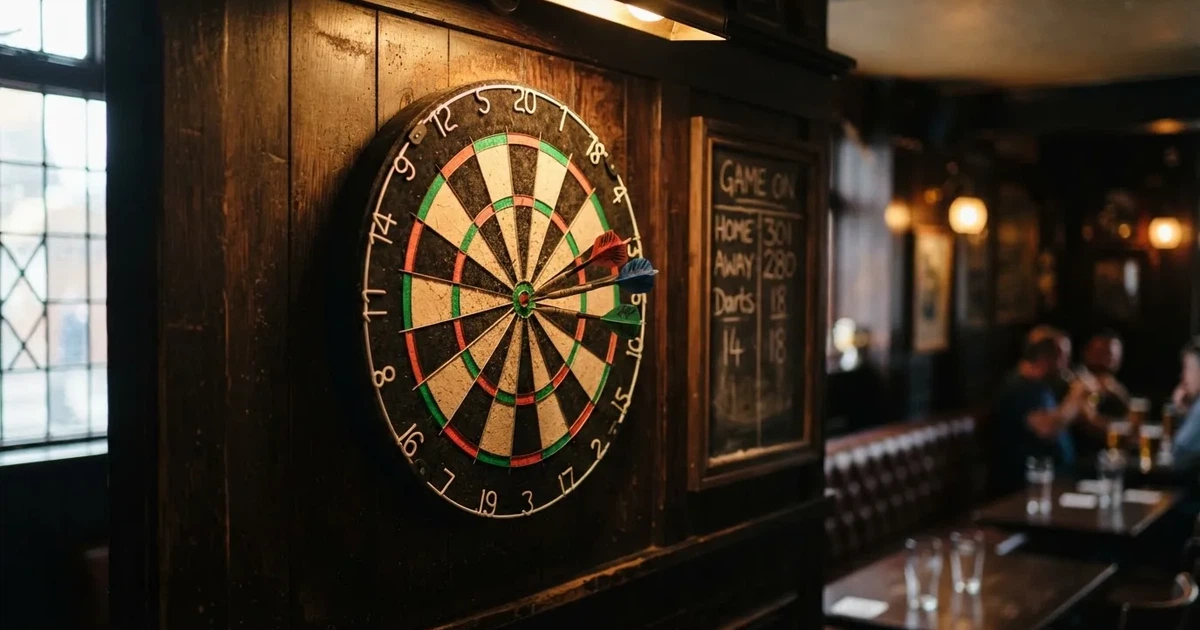
Darts is a small sport in betting terms and a strange one to price. A Premier League fixture lasts about an hour and a half; the PDC World Championship final stretches across two evenings at Alexandra Palace with a £5,000,000 prize fund and £1,000,000 to the winner. Between those two ends sit the online markets that licensed UK bookmakers run, and the reader’s job is to tell which of them is worth a stake and which one quietly takes more than it gives back. This guide covers what a darts bet actually is, how the odds are built, where the offers sit, and which UK-licensed bookmakers serve the sport well enough to be worth a look in 2026.
Responsible gambling and what the British licence buys you
Before any of the odds and markets, the licence. The Gambling Commission is the regulator for the whole commercial market in Great Britain under the Gambling Act 2005, and the Commission’s public register is the only test of who holds one. A remote general betting standard (real events) licence is what every bookmaker reviewed below runs under, and every one of them is part of GAMSTOP, the multi-operator self-exclusion scheme. That is the floor the regulator imposes on the licensed side, not on the offshore one, and it costs the customer something as well as buying them something.
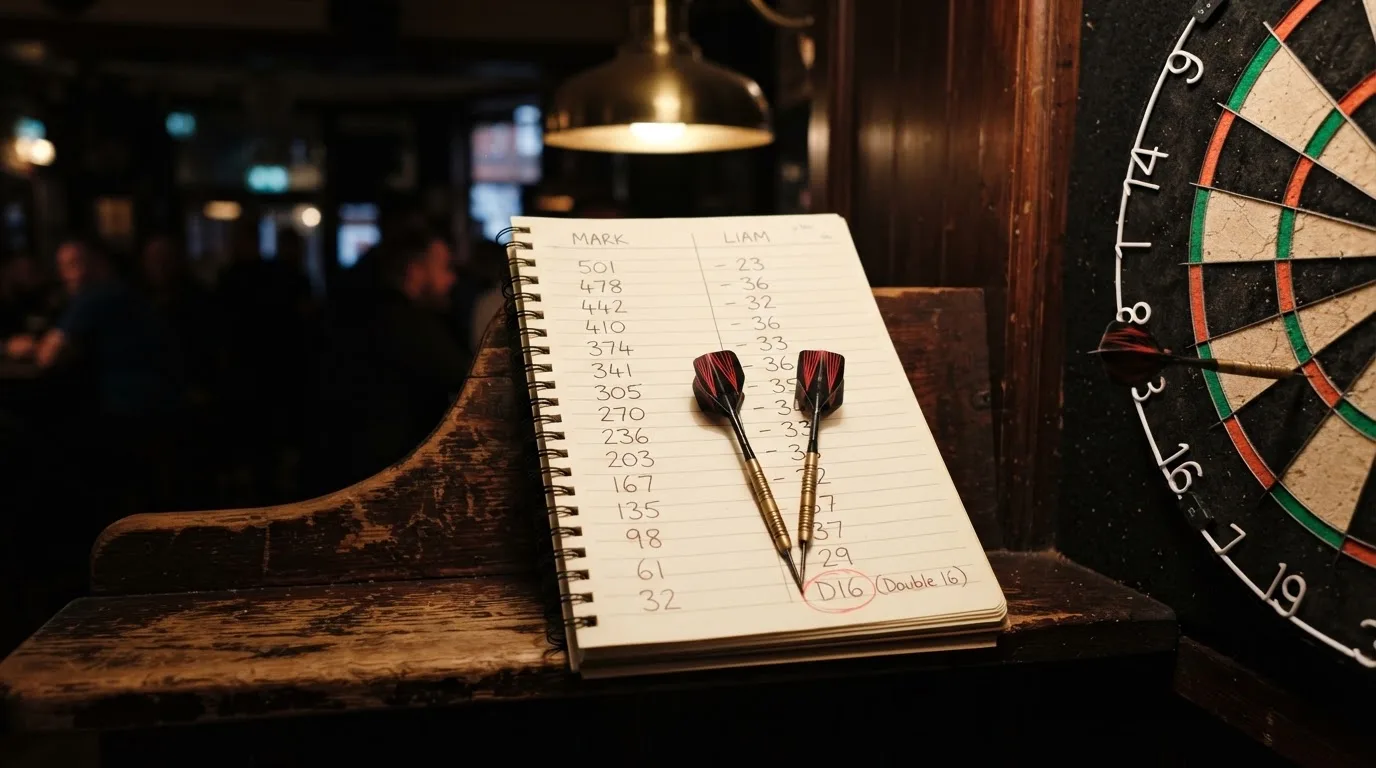
What it buys you is straightforward. Name, address and date of birth are verified before a customer can deposit or gamble, and that has been the rule since 7 May 2019 — free bets and bonuses are inside it. A financial vulnerability check fires when deposits minus withdrawals cross £150 in a rolling 30 days, and from 28 February 2025 it runs as a public-record check, not a credit reference check. A financial risk assessment sits further down the line, announced in a staged plan and with no start date, so a check of that kind cannot be quoted as live. Customer-set deposit limits are mandatory under Remote Technical Standard 12, with the first changes in place since 31 October 2025; a second phase was postponed to 30 September 2026 and whether it is live has not been established. Help is reachable through GamCare, the National Gambling Helpline, GambleAware and NHS gambling clinics.
What it costs the reader is mostly anonymity and ease of entry. A licensed site cannot take a deposit until identity is verified, so the no-registration, no-ID route that some search for sits firmly on the unlicensed side of the divide, where the protections above do not apply. Credit cards are banned for gambling in Great Britain since 14 April 2020, including credit-card-funded e-wallet payments; debit cards and bank transfers are unaffected. There is no statutory cap on stakes in sports betting, so the maximum the bookmaker accepts is its own ceiling and may be tightened on a per-customer basis.
The unlicensed alternative does not buy into GAMSTOP, the Commission’s complaints route, an approved alternative dispute resolution body, the 10x bonus wagering cap, or any British consumer redress if funds are withheld. That is the loss of protection, and it is what a customer who goes offshore is trading away — never the words “legal to use”, because a customer betting at an unlicensed site commits no offence under section 33 of the Gambling Act 2005; the offence is aimed at the operator providing them.
Bonuses, free bets and what they cost the bettor who claims them
Darts welcome offers are written the same way football and racing offers are written, because they are run by the same marketing teams and the same rulebook. The Gambling Commission’s promotion rules in force since 19 January 2026 cap wagering requirements on bonuses at 10x — a £10 bonus at 50x wagering would demand £500 of bets; under the cap it asks for no more than £100. Mixed-product promotions, an offer that requires gambling on two or more product types such as betting and casino, are banned. What the cap does not cover is a stake-not-returned free bet with no wagering condition, and what it does not set is any ceiling on the money value of a bonus. So a “£40 in free bets” headline still reads as the marketing intends, even after the rule takes hold.
Coral’s sports welcome offer, as the operator’s own terms state it, is “Get £40 in Free Bets when you bet £20”: a deposit and sports bet of £20 or more at minimum odds of 2.0 (1/1 fractional), with the £40 issued within 7 days and expiring 7 days after issue, for new GB customers who opt in. The headline spends the £20 stake in words the reader has to read carefully. The £40 is paid in free bet tokens, not withdrawable cash, and the stake is not paid back with winnings. The expiry, at seven days from issue, is tight by sportsbook standards: a reader who places the qualifying £20 in the back end of one weekend has until the following Friday to use the four tokens, and a token left untouched past day seven vanishes. Sky Bet’s free bets run a different clock. They expire 30 days after crediting, can be used only on single or each-way markets (not multiples, virtuals excluded), are non-withdrawable and the stake does not return with winnings. The longer window is the difference between a token that can sit while the bettor waits for a televised Premier League Darts night and one that has to be spent on the next televised night or not at all.
A free bet that does not return the stake is worth less than the headline number, and the gap is set by the odds it is spent at and the margin of the market it lands in. Worked out plainly: a £10 free bet at decimal odds 2.50, on a market that returns 96% on the favourites-and-tosses faces of the back end of one weekend (a 4% margin), yields on average £10 × (2.50 − 1) ÷ 2.50 × 0.96, which is about £5.76 of expected value. The bet that returns £25 on a stake that was never yours is the headline; the £5.76 is what the offer actually costs the bookmaker to honour, and it is also what the bettor actually wins. Higher odds improve the figure — a £10 free bet at 5.00 is worth roughly £7.68 at the same 96% payout share, because the larger denominator eats less of the return — but the spread between 5.76 and 7.68 is the difference between spending the free bet on a 6/4 favourite and spending it on a 4/1 outsider, and the odds the bookmaker quotes on the favourite are the odds the bookmaker would rather the reader took.
A “risk-free” bet refunded as a free bet is not a refund in money. The marketing phrase dresses a credit as cashback and the reader who reads the small print finds a token with a stake-not-returned clause and a deadline. Enhanced odds, price boosts and acca insurance work to the same pattern: the headline names the upside and the terms name the ceiling on what is paid out and what it is paid in. The recurring caveat is the minimum qualifying odds — most welcome offers require a minimum price of 1.50 or 2.00, and the qualifying bet is the bet the token is tied to, not the bet it is spent on. A reader who understands what a free bet is worth in expectation, and at what odds the token pays the most, takes more out of an offer than a reader who claims the headline and waits.
Live darts betting and the cash out question
Darts is one of the most playable sports in-play, and the reason is mechanical. A leg is short — a minimum possible leg is nine darts — and the score runs in discrete chunks as each visit to the board removes points. A bookmaker’s in-play screen can update between visits and offer prices on the outcome of the current leg, the match, the next set, or the next 180 checkout. The Premier League Darts format, with weekly evening fixtures running from February to May, gives a UK licensed bookmaker enough live events to populate an in-play lobby through the spring.
Live darts betting at a UK-licensed bookmaker offers a wider menu than a settled pre-match coupon. Match winner, set winner, next-leg winner, race to a set number of legs, total 180s in the match, highest checkout, player to hit the next 180, and player to win the next leg on a double are the standard lines. The margin on those in-play markets sits higher than the margin on the pre-match match winner, because the bookmaker is pricing an event whose state is known and whose end is near, and the cost of being wrong is paid in the next update. A reader who understands that the price on the next leg is built on the score and the thrower, not on a season form line, gets what an in-play market actually is.
Cash out is the feature that lets the reader lock in a price before the bet settles. A back bet on a player who is now winning the match can be cashed out at a reduced return; a back bet on a player who is now losing can be cashed out at a smaller return still, or at a loss if the swing has been heavy. Cash out is offered by several of the bookmakers reviewed below — 10bet, 888sport, Betfair and others list it as part of their app — and the price offered is the bookmaker’s own mid-market at the moment of the click, with the spread on the bet kept inside it. A bettor who uses cash out as a routine discipline is paying that spread on every leg of the bet’s life; a bettor who uses it as a one-off response to a specific piece of information (a player’s checkout wobble, a change of dart) sometimes pays nothing extra. The general principle is the same as it is for free bets: the feature is worth what it pays in net, and what it pays in net is a function of the price the bookmaker is offering.
Live streaming is a smaller feature with a larger effect. Betfair’s app offers free live streaming of events including UK and Irish horse racing and football; the darts product streams on selected bookmaker apps but not on all of them, and a reader who plans to bet in-play on Premier League Darts should check the app’s streaming schedule before the night starts. Streaming without in-play betting is a viewing product, not a betting one, and the streaming product rarely decides which bookmaker the reader uses — the in-play menu and the in-play margin are what decides it.
Predictions, form and what a darts tip actually is
A darts betting tip is a forecast, and the reader should treat it as one. No system can tell who will hit a 170 checkout under pressure, and a tipster who claims otherwise is selling a story, not a probability. What form can do is narrow the field, and what market prices do is price that narrowing in.
The form lines that matter in professional darts are recent — a player’s last eight to twelve months on the ProTour and the floor events — and head-to-head — how the two players in tonight’s matchup have played each other on similar stages. The PDC World Championship, the showcase at the top of the sport, is not the cleanest form guide for Premier League Darts, because the field at the Palace is wider than the field at the Arena. A reader who reads a “best darts bets today” page expecting Premier League form is reading the wrong page; a reader who treats a tip as one input among several, weighted by the form line behind it and the price the bookmaker is offering, is reading the page the way it was written.
Bankroll management is the discipline a tip cannot replace. The reader who stakes a fixed unit of one to two per cent of the bankroll on each selection survives a losing run; the reader who stakes to win back yesterday’s losses does not. The mathematics of a single darts match do not reward the chasing bettor, because the margin is built into every price and the chasing bettor pays that margin on every subsequent stake. The bettor who keeps the unit small and the selections few is the bettor still standing at the end of a Premier League season.
The temptation of an “acca” on four darts legs is the same temptation as in football: a 5/1 accumulator pays more than a sequence of singles, and a four-fold of short-priced favourites looks almost safe. The probability of all four landing is the product of the four probabilities, which is lower than any of them, and the bookmaker’s margin is multiplied into the price. A treble of three players priced at 1.25, 1.25 and 1.30 (5/4, 5/4 and 3/10) compounds to 2.03, while the true combined probability at a 5% margin would compound to about 2.16; the difference is the take. An acca is a price the bookmaker is glad to write, and a darts acca is no different from a football one.
Bet types and odds: how a darts price is built
The odds on a darts match are decimal in form across every UK licensed bookmaker and fractional in the writer’s habit, with the two converting by a/b → a ÷ b + 1. A price of 2.50 is 6/4, a price of 3.00 is 2/1, a price of 1.50 is 1/2. The British punter reads in fractions and the betting slip returns in decimals, and the conversion is a reader’s habit rather than a bookmaker’s choice.
A darts bet is a contract on the outcome of a defined event. A single is a single outcome, a treble (or “acca”) is three, a Trixie is four bets (three doubles and a treble), a Patent is seven, a Yankee is eleven and a Lucky 15 is fifteen. The total stake of a multiple-bet wager is the unit stake multiplied by the number of bets in the wager — a £1 Lucky 15 costs £15, a £1 Yankee costs £11. Each-way betting is two bets of equal stake: a win bet on the outcome and a place bet on the place terms, so an each-way £5 single is a £10 stake in total. Each-way is most often used in outright winner markets on tournaments, where the place terms vary by event and operator.
The bookmaker’s margin is what the bookmaker keeps of every unit bet on a market. Worked out on an illustrative two-way market at decimal odds 1.90 and 1.90 (9/10 in fractional form), the implied probabilities are 1 ÷ 1.90 = 52.63% on either side, summing to 105.26% — and the margin is the gap above 100%, which is 5.26%. The 100% mark is the break-even point at which the bookmaker pays out exactly what is staked and keeps nothing; the 5.26% is the slice the bookmaker keeps on this market, regardless of which outcome wins. A margin of around 5% is on the lower end for a pre-match darts match winner; in-play margins run higher because the cost of running a market that updates between darts visits is paid in the spread.
For the bettor, the margin is the cost of the ticket before a ball is thrown. A £10 single at 1.90 returns £19 if it wins, a £10 single at 2.50 returns £25, and the difference is the odds; the £10 stake and the £0.526 of margin on every £10 staked at 1.90 is paid whatever happens. The margin on a darts outright winner market — the World Championship, the Premier League — runs wider, often 10% or more, because the field is large and the probability of any one selection is small. A reader who wants the cheapest price on a market looks at the match winner first and the tournament winner second.
Handicap betting in darts is the equivalent of a spread: a player is given a leg or set advantage on the coupon, so a -1.5 handicap on a heavy favourite prices the favourite shorter and the outsider longer. The +1.5 outsider is the bet that wins if the outsider takes a set; the -1.5 favourite is the bet that wins only if the favourite takes a two-set lead. Handicap markets are how a bookmaker offers a price on a match that would otherwise be too short to back, and they are how a reader backs a favourite they expect to win comfortably without paying a 1/5 price.
Sports and tournaments: what darts a UK bookmaker covers
The PDC is the highest governing body in darts alongside the World Darts Federation, and the PDC World Championship is the showcase the fixture calendar turns around. Held annually over the Christmas and New Year period, the 2026 PDC World Darts Championship ran from 11 December 2025 to 3 January 2026 at Alexandra Palace, London, with 128 players in the field, up from 96 in earlier years. The format is the long one: rounds 1 and 2 first to 3 sets, rounds 3 and 4 first to 4, quarter-finals first to 5, semi-finals first to 6 and the final first to 7. Luke Littler beat Gian van Veen 7–1 in the final, on a £5,000,000 prize fund with £1,000,000 to the winner. The match winner market on the final would have priced Littler very short — he was a heavy favourite — and the correct-score markets on the final set would have priced a 7–1 outcome in single digits.
Premier League Darts runs weekly from February to May and is the in-play product the bookmakers feed on. Sixteen weeks of evening fixtures at UK and European arenas, a 16-player field that contracts to a four-player play-off, and a format of best-of-11-leg sets in the league stage and best-of-19 in the knockouts. Every licensed UK bookmaker carries Premier League Darts outright and match winner markets, and most carry in-play on every fixture.
The Grand Slam of Darts, the World Matchplay, the World Grand Prix and the Players Championship Finals sit alongside the Premier League as the floor events the bookmakers price in depth. The European Championship, the Grand Prix and the Masters complete the televised set. The ProTour runs underneath — 30 or so floor events across the calendar year, broadcast on PDC.TV and through bookmaker streaming partnerships, with most bookmakers offering match winner and outright markets on each event.
For the reader, the calendar shapes the betting menu. November through January is the World Championship window; February through May is the Premier League; June through November is the floor events. A reader who plans bets by the calendar — a small stake on the outright at the World Championship, weekly singles on the Premier League, ante-post positions on the Grand Slam in October — spreads the bankroll across the year’s competitive surface.
How the ten bookmakers compare on darts
The comparison below names every featured brand, listing the licence number on the Commission’s public register and the operator’s own published position on darts. The set is fixed, not a ranking; a place in the list is not a licence and not a recommendation. Where the licence holder is a parent group running several brands (LC International Limited runs Coral and others), that is stated once; the brands themselves are separate products with separate offerings and separate marketing.
| Operator | Gambling Commission remote licence | Licence holder | What the operator’s own terms state on darts |
|---|---|---|---|
| 10bet | 043173-R-322899-023 (account 43173) | Blue Star Planet Limited | Sportsbook covers football, tennis and horse racing, with Cash out, Bet Builder and Live Streaming; darts sits inside the wider sportsbook product alongside the other sports listed. |
| Sky Bet | 067370-R-341330-005 (account 67370) | SBG Sports Limited | Free bets expire 30 days after crediting, are usable only on single or each-way markets (multiples excluded, virtuals excluded), are non-withdrawable, and the stake does not return with winnings. |
| DragonBet | 064908-R-339041-003 (account 64908) | DragonBet Ltd | App features Welsh football and rugby markets, racing, American football, in-play betting and bet builder markets; darts coverage sits inside the wider in-play product. |
| 888sport | 039028-R-319297-014 (account 39028) | 888 UK Limited | Offers pre-match and in-play betting, Cash Out, Bet Builder, racing streams, BetFinder form tools, a live bet feed and daily boosted odds across the sportsbook, of which darts is one. |
| Fafabet | 057385-R-333191-006 (account 57385) | Taichi Tech Limited | Pays Best Odds Guaranteed on UK and Irish horse racing win and each-way bets from 9am on race days; darts coverage sits inside the wider sportsbook product alongside racing and other sports. |
| Star Sports | 009177-R-104555-019 (account 9177) | Star Racing Limited | Lets customers speak to a trader directly on 08000 521 321 to open an account, place bets or ask customer queries, with email support at [email protected]; sportsbook coverage extends to darts inside the phone-led service model. |
| Coral | 054743-R-330863-014 (account 54743) | LC International Limited | Sports welcome offer is “Get £40 in Free Bets when you bet £20”: a deposit and sports bet of £20 or more at minimum odds of 2.0 (1/1), with the £40 in free bets issued within 7 days and expiring 7 days after issue, for new GB customers who opt in. |
| Betfair | 039439-R-319330-013 (account 39439) | PPB Counterparty Services Limited | Offers in-play betting, Bet Builder, free live streaming of events such as UK and Irish horse racing and football within the app, and a 90 Minute Payout market; darts is one of the in-play sports on the app. |
| DAZN Bet | 048756-R-327274-019 (account 48756) | DZBT Limited | Deposits start at £5 by debit card, Apple Pay, Paysafecard, Trustly and Skrill, and at £20 by PayPal, with no processing fees; sportsbook coverage extends to darts inside the deposit-led product. |
| Kalooki Sportsbook | 057730-R-333396-005 (account 57730) | Kalooki Sportsbook Limited | Operated by Kalooki Sports Book Ltd (company number 12938274), licensed by the Gambling Commission under account number 57730, and is a GAMSTOP member; sportsbook coverage includes darts alongside other sports. |
The licence holder matters because several brands in the licensed UK market run under one corporate umbrella, and the same group operating several brands does not mean several independent operators. LC International Limited runs Coral and other brands; PPB Counterparty Services Limited runs Betfair. The Commission’s public register is searchable by business name, trading name, domain or account number, and the licence number is the link the reader uses to confirm the brand they are signing up with.
10bet
10bet’s UK sportsbook runs a wide menu of sports — football, tennis, horse racing among them — and the product features it markets around them: Cash out, Bet Builder and Live Streaming. Darts coverage sits inside that product rather than as a featured vertical, and the depth of the in-play lobby on Premier League Darts nights is the test of how seriously the brand takes the sport. The Blue Star Planet Limited licence is on the public register under account 43173, and the brand is part of GAMSTOP. For a bettor whose main interest is in darts but who also plays football and tennis, 10bet is a single-app product rather than a darts-specialist one; whether it fits depends on the consistency of its live odds updates.
Sky Bet
Sky Bet’s free bet terms are the headline of the brand’s offer: 30 days from crediting, singles and each-way only (no multiples, virtuals excluded), non-withdrawable, no stake return. The longer window relative to the seven-day token at Coral is the practical edge — a reader who plans to spend the free bets across a Premier League Darts night and a televised World Championship round has the time. SBG Sports Limited holds the licence under account 67370. The product sits inside the wider Sky Betting & Gaming family, and the in-play menu on darts runs to match winner, set winner and next-leg markets at the bigger events. A reader who values the longer free-bet clock and the singles-only rule (which keeps the offer inside the book’s preferred use case) gets the best of the brand.
DragonBet
DragonBet’s app features Welsh football and rugby markets, racing, American football, in-play betting and bet builder markets — a product built around a regional identity rather than a UK-wide generalist pitch. Darts coverage sits inside that product, and the depth at televised events is the question. DragonBet Ltd holds the licence under account 64908. The brand is part of GAMSTOP. The app is a tailored product for Welsh sports fans who also follow darts, though the depth of the market lobby during major events is worth verifying against the competition.
888sport
888sport offers pre-match and in-play betting, Cash Out, Bet Builder, racing streams, BetFinder form tools, a live bet feed and daily boosted odds across the sportsbook — the full-feature product of a generalist UK bookmaker. 888 UK Limited holds the licence under account 39028. Darts is one of the in-play sports on the app, and the daily boosted odds product is the route by which the brand puts a price on Premier League Darts fixtures at shorter odds than the match winner market. This is a comprehensive platform for the feature-heavy bettor, with the live streaming and boost cadence serving as the primary draws.
Fafabet
Fafabet pays Best Odds Guaranteed on UK and Irish horse racing win and each-way bets from 9am on race days — a feature that does not apply to darts but signals the brand’s race-led positioning. Taichi Tech Limited holds the licence under account 57385. Darts coverage sits inside the wider sportsbook product alongside racing and other sports, and the depth at televised events is the test. For a bettor whose primary interest is horse racing and who bets darts on Premier League nights as a secondary product, Fafabet is a sensible second-app option; for a darts-first bettor, the in-play product depth and the boost cadence are the questions to ask before signing up.
Star Sports
Star Sports’ distinguishing offer is the phone-led service: customers can speak to a trader directly on 08000 521 321 to open an account, place bets or ask customer queries, with email support at [email protected]. Star Racing Limited holds the licence under account 9177. The brand sits inside a smaller-operator category than the generalist apps reviewed above, and the service model is the differentiator. Darts coverage is part of the sportsbook product, and the trader-led service is a route for higher-stake customers who want a named contact. For a bettor who values a phone-led relationship and stakes at a level where the trader service pays for itself, Star Sports is one of the few UK-licensed options that runs that model; the trade-off is a smaller product surface and a thinner in-play lobby than the generalist apps.
Coral
Coral’s sports welcome offer is “Get £40 in Free Bets when you bet £20” at minimum odds of 2.0 (1/1), with the £40 issued within 7 days and expiring 7 days after issue. The £40 is the headline; the qualifying £20 at minimum odds is the cost, and the 7-day expiry on each token is tight. LC International Limited holds the licence under account 54743 and the licence categories include remote general betting standard (real events) and remote betting intermediary. The brand is part of the wider Entain group, and the in-play product on darts sits inside the same app that runs the football and racing verticals. Choosing Coral gets the £40 headline, but the seven-day window requires a disciplined betting schedule.
Betfair
Betfair runs the betting exchange and the sportsbook side by side. PPB Counterparty Services Limited holds the licence under account 39439. The sportsbook offers in-play betting, Bet Builder, free live streaming of events such as UK and Irish horse racing and football within the app, and a 90 Minute Payout market — the 90 Minute Payout is a football product and does not apply to darts. Darts is one of the in-play sports on the app, and the exchange runs alongside the sportsbook with back and lay prices on the major events. The combination of exchange liquidity and sportsbook functionality makes this a distinct choice for the strategist who wants to hedge positions.
DAZN Bet
DAZN Bet’s distinguishing offer is the deposit surface: £5 by debit card, Apple Pay, Paysafecard, Trustly and Skrill, and £20 by PayPal, with no processing fees. DZBT Limited holds the licence under account 48756. Darts coverage sits inside the wider sportsbook product, and the depth at televised events is the test. Accessing the sportsbook requires a minimum deposit of £5, making it a viable entry point for casual punters who want a light-touch betting experience.
Kalooki Sportsbook
Kalooki Sportsbook is operated by Kalooki Sports Book Ltd (company number 12938274), licensed by the Gambling Commission under account number 57730, and is a GAMSTOP member. The brand is part of the licensed UK market, and the sportsbook product covers darts alongside other sports. For a bettor who values the licence and the GAMSTOP membership and is comfortable with the depth of the smaller-operator product, Kalooki Sportsbook is a UK-licensed option; the trade-off is the depth of the in-play product at the televised nights relative to the generalist apps.
What online darts betting actually is
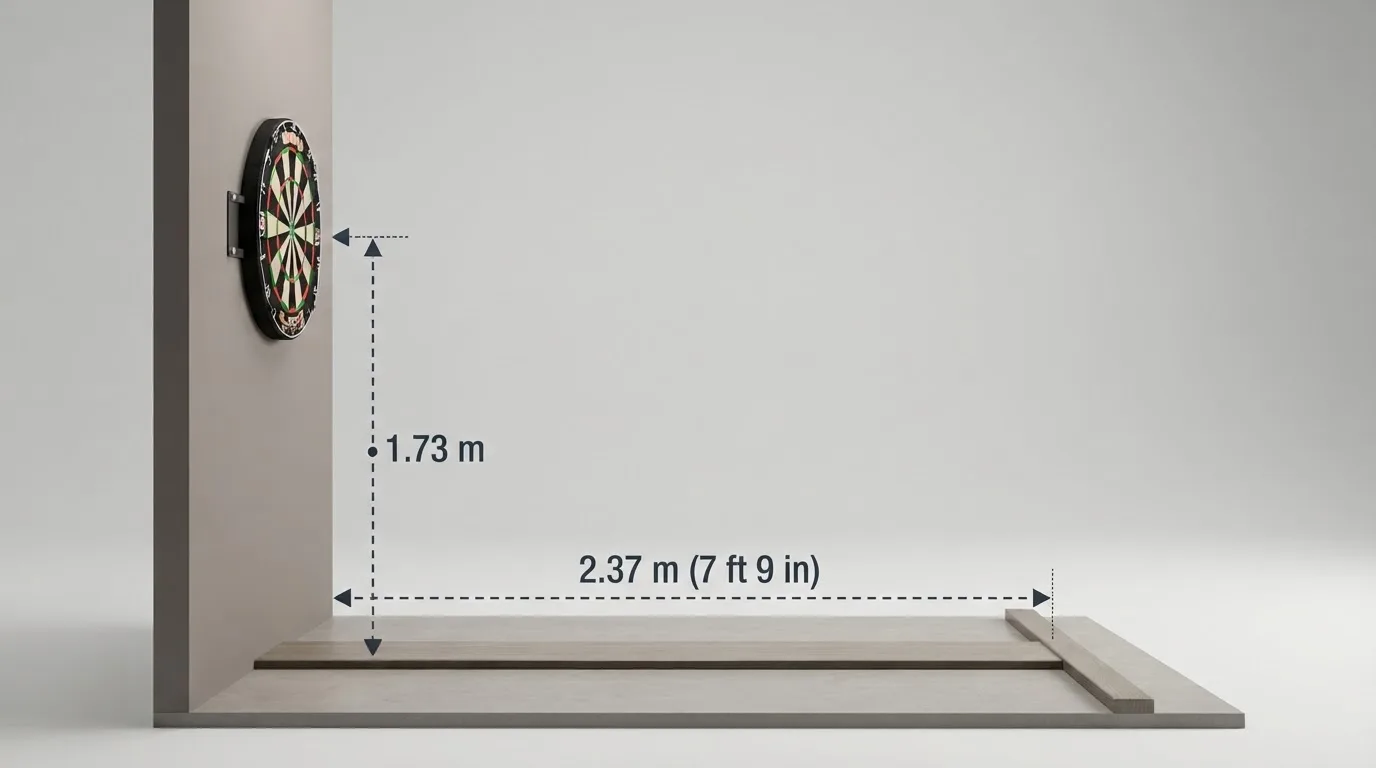
A darts bet is a contract on the outcome of a defined event — a leg, a set, a match, a tournament. The standard game in professional darts is 501: a player starts at 501 points and must finish on a double or the bullseye, which is worth 50, or the outer bull, which is worth 25. The minimum possible leg is nine darts — the highest possible three-dart finish is 170, which is treble 20, treble 20 and bullseye — and the standard dartboard has 20 numbered segments in a pie shape, each with single, double and treble areas. The board sits 1.73 m above the floor and the throw line is 2.37 m back. None of that is on the betting slip; all of it is on the page because the structure of the game is the structure of the markets the bookmaker prices.
A darts betting site is a UK-licensed bookmaker that runs markets on professional darts events. The bookmaker carries the PDC World Championship, the Premier League Darts, the World Matchplay, the Grand Slam, the European Championship and the floor events of the ProTour, with depth at the televised events and a thinner product at the floor-only events. The bookmaker’s margin on the match winner market is built into the price on both sides, and the spread between the two sides is the bookmaker’s overround — the gap above 100% that is the bookmaker’s slice.
A darts betting app is the mobile version of the betting site, and the UK licensed bookmakers reviewed above all run apps. The app carries the in-play menu, the bet builder, the Cash Out, the streaming product and the deposit surface, and the app is the product a UK licensed bookmaker sells to the bettor who bets on Premier League Darts from the sofa. A darts betting app and a darts betting site are the same product; the difference is whether the bettor opens it on a phone or a desktop.
Legality, regulation and the offshore alternative
A bookmaker serving customers in Great Britain needs a Gambling Commission licence wherever it is based, and that has been the rule since the Gambling (Licensing and Advertising) Act 2014. A Curaçao, Maltese or Gibraltar licence is not a substitute. The Commission’s public register can be searched by business name, trading name, domain or account number, and the licence number is the test. Licensed operators use .com as well as .co.uk, so the domain proves nothing.
In-play betting at a UK licensed bookmaker is offered under the operator’s own licence conditions and the customer-protection duties those conditions impose; it is not “unrestricted” in the legal sense, and the controls are the operator’s. Esports are treated like any other event; virtual events are a separate licence category. Bets on politics, TV shows and novelty markets are offered by GB bookmakers and no statutory prohibition was found. There is no state-set deposit or loss ceiling for betting: limits are the customer’s choice.
The unlicensed alternative offers none of those protections. No GAMSTOP coverage, no Commission complaints route, no approved alternative dispute resolution body, no British consumer redress if funds are withheld, no 10x bonus wagering cap, no financial vulnerability check. That is the loss of protection, and it is what the customer who bets offshore is trading away. The Commission enforces against the operator — cease-and-desist notices, search-engine referrals, work with registrars and hosts — and court-order DNS blocking powers are at the edge of being granted. A customer who bets at an unlicensed site commits no offence under section 33 of the Gambling Act 2005; the offence is aimed at the operator providing the facilities.
Northern Ireland sits outside the Gambling Act 2005 and has its own older law, so a “GB-licensed” brand does not regulate Northern Ireland in the same way. A reader in Northern Ireland should check the local position before signing up.
Frequently asked questions
How do you bet on darts?
Pick a UK-licensed bookmaker, sign up, verify your identity (name, address and date of birth — required before a first deposit at any licensed site), deposit by debit card or bank transfer (credit cards are banned for gambling in Great Britain), open the darts tab, pick a market — match winner, set winner, next-leg winner, outright tournament winner — and place the bet. The bet settles when the event settles, and the return (stake plus winnings at decimal odds) is paid into the account if it wins.
What is darts betting?
A darts bet is a contract on the outcome of a defined event in professional darts — a leg, a set, a match, or a tournament. The standard game is 501, where the player starts at 501 and must finish on a double or the bullseye, and the markets mirror the structure of the game. UK licensed bookmakers run darts markets on the PDC World Championship, Premier League Darts, the World Matchplay, the Grand Slam and the floor events.
How does darts handicap betting work?
Handicap betting in darts gives one player a leg or set advantage on the coupon — a -1.5 favourite has to win by two clear sets, a +1.5 outsider wins if it takes a set. Handicap markets are how a bookmaker offers a price on a heavy favourite at longer odds than the match winner market, and how a reader backs a heavy favourite without paying a 1/5 price.
How can it be checked that a bookmaker holds a Gambling Commission licence?
Search the Commission’s public register by business name, trading name, domain or account number. The register lists the licence holder, the licence number, the licence categories and the trading names under the licence. A licence number in the form 0XXXXX-R-XXXXXX-XXX is a remote licence; the “R” is for remote, and the first five digits are the account number.
How is the return on a bet worked out from the stake and the odds?
The return on a winning single is stake × decimal odds. A £10 single at 2.50 returns £25, and the net profit is £15 (the £25 return minus the £10 stake). For a combination bet, the odds of the legs multiply into one price: a treble of 2.00, 3.00 and 4.00 compounds to 24.00, and a £10 treble returns £240. Stake-not-returned free bets do not include the stake in the return, so a £10 free bet at 2.50 returns £15 net of stake, not £25.
What is the bookmaker’s margin and how can it be seen in the odds?
The margin is what the bookmaker keeps of every unit bet on a market, and it sits inside the prices on both sides. Worked on an illustrative two-way market at decimal odds 1.90 and 1.90, the implied probabilities sum to 105.26% (1 ÷ 1.90 on either side), and the margin is the 5.26% gap above 100%. The same gap appears as a 5.26% take on every unit bet on the market, regardless of which outcome wins. As a band, pre-match darts match winner margins typically sit between 4% and 6%; in-play margins run higher, often 6% to 10%, because the bookmaker is pricing an event whose state is known.
Tennis, darts & cue sports – Fast Payout
Content created by the «Fast Payout» team
