
Betting on chess online in 2026: where the lines are, who sets them, and what a stake pays back
 Available in US
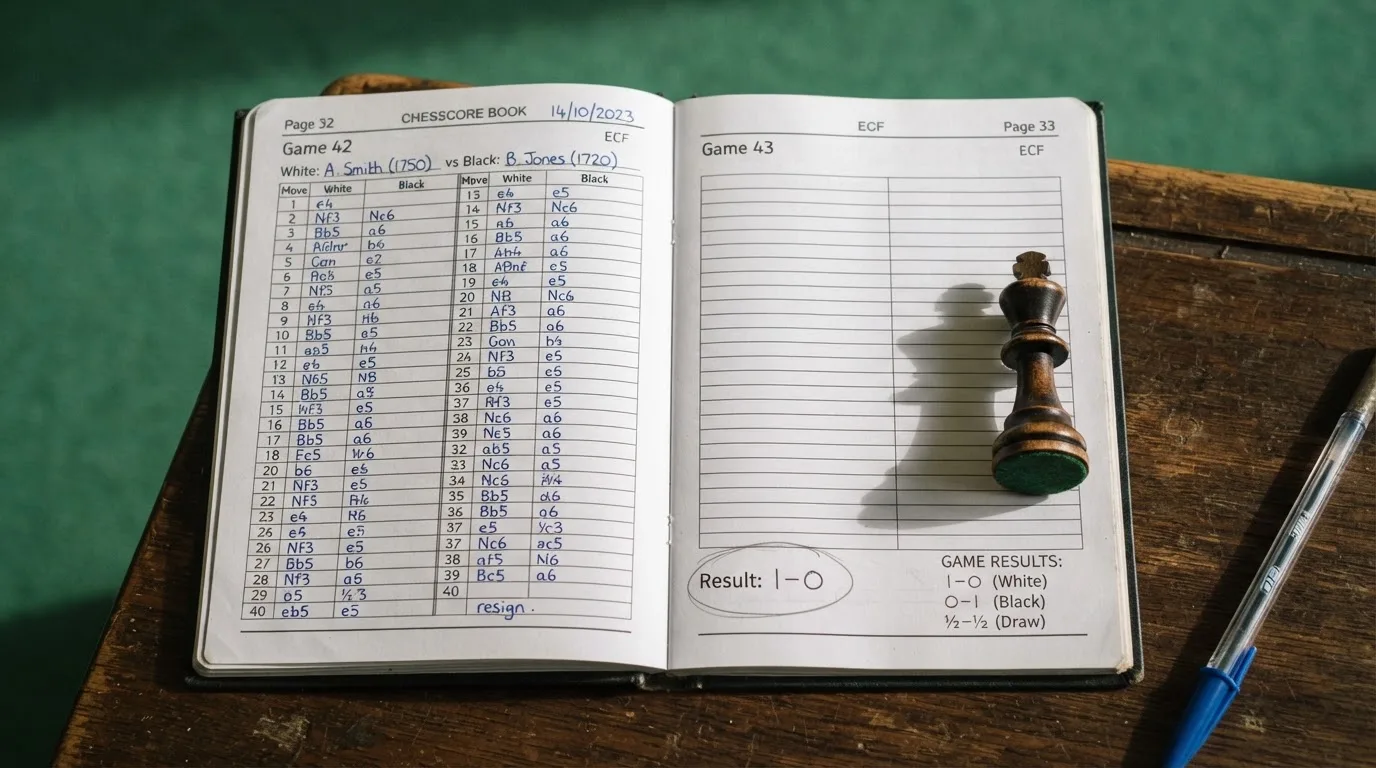
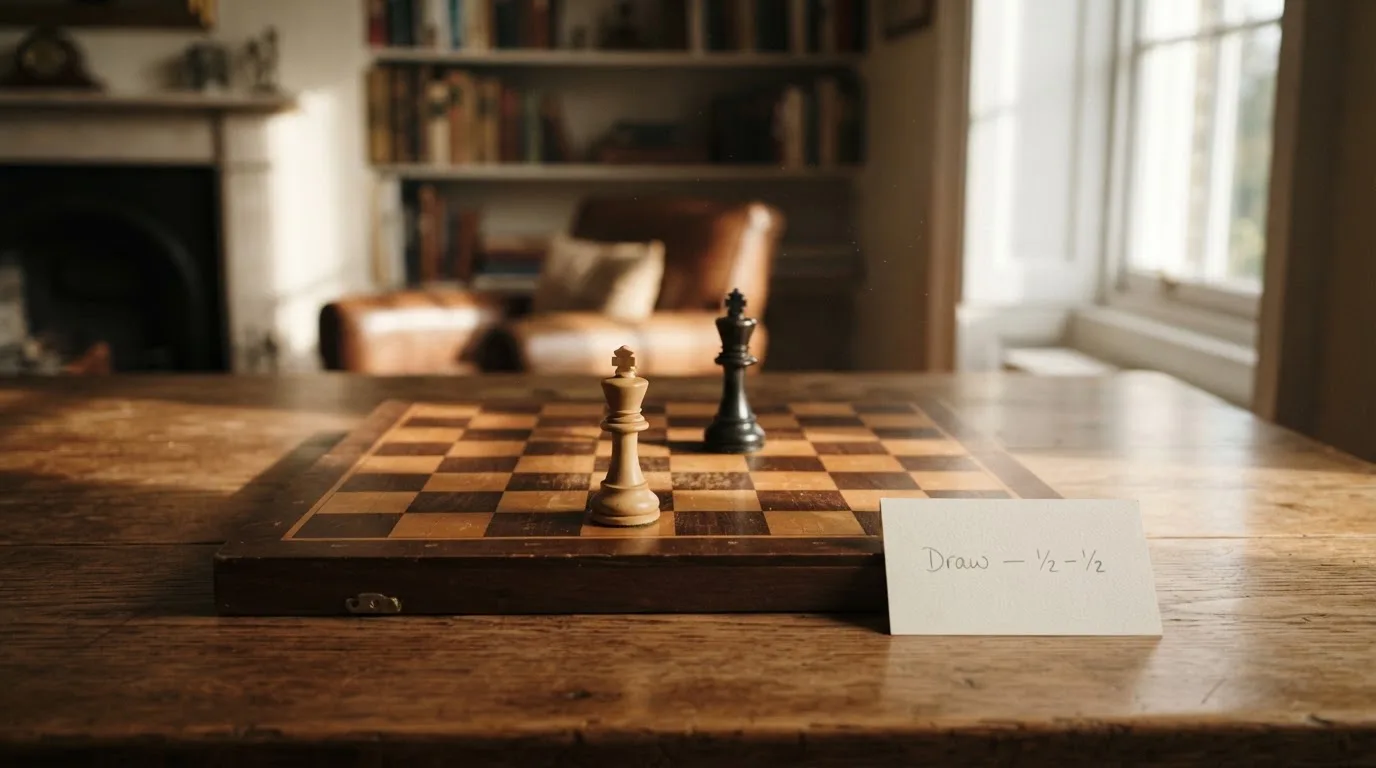
A chess game ends in three ways: a win for White, recorded as 1–0; a win for Black, recorded as 0–1; or a draw, recorded as ½–½. That is the entire vocabulary a bookmaker needs to build a market from, and from those three results the rest of the page follows. The pieces in between – the openings, the middlegame tactics, the slow grinding endgames – are why people watch. They are not what gets priced.

Chess is a niche in the British sportsbook. Most of the ten brands reviewed in the ‘The Top 10 chess bookmakers reviewed’ section list it under “Other Sports” or alongside darts and snooker, not at the top of the navigation. Where the markets exist they look much like any other two-player sport: match winner, often with the draw quoted as a third line, tournament outright, sometimes a handicap on the board’s colour or on the number of moves. The bookmaker’s margin sits inside every line, and on chess it tends to run higher than on Premier League football because the liquidity is thinner. That is the shape of the subject, and the rest of the page is the detail of it.
Data current as of 27 October 2026, verified against the Gambling Commission’s public register of remote operating licences.
What safer gambling means in practice on a chess site
The first thing a licensed bookmaker checks is not the stake. Since 7 May 2019 every GB-licensed operator verifies name, address and date of birth before a customer can deposit or place a bet, and the check covers free bets and bonuses as well as cash play. That is the practical shape of the rule most readers meet as “no anonymous gambling”: the deposit button only appears after the operator has confirmed who you are. The rest of the safer-gambling stack sits on top of that.
GAMSTOP is the national online self-exclusion scheme and every operator reviewed here belongs to it. A customer who signs up to GAMSTOP is blocked from every GB-licensed online operator for the period chosen: six months, one year, five years, or five years with auto-renewal. After the minimum period the exclusion stays in place for a further seven years unless the customer asks to be removed. The scheme covers online sites and apps; the betting shop has its own separate service. There is no opt-out by brand: registering with GAMSTOP means giving up every licensed site at once.
Three newer controls sit alongside GAMSTOP and matter more for higher-spending customers. A financial vulnerability check applies once deposits minus withdrawals cross £150 in any rolling 30 days; it looks at public records such as county court judgments and bankruptcy, not at income. A financial risk assessment, the press’s “affordability check”, has been announced in a staged plan but had no confirmed start date at the time of writing and is not yet in force. A deposit-limit requirement obliges operators to offer a customer-set gross deposit limit on a fixed time-frame; the first changes have applied since October 2025, a second phase is planned for 30 September 2026 and whether it is now live is not established. None of these is a state-set maximum stake: there is no statutory cap on what a customer can bet, and limits remain the customer’s own choice.
Help is independent of the operator. GamCare runs the National Gambling Helpline; GambleAware funds treatment and research; the NHS operates gambling clinics across Great Britain; Gamblers Anonymous runs peer-support meetings. The reviewed brands publish links to these services in their safer-gambling pages. Listing them on a wagering site is a licence condition, not a marketing choice, and the links are how a customer reaches the help that does not have a stake in the bet.
Mobile chess betting on a phone
Two routes exist for placing a chess bet on a handset in 2026: a native app from the App Store or Google Play, and the operator’s mobile site in a phone browser. Both reach the same wallet, the same licence and the same safer-gambling controls. The differences are practical and small.
bet365’s iOS app is the most-downloaded sports betting app in the United Kingdom and carries the operator’s full pre-match and in-play service, bet builders, live streaming and bet tracking onto a handset. Unibet’s app, run by Platinum Gaming Limited out of Gibraltar, lists its operator as established in 1999 and uses the same login as the desktop site. Betfred’s app, published by Done Brothers (Cash Betting) Ltd, spreads twenty-one sports plus over 2,000 casino games and accepts deposits as small as a few pounds. Midnite’s iOS app shows live in-play, an acca builder, popular accas and price-boost cards with maximum-stake limits printed in the offer terms. 10bet’s app covers football, tennis and horse racing with Cash Out, Bet Builder and live streaming built in.
A second tier of brands runs a smaller app. BetMGM, NetBet and Sky Bet each publish an iOS app with a sportsbook and a casino in the same shell; BetGoodwin’s app pairs racing with a sportsbook; Tote’s app is built around pool betting; Lottoland combines casino, lottery and a sportsbook in one. On Android, the distribution picture differs from iOS: Google Play restricts gambling apps in several jurisdictions and many of these operators reach British Android users through the mobile site rather than a Play Store install. The end result is the same: a browser tab on the home screen, the same markets, the same wallet.
Three practical details decide which route a reader picks. First, fingerprint and face login: native apps use the handset’s biometrics, the browser relies on a password manager. Second, push alerts for in-play moves or odds changes: those need an app install. Third, live streaming: where a match is streamed, the app is usually the route offered. None of these is a reason to choose one brand over another. The reason to choose one brand over another is whether it has the chess market you want at a price you accept.
The wider choice of chess bookmaker apps also includes brands not in the reviewed ten. A native iOS install often surfaces brands the desktop site does not promote in the same way; an Android user without a Play Store install reaches the same brand through the browser. The point is coverage, not the route.
Live betting on chess and the question of cash out
A chess game is unusually well-suited to live betting for one reason: it has a clock. Time control is what turns a quiet position into a moment a punt can be made on. A player low on time in a complex endgame, a rook sacrifice that turns out to lose a piece three moves later, an exchange blunder that crumbles a passed pawn structure – each one is observable in real time and each one shifts the odds.
GB bookmakers that carry chess live betting price it in segments. A handful of brands update the line after each completed game of a match, and a smaller handful update it move by move through a live data feed. The second group is small, because move-by-move pricing needs a tradable data feed and a margin that absorbs re-pricing, and most chess books price only by completed games of the match or by overall match progress. Where live betting is offered, the in-play menu typically sits under the same heading as the pre-match menu on the desktop site and as a tab on the live-betting app.
Cash Out is the bookmaker’s mechanism for closing a bet before the match finishes. The price offered at any point is the bookmaker’s own estimate of what the bet is worth given the current position; it is not the same as the price the same selection could have been backed at on the betting exchange, and it is usually worse. A customer who uses Cash Out locks in a smaller guaranteed return rather than waiting for the result and risking the stake. The bookmaker offering the feature keeps the difference between the Cash Out price and the backer’s edge, and the edge widens as the position gets murkier.
bet365 offers in-play betting and live streaming across many sports, plus Bet Track, Match Live and a Live Golf Tracker for following bets in play. 10bet, BetMGM, NetBet and Unibet offer Cash Out on at least some of their markets. Whether Cash Out is available on a specific chess market at a specific moment is a per-match per-brand call: a feature in the operator’s standard offer is not a guarantee it is lit on every market.
The practical shape of live chess betting is simple. The market exists; the volume is small; the price moves only when the data feed moves; and Cash Out is a tool that pays for the convenience of not waiting by taking a slice off what the bet is worth. The slow grinds that chess is famous for mean many of those positions never reach a “moment” at all.
Reading predictions and finding an edge
There is no statutory list of permitted chess betting markets in Great Britain. The bookmaker offers whatever the bookmaker offers, and the bookmaker’s own rulebook settles the rest. That is also the reason the predictions market for chess is unlike football or horse racing: the field of professional chess tipsters is small and the dedicated analytics sites are fewer.
The material a chess bettor reads is broader than the tipsters. Engines stockfish and Leela run above human strength and publish free evaluations move by move; FIDE publishes the official ratings list and the results database; broadcast games on chess24 and on Lichess carry live move-by-move coverage with engine bars. A “tip” from a human is most often a paraphrase of an engine line. The genuinely useful piece of context is the format. A classical game with long time controls drifts towards draws; a rapid or blitz game drifts towards decisive results. The market on a classical Candidates match carries a long-tail draw probability; the market on a blitz exhibition does not.
The second useful context is form. A super-grandmaster rated 2,800 who has lost six games in a row is not the same proposition as one rated 2,800 on a winning run, even at the same Elo. Elo is the baseline; recent form is the overlay. A small number of dedicated chess tipping services publish pre-match analysis for the bigger events – World Championship cycles, the Candidates, the Grand Chess Tour – but for ordinary titled events the analysis is in the broadcast feed rather than in a tipster’s column.
Where the prediction market is small, it tends to be sharper. Less public money, fewer copycats, more chance that a price is wrong in a way a serious follower can spot. That is the other reason the niche rewards preparation: the lines are softer than football’s, but the volume is lower too, so an edge turns into a small bet at a small book that may not let it grow.
For all that, no analysis is a forecast of who wins. The strong favourite can lose to a blunder; the outsider who plays well can hold a draw. The reader who treats analysis as a forecast of an outcome misunderstands what analysis is for, and the page that pretended otherwise would not be worth reading.
What kind of bet a chess market takes
The bet types chess carries follow the bet types a bookmaker carries on any other sport. The interesting detail is which ones are routine on chess and which are the exception.
A single is one selection, one stake, settled on one result. Win the match, lose the stake. The bread and butter of every bookmaker that takes the sport.
An outright is a bet on the tournament winner before the tournament starts, settled when the last game ends. The stake runs through every round and the price reflects the field: a short favourite in a small field, a long tail of outsiders at large odds. Ante-post rules apply in full, including non-runner deductions if a player withdraws after the bet is placed.
A match-result bet covers a single head-to-head game or a multi-game match. The three results are White win, Black win, or draw. The draw carries weight in chess and most chess match-result markets price it as a third line rather than treating it as a handicap. Some bookmakers quote the draw as a separate column; others offer a two-way line with the draw settled as a loss on both sides; a small number offer a handicap on games won.
An accumulator (“acca”) links several selections and settles only if all win. The odds multiply: three selections at 3.00 each produce a combined price of 27.00. William Hill’s Football Acca Boost covers accas of two legs or more with each selection at 1/5 or bigger, with a boost that scales from 3% on a double up to 200% on twenty legs or more, capped at £10,000 per online bet and running until 30 May 2027. The same mechanics apply on other sports, including chess: a Wimbledon-style acca of chess outrights is a real product, though a niche one.
An each-way bet is two equal stakes: one on the selection to win, one on the selection to place. The “place” terms vary by event and by bookmaker, and on chess they are uncommon because chess field sizes are small and the place terms rarely make sense. A tournament each-way is more often an outright market than a half-stake, half-stake split.
The bookmaker’s margin sits inside every line. A 1X2 market on a chess match quoted at 1.90 / 3.40 / 4.50 carries an overround the reader can compute from the three odds; the section on margin below shows how. The headline price is not the same thing as the value of the bet, and on chess that gap tends to be wider than on mass-market sports.
Live odds do not require a separate category of bet. The bet types are the same; the price changes between the time of placement and settlement. What changes is the price-discovery process, and the section above covered it.
Chess tournaments bookmakers take bets on
A chess game is played on an 8×8 board of 64 squares, with each player controlling 16 pieces. From that board comes every market chess bookmakers offer. The events that carry the most lines are the ones with the deepest bookmaker coverage: the World Championship cycle, the Candidates, the Grand Chess Tour, the national opens, and the rapid and blitz championships.
The World Chess Championship is the headline event. Wilhelm Steinitz claimed the first universally recognised title in 1886, and the modern championship is a long match between the reigning champion and a challenger who qualified through the Candidates. Gukesh Dommaraju won the title in 2024. The match is classical time-control and the draw rate is high: an even matchup between two super-grandmasters often settles on tiebreaks. The match-result market typically carries the longest draw price, and the outright for the next World Champion carries the most liquidity.
The Candidates Tournament is the eight-player qualifier for the World Championship match. Two groups of four play a double round-robin, the top two advance to a final, and the winner of the final plays the World Champion. The Candidates carries the same high-draw classical format and the market shape is similar: favourite and a tail of outsiders at modest prices, with a draw market on individual rounds.
The Grand Chess Tour is a series of elite rapid and classical events across a calendar year. Each leg has its own outright and match markets and the tour carries an overall standings market. Rapid sections move the draw rate lower and the decisive-result rate higher than classical chess; the market price reflects that.
The major opens – the Tata Steel Masters, the Norway Chess tournament, the Sinquefield Cup, the London Chess Classic – each carry outright and per-round markets. Coverage varies by bookmaker: a brand with a dedicated chess feed lists all of them, a brand treating chess as a niche lists only the headline matches.
Online events run by chess24 and by Lichess carry their own markets. The Speed Chess Championship is a rapid-and-blitz knockout with short time controls and a high decisive-result rate. The Champions Chess Tour runs year-round online. Both settle faster than classical chess and both tend to carry live markets on a smaller scale.
The market depth varies with the event. A World Championship match carries pre-match outrights and per-game markets at every major bookmaker. A local club championship carries nothing. A useful rule: the bigger the event, the more lines, and the less patience the bookmaker has with thin liquidity. Where the lines thin out, so do the prices the bookmaker is willing to lay.
A worked example of margin and payout from a chess line
The bookmaker’s margin is the slice of every pound staked that the book keeps on average across all outcomes of a market. It is what is left after the published prices are turned into a true probability. The payout share is its mirror: what is returned to bettors in the long run.
Take an illustrative two-way match between two evenly rated players, priced at decimal odds 1.90 and 1.90 (9/10 in fractional form). The payout share from those two prices is 1 ÷ (1/1.90 + 1/1.90), which works out to 0.950 – the book returns 95 pence of every pound staked across both outcomes over many bets. The margin is 1 – 0.95, or 5%. That 5% is the price the bettor pays for the bookmaker taking the bet.
Now stretch the same arithmetic to a three-way chess match with the draw quoted at, say, 3.40. The payout share of 1.90 / 3.40 / 4.50 is 1 ÷ (1/1.90 + 1/3.40 + 1/4.50). Add the three reciprocals and the total comes to 0.526 + 0.294 + 0.222, or about 1.042. The payout share is 1 ÷ 1.042 ≈ 0.960, and the margin is around 4.0%. That is a typical margin for a major three-way football market; chess markets that pull more volume settle near the same band, and chess markets with thinner liquidity run wider.
What that 5% (or 4%, or 7%, depending on the market) means for a single bet is the wrong question to ask of the margin. The margin is a property of the whole market, not of any one selection. A bet at 1.90 either wins and pays 1.90 times the stake, or loses and pays nothing. The 5% is what the bookmaker keeps out of all the action on both sides combined, averaged across many bets. A reader who wants to know what their bet costs uses the odds and the probability they assign to each outcome, not the margin.
State the result as a band, not a point. Two-way markets on mainstream events tend to settle in the 4-6% margin band; three-way markets with the draw quoted broadly sit in the 4-7% band; thinner markets – chess outrights, niche outrights on a speed-chess event – commonly run higher. The headline price on the screen is the price on the screen; the value of the bet depends on what the bettor thinks the selection’s true probability is, not on the margin alone. Where research carries no exact figure for a specific chess event at a specific bookmaker, the point is qualitative: thinner chess markets tend to carry wider margins than the equivalent mass-market sports markets. A reader who wants the exact margin reads it off the price ladder on the operator’s site before placing the bet.
How to check a bookmaker holds a Gambling Commission licence
Every operator in the reviewed ten below holds a remote operating licence from the Gambling Commission. The Commission’s public register is the only test of whether that licence is current, and the register can be searched by business name, trading name, domain or account number.
The register lists each licensee with the licence number, the licence holder’s company name, the trading names authorised under the licence, the activities covered (remote general betting standard – real events, remote general betting standard – virtual events, pool betting, betting intermediary), and the dates the licence has been in force. The account number on the register is the same account number the operator prints in its own terms. If the two match and the licence status reads “active”, the operator is properly licensed for the activities listed.
Several brands can run under a single licensee. Ladbrokes and Coral run under one; Paddy Power and Betfair run under another. They are not independent operators for licensing purposes, and the register shows the relationship. A “two brand” presence is one licence.
GB-licensed operators use both .com and .co.uk domains. The domain alone proves nothing either way, and the .com form is not a flag. The test is the register.
The register carries every licensed operator, far more than the reviewed ten. The reviewed set is the operator list this page ranked; the register is the universe. Reading the register before placing a bet is the safer check than reading this page.
A second check is GAMSTOP. Every operator reviewed here is a GAMSTOP member. GAMSTOP membership is a mandatory licence condition for online operators and a brand on the register is, by virtue of that, in the GAMSTOP scheme; an operator on the register but not in GAMSTOP would be in breach of its licence. The presence of a brand on the GAMSTOP list is a secondary confirmation.
What a stake pays back on a win
The arithmetic of a single bet is the same in chess as in any other sport. The stake is the amount risked; the decimal odds are the multiplier; the return is the stake plus the winnings; the profit is everything above the stake. A £10 stake at decimal odds of 2.50 returns £25 (£10 profit), and at decimal odds of 1.50 returns £15 (£5 profit). The bookmaker keeps the stake on a losing bet; it returns the stake plus winnings on a winning bet.
A combination bet multiplies the prices of its legs into one number. A double at 3.00 and 4.00 has a combined price of 12.00; a £10 stake returns £120 on a winner and zero on any losing leg. Every leg has to win. The whole point of an accumulator is the long-shot multiplier; the whole risk is that a single weak leg voids the bet.
Three qualifications matter. First, fractional odds. British bookmakers print fractional odds by default and the conversion to decimal is a ÷ b + 1; a price shown as 5/2 is decimal 3.50. Second, each-way. An each-way bet is two bets of equal stake, so a £10 each-way at 5/1 is £20 staked; the “win” leg pays at 5/1 and the “place” leg pays at a fraction set by the bookmaker (often 1/4 or 1/5 of the win odds for place terms of 1/4 the field or 1/5 the field). Chess each-way is uncommon. Third, withdrawals. The book returns the stake with winnings on a cash bet; on a free bet the stake is usually not returned, which makes the price lower than it looks.
The arithmetic is not the value of the bet. A £10 stake at 1.90 returns £19 on a win and the bettor’s edge depends on the probability of winning at 1.90. That is where analysis, research and the section above on predictions come in.
The Top 10 chess bookmakers reviewed
The ten operators below were reviewed against their licence, their product on chess, the safer-gambling and payment terms each prints in its own terms page, and the practical shape of using the brand on a phone. None of them is “the only” licensed brand; the Commission’s public register lists thousands. What this list does is rank the reviewed ten on the criteria readers named in research: which markets each carries for chess, how the in-play menu sits, how the safer-gambling and payment terms read, and what the welcome offer amounts to in pounds and pence.
1. Midnite
Midnite runs under Gambling Commission account 101839, with Midnite Limited as licence holder and a remote general betting standard (real events) licence. The site lists live in-play, an acca builder, popular accas and price boosts with maximum-stake limits printed on each card. The brand’s offer to new customers is a £5-or-more qualifying bet at minimum odds of EVS (2.0) within fourteen days of sign-up, returning £25 in free bets plus 50 free spins, with the free bets valid for seven days. The acca builder is the in-house route into pre-made and custom combinations; price boosts are picked by the operator and sit alongside the standard market.
The core product on chess is the match winner and the outright, with live updates after each completed game rather than move by move. The safe-bet call is the acca builder combined with the price-boost cards – small stakes, multi-legs, capped upside, and the maximum-stake limit on each card stops the offer running away. The wide-grey-area call is the live menu itself: it is real, but on chess it usually means “after each game”, not “during a single move”.
Verdict: Midnite suits the chess reader who wants a clean acca experience and a low-stake qualifying bet, less so the reader who wants move-by-move in-play. The acca builder carries the brand’s identity; the live menu is thinner than on the bigger books.
2. Tote
Tote runs under Gambling Commission account 54779, with TDCO Limited as licence holder and a remote general betting licence (pool betting on horse racing is the historic spine of the brand). The Tote is the British pool-betting operation, settled into a dividend rather than a fixed-odds payout, and the brand’s sportsbook rides alongside it. On chess, pool betting is not the natural product; the fixed-odds market is.
The wider Tote offering – dividends, the scoop, the placepot – is built for racing, not for chess, and the chess experience on Tote is the standard sportsbook experience: match winner, sometimes tournament outright, the same market shape as every other brand on the list.
Verdict: Tote suits the racing reader who also wants a sportsbook, less so the chess reader who came for a niche. The licence is real; the chess product is functional rather than headline.
3. BetGoodwin
BetGoodwin runs under Gambling Commission account 2927, with Goodwin Racing Limited as licence holder. The brand’s offer is “Bet £10 & Get £15 in Free Bets”, split as a £5 sports bet, a £5 acca and a £5 Sub-Cover bet. The acca and Sub-Cover free bets are the giveaway shape – a fixed structure designed to push the customer into a multi-leg bet and a named feature.
The chess product on BetGoodwin is a standard sportsbook offering, smaller than the bigger books in dedicated chess markets but adequate for the headline matches. The brand’s narrower scope shows in the depth of the menu: the bigger chess events are there, the second-tier events are not always quoted.
Verdict: BetGoodwin suits a smaller-stake customer happy with a sportsbook shape and a tidy free-bet package; less so the chess reader who wants every event on every list.
4. Sky Bet
Sky Bet runs under Gambling Commission account 67370, with SBG Sports Limited as licence holder. Its free bets expire thirty days after crediting, are usable only on single or each-way markets (not multiples), excluding virtuals, are non-withdrawable and do not return the stake with winnings. The shapes are clear on the page: a free bet is not a cash bet, the stake is lost on a winning free bet, and the bets expire on a clock the customer has to watch.
The chess product on Sky Bet is a mainstream sportsbook menu: match winner, tournament outright, the standard shape with a smaller dedicated chess page. Sky Bet’s customer base is broader than chess; the chess product has to fit inside that.
Verdict: Sky Bet suits a mainstream sportsbook customer for whom chess is one of many sports, less so a chess specialist. The free-bet structure favours singles, which suits chess singles, but excludes multiples, which the chess reader using accas would notice.
5. Unibet
Unibet runs under Gambling Commission account 45322, with Platinum Gaming Limited in Gibraltar as licence holder and the brand dating from 1999. The UK welcome offer is “Get £40 in Free Bets when you bet £20” – a deposit and a sports bet of £20 or more at minimum odds of 2.0 (1/1), with the free bets expiring within seven days of issue, for new GB customers using a debit card or instant bank transfer. The qualifying route is one bet, the free-bet bundle is one tier, and the clock is short at seven days.
The chess product on Unibet is broad: match winner, tournament outright, live betting on the headline events and a deeper pre-match menu than most of the niche books. Unibet’s heritage shows in the depth; the free-bet package is the routemap into that depth.
Verdict: Unibet suits the chess reader who wants depth from the pre-match menu and a welcome offer that pays out in a single tier, less so the reader who wants the qualifying bet spread across many small stakes. The seven-day clock is short; the brand’s depth is long.
6. bet365
bet365 runs under Gambling Commission account 55148, with Hillside (UK Sports) ENC as licence holder. The operator is the official global betting partner of the UEFA Champions League and its app is described as the most-downloaded sports betting app in the United Kingdom. The in-house products include Bet Builder+ (combining markets from one event into a single bet, available pre-match and in-play), Super Boosts, Winnings Boosts on Bet Builders and selected singles, and daily Bet Boosts. In-play is layered with live streaming, Bet Track, Match Live and a Live Golf Tracker for following bets in play. The brand’s depth is the point – more markets, more features, more live coverage than most of the field.
The chess product on bet365 is the deepest pre-match and in-play offering in this list, fed by the same live-data infrastructure that runs the football side. The Bet Builder+ framework applies to chess singles in the same way as to football, and price boosts on selected events are routine. The volume that bet365 carries on chess is higher than the volume the niche books carry, which usually narrows the margin.
Verdict: bet365 suits the chess reader who wants the deepest menu and the widest live coverage in one place, at the cost of a brand whose identity is its scale rather than its chess specialism. The features and the price-boost shape are the giveaway; the underlying market is the wider pre-match and live offering.
7. 10bet
10bet runs under Gambling Commission account 43173, with Blue Star Planet Limited as licence holder. The sportsbook covers football, tennis and horse racing as headline sports and lists Cash Out, Bet Builder and Live Streaming as features. The chess product on 10bet is the standard sportsbook offering; the brand’s identity is the feature suite rather than the sport coverage.
The welcome offer differs from the rest of the field in shape, with the bonus split into named parts and the qualifying route typically a single bet. Cash Out is built in across the sportsbook; Bet Builder is the multi-leg route; Live Streaming is the headline feature for the bigger sports.
Verdict: 10bet suits the multi-feature reader for whom chess is one of several sports, less so the chess specialist. The product is wide; the chess depth is the standard sportsbook depth.
8. Betfred
Betfred runs under Gambling Commission account 39544, with Petfre (Gibraltar) Limited as licence holder. The Betfred Sports, Casino and Games app covers twenty-one sports plus over two thousand casino-style games. The brand’s heritage is a high-street bookmaker with a deep online sportsbook; the casino arm sits alongside.
The chess product on Betfred is the standard sportsbook offering, with the wider sportsbook and casino product the larger part of the brand’s proposition. The Betfred welcome offer and acca-insurance products are the routemap into the sportsbook; the casino product is the routemap away from it. A wide proposition, a deeper chess menu than the niche brands.
Verdict: Betfred suits the multi-product reader who wants a sportsbook alongside a casino, less so the chess specialist. The brand’s identity is the suite; the chess depth is mainstream.
9. BetMGM
BetMGM runs under Gambling Commission account 39198, with LeoVegas Gaming PLC as licence holder. The UK sports welcome offer is four £10 free bets (two football accumulators of four-plus selections and two sports multiples of two-plus), valid for seven days with minimum odds and an opt-in required. The structure pushes the customer into the multi-leg side of the sportsbook from the first bet – the offer is a multi shaped as four free bets.
The chess product on BetMGM is a standard sportsbook offering, with the wider casino product the larger part of the brand’s proposition. The welcome offer’s shape favours multi-leg sports rather than chess singles, and the seven-day clock is short.
Verdict: BetMGM suits the multi-leg reader, less so the chess specialist. The welcome offer pushes toward football accas; the brand’s identity is casino-and-sports rather than chess-specialist.
10. NetBet
NetBet runs under Gambling Commission account 39170, with Netbet Enterprises Limited as licence holder. The NetBet Sport app offers Daily Boosts, Profit Boosts and free bet offers, a Bet Builder with instant dynamic odds, and sports stats for major leagues. The feature suite is wide: boosts at multiple depths, a bet builder with dynamic odds rather than a fixed tab, and stats integrated into the pre-match view.
The chess product on NetBet is a standard sportsbook offering, with the wider sportsbook and casino product the larger part of the brand’s proposition. The bet builder with dynamic odds is the giveaway – the price updates as the customer builds the multi, rather than locking in when the first leg is added.
Verdict: NetBet suits the bet-builder reader, less so the chess specialist. The feature set is wide; the chess depth is mainstream.
The betting landscape at a glance
The table below summarises the reviewed ten on the licence each holds and how each brand’s own terms page addresses the subject. The licensee is the company named on the Commission’s public register; the licence number is the account number against that company.
| Brand | Gambling Commission licence holder and account number | What the operator’s own terms state on the subject |
|---|---|---|
| Midnite | Midnite Limited, account 101839 | Acca builder with price-boost cards and a low-stake qualifying bet |
| Tote | TDCO Limited, account 54779 | Pool betting centred on racing, with a fixed-odds sportsbook alongside |
| BetGoodwin | Goodwin Racing Limited, account 2927 | Bet £10 & Get £15 in Free Bets split across three free bet types |
| Sky Bet | SBG Sports Limited, account 67370 | Free bets usable only on singles or each-way, multiples excluded |
| Unibet | Platinum Gaming Limited, account 45322 | Free bets at 7-day expiry, qualifying bet at minimum odds 2.0 |
| bet365 | Hillside (UK Sports) ENC, account 55148 | In-play, live streaming, Bet Builder+, price boosts across many sports |
| 10bet | Blue Star Planet Limited, account 43173 | Cash Out, Bet Builder and Live Streaming on sportsbook |
| Betfred | Petfre (Gibraltar) Limited, account 39544 | Sportsbook and casino published by Done Brothers (Cash Betting) Ltd |
| BetMGM | LeoVegas Gaming PLC, account 39198 | Four free bets split across accas and multiples, 7-day validity |
| NetBet | Netbet Enterprises Limited, account 39170 | Daily Boosts, Profit Boosts and a dynamic-odds bet builder |
Every account number on this table is a real number on the Commission’s public register, and every brand on this table is a member of GAMSTOP. The brand-shape column is a summary of the headline features the operator itself prints in its terms, not an interpretation by this page.
The legal frame in one read
Great Britain licensing under the Gambling Act 2005 covers England, Scotland and Wales. Northern Ireland sits outside the Act and is governed by a separate, older law; a “Great Britain licence” or “GB-licensed” is the correct framing, never that a GB licence regulates Northern Ireland. Since the Gambling (Licensing and Advertising) Act 2014 an operator whose remote facilities reach a customer in Great Britain needs a Gambling Commission licence wherever the operator is based, under sections 33 and 36 of the 2005 Act as amended. A Curaçao, Maltese or Gibraltar licence is a licence in those jurisdictions, not a substitute for a Commission licence at the point of consumption.
There is no state monopoly and no cap on the number of licences. The Commission’s public register is the test of who holds one and what activities each licence covers; the activities for the reviewed ten are remote general betting standard (real events), which is the licence type for fixed-odds and most live betting on real-world sport. A betting exchange licence is a separate licence category called a remote betting intermediary; the reviewed ten are not exchanges.
No statutory list of permitted bets or markets exists. An operator holds a licence for a category and offers markets under its own rules and the Licence Conditions and Codes of Practice, the LCCP. In-play betting is offered by GB bookmakers under the operator’s own licence conditions and customer-protection duties; the legal characterisation is not “unrestricted”. Esports are treated like any other event; virtual events are a separate licence category. Bets on politics, TV and novelty markets are offered by GB bookmakers; no statutory prohibition was found.
Financial spread betting is regulated by the Financial Conduct Authority, not the Commission. Spreadex, for example, is regulated by the FCA for spread betting and by the Commission for fixed-odds betting; spread-betting losses can exceed deposits and the warning is in the FCA framework rather than the Commission one. A bettor using Spreadex for chess is using the fixed-odds side, not the spread-betting side.
Minimum age 18 across the board. Name, address and date of birth verification is in place before the first deposit or bet, and the rule covers bonuses as well as cash play. The reader who treats “no anonymous gambling” as a slogan rather than a process meets it as a check at the deposit button.
Marketing on gambling is not licensed by the Commission. The CAP Code governs non-broadcast advertising and the BCAP Code governs broadcast advertising, with the ASA enforcing both alongside the LCCP. CAP Code section 16 sets out the rules of socially responsible marketing, including the rule that no one who is or seems to be under 25 may feature gambling or play a significant role, with an exception for marketing placed where a bet can be made directly. The rule concerns who may appear in the advertisement, not who may bet.
Whistle-to-whistle advertising – betting ads on TV from five minutes before a live sporting event to five minutes after, before the 9pm watershed – has been in force since 1 August 2019, with horse and greyhound racing excluded. The Premier League clubs’ withdrawal of gambling sponsorship from the front of matchday shirts from the 2026/27 season is a voluntary measure; sleeves and hoardings remain. None of this is law in the strict sense; the rules are operator-side licence conditions and ASA-enforced codes.
Bonus rules tightened in stages. Promotion rules in force since 19 January 2026 cap wagering requirements on bonuses at 10x – a £10 bonus at 50x wagering would have demanded £500 of bets; under the cap no more than £100. Mixed-product promotions that require gambling on more than one product type – “bet on football to get free spins”, for example – are banned from 19 January 2026. Whether the cap applies to free bets with no wagering condition, and any cap on the money value of a bonus, are not established. No working bonus code, voucher or promo is printed anywhere on this page.
The player pays no tax on betting winnings in Great Britain. The operator pays General Betting Duty, currently 15% on gross profits, with a remote betting rate rising to 25% from 1 April 2027 (HM Government policy paper of 26 November 2025); remote bets on UK horse racing, self-service betting terminal bets, pool betting and in-person betting stay at 15%. A professional gambler should ask HMRC or an adviser. Whether operators pass the duty through into odds is not established, and the page never states that the player is charged duty.
Offshore operators serving British customers without a Commission licence run outside the framework. Providing gambling facilities in Great Britain without the licence is an offence under section 33 of the Gambling Act 2005 – up to 51 weeks’ imprisonment or a level-5 fine on summary conviction – aimed at the operator. No offence aimed at a customer who bets on an unlicensed site was found. What the customer loses is the protection: no GAMSTOP coverage, no Commission complaints route, no approved dispute-resolution body, no British redress if funds are withheld, no application of the bonus cap or the financial vulnerability check. Enforcement is disruption (cease-and-desist notices, search-engine referrals, work with payment providers) rather than blocking. Whether ISP-level DNS blocking is in operation is not established.
What the bonus and free-bet rules actually cost
A “free bet” is the bookmaker’s most used word and the bettor’s most expensive. The free-bet token is not cash; the stake on a winning free bet is not paid back with winnings; the free bet expires on a clock; the free bet often carries a minimum-odds rule.
Sky Bet’s free bets expire thirty days after crediting, can be used only on single or each-way markets, exclude virtuals, are non-withdrawable and do not return the stake with winnings. Unibet’s free bets expire within seven days of issue. BetMGM’s free bets expire within seven days, with minimum odds and an opt-in required. Midnite’s offer returns free bets plus free spins, with the free bets valid for seven days and the free spins on a separate clock. BetGoodwin’s free bets are split across three free bet types (sports, acca, Sub-Cover) with the terms differing for each type.
A free bet’s actual value is lower than its face value because the stake is not returned. A £10 free bet at 1.90 returns £9 of profit (the £19 winnings minus the £10 stake the book keeps), not £19. The headline price on the free bet is the same as a cash price; the difference is in the return on a win.
Wagering requirements on cash bonuses – a £10 bonus with a 5x wagering requirement – demand £50 of bets at qualifying odds before the bonus is withdrawable. The promotion rules capped this at 10x for new offers from 19 January 2026, and banned mixed-product offers that combine betting with casino, bingo or lottery. Free bets without a wagering condition sit in a different bucket; whether the cap applies to them is not established.
The honest summary: a free bet is a marketing expense dressed up as a gift. It costs the bookmaker less than the headline number because the stake is not returned, and it earns the bookmaker a customer who will place the next bet at full odds. The reader who treats the free bet as a price discount rather than a betting opportunity keeps the right frame.
Placing the bet, settling it, and getting the money out
Three steps run every chess bet, in the same order, on every reviewed brand.
First, the deposit. The reviewed operators accept debit cards and bank transfers as standard. Credit cards are banned for gambling in Great Britain under LCCP condition 6.1.2, in force since 14 April 2020; credit-card-funded payments through an e-wallet are caught the same way. E-wallets and instant bank-payment services are accepted at several of the brands, with operator-specific terms. Cryptocurrency is not a settled topic across the field.
Second, the bet. The customer opens the chess market on the app or desktop site, picks the selection, enters the stake and confirms. The minimum stake varies by operator and the maximum stake varies by market and by customer; the operator sets its own maximum stakes and may restrict customers. Cash Out, where offered, sits on the open bet and lets the customer lock in a return before the game finishes.
Third, the settlement. On a winning bet, the bookmaker credits winnings plus the cash stake; on a losing bet, the stake is forfeit. Withdrawals run from the customer account back to the original deposit method in most cases, and the time the withdrawal takes varies by method. E-wallets tend to clear faster than bank transfers. The reviewed brands publish withdrawal times in their help pages; the reader who needs a faster payout reads the operator’s own schedule.
The practical frame is that the bet is the easy step. The deposit and the withdrawal are where the operator’s terms and the payment-method limits bite. A reader using a debit card and an instant bank transfer sees a one-day payout at most of the reviewed brands; a reader using an unfamiliar method sees a longer wait and may need to provide additional source-of-funds information at higher spend.
What the audit and regulatory frame changes for the reader
Two facts the reader does not see sit behind every reviewed brand. First, GB-licensed operators pass each new customer through an identity check before the first deposit, including on free bets and bonuses. The check confirms name, address and date of birth against public records; a customer who fails the check cannot deposit. Second, every GB-licensed online operator belongs to GAMSTOP, and a customer registered with GAMSTOP cannot open an account, deposit or bet. Both controls cut both ways: they cost the customer the unfettered access that an unlicensed site offers, and they keep the customer inside the dispute-resolution and source-of-funds framework that an unlicensed site does not.
The licensed framework does not make the bet a forecast of who wins. The chess bet is a contract that pays if White wins, if Black wins or if the game is drawn; the bet does not know who is going to win. The reader who treats the regulatory framework as a guarantee of outcome mis-reads both the framework and the bet.
The licence check, in five steps
(1) Open the Gambling Commission’s public register at the Commission’s website. (2) Search by the brand’s trading name, business name, domain or Commission account number. (3) Confirm the licensee status reads “active”, the licence category includes remote general betting standard (real events) if fixed-odds betting on real sports is in question, and the trading names listed include the brand reviewed. (4) Compare the Commission account number to the one the operator prints in its own terms; if they differ the operator is the trading name and the account number belongs to a different licensee. (5) Confirm the brand is registered with GAMSTOP by checking the GAMSTOP site’s list, and confirm the GAMSTOP sign-up page blocks the brand from accepting new accounts while a registration is in force.
If any of those five steps does not confirm, the reader has either the wrong brand or the wrong licensee, and the bet does not belong on the licensed register. A reader who treats the five-step check as a per-bet ritual will treat it as a per-account check at sign-up, which is the place it actually does its work.
Where this page stops, and where the reader starts
The page ends where the page’s job ends – on a description of how the chess market sits on the reviewed books, what the safer-gambling and licensing framework looks like in 2026, what the headline arithmetic of a bet is and what the regulated market does and does not guarantee. The bet itself – which colour to back, when to lay the favourite, how to size the stake – is a step the page does not take, because nobody can take it for the reader.
The reader’s job starts where the page ends. Open the Commission’s register, pick a brand, deposit, place the bet, watch the game. If the bet wins, withdraw. If it loses, leave. Either way, the page’s role is over.
Frequently asked questions
Where can a chess bet be placed?
A chess bet can be placed at any GB-licensed bookmaker that carries chess markets, including the ten reviewed above. The Commission’s public register lists every licensed brand, and the reviewed ten are a sample rather than the full set. A few of the reviewed operators carry match-winner and outright markets on the major chess events; the depth of the menu varies by brand.
Is betting on chess legal?
Yes. There is no statutory list of permitted chess markets in Great Britain; a bookmaker holds a licence for a category and offers markets under its own rules. The reviewed ten all hold a remote general betting standard (real events) licence, which is the licence category for fixed-odds betting on real-world sport. Chess sits inside that category. A reader who wants the legal characterisation of a specific market reads the bookmaker’s own terms.
How is a chess bet placed?
A customer signs up with a licensed bookmaker, completes the identity check, deposits funds, opens the chess market on the app or desktop site, picks the selection and confirms the stake. The minimum stake and the maximum stake depend on the operator and the market. A winning bet pays the stake plus winnings at the decimal odds shown; a losing bet forfeits the stake.
How can it be checked that a bookmaker holds a Gambling Commission licence?
Open the Commission’s public register at its website, search by trading name, business name, domain or Commission account number, confirm the licensee status reads “active”, and confirm the trading names listed include the brand reviewed. Cross-check the Commission account number with the one the operator prints in its own terms. Confirm the brand is registered with GAMSTOP. If any of these does not line up, the brand is either unlicensed or trading under a different licensee.
How is the return on a bet worked out from the stake and the odds?
The return on a winning single is the stake multiplied by the decimal odds. A £10 stake at decimal odds of 1.90 returns £19 on a win (£9 profit). A combination bet multiplies the odds of its legs into one price; a double at 3.00 and 4.00 has a combined price of 12.00, so a £10 stake returns £120 on a winner. The bookmaker keeps the stake on a losing bet.
What is the bookmaker’s margin and how is it seen in the odds?
The margin is the slice of every pound staked that the book keeps on average across all outcomes of a market. It is calculated as 1 minus the payout share, where the payout share is 1 divided by the sum of 1/odds across all outcomes. A two-way market priced at 1.90 / 1.90 has a payout share of 0.95 and a margin of 5%. A thinner chess market carries a wider margin; the figure on the screen is the headline price, not the margin.
Tennis, darts & cue sports – Fast Payout
Content created by the «Fast Payout» team
