
Hurling betting tips: how a real price is built from form, line-ups and margin
 Available in US
Hurling moves faster than the eye can track it, the scores change in bunches, and the All-Ireland calendar gives the markets a short, sharp window to settle into. That is part of why a “tip” travels as a guess: the sport punishes anyone who treats a price as a prediction. The other part is the bookmaker’s margin sitting inside every quoted number. Read the page that way — every input a price gets built from, every shortcut a marketing line skips — and the gap between “tips” and “value” starts to mean something.

Data current as of 27 October 2026 · verified against the Gambling Commission’s public register of remote operating licences.
Live betting on hurling: the whistle is not the picture
Live betting on hurling used to mean taking the price before the throw-in and watching the rest from the couch. The in-play markets the major UK bookmakers now run on GAA fixtures have moved well past that. A ball is struck over the bar, the odds on the next score move within a second, and a bet placed between two scores settles against a different picture than the one the standing price per player was built on. For a sport whose scores come in bunches — three points in ninety seconds, a goal that swings a match, a black card that reshapes the midfield — that is the whole point and the whole danger.
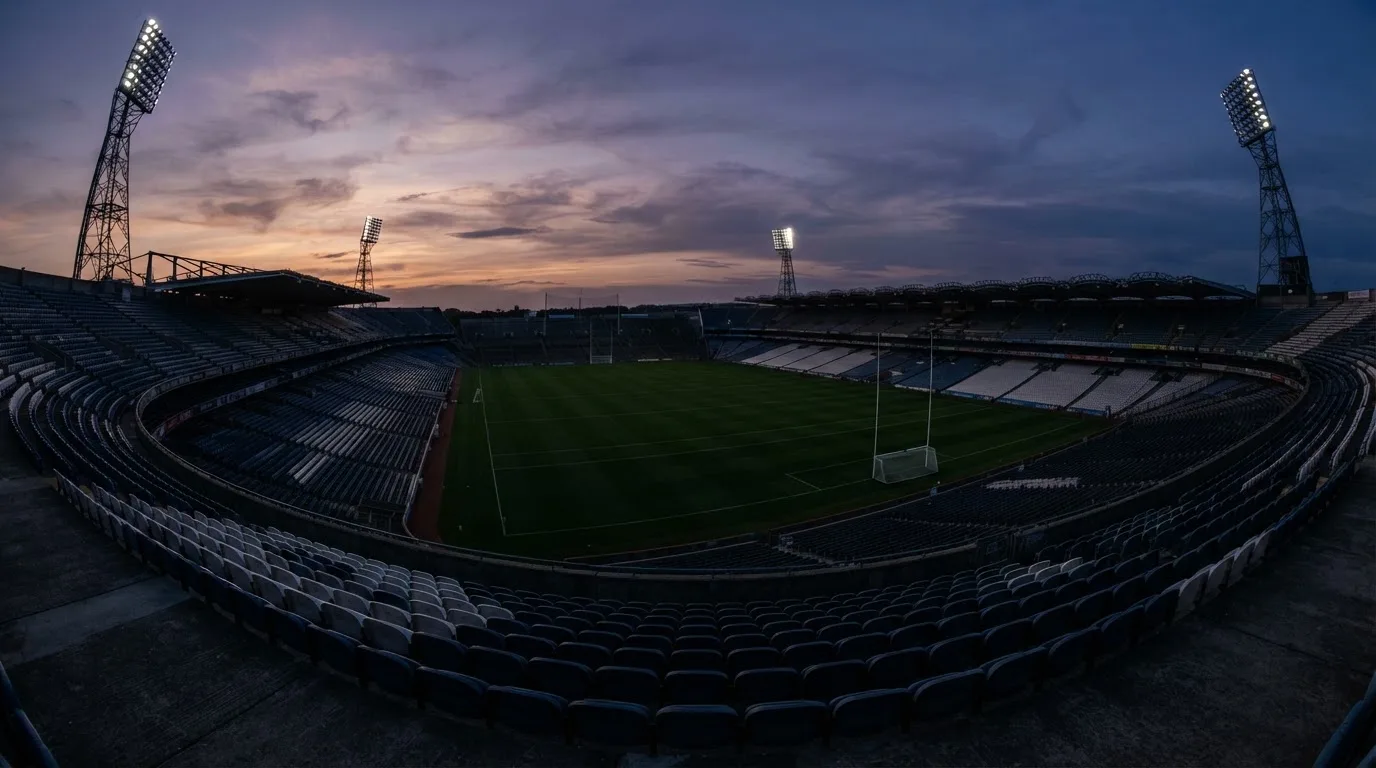
Two mechanics decide whether an in-play market on a hurling match is worth the punter’s attention. The first is the margin the bookmaker keeps on each running market. Margin in hurling live betting runs tighter on the match result market, where the binary is binary, and looser on the next-score markets and the team-total markets, where the price ladder has to cover a lot of ways a sequence can play out. The second is the suspension of the market. A goal, a red card or a long injury break can freeze the feed, reprice the gap, or pull the market off the board entirely; some books price a brief delay, others void a stake if the market was suspended when the bet was struck. A punter who has never read the rules is one of those suspensions away from a voided stake they thought they had won.
The cash-out button sits next to every live bet on a hurling match. Cash out settles a bet before the final whistle at a price the bookmaker sets, which is a price after its margin rather than before it; a £10 back at 3.00 that cashes out at 1.80 is not the £18 the original price implied, it is £18 minus whatever the bookmaker has shaved off to lock the position. The mechanics are straightforward. The discipline is to use cash out as a planned exit rather than a panic button, and to remember that a price offered is a price offered because the bookmaker is happy to take the bet off its own book.
How live prices actually move
The 1X2 book runs from the throw-in. The in-play version updates with every score, and the line moves in chunks — a point shortens the favourite by a few ticks, a goal shortens it further, a black card pushes the underdog’s price back out. Handicaps and totals move in the same rhythm, with the handicap line drifting as the lead changes and the total pushing up as the score climbs.

A punter using a live price the way a tipster uses form does three things. First, they wait for the first five or ten minutes before backing the favourite, because early prices on a hurling match price in the standing form and the public money, not what has happened on the pitch. Second, they back the underdog after a goal, on the grounds that the favourite’s price has just shortened further than the new score deserves. Third, they set a stop-loss on a running bet rather than letting a bad price ride into half-time. None of that is a tip; it is a discipline, and disciplines compound where single picks do not.
The cash-out trap in hurling live betting
A cash-out value that looks generous is usually generous against the original price, not against the live price a new punter would get. The bookmaker locks in its margin on the way back out, the way it locked in its margin on the way in. A punter who cashes out early is selling themselves the original bet at a haircut; a punter who cashes out late is giving the bookmaker the time to price the new score into the offer. The mid-point — a settled plan, set before the throw-in — is the only one that does not read as a punt on the bookmaker’s own discipline.
Hurling bet types and odds: what a price actually says
A hurling match settles into the same set of markets as any other field sport. Match result (winner / draw at regulation), handicap, total points, first scoring play, next scoring play, half-time / full-time, player markets where the book runs them. The odds on each are decimal (3.00 reads as £3 returned on a £1 stake) or fractional (5/1 reads as £5 profit on a £10 stake; the same price in decimal form is 6.00). Every UK-facing bookmaker displays both, and the choice between them is the punter’s.
What a price says, before any of those market types, is the bookmaker’s read on the match. A 1.50 favourite and a 4.00 outsider on the same hurling match imply the bookmaker thinks the favourite wins about two thirds of the time and the outsider about a quarter, with the remaining tenth held back as the bookmaker’s margin across both sides. That margin is the only thing on the betting line that is not the bookmaker’s view of the match; it is the bookmaker’s view of the punter. A punter who treats a price as a probability is using the bookmaker’s word for it.
How a price is built
Take a two-way match with each side at 1.90 in decimal. The implied probability on each side is 1 ÷ 1.90, or about 52.6 per cent. Both sides summed is 105.3 per cent. The 5.3 per cent above 100 per cent is the overround, or margin: the slice of every unit staked the bookmaker expects to keep on this market. On a tighter contest, both sides at 1.95, the sum is 102.6 per cent and the margin is about 2.6 per cent. On a wider contest, the favourite at 1.40 and the outsider at 2.80, the sum is 102.4 per cent and the margin is again around 2.4 per cent — the bookmaker takes its cut in roughly the same place regardless of the favourite’s price. The punter pays it whichever side they back.
That margin is the same on every market, in shape: each outcome carries its own implied probability and the sum exceeds 100 per cent by the bookmaker’s cut. The size of the cut varies. Match result on hurling typically runs the tightest because the market is binary and well-watched. Handicaps and totals run a touch looser. Player markets, where the book has thinner data, run wider still. Each layer of “exotic” profile has the margin turning in the same direction.
From odds to return
A winning single returns stake times the price. A £10 back at 3.00 returns £30; the stake is included, so the net profit is £20. A winning single at 5/1 fractional returns the same: stake plus five times the stake as profit, a £10 stake returns £60 total, £50 of it profit. A winning accumulator multiplies the prices of each leg together and then multiplies by the stake; four legs at 2.00, 3.00, 1.50 and 4.00 give a combined price of 36.00, so a £10 stake returns £360 total if all four win. The arithmetic is mechanical; the difficulty is that the price on each leg already carries the bookmaker’s margin, and a four-leg accumulator carries four slices of margin stacked into one.
An each-way bet is two bets of equal stake — a win part and a place part. The place part pays at a fraction of the win price (typically a quarter or a fifth, depending on the field), and the stake doubles. A £10 each-way at 5/1 with a quarter the odds for a place costs £20 total and pays £60 on the win part and £15 on the place part if the selection wins; £15 only if it places. Each-way is a hurling match bet only where the bookmaker offers place terms for the contest in question, and that is its own checklist.
Bet builder and same-game multi on hurling
A bet builder strings markets from one hurling match into a single price. The price is the product of the individual prices, less the bookmaker’s margin on the combined bet. The mechanics look like an accumulator and feel like one, but they sit on one fixture: a price on Kilkenny to win at 2.20 plus a price on over 30.5 total points at 1.85 becomes 4.07 for both to land. Bet builders let a punter anchor on a single fixture rather than chase form across counties, and they carry the bookmaker’s full margin on each leg rather than the trimmed margin a multi-event accumulator might offer. A punter who likes the look of one hurling match uses a bet builder; a punter who likes the look of the whole round uses a multi-fixture accumulator.
The hurling calendar and the markets that follow it
The GAA’s fixture list is what the markets lean on. Hurling teams field 15 players in senior inter-county games, games last 70 minutes in two 35-minute halves, and the sport sits under the Gaelic Athletic Association. A goal is worth three points and a point (over the crossbar) is worth one point; a 1-12 to 0-15 scoreline reads as fifteen to fifteen in total, even though the goal side carried fewer scores. That scoring shape — bunches of points with the occasional three-point swing — is why the in-play markets react sharply to goals and why handicap lines jump on a single green flag.
The provincial round and the All-Ireland series
The All-Ireland Senior Hurling Championship splits at provincial level. Leinster carries six counties in a round-robin group, Munster carries five in theirs; the top two in each group meet in the provincial final and the third-placed side goes through to the All-Ireland quarter-finals. Beyond the senior championship sit the All-Ireland club championships, the National Hurling League and the minor and under-20 grades. UK-facing bookmakers price the senior championship heavily, the club championship lightly, and the league as the form race it actually is.
The shape of the fixture list matters for the markets. Provincial round-robins settle into a rhythm — three or four match-days in five or six weeks, each team playing the others home and away — and the bookmaker’s prices sharpen with the form as it accumulates. A county that loses the first game and wins the next two carries a longer price on the provincial final than it did at the start of the run. A county that wins the first three might shorten even as the round-robin prices point the other way; the markets move with what is expected of what, not with what has just happened.
Settling rules worth knowing
Bets on hurling settle on the official result at the end of normal time, including any injury time the referee adds. Extra time does not count unless the bookmaker’s rules for the market in question state otherwise. Match result bets on the All-Ireland senior championship final usually settle at the end of normal time, and the replay — where the championship permits one — is a separate fixture for betting purposes. A bet on a county to win the championship is a bet on the trophy, not the final, and settles when the trophy is lifted.
The replay rule is a hurling quirk the markets have not always priced in cleanly. A drawn senior final produces a replay the following weekend, and prices for the replay are issued as a fresh market; an outright bet on the championship runs through both fixtures. Punters who backed a county to win the trophy in extra time and the championship was decided in normal time have lost a bet they thought they had won; punters who checked the rules knew the score at full-time was the bet that mattered.
Form, line-ups and the data behind a price
A tip on hurling reads as a tip because the tipster has done one of three things: they have watched the form, they have read the line-ups, or they have built a number out of the bookmaker’s own odds. The form on the All-Ireland series is short and clean — two or three championship matches a month, a known recent head-to-head, a manager who picks from a small panel. A line-up read picks out the absent starters (a county missing two of its starting six forwards carries a different shape than one missing a corner-back); a number built from the odds picks out where the bookmaker’s price disagrees with the tipster’s read.
None of those three things makes a pick certain. Form fades, line-ups change, the bookmaker’s price reflects more bets than the tipster has seen. A punter who treats a tip as a tip — a steer on where to look, not a flag to follow — uses one as a starting point and the bookmaker’s price as the arbiter. A punter who treats a tip as gospel has paid a tipster to do the thinking the punter could have done themselves with the fixture list in front of them.
The hurling betting shortlist: ten UK-licensed bookmakers
The shortlist below sits on the Gambling Commission’s public register as holders of a remote general betting standard (real events) licence for Great Britain. Each entry names the licence holder, the Commission account number (the public search field on the register) and what the operator’s own terms state about the relevant mechanics. It is a rank-check, not a recommendation: a place in a comparison is not a licence, and an offer on a bookmaker’s promo page is the bookmaker’s word for its own offer.
| Brand | Licence holder | Account no. | What the operator’s own terms state |
|---|---|---|---|
| Kalooki Sportsbook | Kalooki Sportsbook Limited | 57730 | Identifies the customer with name, address and date of birth before the first deposit or bet; member of GAMSTOP. |
| William Hill | WHG (International) Limited | 39225 | Pays Best Odds Guaranteed on UK and Irish horse racing from 8am on race days, singles and multiples; runs a Football Acca Boost on accas of two or more legs at minimum price 1/5 (1.20 decimal), boost from 3 per cent on a double to 200 per cent on twenty legs or more, capped at £10,000 per online bet, in force until 30 May 2027. |
| Fafabet | Taichi Tech Limited | 57385 | Pays Best Odds Guaranteed on UK and Irish horse racing win and each-way bets from 9am on race days, settling at the starting price if that is the bigger of the two. |
| Bet600 | Tyche Tech Limited | 44731 | Pays Best Odds Guaranteed on horse racing, settling at the starting price if the early or show price is the smaller of the two. |
| Swifty Sports | Swifty Global (UK) Ltd | 58957 | Offers Best Odds Guaranteed, cash out on selected markets including horse racing and football, daily price boosts, in-play betting and live streaming; bet builder listed as coming soon. |
| bet365 | Hillside (UK Sports) ENC | 55148 | Lists itself as the official global betting partner of the UEFA Champions League; offers Bet Builder+ for combining markets from one event pre-match and in-play, Super Boosts, winnings boosts on bet builders and selected singles, in-play betting and live streaming of selected events worldwide. |
| Paddy Power | PPB Counterparty Services Limited | 39439 | App covers football, horse racing, boxing, rugby, tennis, golf, darts, snooker and Formula 1; sits on the same platform as Betfair under PPB Counterparty Services Limited. |
| BoyleSports | Boylesports Enterprise | 39469 | Sports welcome offer for UK customers is £20 in free bets when a £10 bet is placed; the equivalent Irish offer is €30 in free bets for a €10 bet. |
| 888sport | 888 UK Limited | 39028 | Offers pre-match and in-play betting, cash out, bet builder, racing streams, BetFinder form tools, a live bet feed and daily boosted odds. |
| QuinnBet | QuinnBet (Gibraltar) Limited | 61011 | Pays Best Odds Guaranteed on UK and Irish horse racing bets from 10am on race days, on singles, multiples and system bets, capped at £150 per customer per race. |
A bookmaker that holds a Gambling Commission remote licence is accepted for legal betting in Great Britain under the Gambling Act 2005; a brand that does not hold one is not, and a customer who bets with one gives up the Commission’s complaints route and the GAMSTOP exclusion scheme. Several of the brands above sit under the same licence holder — Paddy Power and Betfair are both run by PPB Counterparty Services Limited, for example — which means a complaint or a withdrawal issue that touches one touches the licence as a whole.
Hurling betting in Great Britain: the legal frame
The Gambling Commission licenses the whole commercial betting market in Great Britain under the Gambling Act 2005. Northern Ireland sits outside that Act and runs its own older framework; a Commission licence does not extend there. Since the Gambling (Licensing and Advertising) Act 2014, an operator whose remote facilities are used in Great Britain needs a Commission licence wherever it is based. A Curaçao, Maltese or Gibraltar licence is not a substitute, and a brand whose address sits in any of those places still needs the Commission account if it takes bets from customers in England, Scotland or Wales.
The Commission’s public register can be searched by business name, trading name, domain or account number. That register is the test of who holds a licence, and the only place to verify one. A claim on a bookmaker’s own landing page that “we are licensed by the Gambling Commission” is a claim the register either confirms or contradicts; a punter who has not checked the register has not checked the licence.
What the licence requires the operator to do
A remote general betting standard (real events) licence comes with a stack of obligations the Commission enforces through the Licence Conditions and Codes of Practice (LCCP). Identity verification before the first deposit or bet has been mandatory since 7 May 2019 — name, address and date of birth, including where the customer is only claiming a free bet or a bonus. GAMSTOP, the national multi-operator self-exclusion scheme, has been a condition for online operators since 31 March 2020; periods are six months, one year, five years, or five years with auto-renewal, and after the minimum period the exclusion stays in place for a further seven years unless the customer asks GAMSTOP to remove it. The credit-card ban has been in force since 14 April 2020 — debit cards and bank-based payments are not covered by it. A financial vulnerability check has applied to licensed remote betting since 30 August 2024, fired when a customer’s deposits minus withdrawals exceed £150 across a rolling 30 days; it is a public-record check (bankruptcy, county court judgments) rather than an income or credit-reference check. Financial risk assessments — the affordability checks of the press — are announced in a staged plan, with no start date.
The marketing rules are tighter than they were. Since 19 January 2026, wagering requirements on bonuses are capped at 10x the bonus (a £10 bonus at 50x wagering needs £500 of qualifying bets; under the cap no more than £100). Mixed-product promotions — an offer that requires gambling on two or more product types, for example “bet on football to get free spins” — are banned. The CAP Code, enforced by the ASA, governs non-broadcast advertising; the BCAP Code governs broadcast; “whistle-to-whistle” — the ban on betting ads from five minutes before a live sporting event to five minutes after, before the 9pm watershed — is an industry code rather than law. Whether the wagering cap applies to free bets with no wagering condition, and any cap on the money value of a bonus, are not settled in the public rule book.
What the licence does not cover
A Commission licence does not stop a bookmaker from offering a thin product, a wide margin, or a rule that disfavours the punter. It does not guarantee a payout on a market the bookmaker has chosen to void. It does not cap the bookmaker’s stake or payout beyond what the operator has set itself, because there is no statutory ceiling on either. The bookmaker pays no winnings-tax for the punter in Great Britain; General Betting Duty is the operator’s tax on gross profits, currently 15 per cent and rising to a 25 per cent remote rate from 1 April 2027, with the 15 per cent rate holding for remote bets on UK horse racing, pool betting and in-person betting. The punter is not charged duty; whether the operator passes its duty on through tighter odds is not settled.
Offshore, and what it costs the customer
A brand that does not hold a Commission licence and accepts customers in Great Britain commits an offence under section 33 of the Gambling Act 2005 — aimed at the operator, not the customer. The cost to a customer of using such a brand is not criminal liability but loss of protection: no GAMSTOP coverage, no Commission complaints route, no approved dispute-resolution body, no British consumer redress if funds are withheld, no application of the 10x bonus cap or the £150 vulnerability check. The Commission does not block unlicensed sites by default; it disrupts through cease-and-desist notices, search-engine referrals, work with registrars, hosts and payment providers, and court-order DNS blocking powers that have been granted or are about to be granted. Neither licensed nor unlicensed is the safe choice by default; licensed carries the verification, the limits and the GAMSTOP coverage, and unlicensed carries none of those protections.
Safer gambling: tools a licensed bookmaker has to offer
The safer-gambling toolkit is the part of the licence a punter uses directly. GAMSTOP is the headline: a customer who registers with GAMSTOP is excluded from every online operator that holds a Commission remote licence, for a minimum period of six months. A punter who wants a longer break can take one year, five years, or five years with auto-renewal; after the minimum period the exclusion stays in place for a further seven years unless the customer asks GAMSTOP to remove it.
The deposit limit is the everyday tool. Every licensed operator must offer a gross deposit limit on a fixed time frame, and the first changes have applied since 31 October 2025, with a second phase postponed to 30 September 2026. The limit is the customer’s choice, and operators must offer the choice before a deposit can be made. A punter who sets a daily, weekly or monthly limit and then wishes to raise it usually waits 24 hours for the change to take effect, by which time the impulse to raise it has either passed or hardened.
Time-outs, reality checks and product blocks sit beneath the deposit limit. A time-out is a short exclusion — 24 hours, a week, a month — that a punter can set on themselves without going through GAMSTOP. A reality check is a pop-up reminder of how long the punter has been logged in and how much has been staked; a product block cuts off a single product type (casino, for example) while leaving the rest of the account open. None of those tools are new, and none of them is a substitute for the customer asking themselves whether they should be betting at all.
Where to find help outside the bookmaker
GamCare runs the National Gambling Helpline and offers one-to-one counselling; GambleAware funds treatment and research; NHS gambling clinics run in several regions of England; Gamblers Anonymous runs peer-support meetings across the country. A punter who has set a deposit limit and is looking to raise it, who has chased losses, or who has bet money set aside for something else, is a punter for whom one of those services is the next step rather than the last. The Commission’s safer-gambling page links to each of them.
Bonuses and free bets on hurling: what the marketing line leaves out
A bonus on a hurling match is a marketing offer: an incentive for the punter to open an account, place a first bet, or stick with one bookmaker rather than another. The shape of the offer matters because the cost of clearing it sits inside the small print, and the small print is where the punter finds out whether the offer is worth taking. Two mechanics decide. The first is the wagering requirement: the multiple of the bonus (or the bonus plus the deposit) the punter has to stake before any winnings become withdrawable. The second is the minimum price for a qualifying bet: most bookmakers require a price of 1.50 (1/2 fractional) or above, and any bet placed below that minimum does not count towards the turnover.
The 19 January 2026 cap on wagering requirements is the cleanest read on what an offer can cost. A £10 bonus at 50x wagering asks for £500 of qualifying bets before the bonus is withdrawable; under the cap, the multiple is held at 10x or below. A punter who sees a bonus that exceeds the cap is looking at an offer that cannot legally be on a GB-licensed bookmaker’s page, because the cap binds the operator; an offer on an unlicensed site is a different conversation. Mixed-product promotions — an offer that requires gambling on two or more product types, for example a sports bet that unlocks free spins — are banned outright.
Free bets and what they actually pay
A free bet is a stake the bookmaker gives rather than the punter funds. The free bet’s stake is usually not returned with a win: a £10 free bet at 3.00 pays £30 in profit (3.00 minus 1, times £10) rather than £30 in return, because the £10 stake is the bookmaker’s. Some bookmakers refund a free bet as cash on certain conditions, and most cap the winnings from a free bet at a fixed ceiling. A free bet at minimum price 1.50 (1/2 fractional) is the standard condition; a free bet at minimum price 2.00 (1/1 fractional) is rarer and more valuable to the punter, because a higher price requirement forces the punter onto longer odds.
A free bet’s value on average is the free-bet amount times the edge the punter has over the bookmaker’s margin on the chosen market. A £10 free bet at minimum price 1.50, on a market the punter prices at a 60 per cent true probability (the bookmaker’s implied probability is 66.7 per cent at 1.50), gives the punter an edge; the £10 is worth more than £10 on average. Using the same arithmetic for a 50 per cent true probability gives the punter less edge, making the £10 worth less than £10. The arithmetic is mechanical, and the punter who runs the numbers before claiming the offer is the punter who knows whether the offer is worth taking.
Acca insurance, price boosts and enhanced odds
An accumulator insurance refunds the stake as a free bet or a bonus when one leg of a multi-leg accumulator loses; the typical condition is a four-fold or higher, with the refund capped at a fixed stake. A price boost or enhanced odds lifts the price on a single outcome above the standing price; the boost is the bookmaker’s word for what the price should be, and the punter’s view is whatever the punter thinks the price should be. A boosted odds offer that carries a maximum stake limit and a maximum winning cap is an offer where the punter’s upside is bounded; the marketing line does not always carry that bound.
A welcome offer is the bookmaker’s most generous package, and the most conditioned. The first-bet terms carry the wagering requirement, the minimum price, the deadline for placing the qualifying bet, the deadline for using the free bet, and any market or sport exclusions. BoyleSports’ UK welcome offer — £20 in free bets for a £10 first bet — looks generous; the underlying terms (qualifying bets at minimum price, free bets usable within a window, free-bet winnings capped) sit inside those conditions. The punter who reads the small print before placing the qualifying bet knows the offer’s real cost; the punter who reads it after is reading a refund policy on a stake they have already lost.
The bookmaker margin on a hurling market, worked through
The margin on a hurling match is the slice of every unit staked the bookmaker expects to keep. It is not a fee, it is not a charge, and it does not appear on the betting slip; it sits inside every price the bookmaker quotes, and the punter pays it whichever side they back. The shape is the same on every market: implied probability plus implied probability plus the margin equals more than 100 per cent, and the difference is the bookmaker’s expected profit.
The simplest worked example is a two-way market with each side at 1.90 in decimal form (or 9/10 in fractional — both names for the same price). The implied probability on each side is 1 ÷ 1.90, or about 52.6 per cent. Both sides sum to 105.3 per cent. The 5.3 per cent above 100 per cent is the margin. A punter who stakes £1 on each side — £2 total — receives £1.90 back from the winning side and keeps £0.10 from the losing side; the bookmaker keeps the 10p as expected profit on the market, before any margin of safety or any unbalanced book.
That 5.3 per cent margin is an illustration, not a measured price on a real hurling market. The actual margin on a 1X2 hurling book typically runs tighter — between 2 per cent and 5 per cent, depending on how much money the bookmaker expects to take and how confident it is in its line. Margins on handicaps and totals run a touch looser, because the bookmaker has more outcomes to price. Margins on player markets run wider still, because the bookmaker’s data is thinner. Each layer of “exotic” profile pushes the margin the same direction. A punter who picks the tightest margin on the markets they want is leaving the bookmaker less on every bet they place; a punter who picks by price alone is paying whichever margin the bookmaker has chosen to charge.
How to read a price before you back it
For a punter to read a price the way an analyst reads a balance sheet, three checks run before any stake is set. The first is the margin: convert both sides of the market to implied probabilities, sum them, and subtract from 100. Anything above 105 per cent on a hurling 1X2 is a market where the bookmaker is taking more than a standard cut; anything below 103 per cent is tight. The second check is the price movement: a price that has shortened sharply from open to close is a price the market has agreed with, and a price that has drifted is a price the market has not. The third check is the alternative: the same outcome on another bookmaker, with the same fixtures and the same rules, at a higher price. A £10 stake at 3.00 across the bookmakers is the punter’s best edge; a £10 stake at 2.80 is £2 short of it.
For a punter using a tip rather than a price, the same three checks run with a different frame. The tip is a steer on where to look: a county that has won the last three championship matches, a manager who has rotated the panel well, an opponent missing a starter. The price is the punter’s view on whether the steer is worth paying for. A tip at 2.00 on a county the punter prices at 60 per cent true probability is a tip with edge; at 1.50, it is a tip without edge, because the bookmaker’s margin has already eaten it.
Why no tip is ever certain
A tip on a hurling match is a tip because the tipster has done one of three things: read the form, read the line-ups, or built a number from the bookmaker’s own odds. None of those things makes the pick certain, because the form fades, the line-ups change, the bookmaker’s price reflects more bets than the tipster has seen. A black card in the first half reshapes the midfield; a goal in the third quarter swings the match; a replay is a different fixture. A tip is the start of a punter’s research, not its end.
The bookmaker’s margin is the same: it sits inside every price, and the punter who forgets it pays it. The margin on a hurling match does not shrink because the punter has watched the form. The margin on a multi-leg accumulator does not shrink because each leg has been picked carefully. The margin is a structural cost the punter pays on every bet, and the only way to lower it is to shop the price across bookmakers, pick the markets the bookmakers price tightest, and walk past the markets they price loose.
Bankroll discipline as the only edge
The discipline that holds over a season of hurling betting is bankroll management. A punter who stakes a fixed percentage of a fixed bankroll on each bet — 1 per cent or 2 per cent, on a bankroll the punter can afford to lose — survives the losing runs that even sharp handicappers hit. A punter who chases losses by raising the stake after a bad weekend is one bad weekend away from a bankroll that cannot cover the next bet. A punter who raises the stake after a good weekend is one bad weekend away from giving back what the good weekend paid for. The discipline is the bankroll; the picks are downstream of it.
A staking plan that sits on a fixed percentage of the bankroll also forces the punter to walk past the bets they cannot price. A bet with a thin edge, a bet with a wide margin, a bet on a fixture the punter has not watched — each fails the discipline before it reaches the slip. A punter who keeps a record of every bet, settled and unsettled, runs the discipline back across the season and finds the markets they are sharpest on; a punter who bets from memory runs the discipline forward and finds the same markets without knowing why.
Operator reviews
Kalooki Sportsbook — for the punter who wants a small, GB-only book
Kalooki Sportsbook runs under Kalooki Sportsbook Limited (Gambling Commission account 57730). The site verifies the customer’s name, address and date of birth before the first deposit or bet and is a member of GAMSTOP. The bookmaker’s marketing has the small-footprint shape: a tight product, no global partnership deals, no race-day price promises on horse racing. That is the trade. A punter who wants a GB-licensed bookmaker with the standard safer-gambling tools gets that, and the price the punter pays is the depth of the markets and the marketing budget behind them. For a low-stake punter on the senior championship and the club championship, it covers what needs covering; for a punter who wants live streaming of the All-Ireland final, the small-footprint shape means looking elsewhere.
William Hill — for the acca builder who likes a price boost
William Hill runs under WHG (International) Limited (Gambling Commission account 39225). The bookmaker pays Best Odds Guaranteed on UK and Irish horse racing from 8am on race days, on singles and multiples, and runs a Football Acca Boost on accas of two or more legs at minimum price 1/5 (1.20 decimal), boost from 3 per cent on a double to 200 per cent on twenty legs or more, capped at £10,000 per online bet, in force until 30 May 2027. The acca boost is the headline mechanic, and the cap is the discipline: a £10,000 ceiling on the boost means a punter who runs a long acca at high stakes hits the cap before the price does. For the acca builder, the boost is worth chasing; for the single-bet punter on hurling, the horse-racing BOG is the more useful mechanic, because it covers a market the acca builder does not.
Fafabet — for the early-price punter on horse racing
Fafabet runs under Taichi Tech Limited (Gambling Commission account 57385). The bookmaker pays Best Odds Guaranteed on UK and Irish horse racing win and each-way bets from 9am on race days, settling at the starting price if that is the bigger of the two. That 9am start is later than the 8am start some competitors run, and the gap matters to the punter who likes to take the morning price and forget about the race; a price the bookmaker lengthens at 9am is a price the punter does not get. For the early-price punter, the BOG is the headline and the time is the trade-off; for the race-day punter, the BOG is the same.
Bet600 — for the punter who lets the SP settle the bet
Bet600 runs under Tyche Tech Limited (Gambling Commission account 44731). The bookmaker pays Best Odds Guaranteed on horse racing, settling at the starting price if the early or show price taken is the smaller of the two. The mechanic is the same in shape as the others, the threshold is the show price rather than the morning price, and a punter who lets the bet ride into the race gets the SP if it is the bigger of the two. For the punter who bets once on a race and walks away, the SP settlement is the natural fit; for the punter who trades the market, the BOG is a small mechanic on a wider strategy.
Swifty Sports — for the punter who wants a bet builder on the way
Swifty Sports runs under Swifty Global (UK) Ltd (Gambling Commission account 58957). The bookmaker offers Best Odds Guaranteed, cash out on selected markets including horse racing and football, daily price boosts, live streaming and in-play betting; bet builder is listed as coming soon. The trade is clear: the bookmaker covers the standard mechanics and is rolling out the same-game multi mechanic the bigger books already run. A punter who has been waiting for the bet builder on this account knows the rollout is the price of waiting; a punter who needs the bet builder today goes elsewhere.
Swifty Sports — for the in-play punter
Swifty Sports runs under Swifty Global (UK) Ltd (Gambling Commission account 58957). The bookmaker offers live streaming on selected events, in-play betting and cash out on markets including horse racing and football. The in-play offering is the headline: a bookmaker that runs in-play on hurling at the senior championship level lets the punter watch the price move with the score. For the in-play punter, live streaming is the mechanic that turns the in-play price into a usable edge; a punter without it is pricing blind.
bet365 — for the punter who wants the most-watched app
bet365 runs under Hillside (UK Sports) ENC (Gambling Commission account 55148). The bookmaker lists itself as the official global betting partner of the UEFA Champions League and describes its app as the most downloaded sports betting app in the UK. The mechanics on offer are the widest of the shortlist: Bet Builder+ for combining markets from one event pre-match and in-play, Super Boosts, winnings boosts on bet builders and selected singles, in-play betting, live streaming of events worldwide, Match Live, Bet Track and a Live Golf Tracker. The trade is depth: a punter who has not yet opened an account on the most-watched app is one punter at a disadvantage when other books price a market tighter; a punter who has opened one is one punter in a much larger pool. The marketing line (“official global betting partner”) is the bookmaker’s word for what it is; the licence, the mechanics and the price density are the punter’s word for what it costs.
Paddy Power — for the punter who wants the price-boost menu
Paddy Power runs under PPB Counterparty Services Limited (Gambling Commission account 39439). The app covers football, horse racing, boxing, rugby, tennis, golf, darts, snooker and Formula 1; the same licence holder runs Betfair. The price-boost menu is the headline: the bookmaker runs daily price boosts across the major sports and is willing to push the marketing hard. The trade is the same trade as on most books with a strong price-boost offering: a boosted odds offer is bounded by a maximum stake and a maximum winning cap, and the marketing line does not always carry the bound. For the price-boost punter, the menu is the headline and the cap is the discipline; for the punter who bets the standing price, the price-boost menu is a daily reminder that another bookmaker has priced the same market tighter.
BoyleSports — for the punter who likes a free-bet welcome
BoyleSports runs under Boylesports Enterprise (Gambling Commission account 39469). The UK sports welcome offer is £20 in free bets when a £10 bet is placed; the equivalent Irish offer is €30 in free bets for a €10 bet. The headline is the headline: a £20 free-bet welcome for a £10 first bet is the standard shape of a UK welcome offer. The discipline is the same discipline as on every welcome offer — the wagering requirement, the minimum price, the deadline for using the free bets — and a punter who reads the small print before placing the first bet knows the real cost. For the welcome punter, the headline is the offer; for the seasoned punter, the welcome is a way to test a bookmaker’s in-play product and the cash-out mechanic.
888sport — for the punter who wants form tools in the app
888sport runs under 888 UK Limited (Gambling Commission account 39028). The bookmaker offers pre-match and in-play betting, cash out, bet builder, racing streams, BetFinder form tools, a live bet feed and daily boosted odds. The trade is form: BetFinder is the bookmaker’s word for the form tools it puts in the app, and a punter who likes to do their form work inside the bookmaker’s own platform gets a tool the smaller books do not run. For the form punter, BetFinder is the headline; for the punter who does their form work outside the bookmaker, the daily boosted odds are the more useful mechanic.
QuinnBet — for the punter who wants a daily horse-racing BOG
QuinnBet runs under QuinnBet (Gibraltar) Limited (Gambling Commission account 61011). The bookmaker pays Best Odds Guaranteed on UK and Irish horse racing bets from 10am on race days, on singles, multiples and system bets, capped at £150 per customer per race. The headline is the cap: £150 per customer per race is tighter than the BOGs run by the bigger books, and a punter who likes to bet the maximum on a daily race hits the cap before the price does. For the smaller-stake punter, the BOG is the same BOG; for the maximum-stake punter, the cap is the trade.
A discipline for the season
A punter who treats the hurling season as one bet at a time loses the season in three losing weekends. A punter who treats the season as a series of small, sized bets at the best available price, on the markets they are sharpest on, walks into the All-Ireland final with a bankroll that has survived the provincial round-robin and the quarter-finals. The discipline is the bankroll, the price-shopping is the discipline, and the tip is the steer, not the flag. Read the bookmaker’s margin the way the bookmaker reads the punter, and the gap between a tip and a value bet starts to look like the gap between a guess and an edge.
Frequently asked questions
What is a value bet and why is no tip ever certain?
A value bet is a bet whose price is greater than the true probability of the outcome, once the bookmaker’s margin has been stripped out. No tip is ever certain because the form on which the tip is built fades, the line-ups change between the announcement and the throw-in, the bookmaker’s price reflects more bets than the tipster has seen, and the sport itself is unpredictable — a goal, a black card or a freak deflection can swing a hurling match in a passage of play. The value is statistical, not predictive.
What is the bookmaker’s margin and how can it be seen in the odds?
The margin is the slice of every unit staked the bookmaker expects to keep on a market. It can be seen in the odds by converting each outcome to an implied probability — divide 1 by the decimal price — and summing them; the margin is the percentage above 100. A two-way market at 1.90 on each side sums to 105.3 per cent, so the margin is about 5.3 per cent; a market at 1.95 on each side sums to 102.6 per cent, so the margin is about 2.6 per cent. The punter pays the margin whichever side they back.
How is the return on a bet worked out from the stake and the odds?
In decimal odds, the return is the stake multiplied by the price; a £10 stake at 3.00 returns £30 total, of which £20 is profit and £10 is the stake returned. In fractional odds, the return is the stake plus the stake multiplied by the fraction; a £10 stake at 5/1 returns £60 total, of which £50 is profit. For a combination bet, the prices of the legs multiply into one combined price, which is then multiplied by the stake.
How can it be checked that a bookmaker holds a Gambling Commission licence?
The Gambling Commission’s public register can be searched by business name, trading name, domain or account number. The register lists the licence holder, the licence type, the account number, the licensed activities and the trading names covered. A brand whose domain is on the register against a remote general betting standard (real events) licence is licensed for betting on real sporting events; a brand whose domain is not on the register, or whose licence does not cover the betting activities in question, is not licensed for GB customers.
Which tools for controlling play does a licensed bookmaker have to offer?
A licensed remote bookmaker must offer GAMSTOP self-exclusion (six months, one year, five years, or five years with auto-renewal, with a further seven-year hold after the minimum period unless the customer asks to be removed), deposit limits on a fixed time frame, time-outs, reality checks and product blocks. Identity verification before the first deposit or bet is mandatory, the financial vulnerability check fires at £150 of net deposits across a rolling 30 days, and credit cards are banned for gambling. Help outside the bookmaker is at the National Gambling Helpline (GamCare), GambleAware, NHS gambling clinics and Gamblers Anonymous.
How do fractional odds such as 5/1 convert to decimal odds such as 6.00?
Divide the first number by the second and add one. 5/1 fractional becomes 5 ÷ 1 + 1, or 6.00 decimal; 11/4 becomes 11 ÷ 4 + 1, or 3.75 decimal; evens (1/1) becomes 1 ÷ 1 + 1, or 2.00 decimal. The decimal price is the total return per unit staked, including the stake; the fractional price is the profit per unit staked, excluding the stake.
Rugby, cricket & Gaelic – Fast Payout
Content created by the «Fast Payout» team
