
Cycling Betting Tips 2026: Reading Form, Finding Value, Betting Smarter
 Available in US
A cycling tip is a guess dressed up as analysis. Strip the marketing off and it is an opinion about who wins, set against a price that already contains the bookmaker’s margin. This page is not a tip sheet. No rider is named as a certainty, no stage is picked, no price is called. What follows is the machinery underneath a cycling bet: how form is read, how a value bet is recognised, what the bookmaker’s margin does to every price on the menu, and how the Gambling Commission’s licensing rules shape what a UK punter can and cannot do. It is a guide for someone who wants to bet on the Tour, the Giro or the Vuelta with their eyes open — and who wants to know, before staking a tenner, why no tip is ever a sure thing.

The data below was checked against the Gambling Commission’s public register on 27 October 2026. Offers and prices move; licences move more slowly.
What a cycling tip actually is
A “tip” in betting is a prediction with three parts: an outcome the tipster thinks is most likely, a price the bookmaker is offering against that outcome, and a stake the fairbet covers. The third part is the one most tips skip past, because it is the one that decides whether the tip was any good. A tip on a 4.00 shot that wins pays three units of profit for every one staked; a tip on a 1.20 shot that wins pays twenty pence of profit per pound. Both can be “right” in outcome terms. Only one of them was worth the paper it was written on.
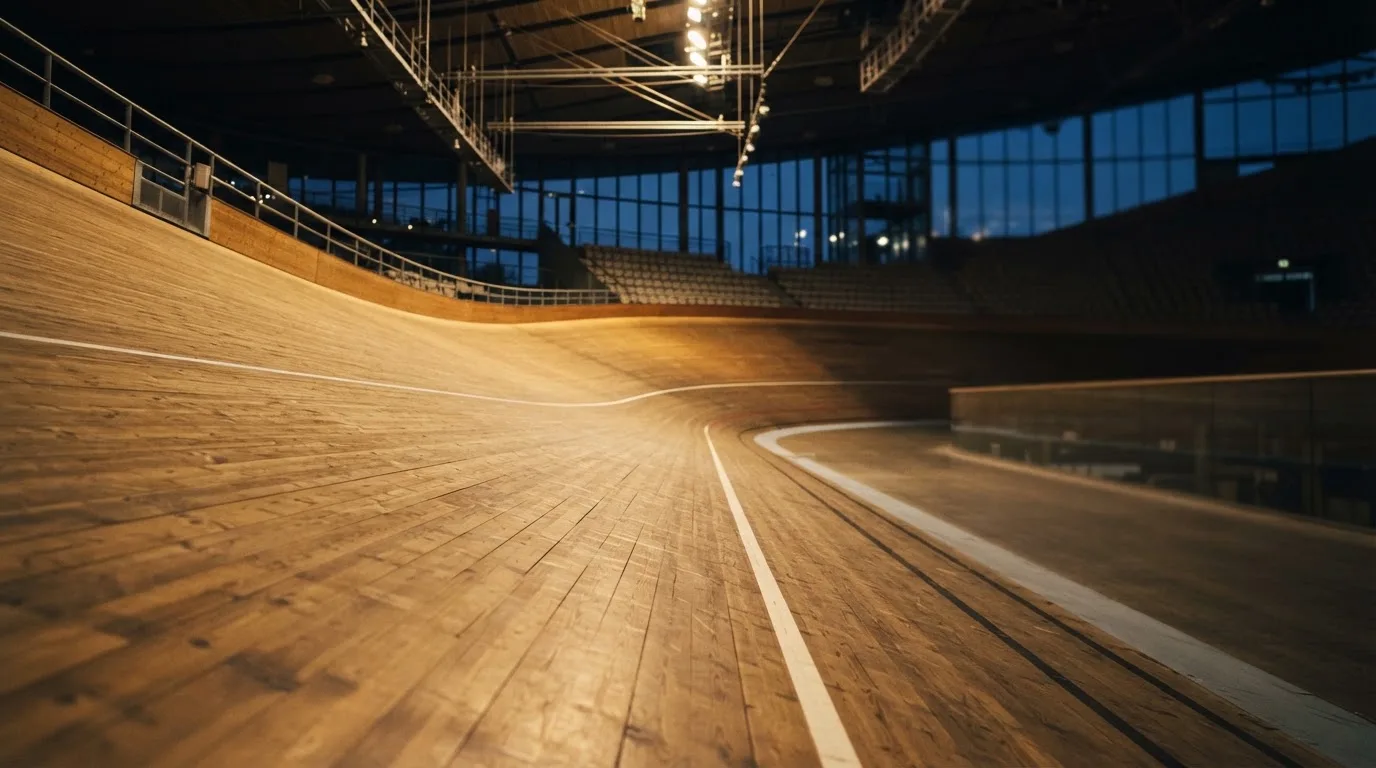
Cycling has a peculiar geometry that makes this point sharper than it is for most sports. A Grand Tour stage is a 180-kilometre open road race with twenty-three teams, around 150 riders in the peloton, and a finish line that often rewards a breakaway nobody saw coming. Form from the previous weekend can be erased by a crosswind on the first categorised climb. A pre-race favourite at 3.00 can be distanced on a descent by a domestique nobody had on the betting slip. The sport punishes confident predictions in a way that, say, a one-on-one tennis final does not.
So the tip in cycling is rarely “this rider wins the race”. It is usually a narrower market: stage winner on a hilltop finish, top three on a mountain stage, head-to-head between two climbers on a summit finish, or which of the GC favourites loses the least time on a particular day. The narrower the market, the more variables have to be right at once — and the more honest the tip has to be about its own uncertainty.
The four ingredients of a usable tip
A tip that earns its keep before the flag drops carries four ingredients. Skip any one and the prediction becomes a punt in the dark.
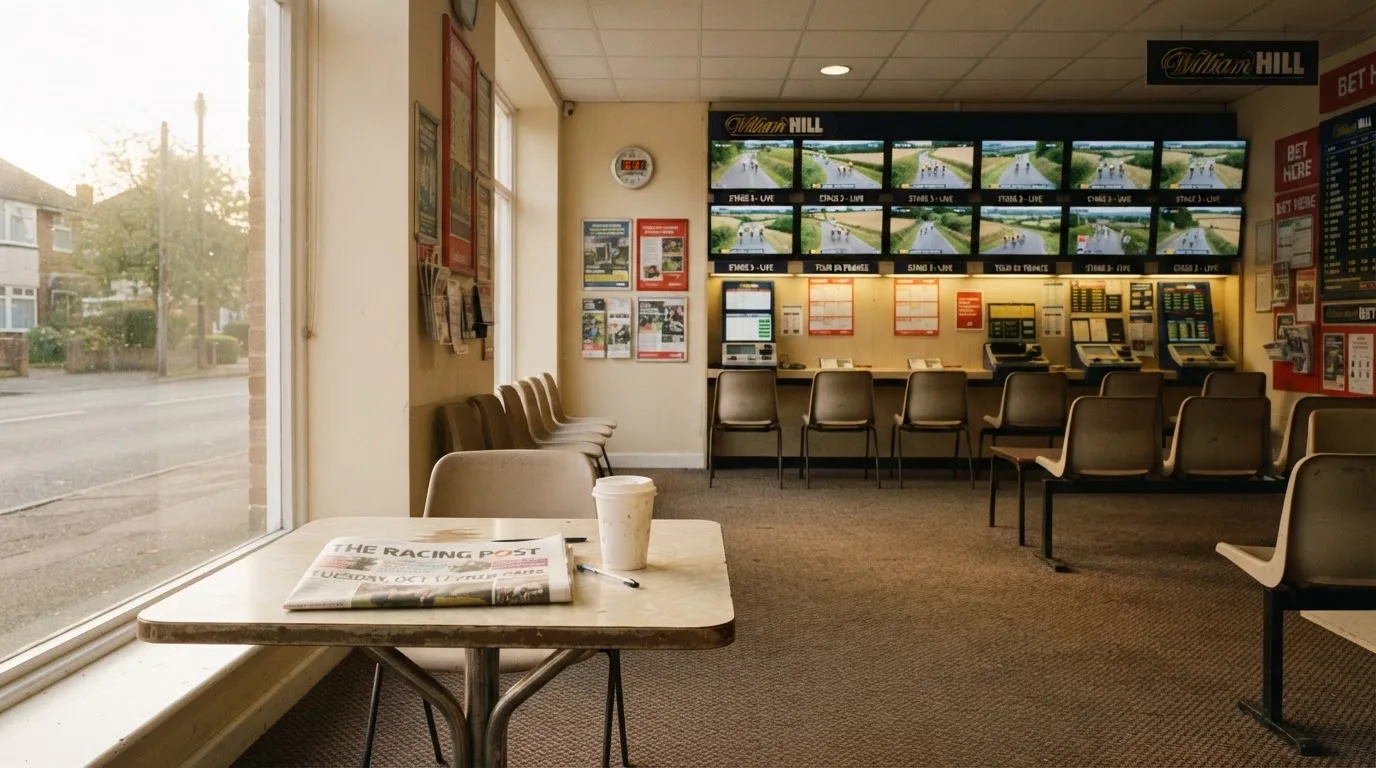
The first is route and profile. A flat sprint stage points to the fast men — the pure sprinters whose teams have spent the day shepherding them to the line. A mountain stage with three Hors Categorie climbs points to the climbers and their domestiques, not to the men who can hold 400 watts for twenty minutes but not for ninety. A cobbled stage points to a particular kind of all-rounder whose names the Classics crowds know. The tip that fails to read the route is the tip that names a sprinter on a summit finish and is baffled when he finishes forty minutes down.
The second is recent form and what kind of form it is. A rider coming off a podium at the Dauphiné or the Tour de Suisse has form; a rider who has not raced since April has fatigue masked as freshness. Form in cycling is not just the last result. It is the trajectory: improving week on week, flat, fading. A punter who reads form as a single line of past results misses the shape of the season underneath.
The third is the start list and the team tactics. A team with two GC contenders rarely rides for both. The team leader is named in the press conference; the team car sets the strategy on the road. A tip on the team’s second rider is a tip on a domestique until the leader loses time. Reading the team sheet is reading the script before the play begins.
The fourth is the head-to-head and the price. A bookmaker offers a head-to-head market on two named riders in every stage of every Grand Tour. The market is a number. The tip’s job is to ask whether that number reflects the true probability of one rider beating the other, given everything the first three ingredients have established. If it does, there is no tip. If it does not — if the price is longer than the probability justifies — there is a value bet. Everything else is decoration.
What a value bet actually is
A value bet is a price that is too long for the probability of the outcome. The arithmetic is simple. The probability of a thing happening, multiplied by the decimal odds offered, must be greater than one. If a punter believes a rider has a 30 per cent chance of winning a stage, and the bookmaker offers 4.00, the bet has positive expected value: 0.30 × 4.00 = 1.20, meaning a pound staked returns on average £1.20 across many bets at that price.
The bookmaker disagrees with that calculation, of course, and so does the rest of the market. The price the punter sees already contains the bookmaker’s margin and the weight of money from other punters. The punter’s job is to decide whether the bookmaker’s price underestimates the rider’s chance more than the margin inflates it. Most of the time, on most markets, it does not. A price of 4.00 on a 30 per cent chance is the genuine value case; a price of 3.50 on the same chance is the typical bookmaker offering, after margin and money.
The point no tip can duck: the value bet is a long-run concept. Across hundreds of bets at a real edge, a punter makes money. Across five bets at a perceived edge, the punter can easily lose four of them and quit the strategy before the mathematics rescues it. Cycling tips land roughly a third of the time at generous prices and roughly half the time at short prices; the same proportions hold for tips that have no value at all. Distinguishing the two is what separates a punter from a customer paying for guesses.
The bookmaker’s margin and how it sits inside the price
Every decimal odds line a UK bookmaker prints contains a margin. The margin is the cut the bookmaker takes on every pound staked across all outcomes of a market, before the result is known. It is the reason a “fair” two-way market — one where both sides have a 50 per cent chance — does not price at 2.00 on each side. It prices at something like 1.91 on each side, and the difference between the two prices is the margin.
Take the illustrative example: a head-to-head market between two riders, each priced at 1.90. The payout share across the market is calculated as 1 ÷ (1/1.90 + 1/1.90). Each side’s reciprocal is 0.5263, so the sum is 1.0526, and the payout share is 0.9501 — roughly 95 per cent. The margin, the cut the bookmaker keeps out of every pound wagered on this market across both outcomes, is 1 − 0.9501, or about 4.99 per cent, very close to the 5 per cent figure used as the working illustration.
In a three-way Grand Tour market — the winner, with three riders priced at, say, 3.00, 4.50 and 6.00 — the same calculation produces a higher margin. The three reciprocals sum to 0.3333 + 0.2222 + 0.1667 = 0.7222, and the payout share is 1.385 — a number over one only because three prices have been added where two were enough. That is impossible; the calculation needs the reciprocals summed and inverted. The actual payout share is 1 ÷ 0.7222 = 1.385, which is the total implied probability before normalisation. To get the true margin, the implied probabilities are normalised to sum to 100 per cent: each is divided by 1.385. The favourites implied 24.1 per cent becomes 17.4 per cent, the second becomes 16.1 per cent, the third 12.0 per cent — and the three sum to 45.5 per cent. The other 54.5 per cent is the overround, the margin, the cut the bookmaker keeps on every unit bet on this market.
That figure is the reason a value bet is hard to find on Grand Tour winner markets. A punter has to identify a price whose true probability exceeds its implied probability by more than the margin inflates it. On a three-way winner market with a 50 per cent overround, that is a tall order. On a two-way head-to-head at 4-5 per cent margin, it is more reasonable — and the head-to-head is the market where most cycling tips earn their keep.
The margin is not a number the punter is told. It is a number the punter computes from the prices on the screen. A useful habit: before staking, take the reciprocals of every price on the market, add them, and see how far the sum is above one. Anything above 1.05 is a heavy margin market; anything below 1.03 is light, by the standards of British online bookmakers. Most outright winner markets sit closer to 1.30 than to 1.05, which is one reason so many cycling tips lose across a season even when each individual tip looks plausible.
Staking and bankroll: the discipline no tip can replace
A tip is only as good as the stake placed against it. A punter who stakes £10 on every tip at random prices will see their bank drained by the margin long before the value bets come good. A punter who stakes 2 per cent of bank on every tip, regardless of confidence, will see their bank fluctuate but survive.
The flat-stake rule is the discipline. Choose a unit — £10, £20, whatever the bank can lose ten times over without distress — and stake that unit on every tip whose price clears the value threshold. Do not stake more because the tip “feels right”. Do not stake less because the rider is a long shot. The discipline is the part of the system that actually delivers the long-run edge; the picks themselves are only the input.
Bankroll management also means writing down the bets. A punter who cannot say at the end of the month how many bets were placed, at what average price, and with what closing bank, cannot tell whether the system is working. The closing bank is the only honest scorecard.
Why no tip is ever certain
A cycling tip is a probability statement, not a prediction. Even a 1.20 shot on the final sprint of a flat stage — the most certain kind of cycling bet — fails often enough that staking the rent on it is a poor plan. Pincers, lead-out trains that misfire, mechanicals in the final kilometre, and the wrong side of a crosswind all turn certainties into also-rans.
The deeper uncertainty is on stage races, where a tip on the overall winner has to survive three weeks of crashes, illness, crosswinds, and team tactics that the punter cannot see from the sofa. A punter who treats any cycling tip as a certainty is a punter who has not bet on enough cycling to know better.
The honest framing: a tip improves the punter’s expected return across many bets. It does not promise any single bet will win. Anyone selling certainty is selling something that does not exist.
The legal frame for cycling betting in Great Britain
A bookmaker taking bets from a customer in Great Britain needs a licence from the Gambling Commission wherever the bookmaker is based, and has needed one since the Gambling (Licensing and Advertising) Act 2014 amended sections 33 and 36 of the Gambling Act 2005. A Curaçao, Maltese or Gibraltar licence is not a substitute. The Commission’s public register, searchable by business name, trading name, domain or account number, is the whole test of who holds a licence and what category of licence they hold.
There is no state monopoly and no cap on the number of licences. Betting on cycling is permitted under any of the standard remote categories — remote general betting standard (real events) covers it for ordinary fixed-odds bookmakers, and remote betting intermediary covers it for exchanges. There is no statutory list of permitted or prohibited bets; markets are offered under each operator’s licence conditions and the LCCP.
The minimum age for any gambling product in Great Britain is 18. Since that date, name, address and date of birth are verified before the first deposit or bet — including with a free bet or a bonus offer. A punter who cannot pass those checks cannot open an account at a GB-licensed bookmaker.
A separate regime applies to Northern Ireland, which sits outside the Gambling Act 2005 under older legislation. A GB-licensed bookmaker does not, by holding a GB licence, automatically cover Northern Ireland; punter in Northern Ireland should check each operator’s own terms for availability. A “GB-licensed” claim refers to Great Britain — England, Scotland and Wales — and not to the United Kingdom as a whole.
Offshore and unlicensed: a bookmaker serving customers in Great Britain without the required licence commits an offence aimed at the operator under section 33 of the 2005 Act. No offence aimed at the customer who merely places a bet was found in the statute. The honest framing for a punter who chooses an unlicensed site is not “legal to use” but “no GAMSTOP coverage, no Commission complaints route, no British consumer redress if funds are withheld, and not bound by the 10x bonus cap or the £150 vulnerability check”. The trade-off a punter makes is real: no verification before the first deposit, but also no protection if the operator stops paying out. That is the calculation, not a recommendation.
Safer gambling: what the rules actually require
Three layers of protection sit on top of every GB-licensed cycling bet. The first is GAMSTOP, the national multi-operator online self-exclusion scheme and a mandatory licence condition for every online operator since 31 March 2020. A punter who registers with GAMSTOP is blocked from opening new accounts at GB-licensed online bookmakers for the chosen period — six months, one year, five years, or five years with auto-renewal. After the minimum period, the exclusion stays in place for a further seven years unless the punter asks GAMSTOP to remove it. GAMSTOP covers online sites and apps; betting shops use a separate scheme.
The second is the financial vulnerability check (LCCP condition 3.4.4, in force since 30 August 2024). Once a punter’s deposits minus withdrawals exceed £150 in a rolling 30 days (since 28 February 2025), the operator runs a public-record check — for example bankruptcy or county court judgments. It is not an income check and not a credit reference check. The framing matters: the £150 threshold is the trigger for a check, not a cap on what the punter may deposit.
The third is the deposit limit under RTS 12, which requires operators to offer a gross deposit limit on a fixed time frame. The first changes applied from 31 October 2025; a second phase was postponed to 30 September 2026. There is no state-set deposit or loss ceiling: limits are the punter’s choice, set within the operator’s tools. The popular “affordability checks” of the press are financial risk assessments under a staged plan announced by the Commission; the plan has not been given a start date and is not yet in force.
Wider help: GamCare runs the National Gambling Helpline, GambleAware funds treatment, NHS gambling clinics offer specialist support, and Gamblers Anonymous runs peer-support meetings. Every GB-licensed operator links to these services from the safer-gambling section of its site and app. The licensed bookmakers reviewed below all do. None of those links are endorsements of the bookmaker; they are licence conditions.
Promotion rules: the cap and the ban a punter should know
Two promotion rules matter for cycling betting, both in force since 19 January 2026. First, wagering requirements on bonuses are capped at 10x. A £10 bonus at 50x required turnover needs £500 of qualifying bets; under the cap, no bonus requires more than £100 of qualifying bets. The cap applies to the bonus itself; whether it applies to free bets with no wagering condition, and whether there is a cap on the money value of a bonus, are not established by the rules as published.
Second, mixed-product promotions are banned. An offer that requires gambling on two or more product types — betting plus casino, betting plus bingo, betting plus lottery, the “bet on football to get free spins” shape — is not permitted. The cap and the ban both apply only to GB-licensed operators; an unlicensed site running the same offer is not constrained by the LCCP.
A punter who sees a “100 per cent bonus” or a “risk-free bet” from a GB-licensed bookmaker in 2026 should read the small print for the wagering multiplier, the minimum odds, the expiry, and any cap on free-bet winnings. A free bet’s stake is not returned with a win: a £10 free bet at 4.00 pays £30 of profit, not £40. A punter who treats a free bet as cash stakes it twice — once to clear the bonus and once to clear the loss — and ends the promotion poorer than they began.
The cycling calendar and what it offers the punter
Cycling’s betting calendar runs almost year-round, with three peaks: the spring Classics, the summer Grand Tours, and the autumn road World Championships.
The Classics run from late February through April and cover the one-day races that built the sport: Milan–San Remo, the Tour of Flanders, Paris–Roubaix, Liège–Bastogne–Liège, and Il Lombardia. Each race has a defined terrain — flat, cobbled, hilly — and a defined set of riders who excel on that terrain. The Classics are the punter’s friend: small fields, repeatable form, predictable script.
The Grand Tours are the three-week stage races that carry the sport’s attention: the Giro d’Italia, the Tour de France, and the Vuelta a España. Each Grand Tour runs 15 to 23 days under UCI rules, includes two rest days, and awards a leader’s jersey — pink in the Giro, yellow in the Tour, red in the Vuelta. The 2026 Tour de France ran from 4 to 26 July 2026, starting in Barcelona with a team time trial and finishing on the Champs-Élysées, over 21 stages and 3,245 km with 23 teams; Tadej Pogačar of UAE Team Emirates won his fifth Tour. The Giro and the Vuelta follow the same shape: a prologue or short opener, two or three flat sprint stages, a week of medium mountains, a week of high mountains, and a final time trial or flat stage into the capital. The Grand Tours are the punter’s nightmare: large fields, three weeks of compounding variables, and GC standings that can flip on a single crosswind stage. The Grand Tours are also where the betting volume lives, which means the sidebook is widest and the margins widest with it.
The road World Championships close the road season in late September, with a time trial and a road race for elite men and women. The road race is a one-day event on a circuit, often hilly, where tactics dominate form. The UCI has governed road cycling since 1900, when it was founded in Switzerland; it runs the annual men’s and women’s road World Championships, and through its sub-body the UCI WorldTour it sanctions the top-tier professional races. The WorldTour was created in 2005 as the ProTour and renamed the WorldTour in 2011; it includes the Grand Tours and other major stage races.
Behind the WorldTour sits a longer calendar: the one-week stage races (Paris–Nice, Tirreno–Adriatico, the Dauphiné, the Tour de Suisse), the one-day semi-Classics, the national championships in late June, and the lower-tier .1 and .2 races that run almost every week of the season. The deeper calendar is the punter’s research base — the form evidence for the races that pay.
Markets on a Grand Tour stage
A UK bookmaker offers roughly the same menu of markets on every stage of every Grand Tour. The menu breaks into four families.
The first is the stage winner market: an outright on which rider wins the stage. Margins are heavy (often 15-25 per cent overround on three-way favourites), and the field is large. The stage winner market pays best when the punter has identified a rider whose form and route match better than the price reflects.
The second is the head-to-head or match-bet market: which of two named riders finishes ahead of the other on the stage. Margins are light (often 4-6 per cent on a two-way), the field is binary, and the punter’s job is to compare the two riders’ chances honestly. Head-to-heads are the cycling punter’s most efficient market, because the comparison is constrained and the margin is small enough that a value bet can survive the round.
The third is the GC market: which rider wins the overall classification. Margins are heavy; the field is large; the variables compound across three weeks. A punter who bets the GC market with discipline stakes small, hedges on the first rest day, and accepts that most GC bets lose.
The fourth is the proposition market: which team wins the team classification, which rider wins the points classification (green jersey in the Tour, ciclamino in the Giro), which rider wins the mountains classification (polka dot, maglia azzurra), which rider wins the young rider classification (white jersey, maglia bianca), how many stages a particular rider will win across the three weeks, and the various novelty markets a bookmaker assembles around the race. Margins vary; pros stand or fall on the punter’s research depth on that particular proposition.
The fifth family is in-play: bets placed after the stage has begun, with prices that move with the race. In-play margins are wider than pre-match margins, because the bookmaker is pricing a small information set under time pressure. A punter who watches the race and reads the in-play prices well can find them; a punter who chases the in-play screen without watching the race is paying the wider margin for the privilege.
Reading form on the road
Form in cycling is built from four kinds of evidence. Race results give the headline: where the rider finished. Power data gives the engine: how many watts the rider produced for how long, and on which gradient. Heart rate and recovery give the body: how the rider responded to effort. Race script gives the context: did the rider win from a break, from a sprint, from a select group, or against the whole field?
A punter who reads only the headline gets the headline’s value — which is approximately what the bookmaker has already priced into the market. A punter who reads the engine data gets an edge on climbs and time trials, where watts matter most. A punter who reads the race script gets an edge on stages where the script is unusual: a late break that succeeded, a sprint that was controlled by an unexpected team.
The edge in cycling form-reading is small. Across a season, a punter with disciplined form-reading might beat the closing price by 2-3 per cent on average. That edge, compounded across hundreds of bets at disciplined stakes, is the punter’s profit. It is not a fortune; it is the difference between a hobby that costs money and a hobby that pays for itself.
Reading the start list and the team
The start list for a Grand Tour is published the evening before the opening stage. Each team names eight riders; the GC leader is usually obvious from the press conference; the domestiques are named in trade press coverage in the days before.
The team sheet is the script. A team with one GC contender rides for that rider on every mountain stage, every crosswind stage, and every stage where time can be lost. A team with two GC contenders — a rare and tense arrangement — usually picks one by the first rest day and rides for the other. A team with no GC contender rides for stage wins, jersey competitions, or simply to be seen on television.
A punter who reads the team sheet finds bets the bookmaker has not yet priced: the domestique who gets freedom on a flat sprint stage because the team’s sprinter is ill, the second GC contender who is quietly allowed to ride his own race in the first week, the breakaway specialist who is sent up the road with the team’s blessing on a medium-mountain stage. These are the bets that earn their keep.
Cycling’s specific risks for the punter
Three risks specific to cycling deserve a paragraph each. The first is the non-starter: a rider who is named on the start list but does not roll up to the line. Ante-post bets on a non-starter are usually voided, but the rules vary by bookmaker and by market; a punter who bets ante-post on Grand Tour GC should check the bookmaker’s non-starter rule before staking.
The second is the abandon: a rider who starts but does not finish. Stage bets and head-to-head bets on an abandoning rider are voided; GC outright bets are voided in some markets and not others; in-play bets are settled on the result at the point of abandon. The mechanic matters because cycling abandons are common — a crash on a descent, illness in the third week, a team withdrawal after a positive COVID test — and the voiding mechanic determines whether the punter’s stake is returned or lost.
The third is the rule-4 deduction: a bookmaker’s rule for adjusting payouts when a runner withdraws after the betting market has formed. In horse racing, rule 4 is a standard deduction; in cycling, the mechanic is less formal and the punter should check the bookmaker’s terms on non-runner adjustments for head-to-head and outright markets. The deduction can be heavy: a key runner’s withdrawal after the betting market has formed can reduce a price by 10-20 per cent.
How the bookmakers stack up on cycling
The ten bookmakers below all hold a Gambling Commission remote licence for fixed-odds betting on real events in Great Britain and were checked against the Commission’s public register on the date at the top of this page. They are not presented as a ranking: a licence is a permission to operate, not a recommendation to use. Cycling-specific depth varies across the set, and what follows is what each operator’s own published material says about its offer.
| Brand | Licence and Holder | Key Terms |
|---|---|---|
| Spreadex | 008835-R-104580-022 (Spreadex Limited) | Spread betting and fixed-odds in one app |
| Bar One Racing | 056516-R-332750-007 (Bar-One Racing Limited) | Irish independent bookmaker |
| Smarkets | 039173-R-319366-011 (Smarkets (Malta) Limited) | Betting exchange with instant deposits |
| William Hill | 039225-R-319373-015 (WHG (International) Limited) | Best Odds Guaranteed |
| BetMGM | 039198-R-319450-029 (LeoVegas Gaming PLC) | Four £10 free bets offer |
| Midnite | 101839-R-342850-001 (Midnite Limited) | In-play events and acca builder |
| Paddy Power | 039439-R-319330-013 (PPB Counterparty Services Limited) | Money-back specials |
| Betboro | 044181-R-324363-007 (Webmedia Development N.V.) | 100% matched free bet offer |
| Octobet | 062545-R-337248-006 (Octopus Game Limited) | 50% back as free bet offer |
| BetVictor | 039576-R-319370-028 (BV Gaming Limited) | Best Odds Guaranteed |
Spreadex
Spreadex sits in an unusual corner of the UK market because it is regulated by the Financial Conduct Authority for spread betting and by the Gambling Commission for fixed-odds betting, and its site states that spread betting losses can exceed the deposit. A punter who opens a Spreadex account gets both products under one roof: fixed-odds cycling bets alongside spread bets on rider performance, stage times, and finishing positions. The combination is genuinely useful for a punter who wants to express a view on the margin of victory, not just the winner; it is also genuinely risky, because a spread bet that moves against the punter can cost more than the deposit that funded it.
The fixed-odds side carries one-click, auto and partial cash out, a Bet Builder that can combine fixed-odds and spread markets into one bet, and live streaming of UK and Irish horse racing, greyhounds, tennis, NFL and selected football. Cycling is not on that streaming list, so a punter betting in-play on a Grand Tour stage at Spreadex will be working off the data feed, not the video. The right read: Spreadex suits a punter who wants the spread-bet toolkit and is comfortable with its risk profile. A punter who only wants fixed-odds cycling bets is paying for a toolkit they will not use.
Bar One Racing
Bar One Racing has rebranded as BAR 1 Betting and remains an Irish independent bookmaker with shops across Ireland and racecourse sponsorships at Dundalk, Fairyhouse, Navan, The Curragh, Curraheen Park and Cork. The Irish retail footprint shows in the product: horse racing and greyhound racing dominate the menu, and cycling sits further down the sports list, with a thinner pre-match offering than a UK-focused bookmaker.
The right read: BAR 1 suits an Irish or UK punter whose betting interest is mainly racing and who wants an independent bookmaker behind the betting slip. A punter whose interest is the Tour de France and the Classics may find the cycling menu thin compared to a UK-focused bookmaker.
Smarkets
Smarkets is a betting exchange rather than a traditional bookmaker; it operates under a remote betting intermediary licence rather than the standard remote general betting standard licence. The exchange model means punters bet against each other, with Smarkets taking a commission on net winnings. Cycling markets on an exchange are formed by the punters, not by a bookmaker’s trading team; the prices can be sharper, the liquidity thinner.
Smarkets UK states that deposits by open bank transfer are instant from £10 up to £10,000, and withdrawals are processed within six hours from £10 up to £100,000. UK debit card deposits are instant from £10 up to £15,000. Those payment terms make Smarkets competitive with the fastest traditional bookmakers on withdrawal speed.
The right read: Smarkets suits a punter who wants the exchange model on cycling — back and lay, the ability to trade out of a position mid-race, prices closer to the true margin — and is comfortable with the thinner liquidity on smaller cycling markets. A punter who wants a traditional fixed-odds bookmaker with a wide cycling menu and pre-match specials will find Smarkets a poor fit.
William Hill
William Hill is one of the oldest names on the British high street and holds a Commission remote licence through WHG (International) Limited. The cycling menu is broad — outright winner markets on every Grand Tour, head-to-heads on most stages, and in-play prices during every stage — and the welcome offer for new UK customers sits in the standard shape. The standout feature for cycling is Best Odds Guaranteed on UK and Irish horse racing from 8 AM on the day of the race, on both single and multiple bets; it does not apply to ante-post, tote or pari-mutuel bets.
The right read: William Hill suits a punter who wants a deep menu on Grand Tours and the Classics, who values Best Odds Guaranteed on the horse racing side of the betting slip, and who is comfortable with a large legacy bookmaker’s house rules. The cycling menu is broad enough for most punter strategies; the in-play offering is competitive; the brand is familiar enough that the safer-gambling tools are easy to find.
BetMGM
BetMGM’s UK sportsbook is operated under a Commission licence held by LeoVegas Gaming PLC. The welcome offer for new UK customers who deposit £10 or more and place a sports bet within seven days is four £10 free bets: two football accumulators of four or more selections and two sports multiples of two or more, valid for seven days with minimum odds and opt-in required. Free-bet stakes are not returned with a win; the offer is a free bet, not a cash bonus.
The cycling menu sits inside the broader sportsbook: outright winner markets on the Grand Tours, head-to-heads on major stages, and the standard in-play offering. The welcome offer is football-weighted; a punter whose interest is cycling will not use two of the four free bets without crossing into football markets.
The right read: BetMGM suits a punter whose betting interest covers both cycling and football and who wants the broader MGM product. A punter whose interest is cycling alone will find the welcome offer misaligned with their betting.
Midnite
Midnite’s site cites Gambling Commission licence 101839 and offers in-play events, an acca builder, popular accas and price boosts with maximum-stake limits. The sports welcome offer for new customers who bet £5 or more on pre-match odds of EVS (2.0) or greater within fourteen days of sign-up is £25 in free bets and fifty free spins, valid for seven days. The minimum price of EVS rules out the heaviest favourites; a punter who backs 1.20 shots to clear the welcome threshold will not qualify.
The cycling menu is broad for a newer UK bookmaker: outright markets on the Grand Tours, head-to-heads on most stages, and price boosts on selected stages during the Tour. The right read: Midnite suits a punter who wants a modern UK bookmaker with a competitive welcome offer and a cycling menu that has closed most of the gap to the legacy brands. The minimum odds on the welcome offer are the catch: a punter who bets only on heavy Grand Tour favourites will not qualify.
Paddy Power
Paddy Power’s sports betting app covers football, horse racing, boxing, rugby, tennis, golf, darts, snooker and F1, with cycling joining the menu through the sportsbook rather than as a standalone tab. The app is published by Paddy Power PLC; the licence is held by PPB Counterparty Services Limited. Paddy Power’s house style is the money-back special — a refund as a free bet if a named condition misses — and the cycling markets often carry a stage-specific refund during the Tour.
The right read: Paddy Power suits a punter who wants the money-back specials on the Grand Tours, a deep football menu for the cross-product punter, and a brand with a long UK track record. The cycling menu is solid; the welcome offer and the ongoing specials are the differentiator.
Betboro
Betboro’s sports welcome offer is a 100 per cent matched free bet of up to £25 on the first qualifying wager, requiring a debit card deposit of at least £10 and a first bet of £5 to £25 with at least three selections, each at 3/5 (1.60) or higher. The minimum price of 1.60 on every leg rules out heavy favourites; the three-leg minimum rules out single bets. The free bet stake is not returned with a win.
The cycling menu at the UK site covers outright markets on the Grand Tours and selected head-to-heads, but the depth is thinner than the legacy UK bookmakers. The right read: Betboro suits a punter who wants a smaller-stake welcome offer with clear terms and is comfortable with a thinner cycling menu. The three-leg minimum and the 1.60 floor on each leg will frustrate a punter whose edge is on outright winner markets.
Octobet
Octobet’s sportsbook welcome offer is 50 per cent back as a free bet up to £50, plus a £10 casino bonus for new customers. The shape is a refund-as-free-bet offer, not a matched deposit; a punter who places a £20 first bet that loses receives £10 back as a free bet, not £20. The free bet stake is not returned with a win, and the casino bonus carries its own wagering conditions under the 10x cap.
The cycling menu is newer than the legacy bookmakers; outright markets on the Grand Tours are present, but the stage-by-stage head-to-head depth is thinner. The right read: Octobet suits a punter who wants a refund-shaped welcome offer and is comfortable with a newer UK bookmaker’s cycling depth. A punter whose strategy depends on in-play head-to-heads on every stage may find the menu thin.
BetVictor
BetVictor offers Best Odds Guaranteed on UK and Irish horse racing, enhanced live race streaming, a BetFinder feature for finding racing bets, and Smart Stats. The cycling menu covers outright markets on the Grand Tours and head-to-heads on selected stages; the depth on minor Classics is thinner than the legacy bookmakers. The licence is held by BV Gaming Limited.
The right read: BetVictor suits a punter who values Best Odds Guaranteed on the horse racing side, who wants Smart Stats as a form tool, and whose cycling interest is the Grand Tours rather than the deeper Classics calendar. The cycling menu will cover most punter strategies on the three big stage races; it is less comprehensive on the one-day Classics.
Cycling betting: the practical order of operations
A punter who has decided to bet on the Tour de France in 2026 goes through a recognisable sequence. The sequence is not a recipe; it is the order in which the punter’s research compounds.
The first step is the route: read every stage profile, mark the sprint stages, the mountain stages, the time trials, and the transitional stages. A punter who has not read the route is betting on names, not on the race.
The second step is the start list: published the evening before the Grand Tour opens, the start list fixes which eight riders each team has brought. The team sheet is the script; the punter reads it.
The third step is the form evidence: the last three races for each rider, the trajectory of the season, the power data where available, and the head-to-head history between the GC contenders on similar terrain. The form evidence is what the punter brings to the price.
The fourth step is the price: read the outright market, the head-to-head markets, and the in-play markets as they form. The price is the punter’s edge in the game.
The fifth step is the stake: apply the flat-stake rule, log the bet, and move on. The stake is the discipline.
The sixth step is the settlement: win or lose, settle the bet at the price taken, log the result, and update the closing bank. The settlement is the scorecard.
A punter who follows the sequence across a Grand Tour will end the three weeks with a clear record of which bets were placed, at what prices, with what stakes, and with what result. The record is the only honest measure of whether the system is working. The headline win or loss on any single stage is noise.
Cycling tips: a final reading
A cycling tip is a probability statement about a stage or a race, dressed in the language of prediction. The probability statement is honest if it names the route, the form, the team sheet, the price, and the stake; it is dishonest if it names only the rider and a confident “this is the one”.
The bookmaker’s margin sits inside every line. A punter who does not see it is paying it. The head-to-head market at 4-5 per cent margin is the most efficient cycling market; the outright winner market at 15-25 per cent overround is the least. A punter’s strategy should reflect that.
The legal frame in Great Britain is the Gambling Commission’s licence register, GAMSTOP for self-exclusion, the £150 vulnerability check on rolling deposits, and the 10x bonus cap on offers. The licensed bookmakers reviewed above all sit inside that frame; the unlicensed ones do not.
The calendar runs almost year-round, peaks at the Grand Tours, and the punter’s research base is the deeper calendar underneath. A punter who reads form across the spring Classics brings a sharper edge to the summer Grand Tours than a punter who watches only the Tour.
No tip is certain. A punter who stakes what they can afford to lose, reads the price before staking, and logs the bet has done what can be done. The rest is the race.
Frequently asked questions 2026
How does a punter read form on a Grand Tour?
Form read in shape, not just in last result. A rider whose last three races show improving trajectory — top twenty, top ten, podium — brings positive form into the Tour; a rider whose last three races show a flat or fading trajectory brings question marks. Form reading also uses power data on climbs and time trials, the race script (did the rider win from a break, a sprint, or a select group?), and the team tactics (was the rider protected or exposed?). The form evidence is what the punter brings to the price; the bookmaker has already priced the headline result.
What is a value bet in cycling?
A value bet is a price that is too long for the probability of the outcome. The arithmetic: probability multiplied by decimal odds must exceed one. A punter who believes a rider has a 25 per cent chance of winning a stage, and the bookmaker offers 5.00, has a value bet at 0.25 × 5.00 = 1.25, returning an average of £1.25 per pound across many bets at that price. The value bet is a long-run concept; across a handful of bets the variance dominates the edge.
Why is no tip ever certain?
A cycling race is an open event with 150 riders, three weeks of compounding variables, and a finish line that often rewards a breakaway nobody had on the betting slip. A 1.20 shot on a flat sprint stage still loses to mechanicals, lead-out trains that misfire, and the wrong side of a crosswind. A tip improves the punter’s expected return across many bets; it does not promise any single bet will win.
How does a punter check that a bookmaker holds a Gambling Commission licence?
Search the Commission’s public register by business name, trading name, domain, or account number. The register is the whole test of who holds a licence and what category they hold. The bookmakers reviewed above were checked against the register on the date at the top of this page; their account numbers appear in the review. A punter who cannot find the brand on the register, or whose search returns a different account holder than the brand’s marketing suggests, should not deposit.
What is the bookmaker’s margin and how does it sit in the odds?
The margin is the cut the bookmaker keeps out of every pound staked across all outcomes of a market. The arithmetic: add the reciprocals of all prices on the market (1 ÷ decimal odds), normalise to 100 per cent, and subtract from 100 per cent. The remainder is the margin. A two-way head-to-head at 1.90 / 1.90 carries roughly a 5 per cent margin; a three-way outright winner market often carries 15-25 per cent. The margin is the reason a value bet is harder to find on heavy-margin markets.
Combat & motorsport – Fast Payout
Content created by the «Fast Payout» team
