
Curling betting tips: how UK punters read the markets and the odds
 Available in US
Curling is not the first sport British punters think of, but it sits inside the same wagering frame as football, tennis and darts — a price, a market, a stake, a return. What differs is the volume. The major bookmakers list curling when the World Championships, the European Championships and the Olympic Winter Games roll around, and the rest of the year the markets are thinner. Tips and predictions are sold everywhere on that thin calendar, and most of them are a guess dressed as analysis. The honest page about curling betting is not a tip sheet. It is a way of reading the markets, the odds and the bookmaker’s own margin, so a tip — whoever supplies it — can be judged rather than copied.
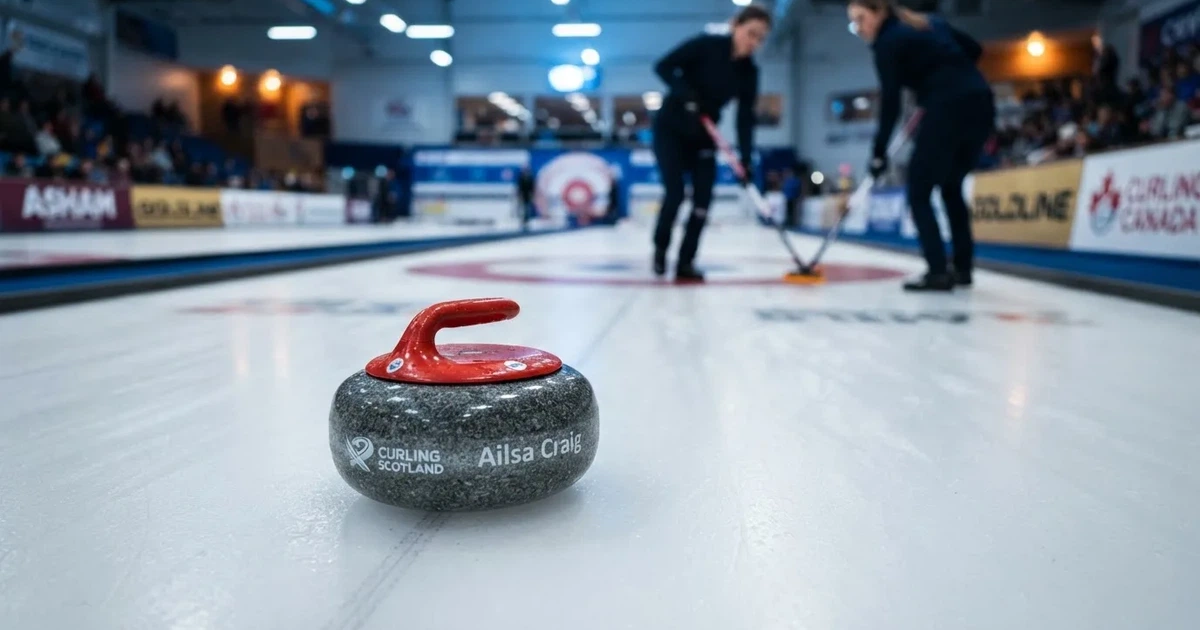
This guide is built around the choices a UK punter actually faces. Which bookmakers list curling when it matters, which ones shut up shop outside the championships, what a market looks like, what a value bet really is, and why no tip is ever certain. Concrete matches, predicted scores and named winners do not appear here. They cannot be invented honestly, and a reader who acts on a made-up pick loses real money on the page’s word. What the page does is set the conditions under which a tip — your own or someone else’s — becomes a decision rather than a guess.
Data current as of 27 October 2026, checked against the Gambling Commission’s public register of remote operating licences.
What curling betting actually offers a UK punter
Curling at betting sites is a small, seasonal sport. The market is busiest during the men’s and women’s World Curling Championships, the European Curling Championships, the Olympic Winter Games and the top-flight events on the World Curling Tour — the Grand Slam of Curling in North America, the World Men’s and Women’s Championships, and the European Championships when they fall outside an Olympic year. Mixed doubles, added to the Olympics in 2018, has its own short calendar and a narrower bookmaker offering. Outside these windows the in-play and outright books are quiet.

What a bookmaker tends to list, when it lists at all, follows the sport’s own structure. Outrights on the World Championships and the Olympic gold medal are the headline markets. Match winner, handicap and totals on individual games (typically 8 or 10 ends in international play) are the working markets. Set betting — the score after a fixed number of ends — sits with some operators but not all. The smallest field, mixed doubles, gets match winner and a handful of game props at the bigger books.
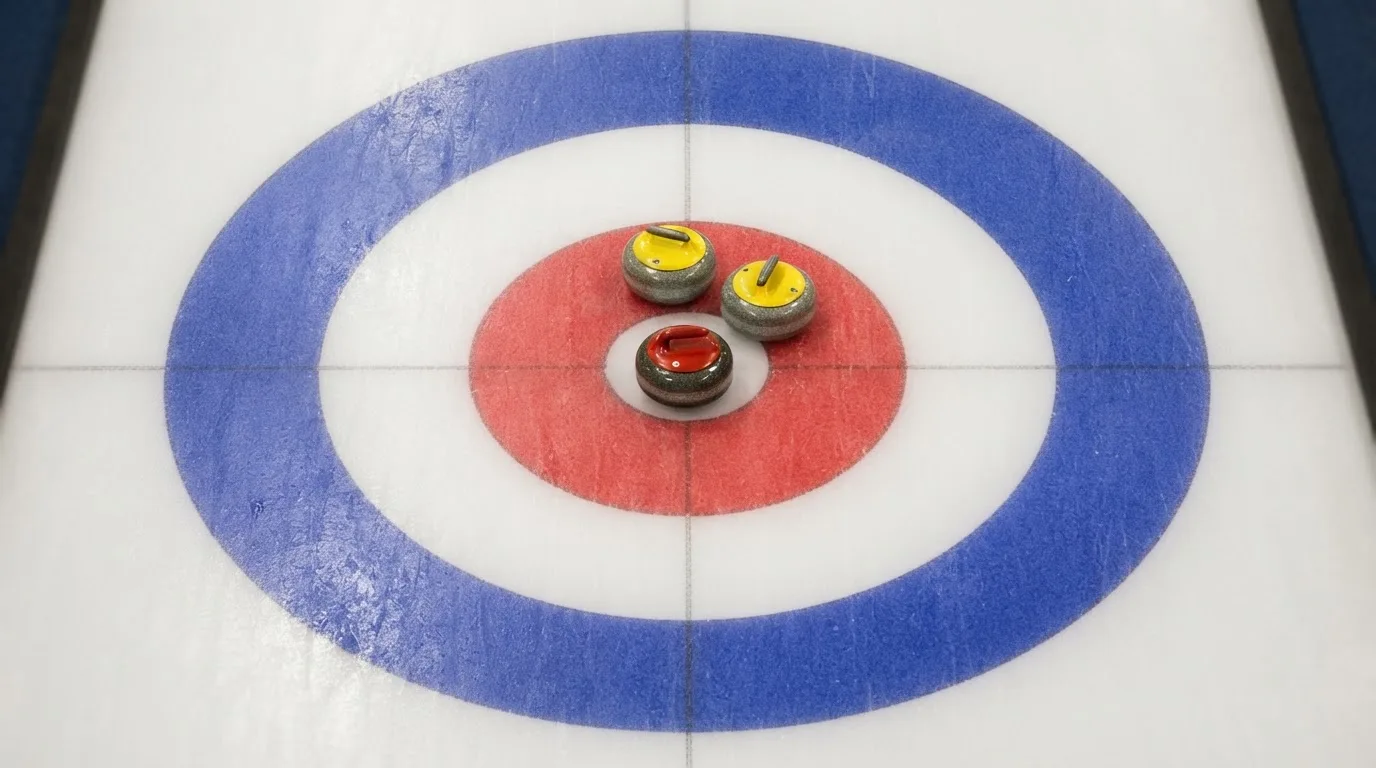
The sport itself is worth knowing in outline because the markets echo its mechanics. A curling team has four players (two in doubles), and each player throws two of the team’s eight stones. An end is the unit of scoring: after all 16 stones are thrown, the team with the stone closest to the button scores one point for each of its stones closer than the opponent’s nearest stone, and only stones in the house count. Tied games go to extra ends. The hammer — last stone of an end — goes to the team that did not score in the previous end; if an end is blanked, the hammer stays with the same team. Stones weigh between 17.24 and 19.96 kg under World Curling Federation rules. Curling became an official Olympic medal sport in 1998.
These mechanics explain the markets you meet. The hammer is a structural advantage — the team with it can choose to blank an end and keep it for the next — and bookmakers price that advantage into the handicap line. An end total is closer to a tennis game than to a football score: one end, possibly zero. That is why the totals markets on curling sit low and why the working handicap is small. The bookmaker’s market depth mirrors the sport’s small scoring unit.
How to bet on curling: the practical mechanics
The mechanics of placing a bet on curling are the mechanics of placing a bet on anything else at a UK-licensed bookmaker, and the licence frame applies regardless of the sport on the slip. Identity is verified before the first deposit: name, address and date of birth, and from 7 May 2019 this check is completed before any gambling, including with a free bet or bonus. Credit cards are banned for gambling in Great Britain, including credit-card-funded payments through an e-wallet, so debit cards, bank transfers and a closed set of e-wallets are what the cashier offers. Identity has to be cleared once, with photo ID and proof of address, and the account is then funded in the normal way.
The bet itself is a stake, a selection, a market. Decimal odds are the standard at the major books — 1.90, 2.50, 6.00 — though fractional odds (9/10, 6/4, 5/1) are still seen on UK sites and on racing pages; the conversion is a/b → a ÷ b + 1, so 5/1 reads 6.00 in decimal. A stake of £10 at decimal odds 2.50 returns £25, profit £15. The return includes the stake; the profit is the return minus the stake. A combination bet multiplies the odds of the legs into one price, and the punter needs every leg to win. An each-way bet is two bets of equal stakes on the same selection — one on the win, one on a place — so the stake doubles.
Two bookmaker mechanics worth knowing for curling. First, Best Odds Guaranteed (BOG) is a racing term, applied by William Hill from 8 AM on the day of the race to UK and Irish horse racing, on both single and multiple bets; it does not apply to ante-post, tote or pari-mutuel bets, and it has no obvious extension to curling. Second, betting exchanges run under a separate licence category — the remote betting intermediary licence — and let customers back and lay against each other. Matchbook holds that licence. Prices on an exchange are tighter on big events because there is no bookmaker margin built in by a bookmaker, only the commission the exchange takes on net winnings; outside the headline events the exchange offering on curling is thin. Spread betting, where losses can exceed the deposit, is regulated by the FCA, not the Commission, and is a different product altogether.
In-play betting on curling exists where the bookmaker has priced the match live. GB-licensed operators offer in-play under their own licence conditions; the legal frame does not call it “unrestricted”, and the controls are the operator’s. For a sport with quiet in-play liquidity, the in-play price is the bookmaker’s price and is set with a wider margin than the pre-match line.
Curling betting odds and what they say
Odds are the bookmaker’s probability of an outcome, dressed as a return. A decimal price of 2.00 implies a 50% chance; 4.00 implies 25%; 1.50 implies about 67%. The implied probability of a price is 1 ÷ odds, expressed as a percentage. Reading the price means reading the implied probability — and then asking whether you think the true probability is higher or lower, which is what a value bet is.
The bookmaker’s margin is the gap between the implied probabilities of all the outcomes and 100%. For a two-way market priced at 1.90 and 1.90, the implied probabilities are 1 ÷ 1.90 and 1 ÷ 1.90, both about 52.63%; the two add to 105.26%, the overround is 5.26%, and the margin is 5.0%. That is the bookmaker’s take of every pound bet on this market. For a three-way market — home, draw, away — the three implied probabilities add to more than 100%, and the margin is the difference.
The margin belongs to the bookmaker. It sits inside every price and is the reason a “fair” price never appears on the slip — even when the market is correctly read, the punter pays the margin on the way in. A 5% margin on a curling match winner, applied to a turnover of £500 in qualifying bets, leaves about £25 of expected cost before the bonus is even touched. The figures are illustrative — a price of 1.90/1.90 is an example, not a quoted line — and the margin of one market (match winner) is not the margin of another (totals, handicaps, combination). Real margins on curling sit where the bookmaker sits: deeper on the World Championships and the Olympics, wider on the smaller fields where liquidity is thinner.
Two consequences follow. First, the only number that matters is the implied probability versus your own. A price of 3.00 is a value if you think the true probability is higher than 33.33%. A price of 1.50 is a poor bet if you think the true probability is below 66.67%. The margin is paid either way. Second, comparing bookmakers is comparing margins on the same market, and the bookmaker with the smaller margin on a curling match winner keeps less of every pound and is, on a like-for-like price, the cheaper place to bet. The audit of bookmakers further down the page compares licences and what the operator’s own terms state about curling — it is not a margin table because the margin is not given for every brand and every event in research.
Curling betting markets and what they mean
The markets a punter meets on curling are smaller than on a major sport, and the depth varies by event. What follows is the working set, with the reading each market asks for.
Outright winner. The market for the next World Championships, the next European Championships, the next Olympic gold medal. Outrights settle when the event does, settle on the official result, and the price at the start of the event is set months in advance. The margin is widest at the book end and tightens as the field narrows.
Match winner. The market for a single game. Two-way or three-way depending on the format — a knockout round may carry a draw price, a round-robin often does not. This is the working market and the one the bookmaker prices most carefully.
Handicap. The bookmaker’s line on how many ends a stronger side is expected to win by. The handicap sits small because ends are a low-scoring unit. Reading a handicap means reading the strength gap between two teams and whether the line is right.
Total ends / total points. The over/under line on ends played or points scored. Ten-end international games can run to extra ends, and a blanked end keeps the total low. The market is closer to a totals market on a low-scoring sport — small numbers, small lines.
Set betting. The score after a fixed number of ends. This market sits with some operators and not others and depends on whether the bookmaker carries the in-running feed.
Correct score. The score after a fixed number of ends, or at full time. Smaller markets, tighter margins only at the bigger books.
Player props. Stones thrown percentage, performance lines on the lead, the second, the third and the skip. Sits with the top operators on the bigger events and is thin elsewhere.
Team props. Number of ends won, number of stones stolen, number of blanks. Sits with the bigger books on the bigger events.
The deeper the event, the more markets. The Olympics and the World Championships carry the most. The European Championships and the Grand Slam of Curling events carry most of the working set. The mixed doubles field carries match winner, perhaps a handicap, and little else.
Curling tournaments British punters can bet on
The events that move the market are not many, and they sit on a predictable annual calendar. A punter who knows the calendar knows when the bookmakers will price curling at all.
Olympic Winter Games. The headline event. Men’s and women’s four-person curling has been an Olympic sport since 1998; mixed doubles joined the programme in 2018. The Olympic cycle is four years, with the next Winter Games setting the outright market for the year before. The winter Olympics are not the same as the summer Olympics and run on a different cycle, so a “this year’s Olympics” framing applies only in an Olympic year.
World Curling Championships. Annual, men’s and women’s, run by the World Curling Federation. The men’s and women’s championships are the headline annual events outside an Olympic year and carry the deepest market.
European Curling Championships. Annual for the A-division men’s and women’s fields, with B- and C-division tiers below. The European Championship is the working competition for European national teams and is the first event many British punters see in the curling calendar.
World Mixed Doubles Championship. Annual, run by the World Curling Federation. The mixed doubles field has its own calendar and a separate, smaller bookmaker offering.
Grand Slam of Curling. A series of top-tier events on the World Curling Tour, mostly in North America. The bigger bookmakers list the Tour Final and some of the regular Slams.
Continental Cup, Continental Championships. Lower-tier events with thinner bookmaker coverage.
The pattern matters because the volume of markets follows the calendar. A punter who wants a curling outright bets in the run-up to the World Championships and the European Championships, and on the Olympic Winter Games when they fall. The rest of the year the market is sparse, the margin is wider, and the choice of bookmakers is narrower.
Curling betting sites: who actually lists the sport
Not every UK-licensed bookmaker lists curling at every event, and the set that lists the working markets is smaller than the headline set. What follows is what research carries about each operator in the reviewed set, on the licence, the operator’s own terms, and the published facts that bear on curling. The audit of bookmakers sits beside this, in the table that follows, and the operator write-ups sit below it. Every operator in this set holds a Gambling Commission remote licence for general betting on real events, and the Commission’s public register is the whole test of that — a licence number is verifiable there and nowhere else.
Brands mentioned elsewhere in the inputs as background — for example Unibet (regulated by Platinum Gaming Limited under account 45322) and bet365 (official global betting partner of the UEFA Champions League) — appear in research for the licence the operator runs on, the markets it carries, or a side feature such as Best Odds Guaranteed. They are not the subject of a write-up below unless the reviewed set names them, and the table’s row is what they contribute here. A brand a reader sees named but never reviewed reads as an unfinished draft.
Top 10 UK-Licensed Bookmakers for Curling Betting
| Bookmaker | Gambling Commission licence | Position on curling |
|---|---|---|
| Kalooki Sportsbook | 057730-R-333396-005 (account 57730), Kalooki Sportsbook Limited | Curling listed only around the headline events; smaller sportsbook, deeper on niche competitions outside the mainstream |
| Octobet | 062545-R-337248-006 (account 62545), Octopus Game Limited | Curling coverage follows the championship calendar; sportsbook is broader than the curling offering |
| William Hill | 039225-R-319373-015 (account 39225), WHG (International) Limited | Curling listed on the major championships; BOG is a racing product and does not extend to curling |
| Bet Ahoy | 100094-R-341742-003 (account 100094), Bet Ahoy Ltd | Curling listed around the headline events; smaller, newer sportsbook |
| Betfred | 039544-R-319290-010 (account 39544), Petfre (Gibraltar) Limited | Curling sits inside a 21-sport book; the licence covers real events only |
| Matchbook | 039504-R-319407-024 (account 39504), Triplebet Limited | Curling via the betting intermediary licence, where liquidity exists — back and lay on the working events, thin elsewhere |
| Star Sports | 009177-R-104555-019 (account 9177), Star Racing Limited | Curling listed around the headline events; bookmaker known for trader-led support, also by phone |
| BetUK | 039198-R-319450-029 (account 39198), LeoVegas Gaming PLC | Curling listed on the major championships; sports welcome offer is football- and acca-shaped and is not directly relevant to curling |
| Tote | 054779-R-331321-008 (account 54779), TDCO Limited | Pool-betting heritage, remote licence for real events; curling covered where the operator lists it |
| Midnite | 101839-R-342850-001 (account 101839), Midnite Limited | Curling listed on the headline events; in-play and acca builder features carry across sports |
These ten operators all hold a Gambling Commission remote licence for general betting on real events. They are not the only licensed operators, and the placement in this list is not a licence endorsement — it is the set research routes into this comparison. No brand is the only licensed one.
How to compare these bookmakers on curling
The comparison that matters for a curling punter is narrower than the comparison a football punter runs. Three things to look at.
The licence, first. Every operator in the table above holds a remote licence for general betting on real events. That is the base condition. Matchbook holds the additional remote betting intermediary licence — the licence for a betting exchange — and is the only operator in the set under that category. The remote licence category is not a ranking; it is the legal permission the operator runs on. The Commission’s public register is the test.
The operator’s own terms on curling, second. Each operator’s own site is the source for what is actually offered. The headline offer — match winner, handicap, total ends — sits with most operators on the World Championships and the Olympics. The depth of the menu below that headline (set betting, correct score, player props) varies by event and by operator, and is checked on the operator’s own site before a bet is placed, not assumed from the licence category.
The side features, third. BOG is a racing product and does not extend to curling. Cash out, bet builder, acca insurance and price boosts are sport-level features that sit on curling only where the operator has priced the working events — and they are absent on a sport where liquidity is thin. Matchbook’s exchange model is a different product altogether: back and lay against other users, with the commission the exchange takes on net winnings as the cost, rather than the bookmaker margin. For a punter who wants the exchange model on curling, Matchbook is the operator in the set that runs it.
The choice that falls out of this is plain. A punter who wants the deepest outright market on the World Championships and the Olympics uses one of the bigger sportsbooks — William Hill, Betfred, BetUK, Midnite — for the menu and the working liquidity. A punter who wants the exchange model uses Matchbook, accepting that the exchange liquidity on curling is thinner than the sportsbook liquidity on the same events. A punter whose bet is a single £10 match winner on a smaller European Championship match uses whichever operator lists the match at all, and the margin on that event is the operator’s margin.
Kalooki Sportsbook
Kalooki Sportsbook is operated by Kalooki Sportsbook Limited under Gambling Commission account 57730 (remote licence 057730-R-333396-005), and is a GAMSTOP member. The site is a smaller UK sportsbook with a working menu on niche competitions outside the mainstream, and curling sits inside that menu on the headline events. The licence is the right category — general betting on real events — and the GAMSTOP framework means a customer who has self-excluded through GAMSTOP cannot open an account.
What this means for curling. The bookmaker is the right shape for a punter who bets on smaller championships and is happy with a slimmer menu. The depth on the World Championships and the Olympics is narrower than at the bigger books, and the in-play offering on curling follows the event’s liquidity. For a punter whose curling calendar is the European Championships and the B-division fields, the menu is likely to fit. For a punter whose curling calendar is the headline events only, the bigger books are the deeper choice.
Octobet
Octobet is operated by Octopus Game Limited under Gambling Commission account 62545 (remote licence 062545-R-337248-006). The sportsbook is broader than the curling offering, and the welcome structure is a 50% back as a free bet up to £50 plus a £10 casino bonus for new customers — a mixed-product framing the reader should note, because a free-bet structure sits on a different settlement path from a cash bonus. The licence category is general betting on real events.
What this means for curling. The sportsbook is built for a punter who wants curling alongside the bigger sports, and the welcome structure’s free-bet framing matters for the value calculation a punter runs before claiming. The mixed-product casino element sits outside the betting line. For a punter who wants curling inside a broader bookmaker menu, Octobet fits the bill; for a punter whose calendar is the headline curling events and nothing else, the bigger books carry more.
William Hill
William Hill is operated by WHG (International) Limited under Gambling Commission account 39225 (remote licence 039225-R-319373-015). The operator holds the standard licence for general betting. Best Odds Guaranteed runs from 8 AM on the day of the race on UK and Irish horse racing, on single and multiple bets; it does not apply to ante-post, tote or pari-mutuel bets, and it has no obvious extension to curling.
What this means for curling. William Hill is the bigger-sportsbook choice, with a working menu on the World Championships, the European Championships and the Olympics. The BOG feature is irrelevant on a curling slip. For a punter who wants curling inside a sportsbook that carries every sport on the British calendar, William Hill is one of the deeper choices; for a punter who wants a curling-specialist menu, it is the broader bookmaker rather than the specialist.
Bet Ahoy
Bet Ahoy is operated by Bet Ahoy Ltd under Gambling Commission account 100094 (remote licence 100094-R-341742-003). The welcome structure is a £10 sports bet and a £5 acca together once the qualifying bet is placed, made up of two free-bet portions settled separately. It operates under the same general betting category.
What this means for curling. Bet Ahoy is a smaller, newer sportsbook, and curling sits inside the menu on the headline events. The smaller sportsbook shape is the right fit for a punter whose curling calendar is the working events and whose other betting is mainstream. For a punter whose calendar is the Olympics and the World Championships only, the bigger books carry the deeper outright market.
Betfred
Betfred is operated by Petfre (Gibraltar) Limited under Gambling Commission account 39544 (remote licence 039544-R-319290-010). The app covers 21 sports plus over 2,000 casino-style games, and the licence category is general betting on real events.
What this means for curling. Betfred is the broader sportsbook with a curling offering inside the 21-sport menu, on the headline events. The casino-style games are outside the betting line and a mixed-product welcome, where one exists, would sit under the same regulatory frame as any other UK-licensed bookmaker. For a punter who wants curling inside a high-street-named sportsbook with a working menu on football, horse racing and the bigger sports, Betfred is the established choice; for a punter who wants a curling-specialist menu, it is the broader bookmaker.
Matchbook
Matchbook is operated by Triplebet Limited under Gambling Commission account 39504 (remote licence 039504-R-319407-024). The licence category is general betting on real events plus remote betting intermediary — the licence for a betting exchange. The app carries Bet Builder, multiples, in-play betting and live streaming of horse racing and greyhounds.
What this means for curling. Matchbook is the only operator in the reviewed set running on a betting exchange licence, and the exchange model is different from the sportsbook model. Customers back and lay against each other, and the cost is the commission the exchange takes on net winnings rather than the bookmaker margin. The exchange liquidity on curling is thinner than on football or horse racing, and the working events are the headline events only. For a punter who wants the exchange model on curling — the back-and-lay mechanic, the ability to lay a position as well as back one — Matchbook is the operator in the set that runs it; for a punter whose curling bet is a single match winner, the sportsbook model at the bigger books is the simpler shape.
Star Sports
Star Sports is operated by Star Racing Limited under Gambling Commission account 9177 (remote licence 009177-R-104555-019). The bookmaker’s support route is trader-led, and customers can speak to a trader directly on 08000 521 321 to open an account, place bets or ask customer queries, with email support at [email protected].
What this means for curling. Star Sports is the trader-led sportsbook, and curling sits inside the menu on the headline events. The trader-led support is a feature for a punter who wants to talk through a bet before placing it — unusual in an online-only market and useful when the event is one the punter is less sure about. For a punter who bets curling inside a sportsbook with a personal service, Star Sports is the unusual fit; for a punter who bets curling as part of a wider sportsbook, the bigger books carry more.
BetUK
BetUK is operated by LeoVegas Gaming PLC under Gambling Commission account 39198 (remote licence 039198-R-319450-029). The sports welcome structure is four £10 free bets — two football accumulators of 4+ selections and two multiples of 2+ — once a £10-or-more deposit and a sports bet are placed within 7 days of registering.
What this means for curling. BetUK is a LeoVegas-operated sportsbook with a working menu on the headline events, and the welcome structure is football- and acca-shaped, which is the natural shape for a British sportsbook. A punter whose welcome bet is a curling match winner does not fit the football-shaped welcome; the bet slips over onto the working curling market without the free-bet framing. For a punter who wants curling inside a sportsbook with a football-shaped welcome, BetUK is the broader choice; for a punter whose calendar is curling only, the welcome’s shape is irrelevant.
Tote
Tote is operated by TDCO Limited under Gambling Commission account 54779 (remote licence 054779-R-331321-008). Tote’s heritage is pool betting — a separate licence category in the GB frame — and the remote licence is for general betting on real events. Pool betting on horse racing is a separate licence and duty and is outside the curling line.
What this means for curling. Tote is the pool-betting heritage bookmaker, and curling sits inside the menu where the operator lists it. The pool-betting shape is familiar from horse racing, where the dividend is paid from the pool rather than from a fixed-odds line; on curling the operator offers fixed-odds markets on the working events. For a punter who bets curling inside a sportsbook with a racing heritage, Tote is the unusual fit; for a punter who bets curling as part of a wider sportsbook, the bigger books carry more.
Midnite
Midnite is operated by Midnite Limited under Gambling Commission account 101839 (remote licence 101839-R-342850-001). The site shows in-play events, an acca builder, popular accas and price boosts with maximum-stake limits.
What this means for curling. Midnite is a sports-and-casino bookmaker with a working menu on the headline events, and the in-play and acca builder features carry across sports — including curling, where the bookmaker has priced the working events. The price boosts sit on maximum-stake terms and are an operator feature, not a market feature. For a punter who wants in-play and acca features on curling, Midnite is a fit; for a punter whose calendar is the headline events only and whose bet is a single match winner, the acca builder is irrelevant.
Responsible gambling and the British frame
Curling sits inside the same safer-gambling frame as every other sport on a UK-licensed bookmaker, and the frame applies to the punter as much as to the operator. GAMSTOP is the national multi-operator online self-exclusion scheme and a mandatory licence condition for online operators since 31 March 2020. Exclusion periods are six months, one year, five years, or five years with auto-renewal, and after the minimum period the exclusion stays in place for a further seven years unless the customer asks GAMSTOP to remove it. GAMSTOP covers online sites and apps; betting shops use a separate service.
Financial vulnerability checks (LCCP condition 3.4.4) have been in force since 30 August 2024 and apply to licensed remote betting when a customer’s deposits minus withdrawals exceed £150 in a rolling 30 days; the check is a public-record check (bankruptcy or county court judgments, for example), not an income check and not a credit reference check. Financial risk assessments — the affordability checks that have been widely discussed — have been announced in a staged plan (Commission article of 7 July 2026) with no start date. Deposit limits: operators must offer a gross deposit limit on a fixed time frame; the first changes have applied since 31 October 2025, a second phase was postponed to 30 September 2026, and whether it is live is not established. The punter chooses the limit; no state-set deposit or loss ceiling exists.
A curling bet is small in the wider picture, but the frame treats it the same way as a football bet: identity verified, age 18, no credit-card gambling, no anonymous play. Help is at GamCare (the National Gambling Helpline), GambleAware, NHS gambling clinics, and Gamblers Anonymous. The frame is the same on every sport and at every operator in the reviewed set, and a punter who wants to limit themselves on curling specifically — staking fewer bets, capping a deposit, stepping away during the championship season — sets that limit with the operator or with GAMSTOP, not by changing the sport.
Legality of curling betting in Great Britain
Curling betting in Great Britain runs on the same Gambling Commission licence frame as football, tennis and horse racing. The framework is the Gambling Act 2005, which covers England, Scotland and Wales. Northern Ireland is outside the Act and has its own older law, so a GB-licensed operator is licensed for Great Britain and not for Northern Ireland. Since the Gambling (Licensing and Advertising) Act 2014, an operator whose remote facilities are used in Great Britain needs a Commission licence wherever it is based; a Curaçao, Maltese or Gibraltar licence is not a substitute.
Betting licence types matter because each type is a separate permission. Remote general betting standard (real events) is the licence type for fixed-odds betting on real sporting events — curling sits here, along with football and tennis. Remote general betting standard (virtual events) is the licence for virtual sports. Remote betting intermediary is the licence for a betting exchange; Matchbook holds this alongside its general betting licence. Remote pool betting is the licence for pool betting on horse and dog racing. Betting on curling runs on the real events licence, and the operator’s licence category is the public register’s way of stating what is covered.
What may be bet on is not statutorily listed. An operator holds a licence for a category and offers markets under its own rules and the Licence Conditions and Codes of Practice (LCCP). In-play betting exists where the operator has priced the match live; the legal frame does not call it “unrestricted” and the controls are the operator’s. Esports, politics, TV shows and novelty markets are offered by GB bookmakers; no statutory prohibition on these was found.
Bonuses and wagering are bounded. Wagering requirements on bonuses are capped at 10x since 19 January 2026, and mixed-product promotions — an offer that requires gambling on two or more product types such as betting, casino, bingo and lottery — are banned. The cap applies to bonuses with a wagering condition; whether it applies to free bets with no wagering condition, and any cap on the money value of a bonus, are not established. The cap sits on the operator, not on the punter.
Tax on winnings: the player pays no tax on betting winnings in Great Britain. General Betting Duty is the operator’s tax on gross profits, currently 15%; from 1 April 2027 a new remote betting rate of 25% applies within it, while remote bets on UK horse racing, bets on self-service betting terminals in licensed premises, pool betting and in-person betting stay at 15%. Until 1 April 2027 the remote rate stays at 15%. Whether operators pass duty on through odds is not established, and the player is not charged duty.
Offshore is the line that matters. A GB licence is compulsory at the point of consumption. Providing gambling facilities in Great Britain without the licence the Act requires is an offence under section 33 of the Gambling Act 2005 (on summary conviction up to 51 weeks’ imprisonment, a fine up to level 5, or both; six months in Scotland) — aimed at the operator. No offence aimed at a customer who merely bets on an unlicensed site was found: state the loss of protection — no GAMSTOP coverage, no Commission complaints route, no approved dispute-resolution body, no British consumer redress if funds are withheld, not bound by the 10x bonus cap or the £150 vulnerability check — and never call it “legal to use”. Enforcement is disruption, not blocking: cease-and-desist notices, search-engine referrals, work with registrars, hosts and payment providers.
Building a curling prediction: how a tip is built
A curling tip is a probability statement dressed as a name. The honest version of the tip is built from a few inputs.
Form. Recent results at the same level — last season’s World Championships, the most recent European Championships, the run of Grand Slam events. Form in curling sits within small margins because the scoring unit is small; a team that blanked ends and held the hammer through the tournament was working the structure, and the structure travels.
Head-to-head. Meetings between the same teams in the same season. Curling’s head-to-head is more meaningful than in many sports because the team composition — lead, second, third, skip — is stable across a season and the matchup reads cleanly.
Line-ups. The four-player roster matters because each player has a defined role. The skip calls the line; the third throws the hit weights; the second sets up the guards; the lead places the first stones. A team missing a third or a skip is a different team from the one on the qualifying leaderboard.
Draw shot challenge and shooting percentages. Stones thrown percentage is the cleanest single statistic on a curling team. The published figures split by role and by draw weight; the skip’s draw percentage is the most-cited number and the most predictive.
Ice conditions and venue. Pebble, ice temperature and arena humidity change the curl. The bigger events publish ice notes; the smaller ones do not.
Hammer and blanking. A team with the hammer in the last end of a close game has the structural advantage. The hammer advantage travels with the team and shows up in the handicap line.
Bookmaker’s odds. The published prices are the market’s own probability statements. They carry the bookmaker’s margin and they reflect the market’s view. The odds are not a tip — they are the input a tip is judged against.
A value bet is what falls out of these inputs. It is a price above the true probability once the bookmaker’s margin is taken out. The punter’s job is to estimate the true probability better than the market — and the price is the market’s statement of what it thinks the true probability is. Where the punter’s estimate is higher, the price is a value; where it is lower, the price is a poor bet. No estimate is ever certain. The margin is paid either way.
Why no tip is ever certain
A tip is a probability statement, and a probability statement is not a certainty. Three reasons.
Small scoring unit. A curling end scores one point for each stone closer than the opponent’s nearest stone. The scoring unit is small, the variance per end is high, and a single mistake — a thin guard, a heavy draw, a rolled take-out — flips the end. A team that wins six of ten ends wins the game; a team that wins five of ten goes to an extra end. The structure of the game rewards the team that makes the fewest mistakes, but it does not reward any team with certainty.
Structural advantages are not guarantees. The hammer is a structural advantage, not a guarantee. A blanked end keeps the hammer with the same team; a stolen end flips it. A team down one with the hammer in the last end is favourite but not certain.
Ice and conditions. Pebble changes through a game and through a week. A team that reads the ice on day one may be reading it wrong on day three. The published shooting percentages are averages over the season, not a guarantee for the next stone.
The bookmaker’s margin is paid either way. A tip that beats the market by 2% still loses the margin over a hundred rolls. A tip that beats the market by 5% is the rarer thing, and the punter who finds one is the punter who has a clean edge on the input — form, line-ups, shooting percentages, ice notes, head-to-head — and not the punter who has read a tip sheet.
A tip sheet is a guess dressed as analysis. A punter who reads a tip sheet has read the guess; the analysis is what the punter runs against the published price. The honest use of a tip is to take the published price as the market’s probability, take the tip as another probability statement, and ask which one is closer to the punter’s own estimate. That is what a tip is for. It is not a name to back.
Staking and bankroll discipline
Staking is the discipline that turns a tip into a long-run decision. The cleanest staking frame for a curling punter is the flat stake: a fixed percentage of the bankroll on every bet, set at a level the punter can sustain through a quiet month and a busy one. A 1% bankroll stake on a curling outright at 6.00 risks 1% of the bankroll to make 5% on a win; the same stake at 2.00 risks 1% to make 1%.
The flat stake disciplines two things. It stops the punter from over-staking a “sure” tip — a curling tip is never a sure tip — and it stops the punter from chasing a loss by raising the stake on the next bet. The chasing stake is the stake that empties it.
A second frame is the Kelly criterion, where the stake is set by the edge: stake = edge ÷ odds. The Kelly stake is larger for a larger edge and smaller for a smaller edge, and is the right shape for a punter who has a clean edge on the input. The punter who has no clean edge should not be running a Kelly stake.
A third frame is the unit system: a fixed unit size — say £10 — and a fixed number of units on every bet, set by the punter’s confidence in the price. The unit system is the simplest and the most common on curling, where the bets are smaller and the punter’s bankroll is modest.
Bankroll discipline is the frame around the staking. A punter sets a bankroll — the figure is the punter’s own, set at a level a punt can be lost without changing the punter’s life — and bets from that bankroll. A bankroll that is half the punter’s holiday money is too large. A bankroll that is a month’s rent is not a bankroll.
Worked example: reading the price on a curling match
Two teams, A and B. The bookmaker’s match winner prices are A 1.90, B 1.90. The punter’s own estimate, built from form, head-to-head, line-ups and ice notes, is 55% A, 45% B. The implied probabilities at 1.90 are 52.63% A, 52.63% B. The margin is 1.05.26 − 1.00 = about 5.26%. The payout share is 1 ÷ 1.0526 = about 95.0%.
The price at 1.90 is below the punter’s estimate on A and above the punter’s estimate on B. Backing A at 1.90 is a poor bet — the punter’s estimate is 55% and the market’s price implies 52.63%. Backing B at 1.90 is a value bet — the punter’s estimate is 45% and the market’s price implies 52.63%. The margin is paid on both bets. The value bet is the side where the punter’s edge beats the margin.
A £10 stake on B at 1.90 returns £19 (decimal return = stake × odds = 10 × 1.90), and the profit is £9. The punter’s expected value on the bet is (45% × £19) + (55% × £0) − £10 = £8.55 − £10 = −£1.45, on the punter’s own estimate. The negative expected value is the margin the punter pays. The punter’s edge over the market is the gap between the punter’s 45% and the market’s 52.63%, which is in the punter’s favour on B. On A, the punter’s 55% is above the market’s 52.63% — the punter’s edge over the market is positive on A as well, but the bet is still negative expected value because the punter’s probability is below 1 ÷ 1.90 = 52.63% only on B.
Wait — the punter’s estimate is 55% A, 45% B. The market’s price implies 52.63% on both. The punter’s edge over the market is positive on A (55% > 52.63%) and negative on B (45% < 52.63%). Backing A at 1.90 is the value bet. The expected value on A is (55% × £19) + (45% × £0) − £10 = £10.45 − £10 = +£0.45. Backing B is a poor bet — expected value (45% × £19) + (55% × £0) − £10 = £8.55 − £10 = −£1.45.
The point of the worked example is not the name of the winner. It is the arithmetic that decides whether a price is a value bet. The margin sits inside the published price; the punter’s edge sits inside the punter’s estimate; the value bet is the side where the punter’s edge beats the margin. The figures are illustrative — a price of 1.90/1.90 is an example, not a quoted line — and the margin on a real curling market is whatever the bookmaker publishes on the day.
A punter’s checklist before a curling bet
A short list, set down before the bet.
Is the bookmaker licensed? The Gambling Commission’s public register, searched by business name, trading name, domain or account number, is the whole test. A licence number that does not appear there is not a licence.
Is the event covered? The headline events — the World Championships, the European Championships, the Olympic Winter Games, the Grand Slam of Curling — are the events the bigger books list. The smaller events are thinner.
Is the price a value? The implied probability versus the punter’s own estimate. The margin sits inside the price.
Is the stake set? Flat stake, Kelly stake or unit stake, set at a level the punter can sustain. The stake is set before the bet, not adjusted to chase a loss.
Is the offer worth taking? A welcome structure that fits the punter’s calendar is a welcome structure worth taking; one that does not is a structure that costs the punter on the way in. The 10x wagering cap and the mixed-product ban sit on every UK-licensed bookmaker.
Is the account in good standing? Identity verified, age 18, no credit-card funding, deposit limit set if the punter wants one, GAMSTOP in place if the punter wants one. The frame is the same on every sport and at every operator.
Frequently Asked Questions
How is the return on a curling bet worked out from the stake and the odds?
For a single bet, the return is the stake multiplied by the decimal odds. A £10 stake at decimal odds 2.50 returns £25 (decimal return = stake × odds = 10 × 2.50); the profit is £15. For a combination bet, the odds of the legs multiply into one price, and every leg must win for the bet to pay out. The return includes the stake; the profit is the return minus the stake.
What is a value bet, and why is no curling tip ever certain?
A value bet is a price above the true probability once the bookmaker’s margin is taken out. The implied probability of a price is 1 ÷ odds, and the margin is the gap between the implied probabilities of all outcomes and 100%. No tip is certain because the scoring unit in curling is small, the variance per end is high, and the published prices carry the bookmaker’s margin. A tip is a probability statement; the punter’s job is to estimate the true probability better than the market.
Can you bet on curling in Great Britain?
Yes, at any Gambling Commission-licensed bookmaker that lists the sport, when the event is priced. The headline events — the World Curling Championships, the European Curling Championships, the Olympic Winter Games, the Grand Slam of Curling — are the events the bigger books list. Outside those windows the market is thinner and the bookmaker list is narrower.
What is the bookmaker’s margin, and how can it be seen in the odds?
The bookmaker’s margin is the gap between the implied probabilities of all outcomes of a market and 100%. For a two-way market at 1.90 and 1.90, the implied probabilities are 52.63% on each side, the total is 105.26%, the overround is 5.26%, and the margin is 5.0%. The margin sits inside every price and is the bookmaker’s take of every pound bet on the market. A smaller margin on the same market is a cheaper place to bet.
How is it checked that a bookmaker holds a Gambling Commission licence?
The Commission’s public register, at the regulator’s own site, is the whole test. The register is searched by business name, trading name, domain or account number, and lists the licence category, the licence holder and the trading names under the licence. A licence number that does not appear there is not a licence. Since the Gambling (Licensing and Advertising) Act 2014, an operator whose remote facilities are used in Great Britain needs a Commission licence wherever it is based; a Curaçao, Maltese or Gibraltar licence is not a substitute.
Tennis, darts & cue sports – Fast Payout
Content created by the «Fast Payout» team
