
Where Skrill Actually Works at British Bookmakers in 2026
 Available in US
Current as of 27 October 2026 · verified against the Gambling Commission’s public register
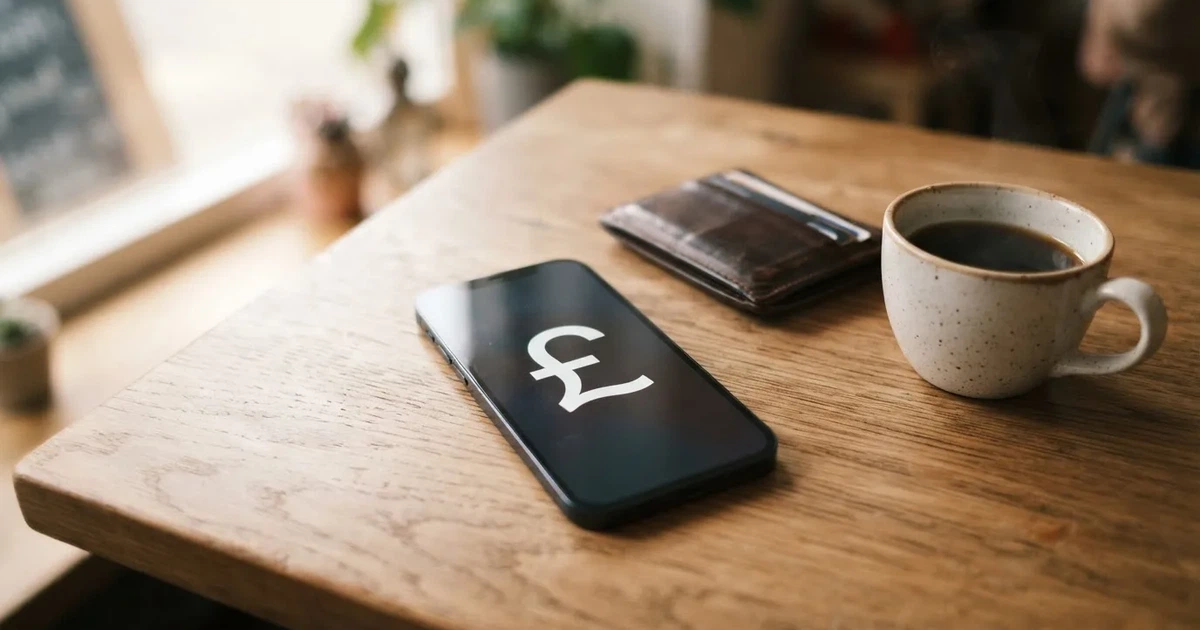
Skrill shows up in two places on a British punter’s screen: the deposit screen, and the cashier’s withdrawal list. Between those two moments sits everything that actually matters — whether the operator accepts the wallet at all, what the minimum is, what the wagering requirement does to a bonus if one is claimed, and how long the money takes to come back. This page works through that sequence for six bookmakers that hold a Gambling Commission remote licence, names the terms each one sets on its own cashier page, and reads the bonus small print for what it costs the customer who claims it.
Credit cards have been banned for gambling in Great Britain since 14 April 2020, so Skrill’s role as an e-wallet sitting beside debit cards and bank transfers matters more in Britain than in markets where credit still loads. Identity is checked before the first deposit, which rules out anonymous play at any licensed site. No British rule named a particular e-wallet, so the practical question — which operator takes Skrill, from what minimum, and how fast — is answered only from each operator’s own terms.
The Short List: Six GB-Licensed Bookmakers That Take Skrill
The comparison covers six brands, each named on the Gambling Commission’s public register against a remote general betting standard (real events) licence. The order is not a leaderboard; it is the sequence in which the table is built up from the public register, so a brand sitting fifth is not worse than the one sitting second.

| Brand | Gambling Commission remote licence and holder | What the operator’s own terms state on Skrill |
|---|---|---|
| QuinnBet | 061011-R-335683-004 (QuinnBet (Gibraltar) Limited) | Skrill is not accepted; deposits go through debit cards, Apple Pay, OpenBanking and Revolut |
| DAZN Bet | 048756-R-327274-019 (DZBT Limited) | Skrill is accepted from £5, alongside debit card, Apple Pay, Paysafecard and Trustly |
| Star Sports | 009177-R-104555-019 (Star Racing Limited) | Skrill support carried only as listings report it; cashier terms not confirmed |
| Bet Ahoy | 100094-R-341742-003 (Bet Ahoy Ltd) | Skrill is not part of the documented offer set |
| Sky Bet | 067370-R-341330-005 (SBG Sports Limited) | Skrill support carried only as listings report it; cashier terms not confirmed |
| Betboro | 044181-R-324363-007 (Webmedia Development N.V.) | Skrill is not part of the documented offer set |
Two of the six confirmed on their own pages that they do not take Skrill as a deposit method. QuinnBet’s help centre states directly that Skrill and Neteller deposits are not accepted. DAZN Bet’s help section names Skrill among five deposit methods, with a £5 starting deposit and no processing fees attached. For the remaining three, the cashier’s own statement on Skrill could not be confirmed — the brand appears on this list because it holds a Commission licence, not because its Skrill support is verified.
The pattern is not arbitrary. A bookmaker whose banking stack sits behind OpenBanking and debit cards has a commercial reason to keep Skrill out — every additional payment rail costs the operator in integration fees and chargebacks. A bookmaker whose customers skew younger, or that competes on speed, tends to add Skrill and Neteller because those wallets are already in punters’ hands. QuinnBet and Bet Ahoy and Betboro sit closer to the first shape; DAZN Bet sits closer to the second. The verdict on a wallet choice is therefore partly a verdict on which business model the punter is buying from.
How the Wallet Works, and What Skrill Actually Is
Skrill began life as Moneybookers, founded on 27 July 2001 in London. The company rebranded to Skrill starting in September 2011, with the transition completed by 2013. In 2015 Optimal Payments (later Paysafe) acquired Skrill for €1.1 billion, and Skrill is now a subsidiary of Paysafe Limited, headquartered in London.

The product is a digital multi-currency wallet handling online payments, money transfers, card payments, bank transfers and conversion of funds to cryptocurrency. International money transfer services launched in February 2018; cryptocurrency trading followed in July of the same year. Skrill has been a visible sponsor in British sport: the European Poker Tour, English football’s National League, AC Milan since May 2020 and Leeds United since March 2021.
For a punter, what matters is that Skrill sits between the bank and the bookmaker. Loading the wallet from a debit card or bank transfer takes seconds; moving the balance into a betting account is then a separate transaction. The same plumbing works in reverse at withdrawal, with the bookmaker pushing the balance back to Skrill and the punter then choosing whether to leave it there, send it to a bank, or move it elsewhere. A security breach exposing around 4.5 million Skrill customer records from 2009 was discovered in October 2015, which is the reason Skrill’s login pages now run a heavier verification step than most wallets.
Who Can Bet, and What the Gambling Commission Actually Licences
The Gambling Commission (UKGC) is a non-departmental public body sponsored by the Department for Culture, Media and Sport. It licenses the whole commercial market under the Gambling Act 2005, which covers Great Britain — England, Scotland and Wales. Northern Ireland is outside the Act and runs its own older law, so a “GB licence” never reaches a Northern Ireland customer. Since the Gambling (Licensing and Advertising) Act 2014 an operator whose remote facilities are used in Great Britain needs a Commission licence wherever it is based, so a Curaçao, Maltese or Gibraltar registration is not a substitute. Sections 33 and 36 of the 2005 Act, as amended, set the offence and the penalty.
Licence types the Commission issues include remote general betting standard (real events), remote general betting standard (virtual events), remote general betting limited, remote pool betting and remote betting intermediary (the licence for betting exchanges). Every brand on this page sits under the first of those, with the licence holder named in the register entry. Several brands can run under one licensee; Ladbrokes and Coral, for example, are run by LC International, Paddy Power and Betfair by Flutter. Treating two such brands as independent operators is a common misreading.
The Commission’s public register can be searched by business name, trading name, domain or account number, and it is the only test of whether a brand actually holds a licence. The account numbers and licence numbers in this page’s table come from that register. A licensed operator uses .com as well as .co.uk, so the domain proves nothing. Financial spread betting is regulated by the Financial Conduct Authority, not the Commission, which is why a brand such as Spreadex — regulated by the FCA for spread betting and by the Commission for fixed-odds betting — carries two regulators on its own page.
The Age and Identity Floor
The minimum age for any gambling product in Great Britain is 18. Name, address and date of birth are verified before a customer can deposit or gamble — a rule in force since 7 May 2019 — and that verification covers free bets and bonuses as well as cash stakes. A punter who has not yet cleared verification cannot deposit, so the question of anonymous play at a licensed site answers itself: it does not exist. Where a punter’s deposits minus withdrawals cross £150 in a rolling 30-day window, a financial vulnerability check applies (LCCP condition 3.4.4, in force since 30 August 2024, with the deposit threshold live since 28 February 2025); it is a public-record check, not an income check and not a credit reference check.
A customer who wants to verify a brand’s licence can search the Commission’s public register by trading name, by domain or by the Commission account number carried in this page’s comparison table. The register entry shows the licence categories, the holder, the address and any conditions attached to the licence.
When the Site is Licensed but the Help is Not British
A GB licence is compulsory at the point of consumption, meaning the operator must hold one if it takes custom from Great Britain whether or not it is based here. Providing gambling facilities in Great Britain without the licence the Act requires is an offence under section 33 of the Gambling Act 2005 — on summary conviction, up to 51 weeks’ imprisonment, a fine up to level 5, or both; six months in Scotland. The offence is aimed at the operator. There is no criminal offence targeting a customer who merely bets on an unlicensed site, so the legal framing is about what is lost, not what is punished.
A punter who moves to an unlicensed brand loses GAMSTOP coverage, the Commission’s complaints route, an approved dispute-resolution body and British consumer redress if funds are withheld. The 10x wagering cap on bonuses and the £150 vulnerability-check threshold do not apply. Enforcement against unlicensed operators is disruption rather than blocking: cease-and-desist notices, search-engine referrals, work with registrars, hosts and payment providers. The Commission has been given, or is about to receive, court-order DNS blocking powers, but ISP-level blocking is not in operation as of the date on this page. The honest framing is that a licensed site carries checks, limits, GAMSTOP coverage and a bonus cap — alongside the verification step before the first bet — while an unlicensed site carries none of those protections and the real risk of funds being withheld.
Safer Gambling: Where the Limits Actually Live
GAMSTOP is the national multi-operator online self-exclusion scheme and has been a mandatory licence condition for online operators since 31 March 2020. Exclusion periods are six months, one year, five years, or five years with auto-renewal, and after the minimum period the exclusion stays in place for a further seven years unless the customer asks GAMSTOP to remove it. GAMSTOP covers online sites and apps; betting shops run a separate self-exclusion service. Every GB-licensed online operator takes part, including all six brands on this page.
A financial vulnerability check applies to licensed remote betting when a customer’s deposits minus withdrawals exceed £150 in a rolling 30-day period. It is a public-record check rather than an income check or a credit reference check, and the £150 figure is the trigger, not a cap. Financial risk assessments — the affordability checks the press describes — are announced in a staged plan (Commission article of 7 July 2026), with no start date as of this page. Deposit limits are an operator requirement: the operator must offer a gross deposit limit on a fixed time frame. The first changes applied on 31 October 2025 and a second phase was postponed to 30 September 2026. There is no state-set deposit or loss ceiling for betting — limits are the customer’s choice.
Help lines and services that any licensed brand links to: GamCare (which runs the National Gambling Helpline), GambleAware, NHS gambling clinics and Gamblers Anonymous. The licensed brand’s own safer-gambling page is required to link to these. Unibet, for example, lists BeGambleAware, GamCare, GAMSTOP, Gambling Therapy and the Betting and Gaming Council on its UK site, alongside deposit limits, a Player Profile test, product restrictions, self-exclusion and live chat support. The same set is standard across the licensed bookmaker market.
Crypto, Anonymity, and What Skrill Cannot Do
No British rule was found that bans cryptocurrency deposits at licensed operators, but no licensed operator in the comparison above documents a cryptocurrency cashier. Skrill itself launched cryptocurrency trading in July 2018, so the wallet can hold and convert crypto, but moving a balance from Skrill into a licensed bookmaker is a fiat-to-fiat transfer — the bookmaker never sees the crypto leg of the journey.
Anonymous play at a licensed site is not possible: identity is verified before the first deposit. The same is true at every GB-licensed bookmaker, because the verification step is a condition of holding the licence, not a commercial choice. A punter who wants to bet without identity has to leave the licensed market, which means losing the protections above. The four-figure cost of leaving is real: no GAMSTOP coverage, no dispute-resolution route, no cap on bonus wagering requirements, and no recourse if funds are withheld. The honest framing is that Skrill is a wallet, not an anonymity layer — it sits on top of a verified identity.
Bonuses: What “Free Bets” Cost at Each Brand
Advertising is not licensed by the Commission. It runs through the CAP Code (non-broadcast) and BCAP Code (broadcast), enforced by the ASA, alongside the LCCP marketing conditions. CAP Code section 16 sets the rules: marketing must be socially responsible, must not be of strong appeal to under-18s, and no one who is or seems to be under 25 may be featured gambling or play a significant role. The rule concerns who may appear in the advertisement, not who may bet.
Promotion rules in force since 19 January 2026 cap wagering requirements on bonuses at 10x: a £10 bonus at 50x needs £500 of bets; under the cap no more than £100. Mixed-product promotions — an offer that requires gambling on two or more product types such as betting, casino, bingo and lottery, for example “bet on football to get free spins” — are banned. Whether the cap applies to free bets with no wagering condition, and whether there is a cap on the money value of a bonus, remain unconfirmed. The cap is a national rule; it applies to every licensed operator. A brand that runs a 30x or 50x rollover is in breach, and a punter who reads such an offer in a licensed brand’s marketing has read an offer that should not exist.
Reading the welcome offer on its own terms — five of the six, in their own words:
Sky Bet offers £30 in free bets to new customers, credited as three £10 free bet tokens after a deposit of at least £5 and a first single or each-way bet of at least 5p at odds of 1/1 (2.00) or greater. The stake is not returned with a free bet win, so a successful £10 free bet at 2.00 pays £10 in profit, not £20.
Betboro runs a 100% matched free bet of up to £25 on the first qualifying wager. The trigger is a debit card deposit of at least £10 and a first bet of £5 to £25 with at least three selections each at 3/5 (1.60) or higher. Debit card only — a Skrill deposit does not qualify. Three-leg minimums and a 1.60 minimum price per leg cut the offer’s expected value sharply, because three short-priced legs compound the bookmaker’s margin.
Coral offers “Get £40 in Free Bets when you bet £20”: a deposit and sports bet of £20 or more at minimum odds of 2.0 (1/1), with £40 in free bets issued within 7 days and expiring 7 days after issue, for new GB customers who opt in. The 2.0 minimum on the qualifying bet is the same as Sky Bet’s, and a stake that wins at 2.00 returns £40 (£20 profit plus the £20 stake), so the qualifying bet pays for itself before the free bet lands.
Betway offers £40 in free bet tokens (4 x £10) credited on settlement of a first bet of at least £10 at minimum odds of 2.0, with a 7-day expiry and debit card deposits only. The same debit-card-only restriction as Betboro, with the same implication for a Skrill-funded account.
Bet Ahoy offers a 10% Acca Bonus up to £1,000, Sub-Cover for player substitutions, Best Odds Guaranteed on UK and Irish horse and greyhound racing up to £100, and Double Result payout on UK and Irish racing. None of those is a free bet on a first deposit; they are recurring promos.
DAZN Bet, QuinnBet, and Star Sports do not have a confirmed welcome offer at the time of writing. The reader should check each brand’s own promotions page before depositing, because offers turn over faster than licence entries.
The pattern is consistent. Every confirmed offer in the licensed market pairs a small qualifying stake with a 2.00-or-better minimum price, returns the winnings only (not the free-bet stake), and runs a short expiry — typically seven days from credit. The qualifying bet is the lock: the bookmaker is, in effect, selling a free bet at the price of one qualifying wager the punter has to win. A punter who treats the offer as a free option is paying for it; a punter who picks a qualifying bet they would have placed anyway is closer to neutral.
Payments and Payout Speed: How the Wallet Actually Moves Money
Credit cards are banned for gambling in Great Britain, a ban in force since 14 April 2020 under LCCP condition 6.1.2. The ban covers credit-card-funded payments through an e-wallet, so a Skrill balance topped up from a credit card does not reach a licensed bookmaker. Debit cards and bank-based payments are not covered by the ban, and Skrill itself accepts debit card and bank transfer top-ups. Identity is verified before the first deposit, so the verification step happens before any Skrill transaction is attempted.
The minimum deposits and methods at the six brands:
DAZN Bet sets a £5 minimum deposit by debit card, Apple Pay, Paysafecard, Trustly and Skrill, and £20 by PayPal, with no processing fees. Skrill sits at the lowest tier alongside the other methods. A £5 deposit is the entry point, not a recurring requirement, and subsequent deposits can be larger.
QuinnBet accepts debit cards, Apple Pay, OpenBanking and Revolut, and explicitly does not accept Skrill or Neteller deposits. The Revolut card route is the closest substitute for a Skrill-funded account.
Bet Ahoy, Betboro, Star Sports and Sky Bet do not have a documented deposit minimum. The reader should check each brand’s cashier before depositing; British operators typically set minimums between £5 and £10.
Withdrawal speed at the licensed end is set by the operator’s own cashier terms, not by Skrill. Skrill’s own processing is near-instant once the operator releases the funds. The variable is the operator’s pending period — the time between the withdrawal request and the operator’s release — which can run from a few hours to several business days at the operator’s discretion. Kwiff, for example, states it processes deposits and withdrawals quickly with Trustly payments; the same speed claim is plausible on Skrill but has not been confirmed.
A British named-account rule — a requirement that withdrawals go back to the same payment method as the deposit — is standard at licensed operators even though it is not a statutory rule. A punter who deposits by Skrill and asks to withdraw to a debit card will be pushed back to Skrill, and a punter who deposits by debit card will be pushed back to the debit card. The pattern is anti-money-laundering, not a Skrill-specific rule.
Currency and fees: Skrill charges its own fees for currency conversion and for withdrawals to a bank account; the operator’s terms rarely cover Skrill’s side. A punter who funds a Skrill wallet in pounds, bets in pounds and withdraws in pounds pays no Skrill conversion fee; a punter who funds in euros and bets in pounds pays the conversion spread twice. The licensed bookmaker does not charge a deposit fee at any of the six brands confirmed above; whether the bookmaker charges a withdrawal fee was not confirmed.
QuinnBet — Verdict
QuinnBet runs on a debit-card and OpenBanking stack with Revolut added, and does not take Skrill or Neteller. A punter whose wallet of choice is Skrill is, for this brand, the wrong customer — there is no workaround, and the cashier terms say so directly. QuinnBet’s wider offer (sportsbook, casino, and a stated acceptance of Revolut) is real, but the welcome offer could not be independently confirmed. It is clear that a Skrill-funded account has no home at QuinnBet, and the punter who wants this brand will need a debit card or Revolut in hand before opening it.
DAZN Bet — Verdict
DAZN Bet sets a £5 minimum on Skrill deposits, alongside debit card, Apple Pay, Paysafecard and Trustly, with PayPal sitting at £20 and no processing fees on any method. The £5 floor is the lowest of the six brands confirmed, and Skrill is one of the five methods at that floor. DAZN Bet’s welcome offer could not be independently confirmed. For a Skrill-funded account that wants the lowest entry deposit and a cashier that names Skrill on its own help page, DAZN Bet is the cleanest match in the comparison.
Star Sports — Verdict
Star Sports holds a Commission licence through Star Racing Limited, and the brand’s safer-gambling setup is documented on its app page: deposit limits, a Play Break facility and self-exclusion in My Account, with the app available in the UK and Ireland. The cashier’s own statement on Skrill could not be independently confirmed. A Skrill-funded punter should check the cashier on the Star Sports site before depositing, and the safer-gambling toolkit is in place regardless of which payment method is used.
Bet Ahoy — Verdict
Bet Ahoy’s offer set is built around the acca — a 10% Acca Bonus up to £1,000, Sub-Cover for player substitutions, Best Odds Guaranteed on UK and Irish horse and greyhound racing up to £100, and Double Result payout on UK and Irish racing. There is no first-deposit free bet, and the recurring promos target the multiple-leg bettor rather than the single-pick punter. Skrill support is not documented. The verdict: this brand suits a punter whose betting pattern is the accumulator and who does not need a welcome free bet — and the cashier’s Skrill policy needs a check before the first deposit.
Sky Bet — Verdict
Sky Bet’s £30 in free bets (three £10 tokens) is one of the cleaner welcome offers in the licensed market: a £5 deposit, a first bet of at least 5p at 1/1 (2.00) or greater, and the free bets credited on settlement. The stake is not returned on the free bet itself, so a winning free bet at 2.00 pays the same as the stake, not double. Sky Bet’s cashier terms on Skrill could not be independently confirmed. The welcome offer is well-specified and modest in cost, but a Skrill-funded punter should confirm the cashier’s Skrill policy before treating the offer as live.
Betboro — Verdict
Betboro runs a 100% matched free bet up to £25, with a debit card deposit of at least £10 and a first bet of £5 to £25 with at least three selections each at 3/5 (1.60) or higher. Three constraints matter: the qualifying bet must be an accumulator of at least three legs; each leg must be at 1.60 or higher; and the deposit must be by debit card, so a Skrill-funded account does not qualify. The accumulator constraint compounds the bookmaker’s margin across three legs, which means the qualifying bet is more expensive than its single-pick equivalent. Betboro’s cashier terms on Skrill are not documented, and the welcome offer rules out Skrill deposits for the qualifying trigger even if the cashier took Skrill for non-offer deposits. The verdict: this brand suits a punter who already bets accumulators and pays with a debit card, not a Skrill-funded account looking for a clean free bet.
What the Welcome Offer Actually Costs
A free bet at 2.00 returns its winnings only — the stake is not paid back — so a £10 free bet that wins pays £10 in profit. A punter who places the qualifying bet at exactly the minimum 5p stake, with the rest of the qualifying wager on a single pick at the minimum price of 1/1 (2.00), gets a free bet worth roughly its stake, with the rest of the value depending on the price the punter picks for the free bet itself.
The qualifying bet is the lock. At minimum odds of 2.00 and a £20 stake, the qualifying bet returns £40 (£20 stake plus £20 profit) on a win and £0 on a loss. The punter who places a £20 single at odds of 2.00 has, in effect, paid £20 for a free bet ticket — and a free bet that wins at 2.00 pays £10 in profit. The breakeven calculation depends on the price the punter takes the free bet at: a free bet placed at higher odds widens the spread in the punter’s favour, a free bet placed at lower odds narrows it. The Commission caps wagering requirements at 10x, but free bets with no wagering condition sit outside that cap, so the breakeven arithmetic above applies only to free bets that are wager-free on receipt.
The honest reading of a “Get £40 in Free Bets when you bet £20” headline is that the punter is paying £20 of the player’s own money for £40 of free-bet credit, with the free-bet stake not returned and a 7-day expiry on each token. The offer has a price, and the price is the qualifying bet.
Tax and the Customer’s Side of the Betting Slip
The player pays no tax on betting winnings in Great Britain. General Betting Duty is the operator’s tax on gross profits, currently 15%, and from 1 April 2027 a new remote betting rate of 25% applies within it, while remote bets on UK horse racing, bets on self-service betting terminals in licensed premises, pool betting and in-person betting stay at 15%. Until 1 April 2027 the remote rate stays at 15%; whether operators pass duty on through odds is not established, and the customer is never charged duty directly. Spread betting has its own rates — 3% financial, 10% other — and the Commission’s statutory levy is a separate charge on operators, not a tax on winnings.
The reader who is a professional gambler should ask HMRC or an adviser, because the general rule above does not cover every case.
How to Verify a Bookmaker’s Licence
The Commission’s public register can be searched by business name, trading name, domain or account number. The licence number format used in this page — six digits, an R, then a string of digits, then a three-digit suffix — is the standard Commission licence format, with the R marking a remote licence and the suffix denoting the licence version. Every number in the comparison table is taken from the register entry. A punter who wants to confirm a brand’s licence types, licence holder and trading name can search the register, and the entry will show the categories the licence covers, the registered address and any conditions attached.
A licensed operator uses .com as well as .co.uk, so the domain proves nothing on its own — the test is the register entry. A brand whose domain is not on the register is not licensed, and a punter betting at such a brand has none of the protections that the licensed market offers.
Reading the Welcome Offer Without the Marketing
A welcome offer is a marketing line with a price tag, and the price tag is in the small print. The pattern across the five offers is consistent: a small qualifying stake, a 2.00-or-better minimum price, a short expiry, and a free-bet return that does not include the stake. A punter who reads those four numbers has read the offer; a punter who reads only the headline has read the marketing.
The marketing word “free” is the word to read most carefully. A free bet at 2.00 returns £10 in profit on a £10 stake, not £20 in total — the stake is not returned. A “100% matched” offer matches the qualifying bet, not the deposit, and the match is paid in free-bet credit, not cash. A “risk-free” bet is usually refunded as a free bet, not as cash, and the refund carries the same stake-not-returned condition. The cost is in the qualifying bet’s outcome, the minimum price, the number of legs, the deposit method and the expiry. Each of those is a constraint; together they are the offer’s price.
Frequently Asked Questions
Can you bet against Skrill?
Skrill is a payment method, not a counterparty. A bet placed at a licensed bookmaker is between the punter and the operator, settled on the result the operator records; Skrill moves the money but is not on the other side of the bet. Spread betting is the closest product to “betting against” the firm, and Spreadex, which is FCA-regulated for spread betting and Commission-regulated for fixed-odds betting, states that spread betting losses can exceed the deposit.
Can you lose on Skrill betting?
Yes. The stake can be lost on any losing bet, and at a licensed bookmaker the stake is real money that the punter funded from the Skrill wallet. The licensed market does not insure stakes against loss; it offers tools (deposit limits, time-outs, GAMSTOP self-exclusion) to manage the risk before the bet is placed, not to refund it after.
Can you use Skrill in betting shops?
Betting shops in Great Britain are licensed under a separate licence category (off-course betting, not remote), and their self-exclusion service is separate from the online GAMSTOP scheme. Skrill is an online wallet. The licensed online bookmakers on this comparison take Skrill as a remote deposit method, and that is the context in which the wallet appears in British betting.
Which payment methods do GB-licensed bookmakers accept, and are credit cards allowed?
Credit cards have been banned for gambling in Great Britain since 14 April 2020, including credit-card-funded top-ups of an e-wallet. Debit cards, bank transfers and a long list of e-wallets and bank-based payments are accepted by licensed operators, with the exact mix set by each operator’s cashier. DAZN Bet takes debit card, Apple Pay, Paysafecard, Trustly and Skrill from £5, and PayPal from £20; QuinnBet takes debit card, Apple Pay, OpenBanking and Revolut, and does not take Skrill or Neteller. The Commission’s public register confirms a brand’s licence; the cashier confirms what the brand takes.
From what age can bets be placed in Great Britain, and when is identity verified?
The minimum age is 18. Name, address and date of birth are verified before the first deposit or bet, with the rule in force since 7 May 2019 and covering free bets and bonuses as well as cash stakes. The verification is a licence condition rather than a commercial choice, so every GB-licensed operator runs it. A punter who has not cleared verification cannot deposit, and the operator cannot lawfully accept the deposit.
How can it be checked that a bookmaker holds a Gambling Commission licence?
The Commission’s public register can be searched by business name, trading name, domain or Commission account number. The licence format is six digits, an R, a longer string, and a three-digit suffix (for example 061011-R-335683-004), with the R marking a remote licence. The register entry shows the licence categories (remote general betting standard (real events), for instance), the licence holder, the registered address and any conditions attached to the licence. A brand whose domain is not on the register is not licensed at the point of consumption that matters in Great Britain.
Payments & apps – Fast Payout
Content created by the «Fast Payout» team
