
PayPal bookmakers in Great Britain: the six that take it, the rules that bite and what identity checks cost
 Available in US
Current as of 27 October 2026, verified against the Gambling Commission’s public register.
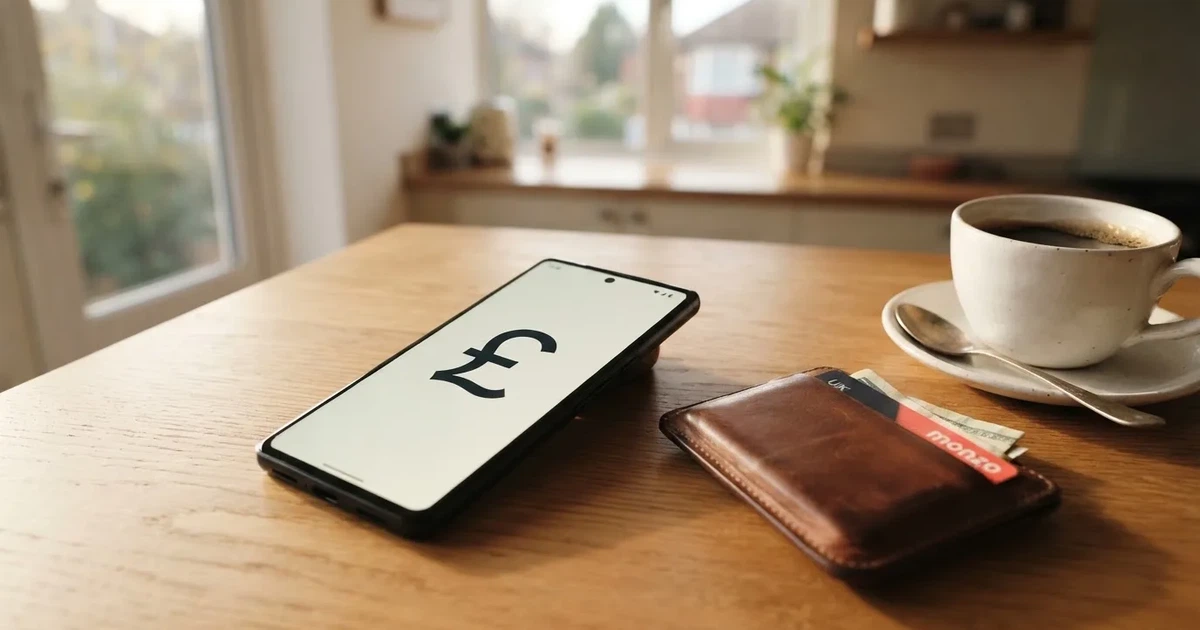
Most British bettors who land on a deposit page find PayPal sat between debit card and Apple Pay, look at the minimum, and move on. The page behind that choice is larger than the cashier screen suggests: a licence number that needs checking, an identity check that happens before the first pound moves, a credit-card ban that quietly rules out PayPal funded from a credit card, and a bonus market whose own wagering ceiling just changed in January. This guide walks that surface. Six GB-licensed brands sit in the ranking because they appear on the Commission’s register against a remote general betting standard (real events) licence, take PayPal in their own cashier, and make sense to compare on that axis. A seventh, Smarkets, earns a place because it is the exchange on the same register and takes PayPal on the betting-intermediary licence, even though its terms on the payment key read differently.
The angle throughout is consequence. A minimum deposit of £5 reads one way at a £10 punter’s wallet and another way at DAZN Bet’s cashier, where PayPal starts at £20. A debit-card ban is a headline that says nothing about whether PayPal funded from a credit card still slips through; it does not, and the LCCP says so. A bonus cap sounds bureaucratic until the calculation on it shows what a real £50 free bet now costs to clear. The point of the page is to name those numbers and say what they cost.
The six GB-licensed bookmakers that take PayPal in their own cashier
| Brand | Gambling Commission licence (account) | What the operator’s own terms say about PayPal |
|---|---|---|
| DAZN Bet | 48756 (DZBT Limited) | PayPal deposits start at £20, with no processing fee on deposits or withdrawals |
| Star Sports | 9177 (Star Racing Limited) | PayPal is one of the cashier methods; no fee disclosed in the standard help text |
| bet365 | 55148 (Hillside (UK Sports) ENC) | PayPal is a core funding method alongside debit card and Apple Pay |
| Bet Ahoy | 100094 (Bet Ahoy Ltd) | PayPal appears in the cashier; minimum and fee disclosed at deposit |
| NetBet | 39170 (Netbet Enterprises Limited) | PayPal is supported alongside Instant Payments to bank, Apple Pay and debit card |
| LiveScore Bet | 56859 (LiveScore Betting and Gaming (Gibraltar) Limited) | PayPal sits with Visa, Mastercard, Apple Pay, Pay by Bank and Revolut Pay |
The licence numbers above come from the Commission’s own register; the payment terms come from each brand’s help pages and app-store listings. A register entry is the whole test of whether a brand holds a British licence; it is not, on its own, a judgement of whether that brand deserves a place on a shortlist. The judgement sits in the operator-by-operator write-ups further down. Some readers will want only the licence number and the cashier screen; the rest of the page is for the ones who also want to know what they are agreeing to when they tick the box.

There are also two outriders worth flagging up front. Smarkets runs as a betting exchange on a separate remote betting intermediary licence, takes PayPal, and pays withdrawals inside six hours for verified customers — faster than any sportsbook on this list. Unibet and Betfair both take PayPal on the same Commission’s register but through group licences (Platinum Gaming Limited for Unibet; PP+Betfair for Betfair) that the table above does not print; they appear in the operator-by-operator section rather than the headline six. Midnite is a brand the Commission’s register lists, with a card that shows Visa, Mastercard, Apple Pay, Google Pay and Trustly — but PayPal is not on that cashier, so it sits outside this ranking and is named only where its safer-gambling work is relevant.
Why these six and not others
The Commission’s public register lists several hundred remote betting licences. A shortlist needs a tighter cut. Three filters apply here. First, the brand takes PayPal in its own cashier, not just as a “more payment options” line on the homepage — the help page names PayPal and shows a minimum or processing note. Second, the brand operates its own customer-facing app in the UK, so the cashier is the one a British punter will actually see. Third, the brand carries a current remote general betting standard (real events) licence; the payment policy of a brand under a different licence category is governed by different rules, and mixing them into a single comparison produces a table that says nothing reliable. The six that pass all three filters are listed above.

A second observation matters. Several of the groups running these brands run more than one site under a single licence — the Ladbrokes-Coral pair, the Paddy Power-Betfair pair, the Sky Betting-and-Gaming brands. That changes what the licence number means: it identifies the group, not the site. A licence lookup by domain, by trading name and by account number can return different results, and only the account number is the same across the whole group. The table above prints the account number precisely because it survives the group-vs-brand distinction.
PayPal itself: how the company arrived at the British betting cashier
PayPal is older than most of the brands it funds. The company started as Confinity in December 1998, founded by Max Levchin, Peter Thiel and Luke Nosek as a cryptography and digital-payments venture. Confinity merged with Elon Musk’s X.com in March 2000, and the combined company took the PayPal brand in June 2001. eBay bought PayPal on 3 October 2002 for $1.5 billion, then spun it off as an independent publicly traded company on 18 July 2015. The headquarters sit in San Jose, California; the operations centre sits in La Vista, Nebraska. By 2022 the platform operated in 202 markets with 426 million active registered accounts, and the 2023 revenue line was $29.771 billion. None of those figures has anything to do with a £10 bet, but they matter for one reason: PayPal is a very large payment business, and the rules it applies to gambling merchants are the rules of a very large payment business, not the rules of a betting-friendly fintech.
PayPal holds a Luxembourg banking licence, in place since 2008, which it uses as the basis for its European operations including the UK-facing product. That licence matters because it makes PayPal a regulated financial institution at the cashier end of the transaction — not a betting operator, not a money-services business, but a bank. The practical consequence is two-fold. One, PayPal’s own policies on gambling are stricter than the merchant’s, and they can and do cut off a betting operator that runs afoul of those policies regardless of what the Commission’s register says. Two, where PayPal sits between a customer’s card and the betting merchant, the card’s own consumer protection does not always travel with it. Section 75 of the Consumer Credit Act 1974 does not apply to a credit-card purchase where PayPal is the intermediary: a reader who funded PayPal from a credit card and has a dispute has a PayPal dispute and not a Section 75 claim against a service.
The gambling-relevant history is shorter. PayPal stopped processing payments for online gambling in 2003. It resumed the service from 2010, but only in countries where online gambling is legal — Great Britain under a Gambling Commission licence counts, and so does PayPal’s continued decision that it will not serve a market whose regulator it does not recognise. So a British punter funding a deposit with PayPal is paying a regulated bank that has explicitly chosen to serve this market, into a merchant that the same regulator has licensed. The compliance burden sits on both sides, which is part of why the cashier screen looks the way it does.
The law that frames a PayPal deposit at a GB bookmaker
Three legal layers run underneath every PayPal deposit at a British bookmaker, and a reader needs at least the surface of each before the comparison makes sense.
The first layer is the Gambling Act 2005, as amended by the Gambling (Licensing and Advertising) Act 2014. Since 2014 an operator needs a Commission licence wherever it is based if its remote facilities are used in Great Britain — sections 33 and 36 of the 2005 Act, as amended. A Curaçao, Malta or Gibraltar licence does not substitute. The Commission’s public register can be searched by business name, trading name, domain or account number, and is the whole test of whether a brand holds a British licence; no count of licensed operators should be printed without its access date. Minimum age 18, identity verified before the first deposit or bet.
The second layer is the Licence Conditions and Codes of Practice (LCCP), the social responsibility code that runs underneath every licence. Two LCCP rules bite directly on the cashier. LCCP 6.1.2, in force since 14 April 2020, bans credit cards for gambling — and a credit card funded into PayPal and then into a betting account is still a credit-card-funded payment, so a credit-card-funded PayPal deposit at a GB bookmaker is a breach of the operator’s own licence condition even before PayPal’s own policy is reached. LCCP condition 3.4.4, in force since 30 August 2024 and applied at the £150 deposit-minus-withdrawal threshold since 28 February 2025, requires a public-record financial vulnerability check: bankruptcy, county court judgments, the kind of record that surfaces in a Companies House search. It is not a credit reference check, not an income check, not the press’s “affordability check”. The financial risk assessment — the affordability check of the headlines — sits in a staged plan with no start date.
The third layer is the CAP Code and the BCAP Code, enforced by the ASA, governing how a brand may advertise to a British reader. CAP Code section 16 says no one who is or seems to be under 25 may feature gambling or play a significant role in an advertisement, with an exception for marketing placed where a bet can be made directly; this rule is about who appears in the advert, not about who may bet. Since 19 January 2026 the bonus ceiling has applied: wagering requirements are capped at 10x the bonus, so a £10 bonus at 50x requires £500 of qualifying bets and under the cap no more than £100; mixed-product promotions — an offer that requires gambling across two or more product types, betting plus casino, betting plus bingo, betting plus free lottery — are banned. Whether the 10x cap applies to a free bet with no wagering condition, and whether the bonus itself is capped, are not settled; the current Commission position on a no-wagering free bet has not been published, and the page does not pretend to know.
The third layer matters for the table at the top of this guide because several of the bonuses the apps advertise sit right against the new cap, and the table cannot tell a reader which ones would still be legal under a stricter reading. The honest move is to name the offer as the brand’s own terms state it and to flag the cap in the same paragraph.
What this means at the cashier
The legal frame sets three constraints the cashier has to satisfy before a pound moves. First, the operator must be able to prove a Commission licence when asked, which is why every row in the table carries the licence number. Second, the operator must verify the customer’s name, address and date of birth before the first deposit — a rule that has been in force since 7 May 2019 and that includes a free bet or bonus. There is no anonymous play at a GB-licensed site, and the page never tells a reader there is. Third, the payment method itself must satisfy the credit-card ban; PayPal funded from a credit card does not, and a reader who tries it will find the deposit declined, and rightly.
A reader who only wants to know whether PayPal works at a British bookmaker has the answer already: it does, at six of the brands on the Commission’s register, and the licence number is the key. The next three sections go into the mechanisms that frame what that licence and that payment actually buy.
Safer gambling at a PayPal bookmaker
Every brand on this page is a GAMSTOP member — that is a mandatory licence condition for online operators since 31 March 2020, not a marketing line. GAMSTOP is the national multi-operator online self-exclusion scheme, and the minimum exclusion is six months. The other periods are one year, five years, or five years with auto-renewal. After the minimum period the exclusion stays in place for a further seven years unless the customer asks GAMSTOP to remove it. GAMSTOP covers online sites and apps; betting shops use a separate scheme.
Deposit limits at a licensed operator are the customer’s choice, set in the customer’s account and not a state-set ceiling. The Commission’s Remote Technical Standards (RTS 12) require operators to offer a gross deposit limit on a fixed time frame; the first changes applied from 31 October 2025, a second phase was postponed to 30 September 2026, and whether that second phase is live today is not established on the published register. The honest framing for the reader is: there is a deposit-limit tool at every brand on this page, the periods offered vary by brand, and no state-set ceiling exists in British sports betting.
The self-help resources are the same across the licensed market. GamCare runs the National Gambling Helpline. GambleAware funds treatment and education. The NHS gambling clinics offer face-to-face treatment in several regions. Gamblers Anonymous runs peer-support meetings. BeGambleAware, GamCare, GAMSTOP, Gambling Therapy and the Betting and Gaming Council sit on the safer-gambling footer of the licensed brands, including Unibet and Midnite; the six brands in the table above follow the same pattern, and the brand write-ups further down flag any deviation.
The financial vulnerability check deserves its own paragraph because it is the rule that lands most directly on a deposit. A customer whose net deposits exceed £150 in a rolling 30 days — total deposits minus total withdrawals — is asked for a public-record financial check. That is a Companies House search for county court judgments and similar public records, not a credit reference search and not an income check. A reader who keeps deposits below £150 in any rolling 30-day window does not trigger the check at any of the brands above. A reader who deposits more will be asked, and the brand will keep the deposit pending the response. The Commission’s own framing is a vulnerability screen rather than a credit screen; the press has called it an affordability check, which is not the same thing and is not what the LCCP says.
The financial risk assessment — the press’s affordability check — sits in a staged plan announced by the Commission on 7 July 2026, with no start date. Writing that it is in force is wrong; writing that it will never apply is also wrong; the honest sentence is “announced, staged, no start date”. The page uses that wording exactly.
What a reader actually does
The practical sequence at any of the six brands in the table runs the same way. Register with name, address and date of birth — verified before the first deposit. Set a deposit limit if a tighter ceiling suits the wallet; the limit is a tool, not a punishment. If a 30-day net deposit crosses £150, expect a public-record vulnerability check and have ID ready. If gambling stops being fun, register with GAMSTOP — six months is the minimum, longer periods are harder to walk back. None of this requires a phone call; everything runs through the brand’s safer-gambling page, the GAMSTOP site, and the National Gambling Helpline.
A reader who wants a single document to keep will find the Commission’s public register easier to use than the LCCP itself: search by brand name or domain, confirm the licence status and categories, and the safer-gambling frame around that brand is settled. The Commission’s register is the one source that names the licence holder and the licence categories. Everything else flows from those two fields.
Crypto, anonymity and what PayPal is not
Searches for anonymous betting, no-KYC betting and crypto betting bring readers looking for a way to bet that the Commission’s register does not cover. The honest answer at a British bookmaker is that no such way exists, and PayPal is not the bridge.
GB-licensed bookmakers verify name, address and date of birth before the first deposit, in force since 7 May 2019, including with a free bet or bonus. There is no anonymous play at a licensed site. A reader who wants to fund a betting account without identity verification needs to leave the licensed market, and the moment a reader does that the GAMSTOP coverage, the Commission’s complaints route, the approved dispute-resolution body and the British consumer-redress routes stop applying. The licensed market’s protections and its identity checks are the same trade.
Cryptocurrency does not move that trade. The Commission’s register has no rule specifically permitting or specifically banning crypto deposits at a licensed operator — the rule is silent, and the practical answer is that GB-licensed brands in this ranking do not take crypto at the cashier. PayPal does not help: PayPal does not move Bitcoin, and the PayPal wallet at a British bookmaker is funded from a bank or a card, which is a regulated funding source whose identity is already on file with the brand. The “anonymous PayPal sportsbook” search returns the same answer as the “anonymous sportsbook” search in Great Britain — there is no anonymous way into a regulated market.
The offshore option sits in the same paragraph. A Curaçao, Maltese or Gibraltar licence is not a substitute for a Commission licence since the Gambling (Licensing and Advertising) Act 2014, and a brand licensed only offshore that targets British customers is operating without the licence the Act requires. Providing gambling facilities in Great Britain without the licence is an offence under section 33 of the 2005 Act — aimed at the operator, with a summary conviction that can reach 51 weeks’ imprisonment, a level-5 fine, or both (six months in Scotland). No offence aimed at a customer who merely bets on an unlicensed site was found on the register; the page states the loss of protection — no GAMSTOP, no Commission complaints route, no approved dispute-resolution body, no British consumer redress if funds are withheld, no 10x bonus cap, no £150 vulnerability check — and stops short of writing “legal to use”. Enforcement is disruption, not blocking: cease-and-desist notices, search-engine referrals, registrar and host work, and payment-provider pressure. Court-order DNS blocking powers are with the Commission or about to be — the page does not write that ISP blocking is in operation.
The plain framing is two sentences. Licensed means identity checks, GAMSTOP, the 10x bonus cap, the £150 vulnerability check, and the Commission’s complaints route if something goes wrong. Unlicensed means none of those, plus the real risk of a frozen balance and no British route to argue the case. Neither is the safe choice by default; the choice is which trade the reader wants to make.
Where PayPal fits in this
PayPal, for this purpose, is on the licensed side of the line. PayPal holds a Luxembourg banking licence, has explicitly chosen to serve markets where online gambling is legal, and only works with operators whose regulator it recognises — Great Britain included. So a PayPal deposit at any of the six brands in the table above is a deposit into a licensed operator from a regulated payment institution, with identity verified on both sides. The cluster the search query targets — anonymous, no-KYC, crypto — is a different product altogether, and PayPal is not it.
A reader who still wants that product is outside this guide. The British reader who wants PayPal is on this page, and the rest of the guide is for them.
Bonuses and free bets at a PayPal bookmaker
The bonus market has just changed. Since 19 January 2026 the Commission’s promotion rules have applied: wagering requirements are capped at 10x the bonus, so a £10 bonus at 50x required £500 of qualifying bets and now requires no more than £100; and mixed-product promotions — an offer that requires gambling on two or more product types, betting plus casino, betting plus bingo, betting plus free lottery — are banned. Free bets with no wagering condition are not categorically excluded under the published text, but the Commission has not said they are categorically included either; the safe reading is that the cap applies where there is a wagering condition, and that a no-wagering free bet is judged on its own terms.
Free bets have their own arithmetic. A free bet whose stake is not paid back is worth less than the headline number. The formula is straightforward: take the free-bet amount, multiply by (odds minus one), divide by the odds, multiply by the payout share of the market the bet lands in. For a £10 free bet at odds of 4.00 on a market with a 95% payout share, the average value works out as £10 × 3 ÷ 4 × 0.95 = £7.13 — the £10 is what the brand advertises, £7.13 is what the bet is worth on average, and the difference is the stake the brand keeps when the bet wins. The arithmetic is what the headline does not say.
Where the offer is a deposit-gated package, the wagering requirement sits on the bonus base the brand names in its own terms — the bonus, or the bonus plus the deposit. A 100% match up to £50 with a 10x requirement on the bonus alone means £500 of qualifying bets at the minimum price the brand names; the same offer with the requirement on bonus plus deposit doubles the qualifying turnover. The brand write-ups below name the base in each case; the calculation is the same in shape.
Cashback offers — money back as cash when a bet loses — carry their own arithmetic, and the brand’s refund cap is the number that decides whether the offer is worth taking. Acca insurance returns the stake as a free bet when one leg of an accumulator loses, not cash; the offer is real, and the value depends on the cap and on the minimum number of legs the brand requires. Enhanced odds and price boosts are single-bet offers where the brand prices one outcome above the market; the margin on the boosted leg is what the boost costs the brand, and a price boost that the brand can withdraw at any time is not the same offer as a permanent price.
The rule this page follows across all of them is to describe the offer as the brand’s own terms state it, to name the cap and the minimum price where the brand names them, and to keep the type the brand names — a free bet stays a free bet, a cash bonus stays a cash bonus, a price boost stays a price boost. Restyling an offer into the type a reader is searching for is the mistake this guide does not make.
Octobet’s welcome offer as a worked example
Octobet’s sportsbook welcome offer, as the brand’s own app-store listing states, is 50% back as a free bet up to £50, plus a £10 casino bonus for new customers. The shape is a deposit-gated match where the casino leg is a separate token. The 10x wagering cap from January 2026 applies to the sportsbook leg if it carries a wagering condition — the brand’s own terms name the requirement, and the page reports that figure rather than re-deriving it. The £10 casino bonus carries its own rules and would, if a wagering condition applied, sit under the same cap; mixed-product promotions are banned, so an offer that requires both legs is not the offer Octobet is running.
The free-bet arithmetic above applies in shape: take the free-bet amount, multiply by (odds minus one), divide by the odds, multiply by the payout share of the chosen market. A £50 free bet at odds of 3.50 on a 95% market works out at £50 × 2.5 ÷ 3.5 × 0.95 = £33.93 of expected value, before the £10 casino leg is added. That is what the headline £50 is worth on average on the sportsbook leg; the casino leg has its own expected value at its own rules.
The reader who wants to know what a free bet is worth runs the same arithmetic with the brand’s own numbers, and the reader who wants to know whether to take the offer runs the calculation with the wagering condition the brand names. The page does neither for the reader; it lays out the formula and the inputs the brand publishes, and leaves the reader at the cashier.
Payments and payout speed at a PayPal bookmaker
The cashier is the part of the page that the search query actually buys. PayPal’s headline qualities at a British bookmaker are speed, dispute handling and the absence of a credit-card transaction — which, given the credit-card ban at the cashier, is exactly the point. The cost is the minimum, which varies.
DAZN Bet’s published deposit terms are the clearest of the six. Debit card, Apple Pay, Paysafecard, Trustly and Skrill all start at £5; PayPal starts at £20; no processing fees on deposits or withdrawals. The arithmetic on that minimum is what a small reader is spending before the bet is placed. A £5 minimum covers a £5 punt on a long-odds single; a £20 minimum forces the wallet to carry £20 before a £1.50 each-way double is funded, and the leftover balance is what the punter has to manage. That is not a complaint about DAZN Bet — it is a description of what the cashier requires at that brand.
bet365’s app-store listing names debit card, PayPal and Apple Pay as the core funding methods; the brand’s help pages name the minimum and the fee at deposit. NetBet’s app supports Instant Payments to bank, Apple Pay, PayPal and debit card, with Face ID and Touch ID login, which means the PayPal leg is one of four parallel rails rather than the only one. LiveScore Bet’s help page lists Visa, Mastercard, Apple Pay, PayPal, Pay by Bank (Open Banking) and Revolut Pay; the diversity of rails is the point — a reader whose PayPal has a hold on it for any reason has four other ways to fund the account.
The withdrawal story matters more than the deposit story. PayPal’s typical payout at a GB bookmaker is hours, sometimes minutes; a same-day PayPal withdrawal is the norm at the brands in the table above where the brand’s terms confirm it. Smarkets, which sits on the betting-intermediary licence rather than the sportsbook licence, processes withdrawals within six hours from £10 up to £100,000 — a tighter window than the sportsbook brands. Where a brand’s terms do not state a withdrawal window for PayPal specifically, the page does not invent one.
Identity verification bites on both legs. A first-time withdrawal at a GB-licensed brand triggers the same name, address and date-of-birth check as a first deposit, and the customer support team has the right to ask for source-of-funds evidence at higher spend. The rules are anti-money-laundering rules, not brand-specific, and a reader who has been asked for a bank statement or a payslip has hit the rule rather than the brand. A delay of twenty-four to forty-eight hours on a first PayPal withdrawal at a GB bookmaker is normal and not the brand holding the money.
A side note on the betting exchange
Smarkets deserves its own paragraph because it is the only betting exchange on this page. Smarkets UK deposits by open bank transfer are instant from £10 up to £10,000, and withdrawals are processed within six hours from £10 up to £100,000; UK debit card deposits are instant from £10 up to £15,000. PayPal is one of the funding methods at Smarkets; the betting-intermediary licence and the back-and-lay model put it in a different category from the sportsbook brands, and the comparison is not a like-for-like one. A reader who wants an exchange-style product at PayPal speed should look at Smarkets directly; a reader who wants a sportsbook should look at the table.
PayPal’s own rules on gambling payments
PayPal stopped processing payments for online gambling in 2003, then resumed the service from 2010, but only in countries where online gambling is legal, which includes Great Britain under a Commission licence. So the merchant relationship sits on both sides of the cashier: the brand has a Commission licence, PayPal has a banking licence, and either side can cut the relationship. A reader who finds a brand’s PayPal button missing one morning has probably hit PayPal’s own merchant policy rather than the brand’s product choice. The page names this so a reader does not assume the brand has quietly dropped the method.
Section 75 of the Consumer Credit Act does not apply where PayPal sits between a credit card and the merchant. A reader who funded PayPal from a credit card and has a dispute has a PayPal dispute and not a Section 75 claim. This is the practical reason the LCCP’s credit-card ban covers credit-card-funded PayPal — the protection would otherwise be lost at the cashier, which is exactly what the rule is designed to stop.
Star Sports
Star Sports is one of the two smaller British racing-facing brands on this list. The Commission’s register lists account 9177 against Star Racing Limited, which holds the remote general betting standard (real events) licence. The brand’s app-store listing names the safer-gambling tools in My Account — deposit limits, a Play Break facility, self-exclusion — which is the LCCP standard rather than anything distinctive. The app is available in the UK and Ireland.
PayPal sits in the cashier; the brand does not, in the help text the app store shows, publish a separate minimum for PayPal. A reader who chooses PayPal here is choosing a racing-led sportsbook whose race product is the headline, whose sportsbook product is the supporting offer, and whose safer-gambling surface follows the licensed-market norm. Where Star Sports reads thinner than bet365 or LiveScore Bet, it is on the breadth of the sportsbook rather than on the racing product itself. A racing-led punter has a different shortlist from a sportsbook-led punter, and the page keeps them in the same table because the licence category is the same on both.
The verdict sits where the block actually lands. A racing-led punter who wants a smaller brand with a Commission licence and a full safer-gambling surface has a friendlier bet here than at the larger brands whose racing product is one tab among ten. A sportsbook-led punter is better served further down the table.
bet365
bet365 is the giant of the British licensed space and the one brand every comparison has to mention. Hillside (UK Sports) ENC holds account 55148 on the register, operating under the remote general betting standard (real events) licence. The app-store listing names debit card, PayPal and Apple Pay as the funding methods, and Face ID login on supported devices. The product surface is the largest in the table — pre-match, in-play, bet builder, cash out, price boosts, racing streams, the full menu.
PayPal at bet365 is one of three core rails, alongside debit card and Apple Pay; the minimum and fee are published in the brand’s help pages, and the cashier shows them at deposit. The withdrawal story at bet365 is same-day on PayPal once the account is verified; the brand’s own published windows are narrower than the licensed-market norm, which is the point of choosing a market-leading brand. The Face ID login is the kind of small touch that does not change a comparison but changes a daily use.
The brand’s product breadth has a cost. A reader who only bets on horse racing will find the same product at Star Sports without the noise; a reader who bets on football, racing, tennis and the in-play markets on all three has the product at bet365 and the choice is over. The verdict is that bet365 is the right brand for the punter who wants the largest product surface and a PayPal rail that is one of three parallel options rather than the headline; the punter who only wants racing, or only wants one sport, can pay less for a sharper product elsewhere.
DAZN Bet
DAZN Bet arrived in Britain with the broadcast brand behind it and a cashier that reads tighter than the headline suggests. DZBT Limited holds account 48756 on the register, and is licensed for remote general betting (real events). The help page names the deposit methods: debit card, Apple Pay, Paysafecard, Trustly and Skrill all start at £5, PayPal starts at £20, with no processing fees on deposits or withdrawals.
The £20 PayPal minimum is the number to keep. A reader who wants the same brand at a lower minimum can use Apple Pay at £5; a reader who specifically wants PayPal is paying a £15 premium on the minimum, which is what the cashier requires. The brand’s product surface is a sportsbook with a clear in-play offer and a growing bet-builder; the broadcast tie-in shapes the brand’s content rather than its market depth.
The verdict is that DAZN Bet is a PayPal option where the punter wants a broadcast-led brand and is willing to carry the £20 minimum; the punter who wants PayPal below £20 is better served at one of the brands further down the table. The page does not say the £20 minimum is unfair — the brand is free to set its own minimum within the Commission’s rules — but it does name the number, because the comparison without it is incomplete.
Bet Ahoy
Bet Ahoy is the newer brand on the list. Bet Ahoy Ltd holds account 100094 on the register, licensed for remote general betting (real events). The brand’s app-store listing names four headline offers: a 10% Acca Bonus up to £1,000, Sub-Cover for player substitutions, Best Odds Guaranteed on UK and Irish horse and greyhound racing up to £100, and a Double Result payout on UK and Irish racing.
PayPal sits in the cashier at a minimum and fee the brand publishes at deposit. The brand’s product surface is sportsbook-shaped, with the racing product taking the lead and the football product shaped around the acca offers. Sub-Cover is the unusual one: a refund or adjustment when a player substitution changes the terms of the bet, which is the kind of rule the brand’s own terms page spells out in detail. BOG up to £100 caps the offer on UK and Irish racing; the cap is what stops the offer becoming open-ended.
The verdict is that Bet Ahoy is the right brand for the punter who builds accas and bets on UK and Irish racing — the Sub-Cover rule and the BOG cap are the offer’s spine. A punter who wants the largest product surface is better served at bet365; a punter who wants the racing product at a racing-led brand is better served at Star Sports. The page names the offer as the brand’s own terms state it, keeps the type the brand names, and stops at the cashier.
NetBet
NetBet has been on the licensed market longer than most of the brands in this table, and its cashier reads accordingly. Netbet Enterprises Limited holds account 39170 on the register, licensed for remote general betting (real events). The app supports Instant Payments to bank, Apple Pay, PayPal and debit card, with Face ID and Touch ID login. The cashier is the kind that offers four parallel rails rather than one headline option, and the PayPal leg is one of four.
The brand’s product surface is sportsbook-shaped with a casino product alongside — a configuration that sits against the January 2026 ban on mixed-product promotions, and which the brand’s own terms navigate by keeping the betting and casino legs separate. The verification flow at NetBet is the LCCP standard; the safer-gambling surface follows the licensed-market norm; the help pages name the deposit and withdrawal terms at PayPal.
The verdict is that NetBet is the right brand for the punter who wants a parallel-rail cashier with PayPal as one of four options rather than the headline, and who is comfortable with a brand whose casino product sits alongside the sportsbook without bleeding into it. A punter who wants the racing product at a racing-led brand is better served at Star Sports; a punter who wants the largest product surface is better served at bet365.
LiveScore Bet
LiveScore Bet is the brand the LiveScore scores app grew into. LiveScore Betting and Gaming (Gibraltar) Limited holds account 56859 on the register, licensed for remote general betting (real events). The help page names the deposit methods: Visa, Mastercard, Apple Pay, PayPal, Pay by Bank (Open Banking) and Revolut Pay. The diversity of rails is the brand’s selling point at the cashier, and the PayPal leg is one of six options.
The product surface is sportsbook-shaped with a strong in-play offer and the brand’s own form tools — a configuration that fits the LiveScore scoring product the brand grew out of. The verification flow and the safer-gambling surface are the LCCP standard; the cashier publishes the PayPal minimum and fee at deposit. The brand’s withdrawal story at PayPal is same-day once the account is verified, with a brand-published window narrower than the licensed-market norm.
The verdict is that LiveScore Bet is the right brand for the punter who wants a parallel-rail cashier with PayPal as one of six options, with the form tools the scoring brand gives, and with a withdrawal window tighter than the licensed-market norm. A punter who wants the racing product at a racing-led brand is better served at Star Sports; a punter who wants the largest product surface is better served at bet365; a punter who wants a tighter minimum on PayPal than DAZN Bet’s £20 should check the cashier directly.
Frequently asked questions
Can you bet against paypal?
Yes — at a betting exchange rather than at a sportsbook. Smarkets runs on a remote betting intermediary licence and lets a customer back or lay outcomes, so a customer can bet against an outcome they think will lose. A sportsbook like bet365 or LiveScore Bet only accepts back bets on outcomes the customer thinks will win, which is the same product PayPal has funded for years. The exchange model is a different product with a different licence and a different cashier, and the page names Smarkets separately for that reason.
Can you lose on paypal betting?
Yes. PayPal is a payment method, not a betting model; the outcome of the bet is set by the market the customer has chosen, the odds at the time the bet is placed, and the result of the event. The brand’s published margin sits inside every price, and a PayPal-funded bet pays the same return as a debit-card-funded bet when it wins and loses the stake the same way when it loses. Nothing about the payment method changes the bet.
Can you use paypal in betting shops?
No. PayPal is an online wallet and the betting shop is a different product — the high-street bookmaker takes cash and debit card at the counter and settles bets on the same rails. Online brands in this ranking have a retail presence on the high street in some cases — the broader British market does — but the PayPal wallet does not extend to the shop floor. The Commission’s register site operates under the same separation: online sites and apps under GAMSTOP, betting shops under a separate self-exclusion service.
Which payment methods do GB-licensed bookmakers accept, and are credit cards allowed?
GB-licensed bookmakers accept a brand-specific set of deposit methods — debit card, PayPal, Apple Pay, Pay by Bank (Open Banking), Revolut Pay, Skrill, Trustly, Paysafecard and others appear across the licensed market; the six brands in the table above publish their full list at deposit. Credit cards are banned for gambling in Great Britain under LCCP condition 6.1.2, in force since 14 April 2020, including credit-card-funded payments through an e-wallet — so a PayPal funded from a credit card and deposited at a GB bookmaker is a breach of the operator’s licence condition before PayPal’s own policy is reached.
From what age can bets be placed in Great Britain, and when is identity verified?
Minimum age 18 at every GB-licensed bookmaker. Identity verification — name, address and date of birth — has to happen before the first deposit or bet, in force since 7 May 2019, including with a free bet or bonus. A financial vulnerability check applies once a customer’s net deposits exceed £150 in a rolling 30 days, in force since 28 February 2025; it is a public-record check, not a credit reference and not an income check.
How can it be checked that a bookmaker holds a Gambling Commission licence?
The Commission’s public register can be searched by business name, trading name, domain or account number, and a match against a current remote general betting standard (real events) licence is the whole test of whether a brand holds a British licence. The licence holder is a separate field on the register, and the licence category is a separate field; a brand whose only match is a different licence category is not a sportsbook brand under the Act. The register is the one source that settles the question, and the page’s table prints the account number so a reader can check directly.
Payments & apps – Fast Payout
Content created by the «Fast Payout» team
