
Best bitcoin betting sites in the UK: who takes it, who regulates it, and what it costs
 Available in US
The honest starting point is a short one. In Great Britain, the test of whether a sportsbook is allowed to take your money is not which cryptocurrencies it lists, what odds it offers, or how fast it pays out. It is the Gambling Commission’s public register. A bookmaker serving customers in Great Britain must hold a Commission licence wherever it sits in the world, and the register is the only place that statement can be checked. Everything else on this page sits on top of that one fact.
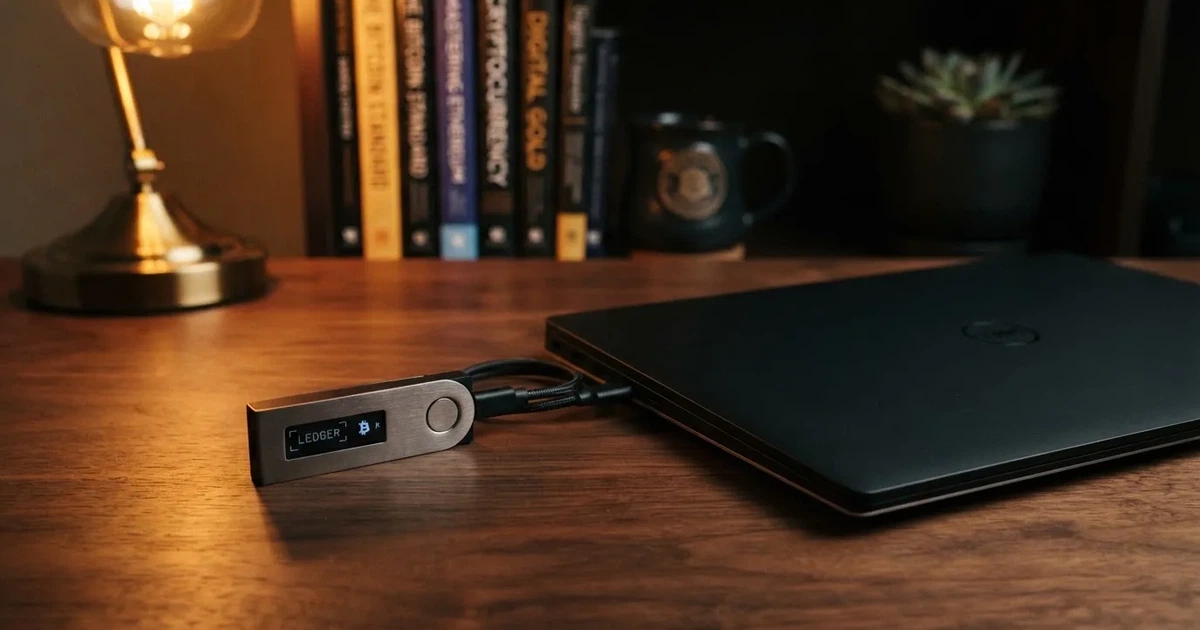
No British rule for or against cryptocurrency deposits at a licensed operator has been published. What that means in practice: which payment methods a licensed bookmaker accepts is taken from its own published terms. Where those terms say nothing about crypto, this page says nothing about crypto for that brand, and where they name crypto alongside other methods, that is what is recorded. Identity verification before the first deposit is universal at every Commission-licensed site, so the marketing picture of a “no KYC” Bitcoin sportsbook describes a product that no operator on the register can lawfully sell into Great Britain.
The angle here is choice, not endorsement. Seven licensed bookmakers are reviewed below, each on its own merits and against a subject that is — candidly — an awkward fit for the mainstream British market. The page closes with a comparison table that puts the licence number and the operator’s own terms on the same line, so the reader can see who has said what before deciding who to open an account with.
Data current as of 27 October 2026, verified against the Gambling Commission’s public register.
How bitcoin actually works for a punter
Bitcoin is best thought of as a payment rail, not as a betting product. It is a way of moving money from a private wallet to a bookmaker’s wallet, and back again. The bet itself, the markets, the prices, the in-play feed, the cash-out button — those are still the bookmaker’s. What changes when the rail is Bitcoin is who can see the transaction, how long it takes, and what happens to its value between deposit and withdrawal.

The basics worth knowing
Bitcoin’s genesis block was mined on 3 January 2009 by the pseudonymous creator known as Satoshi Nakamoto. The white paper that set out the design had been published a few weeks earlier, on 31 October 2008. Nakamoto’s real-world identity has never been verified. The point of rehearsing that history on a betting page is not nostalgia — it is to mark where the asset came from and how recently. People who bet with it now are betting with a fifteen-year-old instrument whose monetary properties most readers will not have studied.
A new Bitcoin block is created roughly every ten minutes on average, and the network reaches consensus through proof-of-work: SHA-256 hashing, in the formal language. The supply is capped at 21 million coins, with full issuance expected around the year 2140. Roughly every four years the reward paid to the miner who finds a new block is cut in half — the halving — starting at 50 BTC per block. None of this is operational for the punter in the way a deposit limit or a withdrawal window is, but it is the scaffolding that gives the asset its scarcity and its price volatility, both of which matter once real money sits in a Bitcoin balance.

What “anonymous” actually buys
The word is misleading. Bitcoin’s ledger is public and permanent; every transaction is recorded against addresses that anyone can inspect. What a punter does not reveal by paying in Bitcoin is their bank account, their card number, or their sort code. That is real privacy, but it is not anonymity in the way the betting press sometimes suggests. Chain analysis firms have de-anonymised large numbers of addresses over the years, and once a Bitcoin address is tied to a verified identity at any regulated venue that link is permanent.
The licensed British bookmaker still verifies the punter at the other end. Name, address and date of birth are confirmed before a first deposit is accepted and before any bet can be placed, free bet or otherwise, since 7 May 2019. Pay in Bitcoin, and the privacy is on the payment rail; place a bet, and the identity behind the bet is on the operator’s records. That is the deal.
The price moves twice
A pound staked in sterling and held through a weekend’s racing is worth the same pound on Monday morning. A Bitcoin stake worth the same pound on Saturday afternoon is worth whatever Bitcoin is worth on Monday, plus or minus the bet. The bet can win and the punter can still lose money on the position. Conversely, a Bitcoin stake that drops by 15 % while the bet is on can pay out at a profit and still be worth less in sterling terms than it was at placement. There is no hedge at the bookmaker’s end — the price of Bitcoin is not a market the operator runs. The punter carries that risk alone.
The legal frame in Great Britain
The legal frame for this page is the Gambling Act 2005, the Gambling (Licensing and Advertising) Act 2014, and the Licence Conditions and Codes of Practice (LCCP) that the Commission publishes under the Act. Northern Ireland is outside the 2005 Act and has its own regime, so the rule is to write “Great Britain licence” or “GB-licensed”, not that a GB licence reaches Northern Ireland.
Who needs a licence
Since the 2014 Act, an operator whose remote facilities are used in Great Britain needs a Gambling Commission licence wherever it is based. A Curaçao, Maltese or Gibraltar licence is not a substitute, even when the operator is owned by a household name. The Commission’s public register can be searched by business name, trading name, domain or account number, and it is the only place the licence claim can be checked. The register carries every GB-licensed operator in one place.
A Commission licence is one of five remote categories: general betting standard (real events), general betting standard (virtual events), general betting limited, pool betting, and betting intermediary — the last of these is the licence a betting exchange runs on. The brands reviewed below all hold the general betting standard (real events) category. The LCCP and the Commission’s Remote Technical Standards sit behind every licence and are what determine how the brand actually operates — not the licence number alone.
Identity, age and the first deposit
The minimum age to bet in Great Britain is 18. Since 7 May 2019 the operator has had to verify the customer’s name, address and date of birth before a deposit is accepted or a bet is placed, and the rule reaches free bets and bonus credits. There is no licensed brand in Great Britain at which a punter can deposit Bitcoin and bet anonymously. Where the marketing language says otherwise, it is describing a non-GB product.
What may be bet on
There is no statutory list of permitted bets or markets. The operator offers markets under the licence category it holds and its own house rules, and the LCCP bounds those rules. In-play betting is offered by GB bookmakers, and the controls are licence conditions and customer-protection duties, not a free-for-all. Esports are treated like any other event; virtual events sit on their own licence category. Bets on politics, TV shows and novelty markets are offered by GB bookmakers, and no statutory prohibition has been published.
Player protection, in the way the Commission uses the words
Three mechanisms matter and each one applies to every GB-licensed online operator.
GAMSTOP is the national multi-operator self-exclusion scheme and has been a mandatory licence condition for online operators since 31 March 2020. Self-exclusion periods are six months, one year, five years, or five years with auto-renewal. After the minimum period the exclusion stays in force for a further seven years unless the customer asks GAMSTOP to remove it. GAMSTOP covers online sites and apps; the betting shops run on a separate multi-operator self-exclusion scheme.
The financial vulnerability check applies to licensed remote betting when a customer’s deposits minus withdrawals cross £150 in a rolling 30 days, since 28 February 2025. The check is a public-record search — bankruptcy, county court judgments and the rest — not an income check and not a credit reference check.
Deposit limits are a separate duty. Operators must offer a gross deposit limit on a fixed time frame. The first changes have applied since 31 October 2025 and a second phase was postponed to 30 September 2026; whether that second phase is live at the date of writing is not established.
A financial risk assessment — the press’s “affordability check” — has been announced in a staged plan, with no start date. The honest line is “announced, staged, no start date”. Help is available regardless of any of these mechanisms: GamCare runs the National Gambling Helpline, GambleAware funds treatment, NHS gambling clinics see patients directly, and Gamblers Anonymous runs meetings.
Bonuses and advertising
Advertising is not licensed by the Commission. It runs through the CAP Code for non-broadcast and the BCAP Code for broadcast, both enforced by the Advertising Standards Authority, alongside the LCCP’s marketing conditions. CAP Code section 16 makes marketing socially responsible, refuses strong appeal to under-18s, and bars anyone who is or looks under 25 from featuring in an ad (with a narrow exception for placements where a bet can be made directly).
The promotion rules in force since 19 January 2026 cap wagering requirements on bonuses at 10x, so a £10 bonus at 50x needed £500 of qualifying bets; under the cap no more than £100 of bonus needs to be turned over before it pays out. Mixed-product promotions — an offer that requires gambling on two or more product types, betting and casino, for example — are banned. The page does not print a promo code. No code is reproduced on this page, and the reader does not need one to read what an offer is worth.
Tax
Betting winnings are untaxed for the player in Great Britain. General Betting Duty is the operator’s tax on gross profits, currently 15%; from 1 April 2027 a new remote betting rate of 25% applies within it, while remote bets on UK horse racing, bets on self-service betting terminals in licensed premises, pool betting and in-person betting stay at 15%. Spread betting has its own rates — 3% financial, 10% other — and the player’s exposure to those rates is different again. The Commission has a separate statutory levy that is its own charge and is not a tax.
Whether operators pass duty on through odds is not established. There is no British rule that the player pays duty, and a bookmaker’s headline price does not carry a “duty” line that the customer sees.
The offshore question
A GB licence is compulsory at the point of consumption. Providing gambling facilities in Great Britain without the licence the Act requires is an offence under section 33 of the Gambling Act 2005, on summary conviction up to 51 weeks’ imprisonment, a fine up to level 5, or both (six months in Scotland) — and the offence is aimed at the operator, not the customer. No offence aimed at a customer who merely bets on an unlicensed site has been published. What the customer gives up is the protection: no GAMSTOP, no Commission complaints route, no approved dispute-resolution body, no British consumer redress if funds are withheld, no 10x bonus cap, no £150 vulnerability check. Enforcement is disruption rather than blocking — cease-and-desist notices, search-engine referrals, work with registrars, hosts and payment providers — and the Commission has been given or is about to receive court-order DNS blocking powers.
The honest framing: a licensed bookmaker brings checks, limits, GAMSTOP and the bonus cap, but it also brings verification before the first bet. An unlicensed bookmaker brings none of those protections and the realistic possibility that funds are withheld. Neither is “the safe choice” by default, and a reader who treats the question as binary has missed it.
What crypto regulation actually does in the UK
Crypto and gambling sit on two different regulatory tracks, and the operator tracks run in parallel.
AML supervision of cryptoasset businesses
The Financial Conduct Authority became the anti-money-laundering supervisor of UK cryptoasset businesses, including Bitcoin exchanges, on 10 January 2020 under Regulation 8L and Regulation 9 of the Money Laundering Regulations. Cryptoasset exchange providers and custodian wallet providers operating in the UK, including those dealing in Bitcoin, must register with the FCA before starting business. Since supervision began the FCA has received 417 cryptoasset registration applications, of which 68 — 17% of determined applications — have been registered and 263 — 67% — have been withdrawn. The remaining applications are mostly still being assessed. The picture that gives is a sector that is, by application count, predominantly either not yet decided or already given up on.
The Commission’s view of crypto at a gambling operator
The Gambling Commission classes cryptoassets, including Bitcoin, as a high-risk payment method and expects licensed gambling operators to treat crypto-funded play as a high-risk indicator requiring enhanced customer due diligence. That is the Commission’s policy, not a published rule. The honest reading is that crypto deposits at a licensed operator attract closer scrutiny, not a refusal to accept them — and that the operator’s own terms, not a Commission rule, decide whether crypto is accepted at all.
Tax treatment of the bitcoin itself
HMRC treats cryptoassets such as Bitcoin held by individuals as subject to Capital Gains Tax on disposal — selling, swapping, spending or gifting them. Income Tax and National Insurance apply where cryptoassets, including Bitcoin, are received as non-cash employment income or as mining and staking rewards. The implication for the punter is that winning a bet paid out in Bitcoin is not in itself a taxable event; selling, spending or swapping the Bitcoin afterwards is.
How the seven licensed bookmakers compare on bitcoin
The seven brands below all hold a Gambling Commission remote licence for general betting standard (real events). Each card carries the licence number, the licence holder, and what the operator’s own published terms say about payment methods. Where the operator’s own terms are silent on crypto, this page is silent on crypto for that brand. The published payment methods are listed in the table that follows; what each operator does with Bitcoin specifically is not part of the table and not part of the ranking.
QuinnBet — small-stake specialist with strict free-bet terms
QuinnBet runs on a Gambling Commission account held by QuinnBet (Gibraltar) Limited, remote general betting standard (real events). Its free bets are valid for seven days from credit and can be used on any market at minimum odds of 1/2 (1.50), with a maximum odds of 50/1. Straight accumulators count; Trixies, Patents and Yankees do not. The free-bet window is short, the price floor is ordinary, and the multi-bet exclusion is the kind of line a reader should see before claiming.
The seven-day expiry is the headline cost. A free bet left to expire is a free bet the punter never uses; minimum odds of 1/2 set the bar for what counts as qualifying play; maximum odds of 50/1 cap the upside. The Trixie/Patent/Yankee exclusion means a punt who plans to use a free bet as the leg of a system bet cannot do so without breaking the term.
What QuinnBet does with Bitcoin specifically is not stated in its published payment methods page in the form reviewed here. Where the operator’s own terms name crypto, this page would record it; where they do not, the page does not claim it either way. The reader who needs a Bitcoin-accepting venue should check QuinnBet’s banking page before opening an account.
Spreadex — financial spread betting and a fixed-odds book under the same roof
Spreadex is regulated by the FCA for spread betting and by the Gambling Commission for fixed-odds betting, and the Commission’s record shows a remote general betting standard (real events) licence held by Spreadex Limited. The site is candid that spread-betting losses can exceed deposits, which is the right note to strike on a product where the loss can outrun the stake.
The split personality matters here. A punter using Spreadex for fixed-odds football is on the Commission’s side of the house; a punter using Spreadex for a financial spread on the FTSE is on the FCA’s. The protections differ, the redress routes differ, and the FCA’s conduct rules are not the same as the Commission’s social responsibility code.
Spreadex’s published payment methods do not list Bitcoin in the form reviewed here. The page records that and moves on. A punter looking for a Bitcoin deposit at a fixed-odds bookmaker will not find it at Spreadex on the terms reviewed.
Geoff Banks — ante-post and in-play on a single app
Geoff Banks’ app is published by GB Sports Advisors Limited and runs on a Commission remote licence for general betting standard (real events). The app offers live in-play prices and ante-post prices on future events. Two product choices, one product surface, and the licence holder is the same company that runs the trading desk.
The Geoff Banks proposition is narrow in the way an old-school bookmaker’s is narrow: ante-post means prices on outcomes weeks or months ahead, in-play means prices while the event is running, and the menu between the two is what the operator chooses to price. There is no claim here of breadth of sport or market, and there does not need to be — the pitch is the price on the markets the book does cover.
The operator’s published terms do not record a Bitcoin deposit method in the form reviewed here. Where the reader sees a Bitcoin deposit option in the cashier, the cashier is the source of truth and supersedes anything written off-platform.
DAZN Bet — low minimums and a broad payment menu
DAZN Bet’s published deposit methods start at £5 by debit card, Apple Pay, Paysafecard, Trustly and Skrill, and at £20 by PayPal, with no processing fees. The Commission record shows a remote general betting standard (real events) licence held by DZBT Limited. Five methods at £5, one at £20, no processing fees, and the deposit floor sits below the £10 industry habit.
The £5 floor is the headline. A punter who wants to size a bet at a fiver has six ways in; a punter who needs PayPal pays the £20 floor. The no-fees line is unremarkable on its own and unremarkable in the way customers want it to be — most operators do not charge deposit fees, and stating that they do not is a defensible baseline.
The published deposit page reviewed here does not list Bitcoin. The page records what is stated: debit card, Apple Pay, Paysafecard, Trustly, Skrill, PayPal. Where the cashier shows a Bitcoin option, the cashier is the source.
Fitzdares — premium brand, narrow payment set, fast Visa withdrawals
Fitzdares accepts Apple Pay, Mastercard and Visa, and the published terms say Visa withdrawals are usually same-day, with Mastercard withdrawals taking up to 48 hours. The licence holder on the Commission’s record is Fitzdares Limited, with a remote general betting standard (real events) licence. Three methods in, fast on Visa, slower on Mastercard, and the brand sits where it has always sat — at the premium end of the British market.
The same-day Visa line is the headline number. “Usually” is doing some work in that sentence and the reader should know it: same-day is the modal outcome, not a guarantee. The Mastercard 48-hour ceiling is the worst case rather than the average. Either way the punter has read the spread.
The published payment methods do not list Bitcoin in the form reviewed here. Fitzdares’ offer is Apple Pay, Mastercard and Visa. A punter who needs a Bitcoin deposit will not find one in those three.
LiveScore Bet — five mainstream rails and Open Banking
LiveScore Bet accepts debit cards (Visa and Mastercard), Apple Pay, PayPal, Pay by Bank (Open Banking) and Revolut Pay. The licence holder is LiveScore Betting and Gaming (Gibraltar) Limited, holding a remote general betting standard (real events) licence. The five rails cover the bulk of the British retail-payment market without reaching into crypto.
The breadth is the headline. Five methods, every one of them mainstream, none of them exotic. Pay by Bank is the standout — Open Banking rails give the punter a direct bank-to-bookmaker transfer without sharing card details. Revolut Pay sits in the same place: a fast wallet rail for a fast wallet.
The published methods do not include Bitcoin in the form reviewed here. Five methods, all mainstream fiat rails, no crypto on the published page. The reader who needs crypto will need to look elsewhere, or wait until LiveScore Bet says otherwise.
Kwiff — a “supercharged” odds mechanic on a small licence
Kwiff is licensed by the UK Gambling Commission and describes itself as a trademark operated by Spryme Ltd; the app carries a 17+ age rating in the GB App Store. The Commission’s record shows the licence held by Eaton Gate Gaming Limited under a remote general betting standard (real events) category. Kwiff’s proposition is a “supercharge” mechanic that randomly boosts the price the customer receives on a placed bet.
The supercharge mechanic is the headline. The punter places a bet at the displayed price and the operator may pay out at a higher price, with the boost applied at the operator’s discretion. The reader who values the certainty of the displayed price should know that the headline price is not always the price paid. The reader who likes the lottery of a boosted payout gets something the ordinary book does not offer.
Kwiff’s published payment methods do not list Bitcoin in the form reviewed here. The reader who needs crypto will need a different venue, or to wait until Kwiff’s cashier page changes.
Side-by-side: licence and payment terms
The table below lines up each brand against the Commission’s public register and the operator’s own payment-methods statement. Where the operator’s own terms name a method, the table records it; where the terms are silent on a method, the table does not record it either way. Bitcoin in particular is recorded only where the operator names it on its own published payment page.
| Brand | Gambling Commission remote licence | Licence holder | What the operator’s own terms state on payment methods |
|---|---|---|---|
| QuinnBet | 061011-R-335683-004 | QuinnBet (Gibraltar) Limited | Free bets valid 7 days, min odds 1/2 (1.50), max odds 50/1; system bets (Trixie/Patent/Yankee) excluded from free-bet use. |
| Spreadex | 008835-R-104580-022 | Spreadex Limited | FCA-regulated spread betting (losses can exceed deposits); Commission-regulated fixed-odds betting. |
| Geoff Banks | 054095-R-330366-010 | GB Sports Advisors Limited | Live in-play and ante-post pricing through the GB Sports Advisors app. |
| DAZN Bet | 048756-R-327274-019 | DZBT Limited | Debit card, Apple Pay, Paysafecard, Trustly and Skrill from £5; PayPal from £20; no processing fees. |
| Fitzdares | 000400-R-103839-030 | Fitzdares Limited | Apple Pay, Mastercard, Visa; Visa withdrawals usually same-day; Mastercard withdrawals up to 48 hours. |
| LiveScore Bet | 056859-R-332720-005 | LiveScore Betting and Gaming (Gibraltar) Limited | Debit cards (Visa, Mastercard), Apple Pay, PayPal, Pay by Bank (Open Banking), Revolut Pay. |
| Kwiff | 044448-R-323408-017 | Eaton Gate Gaming Limited | Commission-licensed “supercharged” odds brand under Spryme Ltd. |
The licence numbers above are taken from the Commission’s public register. The payment-method column is taken from each operator’s own published terms as reviewed here. The two columns describe different things: the licence number is what the operator is allowed to do, the payment-method column is what the operator chooses to do. A licence to take bets does not entitle the operator to take Bitcoin; an operator’s published terms decide that.
What the comparison leaves out
The table does not record whether each brand accepts Bitcoin, because the operator pages reviewed here do not record it either. That is a finding, not a gap. A reader who wants to know whether a brand takes Bitcoin at any given moment should check the cashier at sign-up — operators add and remove payment methods without notice. The Commission’s register is not the place to look; the operator’s own cashier is.
It also does not record margins, prices or payout speeds beyond what the operator’s own terms state. Margins change by market and by event; payout speeds change by method; both sit outside the register’s record. The reader who cares about the price of a 1X2 on a Saturday afternoon will need to look at the price the operator is showing, not at the licence number.
What a reader actually decides
The decision this page is set up to help with is not “who is the best bitcoin bookmaker”, because no licensed British bookmaker on this page advertises a Bitcoin product in the terms reviewed here. The decision is closer to: do I want a licensed British bookmaker at all, and if so, which one suits the way I actually bet?
The case for a licensed brand
A licensed brand brings the protections the Commission publishes: GAMSTOP coverage, the bonus cap, the financial vulnerability check, an approved dispute-resolution route, and the Commission’s complaints route above that. A licensed brand also brings verification at the door. For most British punters that trade is fair, and the trade is the reason the seven brands above are reviewed at all. They are the brands that hold the licence the reader is asking for.
The case against a licensed brand
A punter who wants to deposit Bitcoin without giving a name and address at the door will not find that product at a licensed brand. The Commission’s verification rule has run since 2019, and the high-risk-payment-method policy on crypto makes the operator’s position stiffer still. A punter who wants privacy on the payment rail and is prepared to give up the protections of a licence has, by definition, stepped outside the register. The reader makes that call; the page does not recommend it.
The mid-case
The mid-case is the punter who wants a licensed brand, is willing to be verified, and treats Bitcoin as a wallet choice rather than a privacy choice. Most mainstream British e-wallets and Open Banking rails give the punter a fast, cheap and reasonably private way to move money without using Bitcoin at all. The mid-case reader often ends up at a brand like DAZN Bet, LiveScore Bet or Fitzdares without ever loading the cashier with crypto.
How to check the licence yourself
The Commission’s public register is the only place the question can be settled. Search by business name, trading name, domain or account number. The licence number in the table above is the entry to look up. The register also shows the licence holder, which can be a different legal entity from the trading name — QuinnBet’s brand sits on a Gibraltar company, for example — and that distinction matters when a reader is reading the operator’s terms.
Frequently asked questions
Can you bet against bitcoin?
“Betting against” Bitcoin is not a market the British licensed bookmakers on this page run. Spread betting on Bitcoin’s price exists at firms regulated by the FCA, not at a sportsbook. The licensed British bookmakers on this page offer sports markets paid for in fiat, with the operator’s own payment methods deciding what those are. A punter who wants to take a position on the price of Bitcoin does that through a spread-betting or CFD account, not through a sportsbook.
Can you lose on bitcoin betting?
Yes, in three ways at once. The bet can lose, in which case the stake is gone. The Bitcoin can fall in value between deposit and withdrawal, in which case the punter has lost on the position even if the bet wins. And the licensed British operator will verify identity before a deposit is accepted, so the privacy a punter expected from the rail is not what they get on the betting side. The product has more moving parts than a fiat deposit, and each one of them can cost the punter money.
Can you use bitcoin in betting shops?
No. Betting shops in Great Britain take cash and, where the shop is set up for it, debit-card and account-based payments. There is no Bitcoin acceptance at the counter. The licensed British bookmakers on this page run online, and their shop estate, where they have one, does not extend into crypto at the till.
What does a player lose by betting on a site without a Gambling Commission licence?
GAMSTOP coverage, the Commission’s complaints route, an approved dispute-resolution body, British consumer redress if funds are withheld, the 10x bonus cap, and the £150 financial vulnerability check that the Commission applies. There is no British offence aimed at the customer who merely bets on an unlicensed site, but the operator commits an offence under section 33 of the Gambling Act 2005 by providing the facilities. The reader who uses such a site has stepped outside the protections the page is built around.
How can it be checked that a bookmaker holds a Gambling Commission licence?
The Commission’s public register is searchable by business name, trading name, domain or account number. The licence numbers in the comparison table above are the entries to look up. The register also names the licence holder, which can be a different legal entity from the trading name, and the categories the licence covers. A licence for general betting standard (real events) is the entry that covers a sportsbook. Any other category is not the same product and not the same permission.
Which payment methods do GB-licensed bookmakers accept, and are credit cards allowed?
Credit cards are banned for gambling in Great Britain since 14 April 2020, including credit-card-funded payments through an e-wallet. Debit cards and bank-based payments are not covered by that ban. Each licensed operator publishes its own accepted methods, and the comparison table above records those. Bitcoin, as a published payment method on a GB-licensed sportsbook, is not established in the terms reviewed here.
Payments & apps – Fast Payout
Content created by the «Fast Payout» team
