
The Trixie Bet in Full: How Four Bets Across Three Picks Settle
 Available in US
Current as of 27 October 2026, verified against the Gambling Commission’s public register.
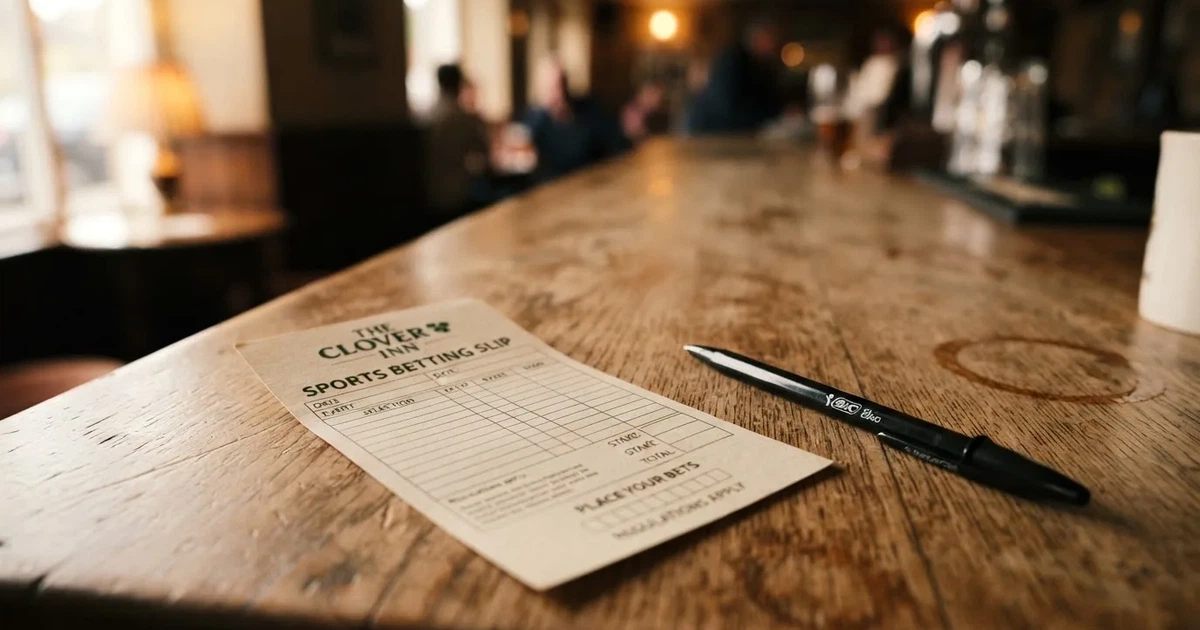
A Trixie is not one bet. It is four bets stitched together across three picks: three doubles and one treble, with the singles left out. The draw for a punter is that a single losing leg does not wipe the whole slip — one of the three doubles can still land — but the price of that cushion is a bigger total stake and a structure the bookmaker prices in its own favour on every line. The pages that follow work through what a Trixie actually does, what it costs under real odds, and which UK bookmakers offer it on terms a reader can use.
The ten bookmakers that take a Trixie in Great Britain
The ranking that follows sits on three filters. Every operator named holds a Gambling Commission remote licence for general betting on real events, so the legal test of “is this brand allowed to take a Trixie from me in my living room” is already passed. The order then weighs what each brand brings to a multiple-bet punter specifically: how clearly the bet slip prices a Trixie, whether the welcome offer counts Trixies toward its turnover, and what the operator’s own terms say about minimum odds, free-bet treatment and stake caps. A licence is the price of admission; everything else is what shapes a punter’s day.

| Brand | Gambling Commission account | Licence holder | What the operator’s own terms state on the Trixie |
|---|---|---|---|
| NetBet | 39170 | Netbet Enterprises Limited | Bet Builder with instant dynamic odds; sports stats for major leagues. Trixie treated as standard multiple. |
| QuinnBet | 61011 | QuinnBet (Gibraltar) Limited | Free bets usable on any market at 1/2 (1.50) or greater; Trixies, Patents and Yankees excluded from free-bet use. |
| BetTom | 64959 | Bet Tom Limited | 50% back as a free bet on sports up to £50; full terms apply to qualifying bet structure. |
| Dabble | 65677 | Dabble Sports UK Ltd | Bet £10, Get £10 in free bets; 7-day expiry, stake not returned, minimum odds on the qualifying line. |
| BetUK | 39198 | LeoVegas Gaming PLC | Free bets exclude virtual sports, esports and non-UK/IE horse racing; minimum odds apply. |
| DAZN Bet | 48756 | DZBT Limited | Cash Out, Bet Builder, daily bet boosts, in-play; cash-out availability not guaranteed. |
| 10bet | 43173 | Blue Star Planet Limited | Football, tennis and horse racing covered; Cash Out, Bet Builder, live streaming. |
| Tote | 54779 | TDCO Limited | Pool-betting heritage; Best Odds Guaranteed on UK and Irish racing from 8 AM on race day. |
| Betfred | 39544 | Petfre (Gibraltar) Limited | Bet Builder, Sub Switch, Racing Post data, Extra Places, live casino and bingo. |
| Fitzdares | 400 | Fitzdares Limited | Cash out, accumulators, Lucky 15s, ante-post markets across racing, football, tennis and more. |
Three things stand out before any punter chooses a name off this list. QuinnBet’s free bet cannot be placed as a Trixie at all — a punter holding a free bet there must use it on singles, doubles or accumulators. BetUK draws a similar line on virtual sports, esports and non-UK/IE racing. And several brands — DAZN Bet, Betfred, Tote — show the bet builder and the cash-out button rather than the Trixie button itself, because the Trixie is a structure the punter chooses on the bet slip, not a product the brand markets.
NetBet: the round number
NetBet lands on the list for the simple reason that the Bet Builder shows dynamic odds as the slip is built, which is exactly where a Trixie punter spends their time. The slip breaks the wager into its three doubles and one treble as selections are added, and the total stake updates live. Daily Boosts, Profit Boosts and free bet offers are the welcome path in, and the sports stats pages give the form a punter leans on. For the punter who has never built a multiple, NetBet’s slip is the place where a Trixie’s geometry becomes visible.

QuinnBet: the explicit exclusion
QuinnBet’s free bet is usable on any market at 1/2 (1.50) or greater, with a maximum price of 50/1, and it expires seven days after it is credited. That sounds generous, then the terms name the bet types that are not eligible: straight accumulators are fine; Trixies, Patents and Yankees are not. A punter with a QuinnBet free bet who wants multiple-bet coverage has to build it as four-fold-plus accumulators instead. The Trixie itself is still available on QuinnBet for cash stakes — the restriction is on the free-bet use, not the market.
BetTom: the matched 50%
BetTom runs a 50% back-as-free-bet sports welcome offer up to £50, paired with a matching 50% in free slot funds for casino play. The structure of the qualifying bet, including the market and the minimum odds, sits in the full terms. For a Trixie punter the live question is whether the qualifying bet counts as a single line, a double, or whether a multiple selection triggers the offer — the answer is on the terms page itself and is the kind of detail a free-bet chaser reads before staking.
Dabble: the clean £10-for-£10
Dabble’s welcome is the plainest of the set: Bet £10, Get £10 in free bets on a first deposit, with minimum odds on the qualifying line, a 7-day expiry on the free bet, and the stake not returned with a winning free bet. The Trixie punter’s job is to check whether a qualifying accumulator or multiple counts toward the trigger, and to use the free bet on a market the terms allow within the week.
BetUK: the three exclusions
BetUK’s free bet rules draw three lines on the page: virtual sports are out, esports are out, and non-UK/IE horse racing is out, with minimum odds applying. For a Trixie built on Premier League football and Champions League outrights the offer is straightforward. For a Trixie that runs through a Dota 2 qualifier or an Australian meeting at Randwick, the free-bet leg is a no.
DAZN Bet: the cash-out question
DAZN Bet’s product set is built around the in-play and bet builder experience. Cash Out, Bet Builder, daily boosts and live markets are the headline features, with the terms making clear that cash-out availability is not guaranteed and that bets stand when it is not offered. For a Trixie the in-play window is the dangerous stretch: one leg goes in-play at 1-0 and the punter sees a green cash-out button, only for the feature to disappear when the second goal goes in.
10bet: the core sports
10bet’s sportsbook covers football, tennis and horse racing with Cash Out, Bet Builder and live streaming. A Trixie punter looking for tennis and racing multiples will find the bet slip they need; a Trixie built around basketball or MMA will be thinner and may force line-shopping onto another brand.
Tote: the pool-betting angle
Tote’s heritage is pool betting on British and Irish racing, and its remote general betting licence sits beside the pool product. Best Odds Guaranteed applies to UK and Irish racing from 8 AM on the day of the race, on single and multiple bets, which is the exact corner a racing Trixie punter operates in. The Trixie structure on racing carries one extra wrinkle: each-way betting doubles the unit stake across the four lines.
Betfred: the racing data
Betfred’s app pairs Bet Builder, Sub Switch, Racing Post data and Extra Places alongside the sportsbook. Extra Places is the feature a Trixie punter on a big-field handicap quietly values, because each-way terms on the race card do not always match what the punter assumed. Sub Switch changes a named player in a Bet Builder when lineups land — useful for a same-match double, irrelevant for a Trixie spread across meetings.
Fitzdares: the premium spread
Fitzdares’ app carries cash out, accumulators, Lucky 15s, specials and ante-post markets across racing, football, tennis, rugby, cricket, golf and American football, with in-play live odds. The product is aimed at the higher-stake multiple punter — Lucky 15s and Yankees sit beside the Trixie as standard. A Trixie at Fitzdares is one option among a full cover of full cover bets.
What a Trixie is, mechanically
A Trixie is a full cover bet that uses three selections and skips the three singles. Four bets sit under the slip: one treble and three doubles, each formed by leaving one selection out in turn. The total stake is the unit stake multiplied by four. Two selections winning produce a return on the one double that pairs them. Three selections winning produce a return on all three doubles plus the treble. One selection winning returns nothing, because every line on the slip needs at least two legs.
The shape matters because it sets the floor and the ceiling. The floor is one winning double: at decimal odds of 2.0, 3.0 and 4.0 with £1 on each line, the only double that pays out on a single winning leg is the one formed by the two selections that did not win, which is a no-bet. The actual floor sits at two winning selections, where one double clears, the other two doubles lose, and the treble loses. The ceiling is the treble at full odds, which on the same 2.0/3.0/4.0 example pays 24.0 to a £1 unit stake.
A worked example in plain numbers
Take three selections at decimal prices of 2.0, 3.0 and 4.0, and a £1 unit stake on each of the four lines, for a £4 total outlay. If all three win, the doubles are 2.0×3.0 = 6.0, 2.0×4.0 = 8.0, 3.0×4.0 = 12.0, and the treble is 2.0×3.0×4.0 = 24.0. The return is 6.0 + 8.0 + 12.0 + 24.0 = 50.0, the stake was 4.0, the profit is 46.0. Drop one selection and the geometry collapses: only one double (the one formed by the two winning legs) pays out, the other two doubles lose, the treble loses, the return is the price of that one double, the profit is the return minus the £4 already staked. The bookmaker keeps the other three lines.
How it compares with the neighbours
A Patent adds the three singles on the same three selections, taking the count to seven bets and lowering the floor to one winning selection. A Yankee does the same on four selections: eleven bets, all multiples from two up, no singles. A Lucky 15 layers four singles, six doubles, four trebles and one fourfold on four selections, for fifteen bets. A Heinz takes six selections and runs fifty-seven bets, every multiple from two up. A Trixie is the smallest full cover bet that does not include singles, and the smallest that gives the punter two-selection tolerance inside a three-selection frame.
The arithmetic a punter actually does
The punter’s job is to multiply the prices of the legs on each line, multiply by the unit stake on that line, and add the four returns together to see what the slip pays when all three selections win. The losing-line case needs only the one double that pairs the two winning legs. The bookmaker’s job on the slip is to show all four line prices and the combined stake before the punter confirms.
The legal frame a Trixie punter stands inside
Every operator named in the ranking above holds a Gambling Commission remote licence for general betting on real events, and the Commission’s public register is the place a punter confirms that licence. The register can be searched by business name, trading name, domain or account number, and the brand’s entry will name the licence holder and the licensed remote activities. A punter who wants the underlying licence number for any brand in the ranking should search the register — the account number is the licence’s public identifier, and the licence number itself is a longer reference the register prints alongside it.
The Gambling Act 2005 covers Great Britain — England, Scotland and Wales. Northern Ireland runs its own regime, and a Great Britain licence is not a Northern Ireland licence. An operator that takes bets from customers in Great Britain needs a Commission licence wherever it is based, since the Gambling (Licensing and Advertising) Act 2014 closed the white-label offshore loophole. A Curaçao or Malta licence is not a substitute for a Commission licence at the point of consumption.
The minimum age is 18. Identity is checked before the first deposit or first bet, including on a free bet or a bonus, and the check covers name, address and date of birth. A punter cannot open an account anonymously at any of the ten brands in the ranking. The same rule means a punter who shares a device with a self-excluded family member will be checked, and the punter’s deposits minus withdrawals above £150 in a rolling 30 days now trigger a financial vulnerability check — a public-record check, not an income or credit-reference check, and the first of the Commission’s staged affordability measures. The broader financial risk assessment regime has been announced in stages, with no start date set.
A licensed remote betting operator takes part in GAMSTOP, the national multi-operator online self-exclusion scheme, and the GAMSTOP periods are six months, one year, five years, or five years with auto-renewal. After the minimum period the exclusion stays in place for seven years unless the customer asks GAMSTOP to remove it. Self-exclusion in a betting shop runs through a separate service. Help beyond self-exclusion sits with GamCare and its National Gambling Helpline, GambleAware, the NHS gambling clinics network and Gamblers Anonymous.
The responsibility frame a Trixie punter should know
GAMSTOP is the formal self-exclusion route, and every operator in the ranking is a member. A punter who registers with GAMSTOP is barred from opening new accounts, depositing and betting at any licensed online operator for the chosen period. The scheme is not a betting-shop ban, and the betting shop uses its own self-exclusion service — a punter who needs the full picture should add both. After the minimum period the exclusion does not end automatically; it stays in place for a further seven years unless the punter asks GAMSTOP to remove it, which is a deliberate friction built into the system.
A financial vulnerability check fires at £150 of net deposits over a rolling 30 days, and the check is a public-record one. A punter who has had a county court judgment, an IVA or a bankruptcy in the recent record will see the operator ask for more information. A financial risk assessment — the press’s “affordability check” — has been announced by the Commission in a staged plan with no start date, so any page that calls it in force is wrong.
Deposit limits are the punter’s lever, not the state’s. A punter sets their own gross deposit limit on a fixed time frame at any licensed operator, and the operator is required to offer the tool. A state-set deposit or loss ceiling for sports betting does not exist; the betting shop and the online operator both run on the punter’s choice. The credit card ban (in force since 14 April 2020) means a punter cannot fund a bet with a credit card or a credit-card-funded e-wallet; debit cards and bank-based payments are not covered by that ban.
When the Trixie is the bet, the responsibility frame is unchanged. A Trixie is a bet structure, not a different product, and the punter’s right to self-exclude, set deposit limits, and walk away is the same on a four-line multiple as on a single. The bookmaker’s margin and the punter’s stake are bigger, and the temptation to chase a near-miss treble is sharper; the protections in place do not change.
Bonuses and free bets: where the Trixie sits in the offer
The Trixie itself is a bet structure the punter builds, not a product the brand markets, so the welcome offer and the Trixie meet on the terms page, not the homepage. A welcome offer is the operator’s deal with the new customer: a matched percentage of the first deposit, a free bet bundle, enhanced odds on a named event, or a combination. A free bet is a token the punter stakes at the bookmaker’s risk, with the stake usually not returned with a winning bet — the punter takes the winnings, the operator keeps the stake.
The wagering cap and the mixed-product ban
Since 19 January 2026, wagering requirements on bonuses are capped at 10x. A £10 bonus at 50x needed £500 of qualifying bets before withdrawal; under the cap, no bonus carries more than £100 of required turnover. Mixed-product promotions — an offer that requires gambling on two or more product types, for example “bet on football to get free spins” — are banned in the same reform package. A punter comparing welcome offers now reads the wagering cap and the product split before the headline number.
Free bets and the Trixie in practice
QuinnBet’s free bet cannot be placed as a Trixie, Patent or Yankee — the terms exclude full cover bets. BetUK’s free bet excludes virtual sports, esports and non-UK/IE horse racing. Dabble’s free bet is a 7-day token, stake not returned, qualifying bet at minimum odds. The shared shape: a free bet is a constrained tool, and the Trixie punter uses it on a market the terms allow or leaves it to roll off the clock.
The arithmetic of expected cost
A welcome offer’s real cost is the expected loss on the turnover the bonus requires, not the bonus number on the banner. The arithmetic runs: required turnover = bonus base × wagering factor; the punter then places bets totalling that turnover on markets the terms allow, and the bookmaker’s margin on those markets is what the bonus actually costs the punter. A bonus with a 5x wagering factor and a 5% market margin is a cheaper bet than a bonus with a 10x factor and an 8% margin, even when the second bonus is bigger in cash. The cap at 10x has lowered the worst case; the spread between the cheapest and the most expensive welcome offers in the ranking depends on each one’s specific terms.
The Trixie’s place in bet types and odds
A Trixie sits inside a family of full cover bets whose number of lines grows with the number of selections. Three selections and a Trixie: four bets. Four selections and a Yankee: eleven bets. Four selections and a Lucky 15: fifteen bets. Six selections and a Heinz: fifty-seven bets. Eight selections and a Goliath: two hundred and forty-seven bets. Each shape makes a different trade between stake, tolerance for losers and exposure to the bookmaker’s margin.
How odds compound
The decimal price of a double is the product of the two legs’ decimal prices. The decimal price of a treble is the product of the three legs. The decimal price of a fourfold is the product of the four legs. The Trixie’s treble line is the same multiplication: 2.0 × 3.0 × 4.0 = 24.0. The same arithmetic under the bookmaker’s margin: every leg’s price already carries a margin, and the multiplied price carries the compounded margins of all the legs. A treble is a more expensive product for the punter than three singles, even before the singles are staked, because the margin compounds.
Fractional and decimal in the same sentence
British bookmakers display fractional odds (5/1, 11/4, evens) and decimal odds (6.00, 3.75, 2.00) at the same time. Fractional odds show the profit per unit stake; decimal odds show the return per unit stake. Conversion is mechanical: fractional a/b becomes decimal a ÷ b + 1. 5/1 becomes 6.00; 11/4 becomes 3.75; evens (1/1) becomes 2.00. A bookmaker’s margin is the same on both displays; the format only changes how the punter reads it.
What the bookmaker’s margin actually is
The margin is the share of every unit staked that the bookmaker keeps on average across all outcomes of a market. It is the complement of the payout share. The payout share of a market with odds on every outcome is the sum of the reciprocals of those odds, inverted. A two-outcome market at 1.91 and 1.91 has a payout share of 1 ÷ (1/1.91 + 1/1.91) = 0.955, and a margin of 0.045, or 4.5%. A three-outcome 1X2 market with the home win at 2.10, the draw at 3.40 and the away win at 3.60 has a payout share of 1 ÷ (1/2.10 + 1/3.40 + 1/3.60) = 0.953, and a margin of 4.7%. The margin on the multiples market is harder to read because the bookmaker prices each multiple line individually, and the compounded margin of a Trixie’s four lines is roughly four times the margin of the singles they are made from — with the same shape, the higher the number of legs, the larger the compounded margin.
The punter’s view of a Trixie price
A Trixie at 50/1 in the bet slip is a price the punter reads as the return per unit stake when all three selections win. The four lines on the slip have their own prices; the slip headline is the treble, and the doubles sit beneath it. A punter who shops the Trixie’s treble price across two or three brands before staking will see small differences that, compounded across a season, are the difference between a hobby that costs a fiver a week and one that costs a tenner.
Strategy and the bankroll: what the Trixie can and cannot do
A Trixie is a structural choice, not a tipster’s edge. The punter is buying tolerance: a single losing leg does not kill the slip, because one of the three doubles can still land. The price of that tolerance is a four-line stake where every line carries the bookmaker’s margin. The punter’s job is to compare that cost against the punter’s view of each leg’s probability, and to decide whether the cushion is worth the multiplier.
Where the Trixie fits the bankroll
The bankroll is the total stake the punter has set aside for the Trixie across the season, not the stake on any one slip. A punter with a £200 bankroll, a unit stake of £1 and 50 slips in mind is staking 2% of the bankroll per slip. A punter with a £40 bankroll, a unit stake of £2 and five slips in mind is staking 20% of the bankroll per slip, which is the kind of sizing that turns a Trixie’s natural tolerance into a fast way through the bankroll when the doubles do not land. The structure of the bet is the same in both cases; the punter’s view of their own edge and the punter’s view of the variance is what differs.
Why two-out-of-three is not a strategy
The Trixie pays out on two-out-of-three, and the punter’s temptation is to treat the two-out-of-three case as a frequent win. The arithmetic says otherwise. With the bookmaker’s margin on every leg, the doubled-and-trebled price still has a margin the punter pays on the round, and the only time the punter beats the bookmaker is when at least one leg was priced longer than the punter’s true probability estimate. A Trixie across three selections the punter rates at 60%, 40% and 25% has a 6% chance of all three winning and a 38% chance of exactly two winning. The double on the two winning legs is the slip’s return. The punter is staking four times the unit to harvest that 38% case, and the bookmaker’s margin is taken on the round.
Each-way and the racing Trixie
An each-way Trixie doubles the unit stake on every line — the win half and the place half — so a £1 unit becomes £2 on each of four lines, for an £8 total outlay. The place terms on each leg depend on the race and the operator, and the punter’s job is to read the each-way terms on the race card before staking. A Trixie on three short-priced favourites at a meeting where each-way terms are a quarter the odds for places one to three is a different bet from a Trixie on three longshots at a meeting where each-way terms are a fifth the odds for places one to four. The treble is a more leveraged structure on each-way, because the place half of the treble compounds three place fractions.
The accumulator insurance overlay
Some operators offer accumulator insurance: a free bet refund when one leg of a multiple lets the punter down, often on accumulators of five or more legs. The Trixie is a four-line bet with one treble, so a one-leg-lost Trixie is a two-out-of-three case where one double still pays. Acca insurance on a Trixie is therefore the wrong-shaped product — the punter has not lost the whole slip. The free bet refund on a four-fold or higher accumulator is a different deal, and a punter who values the cushion should build their multiple long enough to qualify.
The price of a winning Trixie in plain numbers
The arithmetic in this section is illustrative — the prices below are not a quoted offer from any operator, and a real bet’s prices will reflect the market at the time of staking. A punter’s job is to read the bet slip’s four line prices and the combined stake before confirming.
Take three selections at decimal prices of 1.50, 2.00 and 2.50 — the kind of prices a short-priced favourite, a moderate outsider and a longer outsider might carry — and a £10 stake on an accumulator, or £2 on each of the four lines of a Trixie. The single-line accumulator at 1.50 × 2.00 × 2.50 = 7.50 returns £75.00 on a £10 stake, profit £65.00. The Trixie at £2 on each line costs £8.00 in total. The doubles are 1.50 × 2.00 = 3.00, 1.50 × 2.50 = 3.75, 2.00 × 2.50 = 5.00. The treble is 1.50 × 2.00 × 2.50 = 7.50. If all three selections win, the Trixie returns £2 × 3.00 + £2 × 3.75 + £2 × 5.00 + £2 × 7.50 = £6.00 + £7.50 + £10.00 + £15.00 = £38.50. Profit is £38.50 minus £8.00, or £30.50.
The accumulator returns more on a winning slip because it stakes a single line at the full compounded price. The Trixie returns less because it splits the stake across four lines and pays only the lines that win. The Trixie’s edge is the second-prize case: when two of the three selections win, the Trixie returns the one double that pairs them, and the accumulator returns nothing. At 1.50 and 2.00, the Trixie’s winning double is 3.00, returning £6.00 on the £2 line, for a £2.00 loss overall on the slip. At 1.50 and 2.50, the double is 3.75, returning £7.50 on the £2 line, for a £0.50 loss. At 2.00 and 2.50, the double is 5.00, returning £10.00 on the £2 line, for a £2.00 profit. The Trixie’s cushion is real on the higher-priced pairing, and a loss on the lower-priced one.
The shape the punter should take from this is a band, not a number. A winning Trixie returns somewhere between the price of the one double that pairs the two winning legs and the full compounded treble, with two-doubles-plus-treble in the all-three-win case. The exact figure sits in the four line prices the bet slip prints, and the punter’s job is to read them before staking.
The compound margin and what it does to a Trixie
The bookmaker’s margin is on every line, and the Trixie’s four lines compound the margin four ways. A 5% margin on each of three singles becomes, on a treble, a margin the punter pays on the round rather than a margin summed — the exact figure depends on each leg’s price, but the direction is the same: the more legs, the more margin the punter crosses. A Trixie’s three doubles plus one treble is a four-line bet where every line carries the compounded margin of its legs, and the punter’s edge has to beat that compounded margin across all four lines for the slip to be a positive expected value.
This is the mechanical reason why the punter’s case for a Trixie rests on the leg-by-leg view. A punter who rates each leg’s probability higher than the bookmaker’s implied probability is making an edge on that leg, and the Trixie lets the punter bet that edge across four lines with two-selection tolerance. A punter who has no view and is betting names because they “look likely” is paying the compounded margin on every line and earning nothing. The structure of the bet does not change the punter’s edge; it only changes the shape of the payout.
What the punter should read on the slip
The bet slip on a Trixie shows the four lines — three doubles and one treble — with each line’s decimal price and the unit stake. The combined stake is four times the unit stake. The “total return if all win” number is the sum of the four line prices multiplied by the unit stake. The “return if two win” calculation is the one double that pairs the two winning legs, multiplied by the unit stake. A punter who reads the slip before confirming has read everything the structure has to say.
Choosing a Trixie bookmaker from the ranking
The ranking opens with the legal test passed: every brand holds a Gambling Commission remote licence. The punter’s second filter is the terms of the welcome offer and the free bet. QuinnBet’s free bet excludes Trixies; BetUK’s free bet excludes virtual, esports and non-UK/IE racing; Dabble’s free bet is a 7-day token; BetTom’s offer is 50% matched up to £50; NetBet’s product is the bet builder with dynamic odds. A punter choosing a brand to clear a welcome offer on a Trixie reads the welcome offer’s terms page, not the headline, because the Trixie’s four lines and the offer’s qualifying bet are the meeting point.
The third filter is the product the punter bets on. Racing Trixies are Tote and Betfred territory, with Best Odds Guaranteed and Extra Places on the race card. Football and tennis Trixies are NetBet, 10bet, DAZN Bet and Fitzdares territory, with bet builders and live streaming. The punter who wants the slip to show dynamic odds as the selections are added has a different shortlist from the punter who wants Best Odds Guaranteed on a Saturday card.
The fourth filter is the operator’s own behaviour under stress. Cash Out availability is not guaranteed; an in-play Trixie whose cash-out button disappears mid-slip is a settled bet at the bookmaker’s price. Live streaming is the operator’s call, and the punter who values a stream should check the operator’s schedule. The punter’s last filter is the punter’s own record: a Trixie at the wrong size for the bankroll is a worse bet than a single at the right size, and the operator’s margin is the same on both.
The operator set, in one paragraph
NetBet shows the slip clearly and pairs the welcome offer with a bet builder. QuinnBet excludes full cover bets from free-bet use, which is a real constraint a Trixie punter with a free bet feels. BetTom’s matched 50% is straightforward, with full terms on the qualifying bet. Dabble’s £10-for-£10 is the cleanest offer in the set. BetUK excludes three product types from its free bet. DAZN Bet is the in-play brand, with cash-out availability that is not guaranteed. 10bet covers the core sports with cash out and live streaming. Tote is the racing specialist, with Best Odds Guaranteed from 8 AM. Betfred is the racing-data brand, with Bet Builder and Extra Places. Fitzdares is the premium cover, with Lucky 15s and Yankees sitting beside the Trixie as standard.
Frequently asked questions
What is a Trixie bet?
A Trixie is a full cover bet on three selections made up of four separate bets: three doubles and one treble. There are no singles, so a single winning selection returns nothing; two winning selections return the one double that pairs them, and three winning selections return all four lines. Total stake is the unit stake multiplied by four.
How does a Trixie bet work in practice?
A punter picks three selections, chooses the Trixie structure on the bet slip, and stakes a unit amount that is multiplied by four. The slip shows each of the four lines with its own decimal price and the total outlay. The bookmaker settles each line independently: a winning double pays out at its compounded price, a losing line pays nothing, and the all-three-win case pays the full four-line return.
What is the difference between a Trixie and a Patent?
A Trixie has four bets across three selections — three doubles and one treble. A Patent has seven bets across the same three selections, adding the three singles. The Patent costs more in total stake but pays out on a single winning selection, whereas the Trixie needs at least two winners to return anything.
How can a punter check a bookmaker holds a Gambling Commission licence?
The Commission’s public register is searchable by business name, trading name, domain or account number. The brand’s entry names the licence holder and the licensed remote activities. Every operator in the ranking above holds a Commission remote licence for general betting on real events, and the account number is the public identifier for that licence.
How is the return on a bet worked out from the stake and the odds?
The return on a single bet is stake × decimal odds. Profit is stake × (decimal odds − 1). On a double the price is the product of the two legs; on a treble, the product of the three; on a fourfold, the product of the four. A Trixie’s four lines are three doubles and one treble, and the all-three-win return is the sum of the four line prices, each multiplied by the unit stake.
What is the bookmaker’s margin and how can it be seen in the odds?
The margin is the share of every unit staked the bookmaker keeps on average across all outcomes of a market, and the payout share is its complement. For a two-outcome market at 1.91 and 1.91, the payout share is 1 ÷ (1/1.91 + 1/1.91) = 0.955, and the margin is 0.045, or 4.5%. The margin is in every price, and the compounded margin on a multiple is the reason a Trixie’s four lines cost the punter more than four singles at the same prices.
Bet types & in-play – Fast Payout
Content created by the «Fast Payout» team
