
Super Heinz bet explained: how seven selections become 120 bets
 Available in US
A Super Heinz is a full-cover multiple bet built from seven selections, comprising 120 individual wagers: 21 doubles, 35 trebles, 35 four-folds, 21 five-folds, 7 six-folds and 1 seven-fold. It contains no singles. Stake it at £2 a line and the total cost is £240 before a single selection has run. The shape of the bet, not the marketing around it, is what the punter is paying for.
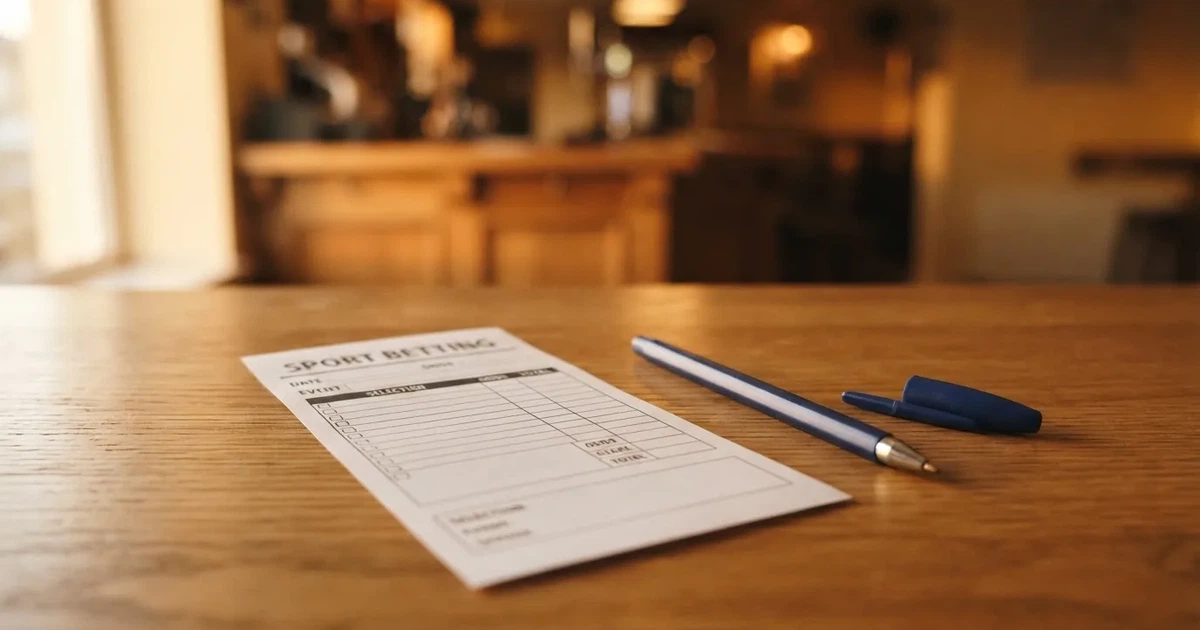
The next sections work through that shape, what it costs to place, how a return is worked out, and which UK bookmakers actually offer it. The arithmetic gets the room it needs because the marketing tends to skip it. All prices in the worked example below are illustrative: they are not prices taken from any bookmaker’s site on any given day, and the reader should price the same selections afresh before staking.
*Current as of 27 October 2026. Licensing data was verified against the Gambling Commission’s public register.*
The 10 bookmakers that offer a Super Heinz — and what sets each apart
A Super Heinz is a standard multiple on most major UK sportsbooks, but a licence and a button are not the same as a usable product. The ranking below looks at who offers the bet, how the price is set, and what each operator’s own terms say about staking, voids and the way a multi-line bet settles when one leg lets the punter down. Several big names sit alongside smaller ones because the bet is identical in shape across the market; what differs is what surrounds it.

| Brand | Gambling Commission licence | What the operator’s own terms say about a Super Heinz |
|---|---|---|
| Ladbrokes | Remote general betting standard (real events), remote betting intermediary — Commission account 54743, held by LC International Limited | Super Heinz supported in the standard betslip; Acca Boosts apply to qualifying multiples; in-play markets feed the same multiples; Best Odds Guaranteed applies to UK and Irish horse racing only and does not extend to a Heinz-style multi |
| BetMGM | Remote general betting standard (real events) — Commission account 39198, held by LeoVegas Gaming PLC | The betslip handles the full 120 lines at a unit stake the customer sets; acca-style free bets are issued as four £10 tokens on multiples and not on a Super Heinz as such; minimum odds and a 7-day clock apply to each free-bet token |
| NetBet | Remote general betting standard (real events) — Commission account 39170, held by Netbet Enterprises Limited | The bet builder outputs singles and standard multiples; Daily Boosts and Profit Boosts price up selected combinations; full-cover bets follow the same settlement rules as the rest of the book |
| Fitzwilliam Sports | Remote general betting standard (real events) — Commission account 48760, held by SBKI Limited | Prices track Oddschecker’s average for each selection rather than the bookmaker’s own line; full-cover multiples are available through the standard betslip; mobile apps carry the same product on Apple and Google |
| Fitzdares | Remote general betting standard (real events) — Commission account 400, held by Fitzdares Limited | Accumulators and Lucky 15s are listed in the app’s product set; specials and antepost markets feed the same betslip; cash out is offered on qualifying multiples including the larger full-cover structures |
| Kwiff | Remote general betting standard (real events) — Commission account 44448, held by Eaton Gate Gaming Limited | Supercharge can boost a settled price after stake — for example 2/1 can move to 20/1 — and applies to single or multi bets on any sport; full-cover bets settle line by line in the normal way |
| Octobet | Remote general betting standard (real events) — Commission account 62545, held by Octopus Game Limited | Best Odds Guaranteed on UK and Irish horse racing, capped at £150 per customer per race, does not extend to a Super Heinz; multiples on the racing side follow the standard book rules |
| Matchbook | Remote general betting standard (real events), remote betting intermediary — Commission account 39504, held by Triplebet Limited | A betting exchange: customers back and lay against each other rather than against a book; Bet Builder, multiples and in-play markets are available; a Super Heinz-style structure is built by the customer as a set of back bets at the prices offered on each selection |
| Betfred | Remote general betting standard (real events) — Commission account 39544, held by Petfre (Gibraltar) Limited | Bet Builder and the standard betslip handle full-cover multiples; Extra Places and Racing Post data are product features, not settlement rules for a Heinz family bet; acca insurance applies where the operator’s terms say it does |
| QuinnBet | Remote general betting standard (real events) — Commission account 61011, held by QuinnBet (Gibraltar) Limited | Free bets are valid for 7 days from credit and may be used on any market at 1/2 (1.5) or greater, with a 50/1 maximum odds cap; straight accumulators are permitted, Trixies, Patents and Yankees are not — the same general rules govern how the bonus side interacts with a full-cover bet |
The licence lines say the same thing ten different ways: each operator holds a remote general betting standard (real events) licence, the relevant licence number sits on the Commission’s public register, and each one takes part in GAMSTOP. The column that earns the table is the third one — what the operator’s own product does to a full-cover bet. A Super Heinz at Ladbrokes sits inside an acca-boosted environment; at Matchbook the customer is laying lines themselves; at Kwiff a settled Super Heinz can be retroactively upgraded. That is the spread a reader is choosing between.
The verdict the rest of the table doesn’t quite make explicit: the bet is a commodity, the bookmaker is the wrapper. Two of the names above handle a Super Heinz through a different mechanic altogether (Matchbook, where each leg is a separate back bet at exchange prices; Kwiff, where the Supercharge can rewrite the settled return after the race). For most readers the choice is really about odds quality, acca boosts and the free-bet terms on the welcome side, not about which brand “supports” a 120-line bet — they all do.
What a Super Heinz actually is
A Super Heinz is a full-cover bet on seven selections. The phrase “full cover” means the bet contains every possible multiple of two selections or more drawn from the seven — no singles, no gaps. Seven picks give 21 ways to choose 2 (the doubles), 35 ways to choose 3 (the trebles), 35 ways to choose 4 (the four-folds), 21 ways to choose 5 (the five-folds), 7 ways to choose 6 (the six-folds), and 1 way to take all seven (the seven-fold). The arithmetic is the binomial coefficient C(7,k) for k from 2 to 7, and the row is 21 + 35 + 35 + 21 + 7 + 1 = 120.

The family is graded. A Heinz covers six selections and is built from the same logic: 15 doubles, 20 trebles, 15 four-folds, 6 five-folds and 1 six-fold, totalling 57 bets. A Goliath runs the same idea one rung higher, over eight selections: 28 doubles, 56 trebles, 70 four-folds, 56 five-folds, 28 six-folds, 8 seven-folds and 1 eight-fold, totalling 247 bets. So a Super Heinz is the middle of three standard full-cover sizes — one more than a Heinz, one fewer than a Goliath.
Two structural points that matter at the betting slip. First, every line is an independent bet at the same unit stake; nothing couples one leg to another beyond sharing the seven picks. The punter can set £0.50 a line, £2 a line, £10 a line — whatever the betslip allows — and the total cost is that unit stake times 120. Second, every line is paid on its own merits, and only the lines that are entirely correct win. Hit six of seven and the seven-fold loses, the seven six-folds each lose the leg that fell through, and the 21 five-folds drop to a four-fold on the surviving six. The bet does not “almost” win.
The flip side is the partial-hit case. A Heinz-style bet has a habit of returning a small profit on a near-miss because each surviving leg is recycled through every combination it still belongs to. Three wins from seven fires 1 double, 1 treble and 1 four-fold at minimum, depending on which three won; six wins from seven fires nearly the full grid minus the lines that include the loser. That is the real value proposition of a Super Heinz and the reason it sits between the smaller multiples and the pure accumulator: more ways to win something, at the cost of much more money down.
How a Super Heinz is built, line by line
The 120 lines follow one pattern. For any number of selections k from 2 to 7, the betslip forms every possible k-fold combination. There is no “system” entry to set; the customer either picks the Super Heinz button on the betslip or selects “120 bets” where the bookmaker offers the count.
The unit stake is the only number the punter has to think about. Set it at £2 and £240 leaves the account before kick-off. Set it at £0.10 and the same bet costs £12. The “minimum stake” line at the top of the betslip reflects the per-line minimum, not the total; the bottom of the slip shows the total. The difference is the kind of thing readers miss when the slip auto-fills.
Void and non-runner rules
A Super Heinz is sensitive to voids in a way a single accumulator is not. When one of the seven selections is voided, the structure downgrades: a four-fold becomes a treble, a treble becomes a double, a double becomes a single. The non-runner rule is mechanical, not discretionary. If one horse is pulled, the lines that include it drop to the next multiple, and the bet continues to settle on the rest. Two voids and the same logic applies twice.
The practical effect is that a Super Heinz can survive a non-runner and still pay — the difference is that a line which would have been a five-fold pays as a four-fold, and so on. A bookmaker’s stated non-runner policy matters more for a 120-line bet than for a single accumulator precisely because so many lines route through any one leg. The bookmaker’s settlement page states the rule plainly: voids downgrade the line, the rest of the bet settles normally.
Super Heinz against the alternatives
A Super Heinz sits between a Lucky 63 and a Goliath in cost and coverage. A Lucky 63 on six selections includes 6 singles on top of the 57 multiples, so it costs more per unit stake but wins something on any one winner. A Super Heinz has no singles, so a single winner returns nothing — the bet relies on at least two legs landing for any return. A Goliath on eight selections costs roughly twice as much at the same unit stake and adds another full layer of combinations.
The choice comes down to two trade-offs. Adding singles (Lucky 63, Lucky 31, Lucky 15) costs more and returns more on partial hits; running a higher full-cover (Goliath) costs a great deal more and broadens the partial-hit payout. The Super Heinz is the narrowest bet in the family that gives the full grid of multiples without the singles premium — useful when the punter is confident of at least two of seven, and a few of the others.
Legality and how a UK licence is checked
A bookmaker taking bets from customers in Great Britain needs a Gambling Commission licence. The Commission’s public register is the whole test: it lists the operating company, the licence categories, the account number and the trading domains. Since the Gambling (Licensing and Advertising) Act 2014 an operator whose remote facilities are used in Great Britain needs a Commission licence wherever it is based. A Curaçao, Maltese or Gibraltar licence is not a substitute, although several of the operators in the ranking above do run from Gibraltar (QuinnBet, Betfred) — they still hold the GB licence on top.
The Commission’s register can be searched by business name, trading name, domain or account number. Enter “QuinnBet” and the result shows QuinnBet (Gibraltar) Limited under account 61011. Enter “Ladbrokes” and the result lists LC International Limited under account 54743. The account number in the table above is what a reader enters; the licence number on the register is the long form the Commission prints alongside. Both refer to the same record.
The register shows the licence categories the operator holds. For sports betting the relevant category is “remote general betting standard (real events)”. Betting exchanges add “remote betting intermediary”, which is what Matchbook holds alongside the standard category. Pool betting on horse or dog racing is a separate category. Virtual events are a separate category. The category matters because a brand that only holds a pool-betting licence cannot legally take a Super Heinz on football. In practice every brand in the ranking above holds at least the standard real-events licence and so can offer the bet.
Three checks before staking on any site. The first is the register entry itself: is the brand listed, and does the trading domain match? The second is the licence category: does the operator hold “remote general betting standard (real events)” or an equivalent that covers sports? The third is the payments and identity step: a GB-licensed site verifies name, address and date of birth before the first deposit, so a site that lets an unverified account stake £240 on a Super Heinz is doing something the Commission’s rules do not allow.
A Super Heinz is a permitted bet under a general betting standard licence — there is no statutory list of permitted markets in Great Britain, and the operator sets the markets under its licence conditions. There is also no statutory cap on stakes. Operators set their own maximum stakes and may restrict individual customers, which is why a £2 unit stake on a 120-line bet costs £240 at one bookmaker and might be capped at £1 a line at another. The minimum stake on a full-cover multiple is set by the betslip, not by law.
Responsible gambling on a full-cover bet
A Super Heinz costs a multiple of the unit stake. At £2 a line it is £240 before kick-off; at £5 a line it is £600. The bet’s cost is invisible at the top of the slip and very visible at the bottom, which is the part readers tend to skip. The responsible-gambling side of a Super Heinz is the same as for any other bet, with the multiplier taken into account.
GAMSTOP is the national multi-operator online self-exclusion scheme and a licence condition for every online operator in Great Britain. Self-exclusion can be set for six months, one year, five years, or five years with auto-renewal, and after the minimum period the exclusion stays in place for a further seven years unless the customer asks GAMSTOP to remove it. Self-exclusion through GAMSTOP covers every GB-licensed online site and app; a separate scheme covers betting shops. Every brand in the ranking above takes part.
A licensed site must run a financial vulnerability check once a customer’s deposits minus withdrawals exceed £150 in a rolling 30 days. The check is a public-record search — bankruptcy, county court judgments and the like — not a credit reference check, and not an income check. The result can prompt source-of-funds questions and, in some cases, restrictions on the account. The affordability checks the press describes are a separate, staged plan, announced but with no start date set.
Operators must offer gross deposit limits under the Remote Technical Standards, and a phased rollout began in late 2025; a second phase was postponed to September 2026, so it is not always clear from the outside whether a particular deposit-limit feature is fully live. The principle is that a GB-licensed site gives the customer a tool to set a ceiling on what they can pay in over a chosen window; the customer is the one who sets the number.
Help lines and clinics. GamCare runs the National Gambling Helpline, GambleAware funds treatment and research, the NHS runs gambling clinics in several regions, and Gamblers Anonymous runs peer-support meetings. A Super Heinz is the kind of bet where partial-hit returns encourage another go, and that is the kind of pattern those services are set up to talk through. The reader who notices the habit is the one most helped by the call.
The protection that an unlicensed site does not offer: GAMSTOP coverage, the Commission’s complaints route, an approved alternative-dispute-resolution service, and any of the British consumer-law routes if the operator withholds funds. The licensed side is not anonymous and is not friction-free, but it is the only side with the safeguards in place.
Bonuses, free bets and a Super Heinz
The free-bet and bonus question on a Super Heinz is mostly settled by the bonus rules, not by the bet itself. A Super Heinz is a multiple, and the way a free bet or a deposit bonus interacts with a multiple is governed by the operator’s terms.
Free bet on a Super Heinz. A free bet is a token stake the operator credits to a customer; the stake is usually not paid back with a winning bet, and a free bet is not the same as a cash stake. At QuinnBet, for instance, free bets are valid for 7 days from credit, may be used on any market at 1/2 (1.5) or greater, with a 50/1 maximum odds cap, and straight accumulators are permitted while Trixies, Patents and Yankees are not. A Super Heinz is not on that excluded list, but the minimum-odds rule still applies on every leg, and the maximum-odds cap applies to any one leg: a 100/1 outsider in the seven would fail the cap and would either be re-priced or voided for the bonus.
BetMGM’s UK sports welcome offer, to take a second example, is four £10 free-bet tokens issued on qualifying multiples of 4+ and 2+ selections, valid for 7 days with minimum odds and opt-in required. The tokens are not the same as a Super Heinz; they sit on smaller multiples. The Super Heinz is a stake-cash bet, not a free-bet bet, and the two meet only at the slip.
The bonus cap that does apply. The promotion rules in force since 19 January 2026 cap wagering requirements on bonuses at 10x the bonus amount, and ban mixed-product promotions that require gambling across two or more product types (betting plus casino, for instance). What is not established is whether the 10x cap applies to free bets with no wagering condition at all, and there is no published cap on the money value of a bonus. So a Super Heinz placed with a free-bet token is settled under the free-bet’s own terms, and a Super Heinz placed with cash to clear a deposit bonus is subject to whatever wagering and minimum-odds terms that bonus carries.
Enhanced odds and acca boosts. Operators run price boosts on selected multiples, including the larger full-cover structures in some cases. A Super Heinz rarely qualifies as a whole — the boost applies to a specific combination, not to all 120 lines. Acca insurance, where the operator refunds a losing accumulator as a free bet if one leg lets the bet down, usually applies to a straight accumulator and not to a Super Heinz; the operator’s promotion page is the place to check. Ladbrokes’ Acca Boost is a price multiplier on winning multiples, not a refund, and applies to qualifying accas, not necessarily to a 120-line full-cover.
The honest position. The bonus that interacts cleanly with a Super Heinz is the cash-back or free-bet offer whose terms do not exclude full-cover bets. The bonus that does not is a price boost or acca insurance tied to a specific accumulator size, or a free bet with a 50/1 cap on any one leg when the punter wanted a longer-priced outsider in the seven. The terms page is the only place to be sure.
Predictions, tips and strategy
The “tips” half of the search landscape for a Super Heinz is not the place to be handed a winner, and the page does not pretend to be one. A Super Heinz is the wrong bet to take into a fixture list the punter has not read. The strategy that does follow from the bet’s shape is the one worth spelling out.
A Super Heinz needs at least two legs to win before it pays anything. The arithmetic of partial returns pushes the punter toward shorter prices on more of the seven, and away from one long outsider in the seven. The grid scales the leg price into every combination: a 1/2 shot that wins is recycled through the 120 lines, and the cumulative return is what matters, not any one leg. A 100/1 outsider that wins is recycled through the same grid, but it sits on top of six other legs that also have to win, and the bonus is much smaller than the headline price suggests.
The strategy of the Heinz family is to over-bet on near-certainties. The punter’s expected edge is positive only if the seven legs are individually value — each one priced shorter than its true probability implies. A Super Heinz does not turn a marginal favourite into a winning bet, and it does not turn a 1/2 shot into something the bookmaker has mispriced. The grid just multiplies whatever edge each leg carries, up or down.
The second strategic point is bankroll. A 120-line bet at the same unit stake is 120 times a single bet. A punter running a Super Heinz a week, at £1 a line, has staked £120 a week on a single betting event, and the bet needs to clear the margin of every one of its 120 lines. The punter running it at £5 a line has staked £600 a week. The 10x bonus cap, the £150 vulnerability check, the deposit-limit tool, and GAMSTOP are the regulatory framework that catches that pattern, and the punter’s own staking plan is the first line of defence.
The third strategic point is settlement. A Super Heinz that is going to lose one leg early can be traded out with a cash-out offer, if the operator offers cash out on a full-cover structure. Fitzdares’ app lists cash out among its features, and most modern bookmakers run the same product. A Super Heinz that has six of seven winners running into the last leg is a different decision: cash out locks in most of the theoretical return for a fraction of the maximum, hold the bet and the seven-fold pays the lot, but the marginal expected value of the hold versus the cash out is not always in the punter’s favour. The bookmaker’s margin is wider on the cash-out price than on the original bet.
The fourth point, and the one the marketing skips, is that the bookmaker’s margin compounds across a multi-leg bet. The margin of a single 1X2 market is the bookmaker’s expected edge on that market, around 5% to 8% on a major football match. A seven-fold accumulator stacks seven such margins, and a Super Heinz stacks the margins across all 120 combinations. The punter who thinks of a Super Heinz as “one big bet” is right about the slip and wrong about the cost — it is 120 separate bets, each carrying its own margin, settled independently.
Bet types, odds and the Super Heinz in the wider family
The Super Heinz sits in a wider family of full-cover and full-cover-plus bets. Knowing the family makes the bet’s economics clearer, and lets a reader compare the Heinz family against the Lucky family and against the plain accumulator.
| Family | Selections | Bets | Singles included? | Total stake at £1 a line |
|---|---|---|---|---|
| Trixie | 3 | 4 | No | £3 |
| Patent | 3 | 7 | Yes (3) | £7 |
| Yankee | 4 | 11 | No | £11 |
| Lucky 15 | 4 | 15 | Yes (4) | £15 |
| Canadian / Super Yankee | 5 | 26 | No | £26 |
| Heinz | 6 | 57 | No | £57 |
| Super Heinz | 7 | 120 | No | £120 |
| Goliath | 8 | 247 | No | £247 |
The Lucky family adds singles. A Lucky 15 at £1 a line is £15 down, and one winner pays the single back plus a small return. A Heinz at £1 a line is £11 down, and one winner pays nothing. The Lucky family is more expensive, but the partial-hit case is more forgiving. The reader’s choice is a question of how confident the punter is of at least one of the picks.
The plain accumulator is the upper bound. An accumulator on seven selections is 1 bet, not 120; one losing leg and the bet loses. A Super Heinz on the same seven is 120 bets, 119 of which can still pay even if one leg lets the punter down. The cost differential is the £119 of additional stake, and the question is whether the partial-hit return justifies it.
Odds formatting in Great Britain is fractional by default, with the decimal form printed alongside. A price of 5/1 in fractional is 6.00 in decimal: return a 5/1 stake of £1 with £5 of profit and the £1 stake back, total £6. The same 5/1 in decimal is just 6.00. The conversion is a/b → a ÷ b + 1, so 11/4 is 11 ÷ 4 + 1 = 3.75. Evens is 1/1, or 2.00 in decimal. Odds-on is the term for a price shorter than evens: 4/6, 1/2, 2/5 are all odds-on.
A worked example. Take seven illustrative selections at prices of 1/2 (1.50) for the first five, evens (2.00) for the sixth, and 6/4 (2.50) for the seventh. The seven-fold odds multiply: 1.5⁵ × 2.0 × 2.5 = 37.97 in decimal. Stake £10 on the seven-fold alone and a winning bet pays £379.70 (£10 stake × 37.97), with profit of £369.70. A Super Heinz on the same seven at £2 a line costs £240; if all seven win, the return is the sum of all 120 lines, paid at the combined odds of each line. That figure depends on every combination, not just the seven-fold, and is the number a betslip will quote on settle.
A return band for a fully successful Super Heinz at £2 a line, on those illustrative prices, sits in the region of £1,500 to £2,000 depending on the exact combinations. The point of the band rather than a single figure is that the calculation involves every line’s individual price, and a slightly different mix of prices across the seven produces a noticeably different total. The reader pricing the same seven at the bookmaker’s site will see the precise number, and the live slip is the source of truth at the moment of staking.
The number a reader should hold in mind is the cost. A Super Heinz at £2 a line is £240. At £5 a line it is £600. The 120-line grid is the point of the bet; the cost is the price of admission.
What a Super Heinz does well, and what it does badly
The case for a Super Heinz is the partial hit. Six winners from seven pays something close to the full grid’s worth minus the lines that included the loser, and that is the moment a Super Heinz is built for. The case against a Super Heinz is the cost: 120 lines at the unit stake before a single selection has run, with the bookmaker’s margin compounding across every one. The bet is a multiplier on whatever edge the seven legs carry, and the multiplier is the wrong way around when the seven legs are at average prices.
The case for a Lucky 63 over a Super Heinz is the singles premium. Six singles plus the 57 multiples of a Heinz family, on six picks, costs more at any unit stake and pays something on a single winner. The case against a Lucky 63 is the cost of those singles when none of them wins, and the dilution of the partial-hit multiples by stake that would have been better-placed in the multiple side.
The case for a plain accumulator over a Super Heinz is the cost: one bet, one stake, the same seven-fold price. The case against is the all-or-nothing settlement: one losing leg and the bet is gone, where a Super Heinz would have continued to settle on the surviving six.
The bookmaker’s offer. An acca boost, where the operator multiplies the winning price of a qualifying multiple, applies in some cases to a full-cover structure. A Super Heinz that wins 119 of 120 lines is, in practice, treated by the boost rules as a winning accumulator for the lines that won, and the boost applies to the relevant combinations. The operator’s promotion page is the place to check; the boost is not automatic.
Worked return for a winning Super Heinz
The reader who wants a number rather than a band can compute the full return from the seven prices, the unit stake, and the bookmaker’s calculator. The shape of the calculation is the same for any seven selections and any unit stake. The example below uses the seven prices mentioned above at a unit stake of £2 a line.
For a straight seven-fold accumulator on those prices, stake £10 and a winning bet returns £379.70, with profit of £369.70. The seven-fold alone, at the same unit stake of £2, would return £75.94, with profit of £65.94. The point of the Super Heinz is what the other 119 lines add on top. The exact total depends on every line’s individual combined odds, and the band of plausible totals on these illustrative prices sits in the low thousands of pounds at £2 a line — the dominant contribution is the seven-fold at 1.5⁵ × 2.0 × 2.5 = 37.97, which on a £2 stake returns £75.94; the next-largest line is the six-folds, where each of the seven six-folds drops one leg and inherits the odds of the remaining six, and the smallest lines are the doubles, where each of the 21 doubles multiplies the prices of its two legs.
The key assumption is that all seven selections win. A partial-hit scenario pays a fraction of the full-grid total, and the fraction depends on which leg lost and how many of the higher-multiple lines the loss took out. The bookmaker’s calculator does the arithmetic; the punter’s stake plan sets the unit number.
A Super Heinz is not a “system” that wins, and no calculation in this article names a winner. What the calculation does name is the cost, the structure and the range of plausible returns for a bet where every leg has won. The reader who wants a system that wins is asking the bookmaker for a price the bookmaker has not offered; the bookmaker’s edge is built into every line, and the grid just multiplies that edge across 120 of them.
Frequently asked questions about the Super Heinz
What is a super heinz bet?
A Super Heinz is a full-cover bet on seven selections that contains every possible multiple of two or more of those picks. The bet contains no singles, so a single winner returns nothing and the bet needs at least two legs to land for any return.
What is a heinz bet?
A Heinz is the same idea on six selections. The grid runs to 57 bets: 15 doubles, 20 trebles, 15 four-folds, 6 five-folds and 1 six-fold. A Heinz at £1 a line costs £57, against the Super Heinz’s £120. Both are full-cover bets with no singles.
How many bets in a super heinz?
The Super Heinz structure comprises 120 bets. The unit stake is the same on every line, and the total cost is the unit stake times 120. The betslip shows the per-line and total stakes separately.
How can it be checked that a bookmaker holds a Gambling Commission licence?
The Commission’s public register can be searched by business name, trading name, account number or domain. Every brand in the ranking above is listed under the account number shown in the table. The licence categories printed on the register (remote general betting standard (real events), remote betting intermediary) tell the reader what kind of betting the licence covers, and the trading domain confirms the brand the punter is dealing with.
How is the return on a bet worked out from the stake and the odds?
The return on a winning single is stake multiplied by the decimal odds; the profit is the return minus the stake. For an accumulator, the odds of the legs multiply into one combined price, and the return is stake times that combined price. For a Super Heinz the same rule applies to every one of the 120 lines independently, and the total return is the sum of the 120 individual returns for the lines that won.
What is the bookmaker’s margin and how can it be seen in the odds?
The margin is the share of every pound staked that the bookmaker expects to keep on a market. The way to see it is to add the implied probabilities of every outcome of a market (each is 1 ÷ decimal odds) and subtract the result from 1. On a football match priced 2.10, 3.40 and 3.60 the implied probabilities are 0.476, 0.294 and 0.278, summing to 1.048; the overround is 4.8%, and the bookmaker’s margin is 4.6%. The bookmaker’s margin is wider on smaller markets and tighter on the major events, and it stacks across the legs of a multi-leg bet.
Bet types & in-play – Fast Payout
Content created by the «Fast Payout» team
