
How UFC betting tips actually work — and what no tipster can promise
 Available in US
Mixed martial arts has spent three decades moving from a curiosity to a fixture on a British betting slip. The Ultimate Fighting Championship held its first event on 12 November 1993 in Denver, Colorado; today it runs eleven weight divisions and has staged more than 750 events. TKO Group Holdings owns the promotion, Dana White has been its president since 2001, and the cards arrive on UK screens thick and fast through 2026 — UFC 334 on 14 November at Madison Square Garden, UFC 335 on 12 December at the T-Mobile Arena. UFC betting tips are the search that follows them. What follows is not a tip sheet: it is a guide to how a UFC price is built, how to read the margin folded into it, what staking discipline actually buys you, and which paths through the licensed market suit which kind of punter.

Current as of 27 October 2026 · verified against the Gambling Commission’s public register.
The shape of UFC: rounds, scoring and how a bout ends
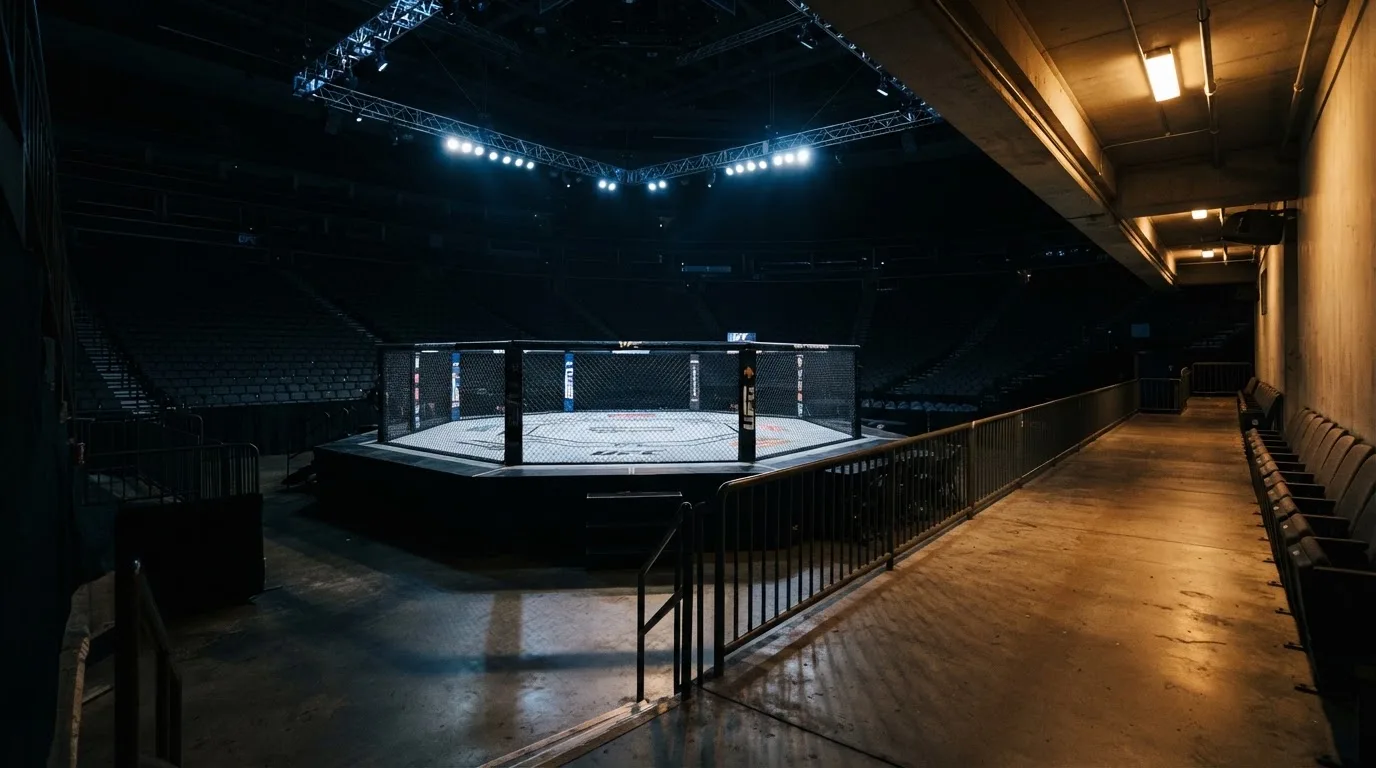
UFC bouts are fought inside a cage over rounds that change the betting arithmetic before a single strike is thrown. Each round runs a maximum of five minutes with one minute of rest between rounds; championship fights and non-title main events are scheduled for five rounds, every other bout for three. A bet on a method-of-victory market is a bet on what happens inside them.

Three judges apply the ten-point must system to every round: the victor of the round receives ten points, the loser nine or fewer, and a 10-8 is the typical score for a dominant round. A fight ends by submission, knockout, technical knockout, judges’ decision (unanimous, majority, split or technical) or disqualification, and a referee or commission physician can rule a bout a no contest. The same list settles almost every derivative UFC fight. UFC bets on the method of victory are settled by that list; bets on the winner of a decision are settled by the card the judges hand in.
A title fight that ends in a draw leaves the champion holding the belt. That detail shapes one specific market: the draw line in a championship bout is settled differently from a draw in a non-title fight, and any tipster treating the two as identical is pricing them wrong.
The fundamentals behind a UFC price
A bookmaker does not price a UFC bout by guessing a winner. It prices the two outcomes it offers — and the third, the draw, where the sport allows it — and folds its margin into each one. The arithmetic is mechanical. Take an illustrative two-way market priced at 1.90 / 1.90 in decimal odds (9/10 fractional). The payout share of that market is 1 ÷ (1/1.90 + 1/1.90), which works out to 0.95, or 95 %. The bookmaker’s margin is the rest: 5 %. Spread the same 5 % across an uneven market, say 1.65 / 2.40, and the share drops a touch and the margin climbs a touch — the gap between the two prices is where the house lives. Every UFC tip that names a “value” pick is, at its core, a claim that one of those prices sits above the true probability of the outcome once the margin is taken out.
That is also the only honest reading of a UFC betting tip. It is a claim about a price, not a claim about a future. A tip is verifiable, in retrospect, by comparing its claimed price to the price the market offered when the bet was placed. A prediction is not verifiable: the fight ends the way it ends, and the tipster either nods or is quiet. The two words get used interchangeably on social media, and the slippage matters: a value claim can be wrong but disciplined, while a confident prediction that turns out right is just luck.
Where the value sits in a UFC card
Three places carry the bulk of the analysis that goes into a UFC tip, and each one carries its own trap.
Form is the easiest to read and the easiest to misread. A fighter’s last three to five bouts give a streak — wins, losses, finishes, decisions — and the streak reads cleaner when the opponents are at a comparable level. Two wins over journeymen and a loss to a ranked contender look like a 2-1 record; they are not the same shape. A tipster who treats the win-loss column as the whole story is pricing name fights.
Statistics are where the tip sheet pretends to be depth. Significant strikes landed per minute, takedown defence, submission attempts, age, reach, the opponent’s record against southpaws — the list runs long, and the figures on it sit on a public record. None of them predict a winner by themselves. They narrow the range of plausible outcomes, and the price the bookmaker offers sits somewhere inside that range. A statistic that contradicts the price is worth attention; a statistic that confirms the price adds nothing.
Line-ups and camp are the part no public statistic shows. A short-notice replacement, a fighter coming back from injury, a camp split between coaches, a weight-cut that nearly missed — these are the inputs a sharp tip builds into a price and a casual tip never sees. They are also the inputs that change the price between the opening line and the fight, and the value of a tip often lives in the timing of when it is read.
The market’s own odds are the fourth input, and the one that matters most. Two bookmakers pricing the same fighter at 1.80 and 2.00 are not saying the same thing about that fighter; they are saying two different things about their own customers. The wider the spread between firms on the same bout, the more a price is being shaped by who is betting rather than by who is fighting. A tipster reading the price as a probability is reading a sentiment gauge.
What a UFC betting tip cannot do
No tipster — and no guide — can tell the reader who wins a UFC fight. The sport resists it. A fighter whose record reads six straight finishes steps in against a counter-striker who has never been knocked out, and the question is not who wins, it is whether the favourite’s price already accounts for the contradiction. A tipster who calls the winner names a name; a tipster who calls the value names a price above the probability and lets the bettor stake accordingly.
The line between the two is where the marketing sits. “Sure win”, “locks of the week”, “best UFC picks” — these are the phrases that sell tipster subscriptions. They are also phrases no honest tipster uses. The bookmaker’s margin is inside every price, and a “lock” is a name attached to a price that the margin has already drained. Reading the price is the discipline. Chasing the lock is the loss.
How the bookmaker’s margin sits inside a UFC price
The margin is the cut the bookmaker keeps of every unit staked on a market. It is built into the prices themselves, and it can be seen once the prices are written down. Take an illustrative two-way market priced at 1.90 / 1.90 (9/10 fractional). The payout share — the share of every pound staked that returns to winners across both outcomes — is 1 ÷ (1/1.90 + 1/1.90), which gives 0.95, or 95 %. The margin is 1 minus that, or 5 %.
That 5 % is what the bookmaker keeps before its own costs. A UFC market priced at 1.85 / 1.85 has a margin closer to 8 %; the same fight at 1.95 / 1.95 has a margin closer to 2.5 %. A round-by-round payout from a single fight typically sits in the 5–8 % band on the main markets; exotic markets — method of victory, round groupings, fighter-specific performance props — sit higher, often 10 % or more, because the outcomes are rarer and the price harder to anchor. Reading the margin is reading the tax. The tip that ignores it is paying it.
The same mechanic explains the draw line in a three-way market. A fight priced at 1.50 / 4.50 / 6.00 has a payout share of 1 ÷ (1/1.50 + 1/4.50 + 1/6.00), which works out to roughly 0.78, or 78 %. The margin is the remaining 22 %. Three-way UFC markets — title fights where a draw is a real possibility — carry a wider margin than the two-way equivalent, and the wider margin is the cost of the longer card.
Staking, bankroll and the discipline a tip cannot replace
A tip is a price. A stake is a decision. The two together produce the bet, and the discipline of staking is what determines whether the bettor survives the weeks the tipster is wrong. Three rules sit underneath the practice.
Flat staking — the same unit on every bet regardless of confidence — is the default. A unit is typically 1 to 2 % of the bankroll; on a £500 bank that is £5 to £10 a bet. The unit is the cost of a lesson. A tip that loses teaches the tipster to ignore it; a tip that wins pays roughly one unit. Flat staking keeps both cheap.
Proportional staking scales the unit to the edge. A tip read as 5 % above the true probability gets a larger unit than one read as 2 % above. The math is more demanding and the variance is wider, but the long-run expectation improves. The discipline is to keep the unit inside the bettor’s own range: a 5 % edge on a £500 bank is still a £25 bet, not a £200 punt.
Bankroll management is the ceiling. The bank is the stake a bettor can lose and still place another one. Once a bank is set, it stays fixed until the bettor reviews it. Chasing losses by raising the unit, doubling after a near-miss, or staking the rent on a confident pick — these are the moves a bankroll rule stops, and they are the moves no tip can rescue.
The honest summary: a disciplined bettor on a 5 % margin market pays 5 % of every bet to the bookmaker, on average, before counting the cost of the tips they bought. A disciplined bettor on a 2 % margin market keeps almost all of it. The margin is the variable the bettor can move; the tip is not.
Reading the UFC card before the tip arrives
A UFC card runs from the early prelims through to the main event, and the prices sit at very different shapes from top to bottom. The main event carries the tightest margin because the betting public has the most information on it; the early prelims carry the widest margin because the public has the least. A tipster selling picks on the early prelims is selling picks on the markets the bettor is paying the highest tax on. A tipster selling picks on the main event is selling picks the bettor could price themselves.
The same logic applies across the markets on a single fight. The moneyline — who wins — is the tightest market. The method of victory — how they win — is wider. The round grouping — in which round — is wider still. Each step down the menu is a step further from the public’s information and a step closer to the bookmaker’s edge. A tip that prices the method of victory accurately is a sharper tip than one that prices the moneyline accurately, because the method market gives the bettor more margin to find value in.
A tip that combines the markets — a bet builder, a same-game multi, an accumulator — is paying margin on margin. Each leg carries its own house cut, and the multiplied price folds them all together. The bettor pays for the convenience. Whether the bettor profits from it depends on whether the combined price sits above the combined true probability once the margins are stripped out. Most do not.
Top 10 UK-licensed bookmakers for UFC betting
The ten operators below all hold a remote operating licence from the Gambling Commission for Great Britain. They are not ranked by suitability — every licensed operator meets the same statutory test — but by what each one offers the UFC bettor specifically: in-play depth, market breadth, accumulator tools, withdrawal speed, and the kind of clear that pays out in cash rather than free bets. Each card closes on the kind of punter it actually suits.
Kwiff — random odds boosts that change the menu every slip
Kwiff’s licence sits under account 44448 on the Gambling Commission’s public register, held by Eaton Gate Gaming Limited. The brand’s signature is “Supercharge”: a feature that can instantly boost the odds on a bet — for example, from 2/1 to 20/1 — and applies to single or multi bets on any sport, UFC included. The mechanic is a price multiplier applied at settlement, not a refund of the difference, so the bettor either wins at the boosted price or loses the stake at the original price; there is no middle ground.
Kwiff suits the bettor who treats UFC cards as entertainment rather than something to handicap — the punter who wants the same bet at a higher price and does not care which way the boost lands. The market depth is thin compared with the major firms, and the brand has no Best Odds Guaranteed on horse racing because it does not need one: the Supercharge is the equivalent, applied across the sports. Against that, the Supercharge is a feature, not a margin cut; the underlying prices still carry the bookmaker’s edge, and the boost is the cost of finding value on a single slip rather than across a card.
Sporting Index — spread betting alongside fixed odds
Sporting Index’s licence sits under account 27343, held by Sporting Index Limited. The firm runs both fixed-odds and spread betting products, which makes it a different beast on a UFC card: the fixed-odds sportsbook prices fights the standard way, while the spread side lets the punter take a position on a range — total rounds, method of victory, winning margin — and settle on the actual outcome. A spread bettor’s losses can exceed their deposit, and the firm is regulated by the Financial Conduct Authority for the financial spread side and by the Commission for the fixed-odds side.
For the UFC bettor the appeal is the spread product on rounds and method. A punter who reads a bout as a finish in round one can take a spread position that pays out if the fight ends early and costs if it goes long. Against that, spread betting is a different discipline from fixed-odds staking, and the bankroll rule that keeps a fixed-odds bettor alive does not transfer cleanly to a product where losses can exceed the deposit. Sporting Index suits the experienced punter who already knows how spread betting settles and wants a way to express a UFC view that fixed odds cannot capture.
bet365 — the in-play depth and the live stream
bet365’s licence sits under account 55148, held by Hillside (UK Sports) ENC. The brand is the benchmark for in-play UFC: live markets update through every round, the live stream covers events worldwide, and the in-play tools — Bet Track, Match Live and a Live Golf Tracker for the golf equivalent — give the bettor a screen that follows the fight rather than the betting slip. The depth of markets on a UFC main event runs into the hundreds on a major card, and the margin on the main lines is among the tightest in the licensed market.
For the UFC bettor the trade-off is the one that defines the brand. The in-play product is wide and the live stream is the closest thing to a broadcast on a betting site, but the welcome offers are typically modest against the headline-grabbing numbers elsewhere, and the bonus cap under the 2026 promotion rules means the firm is competing on margin and product rather than on the size of its sign-up gift. bet365 suits the punter who bets in play and values a stable, deep product over the marketing pitch.
Tote — pool betting on the headline fights
Tote’s licence sits under account 54779, held by TDCO Limited. The brand runs a pool betting product — bets are pooled with other customers and dividends are declared after the race or fight — alongside fixed-odds markets on the major sports. The pool structure means the dividend depends on how the rest of the pool bets, not on a margin the bookmaker has set, and the price the punter takes is the price the pool declares.
For UFC, the pool product typically runs on the main event only, with a win pool and a place-style pool on the method. The punter who likes the simplicity of a single dividend and the absence of a bookmaker margin on the pool side will find it here; the punter who wants the breadth of a bet builder and the speed of an in-play market will not. Tote suits the casual UFC punter on a big card and does not pretend to be anything else.
Fafabet — Best Odds Guaranteed from 9am
Fafabet’s licence sits under account 57385, held by Taichi Tech Limited. The brand pays Best Odds Guaranteed on UK and Irish horse racing from 9am on race days: if the starting price (SP) is bigger than the price the punter took, the bet is paid at the SP. The product is a feature on horse racing rather than UFC, but it tells the reader how the firm treats a punter’s price: it tops up the early price to the bigger one, on win and each-way bets, without conditions for the bettor.
For the UFC punter the relevance is the price discipline behind the BOG rule. A firm that pays the bigger of two prices on horse racing is a firm that takes price drift seriously, and the discipline carries across the sports. Fafabet suits the punter who likes to take an early price on a UFC bout and trusts the firm to settle at the higher number if the market moves. The UFC market depth is narrower than the major firms and the welcome offers are typically modest.
QuinnBet — seven-day free bets with a maximum-odds cap
QuinnBet’s licence sits under account 61011, held by QuinnBet (Gibraltar) Limited. The brand’s free bets are valid for seven days from credit and can be used on any market at odds of 1/2 (1.50) or greater, with a maximum odds of 50/1; straight accumulators are allowed but Trixies, Patents and Yankees are not. The minimum odds floor is the relevant number for a UFC punter: a free bet at 1.50 or greater covers most fight outcomes, the maximum odds cap blocks the long-shot plays.
For the UFC bettor the appeal is the breadth of the markets and the seven-day window on free bets, which is generous against the standard 24 to 72 hours. The trade-off is the maximum-odds cap, which stops a punt on a heavy underdog at 100/1 from being placed with a free bet token. QuinnBet suits the punter who plans a week of betting around a card and wants a free bet that can stretch across two or three events.
William Hill — Best Odds Guaranteed from 8am on the major firms
William Hill’s licence sits under account 39225, held by WHG (International) Limited. The firm has paid Best Odds Guaranteed on UK and Irish horse racing from 8am on race days since before most current customers opened an account, on both single and multiple bets. The rule does not apply to ante-post, tote or pari-mutuel bets. The brand is one of the older names in British betting and the product runs deep on UFC: full moneyline, method of victory, round groupings, fighter-specific performance props, and a live in-play product on the major cards.
For the UFC punter the trade-off is the one that defines a major firm: a wide product with a margin the brand has spent decades optimising. William Hill suits the punter who wants a single account that covers every UFC market and is willing to pay the price of the major-firm margin in exchange for the depth. The welcome offer is typically modest against the headline-grabbing numbers at smaller firms.
Betway — the four-token welcome and the seven-day clock
Betway’s licence sits under account 39372, held by Betway Limited. The welcome offer for new UK and Ireland customers is £40 in free bet tokens (4 x £10), credited on settlement of a first bet of at least £10 at minimum odds of 2.0, with a seven-day expiry on the tokens and debit card deposits only. The structure is four equal tokens rather than a single £40 free bet, which forces the punter to spread the bonus across four bets rather than stake it on one.
For the UFC punter the four-token structure is a discipline rather than a feature. A punter with a £10 unit and a card can place four bets across a card weekend, each at 2.0 or greater, and clear the bonus inside a week. The trade-off is the minimum odds floor and the debit card restriction: an e-wallet deposit does not trigger the offer. Betway suits the punter who already bets in £10 units and wants a welcome bonus that maps cleanly onto four bets rather than a single bigger one.
Geoff Banks — ante-post prices and a small firm
Geoff Banks’ licence sits under account 54095, held by GB Sports Advisors Limited. The brand offers live in-play prices and ante-post prices on future events, on an app published by GB Sports Advisors Ltd. The firm is smaller than the major firms and the UFC market depth is narrower, but the ante-post product on title fights months out is the differentiator: prices are available on bouts that have not been scheduled yet, on a firm that wants the action.
For the UFC punter the appeal is the early price. A punter who has a strong read on a title fight six months out can take a price before the betting public knows the card. The trade-off is the depth of the in-play product and the speed of the withdrawal on a small firm’s books. Geoff Banks suits the patient punter who prices a UFC card months in advance and is willing to lock the bet at a small firm.
Bet600 — Best Odds Guaranteed on horse racing and a young product
Bet600’s licence sits under account 44731, held by Tyche Tech Limited. The firm pays Best Odds Guaranteed on horse racing: if the starting price is bigger than the early or show price taken, the bet is paid at the SP. The product is a horse-racing feature rather than a UFC one, but the discipline behind it — settle at the bigger number, no conditions — is the marker. The UFC product is younger than the major firms and the in-play depth is narrower.
For the UFC punter the relevance is the same as Fafabet: a firm that pays the bigger of two prices is a firm that takes price drift seriously. Bet600 suits the punter who wants a younger firm with a clean BOG rule on horse racing and is willing to take a thinner UFC product in exchange. The welcome offer is typically modest against the headline-grabbing numbers elsewhere.
Legality, licensing and where a UFC bet is actually placed
A bookmaker serving customers in Great Britain needs a Gambling Commission licence, and the Commission’s public register is the whole test of who holds one. Since the Gambling (Licensing and Advertising) Act 2014 the rule is under sections 33 and 36 of the Gambling Act 2005: an operator whose remote facilities are used in Great Britain must hold a Commission licence wherever the operator is based. A Curaçao, Maltese or Gibraltar licence is not a substitute. No state monopoly exists and no cap on the number of licences sits in the statute.
The Commission’s public register can be searched by business name, trading name, domain or account number, and the ten operators in the ranking above all appear on it against a remote general betting standard (real events) licence. Several brands can run under one licensee; the register names the licence holder, not the trading name. A single brand’s licence number does not license a sister brand.
Financial spread betting is regulated by the Financial Conduct Authority, not the Commission. The two regulators overlap on a small set of firms — Sporting Index is one of them — and the relevant test for a UFC punter is which product they are taking: fixed odds are under the Commission, financial spread bets are under the FCA. Northern Ireland is outside the Gambling Act 2005 and has its own older law; a “GB licence” or “Great Britain licence” regulates England, Scotland and Wales, not Northern Ireland.
Minimum age 18. Name, address and date of birth are verified before a customer can deposit or gamble — since 7 May 2019, including with a free bet or bonus. No anonymous play at a licensed site.
What the Commission actually requires of a licensed operator
A Gambling Commission remote licence is not a marketing badge. It carries a set of conditions in the Licence Conditions and Codes of Practice (LCCP) and the Remote Technical Standards (RTS), and three of them sit behind every UFC bet.
GAMSTOP is the national multi-operator online self-exclusion scheme and a mandatory licence condition for online operators since 31 March 2020. Periods run six months, one year, five years, or five years with auto-renewal. After the minimum period the exclusion stays in place for a further seven years unless the customer asks GAMSTOP to remove it. Every GB-licensed online operator takes part. A customer who has self-excluded through GAMSTOP cannot deposit or bet at any of the ten operators above, or at any other GB-licensed bookmaker.
A financial vulnerability check (LCCP condition 3.4.4, in force since 30 August 2024) applies to licensed remote betting when a customer’s deposits minus withdrawals exceed £150 in a rolling 30 days — the threshold has applied since 28 February 2025. It is a public-record check (bankruptcy, county court judgments), not an income check and not a credit reference check. Financial risk assessments (the “affordability checks” of the press) are announced in a staged plan, with no start date as of the Commission’s statement of 7 July 2026 — write “announced, staged, no start date”, not “in force”.
Deposit limits under RTS 12 require operators to offer a gross deposit limit on a fixed time frame. The first changes have applied since 31 October 2025; a second phase was postponed to 30 September 2026 and whether it is in place is not established. There is no state-set deposit or loss ceiling for betting: limits are the customer’s choice. The licensed operator offers the tools; the bettor sets the number.
Bonuses, free bets and what a UFC offer actually costs
Promotion rules in force since 19 January 2026 cap wagering requirements on bonuses at 10x — a £10 bonus at 50x turnover needed £500 of bets, and under the cap no more than £100. Mixed-product promotions — an offer that requires gambling on two or more product types such as betting, casino, bingo and lottery, for example “bet on football to get free spins” — are banned. Whether the cap applies to free bets with no wagering condition and any cap on the money value of a bonus are not established.
What this means for a UFC punter is that the headline number on a sign-up offer is the marketing, and the wagering multiple is the cost. A £30 free bet with no wagering condition is worth the full £30 if it wins at any price the punter can find, minus the bookmaker’s margin. A £30 bonus at 5x turnover requires £150 of qualifying bets, and the punter pays the margin on each one. The two offers are not the same shape, and reading them as the same number is the mistake the marketing wants the punter to make.
A free bet whose stake is not paid back with a win is the standard shape: the punter stakes the free bet token, and on a win the bookmaker pays the winnings but does not return the £30. The value of the free bet, on average, is the free-bet amount times the odds minus one, divided by the odds, multiplied by the payout share of the market. A £30 free bet at 3.00 (2/1) on a market with a 95 % payout share is worth £30 × (3.00 − 1) ÷ 3.00 × 0.95, or £19. That is the average; the punter either wins £60 or wins nothing. The £19 is the expected value across many such bets at the same price.
No promo code is printed on this page. Where an offer exists, the punter finds it through the operator’s own site.
Live betting and cash out on a UFC card
Live UFC betting is the market that updates through every round, and the in-play product is where the major firms differentiate. bet365 runs the deepest in-play book on a UFC main event, with markets that update between rounds and a live stream that follows the fight. The depth is the result of the firm’s investment in the product rather than a quirk of the sport; the same firm runs a thin in-play book on smaller sports.
Cash out is the feature that lets a punter settle a bet before the fight ends. The cash-out price is the bookmaker’s mid-price on the current state of the bet, less a margin the bookmaker keeps for itself, and the price moves with the fight. A punter who cashed out a pre-fight favourite after a first-round knockdown receives a fraction of the original stake; a punter who cashed out an underdog mid-fight after a takedown receives a multiple of the stake. The mechanic is a settlement tool, not a free option, and the price the bookmaker offers is the price the bookmaker is willing to take the other side of.
A live bet that cannot be cashed out is a bet the punter has to ride to the bell. The Sporting Index new-customer offer, for example, requires the qualifying £10 fixed-odds bet not to be placed in play or cashed out early; the rule applies to the qualifying bet only, not to bets placed with the free bet tokens that follow.
Mobile apps and the UFC betting screen
UFC cards land at odd hours in British time — a Saturday night main event starts at 3am or 4am Sunday for the UK viewer — and the mobile app is the screen most punter bets on a UFC card actually pass through. Three of the ten firms above — Betway, Sporting Index and Fafabet — run apps on the GB App Store; the others run browser-based products that work on a phone.
The relevant comparison on the mobile screen is not the design but the speed of the in-play update. A bet placed between rounds needs to settle before the next round starts, and a sluggish app turns a sharp in-play read into a missed bet. The other relevant comparison is the live stream: a punted who watches the fight on the bookmaker’s app rather than on a broadcast is the punter who sees the in-play odds update as the fight unfolds. The two features together — fast updates and a live stream — are what a mobile UFC punter is paying for.
Crypto, anonymity and the offshore route
A British punter looking for UFC crypto betting will find offshore firms that accept Bitcoin and other coins, and the marketing on those firms leans into the pseudonymous angle. The Commission does not license a payment method — the licence is on the operator — and no rule for or against cryptocurrency deposits at licensed operators is established: describe payments qualitatively and only from each operator’s terms.
What the offshore route costs the punter is the protection a GB licence buys. A GB-licensed operator is bound by the LCCP, by GAMSTOP, by the 10x bonus cap, by the £150 financial vulnerability check, by the Commission’s complaints route and an approved dispute-resolution body, and by British consumer redress if funds are withheld. An offshore firm is bound by its own house rules and the regulator in its own jurisdiction, and a GB punter with a complaint has no automatic route. The marketing pitch of anonymity is the marketing pitch of “no checks” — and the checks are what stops a vulnerable punter losing more than they should.
No Curaçao, Maltese or Gibraltar licence substitutes for a Commission licence at the point of consumption. The Gambling Act 2005, section 33, makes providing gambling facilities in Great Britain without the licence the Act requires an offence — aimed at the operator, with penalties of up to 51 weeks’ imprisonment, a fine up to level 5, or both (six months in Scotland). No offence aimed at a customer who merely bets on an unlicensed site was found. The honest framing is honest on both sides: licensed = checks, limits, GAMSTOP, bonus cap, and verification before the first bet; unlicensed = none of those protections and possible loss of funds. Neither is the safe choice by default.
Responsible gambling: the tools that sit behind every bet
The safer-gambling tools the ten operators above make available include deposit limits, time-out periods, product restrictions and self-exclusion through GAMSTOP. Unibet’s site, for example, lists deposit limits, a Player Profile test, product restrictions and self-exclusion, alongside live chat support and links to BeGambleAware, GamCare, GAMSTOP, Gambling Therapy and the BGC. Every operator covered here carries a similar set.
Help exists outside the operators. GamCare runs the National Gambling Helpline; GambleAware funds treatment and research; the NHS operates gambling clinics across Great Britain; Gamblers Anonymous runs local meetings. A punter who notices their staking has crept past the bank they set, or who is betting to recover losses rather than to find value, has a list of free, confidential places to start.
Self-exclusion through GAMSTOP is the nuclear option: six months to five years plus seven, with auto-renewal, across every GB-licensed online operator. A punter who reaches that point is a punter who has decided the rest of the tools have not been enough, and the rest of the tools exist so the decision is the punter’s rather than the operator’s.
Tax on winnings
The player pays no tax on betting winnings in Great Britain — general information, not tax advice; a professional gambler should ask HMRC or an adviser. General Betting Duty is the operator’s tax on gross profits, currently 15 %; from 1 April 2027 a new remote betting rate of 25 % applies within it, while remote bets on UK horse racing, bets on self-service betting terminals in licensed premises, pool betting and in-person betting stay at 15 %. Until 1 April 2027 the remote rate stays at 15 %. Spread betting carries its own rates — 3 % on financial spread bets, 10 % on others.
Whether operators pass duty on through odds is not established. The punter’s price is the punter’s price; the duty sits behind it. Never write that the player is charged duty.
Advertising, sponsorship and the noise around a UFC card
Advertising is not licensed by the Commission. It runs through the CAP Code (non-broadcast) and the BCAP Code (broadcast), enforced by the ASA, alongside the LCCP marketing conditions. CAP Code section 16: marketing must be socially responsible, must not be of strong appeal to under-18s, and no one who is or seems to be under 25 may be featured gambling or play a significant role, with an exception for marketing placed where a bet can be made directly. The rule concerns who may appear in the advertisement, not who may bet.
“Whistle-to-whistle” is an industry code, not law: since 1 August 2019 betting advertisements are not shown on TV from five minutes before a live sporting event to five minutes after it, before the 9pm watershed, with horse and greyhound racing excluded. The Premier League clubs’ withdrawal of gambling sponsorship from the front of matchday shirts, from 2026/27, with sleeves and hoardings remaining, is voluntary rather than statutory. UFC’s own sponsorship picture sits outside British advertising law and is governed by the promotion’s commercial deals.
Operators are responsible for marketing by their affiliates. No promo code is printed on this page.
What the ten operators look like side by side
The table below lines up the licence picture and the operator’s own terms on the bettor-facing shape of the welcome. The matters are the licence number on the Commission’s public register, the licence holder the register names, and what the operator’s own terms say about the bonus or welcome package. Every figure comes from the register or from the operator’s own site as cited; nothing in the analysis above is reproduced here.
| Brand | Licence number | Licence holder | Welcome package as the operator states it |
|---|---|---|---|
| Kwiff | 44448 | Eaton Gate Gaming Limited | Supercharge feature boosts odds on a bet, for example from 2/1 to 20/1; applies to singles or multis |
| Sporting Index | 27343 | Sporting Index Limited | £10 fixed-odds bet at minimum odds 1/2 unlocks three £10 fixed-odds free bets, three £5 spread bets on Total Goals, three £5 on Winning Favourites and a £1 spread bet on Race Index; qualifying bet cannot be placed in play or cashed out |
| bet365 | 55148 | Hillside (UK Sports) ENC | In-play betting and live streaming of events worldwide with Bet Track, Match Live and a Live Golf Tracker |
| Tote | 54779 | TDCO Limited | Pool betting on horse racing and a fixed-odds sportsbook across the major sports |
| Fafabet | 57385 | Taichi Tech Limited | Best Odds Guaranteed on UK and Irish racing from 9am on race days, win and each-way, paid at SP if larger than the price taken |
| QuinnBet | 61011 | QuinnBet (Gibraltar) Limited | Free bets valid for 7 days from credit; usable on any market at minimum odds 1/2, maximum 50/1; straight accas allowed, Trixies, Patents and Yankees not |
| William Hill | 39225 | WHG (International) Limited | Best Odds Guaranteed on UK and Irish racing from 8am, singles and multiples; excludes ante-post, tote and pari-mutuel |
| Betway | 39372 | Betway Limited | £40 in free bet tokens (4 x £10) on settlement of a first bet of at least £10 at minimum odds 2.0; 7-day expiry; debit card deposits only |
| Geoff Banks | 54095 | GB Sports Advisors Limited | Ante-post and in-play prices on future events through the firm-branded app |
| Bet600 | 44731 | Tyche Tech Limited | Best Odds Guaranteed on horse racing; bet paid at SP if larger than the early or show price taken |
The column on welcome packages reads as the operator’s own terms describe it, not as a comparison — a £40 token package with a 7-day clock is a different shape from a Supercharge that boosts an existing bet, and neither is the same as a pool product that pays a dividend. Reading the column means reading each operator’s own terms, which is the page’s only honest answer to “which one suits me”. That is the trade-off the next paragraph turns on.
Matching an operator to a punter
The same ten firms above cover the UFC punter with different strengths, and the choice depends on what kind of punter the bettor actually is.
The in-play punter who watches the fight and bets between rounds wants bet365, and the depth of the in-play book is the reason. The brand has invested in the product and the live stream is the closest thing to a broadcast on a betting site. The trade-off is the welcome offer, which is modest against the headline numbers elsewhere.
The price-first punter who takes an early price and wants the bigger of two prices if the market moves wants Fafabet, William Hill or Bet600 — the three firms in the ranking that pay Best Odds Guaranteed. The rule is on horse racing rather than UFC, but the discipline behind it carries across the sports. Fafabet suits the punter who takes a price early and trusts the firm to top up at settlement.
The bonus-discipline punter who plans a week of betting around a card wants QuinnBet, where the seven-day free bet window stretches across a card weekend rather than expiring in 24 hours. The maximum-odds cap of 50/1 is the limit and the minimum odds of 1/2 the floor.
The pool-and-fun punter who likes a single dividend and does not want to think about a margin wants Tote, where the pool product on a main event runs without a bookmaker-set margin. The depth on UFC is narrower than the major firms.
The spread-betting punter who reads a UFC bout as a finish in round one wants Sporting Index, where the spread product on rounds and method gives a way to express a view that fixed odds cannot. The trade-off is the discipline: spread betting is a different product and the bankroll rule that keeps a fixed-odds bettor alive does not transfer.
The patient ante-post punter who prices a title fight months out wants Geoff Banks, where prices are available on bouts not yet scheduled. The trade-off is the depth on the day and the speed of withdrawal on a small firm’s books.
The token-discipline punter who bets in £10 units wants Betway, where the £40 welcome offer arrives as four £10 tokens rather than a single bigger free bet. The four-token structure maps onto four bets rather than one punt, and the 2.0 minimum odds is a floor that most markets clear.
The odds-boost punter who likes the same bet at a higher price wants Kwiff, where the Supercharge can lift a price from 2/1 to 20/1 on a single bet. The mechanic is a multiplier at settlement, not a refund, and the punter either wins at the boosted price or loses the stake.
What this page is not
This page is not a tip sheet. No UFC betting predictions are named, no specific fighters are picked, no specific bouts are priced, no system is offered to win. The UFC is a sport in which a fighter who has never been knocked out steps in against a finisher, and the result is not knowable in advance. A tip that names a winner names a name; a tip that names a value names a price above the probability and lets the bettor stake accordingly. The first is not a guide and the second is.
This page does not advertise. No brand is recommended; no sign-up is urged. The ten operators are described as the Commission’s register lists them and as each operator’s own terms describe the welcome offer. The bettor chooses.
This page does not promise a return. Betting is not an income; the bookmaker’s margin sits inside every price and pays the operator before the bettor sees a return. The discipline of staking, bankroll management and value pricing is the discipline of paying the margin slowly rather than paying it all at once.
Frequently asked questions
Where can I place a UFC bet in Great Britain?
At any bookmaker on the Gambling Commission’s public register that holds a remote general betting standard (real events) licence. The Commission’s register can be searched by business name, trading name, domain or account number, and the ten firms covered above all appear on it. Minimum age is 18, and identity is verified before the first deposit.
How is a UFC fight settled for betting purposes?
A bout ends by submission, knockout, technical knockout, judges’ decision (unanimous, majority, split or technical) or disqualification, and a referee or commission physician can rule a no contest. Three judges apply the ten-point must system to every round: the victor receives ten points, the loser nine or fewer, with a 10-8 typical for a dominant round. A title fight that ends in a draw leaves the champion holding the belt.
What is a value bet and why is no tip ever certain?
A value bet is a price that sits above the true probability of the outcome once the bookmaker’s margin is taken out. The margin sits inside every price and is the cut the bookmaker keeps of every unit staked. A tip is a claim about a price, not a claim about a future: it is verifiable, in retrospect, by comparing its claimed price to the price the market offered when the bet was placed. No tip is certain because no price can name a winner — the price is the bet, and the bet is the discipline.
How is the return on a UFC bet worked out from the stake and the odds?
Return equals stake multiplied by decimal odds. Net profit is stake multiplied by (odds minus one). A £10 stake at 2.50 returns £25, of which £15 is profit and £10 is the returned stake. For a combination bet the odds of the legs multiply into one price, and the margin on each leg is folded into the combined price — the bettor pays margin on margin.
What is the bookmaker’s margin and how can it be seen in the odds?
The margin is the cut the bookmaker keeps of every unit staked on a market, and it sits inside the prices themselves. The payout share of a market is 1 divided by the sum of 1 divided by each price; the margin is 1 minus that. An illustrative two-way market priced at 1.90 / 1.90 has a payout share of 0.95 (95 %) and a margin of 5 %. A market priced at 1.85 / 1.85 has a margin closer to 8 %; the same fight at 1.95 / 1.95 has a margin closer to 2.5 %. The margin is the tax the bettor pays on every bet, and reading it is reading the cost.
Combat & motorsport – Fast Payout
Content created by the «Fast Payout» team
