
The ten sports betting apps worth installing in Great Britain this year, judged on what a UK Gambling Commission licence really gives a punter
 Available in US
The browser tab is one thing. The icon on the home screen is another. A betting app has to load fast enough to use in the last ten seconds of a Champions League group game, and it has to accept a deposit, settle a bet and pay out a withdrawal under the same customer-protection regime as the desktop site. In Great Britain that regime is the Gambling Commission’s: every brand reviewed here holds a remote licence issued by the Commission, every one participates in GAMSTOP, every one checks the holder’s name, address and date of birth before a first bet is struck. The whole licensed market runs on those rules, and the differences between the apps are not whether they sit inside them but how each one chooses to present them.
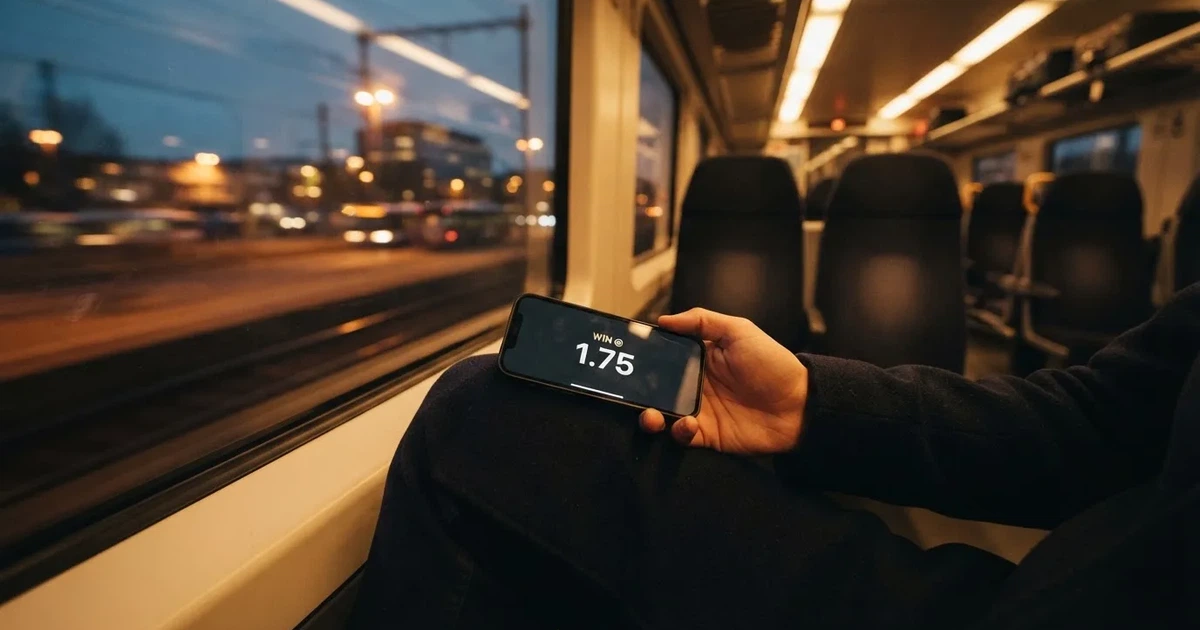
What follows is a working guide to the ten apps that earned a place in this year’s shortlist, written from what each operator and the App Store list for its app say about its product. The framing is consequence: not what a feature looks like in a marketing email, but what it costs the punter and where it bites first. Two sections that any reader in Britain needs in front of the comparison come first — safer gambling and the legal frame — and from there the page works through bonuses, payments, the mobile experience itself, and the sports it covers, before settling on the ten apps reviewed as a group. One table and one calculation-free analysis sit inside the body; the worked arithmetic is the table’s own reading.
Data current as of 27 October 2026, verified against the Gambling Commission’s public register of remote licence holders and against the App Store listings each operator names as the publisher of its iOS app.
Safer gambling on a British betting app: what the rules actually do for the person holding the phone
A safer-gambling section tends to read like a public-service announcement, and it tends to repeat the same line in every section below. The line is true, and the repetition is the problem: it leaves the reader with no map of what each control actually does. British licensed apps run four mechanisms that touch the punter directly, and the difference between them is what each one stops the customer from doing and when.

GAMSTOP is the multi-operator self-exclusion register. Register once, with a name, address and date of birth, and every online operator licensed by the Commission is required to refuse the account. Periods run from six months up to five years, with a five-year auto-renewal option. After the minimum period a further seven-year retention applies before the record can be removed. The point of that long tail is to defeat the well-known impulse to lift the block a month in. GAMSTOP covers online sites and apps. Betting shops use a separate service. Crucially, GAMSTOP is a licence condition, not an offer: an unlicensed app does not check the register, and an unlicensed app does not refuse to open an account that holds one.
Deposit limits are the second mechanism. The Commission’s Remote Technical Standards require a licensed operator to give every customer a gross deposit limit set on a fixed time frame — daily, weekly, monthly. The first phase of changes to that regime came into force on 31 October 2025, and a second phase has been postponed to 30 September 2026, so the upper bound an operator may impose is still in transition. What is unchanged is the principle: a British licensed app does not let a customer set an unlimited deposit ceiling and forget about it. The ceiling is the customer’s choice; the framework is the regulator’s.
Financial vulnerability checks are the third. Since 28 February 2025 a licensed operator must run a public-record check on a customer whose deposits minus withdrawals cross £150 in any rolling 30 days, with the requirement in force since 30 August 2024. That check looks at county court judgments and bankruptcies, not at bank statements, not at payslips. A further stage of checks — the financial risk assessments that the press calls affordability checks — was announced in a Commission article of 7 July 2026 in a staged plan with no start date. The honest framing of the current state is this: the £150 trigger is in force, the deeper checks are announced, and whether a deeper check fires on a given account depends on what the operator has decided for that account.
Help and counselling lines are the fourth. GamCare runs the National Gambling Helpline. GambleAware funds treatment. The NHS runs gambling clinics. Gamblers Anonymous runs meetings. Each licensed app links to those services from a footer that the regulator audits; Unibet, for example, names BeGambleAware, GamCare, GAMSTOP, Gambling Therapy and the Betting and Gaming Council in its safer-gambling footer, and William Hill’s customer service runs twenty-four hours a day on in-site messaging. The listing is required; the questions the reader should ask are how quickly the operator responds and whether the link is visible at the moment of deposit, not whether the link is there.
A reader comparing the ten apps on safer gambling does not pick between safer and unsafe — every one reviewed here runs all four mechanisms. The difference is in what sits in front of those mechanisms. Coral and William Hill time the offering of a deposit limit at registration; Kwiff’s app-store page lists a 17+ age rating that is the App Store’s own way of expressing the same 18-or-over floor the Commission enforces. Star Sports surfaces deposit limits, a Play Break facility and self-exclusion from the My Account menu. Dabble offers deposit limits and cooling-off periods inside the app. What none of the apps does is make those tools unavoidable, which is by design: the law requires the operator to offer them, not to enforce them. A punter who never opens My Account never sets a limit, and the regulator accepts that so long as the menu is there to open.
Crypto, anonymity and the licensed-app question: what an unlicensed route actually costs in Britain
There is no licensed route into a British betting app without an identity check. The Commission has required name, address and date-of-birth verification since 7 May 2019, and a customer who has only placed a free bet is verified the same way as a customer who has deposited a thousand pounds. A crypto-only sportsbook without that check is by definition unlicensed for Britain. Stating what that costs is not a campaign against the reader who would one day try one; it is the work of the section.

A licence is the test of protection, and the protection has a specific price. No GAMSTOP coverage. No Commission complaints route. No approved dispute-resolution body. No British consumer redress if the operator declines to send the winnings back. No bound by the £150 vulnerability-check trigger. No bound by the 10x wagering cap on bonuses that came into force on 19 January 2026. That is the list of what an unlicensed route gives up.
Enforcement in Britain is on the operator, not on the punter. Providing gambling facilities to a customer in Great Britain without the licence the Gambling Act 2005 requires is an offence aimed at the operator under section 33 of the Act, carrying on summary conviction up to 51 weeks’ imprisonment, a fine up to level 5, or both. The Commission’s powers are cease-and-desist notices, search-engine referrals, work with registrars, hosts and payment providers, and court-order DNS blocking powers that have been granted or are about to be. ISP blocking as an operational system is not in force, and never write that it is. A punter does not commit an offence by placing a bet on an unlicensed site, and writing “legal to use” would be the opposite error. The right framing is unlicensed means no protection, and that means either paying the operator’s bill or losing the dispute if one arises.
Crypto deposits at a licensed British bookmaker are a narrower question. The Commission’s public register does not record a ban on cryptocurrency payments, but a licensed operator’s anti-money-laundering controls make the operational status of a Bitcoin deposit a question for that operator’s own payments page. State the position as that operator states it, and never assume a GB licence carries a position on coin payments either way. A Curaçao, Maltese or Gibraltar licence is not a substitute for a Commission licence for customers in Great Britain, and the international wallet of licences a brand can name does not put it inside the British regime. The licence is the test.
What a bonus on a British betting app actually pays back: turnover, minimum prices and the 10x cap
A “free” bet is rarely a free bet in money. The first job of this section is to name the marketing word and let the arithmetic deflate it.
The Commission’s promotion rules, in force since 19 January 2026, cap wagering requirements on bonuses at 10x. A £10 bonus with a 50x wagering requirement used to ask for £500 of qualifying bets before withdrawal; under the cap no more than £100 is required of the punter, and £10 of bonus money remains a £10 of bonus money rather than a £100 marketing figure. The cap does not touch the question of whether the stake of a free bet comes back on a win, and on that point the answer across the licensed market is, for most operators, no — the stake is the usual base, the winnings are paid as winnings, and what the punter keeps is the difference.
Coral’s current sports welcome offer illustrates the moving parts and where they bite. The mechanics, in summary: deposit and place a sports bet of £20 or more at minimum odds of 2.0 (1/1 in fractional form); £40 in free bets is issued within seven days; the free bets expire seven days after issue; the offer is for new GB customers who opt in. The first thing to notice is the asymmetry between what the punter pays in — £20 at 2.0 returns £40 if the bet wins, so the wager nets zero on a win and £20 out of pocket on a loss — and what the punter gets back if the qualifying bet loses: £40 in free bets whose stake is not returned on a win. At minimum odds 2.0, a winning £40 free bet pays £80, of which £40 is profit. The offer pays the punter back if and only if the free-bet price lands, and the qualifying bet is the price of admission to that lottery.
Lottoland UK’s app carries a casino welcome offer rather than a sports one, which is worth flagging because Lottoland is on this list as a sportsbook. The current casino offer requires a £20 stake on selected slots and pays 100 free spins on Fishin’ Frenzy Even Bigger Fish, with no wagering and a 30-day expiry, running until 14 February 2027. No wagering is the rare case; the offer is the offer’s value rather than the offer’s turnover.
Bet600’s app sports welcome offer requires at least five qualifying single bets of £10 or more at minimum odds of 2.0 (Evens) within the first seven days of registration, after which one £10 free bet is credited. Five £10 bets at minimum 2.0 is £50 of qualifying bets for a £10 free bet whose stake is not returned; the qualifying-bet liability is real, the free-bet prize is modest, and the seven-day window is the clock that turns the offer from a benefit into a pressure.
BetVictor offers regular price boosts, acca offers and free bets on selected events, with welcome offers shown in the app and governed by its customer terms and conditions. The plain-English reading of that line is that BetVictor’s promotions list is event-driven and changes week to week; the right time to read the terms is at the moment the offer is shown, not at the moment the bet is struck.
The arithmetic of a free bet, for the case where the stake is not paid back on a win, is straightforward: the value of a free bet is its face value multiplied by the decimal odds minus one, divided by the odds, multiplied by the payout share of the market it is placed on. A £10 free bet at decimal odds 3.0 on a market with a 95% payout share is worth, on average, £10 × (3.0 − 1) ÷ 3.0 × 0.95, or £6.33. The honest reading is that the offer is worth about £6 of expected value to the punter, not £10. A bookmaker’s “free bet” of face value £10 is a free bet of expected value close to £10 minus the operator’s margin on the market, and a reader who runs the multiplication sees where the marketing word sits.
The promotion rules under the Commission also ban mixed-product promotions, which is to say offers that require gambling on two or more product types — for example “bet on football to get free spins”. The market for those cross-product offers in Britain closed on 19 January 2026, and an app that offers one is operating outside the licence condition. None of the apps reviewed here does. Whether the 10x cap applies to free bets with no wagering condition, and whether the regulator has set a cap on the money value of a bonus, are not established and the answer to either is not assumed.
Payments and payout speed on a British betting app: what the cashier actually offers and what faster costs
A British punter’s choice of payment method is constrained by what the regulator allows, what the operator supports, and what the customer’s bank allows. Three sets of rules, and the lowest common denominator is the answer.
Credit cards are banned for gambling in Great Britain, including credit-card-funded payments through an e-wallet. The ban has been in force since 14 April 2020 under LCCP condition 6.1.2. A debit card or a bank-based payment is not covered, and an e-wallet funded by a debit card or bank transfer is not covered. A punter who tries to deposit with a credit card is refused at the cashier and refused again on the app’s payment page. Apple Pay is treated as a debit-card-funded payment; PayPal’s status is similar so long as the underlying funding source is a debit card, a bank transfer or a PayPal balance.
DAZN Bet’s deposit floor is a useful concrete figure: £5 by debit card, Apple Pay, Paysafecard, Trustly and Skrill, and £20 by PayPal, with no processing fees. A £5 minimum is at the low end of the British market and a useful lower bound for the kind of punter who wants to bet the value of a coffee on a Saturday accumulator. The £20 PayPal minimum is a product decision rather than a regulatory floor, and it bites the punter who wants to fund with PayPal specifically.
NetBet’s app supports Instant Payments to bank, Apple Pay, PayPal and debit card, and Face ID or Touch ID login. The phrase “Instant Payments” is the UK Faster Payments Service, which settles a payment from a UK bank account to another UK bank account within seconds during the day and within two hours overnight — the punter’s “instant” is a real thing rather than a marketing word here.
Payout speed is where the comparison gets honest. The licensed British market is split into operators that publish a withdrawal processing window and operators that publish nothing. bet365’s app is the most downloaded sports betting app in the UK by the App Store’s own listing, and the company’s general practice is to process withdrawals back to the original payment method within a defined window that varies by method. Where the operator publishes a window, the punter reads it. Where the operator publishes nothing, the punter reads the cashier’s small print, and the punter assumes the slowest of the published figures is the right ceiling for the period.
There is no statutory cap on stake or payout in British sports betting; the limits are the operator’s own. Midnite’s site, for example, shows price boosts with maximum-stake limits, and the limit is a marketing tool as well as a risk-control tool: a price boost with a £100 maximum stake is a price boost aimed at the £10 punter, and that is a feature, not a bug. The punter comparing the apps on payout speed should also compare the apps on payout ceiling, because a high ceiling and a fast ceiling are not the same product.
The General Betting Duty at 15% on the operator’s gross profits is the operator’s tax, not the punter’s, and the punter pays no tax on winnings in Great Britain. From 1 April 2027 the remote betting rate moves to 25% within General Betting Duty, with UK horse racing, pool betting, betting-terminal bets and in-person bets held at 15%. Until that date the rate is 15% on remote bets. Whether operators pass duty on through odds is not established; never write that the punter is charged duty.
The mobile experience: what an app actually does in the last ten seconds of a football match
A betting app is a small piece of software that runs on a phone. Three things decide whether it works: how fast it loads the in-play page, how reliable the cash-out is, and how robust the biometric login is. The ten apps in this list are all on iOS, all on Android, and all under a 17+ App Store age rating.
bet365’s app supports Face ID login on supported devices and accepts debit card, PayPal and Apple Pay as funding methods. The app’s account opening is driven by the same verification regime as the desktop site — name, address, date of birth — and the app uses those credentials as soon as the bettor signs in. The biometric step is on top.
Kwiff’s app has a 17+ App Store age rating and is published by Spryme Ltd; the App Store listing describes Kwiff’s trademark in passing rather than as a feature, and the licensor on the Commission’s public register is Eaton Gate Gaming Limited. The App Store age rating is the App Store’s own way of expressing the 18-or-over floor the Commission enforces.
Midnite’s app is published by Dribble Media Limited and lists Gambling Commission account number 39198 on the App Store listing — a small but useful disclosure that lets the punter reconcile the App Store’s publisher with the Commission’s licence holder without leaving the listing.
Lottoland UK’s app combines casino, lottery betting, sports betting and scratchcards. The combination is unusual and worth flagging: a punter who installs Lottoland for sports betting ends up with a casino, a lottery bookmaker and a scratchcard product on the same login, and the safer-gambling controls the Commission enforces apply to each product as if it were the only one. The app’s sports betting is the same app, not a different one.
The Tote app, published by UK Tote Group Ltd, offers pool betting: Placepot, Jackpot, Scoop6 and Quadpot, plus World Pool and international pools from the French PMU, the United States and Hong Kong. The Tote is the pool-betting brand of the British market and the only one in the shortlist whose product is the pool rather than the fixed-odds bookmaker. The punter looking for place-market or exacta-market bets at the Tote is the punter the Tote was built for, and the punter looking for a Bet Builder on a Premier League match should look elsewhere.
Smarkets’ app is the only one in the shortlist that runs as a betting exchange. Two-factor authentication, live charts and an order-book view, a quick trade-out option and 24/7 live chat support. The punter looking to lay a bet rather than back it is the punter for whom Smarkets exists; the punter looking for a price boost on a Premier League match should look elsewhere.
Spreadex combines fixed-odds and spread betting in one app. One-click, auto and partial cash out, Bet Builder across fixed odds or spreads, and live streaming of UK and Irish horse racing, greyhounds, tennis, NFL and selected football. Spread betting is regulated by the FCA where the product is financial, and by the Commission where the product is sports-based, and Spreadex is regulated by both regulators for the products they each cover. Spread betting losses can exceed deposits, and that line — printed on the Spreadex homepage rather than buried — is the line that ought to be on the punter’s mind before the bet is struck.
The rest of the shortlist sits between those two poles. Star Sports provides deposit limits, a Play Break facility and self-exclusion in My Account, and the app is available in the UK and Ireland. BetWright’s app, published by BW Operations Limited, also offers a casino, live dealer tables and online bingo on the same login. Fafabet’s app supports Face ID or Touch ID login. London.bet, published by Thistle Bet Limited, lists a 17+ App Store age rating and is described as licensed and regulated in the UK. Geoff Banks’ app, published by GB Sports Advisors Ltd, offers live in-play prices and ante-post prices on future events. The pattern is the same: a sportsbook as the centre, a casino as the by-product, a biometric login as the door, a safer-gambling menu as the floor.
Sports and tournaments: what each app is built to cover
A sports betting app is a product of the sports it covers and the markets it shows. The ten apps in the shortlist are not interchangeable on this point: a horse-racing punter’s shortlist is not a football-punter’s shortlist, and a punters’ shortlist that wants the World Cup is a punters’ shortlist that wants in-play markets on every game of the tournament.
The Premier League and the Champions League drive the football calendar. bet365 is the official global betting partner of the UEFA Champions League, and that partnership is the partnership of the round-ball game’s flagship tournament. The Premier League clubs’ voluntary withdrawal of gambling sponsorship from the front of matchday shirts, from the 2026/27 season, with sleeves and hoardings remaining, is voluntary rather than statutory, and the change touches sponsors rather than markets. The markets on the Premier League and the Champions League are unaffected.
Horse racing is the second leg of the British market. Best Odds Guaranteed (BOG) is the operator’s promise to pay the starting price if the starting price is higher than the price the punter took when placing the bet. Betfair Sportsbook offers free live streaming of UK and Irish horse racing and football within the app. Spreadex offers live streaming of UK and Irish horse racing, greyhounds, tennis, NFL and selected football. The Tote offers pool betting on UK and Irish racing; the Tote’s Placepot, Jackpot and Scoop6 are the most-played pool bets in the country.
Esports are treated by the Commission like any other event, and a licensed bookmaker can offer markets on them. Virtual events are a separate licence category and not the same product as an esports market. A punter looking at esports markets reads the market on its own terms rather than reading it as a virtual event.
In-play markets are not a separate licence either, and the controls on them are the operator’s licence conditions and customer-protection duties. The honest framing is that GB bookmakers offer in-play markets and that the controls are operator-level, not statutory. Never write that in-play is “unrestricted” as a legal conclusion. Betfair’s 90 Minute Payout market is an in-play product with a specific contractual shape: the pay settles for that bet if the favourite goes two goals ahead in ninety minutes, and the offer is described in those terms rather than as a general in-play promise.
Politics, TV shows and novelty markets are offered by GB bookmakers; no statutory prohibition was found. Each operator’s own terms name what it offers and what it does not, and the punter reads the terms before placing the bet. Spread betting, pool betting and betting-intermediary betting are not interchangeable products, and the markets each operator offers reflect the licence category the operator holds. The punter reading the App Store listing for the product reads what the category description says, then reconciles it with the Commission’s public register, then reads the operator’s own market catalogue.
The ten sports betting apps in Great Britain: how each one earns its place
Ten brands. Each one’s place in the list is the brand’s licence, the brand’s product and the brand’s own description of what it does. Each brand’s review closes on the verdict the analysis above it earns. The table below summarises the licence facts; the prose that follows is the analysis.
| Brand | Gambling Commission remote licence number and licence holder | What the operator’s own terms state on the app’s subject |
|---|---|---|
| Kwiff | 044448-R-323408-017 (account 44448), Eaton Gate Gaming Limited | 17+ App Store age rating; describes itself as a trademark operated by Spryme Ltd |
| Fitzwilliam Sports | 048760-R-335434-009 (account 48760), SBKI Limited | Instant deposits, fast withdrawals, timeouts, deposit limits, links to GambleAware, GamStop and Gamblers Anonymous |
| DAZN Bet | 048756-R-327274-019 (account 48756), DZBT Limited | Deposits from £5 by debit card, Apple Pay, Paysafecard, Trustly and Skrill; from £20 by PayPal; no processing fees |
| Geoff Banks | 054095-R-330366-010 (account 54095), GB Sports Advisors Limited | Live in-play prices and ante-post prices on future events; published by GB Sports Advisors Ltd |
| Tote | 054779-R-331321-008 (account 54779), TDCO Limited | Placepot, Jackpot, Scoop6, Quadpot; World Pool; international pools (French PMU, US, Hong Kong); published by UK Tote Group Ltd |
| VBet | 044662-R-324273-022 (account 44662), SCGO Limited | Bet Builder, pre-match and in-play betting, live streaming, live calendar with results and stats; published by SCGO Limited |
| Unibet | 045322-R-324275-019 (account 45322), Platinum Gaming Limited | Operating since 1999; safer-gambling tools include deposit limits, a Player Profile test, product restrictions, self-exclusion, live chat, BeGambleAware, GamCare, GAMSTOP, Gambling Therapy, the BGC |
| Coral | 054743-R-330863-014 (account 54743), LC International Limited | Sports welcome offer: £40 in Free Bets on a £20+ sports bet at minimum odds 2.0; free bets issued within 7 days and expiring 7 days after; new GB customers who opt in |
| Midnite | 101839-R-342850-001 (account 101839), Midnite Limited | In-play events, acca builder, popular accas, price boosts with maximum-stake limits; weekly rewards club; rapid payouts; published by Dribble Media Limited |
| BetMGM | 039198-R-319450-029 (account 39198), LeoVegas Gaming PLC | Published by LeoVegas Gaming p.l.c.; lists Gambling Commission account 39198 |
Kwiff
Kwiff’s licence is held by Eaton Gate Gaming Limited under Commission account 44448, and the operator describes itself as a trademark operated by Spryme Ltd. The App Store listing carries a 17+ age rating, and the App Store’s age rating is the App Store’s own expression of the same 18-or-over floor the Commission enforces. The product positioning that distinguishes Kwiff from the rest of the shortlist is the surprise element: prices that change unpredictably, on markets the operator selects. For the punter who likes a long-shot, that is the draw. For the punter who likes to model a market, that is the limit. Kwiff is worth installing for the punter who treats the app as a leisure product rather than as a research tool.
Fitzwilliam Sports
Fitzwilliam Sports’ licence is held by SBKI Limited under Commission account 48760. The operator’s homepage lists instant deposits, fast withdrawals, timeouts and deposit limits, with explicit links to GambleAware, GamStop and Gamblers Anonymous. The brand is small relative to the rest of the shortlist, and that smallness is part of the product: a less crowded sportsbook is a more readable one. The punter who wants a quiet app with the safer-gambling controls surfaced in plain English is the punter for whom Fitzwilliam Sports was built. The punter who wants price boosts on every televised football match is the punter for whom a different app on this list was built.
DAZN Bet
DAZN Bet’s licence is held by DZBT Limited under Commission account 48756. The deposit floor is the headline figure: £5 by debit card, Apple Pay, Paysafecard, Trustly and Skrill, and £20 by PayPal, with no processing fees. A £5 minimum is at the low end of the British market and a useful lower bound for the kind of punter who wants to bet the value of a coffee on a Saturday accumulator. The partnership with the DAZN streaming platform is what gives DAZN Bet the in-platform link between watching a game and betting on it, and the punter who already pays for DAZN is the punter who gets the most out of the integration.
Geoff Banks
Geoff Banks’ licence is held by GB Sports Advisors Limited under Commission account 54095. The app, published by GB Sports Advisors Ltd, offers live in-play prices and ante-post prices on future events. The brand is small, the focus is on horse racing and the brand’s identity is the named individual whose name appears on the licence. A betting app with such a focused roster is a rarity in the current market, and the punter who values that singular connection is the Geoff Banks target.
Tote
The Tote’s licence is held by TDCO Limited under Commission account 54779. The app, published by UK Tote Group Ltd, offers Placepot, Jackpot, Scoop6 and Quadpot, plus World Pool and international pools from the French PMU, the United States and Hong Kong. The Tote is the only pool-betting brand on the shortlist, and the only one whose product is the pool rather than the fixed-odds bookmaker. It is a specialised tool, and the punter who knows how to play the pools is the only one who needs it.
VBet
VBet’s licence is held by SCGO Limited under Commission account 44662. The app, published by SCGO Limited, offers Bet Builder, pre-match and in-play betting, live streaming and a live calendar with results and stats. The combination of Bet Builder and live calendar is the feature set the punter who plans a Saturday’s betting card is likely to want. The brand is international, and the international reach is part of the product: the punter who wants markets on football outside the British league system is the punter VBet was built for.
Unibet
Unibet’s UK site is run by Platinum Gaming Limited, Gibraltar, under Commission account 45322. The brand states it has operated since 1999. The safer-gambling footer is the headline: deposit limits, a Player Profile test, product restrictions, self-exclusion, live chat, BeGambleAware, GamCare, GAMSTOP, Gambling Therapy, the Betting and Gaming Council. Unibet is the brand that surfaces the safer-gambling controls in plain English on every relevant page, and the gambler who reads the safer-gambling controls is the punter for whom Unibet was built. The international brand depth is part of the product: the punter who wants markets on ice hockey, handball and niche football is the punter Unibet was built for.
Coral
Coral’s licence is held by LC International Limited under Commission account 54743. The sports welcome offer is the headline: deposit and place a sports bet of £20 or more at minimum odds of 2.0, and £40 in free bets is issued within seven days, expiring seven days after issue, for new GB customers who opt in. Coral is part of the same group as Ladbrokes, and the two brands run on the same licence and the same payment rails; presenting the two as independent is the operator error. It is a high-volume sportsbook for the punter who prioritises the free-bet volume over the niche market.
Midnite
Midnite’s licence is held by Midnite Limited under Commission account 101839. The site shows in-play events, an acca builder, popular accas and price boosts with maximum-stake limits, and the app is published by Dribble Media Limited with weekly rewards clubs and rapid payouts. The product positioning is the modern sportsbook: in-play markets, acca builder, popular accas, price boosts, weekly rewards. It is a sportsbook designed for the modern game, and it works best for the punter who is there for the football.
BetMGM
BetMGM UK is published by LeoVegas Gaming p.l.c. and lists Commission account 39198. The brand is the international MGM Resorts brand’s UK arm, and the international brand is part of the product: the punter who values the casino-floor experience in an app is the punter for whom BetMGM was built. The LeoVegas publishing entity is the iGaming platform behind the app, and the two are not interchangeable: BetMGM is the brand, LeoVegas is the platform. For the punter who wants a casino product alongside the sportsbook on the same login, BetMGM is the right shape.
What the comparison actually shows
The right way to read ten operators is not as a ranking. The licence exists at all for every one of them, and the Commission has licensed every one. The difference is in the product: the markets the operator shows, the deposit floor the operator sets, the welcome offer the operator publishes, the safer-gambling controls the operator surfaces. Coral’s welcome offer is a £40-in-free-bets product with a £20 qualifying bet at minimum odds 2.0; DAZN Bet’s deposit floor is £5 across five payment methods; the Tote’s product is the pool; Unibet’s safer-gambling footer is the most explicit. None of those differences is a ranking; each is a product choice that suits a particular punter.
The data behind the comparison has the gaps it has. The Commission’s public register returns licence number, holder and registered trading name, and the description column above uses each operator’s own terms to describe what the operator says about itself. Where the operator does not publish a figure, the figure is not stated. A punter reading the comparison reads the licence, reads the product description and reads the table; the verdict is theirs.
The legal architecture underneath the comparison
The Gambling Commission is the regulator; the Gambling Act 2005 is the statute. Since the Gambling (Licensing and Advertising) Act 2014 an operator whose remote facilities are used in Great Britain needs a Commission licence wherever it is based, under sections 33 and 36 of the 2005 Act as amended. A Curaçao, Maltese or Gibraltar licence is not a substitute. The Commission’s public register can be searched by business name, trading name, domain or account number; that register is the test of who holds a licence, and a brand that does not appear on the register is not licensed for Britain.
The Act covers Great Britain — England, Scotland and Wales. Northern Ireland is outside the Act and has its own older law. A GB licence regulates GB; the right phrasing is “GB-licensed” or “licensed for Great Britain”, and never that a GB licence regulates Northern Ireland. The minimum age is 18, and identity verification runs before the first deposit and before any first bet, including with a free bet or bonus. No anonymous play at a licensed site is possible, by design.
The licence categories the Commission’s register uses are the licence categories the operator holds: remote general betting standard (real events), remote general betting standard (virtual events), remote general betting limited, remote pool betting and remote betting intermediary. The Tote’s product is licensed as pool betting; Betfair’s betting exchange runs on a betting-intermediary licence; the rest of the shortlist runs on remote general betting standard (real events). Each licence category has its own breadth of market, and the markets the operator shows reflect the licence.
There is no statutory cap on stakes or winnings in British sports betting; the limits are the operator’s. There is no state-set deposit or loss ceiling; the customer’s choice is the only ceiling, framed by the regulator’s deposit-limit rules. The General Betting Duty is the operator’s tax on gross profits, at 15% on remote bets until that date, and the punter pays no tax on winnings in Great Britain.
A punter reading this guide should reconcile every brand in this list against the Commission’s public register. The reconciliation is the test of the licence, and the licence is the test of the protection. None of the ten brands is “the only” licensed one — the Commission’s register lists far more brands than any single comparison features — and a brand that does not appear on the register is not licensed for Britain. That is the verdict a comparison can give without reaching past it.
How the reader picks one
Pick from a product question rather than from a ranking. A punter who plays Placepot on a Saturday picks the Tote. A punter who wants Bet Builder and in-play markets on Premier League football picks VBet. A punter who wants the safer-gambling controls surfaced in plain English picks Unibet. A punter who wants the £5 deposit floor picks DAZN Bet. A punter who wants pool betting on UK and international racing picks the Tote. A punter who wants a betting exchange picks Smarkets. A punter who wants spread betting picks Spreadex, and reads the line about spread-betting losses before doing so.
The ten brands sit on the Commission’s public register. The punter reads the licence, reads the product, reads the welcome offer, reads the safer-gambling controls. The choice is the punter’s.
Frequently asked questions
What sports betting apps are legal in Texas?
Texas does not have legalised sports betting at retail or online as of 2026. The legal status of a sports betting app in Texas is the status of an unlicensed app for the United States as a whole: a US punter using a GB-licensed app is using an app licensed for Great Britain, and the app does not accept customers from a US state where sports betting is illegal. State lines are state lines; a GB licence does not open the legal route into Texas.
How do sports betting apps work?
A sports betting app is the mobile front end of a licensed bookmaker. The punter downloads the app, registers an account, verifies name, address and date of birth, deposits by an accepted method, places a bet on a market the operator offers, and asks for a withdrawal back to the original payment method. The bookmaker’s odds reflect a margin baked into every price; the margin is the difference between the true probability of every outcome and the implied probability the price offers. The bookmaker keeps the margin, the punter keeps the difference on a win.
Are sports betting apps legal in California?
California does not have legalised online sports betting as of 2026. Proposition 26 and Proposition 27 were on the ballot in 2022; both failed. The legal status of a GB-licensed app in California is the status of a US punter on an app licensed for Great Britain, and the app does not accept customers from a US state where sports betting is illegal. A GB licence does not open the legal route into California.
How can it be checked that a bookmaker holds a Gambling Commission licence?
The Commission’s public register can be searched by business name, trading name, domain or account number. A punter opens the register, types the brand name, and reads the licence. The licence number, the holder and the categories are all on the register entry. The register is the whole test of who holds a licence, and a brand that does not appear on the register is not licensed for Britain.
How is the return on a bet worked out from the stake and the odds?
Decimal odds are the standard form. Return equals stake multiplied by decimal odds; net profit equals stake multiplied by (decimal odds minus one). A £10 bet at decimal odds 3.0 returns £30 if it wins, of which £20 is profit. A combination bet’s price is the product of the legs’ prices; a double at 3.0 and 4.0 is a price of 12.0. Fractional odds (5/1, 11/4, evens) convert to decimal odds as a divided by b plus one: 5/1 becomes 6.00, 11/4 becomes 3.75, evens becomes 2.00.
What is the bookmaker’s margin and how can it be seen in the odds?
The bookmaker’s margin is the share of every unit staked that the bookmaker keeps on average, baked into every price. For a market with three outcomes (home win, draw, away win) the payout share is one divided by the sum of one over each price; the margin is one minus the payout share. A 1X2 market of 2.10, 3.40 and 3.60 has a payout share of 1 ÷ (1 ÷ 2.10 + 1 ÷ 3.40 + 1 ÷ 3.60), which is about 0.953, and a margin of about 4.7%. A higher margin is a worse market for the punter, all else equal, and the punter comparing markets on the same event should compare margins rather than prices alone. The margin is not labelled on the betting slip; it is read out of the prices themselves.
Payments & apps – Fast Payout
Content created by the «Fast Payout» team
