
How to tip your rugby union bet in 2026: from a ledger and a stopwatch to the bookmaker's margin
 Available in US
Almost any search for “rugby union betting tips” returns the same shape — a list of picks, a “best bet” stamped on one side, and very little about how the picks were made. Most of those pages skip the step that decides whether a tip is worth following at all. They tell you what to back without explaining what a price actually says once the bookmaker has taken their slice, why a tipster’s record of past wins never licenses a future one, or what shows up in your bank account six weeks later when the bonus is harder to clear than it looked.

This page takes a different route. It is a guide to what a tip IS in rugby union betting, what machinery sits behind any price, and what conditions a UK bookmaker attaches to a promotion before the punter sees the money. The angle is consequence: every mechanism below is followed by what it costs in plain terms — the turnover requirement on a £10 bonus, the margin baked into a 1.91/1.91 price, the deposit limit after which the licensed operator has to look at your account. After the mechanics, ten UK-licensed operators are reviewed on the things research can actually verify: their Gambling Commission status, the product mechanics their own terms page describes, and what one condition or feature sets them apart in the comparison. Five frequently asked questions close the piece.
A note on what this page will not do. No match is predicted, no player is named as a “certain scorer”, no system is sold. A guide explains how a market works so a reader can choose one bookmaker over another; a tip sheet claims knowledge nobody has. Anyone who has ever lost to a late try, a yellow card in the 73rd minute, or a fly-half’s shift in form a week too late knows why the second is harder.
Terms and figures checked: 27 October 2026. Operator licences were verified against the Gambling Commission’s public register.
What “a tip” actually means in rugby union
The word on the page, and the calculation behind it
A tip in betting is the publisher’s call on the outcome of a market they cannot control. Sometimes that call is dressed up as a stat model, sometimes as the form of a captain, sometimes as a hunch honed across a hundred Premiership Saturdays. The maths underneath does not care which of these produced it. A price is the market’s answer to a single question — how likely is this outcome? — and the bet is the punter’s disagreement with that answer. The disagreement is profitable only when the punter’s estimate of probability is sharper than the one baked into the price.
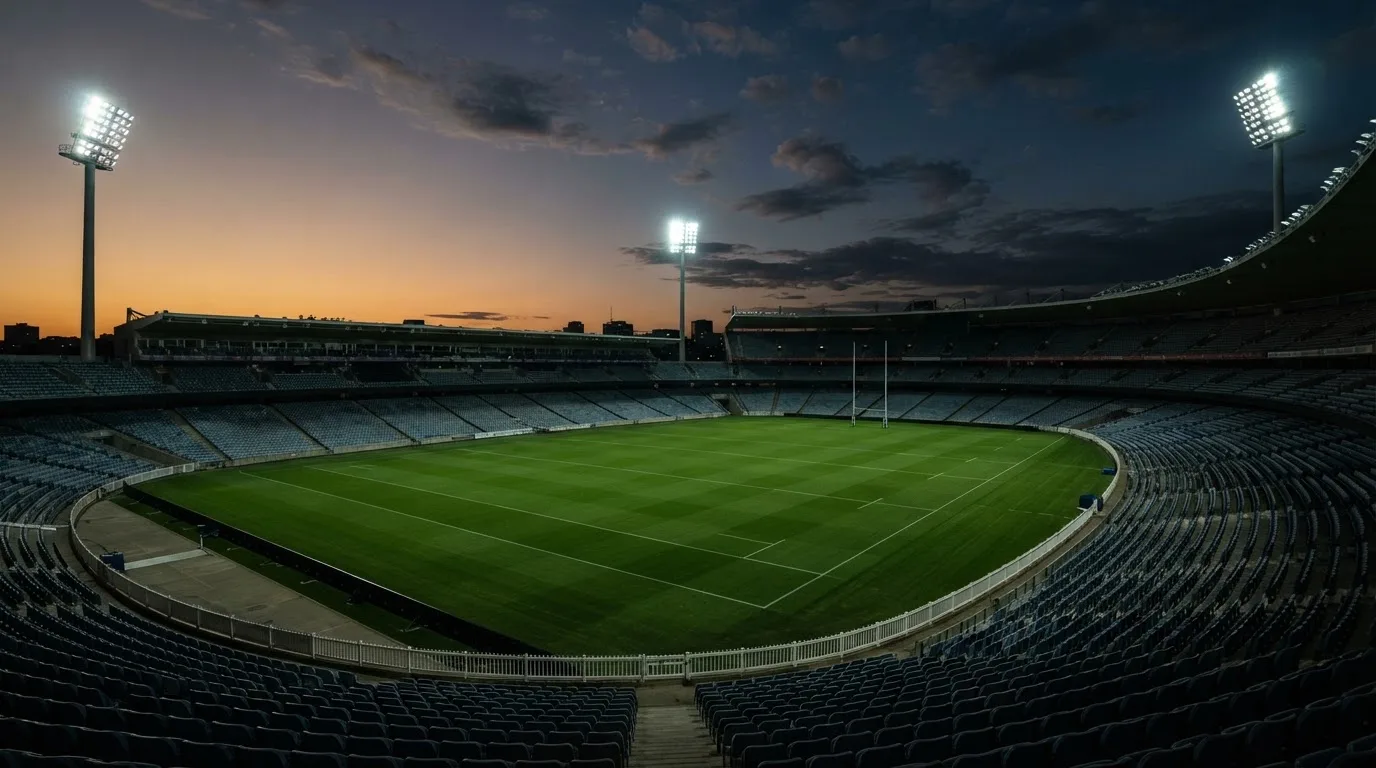
The products covered include spread betting, fixed-odds and total-goals spread bets. Spread betting is the market where losses can exceed the deposit — that risk is regulatory as well as financial, which is why Spreadex is authorised by the Financial Conduct Authority for that line and by the Gambling Commission for fixed-odds betting.
What a “value bet” is, and why it cannot come with certainty
A value bet is a price that is larger than 1 ÷ (your estimate of the true probability). If you think the All Blacks win a World Cup match 50% of the time, any price above 2.00 is value on your own model. If the market has them at 1.80, you think the market is too short. The catch lives in the word “your”. Your estimate is only as good as the inputs you fed it — the team sheet, the injury list, the venue, the rain in Auckland. The estimate is always an estimate, and the estimate is sometimes wrong by enough to wipe out six winning bets in a row.

That is why no tip is ever certain and no tipster can produce a permanent edge. A 60% strike rate at average odds of 2.00 is a long-term losing record, because every 100-point of stake returned 60 × 2.00 = 120 points of return when 50% on even money would have returned 100. Wait — that’s the profitable case. The point under stress: at 60% × average odds 1.80, return is 108 for a stake of 100. Below even money, even a high strike rate does not save a punter. What saves a punter is volume of bets where their probability estimate beats the market’s, and even then the bankroll has to absorb losing runs that last as long as a Six Nations.
The four inputs every rugby tip should pass through
For any rugby union match a tip is built from, four kinds of evidence matter more than the rest. Each is publicly available, and the punter who collects all four before placing a bet at least has the same material the bookmaker is pricing into the market.
Form is recent outcomes with the caveat that a team whose star fly-half was injured against Italy is now playing Scotland with a stand-off off the bench, and the recent “W” beside their name describes a different side. Statistics are the numbers bookmakers do consume — line-out success, scrum completion, tackle completion, territory, metres carried, kick metres conceded. They are not predictive on their own, but they are the raw material a probability estimate leans on. The line-up published an hour before kick-off moves prices faster than any pre-match article. And the market’s own odds, once the bookmaker’s margin is removed, tell the punter what the rest of the market has concluded when it laid its money.
Bonuses and free bets: the small print that decides whether the offer is worth anything
The shape of the new-customer giveaway
Bonuses in the UK come in a small number of recognisable shapes, and reading them is mostly a matter of knowing the shape. A “free bet” pays only the winnings — stake returned as a credit you cannot cash out, profit paid in cash. A deposit match pays a percentage of your deposit as bonus funds whose winnings stay bonus until you clear them. A price boost pays at the boosted price when the underlying selection wins, on a single stake. Each is described by the operator’s own terms.
Concrete examples from the set below: Spreadex’s £60 in free bets for a £10 fixed-odds bet, usable across fixed odds and spread betting, with the qualifying bet placed within 28 days of opening the account. Sporting Index’s three £10 fixed-odds free bets, three £5 Total Goals spread bets, three £5 Winning Favourites spread bets and a £1 Race Index spread bet, unlocked by a £10 fixed-odds bet at minimum odds of 1/2, with the qualifying bet not placed in play and not cashed out early. Sporting Index’s package is a useful illustration because it spans two regulated products — fixed-odds under the Gambling Commission, spread betting under the FCA’s eye — and the qualifying rules apply to the fixed-odds leg, not the spread leg.
Wagering requirements and the cap that came in this year
The promotion rules in force since 19 January 2026 cap wagering requirements on bonuses at 10x the bonus amount. A £10 bonus whose terms ask for £500 of qualifying bets is no longer compliant — the cap reduces that to £100 of qualifying bets at most. This is a structural change in the UK bonus market and one of the reasons the headline-grabbing 50x or 100x rollover offers have shrunk since the late 2010s. The cap applies to bonuses; whether it applies to free bets with no wagering condition, and any cap on the money value of a bonus, are not established in public Commission guidance at the time of writing.
For the punter the cap matters in three concrete ways. First, the headline number is closer to the real cost: a £10 bonus on 10x requires roughly £100 of bets, and most of those bets settle on a market whose margin eats a known fraction of each pound. Second, mixed-product promotions — offers that require gambling on betting AND casino, or betting AND bingo — are banned, so the loophole of “stake on football to get casino free spins” is closed for UK-licensed brands. Third, the 10x cap does not change the underlying economics: a bonus with no wagering at all is still better than a bonus with a 10x requirement, and on this set of operators that is the choice the table of conditions is paid to make clear.
Other conditions that quietly change the price of a free bet
Three further rules sit in most UK bonus small print. The first is minimum odds on qualifying bets — a free bet unlocked only by a qualifying bet at minimum odds of 1/2 (1.50 decimal) rules out the obvious “place a bet at 1.01 to unlock the offer” move. The second is the deadline on the qualifying bet, which at Spreadex is 28 days from account opening; after that, the offer is forfeit. The third is the cap on winnings from a free bet, which most operators display on the offer page. None of these details shows up in the headline number, and all of them decide whether the offer is worth the trouble.
The free bet itself is not money in the punter’s hand. Its expected value is roughly the free-bet amount × (odds − 1) ÷ odds × payout share of the chosen market — what the offer is worth on average. A £10 free bet staked at decimal odds of 4.00 on a market with a 95% payout share is worth £10 × (4 − 1) ÷ 4 × 0.95 = £7.13 in expected terms, ignoring the dead heat adjustment markets apply. That is the realistic ceiling on what the offer pays, and it is the number to compare against a no-deposit, no-offer bookmaker on the same selection.
Live betting and cash out: what changes once the whistle has gone
In-play betting on rugby union
In-play markets on rugby union open as the kick-off happens and close at the final whistle. The price updates in response to points, cards and the scrum going down. The Commission’s LCCP requires operators to manage in-play markets under their own licence conditions and consumer-protection duties — the legal framework here is operator-led, not statute-led. The mechanics of a price suspension after a try are coded into each operator’s feed; the punter who has backed the match winner in-play learns that a five-point swing in the first ten minutes moves the in-play price enough to make the bet a worse one than when it was placed, which is by design. Cash out is the door out — the operator offers to settle the bet at a quoted price before the match ends.
In-play on rugby union is thinner than in-play on football in a couple of respects. Fewer matches are live-streamed, fewer markets stay open through injury stoppages, and some operators suspend the in-play market entirely on smaller fixtures rather than price a match they do not have the data feed to update. The comparison here is a matter of which operator covers which fixture at what depth.
Cash out: what the button does and what it costs
Cash out is a settlement, not a withdrawal. The bookmaker’s quoted price at cash-out includes a margin bigger than the margin of the original market, because the operator is taking on both outcomes of an unsettled bet. That margin is not labelled; the punter learns it the first time a winning bet’s cash-out value is below the eventual payout. For an accumulator the mechanic is the same: cash out closes every leg of the acca at one combined price.
888sport and Midnite both advertise cash out and the bet builder on the same product page — 888sport’s product page lists pre-match and in-play, Cash Out, Bet Builder, racing streams, BetFinder form tools, a live bet feed and daily boosted odds; Midnite shows in-play events, an acca builder, popular accas and price boosts with maximum-stake limits. Paddy Power’s app takes the same recipe and adds Super Sub (a bet rolls over to the replacement if a selected player is substituted), expanded Win More markets and player and ACCA stats. Vbet adds live streaming and a live calendar with results and stats. Each is a layer on top of the in-play market, and each changes what the punter is paying to use the platform.
Predictions, strategy and the bankroll behind them
A strategy that survives losing runs
Bankroll discipline is what a rugby betting strategy looks like from the inside. The simplest workable form is to stake a fixed percentage of the bank on every bet — typically 1% to 3% — and to stop staking when the bank has fallen below a recovery threshold. The mechanic under this rule: a ten-bet losing streak at 3% per bet takes the bank down to about 74% of starting; at 1%, the same streak takes the bank to 90%. The lower the percentage, the longer the streak the bankroll survives. The trap is a winning streak in disguise — the punter raises the percentage after a few winners and one bad week wipes out a month of edges.
A bankroll strategy does not predict winners. It is the part of the strategy that survives the prediction being wrong.
What analytics actually moves a rugby price
Three pieces of public information move rugby union prices more than the rest.
The team sheet published 60 minutes before kick-off is the largest one-shot move of the week. The starting fly-half and the captain change a team’s expected points by enough to swing a match-winner line by a length. Closely related is the injury list of the previous 48 hours — a prop doubt cleared the night before kick-off changes a scrum-price that has been on the board for ten days.
The second piece is the line-out and scrum completion rate over the last four matches. These scrum-flow stats are slower-moving than the team sheet, but they are the leading indicator for a forward-oriented underdog. A side running 85% scrum completion as the dog is a different side to the same team at 75%.
The third is the venue. International rugby union prizes venue more than most sports — a New Zealand side in Eden Park is a different proposition from the same side at Twickenham, and the markets know it. The premium is mostly calibrated in the price already; the punter’s job is to spot the venues where the calibration is off.
Tipsters, tipping services and the records they publish
Tipster services in the UK are not licensed by the Gambling Commission; their tip is a free opinion until the operator pays them a fee, and the record they publish is a record of their opinion’s accuracy. The watch item on any tipster record is the strike rate and the average odds separately — a 40% strike rate at average odds 3.00 is profitable where a 60% strike rate at average odds 1.60 is not. The other watch item is whether the record is verified by a third party — a Proofed, SmartBettingClub or similar audit — or whether the tipster is publishing their own.
That a tipster has done well in March tells a punter nothing about April. The advice that survives the maths is to stake as if the tip is wrong, and to treat a winning record as a tailwind, not a licence.
Bet types and odds: the menu a UK rugby punter actually sees
The three prices, the handicap, and the total
The win-draw-win market in rugby union is a two-outcome market in most matches — under regular rugby union rules a draw is a possible match outcome in the knockout stages and is settled as such, but in the Premiership and most league rugby the match price is a two-way line settled on the home side or the away side at full time. The handicap and the total (over/under match points, often at a line around 44.5 for a close Premiership fixture) round out the three core markets at every UK bookmaker. Each carries its own margin; the over-round on the three-way World Cup final market is wider than on a two-way Premiership match by enough to matter.
Rugby union handicap betting is settled on the points-difference after the handicap is applied. An away side at +7.5 wins the handicap market if they lose by seven or fewer. The handicap line is calibrated to make either side a coin-toss on the market’s view, which is why the prices are close to 1.91/1.91 — research names an illustrative two-way market at 1.90/1.90 (fractional 9/10) as the worked example below.
Outrights, league winners, season markets
Outright betting covers the tournament winner, the top try-scorer, the league regular-season winner and other season-long markets. The Rugby World Cup outright market runs across the whole tournament — a tournament that, from 1 October to 13 November 2027 in Australia, names a champion across 52 matches. South Africa are defending champions after their 2023 final win over New Zealand. The Premiership outright market runs from September to June, the Six Nations from February to March, the Rugby Championship from August to October. Outright markets carry larger margins than match markets because the bookmaker has more time during which the price is wrong, and the price is settled once.
Spread betting takes a different shape: a Total Goals spread on a rugby league or rugby union match is settled on the sum of points, with the punter’s stake multiplied by how far the total misses the spread line. Spread betting on rugby is regulated alongside fixed-odds at the operator and by the FCA where the spread is on a financial contract. Spreadex’s qualifying £10 fixed-odds bet unlocks spread-bet credits usable across fixed odds and spread — the deal marries the two lines for a reason: most UK spread-bet operators run fixed-odds as a loss-leader to bring punters onto the spread product.
Price, return and the worked example
The return on a single is the stake multiplied by the decimal odds. A £10 stake at decimal odds of 2.50 returns £25 — £10 of which is stake, £15 of which is profit. A combination bet multiplies the odds: a £10 double at 2.50 and 3.00 returns £10 × 2.50 × 3.00 = £75 if both legs win. The share-of-the-stake formula is the one bookmakers use to advertise payouts; the punter uses it to confirm the return quoted on the betting slip.
A free bet pays only the winnings. Stake is not returned with a free-bet win — the credit used as stake dies on settlement. A £10 free bet at decimal odds of 3.00 pays £20 in profit, not £30, and the £10 of stake has already left the bettor’s account in the sense that it is a credit, not cash. The expected value of a free bet is what it is worth on average — calculate as the free-bet amount × (odds − 1) ÷ odds × payout share of the market.
Each-way is two bets at equal stake: one on the win, one on a place at terms that vary by race and operator. Rugby union each-way is rare in match markets and common in outrights with place terms of 1/2 or 1/4 — the punter checks the place terms before staking. Acca insurance refunds the stake as a free bet (not cash) when one leg of an accumulator loses. Bet Builder lets the punter combine markets on the same match — handicap, total, first try-scorer — at combined odds set by the operator.
The landscape of sports and tournaments the bookmakers cover
A rugby union team, the field and the rules
A rugby union team fields 15 players. The match is two 40-minute halves, and stoppages are not counted, so most games run longer than 80 minutes. The scorebook: five points for a try, two for a conversion, three for a penalty, three for a drop goal. World Rugby has governed the sport since 1886. The international calendar runs the Six Nations in February and March, the July internationals in the southern hemisphere’s winter, the Rugby Championship in August through October, and the autumn internationals in November, with the Rugby World Cup every four years.
The tournaments UK bookmakers take bets on
The Premiership runs the English club season from late September to a final in mid-June, with a play-off and a relegation playoff against the Championship winner. The United Rugby Championship (URC) covers clubs from Wales, Ireland, Italy and South Africa. The Top 14 takes the French clubs, with the biggest domestic payroll in the sport and the European Champions Cup entry on offer to its top finishers. The European Champions Cup and Challenge Cup pull the best clubs across these leagues into a knockout tournament across the spring. The Six Nations, the Rugby Championship and the Rugby World Cup cover the international game.
World Rugby organised the inaugural Rugby World Cup in 1987 in Australia and New Zealand, with New Zealand the first champions. The 2027 Rugby World Cup runs from 1 October to 13 November 2027 in Australia, with 24 teams in six pools of four and 52 matches. South Africa are the defending champions after the 2023 final win over New Zealand. Bookmakers price the World Cup market from the moment the qualification picture is clear, then again after the team sheets for the final.
The ten reviewed bookmakers
How this ranking is built
The comparison covers ten operators, each of whom holds a Gambling Commission remote licence. The page does not advertise. It describes what an operator’s own terms state, names the licence number on the public register, and closes each review with what one feature or condition sets the operator apart on this comparison — not a “best for” line but a verdict on the trade-off the operator asks the punter to make.
The comparison reads what the operators’ own pages and apps state, names each licence precisely as the Commission public register has it, and stops short of any claim that cannot be checked. No brand is “the only” licensed operator in this comparison; many more brands hold remote licences than this page lists. The list is a shortlist, not the market.
A licence and a regulator for the operators on this page
The single non-negotiable condition for any UK-facing operator is the Gambling Commission licence. Of the ten reviewed here:
- 888sport, brand of 888 UK Limited, Commission account 39028, remote general betting standard (real events).
- Spreadex, brand of Spreadex Limited, Commission account 8835, remote general betting standard (real events). FCA-authorised for spread betting.
- Sporting Index, brand of Sporting Index Limited, Commission account 27343, remote general betting standard (real events).
- Copybet, brand of Copybet UK Limited, Commission account 53774, remote general betting standard (real events).
- VBet, brand of SCGO Limited, Commission account 44662, remote general betting standard (real events).
- Bet600, brand of Tyche Tech Limited, Commission account 44731, remote general betting standard (real events).
- William Hill, brand of WHG (International) Limited, Commission account 39225, remote general betting standard (real events).
- Fafabet, brand of Taichi Tech Limited, Commission account 57385, remote general betting standard (real events).
- Paddy Power, brand of PPB Counterparty Services Limited, Commission account 39439, remote general betting standard (real events).
- Kalooki Sportsbook, brand of Kalooki Sportsbook Limited, Commission account 57730, remote general betting standard (real events).
Every operator’s site on this list runs through the Commission’s safer-gambling licence conditions, including GAMSTOP membership.
Three operators among the ten use the spread-betting product
Spreadex runs fixed-odds betting under the Gambling Commission and spread betting under the Financial Conduct Authority. Sporting Index’s promotion spans both: fixed-odds free bets at minimum odds of 1/2, plus £5 Total Goals, £5 Winning Favourites and £1 Race Index spread bets. Kalooki Sportsbook, by contrast, runs the fixed-odds product only and markets Best Odds Guaranteed on UK and Irish horse racing rather than a spread-book. The trade-off the punter is making is whether spread-betting access is the reason to choose one of these brands, or whether fixed-odds along with the withdrawal mechanics and the bonus terms is the deciding detail.
The top ten reviewed
The reviews below treat the operators in a set order, not a ranking. Each entry is closed on a different angle: a product feature, a terms condition, or the question each operator raises for the punter comparing brands.
1. 888sport. Commission account 39028, held by 888 UK Limited. Pre-match and in-play betting, Cash Out, Bet Builder, racing streams, BetFinder form tools, a live bet feed and daily boosted odds. The product page is broader than most on this list — racing streams and a form tool alongside the betting markets — and the BetFinder detail is unusual for a UK-facing bookmaker. The trade-off the punter is making with a feature-heavy platform is whether the menus slow the path to the bet slip: a platform with ten features stacked on each market is not necessarily faster to use for a single-stake single. Verdict: a platform with the widest feature set of the ten reviewed, balanced against the experience of actually placing a bet in under fifteen seconds.
2. Spreadex. Commission account 8835, held by Spreadex Limited, FCA-authorised for spread betting alongside the Gambling Commission’s fixed-odds licence. The £60 free-bet package for a £10 fixed-odds bet stands out for the spread-cross-over: free bets usable across fixed odds AND spread betting, with the qualifying £10 fixed-odds bet placed within 28 days of account opening. The trade-off is unusual because the same operator services two regulated markets — a fixed-odds bet and a spread bet on a rugby league total-goals line — under the same login. Verdict: the only operator on this list whose new-customer offer explicitly crosses the fixed-odds and spread-betting divide.
3. Sporting Index. Commission account 27343, held by Sporting Index Limited. The package is unusual in length: three £10 fixed-odds free bets, three £5 Total Goals spread bets, three £5 Winning Favourites spread bets and a £1 Race Index spread bet, unlocked by a £10 fixed-odds qualifying bet at minimum odds of 1/2, with the qualifying bet not placed in play and not cashed out early. The minimum-odds rule on the qualifying bet matters more here than at Spreadex because the offer is structured around a chain of bets: the punters who maximise the offer are putting each leg on a market at minimum odds 1/2 first. Verdict: the most-bets-to-clear structure on this list, which favours a punter with the time to place each in turn.
4. Copybet. Commission account 53774, held by Copybet UK Limited. The trade mark on its product page is Best Odds Guaranteed all day every day on UK and Irish racing, and the operator pays first past the post on horse racing even when the winner is later disqualified. These are horse-racing guarantees, not rugby union features, and they tell a punter two things about the operator: horse-racing is the centre of the product mix, and rugby union takes a place alongside it rather than at the top of the menu. Verdict: a punter whose primary interest is racing rather than rugby will look at Copybet first, and rugby union punters approach it as a second bookmaker alongside.
5. VBet. Commission account 44662, held by SCGO Limited. The app’s product page lists Bet Builder, pre-match and in-play betting, live streaming and a live calendar with results and stats. Live streaming is the differentiating mark among the ten — Vbet and a couple of others on this list surface it for rugby fixtures. Verdict: an operator whose rugby punters get a result-stream alongside the in-play market more often than at most of the brands reviewed.
6. Bet600. Commission account 44731, held by Tyche Tech Limited. Best Odds Guaranteed on horse racing: if the starting price is bigger than the early or show price taken, the bet is paid at the SP. Like Copybet, this is a horse-racing feature named in the product description — rugby union is one sport among several, and the BOG feature matters more in a single day’s racing card than in a single rugby fixture. Verdict: BOG is the trade-mark and is settled on at the SP rather than at the price taken on the slip, which is the editorial detail to check before staking.
7. William Hill. Commission account 39225, held by WHG (International) Limited. BOG on UK and Irish horse racing from 8 AM on the day of the race, on singles and multiples, no ante-post, no tote, no pari-mutuel. William Hill is the largest of the brands on this list by retail footprint and one of the older ones. The BOG terms exclude the betting formats that most need BOG (ante-post, where the early price is the only price taken). Verdict: an established British bookmaker on this list whose BOG terms pull back on ante-post betting — a feature whose own description narrows what the customer thinks they are getting.
8. Fafabet. Commission account 57385, held by Taichi Tech Limited. BOG on UK and Irish horse racing win and each-way bets from 9 AM on race days — if the SP is bigger than the original price, the bigger odds are paid. The 9 AM mark is one hour after William Hill’s 8 AM — a small detail, but a punter who wants a price from earlier in the morning has fewer reasons to choose Fafabet for that window. Verdict: BOG at 9 AM rather than 8 AM, with each-way in the terms where William Hill’s pull-back on ante-post holds more weight at the longer end of the racing card.
9. Paddy Power. Commission account 39439, held by PPB Counterparty Services Limited. Bet Builder+, Popular Bet Builders, Super Sub (a bet rolls over to the replacement if a selected player is substituted), expanded Win More markets and player and ACCA stats. Super Sub is the rarest feature on this list — the bet rolls to the named replacement if the named starter is taken off, which is consequential in a sport with rolling substitutions and a 23-man squad. Verdict: Super Sub changes what an in-play player-prop bet means when the player is substituted, and that single feature is the headline difference from the rest of the list.
10. Kalooki Sportsbook. Commission account 57730, held by Kalooki Sportsbook Limited. GAMSTOP member; instant withdrawals by bank transfer within minutes, Best Odds Guaranteed on UK and Irish horse racing, in-play betting, daily boosts and extra place races. The instant withdrawals line is what the operator’s own page emphasises, and a minutes-not-days withdrawal is a different bettor experience than a 1–3 business-day wait. Verdict: a brand that competes with the larger names on withdrawal speed rather than market breadth.
A table of licences and what the operators’ own terms state
The table below is built from two pieces of evidence: the Gambling Commission public register (the licence number and the licence-holder name) and the operator’s own terms page (the second column is what each operator’s own product description names). The register line is the test of who holds a licence; the operator-terms line is a summary, not a substitute for the terms themselves.
| Brand | Commission account | Licence holder | What the operator’s own terms name |
|---|---|---|---|
| 888sport | 39028 | 888 UK Limited | Cash Out, Bet Builder, racing streams, BetFinder, live bet feed, daily boosted odds |
| Spreadex | 8835 | Spreadex Limited | £60 free bets for a £10 fixed-odds bet, usable across fixed odds and spread |
| Sporting Index | 27343 | Sporting Index Limited | Three £10 fixed-odds free bets, three £5 Total Goals spread bets, three £5 Winning Favourites spread bets, a £1 Race Index spread bet |
| Copybet | 53774 | Copybet UK Limited | Best Odds Guaranteed all day, every day on UK and Irish racing |
| VBet | 44662 | SCGO Limited | Bet Builder, in-play betting, live streaming, results and stats |
| Bet600 | 44731 | Tyche Tech Limited | Best Odds Guaranteed paid at starting price on horse racing |
| William Hill | 39225 | WHG (International) Limited | Best Odds Guaranteed on UK and Irish horse racing from 8 AM |
| Fafabet | 57385 | Taichi Tech Limited | Best Odds Guaranteed on UK and Irish horse racing from 9 AM |
| Paddy Power | 39439 | PPB Counterparty Services Limited | Bet Builder+, Super Sub, expanded Win More, ACCA stats |
| Kalooki Sportsbook | 57730 | Kalooki Sportsbook Limited | Instant bank-transfer withdrawals, in-play, daily boosts, extra place races |
Three things the table does not carry. The promotion rules in force since 19 January 2026 apply to every brand on this list, and the 10x wagering cap is the rule a comparison like this measures against. The BOG features on the table apply to horse racing; rugby union fixtures are not eligible under the descriptions named. And the licence number is the test of who holds what — operators holding a remote general betting standard (real events) licence are the only operators who may lawfully take bets from customers in Great Britain.
The landscape of the UK betting market
Why British bookmakers are not free-agent marketers
A bookmaker taking bets from customers in Great Britain needs a licence under the Gambling Act 2005, regardless of where it is based. Sections 33 and 36 of the Act, as amended by the Gambling (Licensing and Advertising) Act 2014, made the licence requirement point-of-consumption: a Curaçao or Maltese or Gibraltar licence is not a substitute. The Commission’s public register is the whole test of who holds one. Domain tells nothing — a brand on a .com as well as a .co.uk is licensed under whichever entry the register shows.
The markets a UK bookmaker offers to British customers are governed by the operator’s licence conditions and the LCCP. The categories a remote licence can cover are five: general betting standard (real events), general betting standard (virtual events), general betting limited, pool betting, and betting intermediary. There is no statutory list of permitted bets or markets in Great Britain — the offering is the operator’s call within its licence terms and conditions.
How the regulator handles the things the punter cares about
Identity is the first rule. The minimum age is 18, and licensed remote operators verify name, address and date of birth before a customer can deposit or gamble — that rule has been in force since 7 May 2019 and applies to free bets and bonuses too. There is no anonymous play at a licensed UK site.
GAMSTOP is the second rule. Licensed online operators are members of the multi-operator self-exclusion scheme, and joining GAMSTOP is mandatory for them since 31 March 2020. A self-exclusion period is six months, one year, five years, or five years with auto-renewal, and after the minimum period the exclusion stays for a further seven years unless the customer asks GAMSTOP to remove it. GAMSTOP covers online sites and apps; the betting shop equivalent is a separate service.
Financial checks come in two stages. The financial vulnerability check (LCCP condition 3.4.4, in force since 30 August 2024) triggers when a customer’s deposits minus withdrawals exceed £150 in a rolling 30 days — at that point the operator runs a public-record check against sources such as bankruptcy and county court judgments. It is not an income check and not a credit reference check, but it is a check that happens in the background of an account that begins to lose money. Financial risk assessments — what the press calls affordability checks — are announced in a staged plan (Commission article of 7 July 2026) with no start date, and the practical date has not been set.
Deposit limits are the third rule. Operators must offer a gross deposit limit on a fixed time frame; the first changes applied since 31 October 2025, a second phase was postponed to 30 September 2026, and whether the second phase is live is not established. There is no state-set deposit or loss ceiling — the limit is the customer’s choice within the operator’s mechanism. Credit cards are banned for gambling in Great Britain (since 14 April 2020, LCCP condition 6.1.2), and credit-card-funded payments through an e-wallet are covered by that ban. Debit cards and bank-based payments are not covered by it.
Bonuses, advertising and bonus rules across the industry
Advertising is governed by the CAP Code (non-broadcast) and the BCAP Code (broadcast), enforced by the ASA, alongside the LCCP marketing conditions. Section 16 of the CAP Code: marketing must be socially responsible, must not be of strong appeal to under-18s, and no one who is or seems to be under 25 may be featured gambling or play a significant role, with an exception for marketing placed where a bet can be made directly. The “Whistle-to-whistle” rule is industry code: since 1 August 2019 betting advertisements are not shown on TV from five minutes before a live sporting event to five minutes after it, before the 9 PM watershed, with horse and greyhound racing excluded.
The promotion rules in force since 19 January 2026 cap wagering requirements at 10x and ban mixed-product promotions — meaning an offer that requires gambling on two or more product types such as betting and casino, or betting and bingo, may no longer be promoted. The Premier League clubs’ voluntary withdrawal of gambling sponsorship from the front of matchday shirts from 2026/27 is voluntary, not law. The matchday sleeves and hoardings remain.
Where the punter is treated as the customer
In Great Britain the player pays no tax on betting winnings — the operator pays General Betting Duty at 15% on gross profits and, from 1 April 2027, a 25% rate applies to remote betting (excluding remote bets on UK horse racing, betting-terminal bets, pool betting and in-person betting, which stay at 15%). Until 1 April 2027 the remote rate stays at 15%, and whether operators pass the duty on through reduced odds is not established — never write that the player is charged duty. Where the words “the customer pays” appear in any line of marketing the punter can show it is wrong: winnings are winnings.
Offshore brands and what the licence test does not cover
A UK-licensed brand is the only legal channel for bettors in Great Britain. The licence is required at the point of consumption; providing gambling facilities in Great Britain without the licence the Act requires is an offence under section 33 of the Gambling Act 2005. The Commission enforces through cease-and-desist notices, search-engine referrals, registrar and payment-provider work, and court-order DNS blocking powers that have been given, or are about to be given — never write that ISP blocking is in operation.
For the bettor, the practical consequence of using an unlicensed brand is the loss of UK protections. There is no GAMSTOP coverage, no Commission complaints route, no approved dispute-resolution body, and no British consumer redress if funds are withheld. Operators running offshore are not bound by the 10x bonus cap, the £150 vulnerability check, the credit-card ban, or the age-verification rules. That is the trade-off for any punter who chooses an unlicensed site, and that is what the comparison of licensed operators is being drawn against.
The bookmaker’s margin and how to read it
Why a 1.91 / 1.91 price is not a 50 / 50 line
Every bookmaker’s market carries a margin — sometimes called the over-round or the vigorish — which is the share of every pound the bookmaker keeps regardless of the outcome. On a two-way market at decimal odds of 1.91 / 1.91, the implied probability is 1 ÷ 1.91 = 0.524 for each side, so the sum of implied probabilities is 1.048. The margin is 4.8%. The market’s view of the rugby match is not 50/50; the market’s view is that there is a slightly less than 50/50 line, and the 4.8% extra is the bookmaker’s charge.
The arithmetic is straightforward. Payout share = 1 ÷ (1 ÷ 1.91 + 1 ÷ 1.91) = 1 ÷ 1.048 = 95.4%, and the margin = 1 − 95.4% = 4.6% — the exact figure depends on rounding. For a worked example with the round figure from research — an illustrative two-way market at decimal odds 1.90 / 1.90 — implied probability is 1 ÷ 1.90 = 0.5263 for each side; sum = 1.0526; payout share = 1 ÷ 1.0526 = 95.0%; margin = 5.0%. The bookmaker keeps about 5p of every pound bet on this market.
The margin as a band, not a number
Margins on rugby union markets vary by bookmaker and market. Two-way match winner markets at the bigger operators tend to sit between 4.5% and 6.5%, with the more competitive end on top-flight fixtures and the wider end on Test matches outside the main calendar. Outright markets carry margins of 20%-plus because they settle months after the bet is placed and the price is wrong for a long window. Three-way markets with the draw (in matches where a draw is a possible regulated outcome) carry a wider margin than the two-way equivalent because three implied probabilities sum to a larger over-round. Combination bets and Bet Builder lines sit further out again because each additional selection adds another bookmaker edge.
The condition that the margin is a band matters most on smaller fixtures where the operator has a thinner data feed. A Bermuda v Chile match at 1.65 / 2.40 carries a margin in the high single digits; the same fixture priced at a sharper bookmaker on a deeper liquidity model sits a couple of points narrower. For punters comparing two bookmakers, the line that matters is whether the difference in margin is large enough to move the implied probability by more than the punter’s own estimate of probability.
How the margin changes a tip’s value
A tip is value when the punter’s probability is sharper than the market’s. The market’s probability is the implied probability, which is the inverse of the decimal odds, plus the margin. The punter’s probability has its own margin of error. If the punter’s estimate is 55% and the market’s implied probability is 50%, the tip is value at any decimal odds above 1 ÷ 0.55 = 1.82 — every price above that returns more in expectation than the punter’s own probability expects to win. At decimal odds of 2.00, with the punter’s estimate at 55% and the market’s implied probability at 50%, the expected value per £1 of stake is 0.55 × £2.00 − £1 = £0.10. The margin is paid for by the bookmaker in expectation; the punter’s job is to price sharper than the market on enough selections to clear the margin over the long run.
A punt on a 1.91 / 1.91 market where the punter’s probability is 50% has expected value per pound of 0.50 × £1.91 − £1 = £−0.045 — a loss of 4.5p on every pound bet, which is exactly the margin. The punter has to win on more than 52.4% of selections at 1.91 to break even, which is the same condition in two forms. That is why a 50/50 line is not a coin flip.
Responsible gambling: what the framework does and what it doesn’t replace
The licence conditions the licensee lives by
The licence conditions on a UK remote operator bind the operator, and they bind the operator far more tightly than the marketing pages of an offshore brand. The LCCP’s social responsibility code requires the operator to interact with customers whose play shows signs of harm, to provide safer-gambling tools, and to take reasonable steps to prevent gambling by under-18s. The Remote Technical Standards set the technical bar — geolocation, age-verification, account-controls and identity checks.
The customer’s choices on the safer-gambling tools are the part of the framework the punter feels. Deposit limits cap the total the customer can deposit in a chosen period; product restrictions close a part of the offering (casino on a sports-led account, for example); self-exclusion works through GAMSTOP and runs from six months to five years plus auto-renewal, with a further seven-year tail after the minimum period. Time-outs (24 hours, 7 days, 30 days) are the operator’s own short-form cooling-off. Reality checks interrupt play at set intervals with a session-summary prompt. The customer can call the operator’s safer-gambling team for a self-imposed deposit ceiling or a permanent stop.
The financial-vulnerability check and the rolling-30-days rule
The financial vulnerability check (LCCP condition 3.4.4, in force since 30 August 2024) applies to licensed remote betting when a customer’s deposits minus withdrawals exceed £150 in a rolling 30 days, with the threshold live since 28 February 2025. The check is a public-record search across sources like the Register of Judgments, Orders and Fines and the Individual Insolvency Register — bankruptcy, county court judgments, and similar public records. The check is not an income check, not a credit reference check, and not a soft search that affects the customer’s credit score.
For most punters the rolling-30-days threshold is not a problem; the £150 net-deposit figure is well above a casual weekly punter’s bankroll. For a punter who has been depositing over the threshold for a month without withdrawing, the operator is required to check the public record and may continue to engage with the customer about the activity. The check itself does not stop play; it triggers an interaction with the operator’s safer-gambling team if the record shows a flag.
Where help is available
Outside the operator, help is on GamCare (the National Gambling Helpline), GambleAware (the education and information body), the NHS gambling clinics, and Gamblers Anonymous (peer-led). GAMSTOP is the registration entry point for self-exclusion. Each of these is a British service, and each is reachable on the operator’s safer-gambling page on a UK-licensed brand. The services are not just for gambling harm; GamCare’s clinical team supports family members and concerned others too.
The point at which a punter’s habits cross into harm is a clinical judgement, not a punt or a league table. A punter chasing losses, lying about the account, betting money needed for bills, or losing more than the budget set is a punter who has crossed. The framework the LCCP sets is designed to interrupt before the line is crossed; the services on the safer-gambling page are designed to help after.
What we found at 16 October 2026
A reader acts on this page, and the only honest framing of an action is one the reader can verify. Thearithmetic on margin and bonus value, the licence numbers on the table, and the promotion rules summarised above all sit on evidence a third party — the Commission’s public register, each operator’s terms page, the Betting and Gambling Council’s published materials — has published. The licence number for each reviewed operator is what the register has it on the day the audited check took place; the comparison holds on that day, and the punter should re-check before relying on it.
The bookmaker’s margin is a property of every market and every operator. The promotion rules are the law since 19 January 2026. The licence is the test of who may lawfully take bets from British customers, and the table above is the shortlist of ten who hold one. Beyond that, every decision on a stake, a price, a market and a bookmaker is the punter’s own — informed by what this guide has set down and bounded by the safer-gambling conditions on the operator they choose.
Frequently asked questions
How does rugby union betting work in the UK?
A punter opens an account with a Gambling Commission-licensed operator, verifies identity, and stakes on a market. Markets cover match winner, handicap, total points, half-time scores, first try-scorer, outright tournament winner, and other lines the operator prices. Settlement is at the price taken on the betting slip unless Best Odds Guaranteed applies, in which case settlement is at the bigger of the price taken and the starting price. In-play markets update through the match, and cash out settles before the final whistle at the operator’s quoted price.
How do you bet on rugby union?
Pick a market on the betting slip, enter the stake, and confirm. The bet settles when the operator declares it settled — at full time for match markets, on tournament conclusion for outrights, on the player’s first try for scorer markets. Combination bets multiply the odds of the legs into one price; each-way doubles the stake on a place-eligible selection. Cash out lets the punter settle before the conclusion at the operator’s quoted cash-out value. The whole thing sits inside the operator’s licence conditions and the LCCP’s safer-gambling code.
What is a value bet, and why is no tip ever certain?
A value bet is a price larger than 1 ÷ (your estimate of true probability) — a bet where the punter’s probability is sharper than the market’s. The estimate is built from form, team sheet, statistics, venue and the market’s own odds. No tip is certain because every one of those inputs is uncertain to some degree, and the strike rate required to clear the bookmaker’s margin over a long run is a strike rate most tipsters cannot sustain. The maths says even a 60% strike rate at average odds below 1.80 is a long-term losing record.
What is the bookmaker’s margin, and how can it be seen in the odds?
The margin is the share of every pound the bookmaker keeps regardless of outcome. On a 1.91 / 1.91 two-way market, the implied probabilities sum to 1.048, the payout share is 95.4% and the margin is 4.6%. Round the price to 1.90 / 1.90 and the implied probabilities sum to 1.053, the payout share is 95.0% and the margin is 5.0%. Wider prices on outright markets and combination bets are larger margins — up to and beyond 20% on World Cup winner markets. The margin is the cost of every bet a punter places.
How is the return on a bet worked out from the stake and the odds?
Return on a single is stake × decimal odds. Profit is stake × (odds − 1). On a £10 stake at decimal odds of 3.50, return is £35 and profit is £25. A combination bet multiplies the leg odds: a £10 double at 3.00 and 2.50 returns £75 if both win, and the profit is £65. A free bet pays only the profit — a £10 free bet at 3.50 pays £25 profit, with no stake returned. The bookmaker settles at the price taken on the slip unless BOG terms apply.
How can it be checked that a bookmaker holds a Gambling Commission licence?
Search the Commission’s public register by business name, trading name, domain or account number. Every licence is published with the licence-holder name and the licence number. A licence under “remote general betting standard (real events)” is the standard category a UK-facing sports bookmaker holds. A .com domain and a .co.uk domain both fit — the licence is what matters, not the suffix. Operators holding one are bound by the LCCP, the safer-gambling code and the GAMSTOP membership rule.
Rugby, cricket & Gaelic – Fast Payout
Content created by the «Fast Payout» team
