
Padel Betting Odds — A UK Reader's Working Guide
 Available in US
A note on freshness before the substance. The figures, licence details and operator terms below were captured on 27 October 2026 and verified against the Gambling Commission’s public register at that date, alongside each bookmaker’s own UK-facing pages.

Padel has gone from a niche racket sport into one of the more conspicuous growth stories in British racquet sport, and the betting market has followed. A decade ago a padel match on a UK bookmaker’s site was a curiosity; today the top-flight circuit sits alongside tennis in the ante-post hub of several sportsbooks, and the number of matches priced has climbed sharply year on year. That growth, however, sits inside a market built around tennis-style pricing rather than a padel market of its own, and the cost of betting on padel is set by the same mechanism that prices every other two-outcome sport: a margin baked into every pair of odds a bookmaker publishes. Understanding that mechanism is the single most useful thing a new padel bettor can do, because the same arithmetic determines whether a price is fair, whether an offer is worth clearing, and whether one bookmaker’s padel line is genuinely better than another’s.
This page is written for the reader who wants to bet on padel from Great Britain with a licensed bookmaker, who wants to know which brands offer the sport, what markets they put up, and what those prices actually cost. It does not advertise any bookmaker, it does not carry a promotional code or voucher, and it does not predict winners. It walks through the sport, the legal frame in which a GB bettor places a padel wager, the responsible-gambling architecture that licence conditions require, the tournaments and leagues that supply the fixtures, and ten bookmakers reviewed against that brief. The arithmetic that turns a pair of odds into a margin, and a margin into a real cost, runs through the whole guide and is given a worked example further down.
What padel is, and why it prices like tennis
Padel is usually played as doubles on a 10 m by 20 m court enclosed by walls and fencing, with a net 88 cm high at the centre. It uses tennis scoring, and major tournaments may use a golden point at deuce instead of advantage. The court is smaller than a tennis court and the walls are in play, so rallies are longer and service holds more dominant than at tennis. For the bettor this matters less than the fact that scoring is identical to tennis, which is why padel prices read like tennis prices: match winner, set winner, set score, total games, handicap games, each-way equivalent where bookmakers offer it, and accumulator legs when the bookmaker allows more than one match on the same slip.
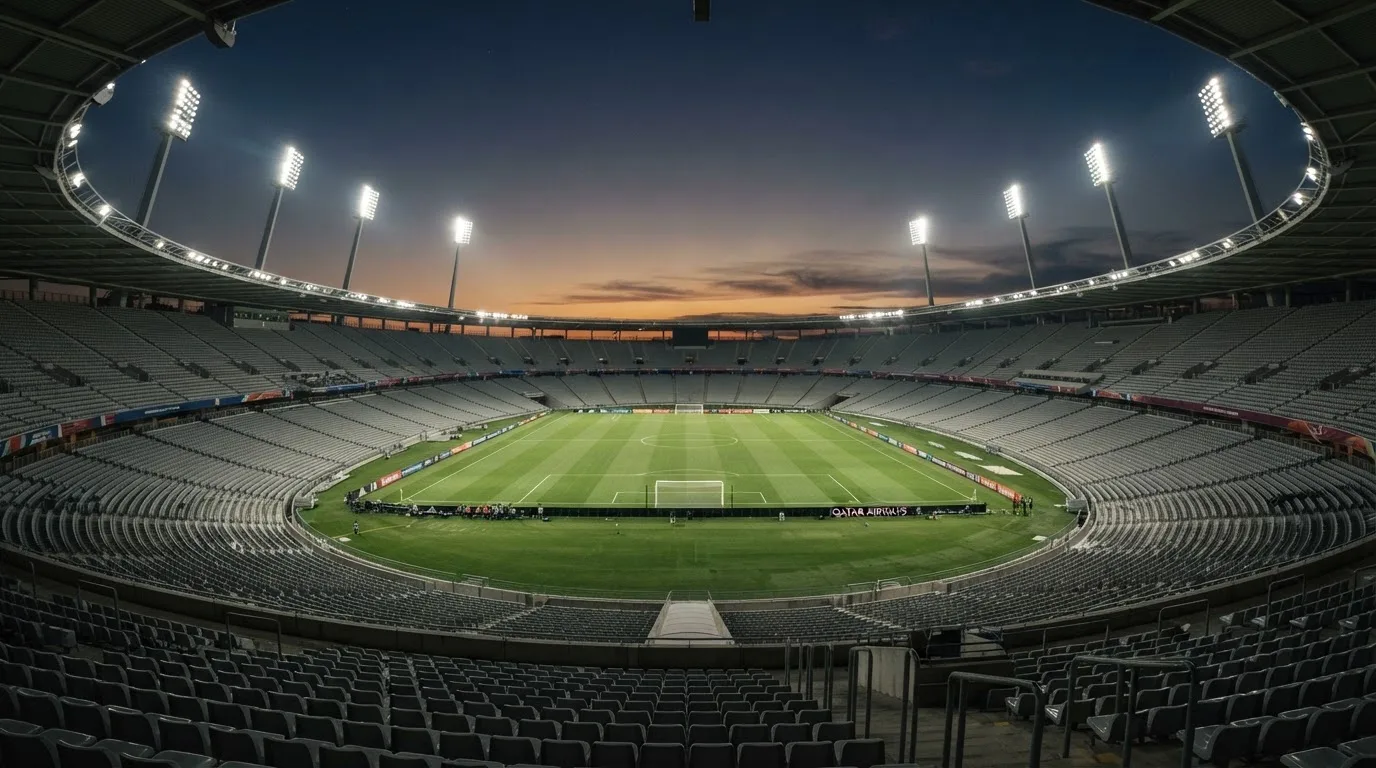
The scoring symmetry is also why padel inherits the tennis pricing conventions — namely, the match winner market (a two-way line with a margin inside it), the set score market (specific outcomes such as 2-0 or 2-1, paid at higher decimal prices because the bookmaker prices more outcomes), and the total games line. Premier Padel, the unified global professional tour formed after Qatar Sports Investments acquired the World Padel Tour in 2023 and took effect in the 2024 season, is the principal circuit the bookmakers follow. Its calendar supplies most of the matches a UK bookmaker will price, and the World Padel Tour’s older identity has largely been folded into it.
The sport’s reach supports why this market is growing: the International Padel Federation (FIP) states there are more than 35 million active padel players in more than 150 countries as of 2025. That figure includes club, amateur and casual play rather than professional fixtures, but it explains why bookmakers view padel as a category with a long runway rather than a passing novelty.
The mechanic the bettor should fix first is the margin. Every bookmaker prices every two-outcome market by setting two decimal odds whose implied probabilities sum to more than 100 per cent. That small excess — the overround — is the bookmaker’s edge, and reading it is a habit a few minutes old already puts a reader ahead of the casual punter. The worked example further down shows the arithmetic on a deliberately symmetric two-way line.
Where padel sits in the British betting market
Padel is not a statutorily named sport, and there is no list of permitted events in the Gambling Act 2005 the way there is, for example, in some jurisdictions. A bookmaker licensed by the Gambling Commission may offer padel under the standard remote general betting licence; the licence category named remote general betting standard (real events) is the one that covers betting on a sporting match that actually happens, and every operator reviewed below holds that category. UKGC licences do not name specific sports on the licence document itself; the licence is activity-based, and the catalogue of sports a bookmaker chooses to price is a commercial decision.

What that means in practice is that the question of whether padel is “legal to bet on” is answered trivially: yes, at any GB-licensed bookmaker, in any market that bookmaker chooses to publish. The more useful question is whether the bookmaker publishes a deep enough padel market that it is worth opening an account. Premier Padel events are routinely priced by all ten operators reviewed here at the time of writing, with the depth of in-play coverage, set betting and tournament outrights varying by brand. Lower-tier padel (FIP regional events, national leagues, club-level exhibition matches) is typically priced only by the larger sportsbooks and often only ante-post rather than in-running.
British betting vocabulary worth holding fixed: punter is the bettor, stake is the amount risked, return is the stake plus any winnings, profit is what remains after the stake is taken out, odds come in fractional form (5/1, 11/4, evens) and decimal form (6.00, 3.75) on British sites. The fractional-to-decimal conversion is decimal = (numerator ÷ denominator) + 1, so 5/1 becomes 6.00 and 11/4 becomes 3.75. The two forms describe the same price; one is the British habit, the other is the international default, and a GB bookmaker lets a customer switch with a single click. Free bets and bet credits are issued as stake-not-returned tokens whose average value is calculated by a slightly different formula, given in the worked-example section below.
The legal frame for a padel bet in Great Britain
The bookmakers a GB bettor is allowed to use commercially are licensed by the Gambling Commission under the Gambling Act 2005. The Act covers Great Britain (England, Scotland and Wales); Northern Ireland sits under older legislation and a GB-licensed bookmaker does not extend to it without a separate Northern Irish licence, though for a remote customer the practical effect is that the licensed bookmaker’s UK site is reachable. Since the Gambling (Licensing and Advertising) Act 2014 came into force an operator whose remote facilities are used in Great Britain needs a Commission licence wherever it is based, so a Curaçao, Maltese or Gibraltar licence is not a substitute. Betting exchanges run under a remote betting intermediary licence, a different category from the remote general betting standard (real events) category the fixed-odds bookmakers hold, and that is why exchange brands appear in a different slot of the register.
For padel betting none of that is restrictive. The Commission does not maintain a list of permitted sports or events; the licence is activity-based and a bookmaker decides what to publish. In-play betting is lawful, and licensed GB bookmakers publish padel markets in-running with controls the operator sets within its licence conditions. Customer controls are not derived from the player but from the operator’s own policies and the LCCP, so the precise stake ceiling on an in-running padel market is a brand-level decision, not a regulated ceiling. No statutory cap on stakes in sports betting was found.
The licence number on a bookmaker’s site is a checkable fact, not a marketing line. The Commission’s public register can be searched by business name, trading name, domain or account number, and a one-line match against the register is the whole test of whether a brand holds a GB licence at that moment. The register snapshot taken on 27 October 2026 is the one the operator licences below are reconciled against, and that snapshot is named in the currency stamp at the top of this guide.
Three pieces of licence-derived practice the padel bettor should hold in mind. Identity verification happens before the first deposit and is required for any GB-licensed online operator, including accounts funded only with a free bet or bonus — there is no anonymous play at a licensed site. Credit cards are banned for gambling in Great Britain, including credit-card-funded e-wallet deposits, so a betting wallet funded via a credit card transaction is unlawful. GAMSTOP is a mandatory licence condition for online operators; a customer who has self-excluded cannot deposit, place a bet or use a free bet at any participating brand for the period they have chosen, and the brands below all participate.
The legal frame this guide does not need to dwell on: tax. The player pays no tax on betting winnings in Great Britain. General Betting Duty is the operator’s tax on gross profits, currently 15 per cent and with a remote rate of 25 per cent scheduled from 1 April 2027 on non-horse-racing remote bets. A punt is unaffected by either number, and no British punter should see “tax” on a betting site for a padel wager. Whether operators reduce prices to absorb duty is a question the published margins answer on their own.
Protecting the player before the bet is placed
Padel markets are not higher-risk than other UK betting products, but the player-protection regime is sport-blind and applies across every match a bookmaker prices. A GB bettor who opens a padel account inherits the same controls as a horse-racing account. This section collects the architecture a reader is most likely to use; the operator write-ups further down name the controls each brand exposes, not the licence regime as a whole.
The national multi-operator online self-exclusion scheme is GAMSTOP, mandatory at every GB-licensed online operator. A self-exclusion runs for six months, one year, five years, or five years with auto-renewal; after the minimum period the exclusion stays in place for a further seven years unless the customer asks GAMSTOP to remove it. It covers online sites and apps; the in-shop self-exclusion scheme is a separate service. Punters who have a known gambling problem should self-exclude at the scheme before opening another account — and should know that the same six-month-plus-seven-years structure applies across every GB-licensed brand the bettor might otherwise shop between.
The licensed remote bookmaker runs two further checks under the LCCP. The financial vulnerability check (LCCP condition 3.4.4, in force since 30 August 2024) applies when a customer’s deposits minus withdrawals exceed £150 in a rolling 30 days (since 28 February 2025): the operator runs a public-record check (for example bankruptcy or county court judgments). It is not an income check and not a credit reference check, and a clean record places no friction on the bettor’s padel account beyond a one-time verification step. Financial risk assessments — the “affordability checks” reported in the press — are announced in a staged plan (a Commission article of 7 July 2026) with no start date, and the guide treats them as announced, staged, not yet in force.
Licensed remote bookmakers must offer a gross deposit limit on a fixed time frame. The first changes have applied since 31 October 2025, a second phase was postponed to 30 September 2026, and whether that phase is currently live is not established here in either direction. The reader who is concerned about spend should set a deposit limit on the spot — limits are the customer’s choice, and no state-set ceiling applies to betting. The punter who treats the deposit limit as a ceiling rather than an aspiration is doing what the regulator expects.
Help is not a regulator; it is a phone line and a website. GamCare runs the National Gambling Helpline; GambleAware funds treatment and provides information; the NHS runs gambling clinics; Gamblers Anonymous runs peer-support meetings. A reader who recognises the signs of a problem in themselves or in someone close to them should make the call before placing another wager. Padel markets at the larger sportsbooks are continuous during the European padel season, and the sheer volume of matches published week-to-week is its own argument for keeping limits in place.
The fixtures: which padel the bookmakers price
The padel betting line sits on Premier Padel’s calendar for the bulk of priced matches. Premier Padel is the unified global professional tour formed after Qatar Sports Investments acquired the World Padel Tour in 2023 and took effect in the 2024 season. Major padel tours sit under it, with Grand Slams and P1-P2 events the highest-status draws and FIP-promoted tournaments filling out the year. The WPT brand persists on some bookmakers’ pages as a history of the older tour, and the migration from WPT to Premier Padel is visible to anyone who has priced both.
Most UK bookmakers publish Premier Padel outrights (the winner of a given tournament), match winner markets for each scheduled match of the main draws, set winner markets at the bigger tournaments, and — at the larger sportsbooks — game handicaps and total games. In-running markets on the men’s and women’s main draws are widely published by the larger sportsbooks, with suspensions during serve and on break points that mirror the tennis convention. The pace at which prices update lags tennis in-running because the volume of bookmaker attention is lower; a punt looking to bet in-running during a tight third-set tiebreak should expect a brief stale-price period on most platforms.
Below Premier Padel the calendar is patchier. FIP regional events are sometimes priced outrights-only; national leagues (the Spanish, Italian, Argentine, Portuguese circuits) are mostly priced only at exchange-style books or by sportsbooks with deep long-tail coverage; club exhibition and padel-tennis crossover events are price-on-request rather than routinely published. The bettor who wants depth beyond Premier Padel should plan around the major events and treat the rest of the calendar as a holdover market in which the prices carry a higher margin because the bookmaker is publishing fewer runners.
Tournament outright markets are the principal ante-post padel product, and the same warnings that apply to ante-post tennis apply here. A player pulled from a tournament through injury or illness will leave the bettor holding a losing ticket with no Rule 4 deduction to soften the loss, because Rule 4 is a horse-racing concept and is not the same regime in padel outrights. Each bookmaker publishes its own non-runner rule; the bettor should read it before staking.
Reading the odds: how the margin sits inside every price
The one mechanic every padel bettor needs is the overround. A two-outcome market (Team A to win, Team B to win) has decimal odds whose implied probabilities — calculated as 1 ÷ odds for each side — should sum to 100 per cent in a fair market. Bookmakers set their odds to sum to more than 100 per cent, and the excess is the overround or margin.
The payout share — what comes back to the betting public in aggregate on this market — is the reciprocal of that sum. The margin is the difference between 100 per cent and the payout share.
To take a worked example with a deliberately clean pair of odds and no claim that any real market is priced this way: at decimal odds of 1.90 and 1.90 on a two-way line, the implied probabilities are each 1 ÷ 1.90, roughly 52.63 per cent, summing to 105.26 per cent. The bookmaker’s margin is therefore 5.26 per cent, and the payout share is 94.74 per cent. For every unit staked on this market across both sides the bookmaker keeps 5.26 per cent in aggregate over the long run; the remaining 94.74 per cent returns to the betting public in winnings.
A margin of 5.26 per cent on an event with two near-equal outcomes is close to the tighter end of fixed-odds sports markets; tennis match winner on Grand Slam matches sits in a similar band, and Premier Padel match winner prices for the bigger draws should be expected at a comparable level. Three-outcome markets (set score, for instance) will run higher — the same mechanic but with three outcomes rather than two — and outrights on a 32-team draw will run higher again, often into the 12-15 per cent range. The mechanic is the same; only the number of outcomes and the depth of the field changes.
What that margin costs a bettor in cash terms depends on the bettor’s typical stake and the markets they bet on. A bettor staking £100 per match across a 50-match Premier Padel season will, in aggregate over thousands of similar bets, pay roughly £5.26 of margin per match under the symmetric 1.90 odds example above. A bettor who stakes across many three-outcome markets at 8 per cent margin pays £8 per £100. A bettor who specialises in outrights pays more again. None of this is forecast; it is the average cost built into the published prices over many bets.
Free bets are priced into the same calculation with one adjustment. A free bet whose stake is not returned with a win has an average value of free-bet amount × (odds − 1) ÷ odds × payout share of that market. The stake is not paid back on a win, which is what makes the formula a percentage of the gross profit rather than of the gross return. A £10 free bet at 6.00 (5/1) on a market with a 94.74 per cent payout share has an average value of roughly £10 × 5 ÷ 6 × 0.9474, around £7.89 in expected value before any maximum-stake or minimum-odds condition. This is the figure that matters when comparing two free-bet offers at different face values; the headline number is rarely the same as the realised one.
A bonus with a wagering requirement is a different animal. The required turnover is the bonus base (the bonus, or bonus plus deposit, depending on how the offer names it) multiplied by the wagering factor research names. With a £10 bonus and a 5x wagering requirement £50 of qualifying bets must be placed, and at an average stake of £5 ten qualifying bets must clear before the bonus balance converts to withdrawable cash. Bets at the minimum price the operator names are the only ones that count, and a price band tighter than the obvious one (say, minimum odds of 1.80 instead of 1.50) forces a higher expected cost per qualifying bet. The expected cost of clearing the bonus is the required turnover multiplied by the margin of the market the bettor plays through. A ten-bet clearance on a market with an 8 per cent margin costs £40 of margin in expected terms — a large fraction of the £10 bonus face value, and the reason the headline “£10 bonus” looks different from the realised value.
How a winning bet pays back
The return on a winning single bet is stake × odds; the net profit is stake × (odds − 1). For a combination bet the odds of each leg multiply into one combined price. A £10 double at 2.50 and 3.00 returns £10 × 7.50 = £75, of which £65 is profit and £10 is the stake. The combined price (7.50) is the product of the two decimal odds; in fractional form the two legs are 6/4 and 2/1, and the price in fractional terms does not multiply neatly — the calculation is always done in decimal. This is why GB sites default to decimal odds for any combination slip even when the singles are shown fractionally.
Each-way betting is two bets of equal stake: one on the selection to win, one on the selection to place. The place terms vary by bookmaker and event; in padel outrights the each-way place fraction is usually a half at one-third of the win odds, following the tennis convention. A £10 each-way bet costs £20 in stake and pays proportionally on both halves: if the selection wins, both bets win; if it places, only the place bet wins; if it loses, both lose. Cash-out on a padel market at most UK bookmakers follows the tennis pattern — a one-click settlement offered against a quoted price — and is a feature of the brand rather than the sport.
The ten bookmakers reviewed against this brief
The ten operators reviewed here are holders of a Gambling Commission remote licence, captured on the public register as at 27 October 2026. The order is the order research hands to this page; not a recommendation. Each operator is described on the licence frame, the padel-relevant product surface, and what its own terms state. Where research provides a figure the page carries it; where it does not, the section says what is known qualitatively.
BetMGM
BetMGM’s UK site runs on a Gambling Commission remote licence held by LeoVegas Gaming PLC, account 39198, in the remote general betting standard (real events) category. The site covers Premier Padel outrights, match winner for scheduled Premier Padel fixtures, and the in-play markets expected of a sportsbook of its scale. The sports welcome offer for new UK customers is a multi-part free-bet package: a £10 minimum deposit and a qualifying sports bet within seven days unlocks four £10 free bets (two football accumulators of four or more selections and two sports multiples of two or more selections), valid for seven days with minimum odds and an opt-in required on the offer page. The structure is multi-leg-heavy and the minimum odds apply to each leg, not to the combined price; a padel bettor wanting to use one of the two sports-multiple free bets will need to combine at least two padel selections, which limits the value of the offer to a punter who is already staking combination slips. Padel pricing depth sits in the standard mid-tier: Premier Padel match winner and outright markets are reliable, in-running coverage is solid during the European leg of the season, and set score / total games markets are routinely published on Premier Padel main draws.
The verdict: a dependable choice for the accumulator-focused punter who intends to combine Premier Padel fixtures with football or tennis selections.
Octobet
Octobet operates on a Gambling Commission remote licence held by Octopus Game Limited, account 62545, as a licensed GB bookmaker. The platform publishes Premier Padel outrights and match winner, with consistent coverage of the men’s and women’s main draws through the European padel calendar. The sports welcome offer is 50 per cent back as a free bet up to £50 on a first qualifying wager, plus a £10 casino bonus. The 50 per cent framing differentiates the offer from the more common 100 per cent match: the headline is lower but the percent on a smaller stake is closer to the mark for a bettor staking less than £100 on the first bet. The free-bet component is a stake-not-returned token; the maximum cap of £50 requires a first qualifying bet of £100 to realise the headline, and a casual padel punter staking £10 captures a £5 free bet. The £10 casino bonus is a flat cash-equivalent on the casino side and not on the padel betting slip, which is worth noting for a bettor whose interest is purely in the sport.
The verdict: a straightforward starting point for the punter with a moderate initial stake; the site coverage is deep enough to sustain a full Premier Padel season.
Smarkets
Smarkets is a betting exchange and operates on a Gambling Commission remote licence held by Smarkets (Malta) Limited, account 39173, in the remote betting intermediary category — a different licence category from the fixed-odds bookmakers around it. The site publishes Premier Padel match winner markets that customers can back and lay; the depth of the in-running padel book depends on how many other customers have set up orders at the same time, and the liquidity at smaller tournaments is thinner than at fixed-odds sportsbooks. UK open bank transfer deposits are instant between £10 and £10,000; withdrawals are processed within six hours between £10 and £100,000; UK debit card deposits are instant between £10 and £15,000. The exchange commission structure on net winnings is the relevant cost on top of the market margin. A padel bettor who is comfortable with the back-and-lay mechanic will find value in layered lay orders on outright favourites, with the caveat that the exchange will only settle markets that have been matched.
The verdict: the right home for the punter who already trades tennis exchanges and wants to lay short-priced favourites; less appropriate as a single-account primary padel book, because the depth of markets depends on other punters showing up.
LiveScore Bet
LiveScore Bet holds a Gambling Commission remote licence held by LiveScore Betting and Gaming (Gibraltar) Limited, account 56859. The Bet Builder on the platform allows up to 10 selections across match result, both teams to score, corners, total goals, player scoring and card markets — the football-shaped fixture that Bet Builder is most associated with, but the platform extends the same builder to padel where the published markets support it (match winner plus total games, or match winner plus set betting where the deeper markets are available). Padel outrights and match winner are priced throughout the Premier Padel calendar; the site’s strength is the combination of a broad selector and a builder-style interface, and that combination is more useful for the punter who already builds tennis combination slips than for the casual single-match bettor.
The verdict: a strong choice for the padel bettor who wants to combine several Premier Padel markets on the same slip; the 10-selection cap on the builder is generous and a padel combination bettor uses it.
Betboro
Betboro’s UK site holds a Gambling Commission remote licence held by Webmedia Development N.V., account 44181. The sports welcome offer is a 100 per cent matched free bet up to £25 on the first qualifying wager: a debit card deposit of at least £10, a first bet between £5 and £25, with each of at least three selections priced at 3/5 (1.60) or higher. The minimum-price floor at 3/5 is tighter than the 1/2 (1.50) more common at competitor brands, and the minimum-three-selections rule forces a combination bettor’s hand. For a padel punter who plans to stake singles, the offer’s nominal £25 ceiling understates the realised value because the qualifying bet must be a combination of three or more legs at 1.60 or higher. The free bet is stake-not-returned. Premier Padel match winner and outrights are priced, with depth tapering for non-main-draw matches.
The verdict: a fit for the padel bettor who was already going to stake a small combination slip and wants a free bet on top; less of a fit for the singles punter who wants a clean welcome offer.
Bar One Racing
Bar One Racing — recently rebranded as BAR 1 Betting — holds a Gambling Commission remote licence held by Bar-One Racing Limited, account 56516. The bookmaker is an Irish independent with shops across Ireland and a sponsorship presence at Dundalk, Fairyhouse, Navan, The Curragh, Curraheen Park and Cork. The horse-racing sponsorship is the brand’s natural focus; padel sits within a sportsbook of moderate depth rather than as a flagship product. Premier Padel match winner and outrights are published during major tournament weeks, with in-play coverage that supports the active bettor’s habit of in-running picks only during the highest-status events. Padel is best treated as a complement to a horse-racing-focused account rather than a primary draw.
The verdict: a fit for the GB bettor who already follows Irish racing and wants a single account for both; padel coverage is real but not the reason to open the account.
VBet
VBet’s UK site holds a Gambling Commission remote licence held by SCGO Limited, account 44662. The sports welcome offer is a £10 free bet if a new, verified customer stakes £10 or more on a first-ever bet that loses — straightforward loss-cover at a small face value, with the qualification requiring a first-bet loser rather than a free-bet credit on signup. The offer’s structure is friendly to a singles punter trying padel for the first time, but the £10 face value and the stake-not-returned nature of the free bet mean the realised value is below £10. Padel coverage includes Premier Padel match winner and outrights, with the depth expected of a mid-tier sportsbook and a faster in-running pricing cadence on the men’s main draws than on the women’s or lower-tier events.
The verdict: a sensible low-friction entry point for the first-time padel bettor seeking basic loss-cover; less compelling as a long-term account because market depth tapers below top-tier events.
Bet Ahoy
Bet Ahoy holds a Gambling Commission remote licence held by Bet Ahoy Ltd, account 100094. The welcome offer is “Bet £10 & Get £10 in Free Bets”, made up of a £5 sports free bet and a £5 accumulator free bet; the split is structural — half on singles-or-multiples, half on accumulators only. The accumulator-only half requires a combination slip the punter may not have wanted; a casual padel bettor staking singles effectively captures only the £5 sports free bet. Premier Padel match winner is published routinely, with outrights and set betting available at the bigger tournaments. The platform’s padel coverage is built for the medium-engagement punter rather than the high-volume trader.
The verdict: a reasonable fit for a padel bettor staking moderate amounts across the Premier Padel calendar; the welcome offer’s split structure favours the punter who already plans combination play.
Midnite
Midnite holds a Gambling Commission remote licence held by Midnite Limited, account 101839, in the remote general betting standard (real events) category. The platform’s marketing surface highlights in-play events, an acca builder, popular accumulators and price boosts with maximum-stake limits. The sports welcome offer for new customers is £25 in free bets and 50 free spins after a £5-or-more pre-match bet at EVS (2.0) or greater within 14 days of signup, with the free bet valid for seven days. EVS — shorthand for evens, the British term for decimal odds of 2.00 — is a widely used qualification floor and is achieved on most single-padels match winner markets. The £25 free bet face value is at the higher end of the fixed-odds UK sportsbook range and the structure of the offer favours the punter who plans combination slips because the EVS floor is simple to clear on the singles side and the seven-day validity gives room.
The verdict: a strong option for the punter whose account style combines singles with measured combination play; the EVS floor is a competitive price threshold for the sport.
Fitzdares
Fitzdares holds a Gambling Commission remote licence held by Fitzdares Limited, account 400, in the fixed-odds general betting licence category — the oldest of the ten by account number, and a brand whose offer leans premium rather than volume. The app offers cash out, accumulators, Lucky 15s, specials and antepost markets on horse racing, football, tennis, rugby, cricket, golf and American football, with in-play live odds. Padel is published within the tennis-style sports cluster rather than as a category of its own, and the depth on Premier Padel is real at major tournaments but thinner during the lower-profile weeks. The brand’s audience is the higher-stake, lower-frequency punter; the welcome offer and the platform surface make sense at that engagement profile.
The verdict: a fit for the padel bettor who already follows tennis at Fitzdares and wants padel bundled into the same account; less of a fit as a primary padel book for a punter who needs daily market depth.
Comparing the ten side by side
The table below pulls each bookmaker’s licence frame together with the padel-relevant product surface each operator’s own terms describe. The licence number is the Gambling Commission remote licence number in the form the public register publishes; the licence holder is the legal entity that holds the licence on the register. The padel surface names what the operator’s own terms state on the sport’s coverage and the welcome offer frame — qualitative, because the headline value and the realised value are different things and the reader will judge the difference with the arithmetic above in hand.
| Brand | Licence number | Licence holder | Padel surface |
|---|---|---|---|
| BetMGM | 039198-R-319450-029 | LeoVegas Gaming PLC | Premier Padel outrights, match winner and in-play; multi-leg welcome offer |
| Octobet | 062545-R-337248-006 | Octopus Game Limited | Premier Padel outrights and match winner; 50 per cent back as a free bet up to £50 |
| Smarkets | 039173-R-319366-011 | Smarkets (Malta) Limited | Premier Padel match winner on the exchange; instant deposits; six-hour withdrawals |
| LiveScore Bet | 056859-R-332720-005 | LiveScore Betting and Gaming (Gibraltar) Limited | Premier Padel match winner; Bet Builder up to 10 selections |
| Betboro | 044181-R-324363-007 | Webmedia Development N.V. | Premier Padel match winner and outrights; 100 per cent matched free bet up to £25 on a combination |
| Bar One Racing | 056516-R-332750-007 | Bar-One Racing Limited | Premier Padel and major-event match winner; Irish-racing-led account |
| VBet | 044662-R-324273-022 | SCGO Limited | Premier Padel match winner and outrights; £10 free bet on a losing first bet |
| Bet Ahoy | 100094-R-341742-003 | Bet Ahoy Ltd | Premier Padel match winner and outrights; £5 sports and £5 acca free bet split |
| Midnite | 101839-R-342850-001 | Midnite Limited | Premier Padel in-play and builder; £25 free bet at EVS qualification |
| Fitzdares | 000400-R-103839-030 | Fitzdares Limited | Premier Padel within a tennis-style package; Lucky 15s and antepost |
The spread shows three patterns. First, the licence category is the same for nine of the ten — remote general betting standard (real events) — with Smarkets alone running on the remote betting intermediary licence because the platform is an exchange, which is also why the platform’s market depth depends on the activity of other customers rather than the bookmaker’s own quotation. Second, the licence numbers themselves scatter, and the register should be re-checked at the moment of account opening: a remote licence number is a current fact, not a historic one. Third, the welcome offers around the table are structurally different — some single-bet-friendly, some combination-forced, some loss-cover — and the bettor who treats the table as a comparison of face values has missed the column that matters.
What the offers really cost
The welcome offers in the table vary in headline by a factor of more than two, and the realised value is the next thing to compute. A £25 free bet at 6.00 on a 94.74 per cent payout share market is worth, on average, around £19.74 in expected value before any caps or minimum-odds conditions — about 79 per cent of face value. A £10 free bet at 3.00 on the same market is worth £6.32 — about 63 per cent of face. The simple explanation: the higher the price the punter puts the free bet on, the more of the stake-not-returned haircut the punter eats. The headline £25 on a higher-odds market is closer to £20 than to £25; the headline £10 on a tight-odds market is closer to £6.
The combination requirement tightens the realised value further. A welcome offer that mandates three or more selections at 1.60 or higher forces the punter onto a market whose margin is rarely under 6 per cent; the required qualifying turnover is stake × legs × (number of bets in the rollover, if any) and the expected cost of clearing that turnover is, on an 8 per cent margin market, around 8 pence per pound of turnover. A £25 qualifying combination at 1.60 across three legs costs, on average, around £1.92 of expected margin before the free bet is credited. The free bet’s realised value less the cost of clearing the qualifying bet is the figure to compare across offers, not the headline.
The 10x wagering requirement cap (in force for bonuses since 19 January 2026) puts a ceiling on the qualifying turnover the bettor has to put through. A £10 bonus at 50x is illegal; the same £10 bonus at 10x is the maximum the cap allows. The cap is on the wagering factor, not on the value of the bonus itself, so a £100 bonus at 10x requires £1,000 of bets — well above what a casual Premier Padel punter will stake in the window. The cap protects the bettor from a separate kind of over-rotation at the offer level.
A mixed-product promotion — an offer that requires gambling on two or more product types (betting, casino, bingo, lottery) to release the headline — is banned under the same set of rules. An offer that says “stake on padel to release free casino spins” is not lawful at a GB-licensed bookmaker at the time of writing. The reader who meets an offer with that structure should treat it as a red flag in itself and check the operator’s status on the Commission’s register, because the structure is the kind of marketing the regulator has already moved against.
The bookmaker landscape at the snapshot date
| Brand | Remote licence (account) | Licence holder | Padel surface |
|---|---|---|---|
| BetMGM | 039198-R-319450-029 (39198) | LeoVegas Gaming PLC | Premier Padel outrights, match winner and in-play; multi-leg welcome offer |
| Octobet | 062545-R-337248-006 (62545) | Octopus Game Limited | Premier Padel outrights and match winner; 50 per cent back as a free bet up to £50 |
| Smarkets | 039173-R-319366-011 (39173) | Smarkets (Malta) Limited | Premier Padel match winner on the exchange; instant deposits; six-hour withdrawals |
| LiveScore Bet | 056859-R-332720-005 (56859) | LiveScore Betting and Gaming (Gibraltar) Limited | Premier Padel match winner; Bet Builder up to 10 selections |
| Betboro | 044181-R-324363-007 (44181) | Webmedia Development N.V. | Premier Padel match winner and outrights; 100 per cent matched free bet up to £25 on a combination |
| Bar One Racing | 056516-R-332750-007 (56516) | Bar-One Racing Limited | Premier Padel and major-event match winner; Irish-racing-led account |
| VBet | 044662-R-324273-022 (44662) | SCGO Limited | Premier Padel match winner and outrights; £10 free bet on a losing first bet |
| Bet Ahoy | 100094-R-341742-003 (100094) | Bet Ahoy Ltd | Premier Padel match winner and outrights; £5 sports and £5 acca free bet split |
| Midnite | 101839-R-342850-001 (101839) | Midnite Limited | Premier Padel in-play and builder; £25 free bet at EVS qualification |
| Fitzdares | 000400-R-103839-030 (400) | Fitzdares Limited | Premier Padel within a tennis-style package; Lucky 15s and antepost |
Where the data stops
The table reads as the union of the licence frame and the padel surface, but it does not — and cannot — convey how each bookmaker’s padel margin compares to the next. Research carries no fixed-odds margin study that names all ten operators on a Premier Padel match winner market, and a margin estimate from public odds would itself be a guess this guide is not licensed to make. The operator-by-operator licensing information is current as at 27 October 2026 and should be reverified at the moment of account opening; the register is the source of record and the address is the brand name, not a URL.
The welcome-offer frame describes each offer structurally. The minimum odds floor, the qualifying stake, the number of legs, the validity window and the maximum cap are stated in the operator’s own terms on its site, and those terms are the only reading of the offer the punter should rely on. This guide does not transcribe a numerical offer — the real terms run through and the offer-specific numbers sit with the brand’s terms page, not here.
What the table does not carry, and where the punter should look: the precise stake ceiling on Premier Padel match winner markets, the in-play suspension pattern, the maximum free-bet payout, the maximum withdrawal speed at higher VIP tiers, and any loyalty or acca-insurance offer that runs beside the welcome package. Each of these lives in the operator’s terms, and each can change between the moment of writing and the moment of staking.
What this page is for
This page is for the reader who wants to bet on padel from Great Britain at a licensed bookmaker and who wants to know the price of doing so before opening the account. It does not predict who will win a tournament, and it does not recommend a brand. It explains how the bookmaker’s margin sits inside the odds, how a free bet’s headline value differs from its realised one, and what a combination-conditional welcome offer actually asks of a padel bettor. The ten operators reviewed above are the brands a GB bettor can compare against each other on the same padel surface; the math is shared, the licence frame is shared, and what differs is the welcome offer structure and the depth of coverage on the lower-tier events. The reader who can read a margin, weigh a free bet’s headline against its realised value, and set a deposit limit before placing a first wager is doing what the licensed bookmaker regime expects. That is the page’s whole.
Frequently asked questions on padel betting odds
Can a person bet on padel from Great Britain?
Yes, at any bookmaker licensed by the Gambling Commission under the remote general betting standard (real events) or remote betting intermediary licence category. Padel is not statutorily named and there is no list of permitted events; the licence is activity-based and a bookmaker decides what sports to publish.
How is a Gambling Commission licence checked?
The Commission’s public register can be searched by business name, trading name, domain or account number, and a match against the register is the test of whether a brand holds a current remote licence. The register snapshot taken on 27 October 2026 is the basis for the licence details above.
How is the return on a winning bet calculated from stake and odds?
Return equals stake multiplied by the decimal odds. For a £10 single at 3.75 the return is £37.50, of which £27.50 is profit. For combination bets the decimal odds of each leg multiply into one combined price before the stake is multiplied.
What is the bookmaker’s margin and how is it seen in the odds?
The margin is the excess over 100 per cent produced when the implied probabilities of every outcome in a market (each calculated as 1 divided by the decimal odds) are added together. A two-way line at 1.90 and 1.90 sums to about 105.3 per cent, giving a margin of roughly 5.3 per cent and a payout share of about 94.7 per cent.
How do fractional odds convert to decimal odds?
Decimal odds equal the numerator divided by the denominator, plus one. Five-to-one (5/1) becomes 6.00; eleven-to-four (11/4) becomes 3.75; evens (1/1) becomes 2.00. GB bookmakers typically let customers switch between the two forms on the same account.
Which player-protection tools must a licensed bookmaker offer?
GAMSTOP enrolment, identity verification before the first deposit, a self-set deposit limit, time-out and self-exclusion tools, links to GamCare, GambleAware, NHS gambling clinics and Gamblers Anonymous, and a financial vulnerability check once deposits minus withdrawals exceed £150 in a rolling 30-day window.
Tennis, darts & cue sports – Fast Payout
Content created by the «Fast Payout» team
